Boston Dynamics' Atlas robot enters production to build Hyundai cars starting in 2028


31 Sources
31 Sources
[1]
Boston Dynamics' Tesla Bot rival Atlas will start building Hyundai cars in 2028
Boston Dynamics unveiled the latest version of its humanoid Atlas robot Monday at CES in Las Vegas. The robot, with a glowing circle for a face and a fully electric, battery-powered body, is so advanced that it will soon be working alongside human factory workers for parent company Hyundai, the companies claimed. Hyundai said it plans on mass-producing Atlas as "production-ready humanoid robots" that will be put to work at the automaker's car plants, starting with the Hyundai Motor Group Metaplant in Savannah, Georgia. The company estimates it will produce 30,000 robots annually starting in 2028. The company also plans on putting the first Atlas robots to work that year "on processes with proven safety and quality benefits, such as parts sequencing." By 2030, Hyundai says that Atlas will level up to tasks involving "repetitive motions, heavy loads, and other complex operations." The automaker envisions a "harmonious collaboration between humans and robots," despite widespread fears about job losses as a result of increased automation. Boston Dynamics started as a spin-off from the Massachusetts Institute of Technology in 1992. The company used funding from DARPA to create robots like BigDog, but is best known for the viral fame its robots have found online. Its two main stars have been Atlas, a humanoid bipedal robot that can run and do backflips, and Spot, a smaller quadrupedal "dog" that's been tested in a variety of scenarios, from sheep herding to assisting health care workers during the pandemic. The company started selling Spot in June 2020 for $74,500, targeting businesses looking for an automated way to patrol and inspect warehouses. Despite the viral fame, Boston Dynamics has consistently lost millions of dollars annually for a number of years. Hyundai acquired Boston Dynamics in 2021 in a deal that valued the company at $1.1 billion. The automaker has long predicted that robots will become an increasingly noticeable presence at its factories over time. And with today's demonstration, Hyundai is hoping to prove that its robot is more advanced and more capable of performing physical tasks than rivals like Tesla's Optimus robot. Tesla has ridden a wave of AI hype in recent years to a market capitalization of over $1 trillion, over 15 times Hyundai's value, despite selling vastly fewer cars. The shift for Atlas from research platform to commercial robot is certainly a significant milestone for Boston Dynamics and its parent company. It's also likely to be an extremely costly endeavor for Hyundai to put Atlas into volume production. The companies haven't said how much Atlas costs to manufacture, but Boston Dynamics does sell its Spot robots for around $75,000 a unit. Atlas is estimated to be hundreds of thousands of dollars more expensive. Hyundai claims its supply chain, access to advanced manufacturing facilities, and previous work on AI-based software and software-defined vehicles give it a unique advantage that will enable it to scale up its robot production while also keeping costs low. Those costs are likely to rise as Atlas becomes more dextrous and autonomous. Hyundai said that the latest, all-electric version of the robot has 56 degrees of freedom (DoF), up from the 50 DoF that was reported in April 2025. The robot has fully rotational joints and "human-scale hands with tactile sensing" and is engineered to handle tasks autonomously. It can be taught "most tasks" in a day, can replace its own batteries automatically for all-day continuous use, and can lift up to 110 pounds (50kg). It's also water resistant and can operate in temperatures as low as -4 and as high as 104 degrees Fahrenheit (20 to 40 degrees Celsius). For years, Boston Dynamics has impressed with demonstrations of its dexterous biped bots performing cartwheels, breakdances, and barrel rolls. Still, the news that Hyundai is on the cusp of putting Atlas to work at its factories may change the public's perception of the seemingly friendly robot, especially if it emerges as a potential Terminator of jobs. Amazon, for example, is hoping its robots can replace more than 600,000 jobs in the US by 2033, according to recently leaked strategy documents. Hyundai has said that by 2028, its $21 billion investment in the US will create 14,000 jobs directly, and more than 100,000 if indirect jobs are included. Hyundai is also announcing a partnership with Google's DeepMind AI research lab to combine Boston Dynamics' robotic expertise with Google's AI foundation models. The automaker is also sourcing AI chips and software from Nvidia. Of course, shifting from impressive demos to a working product that can justify its enormous costs will be an equally enormous challenge for Hyundai and Boston Dynamics. There is a lot of hype around humanoid robots, and not a lot of evidence that they're worth the complexity and effort to build them -- yet.
[2]
Boston Dynamics beats Tesla to the humanoid robot punch
Atlas will be deployed to Hyundai and Google facilities this year CES 2026 Remember when Elon Musk predicted that there would be thousands of Optimus robots at Tesla factories by the end of 2025? Well, that didn't happen, but competitor Boston Dynamics has just announced that its humanoid robot, Atlas, is going to the big time. Not only is Boston Dynamics beginning commercial production of the final version of Atlas, but it's also solidified plans to deploy tens of thousands of Atlas units at Hyundai Motor Group manufacturing facilities. Hyundai, Boston Dynamics' majority shareholder, will start with deployment of Atlas at its Robot Metaplant Application Center in the coming months. Boston Dynamics noted that Hyundai's $26 billion investment in US manufacturing announced last year will also include a robotics factory able to produce 30,000 bots a year, many of which will presumably be Atlas units based on its context in the Atlas press material. Youtube Video In addition to its planned Hyundai deployments this year, Boston Dynamics also announced a partnership with Google DeepMind at CES that will see the pair working out how to integrate Gemini Robotics AI foundation models into Atlas to, according to Boston Dynamics, "give the robot greater cognitive capabilities." Those two commitments mean that all the Atlas units slated for production this year are spoken for, but Boston Dynamics noted it's planning to add additional customers in early 2027. We asked if Boston Dynamics had any customers lined up for 2027, but it declined to name any. We've known the all-electric, commercial version of Atlas was coming since 2024, when Boston Dynamics retired the old version in favor of a prototype that looks generally like what the robotics leader unveiled at CES this week. Speaking of 2024, Boston Dynamics seemed to take direct aim at some other humanoid robot manufacturers when it cited its late entry into the game. "Boston Dynamics only announced its intention to build a commercial humanoid in 2024, after it became clear that recent AI advances had accelerated the pace of how robots could be trained and deployed into real-world applications," the company said in a press release. You may recall Tesla AI Day 2021, when Elon Musk embarrassingly trotted out a guy in a morph suit to demonstrate his dream of humanoid robots able to serve as replacements for human labor. By the following year, Optimus hadn't advanced all that much. Fast-forward to 2025, and Musk was predicting Optimus version 3 prototyped by the end of the year. Not only did that not happen, but Musk's claim Tesla would produce 5,000 to 10,000 Optimus robots in 2025 butted up hard against the embarrassing reality that Optimus isn't only behind the curve, but likely doesn't have any autonomous capabilities at all. Atlas, on the other hand, is now in production and has software that allows it to not only be tele-operated via VR or controlled by a tablet, but also lets it function autonomously. "Atlas is going to revolutionize the way industry works, and it marks the first step toward a long-term goal we have dreamed about since we were children - useful robots that can walk into our homes and help make our lives safer, more productive, and more fulfilling," Boston Dynamics CEO Robert Playter said of the Atlas production launch. The robot has two batteries that it's able to hot-swap on its own, it's able to operate in temperatures as low as -4° F to as hot as 104° F (-20° C to 40° C), is IP67 rated, has 56 degrees of freedom, is padded and has minimal pinch points to reduce the risk of injury to humans operating in the same space as it, and was designed with simple components that can be swapped out for field repairs with minimal time and effort. Atlas is supposedly able to learn autonomously from its environment, and can push its newfound knowledge to other Atlas units in a company's fleet. Atlas also has 360-degree vision to help it spot people before they get too close to its working space, and is designed to pause whenever it could put a person in danger, then continue its work once they're clear. As to it making a leap forward in humanoid robotics with this announcement, Boston Dynamics told us we shouldn't be surprised. "Over a decade ago, we were one of the only companies on the planet putting real R&D into humanoid robots. Now it seems like every week a new company pops up with big plans to make humanoids," a company spokesperson told The Register. "We don't take it lightly, and if we were going to make a commercial humanoid, we had to be convinced we have a solid plan not only to build something cool, but to build something useful." The hydraulic version of Atlas that the company retired in 2024 had been under development since 2013, and by the end of its run, was capable of doing some impressive stunts. "Our commercialization track record with Spot and Stretch gives us confidence that our commercialization with Atlas will be successful," the company added, noting that its customers are hungry for new Boston Dynamics robots "because they know what to expect."
[3]
Hyundai Unveils New Humanoid Robot for Work in Car Factories
Hyundai aims to mass produce as many as 30,000 robots annually at a new facility in the US, part of a broader initiative to meld artificial intelligence with robotics. Hyundai Motor Co.'s Boston Dynamics unit unveiled the latest iteration of a humanoid robot designed to work in the carmaker's manufacturing plants starting in 2028, including at a factory in Savannah, Georgia. The Seoul-based manufacturer initially plans to deploy its newest Atlas robot to handle highly repetitive tasks, such as arranging components in the order they are installed in vehicles, before it plugs them into more complex assembly work by 2030, Hyundai said in a statement from the CES technology conference in Las Vegas. The Atlas humanoid robot features human-scale hands with tactile sensing and fully rotational joints capable of lifting up to 110 pounds (50kg) and operating in temperatures as low as -4F (-20C) and as high as 104F, it said. Hyundai Motor shares jumped as much as 8.4% to a record high in early trading in Seoul on Tuesday. Hyundai aims to mass produce as many as 30,000 robots annually at a new facility in the US, part of a broader initiative to meld artificial intelligence with robotics. The announcement comes after Executive Chair Chung Euisun said in New Year remarks that his company needs to embrace cutting-edge AI technology to avoid falling behind competitors. The auto industry has been at the vanguard of efforts to automate more assembly line processes to trim labor costs and bolster worker safety. With AI, carmakers see opportunities for new revenue streams and improving the in-car experience for drivers with innovations such as hands-free operation. Chinese electric vehicle maker Xpeng Inc. last year showed off its Iron humanoid robot to great fanfare, and a surge in shares. Tesla Inc. is developing its Optimus robot, which Elon Musk says has the potential to be "the biggest product of all time" and will eventually account for 80% of Tesla's value. Toyota Motor Corp. also has an advanced robotics program, which in 2024 paired with rival Hyundai to speed development of humanoid robots using AI. Get the Bonus Points newsletter. Get the Bonus Points newsletter. Get the Bonus Points newsletter. Go in-depth on Bloomberg's games, Pointed and Alphadots, with quizmaster Aimee Lucido. Go in-depth on Bloomberg's games, Pointed and Alphadots, with quizmaster Aimee Lucido. Go in-depth on Bloomberg's games, Pointed and Alphadots, with quizmaster Aimee Lucido. Bloomberg may send me offers and promotions. Plus Signed UpPlus Sign UpPlus Sign Up By submitting my information, I agree to the Privacy Policy and Terms of Service. Robots have long been used in simple tasks like welding and logistics, but companies are now looking for technological breakthroughs that will see robots master more intricate jobs. The rapid development of AI is helping drive bullish bets on the sector, with Goldman Sachs Group Inc. projecting the market for humanoid robots will reach $38 billion by 2035, while Morgan Stanley expects the sector will hit $5 trillion by 2050 -- when there could be more than 1 billion humanoids in use. Hyundai said it "expects humanoids to become the largest segment of the physical AI market in the future and has set a goal to mass-produce the Atlas product model, deploying units at scale across industrial sites as production-ready humanoid robots." The carmaker launched its Robotics Lab in 2019, then two years later acquired Boston Dynamics -- which has had commercial success with a robotic guard dog called Spot and a mobile robotic arm known as Stretch for re-stocking warehouses. The South Korean company plans to invest 125 trillion won ($86 billion) in South Korea over the next five years in AI, robotics and other new technologies, and another $26 billion in the US through 2028. It also plans to strengthen a strategic partnership with Nvidia Corp., leveraging the chip giant's technology to expedite innovation and improve efficiency. The two companies signed an agreementBloomberg Terminal in October to build a $3 billion physical AI cluster in South Korea.
[4]
Hyundai Motor Group plans to deploy humanoid robots at US factory from 2028
Jan 6 (Reuters) - Hyundai Motor Group plans to deploy humanoid robots at its U.S. manufacturing plant in Georgia starting in 2028, marking a step toward automating higher-risk and repetitive manufacturing tasks, the South Korean company said. Hyundai unveiled the production version of the Atlas humanoid robot, developed by its unit Boston Dynamics, at the Consumer Electronics Show in Las Vegas. The company did not disclose the volume or cost of the robots, but said in a statement it aims to roll out adoption across all of its manufacturing sites as part of a push into "physical AI". The robots will initially carry out parts sequencing tasks from 2028, with applications expanding gradually as safety and quality benefits are validated, it said. By 2030, Hyundai said Atlas robots were expected to move into component assembly with a longer-term plan to take on tasks involving heavy loads, repetitive motions and complex operations across production sites. The robots are designed to reduce physical strain on workers by taking on higher-risk and repetitive tasks, laying the groundwork for broader commercial use in industrial settings, it said. At Hyundai Motor's affiliate Kia Corp (000270.KS), opens new tab, the labour union last year called to establish a body to address potential labour rights issues in preparation for the AI era, as workers raised concerns about expanding automation. The company expects humanoid robots to become the largest segment of the physical artificial intelligence market, which refers to AI systems embedded in hardware that collect real-world data and make autonomous decisions, spanning areas such as robotics, smart factories and autonomous driving. Atlas features human-scale hands with tactile sensing and has the ability to lift up to 50 kg (110 pounds), according to Hyundai. The robot can operate autonomously and is designed to function in industrial environments ranging from minus 20 degrees Celsius to 40 degrees Celsius. Hyundai said it is accelerating development in this area through partnerships with global AI leaders, including a collaboration with Nvidia (NVDA.O), opens new tab and Google (GOOGL.O), opens new tab, aimed at improving safety, efficiency and real-world deployment. Reporting by Heekyong Yang in Seoul; Additional reporting by Hyunjoo Jin Editing by Ed Davies Our Standards: The Thomson Reuters Trust Principles., opens new tab
[5]

Boston Dynamics unveils production-ready version of Atlas robot at CES 2026
Boston Dynamics' Atlas is finally entering production. After years of testing this humanoid robot (and forcing it to dance), the robotics company announced at CES 2026 that the final version of the machine is being built now. The first companies to receive deployments will be Hyundai, Boston Dynamics' majority shareholder, and Google DeepMind, the firm's new AI partner. This final enterprise version of Atlas "can perform a wide array of industrial tasks," according to Boston Dynamics, and is specifically designed with consistency and reliability in mind. Atlas can work autonomously, via a teleoperator or with "a tablet steering interface," and the robot is both strong and durable. Boston Dynamics says Atlas has a reach of up to 7.5 feet, the ability to lift 110 pounds and can operate at temperatures ranging from minus 4 to 104 degrees Fahrenheit. "This is the best robot we have ever built," Boston Dynamics CEO Robert Playter said in the Atlas announcement. "Atlas is going to revolutionize the way industry works, and it marks the first step toward a long-term goal we have dreamed about since we were children." Boston Dynamics has been publicly demoing its work on humanoid robots since at least 2011, when it first debuted Atlas as a DARPA project. Since then, the robot has gone through multiple prototypes and revisions, most notably switching from a hydraulic design to an all-electric design in 2024. Later that year, Boston Dynamics demonstrated the robot's ability to manipulate car parts, which appears to be one of the first ways Atlas will be put to work. Hyundai plans to use Atlas in its car plants in 2028, focused on tasks like parts sequencing. In 2030, the car maker hopes to have the robot's responsibilities "extend to component assembly, and over time, Atlas will also take on tasks involving repetitive motions, heavy loads, and other complex operations," Hyundai says. Google DeepMind, meanwhile, is receiving Atlas robots so it can work on integrating its Gemini Robotics AI foundation models into Boston Dynamics' system.
[6]

Hyundai Motor Group plans to deploy humanoid robots at U.S. factory from 2028
Hyundai Motor Group plans to deploy humanoid robots at its U.S. manufacturing plant in Georgia starting in 2028, marking a step toward automating higher-risk and repetitive manufacturing tasks, the South Korean company said. Hyundai unveiled the production version of the Atlas humanoid robot, developed by its unit Boston Dynamics, at the Consumer Electronics Show in Las Vegas. The company did not disclose the volume or cost of the robots, but said in a statement it aims to roll out adoption across all of its manufacturing sites as part of a push into "physical AI". The robots will initially carry out parts sequencing tasks from 2028, with applications expanding gradually as safety and quality benefits are validated, it said. By 2030, Hyundai said Atlas robots were expected to move into component assembly with a longer-term plan to take on tasks involving heavy loads, repetitive motions and complex operations across production sites. The robots are designed to reduce physical strain on workers by taking on higher-risk and repetitive tasks, laying the groundwork for broader commercial use in industrial settings, it said. At Hyundai Motor's affiliate Kia Corp, the labor union last year called to establish a body to address potential labour rights issues in preparation for the AI era, as workers raised concerns about expanding automation. The company expects humanoid robots to become the largest segment of the physical artificial intelligence market, which refers to AI systems embedded in hardware that collect real-world data and make autonomous decisions, spanning areas such as robotics, smart factories and autonomous driving. Atlas features human-scale hands with tactile sensing and has the ability to lift up to 50 kg (110 pounds), according to Hyundai. The robot can operate autonomously and is designed to function in industrial environments ranging from minus 20 degrees Celsius to 40 degrees Celsius. Hyundai said it is accelerating development in this area through partnerships with global AI leaders, including a collaboration with Nvidia and Google, aimed at improving safety, efficiency and real-world deployment.
[7]

Hyundai and Boston Dynamics unveil humanoid robot Atlas at CES
Hyundai-owned Boston Dynamics publicly demonstrated its humanoid robot Atlas for the first time Monday at the CES tech showcase, ratcheting up a competition with Tesla and other rivals to build robots that look like people and do things that people do. "For the first time ever in public, please welcome Atlas to the stage," said Boston Dynamics' Zachary Jackowski as a life-sized robot with two arms and two legs picked itself up from the stage at a Las Vegas hotel ballroom. It then fluidly walked around the stage for several minutes, sometimes waving to the crowd and swiveling its head like an owl. An engineer remotely piloted the robot from nearby for the purpose of the demonstration, though in real life Atlas will move around on its own, said Jackowski, the company's general manager for humanoid robots. The company said a product version of the robot that will help assemble cars is already in production and will be deployed by 2028 at Hyundai's electric vehicle manufacturing facility near Savannah, Georgia. The South Korean carmaker holds a controlling stake in Massachusetts-based Boston Dynamics, which has been developing robots for decades and is best known for its first commercial product: the dog-like robot called Spot. A group of four-legged Spot robots opened Hyundai's event Monday by dancing in synchrony to a K-pop song. Hyundai also announced a new partnership with Google's DeepMind, which will supply its artificial intelligence technology to Boston Dynamics robots. It's a return to a familiar partnership for Google, which bought Boston Dynamics in 2013 before selling it to Japanese tech giant SoftBank several years later. Hyundai acquired it from SoftBank in 2021. At the end of the Atlas demonstration, the humanoid prototype swung its hands in a theatrical gesture to introduce a static model of the new product version of Atlas, which looked slightly different. Crossover excitement from the commercial AI boom and new technical advances have helped pour huge amounts of money into robotics development, though many experts still think it's a long time before truly human-like robots that can perform many different tasks take root in workplaces or homes. "I think the question comes back to what are the use cases and where is the applicability of the technology," said Alex Panas, a partner at consultancy McKinsey who helped lead a CES robotics panel that attracted hundreds of people earlier in the day. "In some cases, it may look more humanoid. In some cases, it may not." Either way, Panas said, "the software, the chipsets, the communication, all the other pieces of the technology are coming together, and they will create new applications."
[8]

Enterprise-grade Atlas humanoids heading for Hyundai factories
The production-ready Atlas comes with a four-hour battery, which it can swap out for a fresh one in under three minutes Boston Dynamics has unveiled the new industry-ready Atlas, a humanoid designed as a practical industrial tool for warehouses and factories. Atlas can operate 24/7 in extreme temperatures, and uses AI to adapt to its environment. Production has already started. After a creepy launch video followed by wowing us with backflips and dance moves, Boston Dynamics has finally gotten down to business. The robotics company has just unveiled the production version of Atlas, a humanoid robot built for serious industrial work. With the first units arriving this year, Atlas has already landed its first job at a Hyundai facility, marking the robot's first deployment in a real-world industrial setting. "For more than 30 years, Boston Dynamics has been building some of the world's most advanced robots," says Robert Playter, CEO of Boston Dynamics, in a press release. "This is the best robot we have ever built. Atlas is going to revolutionize the way industry works, and it marks the first step toward a long-term goal we have dreamed about since we were children - useful robots that can walk into our homes and help make our lives safer, more productive, and more fulfilling." The latest Atlas stands 6.2 ft tall (1.9 m) and features 56 degrees of rotational freedom across its joints. This gives it the flexibility to rotate its neck and hips, move its fingers independently to grasp objects, and bend its knees and ankles to navigate factory floors. That level of articulation translates to a reach of 7.5 ft (2.3 m) - a considerable advantage in cramped warehouse and manufacturing spaces. Though designed to work alongside humans, Atlas is engineered to operate in conditions that would exhaust most human workers. It can handle temperatures ranging from minus 4 °F to 104 °F (-20 °C to 40 °C) and is able to lift 66 lb (30 kg) repetitively, with the occasional spike to 110 lb (55 kg). Its battery provides four hours of normal operation, and when depleted, the robot can swap out its own power source in under three minutes - no human intervention required. Atlas operates through three control modes: fully autonomous, tele-operated by a human handler, or managed through a tablet interface. Its brain is powered by artificial intelligence that doesn't just allow it to move smoothly and execute tasks, it also understands its environment, adapts to changes, and can help extract valuable operational data that companies can use to optimize their facilities. Boston Dynamics has also announced a partnership with DeepMind, Alphabet's British-American artificial intelligence research lab, to accelerate the humanoid's capabilities. The collaboration will focus on teaching the robot new tasks more quickly and improving its contextual understanding of factory and warehouse operations. And when one Atlas learns a new task, that knowledge or skill can be deployed instantly across the entire fleet. This version of the robot is built for warehouse and factory roles - component sequencing, machine tending, and order fulfillment - though Boston Dynamics claims its systems can be customized in less than 24 hours to adapt to other tasks. Production of the new Atlas has started at Boston Dynamics' Boston headquarters, according to the company, with initial customer deployments scheduled for 2026 at Google DeepMind and Hyundai facilities. Hyundai is a majority shareholder in Boston Dynamics, and is planning to build a new robotics facility that's capable of churning out 30,000 robots every year - though that will likely include Spot robodogs and other units. More Atlas customers will be added to the roster from 2027. Hyundai itself will supply the actuators that serve as Atlas' robotic muscles, deepening the integration between hardware and AI. "Our new Atlas is the most production friendly robot we've ever designed," says Zack Jackowski, GM of Atlas at Boston Dynamics. "This generation of Atlas significantly reduces the amount of unique parts in the robot, and every component has been designed for compatibility with automotive supply chains. With Hyundai Motor Group's backing, we will achieve the best reliability and economies of scale in the industry." The start of production brings American industrial humanoid robotics up to speed with China. Last month, Chinese company UBtech released a video showing a regiment of Walker S2 humanoid robots being deployed across multiple sectors - automotive assembly, smart manufacturing, logistics, and AI data centers. According to UBtech, the rollout will continue in staged batches, with units heading to frontline industrial environments. The timing suggests that the race to put humanoid robots on factory floors is no longer one-sided, and both American and Chinese manufacturers are taking methodical, incremental approaches to large-scale deployment.
[9]

Hyundai plans 30,000 humanoid robots annually for factory automation
Hyundai Motor Group has announced plans to build a scalable system that can integrate 30,000 humanoid robots annually by 2028, aiming to automate repetitive factory tasks. The South Korean automaker also unveiled the production version of the Atlas humanoid robot for this purpose during its CES 2026 keynote in Las Vegas on January 5. Hyundai plans to transition from traditional hardware-led robotics to AI-driven systems as part of its broader vision of developing human-centered "Physical AI" for factory environments.
[10]
Boston Dynamics announces production-ready version of Atlas robot at CES 2026
After years of testing its humanoid robot (and forcing it to dance), Boston Dynamics' Atlas is entering production. The robotics company says the final product version of the robot is being built now, and the first companies that will receive deployments are Hyundai, Boston Dynamics' majority shareholder, and Google DeepMind, the firm's newly minted AI partner. This final enterprise version of Atlas "can perform a wide array of industrial tasks," according to Boston Dynamics, and is specifically designed with consistency and reliability in mind. Atlas can work autonomously, via a teleoperator or with "a tablet steering interface," and the robot is both strong and durable. Boston Dynamics says Atlas has a reach of up to 7.5 feet, the ability to lift 110 pounds and can operate at temperatures ranging from minus 4 to 104 degrees Fahrenheit. "This is the best robot we have ever built," Boston Dynamics CEO Robert Playter said in the Atlas announcement. "Atlas is going to revolutionize the way industry works, and it marks the first step toward a long-term goal we have dreamed about since we were children." Boston Dynamics has been publicly demoing its work on humanoid robots since at least 2011, when it first debuted Atlas as a DARPA project. Since then, the robot has gone through multiple prototypes and revisions, most notably switching from a hydraulic design to an all-electric design in 2024. Later that year, Boston Dynamics demonstrated the robot's ability to manipulate car parts, which appears to be one of the first ways Atlas will be put to work. Hyundai plans to use Atlas in its car plants in 2028, focused on tasks like parts sequencing. In 2030, the car maker hopes to have the robot's responsibilities "extend to component assembly, and over time, Atlas will also take on tasks involving repetitive motions, heavy loads, and other complex operations," Hyundai says. Google DeepMind, meanwhile, is receiving Atlas robots so it can work on integrating its Gemini Robotics AI foundation models into Boston Dynamics' system.
[11]

CES 2026: Boston Dynamics, Hyundai debut Atlas robot
The new Atlas robot from Boston Dynamics made its debut at CES 2026. Credit: Mashable If someone was to tell you that Hyundai was having a big press conference at CES, the first thing that would come to mind would likely be cars. But, at CES 2026, Hyundai's big event on Monday was all about Boston Dynamics' robots and the first time its Atlas robot appeared outside the lab and in front of a public audience. The press conference began with a group of Boston Dynamics' well-known Spot robots doing a dance number before the event's announcements officially kicked off. You've likely seen video of Boston Dynamic's two-legged humanoid robot known as Atlas, but those have always been in the company's lab. However, at CES, Atlas walked out on stage in front of the public for the first time. The robot stands up off the floor in an awkward fashion, but Boston Dynamics explains this as the best way for the robot to get up -- because it's not human and doesn't have to conform to the way we need to stand up. As Atlas walked around the stage, Boston Dynamics announced the new product version of its Atlas robot that will be sent out in the field. The new Atlas robot can lift up to 110lbs and extend its arms up to 7.5 feet. The new Atlas is fully water-resistant and can work in temperatures as low as -4 degrees and as high as 104 degrees Fahrenheit. The Atlas robot can quickly learn new tasks and then share that knowledge instantly with other Atlas robots. The Atlas robots battery pack can last for four hours and, when the charge starts to run out, the Atlas robot can return to its charging station and swap out the battery packs all on its own. Where does Hyundai come in at their own press conference? Hyundai is partnering with Boston Dynamics to actually create the Atlas robots, supply the actuators and work together to build the supply chain. In addition, Hyundai itself will utilize all of the robots manufactured this year, with the robots scheduled to ship to Hyundai's Robotics Metaplant Application Center (RMAC). Google DeepMind is also partnering with the two companies in order to further develop Atlas' cognitive abilities with its AI models. Boston Dynamics and Hyundai hope that once Atlas robots prove themselves in a factory setting, these robots can one day start performing tasks inside the home.
[12]

Boston Dynamics' Atlas humanoid robot is now a product and heading to factories in 2028
One of the world's most advanced humanoid robots is finally headed to work. Boston Dynamics and its partner, Hyundai Motors, unveiled the Atlas product at CES 2026 in Las Vegas on Monday (Jan 5th). After developing impressive robotics for more than three decades and spending years building Atlas (first as mostly hydraulic, and now all-electric), this new version of Boston Dynamics' humanoid will be joining the company's Spot quadraped robot in manufacturing. For the first time, Boston Dynamics offered a public demonstration of Atlas's capabilities. Up until now, the company has closely guarded the prototype, only delivering carefully editing videos highlighting a series of eye-popping capabilities that include parkour, gymnastics, running, walking, simulated factory work, and contorting in truly inhuman ways. While the all-electric Atlas prototype was designed as a general-purpose robot, it was still primarily a research product that let Boston Dynamics developers test out new capabilities. According to a release, the Atlas product brings with it 56 degrees of freedom, self-battery replacement, significant strength (it can lift up to 110 pounds), and even weatherproofing, which may prove valuable in some factory environments. The Atlas humanoid product is also equipped with human-like hands that include tactile sensors, and the company claims it can be trained on new tasks in under a day. Even with all this, Atlas is not punching any time cards just yet. Along with its partner Hyundai, Boston Dynamics has a gradual plan for introducing Atlas first to the automotive company's Hyundai Motor Group Metaplant America in Savannah, Georgia. Its initial job will be in parts sequencing, but by 2030, the Atlas product might be at work in component assembly. According to the release, "Atlas will also take on tasks involving repetitive motions, heavy loads, and other complex operations." The goal here, though, is not human worker replacement but "safer work environments for factory employees." Boston Dynamics achieved this milestone, in part, with the assistance of Nvidia's AI infrastructure and models to speed physical robotics training. That partnership has been in place since early last year. Not content to lean on one AI leader, Boston Dynamics also announced a strategic partnership with Google's DeepMind. The pair will work together on developing Google's "cutting-edge robot AI foundation models." What that likely means is that Atlas training and skill may accelerate in 2026. What is missing here is any mention of costs on even a per-robot basis. Spot generally costs $75,000 a piece. The Atlas Humanoid product is likely at least double (if not triple) that. Boston Dynamics also stands apart of competitors like 1X (Neo Beta), Figure AI (Figure 03), and Tesla Optimus, all of which have plans (some coming soon) of deploying humanoid robots in homes. Atlas's roboptic sights are set firmly on the factory space.
[13]

Hyundai plans 30,000 humanoid robots a year by 2028
Why it matters: Hyundai, through its Boston Dynamics subsidiary, is already a leader in robotics -- it now says it is ready to take humanoids from the lab to the factory floor, signaling a new phase in the AI revolution. Driving the news: The South Korea-based industrial conglomerate, whose car brands include Hyundai, Kia and Genesis, unveiled a sweeping AI robotics strategy on Monday at CES in Las Vegas. * The roadmap includes a plan to manufacture 30,000 Atlas humanoid robots a year by 2028 at its sprawling high-tech "Metaplant" near Savannah and then integrate them into its factories and warehouses worldwide. They'll be deployed gradually, beginning in 2028 at the Savannah plant, where Hyundai builds electric and hybrid vehicles like the Ioniq 5 and Ioniq 9. * At first, they'll work on tasks with proven safety and quality benefits, such as parts sequencing. By 2030, Atlas robots will be trained to assemble vehicle components. * Over time, they'll take on more complex jobs that involve repetitive motions and heavy loads -- making work safer and less taxing for factory employees, the company said. The big picture: Boston Dynamics is one of several companies using AI to develop humanoids that can move autonomously and learn tasks by modeling human behavior. * Tesla plans to reveal the latest version of its Optimus robot in February or March, with production slated to begin by the end of 2026, CEO Elon Musk told investors in October. * Mercedes-Benz bought a stake in robotics firm Apptronik, and is testing its robots in a couple of its German factories. * BMW has been testing Figure AI's humanoid robots at its Spartanburg, South Carolina, factory, but hasn't said whether it will integrate them into its production lines. * Unitree, which is headed for an IPO later this year, leads a group of Chinese companies also working on humanoids. Context: Hyundai's CES announcement adds details to a previously announced plan to invest up to $26 billion in the U.S., including a new steel plant in Louisiana and expanded vehicle production in Georgia. * The Savannah manufacturing campus (which made headlines in September for an ICE raid at a related battery joint venture) will be home to a new robot training facility opening this year. Zoom out: Affiliates from across the Hyundai Group empire are supporting the effort, which is also backed by partnerships with leading AI companies such as Google DeepMind and NVIDIA. * Hyundai's bet is that combining Boston Dynamics' AI robotics expertise with its own global scale and manufacturing capabilities will provide a powerful edge over competitors when it comes to mass producing humanoid robots. Where it stands: The Hyundai Group is already using Boston Dynamics robots in industrial settings to enhance safety and improve efficiency. * Spot, the quadruped robot dog, performs data collection and safety monitoring in various industrial sites, including Savannah. * Stretch, the warehouse robot, has unloaded more than 20 million boxes globally since its launch in 2023, the company says. What we're watching: Now Atlas, more than a decade in development, is ready to perform real work. * It can lift 110 pounds, operate autonomously, and be trained for most tasks in less than a day. For more on Atlas, check out Sunday's "60 Minutes" segment.
[14]
Boston Dynamics' Atlas is headed for real work in Hyundai's car factories
The production-oriented Atlas model marks Hyundai's transition from experimentation to execution. With 56 degrees of freedom, most using fully rotational joints, and human-scale hands with tactile sensing, Atlas is engineered to handle material sequencing, assembly, and machine tending while operating autonomously alongside people. Hyundai's focus is on how quickly humanoids can be trained, deployed, and kept running. Most tasks can be taught to Atlas in under a day. The robot operates independently from day one, including automatic battery replacement for continuous operation. Atlas can lift up to 110 pounds (50 kg), perform precision work, and operate in temperatures ranging from -4°F to 104°F, with water resistance for industrial washdowns. Hyundai Motor Group expects humanoids to become the largest segment of the Physical AI market and has set a goal to mass-produce Atlas as a production-ready system. The Group plans to deploy Atlas across its global manufacturing network, beginning with real-world operations at Hyundai Motor Group Metaplant America in Savannah, Georgia. Adoption will follow a phased, process-by-process validation approach. From 2028, Atlas will be introduced into workflows with demonstrated safety and quality gains, such as parts sequencing. By 2030, deployments are expected to expand to component assembly and, over time, to repetitive, heavy, and complex operations across entire production sites.
[15]

Atlas humanoid robot looks more ready than ever for the workplace
Everyone laughed when Atlas fell off stage during a demonstration nearly a decade ago. No one's laughing now. CES 2026 Read and watch our complete CES coverage here Updated less than 5 minutes ago Boston Dynamics is showcasing its remarkable Atlas humanoid robot at CES 2026 in Las Vegas this week, and footage of the autonomous machine at an unveiling event may cause your jaw to head south. The Massachussetts-based company has been working on Atlas for years, gradually improving its agility and dexterity. And with AI technology making impressive advances in recent years, the robot's decision-making skills have also become more sophisticated. The latest iteration, shown in the video at the top of this page, sees Atlas walking onto stage in a very natural, human-like way. "We partnered with our sister organization, the Robotics and AI Institute, to push the limits on natural walking just for this performance, and I think we've done something really special," said Zachary Jackowski, Boston Dynamics vice president and general manager of Atlas, who appeared on stage alongside Atlas. While its ability to walk naturally is impressive, the robot needs to do a lot more if it's ever to become a key part of the workplace in locations like warehouses and factories. And sure enough, during the demonstration, Atlas starts to move its body and three-fingered grippers in a myriad of ways, and with astonishing fluidity, suggesting that the robot could soon be ready for prime time. "Atlas has joints that can move 360 degrees," Jackowski said. "This lets Atlas move even more efficiently than humans, particularly in manufacturing environments where every second counts." Boston Dynamics also announced that in the coming years, Atlas will help assemble cars at a U.S. facility operated by Hyundai, the tech company's main backer. It's also partnered with Google's DeepMind AI research lab to help further improve the robot's ability to process information and make decisions. This week's stage appearance was a far cry from the one back in 2017 when a much more basic version of Atlas strolled around on stage before tripping over and disappearing from view. It caused a lot of laughter at the time. But no one's laughing now.
[16]

Boston Dynamics Unveils First Commercial Atlas Humanoid Robot - Decrypt
Boston Dynamics -- whose YouTube videos of robots have both fascinated and terrified users for years -- debuted a commercially deployable version of its Atlas humanoid robot at CES 2026 in Las Vegas, marking a shift from research demos to real-world use. The company said the launch followed more than a decade of research dating back to the first Atlas robot in 2013, alongside recent advances in artificial intelligence that made commercial deployment possible. "We've been working on humanoids for more than a decade at Boston Dynamics, always keeping a close watch on when the missing pieces of technology would fall into place to make it truly commercially viable," Zachary Jackowski, VP and GM for humanoid robots at Boston Dynamics, said during the presentation. "The rapid advancements in AI over the past few years are the pieces that we needed. Now it's time to officially take Atlas out of the lab." Boston Dynamics said Atlas is designed for industrial jobs like material handling and order fulfillment, and built to move freely, grasp objects with its hands, and monitor its surroundings while working. According to the company, Atlas can lift up to 110 pounds and has a reach of roughly 7.5 feet. "This lets Atlas move even more efficiently than humans, particularly in manufacturing environments where every second counts," he said. "We've also designed Atlas's head and face very purposefully. We want folks working with Atlas to know that Atlas is a helpful robot, not a person," adding that Atlas was not designed to move like a human. Boston Dynamics also revealed it's working with Google DeepMind to expand what Atlas can do on the factory floor. Using DeepMind's Gemini Robotics models in Atlas, Boston Dynamics aims to help it better perceive its surroundings, work through tasks, and operate more autonomously. "We developed our Gemini robotics models to bring AI into the physical world," Google DeepMind Senior Director of Robotics Carolina Parada said in a statement. "We are excited to begin working with the Boston Dynamics team to explore what's possible with their new Atlas robot as we develop new models to expand the impact of robotics, and to scale robots safely and efficiently." Investment in humanoid robots has increased sharply in recent years as advances in AI and labor shortages push companies to test robots in real industrial settings, with firms including Tesla, Hyundai, and Nvidia expanding pilot programs and raising capital to move humanoids into manufacturing and logistics. A May 2025 Morgan Stanley report projects the humanoid robot market could surpass $5 trillion by 2050, with more than 1 billion humanoids in use, largely in industrial and commercial roles, primarily led by design advances in China, including the Unitree G1 humanoid robot. That momentum is reflected in Boston Dynamics' Atlas program, which is closely tied to Hyundai Motor Group, which acquired an 80% controlling stake in the robotics company from SoftBank for $880 million in 2021. The company acknowledged the robot shown on stage was a prototype, guided by a human pilot. Still, Jackowski said Atlas is designed to operate autonomously in real-world settings and to stay on the job even as its battery runs down. "Atlas can perform these tasks at a reliable, consistent pace for about four hours using its dual swappable batteries," Jackowski said. "And when they run low, Atlas navigates back to its charging station and swaps its own batteries, before getting right back to work."
[17]

Hyundai's Robot Bet Raises A Big Question: What Happens To Jobs -- And Car Prices?
When Hyundai acquired the robotics giant Boston Dynamics in 2021, very few observers thought that using mechanical dogs to spot-check welds in car factories would be the endgame. Today, at CES 2026, Hyundai offered a detailed look at what it really wants to do with robots: make them more humanlike, and then put them to work building cars. The goal, Hyundai officials said, is simple: better safety, better quality, more durability and reliability, and at lower production costs. But it doesn't take a robotics expert to know that automating car production at that level could transform the nature of human work, or even put human workers out of a job. And yet, Hyundai officials who spoke to reporters at CES were candid about what could happen to labor if this plan succeeds: things are going to change, just not right away. "We understand the concerns about job security when you deploy the robotic solutions," said Jaehoon Chang, the Vice Chairman of the Hyundai Motor Group. "But as we have demonstrated for our aspirations of human-centered [robotics], we must do the right thing for people in terms of collaboration. And that means we probably need more jobs." That will include people, Chang said, to "guide, supervise and maintain" these robots. "We also need to make roles that can build the ecosystem." Hyundai's announcement is a bold one: to build "a scalable production system capable of manufacturing" 30,000 robots annually starting in 2028. And that same year, the automaker aims to have Boston Dynamics' humanoid Atlas robot working in its Georgia Metaplant, which currently builds the Ioniq 5 and Ioniq 9. That will start with small tasks, Hyundai officials said, but by 2030, the plan calls for Atlas robots assembling components -- taking on work that humans would find tedious, repetitive and even dangerous. While an Atlas robot danced and posed onstage at CES, and even swiveled its hands, legs and body in ways that humans cannot, Hyundai officials openly admitted that the model was teleoperated by someone backstage. But they said that's merely a prototype; the blue robot that stood stationary next to it is the real deal, and the one Hyundai hopes to deploy in factories in just two years. That news is sure to make at least some of Hyundai's 250,000 global employees a bit nervous. After all, it implies that fewer of them will be needed on production lines. But Hyundai insists that more advanced automation can "[ensure] safer working environments for factory employees," and allow humans to collaborate with these machines while taking on more complex, higher-paying work. Moreover, Heung-Soo Kim, an executive vice president who oversees global strategy, added that using robot labor is tied to the company's next-generation factory setup -- not its current labor plans. If Hyundai and Boston Dynamics do successfully automate more of their factories with humanoid robots, Chang said the benefit to consumers would be better quality and consistency, because human error has been removed from more processes. But at a time when more and more buyers are demanding affordability, Hyundai customers should not expect robots to unlock cheaper new car prices. "Of course, there will be an impact on our customers because of the automation, but the degree of the impact will not be so large," said Juncheul Jung, the automaker's head of manufacturing, through a translator. Jung added that labor at Hyundai accounts for about 5% to 10% of vehicle manufacturing costs. Hyundai is hardly the only automaker looking to make humanoid robots. Tesla has been developing its Optimus robot for several years and has also said it hopes to employ them in car factories, all while making claims about how the robot could make up most of its value someday. And several Chinese automakers, including Xpeng, have stepped up their efforts to do the same thing. While CES is no stranger to fanciful dreams, Boston Dynamics CEO Robert Playter said his company has a "commercial maturity" and pathway to monetization that other robotics firms do not. "It's been shocking for us in the last sort of three to five years, just how quickly the number of robot companies has proliferated," Playter said. "Somebody can put together a machine and, using some relatively open source AI, get it to walk." Under Hyundai's ownership, Playter said the goal is to go beyond car factories and offer Atlas through a "robotics-as-a-service" subscription approach. He said Boston Dynamics aims to sell "a few hundred" of its Spot robotic dogs and generate about $100 million in revenue this year. But he has much more in mind down the line: a humanoid robot from Boston Dynamics could be used in elder care, for example, where spending has dramatically increased in recent years. Those opportunities, coupled with Hyundai's own manufacturing scale and capital, give the company an edge that others do not have, Playter said. "They're all still doing, for the most part, demos," he said. "That's not our approach."
[18]

Hyundai and Boston Dynamics unveil humanoid robot Atlas at CES
Hyundai-owned Boston Dynamics publicly demonstrated its humanoid robot Atlas for the first time Monday at the CES tech showcase, ratcheting up a competition with Tesla and other rivals to build robots that look like people and do things that people do. "For the first time ever in public, please welcome Atlas to the stage," said Boston Dynamics' Zachary Jackowski as a life-sized robot with two arms and two legs picked itself up from the floor at a Las Vegas hotel ballroom. It then fluidly walked around the stage for several minutes, sometimes waving to the crowd and swiveling its head like an owl. An engineer remotely piloted the robot from nearby for the purpose of the demonstration, though in real life Atlas will move around on its own, said Jackowski, the company's general manager for humanoid robots. The company said a product version of the robot that will help assemble cars is already in production and will be deployed by 2028 at Hyundai's electric vehicle manufacturing facility near Savannah, Georgia. The South Korean carmaker holds a controlling stake in Massachusetts-based Boston Dynamics, which has been developing robots for decades and is best known for its first commercial product: the dog-like robot called Spot. A group of four-legged Spot robots opened Hyundai's event Monday by dancing in synchrony to a K-pop song. Hyundai also announced a new partnership with Google's DeepMind, which will supply its artificial intelligence technology to Boston Dynamics robots. It's a return to a familiar partnership for Google, which bought Boston Dynamics in 2013 before selling it to Japanese tech giant SoftBank several years later. Hyundai acquired it from SoftBank in 2021. It's rare for leading robot makers to publicly demonstrate their humanoids, in part because fumbles attract unwanted attention -- such as when one of Russia's first humanoids fell on its face in November. Robotics startups typically prefer to show off their research prototypes in videos on social media, offering them the opportunity to show the machines at their best and edit out their failings. At the end of Monday's live Atlas demonstration, which appeared flawless, the humanoid prototype swung its arms in a theatrical gesture to introduce a static model of the new product version of Atlas, which looked slightly different and was blue in color. Crossover excitement from the commercial AI boom and new technical advances have helped pour huge amounts of money into robotics development, though many experts still think it's a long time before truly human-like robots that can perform many different tasks take root in workplaces or homes. "I think the question comes back to what are the use cases and where is the applicability of the technology," said Alex Panas, a partner at consultancy McKinsey who helped lead a CES robotics panel that attracted hundreds of people earlier in the day. "In some cases, it may look more humanoid. In some cases, it may not." Either way, Panas said, "the software, the chipsets, the communication, all the other pieces of the technology are coming together, and they will create new applications." Humanoids don't yet have enough dexterity to threaten many human jobs, though a debate over their effects on employment is likely to grow as they become more skilled. The same Georgia plant where Hyundai plans to test out Atlas was the site of a federal immigration raid last year that led to the arrests of hundreds of workers, including more than 300 South Korean citizens.
[19]

CES 2026 - can Boston Dynamics' Atlas robot carry the humanoid industry on its shoulder?
Among the bigger stories at the Consumer Electronics Show (CES) in Las Vegas this week was that of humanoid robots, but the reality was an enterprise and industrial case study involving autonomy, AI, and mass production being shoe-horned into a consumer event to generate mass-media interest. Mobile robotics company Boston Dynamics - famous for its Spot quadrupeds (robot dogs) and for videos of its hydraulic Atlas prototypes running, jumping, and turning somersaults - launched the product version of its Atlas humanoid at CES 2026. Like the titan of Greek mythology, Boston Dynamics hopes the robot will carry the world on its shoulders - in this case, the world of human-like machines and technologists' hope for their success. So, now the real work begins for the humanoid robotics sector: can it leave 100 years of science fiction behind and become a viable global industry with real-world applications? The now all-electric Atlas is explicitly designed as "an enterprise-grade robot that can perform a wide array of industrial tasks, from material handling to order fulfilment", says Boston Dynamics. It can work autonomously, be teleoperated, or controlled in situ via a tablet interface. More, Atlas has 56 degrees of freedom, fully rotational joints, a reach of 2.3 metres (7.5 ft), and can lift 50kg (110 lbs). Those "fully rotational joints" are the robot's core innovation: its head and torso can each rotate through 360 degrees, while its legs work forward and backwards with equal ease and speed. Thus, the robot can walk forwards, swivel its head and body through 180 degrees and walk back the way it came without changing position or having to walk in a circle. Factored over a day of repetitive tasks, this could be a huge time saver, and thus repay buyers' investment faster than a traditional design. Not only that, but the robot's fingers can bend backwards, as well as clench and grab objects in the normal way - rotational digits, not just opposable ones. In this way, the robot is claimed to be more agile in some ways than a human, and capable of more complex manual tasks - at least in theory. In practice, most commentators believe that robots' manual dexterity is nowhere near human equivalence yet. Even so, Atlas is also designed to be a 'cobot' (collaborative robot), which can work safely alongside humans in factories and industrial settings: its safety features include human detection and fenceless guarding, and it can be integrated into industrial workflows using barcode scanners or RFID tags. According to the Boston Dynamics blah blah: The robot learns new tasks quickly, adapts to dynamic environments, lifts heavy loads, and works autonomously with minimal supervision. It performs at a consistent, reliable pace and does not need to stop even when its battery power runs low - it will autonomously navigate to a charging station, swap out its own batteries, and get right back to work. The robot easily connects to MES [Manufacturing Execution Systems], WMS [Warehouse Management Systems], and other industrial systems via Boston Dynamics' Orbit software. And once a single Atlas robot learns a new task, that task can immediately be replicated across the entire fleet of robots. Impressive stuff - again in theory. But the real story for enterprise buyers and decision-makers is Atlas' immediate future in the car industry, and beyond in the wider manufacturing, warehousing, logistics, and distribution sectors. Boston Dynamics says that it will begin mass production of Atlas at its Boston, Massachusetts headquarters immediately, with a view to begin selling fleets of robots to manufacturing and industrial clients in 2027 and beyond. It's worth noting that, though positioned as an American robot at a US consumer event, the new Atlas was demonstrated by South Korean automotive giant Hyundai - which, unknown to most at CES 2026, has been Boston Dynamics' majority owner since 2020, and its controlling shareholder since 2021. (Japanese multinational holding and investment company SoftBank retains a minority stake - it acquired the MIT spinout from Google in 2017.) The big story for enterprise buyers is that Atlas will now be trained on specific tasks and functions at Hyundai's Robotics Metaplant Application Center (RMAC), and at AI partner Google DeepMind's own research facility. In time, Boston Dynamics plans to deploy "tens of thousands" of the robots in Hyundai's factories, and to build factories capable of building 30,000 robots a year - including significant investments in the US at the same facilities which were raided by immigration officials in 2025. So, we may be entering an era in which industrial robots begin stepping out of their cages on factory production lines and begin walking the floor. Certainly, in general terms, that is the market that companies such as Apptronik and Sanctuary AI are aiming at with their Apollo and Phoenix humanoids, respectively, which are being trained on simple manual tasks, such as box shifting and gross manipulation - see my 2023-24 CEO interviews with those companies for more. But the stumbling block for all humanoid robots remains onboard intelligence. While it would be a routine matter to install a chatbot or language model in a humanoid robot today, and thus create a persuasive illusion of onboard intelligence, the challenge of linking a natural language interface with a world view, sensor inputs, and robots' motor functions are significant. In other words, a robot could explain Einstein's theory of gravity today, but asking it to shift all the rectangular boxes to the small truck in the carpark is a dramatically more complex task without an onboard general intelligence that can translate random verbal commands into comprehension and action, especially in unpredictable or unknown environments. This is an expression of Moravec's Paradox: what a human finds easy to do, a robot finds difficult, and vice versa. This is where Google DeepMind comes in, of course. A Boston Dynamics announcement explained: In addition to unveiling the Atlas product at CES, Boston Dynamics also announced a new partnership with Google DeepMind that aims to integrate cutting-edge Google DeepMind foundation models into Atlas to give the robot greater cognitive capabilities. Carolina Parada, Senior Director of Robotics at Google DeepMind, added: We developed our Gemini Robotics models to bring AI into the physical world. We are excited to begin working with the Boston Dynamics team to explore what's possible with their new Atlas robot as we develop new models to expand the impact of robotics, and to scale robots safely and efficiently. Gemini Robotics models give robots the ability to perceive, reason, and take action naturally. By combining our foundational intelligence with their new Atlas robots, we'll help scale the impact of robotics safely and efficiently, starting with the automotive industry. The future of robotics is looking very bright! Simple announcements, but a massive task in the real world: it is the Everest of humanoid robotics. Even so, Boston Dynamics' CEO is bullish. Speaking at CES, Robert Playter said: This is the best robot we have ever built. Atlas is going to revolutionize the way industry works, and it marks the first step toward a long-term goal we have dreamed about since we were children - useful robots that can walk into our homes and help make our lives safer, more productive, and more fulfilling. Playter's focus on domestic applications was odd in the context of a clear, real-world use case in manufacturing and logistics. Perhaps the intended recipient of this coded message was Tesla CEO Elon Musk, therefore, whose Optimus robot is consistently positioned as a domestic machine that will one day be owned by millions of households. So, because this was the Consumer Electronics Show, Hyundai was - in effect - spinning a consumer story for publicity purposes. In reality, the potential domestic applications of humanoid robots are untested and, to date, unconvincing, especially when compared with viable use cases in manufacturing, warehousing, and logistics. Also at CES 2026 this week, Microsoft announced a strategic partnership with Hexagon Robotics to accelerate the advancement of robots in industrial environments. An announcement from both companies said: The partnership combines Microsoft's cloud computing and AI capabilities with Hexagon's robotics, sensor fusion, and spatial intelligence to address key challenges in scaling industrial humanoids, including data management, imitation learning, and multimodal AI training. At the center of the collaboration is Hexagon's industrial humanoid robot, AEON, which is designed to operate safely and autonomously in complex industrial settings. As I mentioned in my two reports on the world robotics market before Christmas, humanoids remain a technology in search of big enough problems to solve before domestic consumer buyers could justify the cost. Why pay the dollar equivalent of a high-end family car to own a robot if it is just going to load your $400 washing machine, or use your $200 vacuum cleaner? Though Boston Dynamics has sold a few hundred of its quadruped Spot robots to security, military, and industrial clients (albeit at $75,000 a throw), until this week its core function has been to move the dial of how the public perceives robots' capabilities. In many ways, we can thank the company for convincing us that robots are no longer spindly machines can be defeated by staircases but are now examples of advanced and highly agile electric or hydraulic engineering. Even so, the price tag of Boston Dynamics' products is likely to be a problem for many buyers in the future. While Spot has brought in a few million dollars from its hundreds of sales, China's Unitree Go2 is a comparable robot, and retails at just $2,500. China's ability to mass-produce and market advanced robots for a fraction of the cost of US counterparts will be a significant headwind for US companies this century: advanced humanoids are already available in China for low four-figure sums, rather than the five-figure price tags of their US competitors. Indeed, China's robots pose a threat equivalent to DeepSeek's in the AI sector: they call into question the vast infrastructure investments that America seeks for its domestic technology companies. Any attempts to prevent multinationals from buying a Chinese robot for a tenth of the cost of an American one are hardly likely to help US plans to repatriate manufacturing jobs. And for automotive giant Hyundai, robots pose a different kind of challenge. While the use case is clear for making its own factories smarter, more productive, and more efficient with Atlas, will it want to help its car-industry competitors do the same? Put another way, if Atlas succeeds in opening a new seam of global revenue - and it will, if the robot's real-world utility and onboard intelligence matches its promise - then Hyundai will have to consider whether it has become a robot company, not a carmaker. In time, Tesla will face the same question, of course, but at present Elon Musk is aiming at completely the wrong target by focusing on domestic applications for humanoids. Together, Boston Dynamics, Hyundai, and Google DeepMind are a smarter play, with a better robot, pitched at a more realistic market. As I noted in earlier reports, the International Federation of Robotics is rightly cautious about the commercial potential of humanoid robots when compared with industrial machines and service robots. Robot manufacturers are mainly developing humanoids for R&D purposes and producing them on demand, it notes, while new market entrants are largely building them as demonstrators and prototypes. Real-world applications "still have to be determined and proven in practice", said the IFR in its 2025 world robotics report. Manufacturing and logistics are a logical application of this much hyped and endlessly fascinating technology, and with Atlas, Boston Dynamics has certainly produced a promising platform and a beautifully engineered machine.
[20]

Hyundai and Boston Dynamics join forces to bring humanoid robots to factories - SiliconANGLE
Hyundai and Boston Dynamics join forces to bring humanoid robots to factories Hyundai Motor Group-owned Boston Dynamics Inc. unveiled its newest Atlas robot line in a public demonstration on Monday at the CES 2026 annual trade show in Las Vegas. "For the first time ever in public, please welcome Atlas to the stage," Zachary Jackowski, general manager for Atlas at Boston Dynamics, told AP. Atlas, a humanoid robot capable of autonomous actions, standing a towering six-feet, three-inches tall and weighing around 200 pounds, is already in production and will begin deployment in 2028. The company said the robot will help assemble cars in Hyundai's electric vehicle manufacturing facility near Savannah, Georgia. "For more than 30 years, Boston Dynamics has been building some of the world's most advanced robots," said Chief Executive Robert Playter. "This is the best robot we have ever built. Atlas is going to revolutionize the way industry works, and it marks the first step toward a long-term goal we have dreamed about since we were children -- useful robots that can walk into our homes and help make our lives safer, more productive, and more fulfilling." Hyundai holds more than 80% of the robotics company after acquiring it from SoftBank in 2021. At the time, the car maker cited that it intended to merge its manufacturing power with Boston Dynamics' advanced robotics for factory work and logistics. Boston Dynamics is best known for its Spot robot, a dog-like quadruped that has been adopted across numerous industries to perform tasks including security and equipment inspection. Atlas received a revamp in 2024 to change the model from using hydraulic "muscles" to become fully electric. The update to the series significantly enhanced the dexterity and strength of the robotic line, providing it with the necessary leap to increase capabilities for manufacturing floors. The robot can be controlled in three different ways: fully autonomous mode, with an operator using hand controls, or using a table to direct its actions. Its limbs have a reach of about 7.5 feet and lift up to 110 pounds. "This generation of Atlas significantly reduces the amount of unique parts in the robot, and every component has been designed for compatibility with automotive supply chains," Jackowski said. In addition to unveiling Atlas, Boston Dynamics also announced a partnership with Google LLC's DeepMind AI research lab, aiming to bring cutting-edge artificial intelligence models to the robot. DeepMind is well known for developing highly capable physical AI models that can provide the software for robot "brains," providing advanced visual recognition and cognitive abilities. The research unit boasts powerful foundation models such as Gemini Robotics 1.5, which provides spatial control for robots, and Gemini Robotics-ER 1.5, which is an embodied intelligence model that helps them think. Robotics foundation models are part of the advancement of physical AI, an advanced branch of AI that focuses on enabling machines to perceive, understand, reason and act within the physical world. Advancements in physical AI are at the core of intelligent robots and machines capable of learning to act autonomously alongside humans.
[21]
Boston Dynamics vows to turn Atlas into a 'superhuman' robot
CES 2026 Read and watch our complete CES coverage here Updated less than 0 just now ago Boston Dynamics is a pioneer in the humanoid robot sector, with Atlas first appearing in 2013 before going on to become the advanced bipedal bot that it is today. Since then, thanks to advances in robotics hardware and AI, a slew of tech companies big and small have entered the fray, working at speed to try to become the first to build something deployable at scale for tasks in industrial settings, or even in the home. Boston Dynamics is still very much in the race, and at CES 2026 on Monday the Massachussetts-based company shared a couple of major plans for the Atlas humanoid robot. The first involves Korean automaker Hyundai, Boston Dynamics' main backer. The goal is to integrate Atlas into Hyundai's global manufacturing network, starting with pilots at the automaker's state-of-the-art Metaplant in Georgia. "Atlas will be introduced on processes with proven safety and quality benefits, such as parts sequencing," the company said in a release. "By 2030, applications will extend to component assembly, and over time, Atlas will also take on tasks involving repetitive motions, heavy loads, and other complex operations -- ensuring safer working environments for factory employees." Boston Dynamics is also partnering with Google's DeepMind AI research lab to bring more AI smarts to the latest version of Atlas. The technology will provide the humanoid robot with advanced perception, reasoning, and human interaction, with Atlas units already on their way to DeepMind for testing and scaling. "This collaboration will integrate Boston Dynamic's leadership in robotics with Google DeepMind's cutting-edge robot AI foundation models, driving the development of breakthrough technologies," the company said. A two-minute video (top) video, shared by Boston Dynamics on Monday, features clips that show just how far its robots have come over the years. It also claims that Atlas is heading toward becoming a "superhuman robot" that's "built to perform, built to work." It adds that it envisions a world where "robots walk with us as helpers and companions to make life easier, safer, and more fulfilling." Lofty words indeed, but with Boston Dynamics solid experience, as well as its decisive edge enabling fast integration via its Hyundai ownership, few will bet against the company making its vision a reality.
[22]
30,000 Robots By 2028: Hyundai's Big CES Announcement, Explained
Hyundai says it will build 30,000 robots globally by 2028, with a big robotics plant coming to America around then. Hyundai doesn't just want to build your car. It wants to build the robot that builds your car, and the ones that deliver your packages, too. Almost five years after acquiring U.S. robotics giant Boston Dynamics, the Korean automaker announced plans to build 30,000 robots annually starting in 2028. And some of them will even look like humans. That puts it in a direct race with Tesla, which has been developing its "Optimus" humanoid for years, and other automotive players like Xpeng. Just like Tesla, the company also says its humanoid robots' first job will be at its own car factories, where engineers can keep the clankers under a watchful eye. So what exactly is Hyundai planning, and why does the company think it can pull this off? Hyundai is in the process of scaling Boston Dynamics from an experimental startup to a mass-market robot brand. The company's best-known robot, Spot, has been the tip of the spear. The four-legged quasi-dog is already working on construction sites around the world, as a data collection and monitoring tool. (Spot robots are already used at Hyundai factories, including the Metaplant in Georgia.) Its brother, Stretch, is a box-unloading wheeled robot that is already operating in a number of markets. Spot is already considered a world-beating robot. But the company's humanoid project, Atlas, is a much tougher nut to crack. While specialty robots may offer advantages in many cases, the promise of a general-purpose human robot is much bigger, allowing you to replace humans in a one-to-one way. To do that, Atlas will be able to operate fully autonomously, lift up to 110 pounds and automatically replace its own battery, the company claims. It'll be able to do this in temperatures ranging from -4 degrees Fahrenheit (-20 degrees Celsius) and 104 degrees Fahrenheit (40° C), and you'll be able to spray it off with a hose and use it in the rain. The point is, it should work just about anywhere you'd ask a human to work in normal conditions. But first, it'll have the same first job as Tesla's Optimus: go to work in its parent company's auto factories. At CES today, Hyundai said it plans to deploy Atlas humanoids at its auto plants, including the Metaplant. They'll start with simple tasks, the company says, like arranging parts in order. The target for that is 2028, while the company claims they'll be doing complex component assembly by 2030. The idea is to use the dangerous, complex environment of an automotive factory as a training ground for tomorrow's robot workers. Eventually, though, Hyundai and Boston Dynamics want to be doing large-scale production of robots. It'll build 30,000 units per year by 2028, the press release claims, and construct a factory in the U.S. with the capacity to build 30,000 units on its own. That's part of Hyundai's new effort to invest $26 billion into the U.S. over the next four years. But the foundation of this plan is a company-wide push to develop "real-world AI" (a term I first heard from Tesla's Optimus plans). That's already in progress. Hyundai announced a partnership with Nvidia at last year's CES, and is now adding another heavy hitter to its bench. While Hyundai and Boston Dynamics develop the robot hardware, they'll work together with Google's DeepMind AI division on developing the software. This goes with the division's recent "Gemini Robotics" model, which is designed to allow robots to perceive, reason from and interact with the physical world. That's a huge get for Hyundai, as DeepMind is broadly considered one of the most sophisticated AI labs in the world. And the company plans to apply its robotics lessons throughout its empire. From its logistics arm to its auto supplier arm to its ship-building division to its Hyundai-branded consumer-facing robots, like this one, Hyundai wants to push robotics across its global properties. The humanoid robot may be the Holy Grail of the market, but there are plenty of other opportunities to make money and cut costs here. The Coming Robot Battle Make no mistake: The humanoid robot market is coming, and the contest to dominate it has already started. Yet it is a gargantuan challenge to solve. Replicating the range of motion of the human body requires cutting-edge microelectronics for control, sophisticated joints for flexibility, a near-perfect AI for balance and perception and the flexibility to survive a limitless number of motions over a long service life. No company has proven it can do this. But among those trying, the Hyundai Motor Group is among the only ones with a demonstrated lead in robotics, decades of experience in high-precision manufacturing and, now, a real AI strategy. Let's see if the company can pull it off.
[23]

Hyundai and Boston Dynamics unveil humanoid robot Atlas at CES
Hyundai-owned Boston Dynamics publicly demonstrated its humanoid robot Atlas for the first time Monday at the CES tech showcase, ratcheting up a competition with Tesla and other rivals to build robots that look like people and do things that people do. "For the first time ever in public, please welcome Atlas to the stage," said Boston Dynamics' Zachary Jackowski as a life-sized robot with two arms and two legs picked itself up from the floor at a Las Vegas hotel ballroom. It then fluidly walked around the stage for several minutes, sometimes waving to the crowd and swiveling its head like an owl. An engineer remotely piloted the robot from nearby for the purpose of the demonstration, though in real life Atlas will move around on its own, said Jackowski, the company's general manager for humanoid robots. The company said a product version of the robot that will help assemble cars is already in production and will be deployed by 2028 at Hyundai's electric vehicle manufacturing facility near Savannah, Georgia. The South Korean carmaker holds a controlling stake in Massachusetts-based Boston Dynamics, which has been developing robots for decades and is best known for its first commercial product: the dog-like robot called Spot. A group of four-legged Spot robots opened Hyundai's event Monday by dancing in synchrony to a K-pop song. Hyundai also announced a new partnership with Google's DeepMind, which will supply its artificial intelligence technology to Boston Dynamics robots. It's a return to a familiar partnership for Google, which bought Boston Dynamics in 2013 before selling it to Japanese tech giant SoftBank several years later. Hyundai acquired it from SoftBank in 2021. It's rare for leading robot makers to publicly demonstrate their humanoids, in part because fumbles attract unwanted attention -- such as when one of Russia's first humanoids fell on its face in November. Robotics startups typically prefer to show off their research prototypes in videos on social media, offering them the opportunity to show the machines at their best and edit out their failings. At the end of Monday's live Atlas demonstration, which appeared flawless, the humanoid prototype swung its arms in a theatrical gesture to introduce a static model of the new product version of Atlas, which looked slightly different and was blue in color. Crossover excitement from the commercial AI boom and new technical advances have helped pour huge amounts of money into robotics development, though many experts still think it's a long time before truly human-like robots that can perform many different tasks take root in workplaces or homes. "I think the question comes back to what are the use cases and where is the applicability of the technology," said Alex Panas, a partner at consultancy McKinsey who helped lead a CES robotics panel that attracted hundreds of people earlier in the day. "In some cases, it may look more humanoid. In some cases, it may not." Either way, Panas said, "the software, the chipsets, the communication, all the other pieces of the technology are coming together, and they will create new applications." Humanoids don't yet have enough dexterity to threaten many human jobs, though a debate over their effects on employment is likely to grow as they become more skilled. The same Georgia plant where Hyundai plans to test out Atlas was the site of a federal immigration raid last year that led to the arrests of hundreds of workers, including more than 300 South Korean citizens.
[24]

Hyundai and Boston Dynamics Unveil Humanoid Robot Atlas at CES
Hyundai-owned Boston Dynamics publicly demonstrated its humanoid robot Atlas for the first time Monday at the CES tech showcase, ratcheting up a competition with Tesla and other rivals to build robots that look like people and do things that people do. "For the first time ever in public, please welcome Atlas to the stage," said Boston Dynamics' Zachary Jackowski as a life-sized robot with two arms and two legs picked itself up from the stage at a Las Vegas hotel ballroom. It then fluidly walked around the stage for several minutes, sometimes waving to the crowd and swiveling its head like an owl. An engineer remotely piloted the robot from nearby for the purpose of the demonstration, though in real life Atlas will move around on its own, said Jackowski, the company's general manager for humanoid robots. The company said a product version of the robot that will help assemble cars is already in production and will be deployed by 2028 at Hyundai's electric vehicle manufacturing facility near Savannah, Georgia. The South Korean carmaker holds a controlling stake in Massachusetts-based Boston Dynamics, which has been developing robots for decades and is best known for its first commercial product: the dog-like robot called Spot. A group of four-legged Spot robots opened Hyundai's event Monday by dancing in synchrony to a K-pop song. Hyundai also announced a new partnership with Google's DeepMind, which will supply its artificial intelligence technology to Boston Dynamics robots. It's a return to a familiar partnership for Google, which bought Boston Dynamics in 2013 before selling it to Japanese tech giant SoftBank several years later. Hyundai acquired it from SoftBank in 2021. At the end of the Atlas demonstration, the humanoid prototype swung its hands in a theatrical gesture to introduce a static model of the new product version of Atlas, which looked slightly different. Crossover excitement from the commercial AI boom and new technical advances have helped pour huge amounts of money into robotics development, though many experts still think it's a long time before truly human-like robots that can perform many different tasks take root in workplaces or homes. "I think the question comes back to what are the use cases and where is the applicability of the technology," said Alex Panas, a partner at consultancy McKinsey who helped lead a CES robotics panel that attracted hundreds of people earlier in the day. "In some cases, it may look more humanoid. In some cases, it may not." Either way, Panas said, "the software, the chipsets, the communication, all the other pieces of the technology are coming together, and they will create new applications."
[25]

Hyundai and Boston Dynamics unveil humanoid robot Atlas at CES - The Economic Times
The company said a product version of the robot that will help assemble cars is already in production and will be deployed by 2028 at Hyundai's electric vehicle manufacturing facility near Savannah, Georgia.Hyundai-owned Boston Dynamics publicly demonstrated its humanoid robot Atlas for the first time Monday at the CES tech showcase, ratcheting up a competition with Tesla and other rivals to build robots that look like people and do things that people do. "For the first time ever in public, please welcome Atlas to the stage," said Boston Dynamics' Zachary Jackowski as a life-sized robot with two arms and two legs picked itself up from the floor at a Las Vegas hotel ballroom. It then fluidly walked around the stage for several minutes, sometimes waving to the crowd and swiveling its head like an owl. An engineer remotely piloted the robot from nearby for the purpose of the demonstration, though in real life Atlas will move around on its own, said Jackowski, the company's general manager for humanoid robots. The company said a product version of the robot that will help assemble cars is already in production and will be deployed by 2028 at Hyundai's electric vehicle manufacturing facility near Savannah, Georgia. The South Korean carmaker holds a controlling stake in Massachusetts-based Boston Dynamics, which has been developing robots for decades and is best known for its first commercial product: the dog-like robot called Spot. A group of four-legged Spot robots opened Hyundai's event Monday by dancing in synchrony to a K-pop song. Hyundai also announced a new partnership with Google's DeepMind, which will supply its artificial intelligence technology to Boston Dynamics robots. It's a return to a familiar partnership for Google, which bought Boston Dynamics in 2013 before selling it to Japanese tech giant SoftBank several years later. Hyundai acquired it from SoftBank in 2021. It's rare for leading robot makers to publicly demonstrate their humanoids, in part because fumbles attract unwanted attention - such as when one of Russia's first humanoids fell on its face in November. Robotics startups typically prefer to show off their research prototypes in videos on social media, offering them the opportunity to show the machines at their best and edit out their failings. At the end of Monday's live Atlas demonstration, which appeared flawless, the humanoid prototype swung its arms in a theatrical gesture to introduce a static model of the new product version of Atlas, which looked slightly different and was blue in color. Crossover excitement from the commercial AI boom and new technical advances have helped pour huge amounts of money into robotics development, though many experts still think it's a long time before truly human-like robots that can perform many different tasks take root in workplaces or homes. "I think the question comes back to what are the use cases and where is the applicability of the technology," said Alex Panas, a partner at consultancy McKinsey who helped lead a CES robotics panel that attracted hundreds of people earlier in the day. "In some cases, it may look more humanoid. In some cases, it may not." Either way, Panas said, "the software, the chipsets, the communication, all the other pieces of the technology are coming together, and they will create new applications." Humanoids don't yet have enough dexterity to threaten many human jobs, though a debate over their effects on employment is likely to grow as they become more skilled. The same Georgia plant where Hyundai plans to test out Atlas was the site of a federal immigration raid last year that led to the arrests of hundreds of workers, including more than 300 South Korean citizens.
[26]

Hyundai reveals extensive robotics plan
Hyundai has partnered with Boston Dynamics and Nvidia for massive upscaling of robotic factory workers. Hyundai is far ahead most others in their attempts to replace dangerous and physically demanding work for humans with robots, according to a press release. This initiative aims at having, simplified, AI driven factories with continuously updated systems and robots due to large scale machine learning. This includes working with humans in "effective human-robot collaboration". The AI platform is provided by Nvidia. The system is based on Boston Dynamics and their newly revealed Atlas model, along with an extensive plan to mass-produce and in 2028, produce 30,000 units per year. Atlas is made for the factory floor, where fully rotational joints enable movement not possible by humans, due to AI adapting to new roles, while being compact enough to fit in spaces designed for humans. At the same time it can do extremely repetitive work, matching humans with lifting power of up to 50kg at high precision. Atlas is meant to operate autonomously, and even has "hands" with tactile sensing and scaled to human size, with 56 degrees of freedom, it's one of the most agile robots to be produced. It's therefore able to also do maintenance work in addition to assembly and just moving parts around. The Atlas model promises to be able to be fully "trained" in less than a day, and it "self-sufficient", meaning that it knows when to leave work and go for a recharge. It can be washed, and can operate between 20-40 degrees Celsius.
[27]

Boston Dynamics Atlas Unveils New Factory Ready Humanoid Robot at CES 2026
What if the line between human and machine is starting to blur? Boston Dynamics' latest unveiling at CES 2026, the new Atlas, is more than just a technological marvel, it's a bold step toward a future where humanoid robots seamlessly integrate into our daily lives. Unlike its earlier versions, which dazzled audiences with parkour stunts and agility, this iteration of Atlas is designed for practical, industrial applications, tackling real-world challenges with precision and reliability. From lifting heavy loads to navigating complex environments, this robot isn't just mimicking human behavior, it's redefining what machines can do in environments built for people. In this launch overview, we'll explore how Atlas has evolved from a flashy prototype into a versatile workhorse poised to transform industries like manufacturing and logistics. With features like autonomous battery replacement, heavy load handling, and AI-driven decision-making, this robot is more than a glimpse into the future, it's a tangible step toward it. But what does this mean for the workforce, safety standards, and the broader role of robotics in society? As Boston Dynamics pivots toward real-world functionality, the implications of this leap forward are as fascinating as they are complex. The new Atlas represents a clear departure from its predecessors, transitioning from a platform for agility demonstrations to a functional tool designed to address real-world challenges. Its development focuses on industries that require repetitive, physically demanding tasks, such as manufacturing and logistics. By prioritizing operational reliability and safety, Boston Dynamics aims to position Atlas as a viable solution for industrial automation. This evolution aligns with Hyundai Motor Group's broader vision of advancing robotics and artificial intelligence to create practical, scalable solutions for the future. The latest iteration of Atlas has been carefully re-engineered to meet the rigorous demands of industrial environments. Several key design improvements have been introduced to enhance its durability and functionality: These enhancements make Atlas a robust and reliable tool for industries where efficiency and precision are critical. By addressing the specific needs of manufacturing and logistics sectors, Boston Dynamics has positioned Atlas as a key player in the future of industrial automation. Gain further expertise in Boston Dynamics Atlas by checking out these recommendations. The new Atlas offers a variety of operational modes, making sure it can adapt to the diverse needs of industrial environments. These modes include: This flexibility allows Atlas to seamlessly integrate into various workflows, whether it is performing repetitive tasks or collaborating with human workers. Its ability to adapt to different operational requirements makes it a versatile asset in the rapidly evolving landscape of industrial automation. Atlas plays a central role in Hyundai Motor Group's long-term robotics strategy, which envisions a phased deployment of humanoid robots across various industries. The company has outlined a deliberate plan for integrating Atlas into industrial processes: This gradual approach ensures that Atlas meets stringent safety and performance standards while building trust among potential users. Beyond industrial applications, Boston Dynamics envisions broader roles for Atlas in human-scale environments, such as healthcare support, logistics operations, and public services. These potential applications highlight the robot's ability to complement human workers across a wide range of domains. At the core of the new Atlas is its advanced artificial intelligence, developed in collaboration with Google DeepMind. This partnership has significantly enhanced the robot's ability to perceive, learn, and make decisions in real-time. Key AI-driven capabilities include: These advancements address longstanding software limitations in robotics, positioning Atlas as a leader in intelligent industrial automation. By combining innovative AI with robust hardware, Boston Dynamics has created a platform that is not only capable but also adaptable to the unpredictable nature of real-world environments. Boston Dynamics has adopted a cautious, phased approach to deploying the new Atlas, making sure that it meets the high standards required for industrial applications. Initial production, set to begin in 2026, will focus on testing and refining the robot in controlled environments. This strategy allows the company to: By prioritizing a methodical rollout, Boston Dynamics aims to establish Atlas as a dependable partner in the workplace, capable of enhancing productivity while maintaining the highest standards of safety. The unveiling of the new Atlas at CES 2026 represents a pivotal step in the evolution of humanoid robotics. With its focus on practical applications, advanced AI integration, and durable design, Atlas is poised to redefine the role of robots in industrial settings. As part of Hyundai Motor Group's broader robotics strategy, this latest iteration of Atlas offers a glimpse into a future where humanoid robots work alongside humans, enhancing productivity and efficiency across industries. Beyond its industrial potential, Atlas's adaptability and intelligence suggest a future where robots play an integral role in everyday life, bridging the gap between human capabilities and technological innovation.
[28]

Boston Dynamics Debuts Tesla Optimus Rival Atlas Robot, Teams Up With Google DeepMind As Hyundai Prepares Deployment - Tesla (NASDAQ:TSLA)
South Korean automaker Hyundai Motor Group-backed robotics company Boston Dynamics unveiled its Atlas humanoid robot, a competitor to Tesla Inc.'s (NASDAQ:TSLA) Optimus, at the Consumer Electronics Show (CES) 2026. Atlas Robot Revealed On Monday, the company announced that it will begin production of the robot at its facility in Boston "immediately," and that the robots are scheduled for deployment at the South Korean automaker's Robotics Metaplant Application Center (RMAC) in the coming months. Boston Dynamics will also send robots to Alphabet Inc.'s (NASDAQ:GOOGL) (NASDAQ:GOOG) Google DeepMind lab. "The company plans to add additional customers in early 2027," Boston Dynamics said in the statement released on Monday. The robot is capable of lifting objects weighing up to 50 kg (110 lbs) and can function in temperature ranges from -20° to 40° C (-4° to 104° F). A task learned by a single Atlas robot can also be replicated across the entire fleet, Boston Dynamics said. The robot also boasts human detection. Hyundai's Atlas Plans Hyundai also announced that the Atlas robot would be deployed at its Georgia facility by 2028, where it would aid in performing tasks like part sequencing. Hyundai shared that by 2030, Atlas' applications will comprise "component assembly," as well as "tasks involving repetitive motions, heavy loads, and other complex operations." The automaker also said that its new approach would involve the robots handling "labor-intensive or high-risk tasks," while humans would "focus on training the robots" and "providing oversight." Nvidia Partnership, US Investment Hyundai touted a partnership with chipmaker Nvidia Corp (NASDAQ:NVDA), which has been in place since January 2025. The company also shared that the South Korean government had signed an MoU with the chipmaker to strengthen its AI expertise. The automaker then shared that it would be investing over $28 billion in the U.S. over President Donald Trump's term in office to "expand collaboration with leading U.S. companies in robotics, AI, autonomous driving, and other future technologies." Hyundai's investment plans also involve a new factory capable of producing 30,000 robots per year. Back in September last year, Trump had demanded a $350 billion investment from South Korea in the U.S., which had triggered concern within the country's government that such an investment could trigger a major financial crisis in the nation. The Immigration and Customs Enforcement (ICE) had conducted raids on Hyundai's battery manufacturing facility in Georgia in September last year, detaining over 475 workers at the plant. Tesla's Optimus Plan Meanwhile, Tesla's Optimus humanoid robot has been touted by CEO Elon Musk for various applications. Musk shared that Optimus could be used to perform surgeries, calling the Robot an "infinite money glitch," while also opining that it could enable a universal high income for everyone. Musk also highlighted the importance of the robot for the automaker's future, sharing that Optimus would represent over 80% of Tesla's future value amid a push towards AI and Robotics as illustrated in the company's Master Plan IV. Check out more of Benzinga's Future Of Mobility coverage by following this link. Read Next: Elon Musk Says Nvidia's Next-Gen Rubin Chips Won't Be Operational At Scale Soon As Tesla Works On In-House AI Hardware Photo courtesy: Shutterstock TSLATesla Inc$451.05-%OverviewGOOGAlphabet Inc$317.20-%GOOGLAlphabet Inc$316.60-%NVDANVIDIA Corp$187.99-%Market News and Data brought to you by Benzinga APIs
[29]

Hyundai Motor Group ushers in era of AI robotics - The Korea Times
LAS VEGAS -- Hyundai Motor Group will open a new era of artificial intelligence (AI) robotics by converging its manufacturing prowess with vast datasets compiled from its complete value chain in auto production, logistics and sales, the carmaker said Monday (local time) on the sidelines of this year's CES tech fair. Jumping on the AI bandwagon, the carmaker pledged to transform itself into a key player for what it calls "human-centric AI robotics" by overcoming challenges from conventional hardware- and mobility-focused robots. "Physical AI" is the catchphrase for this year's CES, referring to the integration of AI with hardware to interact with the physical world. Embracing the latest tech trend, the carmaker displayed confidence in boosting its presence, particularly in humanoid robots, smart factories and autonomous driving. Hyundai Motor Group is one of the world's largest carmakers, with a strong global value chain for its entire business process, considered a key upside in compiling relevant datasets to become a leading physical AI player. The carmaker also unveiled a plan to build its group-wide physical AI application center in Korea to expand the relevant ecosystem here. Additionally, the company will build what it calls a "robot foundry factory" focusing on manufacturing customized products. Next-generation humanoid robot The carmaker's robotics subsidiary, Boston Dynamics, unveiled its next-generation electric Atlas humanoid robot for the first time at CES 2026. The advanced two-legged robot will play a pivotal role in driving the group's manufacturing transformation, the carmaker said. This is not the first time that the company has adapted robots used for its manufacturing and logistics process. Boston Dynamics' Spot, its four-legged walking robots, and Stretch mobile warehouse robots have already proven their efficiency in diverse industrial areas. Hyundai Motor Group also pledged to accelerate its partnerships with global leading tech firms to develop more advanced physical AI technologies and products. Starting last year, the group formed a strategic partnership with Nvidia so the carmaker can utilize the graphic chipmaker's massive AI infrastructure and simulation libraries. The next-generation Atlas robots will be deployed to Hyundai Motor Group Metaplant America (HMGMA) and the carmaker plans to supply them to other key strategic production hubs across the globe. The plant is Hyundai Motor's much-touted software-defined factory (SDF) powered by datasets and software. Hyundai Motor's AI robots will receive upgrades from the automated production facilities at the plant. The carmaker plans to open the Robot Metaplant Application Center (RMAC), a facility to train robots before they are deployed at production lines. The center is scheduled to open in the United States this year. "Hyundai Motor Group will speed up the mass production of robots and attain an annual production capacity of 30,000 robots by 2028," an official from the group said. "Starting from the Atlas -- the first mass-produced humanoid robots for industrial purposes -- we are going to expand our robotics presence into more industries and commercial areas."
[30]

Hyundai Motor Group plans to deploy humanoid robots at U.S. factory from 2028
LAS VEGAS -- Hyundai Motor Group plans to deploy humanoid robots at its U.S. manufacturing plant in Georgia starting in 2028, marking a step toward automating higher-risk and repetitive manufacturing tasks, the South Korean company said. Hyundai unveiled the production version of the Atlas humanoid robot, developed by its unit Boston Dynamics, at the Consumer Electronics Show in Las Vegas on Monday, adding that it aims to build a factory capable of manufacturing 30,000 robot units annually by 2028. The company did not disclose the cost of the robots, but said in a statement it aims to roll out adoption across all of its manufacturing sites as part of a push into "physical AI." The robots will initially carry out parts sequencing tasks from 2028, with applications expanding gradually as safety and quality benefits are validated, it said. By 2030, Hyundai said Atlas robots were expected to move into component assembly with a longer-term plan to take on tasks involving heavy loads, repetitive motions and complex operations across production sites. The robots are designed to reduce physical strain on workers by taking on higher-risk and repetitive tasks, laying the groundwork for broader commercial use in industrial settings, it added. At Hyundai Motor's affiliate Kia Corp, the labour union last year called to establish a body to address potential labor rights issues in preparation for the AI era, as workers raised concerns about expanding automation. Hyundai Motor's vice chair Jaehoon Chang said at CES that the company understands concerns about job losses, but people will be needed to maintain and train the robots, and additional personnel will be required. The company expects humanoid robots to become the largest segment of the physical artificial intelligence market, which refers to AI systems embedded in hardware that collect real-world data and make autonomous decisions, spanning areas such as robotics, smart factories and autonomous driving. Some automakers see an overlap between autonomous driving and robotics, because similar sensing, perception and decision-making technologies underpin both aspects of the emerging field of embodied AI. Atlas features human-scale hands with tactile sensing and has the ability to lift up to 50 kilograms (110 pounds), according to Hyundai. The robot can operate autonomously and is designed to function in industrial environments ranging from minus 20 degrees Celsius to 40 degrees Celsius. Hyundai said it is accelerating development in this area through partnerships with global AI leaders, including a collaboration with Nvidia and Google, aimed at improving safety, efficiency and real-world deployment.
[31]

Hyundai Motor Group plans to deploy humanoid robots at US factory from 2028
Jan 6 (Reuters) - Hyundai Motor Group plans to deploy humanoid robots at its U.S. manufacturing plant in Georgia starting in 2028, marking a step toward automating higher-risk and repetitive manufacturing tasks, the South Korean company said. Hyundai unveiled the production version of the Atlas humanoid robot, developed by its unit Boston Dynamics, at the Consumer Electronics Show in Las Vegas. The company did not disclose the volume or cost of the robots, but said in a statement it aims to roll out adoption across all of its manufacturing sites as part of a push into "physical AI". The robots will initially carry out parts sequencing tasks from 2028, with applications expanding gradually as safety and quality benefits are validated, it said. By 2030, Hyundai said Atlas robots were expected to move into component assembly with a longer-term plan to take on tasks involving heavy loads, repetitive motions and complex operations across production sites. The robots are designed to reduce physical strain on workers by taking on higher-risk and repetitive tasks, laying the groundwork for broader commercial use in industrial settings, it said. At Hyundai Motor's affiliate Kia Corp, the labour union last year called to establish a body to address potential labour rights issues in preparation for the AI era, as workers raised concerns about expanding automation. The company expects humanoid robots to become the largest segment of the physical artificial intelligence market, which refers to AI systems embedded in hardware that collect real-world data and make autonomous decisions, spanning areas such as robotics, smart factories and autonomous driving. Atlas features human-scale hands with tactile sensing and has the ability to lift up to 50 kg (110 pounds), according to Hyundai. The robot can operate autonomously and is designed to function in industrial environments ranging from minus 20 degrees Celsius to 40 degrees Celsius. Hyundai said it is accelerating development in this area through partnerships with global AI leaders, including a collaboration with Nvidia and Google, aimed at improving safety, efficiency and real-world deployment. (Reporting by Heekyong Yang in Seoul; Additional reporting by Hyunjoo JinEditing by Ed Davies)
Share
Share
Copy Link
Boston Dynamics unveiled its production-ready Atlas humanoid robot at CES 2026, marking a shift from research to commercial deployment. Hyundai plans to deploy 30,000 Atlas units annually at its car factories starting in 2028, beginning with parts sequencing tasks before advancing to complex assembly work by 2030.
Boston Dynamics Shifts Atlas from Research to Mass Production
Boston Dynamics announced at CES 2026 that its Atlas humanoid robot is entering commercial production, marking a significant milestone after over a decade of development that began as a DARPA project in 2011
1
5
. The robotics company, acquired by Hyundai in 2021 for $1.1 billion, unveiled the production-ready version featuring a glowing circular face and a fully electric, battery-powered body designed specifically for industrial applications1
.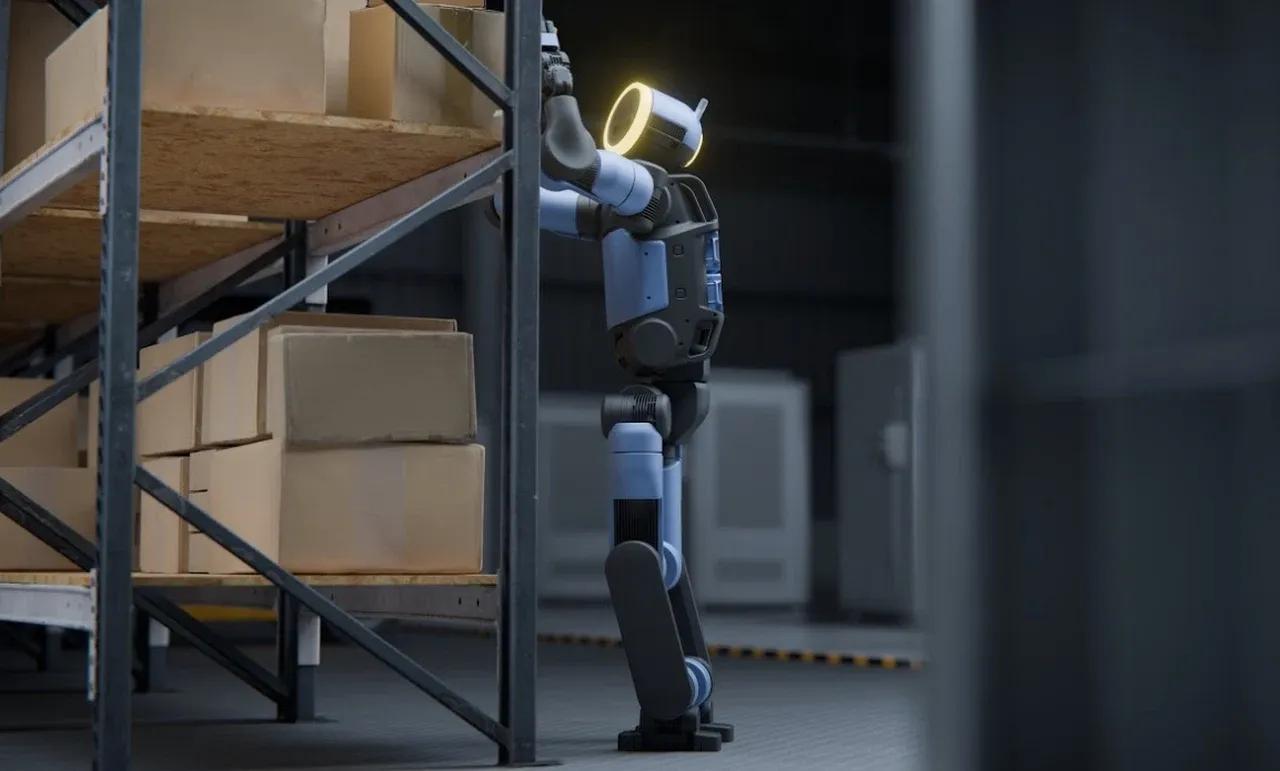
Source: Geeky Gadgets
The timing of this announcement positions Boston Dynamics ahead of competitors like Tesla Optimus, which failed to meet Elon Musk's prediction of deploying thousands of robots by the end of 2025
2
. Boston Dynamics CEO Robert Playter emphasized the strategic decision to enter commercial production only after recent AI advances accelerated the pace of robot training and real-world deployment capabilities2
.Hyundai Plans 30,000 Atlas Units Annually at Car Factories
Hyundai announced plans to produce 30,000 Atlas robots annually starting in 2028 at a new robotics facility in the US, with initial deployment at the Hyundai Motor Group Metaplant in Savannah, Georgia
1
3
. This mass production strategy is part of Hyundai's $26 billion investment in US manufacturing and a broader 125 trillion won ($86 billion) commitment to AI, robotics, and new technologies in South Korea over the next five years3
.The deployment will begin with parts sequencing tasks in 2028, where Atlas will arrange components in the order they are installed in vehicles
1
4
. By 2030, Hyundai expects Atlas to advance to component assembly and handle tasks involving repetitive motions, heavy loads, and other complex operations across production sites4
. Hyundai Motor shares jumped as much as 8.4% to a record high following the announcement3
.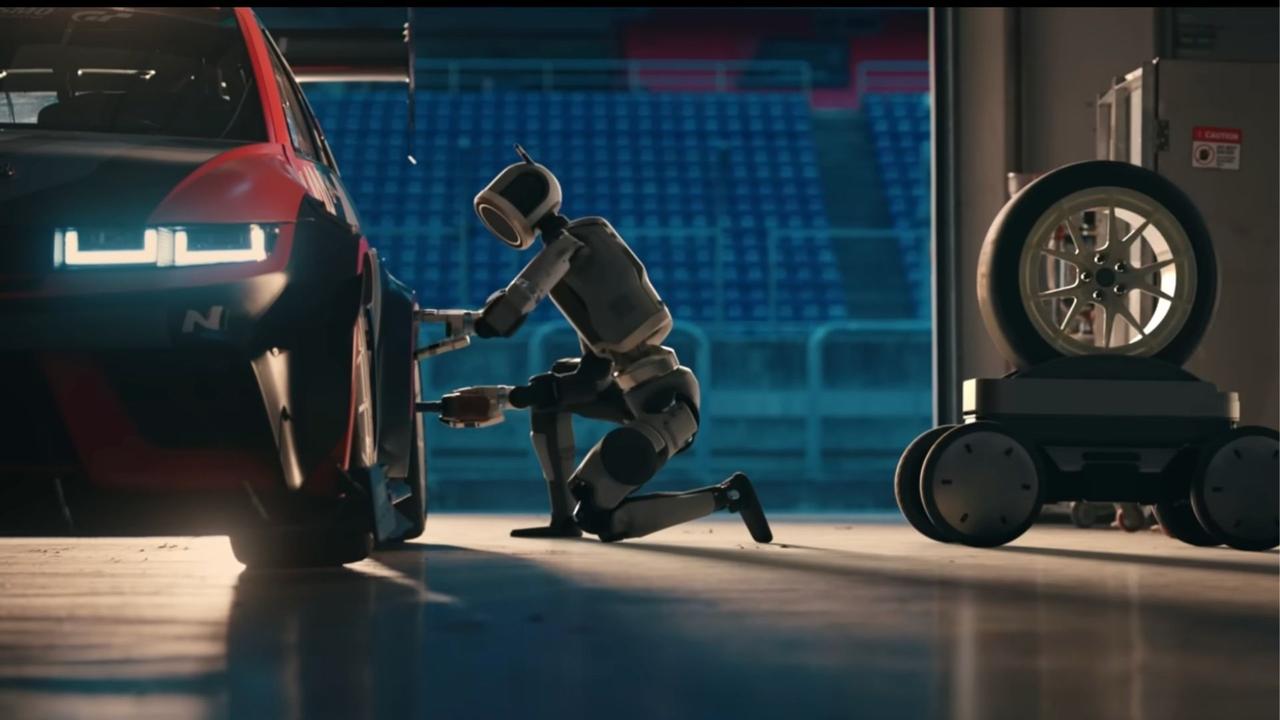
Source: Interesting Engineering
Advanced Capabilities and Physical AI Integration
The production version of Atlas features 56 degrees of freedom, up from 50 reported in April 2025, with fully rotational joints and human-scale hands equipped with tactile sensing
1
. The robot can lift up to 110 pounds (50kg), operate in temperatures ranging from -4 to 104 degrees Fahrenheit (-20 to 40 degrees Celsius), and is IP67 rated for water resistance2
3
.Atlas can function autonomously, be controlled via teleoperator through VR, or operated using a tablet steering interface
2
5
. The robot features two hot-swappable batteries that it can replace automatically for continuous all-day operation, and it can be taught most tasks within a day1
. Hyundai expects humanoid robots to become the largest segment of the physical AI market, which refers to AI systems embedded in hardware that collect real-world data and make autonomous decisions4
.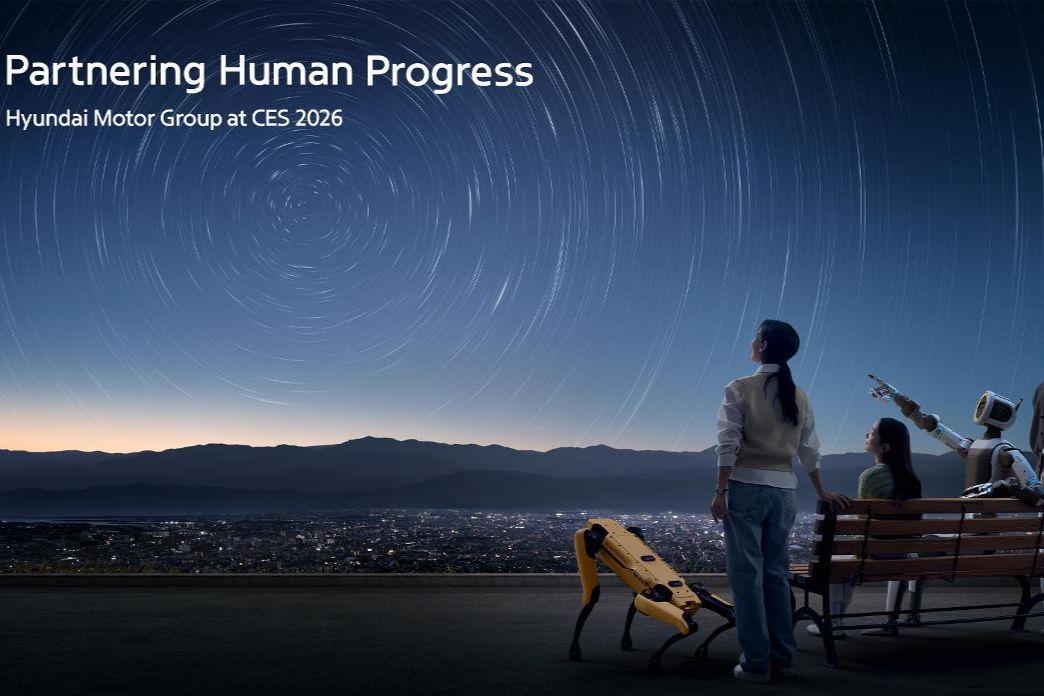
Source: Korea Times
Related Stories

Strategic Partnerships with Google DeepMind and Nvidia
Boston Dynamics announced a partnership with Google DeepMind to integrate Gemini Robotics AI foundation models into Atlas, aiming to give the robot greater cognitive capabilities
2
5
. Google DeepMind will receive Atlas units this year to develop these integrations, with all production robots for 2026 already allocated between Hyundai and Google deployments2
.Hyundai is also strengthening its partnership with Nvidia, leveraging the chip giant's technology to accelerate innovation and improve efficiency in robotics
3
. The two companies signed an agreement in October to build a $3 billion physical AI cluster in South Korea3
. Boston Dynamics plans to add additional customers in early 2027, though no specific names have been disclosed2
.Market Implications and Automation Concerns
The shift to commercial production represents both opportunity and challenge for the manufacturing sector. Goldman Sachs projects the market for humanoid robots will reach $38 billion by 2035, while Morgan Stanley expects the sector to hit $5 trillion by 2050 when there could be more than 1 billion humanoids in use
3
. Hyundai claims its supply chain, advanced manufacturing facilities, and work on AI-based software give it unique advantages to scale production while keeping costs low1
.However, concerns about automation and worker safety persist. At Hyundai affiliate Kia Corp, the labor union called to establish a body to address potential labor rights issues as workers raised concerns about expanding automation
4
. While Hyundai envisions harmonious collaboration between humans and robots, Amazon's leaked strategy documents suggest plans to replace more than 600,000 jobs in the US by 2033 through robotics1
. Hyundai counters that its $21 billion US investment will create 14,000 direct jobs and more than 100,000 indirect jobs by 20281
.References
Summarized by

Navi
[2]
Related Stories
Boston Dynamics unveils production-ready Atlas robot with superhuman abilities at CES 2026
05 Jan 2026•Technology

Boston Dynamics' Atlas Robot Demonstrates Autonomous Workplace Capabilities
01 Nov 2024•Technology

Boston Dynamics partners with Google DeepMind to give Atlas humanoid robot Gemini-powered intelligence
05 Jan 2026•Technology

Recent Highlights
1
OpenAI Releases GPT-5.4, New AI Model Built for Agents and Professional Work
Technology
2
Anthropic sues Pentagon over supply chain risk label after refusing autonomous weapons use
Policy and Regulation

3
OpenAI secures $110 billion funding round as questions swirl around AI bubble and profitability
Business and Economy

Recent Highlights
Today's Top Stories






Your Daily Dose of Curated AI News
Don’t drown in AI news. We cut through the noise - filtering, ranking and summarizing the most important AI news, breakthroughs and research daily. Spend less time searching for the latest in AI and get straight to action.

