Hyundai labor union blocks humanoid robots over warnings of mass job losses in factories


5 Sources
[1]
Hyundai's humanoid robot plans trigger union warnings of mass job losses
Serving tech enthusiasts for over 25 years. TechSpot means tech analysis and advice you can trust. A hot potato: The fear of generative AI taking office jobs has somewhat overshadowed the issue of robots replacing factory workers. But in Korea, Hyundai Motor's labor union has warned against the
[2]
Hyundai labor union warns humanoids could trigger major job losses
The union further leveled allegations that the carmaker was seeking profits by reducing the workforce through the deployment of robots. "This is a good excuse for capitalists who seek to maximize profits from a long-term viewpoint," the union said. The typical maintenance cost of an Atlas
[3]
'Yellow envelope law' meets age of robot workers - The Korea Times
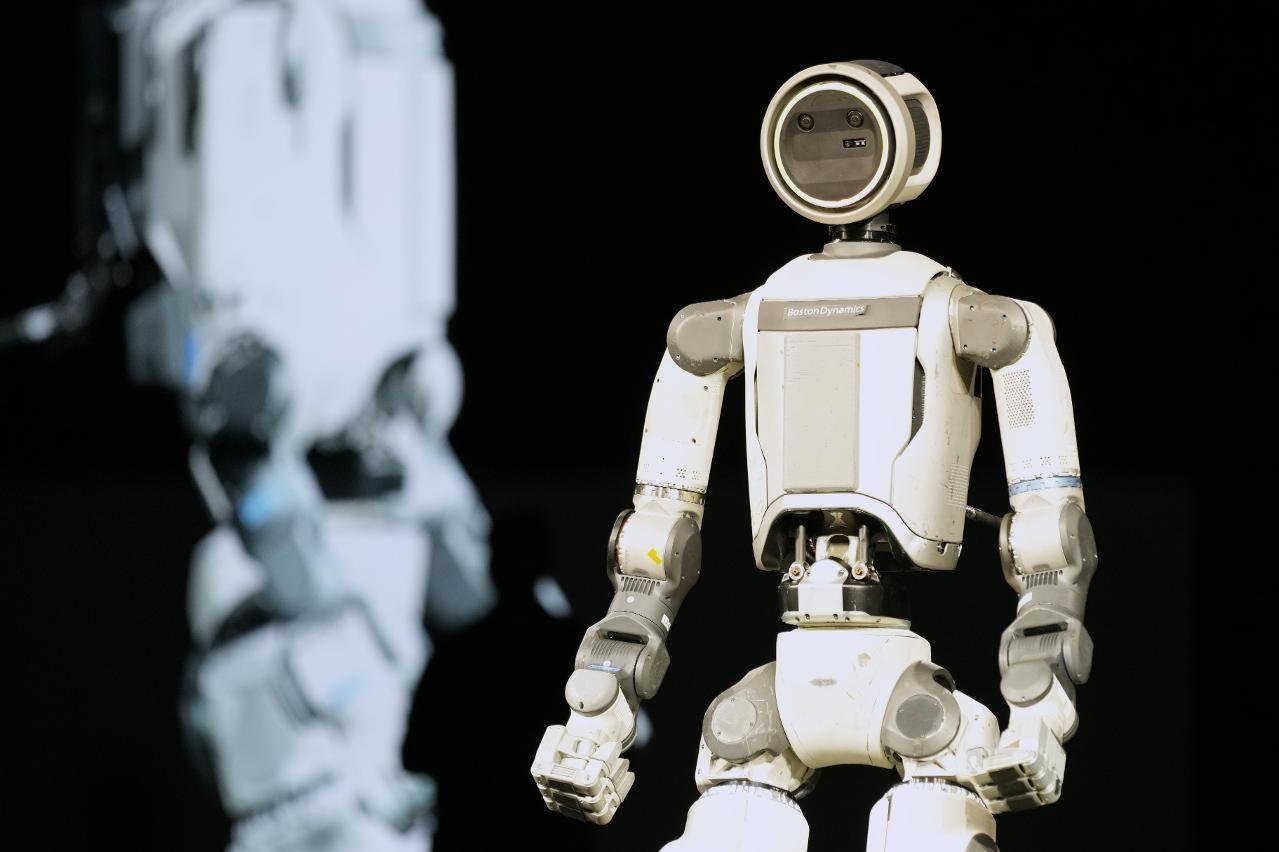
An Atlas robot stands on stage during a Hyundai and Boston Dynamics press conference ahead of the CES tech show in Las Vegas, Jan. 5 (local time). AP-Yonhap Conflict over robots controlled by artificial intelligence (AI) is no longer a scenario in the distant future for Korea. It is unfolding in
[4]
Hyundai's 'Atlas' robot sparks debate over human labor, jobs in Korea
Hyundai Motor Group's announcement of plans to deploy its new humanoid robot "Atlas" in manufacturing facilities has been met with fierce backlash from the company's labor union. Industry observers note that South Korea is No. 1 in the world in terms of robot adoption in factories, indicating
[5]
Hyundai Motor union warns against humanoid robot deployment - The Korea Times
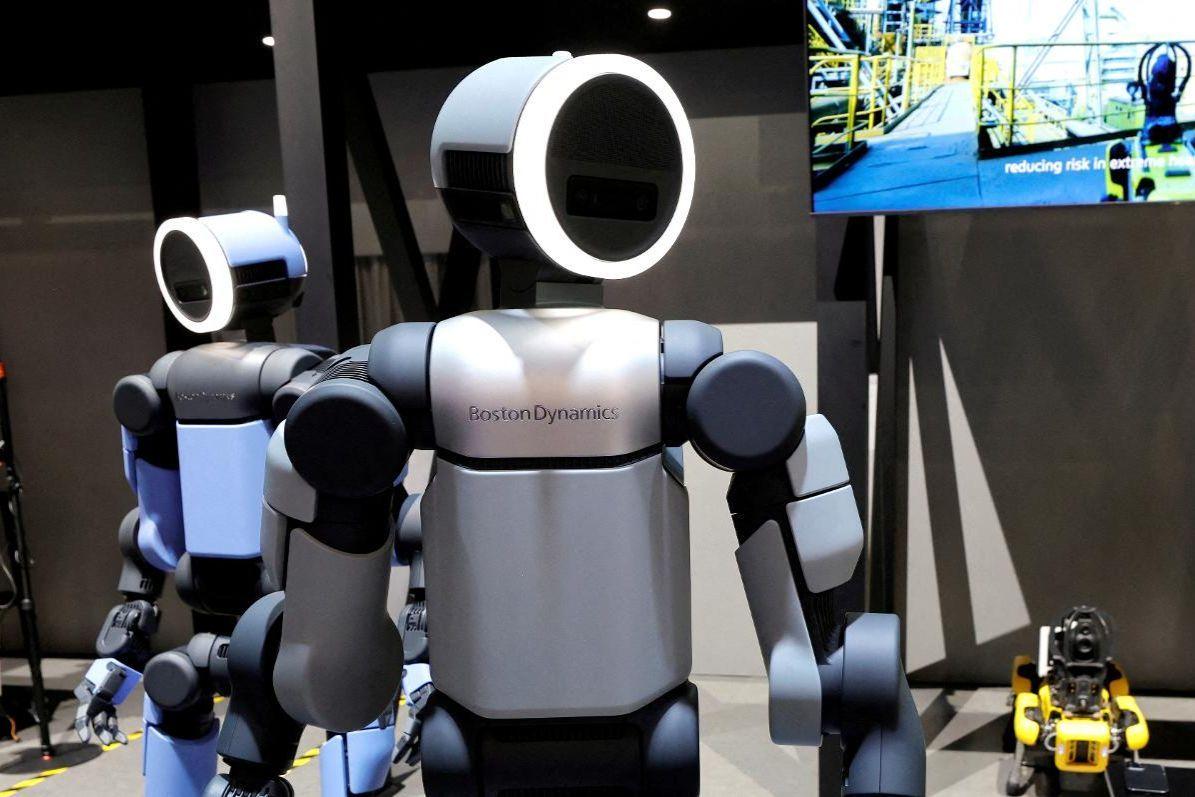
Boston Dynamics' Atlas humanoid robots are displayed at the Hyundai Motor Group booth for CES 2026 in Las Vegas, Jan. 6. Reuters-Yonhap Hyundai Motor's labor union stated its strong opposition to the carmaker's plan for deploying humanoid robots across its major assembly lines here and
Share
Copy Link
Hyundai Motor's labor union has issued a stark warning against the company's plans to deploy Boston Dynamics' Atlas humanoid robots across its factories, saying the move will trigger a massive employment shock. The union vows that not a single robot can enter production sites without a labor-management agreement, setting up a confrontation that could define how AI-powered automation reshapes manufacturing in Korea and beyond.
Hyundai Labor Union Draws Line on Humanoid Robots
Hyundai Motor's labor union has taken a firm stance against the company's ambitious plans to deploy humanoid robots across its manufacturing facilities, warning that the move will bring a "huge employment shock" to workers
1
. The union issued a statement declaring that "not a single robot can be deployed at worksites without an agreement between the union and management," effectively blocking the carmaker's automation strategy until negotiations are complete5
.The conflict emerged after Hyundai Motor Group unveiled Boston Dynamics' Atlas robot at CES 2026 earlier this month, positioning Physical AI as its next major growth engine
2
. The company announced plans to build a factory capable of producing 30,000 robots annually by 2028 and begin deploying these AI-powered robot workers at Hyundai Motor Group Metaplant America (HMGMA) in Georgia that same year, with plans to roll them out across all global production sites1
.
Source: Korea Times
Cost Reduction Drives Automation Strategy
The deployment of humanoid robots represents a significant shift in manufacturing economics that has alarmed workers. The annual maintenance cost for an Atlas robot is estimated at approximately $9,500, far below typical human labor costs, which reach about 130 million won per year for each employee at Hyundai
3
. These robots can operate nearly 24 hours a day without requiring sick days, vacation time, or breaks, making them an attractive option for companies focused on cost reduction and production efficiency .
Source: TechSpot
The Hyundai labor union has accused management of using automation to reduce the workforce and maximize profits at the expense of human workers. "This is a good excuse for capitalists who seek to maximize profits from a long-term viewpoint," the union stated, characterizing the robot deployment in factories as a strategy to cut labor costs rather than improve working conditions
2
.Yellow Envelope Law Shifts Power Dynamics
The timing of this confrontation coincides with Korea's recently enacted "yellow envelope law," set to take effect in March, which fundamentally changes the balance of power between employers and unions
3
. The pro-labor legislation expands workers' rights in labor disputes and limits employers' ability to seek damages from unions over strike-related losses, giving unions more leverage in collective bargaining agreements. Under this new framework, management decisions that significantly affect working conditions—including large-scale automation projects—are recognized as matters for collective bargaining and action3
.Experts suggest this legal shift may paradoxically both slow and accelerate automation. While union rights could delay robot deployment, companies might rush to install automation before union power increases further. "The real question is not whether this will happen, but whether labor, capital and the state will use this moment to find a balance that lets us prosper together," said Ahn Jong-ki, a professor at the Korea University Institute for Research on Labor and Employment
3
.Korea Leads Global Robot Adoption
The controversy unfolds against the backdrop of Korea's position as the world's leading adopter of industrial robots. According to 2024 data from the International Federation of Robotics, South Korea had the highest robot density globally at 1,012 robots per 10,000 employees, far exceeding Singapore's 770, China's 470, Germany's 429, and the global average of 162
4
. This existing infrastructure makes Korea a natural testing ground for the next wave of humanoid automation.Boston Dynamics says Atlas can learn most tasks within a day and autonomously handle diverse high-intensity labor, including lifting objects weighing up to 50 kilograms over 2 meters
4
. Hyundai plans to phase in the robots starting in 2028 with simple tasks like parts sequencing, then deploy them for complex, heavy-duty operations across production lines by 20302
.
Source: Korea Times
Related Stories

Worker Anxiety and Workforce Inequality Concerns
The impact of automation on human labor extends beyond Hyundai's factories. An October 2025 survey of 1,000 working Koreans conducted by Gabjil 119 found that nearly half of respondents (48.2%) feared being replaced by AI, while 77.9% estimated that AI adoption would worsen labor market inequality and wealth polarization
4
. These concerns about workforce inequality highlight the broader social implications of rapid automation.Other Korean manufacturers are watching the Hyundai situation closely. Hanwha Ocean plans to progressively double automation rates at its shipyards, targeting 100% automation in welding by 2030, while Posco Group has deployed Boston Dynamics' Spot robots since 2023 for maintenance in hazardous areas
4
. "Backlash from labor unions is prompting businesses to tread with caution while closely monitoring the discourse surrounding Hyundai Motor Group and its utilization of Atlas," a shipbuilding industry official noted4
.What Comes Next
Hyundai's 2028 timeline may already represent a compromise designed to test union and public reaction rather than the earliest technically feasible deployment date, according to labor experts
3
. The company has emphasized that Atlas will ease the physical burden on workers and handle dangerous tasks, but the union remains unconvinced that warnings of mass job losses can be dismissed1
.Lee Byoung-hoon, a professor emeritus of sociology at Chung-Ang University, characterized the situation as "an opportunity to set the example for an exemplary negotiation," urging both sides to communicate and find outcomes that minimize harm to jobs and labor conditions
4
. Whether this labor-management agreement can be reached will likely shape how manufacturing automation proceeds not just in Korea, but globally, as other companies observe whether aggressive robot deployment strategies can overcome organized labor resistance in an era of strengthened union rights.References
Summarized by

Navi
[2]
Related Stories
Hyundai Strike Over Humanoid Robots Marks Historic Labor Standoff in Auto Industry
16 Jul 2026•Business and Economy
Hyundai workers vote to strike as humanoid robots threaten factory jobs
25 Jun 2026•Business and Economy
Boston Dynamics' Atlas robot enters production to build Hyundai cars starting in 2028
05 Jan 2026•Technology

Recent Highlights



Recent Highlights
Today's Top Stories



Don’t drown in AI news. We cut through the noise - filtering, ranking and summarizing the most important AI news, breakthroughs and research daily. Follow topics that matter to you and stay ahead.


