Bumble and Tinder launch AI matchmaking assistants to revive dating apps amid Gen Z fatigue


15 Sources
15 Sources
[1]
Bumble to launch an AI dating assistant, 'Bee' | TechCrunch
Dating app maker Bumble is venturing into generative AI. During the company's fourth-quarter earnings on Wednesday, Bumble introduced a new AI assistant it's calling "Bee," designed to become a personal matchmaker that learns users' "values, relationship goals, communication style, lifestyle, and dating intentions" through private chats. It then uses those insights to help find the user more relevant matches. Currently, Bee is in the pilot phase and being tested internally, founder and CEO Whitney Wolfe Herd told investors, but it's launching into beta soon. With Bee, the company envisions being able to capture much more information about Bumble users, as it learns more about each individual's story and what they really want. This could differentiate Bumble's app from others like Tinder, which also just underwent an overhaul as the dating app market has fizzled with Gen Z users. Bumble says users will interact with Bee much like they do with other AI chatbots, through typing and speaking in a more conversational style. Initially, Bee will be used to power a new dating experience, called "Dates," that uses AI to recommend matches; but in the future, Bumble says Bee will move into other areas, like offering date suggestions or requesting anonymous feedback from your prior matches. In "Dates," Bee will first learn about the user through a private, onboarding conversation. It then identifies two people who have shared intentions, values, and relationship goals. Both users are notified in the app with a description of why they make a great match. The addition is part of a broader tech and AI-focused overhaul of the dating app, which to date has marketed itself as more focused on women's needs. The company pioneered features like the "women message first," body-shaming bans, and tools that blurred unsolicited explicit images, among others. Now, it's looking to use AI to return to user growth amid a dating market that sees younger users, particularly Gen Z, growing tired of the swipe. In fact, Herd said that Bumble would experiment with removing the long-popular swipe mechanism in select markets to see how users react. Instead of prioritizing swipes as a binary "yes" or "no," Bumble is looking to leverage other features, like new "chapter-based" profiles where members can connect with one another on different parts of a user's life story. This will give Bumble more data to feed into its AI system and algorithms. "We will be introducing more dynamic ways for somebody to express interest in your story, rather than just your profile, and this is going to drive more dynamic engagement, spark better conversation, and ultimately drive better KPIs across the board -- like engagement and chances to get better conversations going," Wolf Herde said. "You will also see us take a much more deliberate approach to getting people offline versus just in what people refer to as dead-end chat zones." The company is also looking into other ways to better cater to Gen Z, a cohort that often prefers group socializing over one-on-one dates to get to know people. The company has been working to add AI to its app for years, rolling out changes like AI photo selection and feedback tools, for instance, as well as in areas like safety. Wolfe Herde told investors that Bumble's back-end infrastructure had been overhauled as the app infused itself with AI.
[2]
Tinder, Bumble Both Bet Big on AI-Powered Matching to Find Your Next Date
Dating apps aren't as popular as they once were, as many daters grow tired of swiping, but both Tinder and Bumble believe AI-powered recommendations may be the next step in helping you find an ideal match. Tinder's AI-generated recommendations, called Chemistry, have been in testing in Australia and New Zealand since November. The brand said on Thursday it would now let those in the US and Canada try out its AI matchmaking. Chemistry uses a Q&A format to learn what you want from your dating experiences, then gives you an AI-generated, daily curated report of people that may suit "your personality, your vibe, and what matters to you." It also lets you connect your camera roll, which Tinder's AI will scan to take "insights" looking for similar interests, lifestyles, and personality traits. For example, if it sees lots of photos of you in nightclubs, it may learn that you'd like to match with an outgoing partner who likes to party. Bumble is also set to introduce AI-powered matching, but it isn't ready for the public yet. Bumble CEO Whitney Wolfe Herd told investors the tool is in internal testing, with its Bee assistant set to launch soon. Bumble's tool, called Dates, will be available in the app itself and work alongside its Bee AI assistant, and will include a quiz similar to Tinder's to understand what you're looking for. It will ask questions like, "What kind of relationship do you value and want?" and it'll match your answer to similar-minded people. You'll then get a notification, as with the other person, to say you're a strong match. Herd teased that the brand may even experiment with dropping its swiping mechanic, where you move through profiles by selecting whether to talk to each one. If its AI-powered matching proves popular, it may rethink its older design. Bumble has been known to introduce new ideas to online dating, such as its decision to offer a tool that requires women to message first. According to Mashable, Herd told investors, "Daters across the industry are dissatisfied with being reduced to images and potentially dismissed with a swipe. Bumble 2.0 introduces a chapter-based structure designed to help members tell their stories more authentically and understand one another more deeply."
[3]
Tinder Unveils Video Speed Dating Feature, Deeper AI Integration
Tinder is also introducing safety improvements, such as enhancements to its "Are You Sure?" feature and a new auto-blur feature for its "Does This Bother You?" tool. Tinder announced a handful of new app updates -- including several AI-powered features -- marking its latest attempt to reinvigorate the brand for the crucial Gen Z audience. The changes, unveiled during an event in Los Angeles on Thursday, include a mix of new features, improvements to existing ones and some added safety measures. "With more than half our users under 30, we're building alongside a generation that wants dating to feel more authentic, lower-pressure and worth their time," Spencer Rascoff, the chief executive officer at Tinder and its parent, Match Group Inc., said in a statement. Get the Tech Newsletter bundle. Get the Tech Newsletter bundle. Get the Tech Newsletter bundle. Bloomberg's subscriber-only tech newsletters, and full access to all the articles they feature. Bloomberg's subscriber-only tech newsletters, and full access to all the articles they feature. Bloomberg's subscriber-only tech newsletters, and full access to all the articles they feature. Bloomberg may send me offers and promotions. Plus Signed UpPlus Sign UpPlus Sign Up By submitting my information, I agree to the Privacy Policy and Terms of Service. Many dating companies, including Match, Bumble Inc. and Grindr Inc., are reckoning with a generational shift in how young people prefer to meet other singles. And many users across different age demographics have indicated a feeling of burnout after using the apps continuously and not meeting quality matches. A common theme across all of the major companies' strategies is offering new features, many of which are powered by artificial intelligence. Bumble earlier this week announced an AI-powered assistant meant to act as a personal matchmaker. New Tinder features include: * A real-time video speed dating experience inside the app that will arrive later this spring. Users who have undergone photo verification can join scheduled virtual events for 3-minute video chats. * A new "Events" feature that lets users discover local goings-on and see who else is interested in attending. Gatherings run the gamut, including group classes and trivia nights. The feature will debut first in Los Angeles as part of a pilot run. * The app's existing "Music Mode" has been redesigned to connect users by shared musical taste. The feature prioritizes profiles with similar interests and gives them more prominent placement. * A new "Astrology Mode" lets users add their birth details to their profile and view deeper insights into how they might align with a potential match. * Tinder's Chemistry feature -- which uses AI to analyze profile information, user responses to questions, and photo insights to facilitate more meaningful connections -- will launch in the US and Canada. It is already available in Australia and New Zealand. * The brand is also introducing a real-time recommendation system called Learning Mode that's designed to better understand what people are looking for and make better match recommendations. On the safety side, Tinder said improvements will be coming to its "Are You Sure?" feature, which alerts users to potentially harmful language before they hit send. It also plans to add an auto-blur feature to its "Does This Bother You?" tool that detects potentially inappropriate messages. Another enhancement is a new initiative called "Tinder Connect" that aims to bring more of a user's real life into their profile based on the apps they're already using. The tool works with partners, including Duolingo and Beli, to better highlight user interests, from language to food taste. The company said it has previously seen success with its Spotify integration on the platform. While Match and other dating companies are investing heavily in AI as a way to reshape their signature apps, it is not clear that is what a majority of users want. Gen Z, which broadly dates less than older cohorts, reported higher discomfort than millennials with using AI to draft profile prompts and responses to messages, or to modify profile pictures, a survey published last year by Bloomberg Intelligence found.
[4]
Bumble is the latest dating app to add an AI assistant
Bumble is testing an AI dating assistant called "Bee" that it hopes will get users on dates without them having to swipe through profiles, Bloomberg writes. The company announced the AI assistant during its fourth quarter earnings, and intends to use the AI in a new experience it calls "Dates." When a user opts in to Bumble's Dates feature, Bee performs an onboarding chat where it learns about the users' "values, relationship goals, communications style, lifestyle and dating intentions," and then attempts to find other users who share some or all of those traits. Once Bee finds someone compatible, both users are notified in the app that they could be a great match, and receive a summary generated by Bee explaining why. From there, they can chat and see if things lead to a real-life date. As is often the case with pie-in-the-sky AI features, Bumble has even bigger plans for how Bee could be used in its app, including as a tool for collecting anonymous feedback from user's previous matches or as a way to receive suggestions for dates ideas. AI will also apparently enable Bumble to move away from binary yes or no swipes on profiles and towards a system where users connect over "chapter-based" profiles that are more reflective of their life story. Bumble is testing Bee internally and plans to launch the AI and its Dates feature in beta soon. The company is far from the only dating app experimenting with integrating AI recommendations and summaries. Tinder uses AI to recommend profile pictures to users, and now offers another feature called "Chemistry" that combines insights gained from personal questions and access to users' Camera Roll to make more informed matches. Meanwhile, Grindr's "Edge" subscription tier offers AI summaries of past chats and connections, and stats on whether a user is actually compatible with a new match. It's too early to tell whether AI makes a meaningful difference in the dating experience for users, but if it keeps them using an app or paying for a subscription, it's likely a worthwhile experiment for Bumble, Tinder and Grindr.
[5]
Bumble's New AI Assistant Aims to Take Dating Beyond the Swipe
Dates is meant to move beyond surface-level swiping to better understand users and their needs, and will roll out first as part of a pilot program for a select group of users. Bumble Inc. unveiled a new artificial intelligence-powered assistant designed to act as a personal matchmaker, the company's latest effort to reinvigorate itself at a time when many users have shown dating-app fatigue. The new opt-in tool, called Dates, starts with a private, in-depth conversation that explores broad topics like values, relationship goals, communication style, lifestyle and dating intentions. When it identifies two people who are aligned in these areas, both are notified with a summary explaining why they are a strong match. Chats with the AI assistant are private and nothing will be shared on a user's public profile, the company said on Wednesday. Members can also choose what topics of their conversation can be shared with a potential match. Dates -- which is powered by Bumble's own AI model, called Bee -- is meant to move beyond surface-level swiping to better understand users and their needs, founder and Chief Executive Officer Whitney Wolfe Herd said in an interview. The tool will not write messages on behalf of members or generate conversations. It will roll out first as part of a pilot program for a select group of users. Though it will be free to start, it could become a premium offering over time, the company said. The new feature, which was announced during the company's fourth-quarter earnings call, is part of a larger effort by Bumble to return its namesake dating app to growth. Wolfe Herd, who earlier co-founded Tinder, started Bumble in late 2014 with the novel idea that women should be the ones to start conversations on her dating app. While that pitch was unique at the time, revenue has since slowed, with Gen Z splitting from older generations in how they prefer to date. Bumble isn't alone: Other dating companies, including Tinder parent Match Group and Grindr Inc., are also reinventing their apps in the age of AI in a bid to reverse stubborn subscriber losses. Tinder is expected to unveil its next-generation AI features at an event in Los Angeles on Thursday. The goal of Dates is to get people to meet up with compatible matches and to "remove some of the emotional friction that really sits between matching and meeting," Wolfe Herd said, adding that she sees solving this challenge as a key opportunity for the company. It builds on what she said reflects the Bumble community's feedback, which is that users don't just want to go on more dates but better ones. "We don't see AI as a gimmick layer on top of swiping," she said. "It really needs to be an infrastructure for better relationships. It should not just be a chatbot layered on top of something." Wolfe Herd has previously said she wouldn't have swiped on her husband's dating profile if she had seen one, but now believes having an AI agent knowing how compatible they actually are could have brought them together otherwise. The company said future iterations of the tool may include date suggestions and offer prompts requesting feedback, allowing it to learn how a date went so that it can better understand member's needs. Wolfe Herd believes the era of dating is shifting from randomized discovery -- the current swipe model that she helped invent while at Tinder -- to an era of search, giving users more control over their experience, rather than "feeling like the algorithm is defining who you see and why you see them." At the same time, she sees AI and the more conventional swiping design complimenting each other. "It's like online shopping -- you could go to an online site and scroll for dresses and shoes and add something to your wish list but maybe it's not in your size," she said. "Or you could go for the personal shopper, and say 'I have a wedding this weekend and want to wear a pastel dress in a certain size and it needs to be delivered to my house in time.' You can be very precise, and the personal shopper will bring me back six to eight options that all fit the criteria." Bumble is already using artificial intelligence to enhance safety and verification processes, including automated detection of spam and fake profiles with tools like Deception Detector. It is also leaning on the technology to help purge bad-actor accounts and for features like Profile Guidance and its "Review Before You Send" prompt that nudges people to think twice before sending certain messages.
[6]

Bumble's AI assistant Bee will learn what you want from a relationship
The dating app unveiled Bee at its Q4 earnings alongside a broader 'Bumble 2.0' overhaul, as the company attempts to reverse years of declining user numbers by replacing gamified swiping with AI-driven compatibility. There is a version of the future, Bumble's version, at least, where you never swipe on a dating app again. Instead, you have a private conversation with an AI that learns what you actually want from a relationship, sits quietly in the background, and surfaces one carefully chosen match with a note explaining exactly why the two of you belong together. That is the pitch behind Bee, the AI dating assistant Bumble reveled at its fourth-quarter earnings on 11 March 2026. The product is still in internal testing, with a public beta coming "soon" according to founder and chief executive Whitney Wolfe Herd, who described it to investors as a personal matchmaker that learns users' values, relationship goals, communication style, lifestyle, and dating intentions through private chats. Once Bee identifies two people it considers compatible, both are notified in the app with a summary of why they make a strong match. From there, the conversation and the date are up to the humans. The launch vehicle for Bee is a new in-app experience called Dates. Users opt in, complete an onboarding conversation with Bee via text or voice, and then wait for a curated introduction rather than scrolling through an open pool of profiles. Bumble says future applications of Bee will extend to date-night suggestions based on shared interests, and an optional anonymous feedback loop from previous matches to help the system and the user understand what went wrong. Bee is the headline act in a broader product reset, Bumble is calling Bumble 2.0. Alongside the AI assistant, the company is experimenting with removing the traditional left-right swipe mechanic entirely in select markets, replacing it with what it calls chapter-based profiles, structured layouts that let users showcase different dimensions of their lives, from work and hobbies to values and plans. Wolfe Herd told investors that this richer format will feed the app's AI with better signals and give members more texture to respond to than a single profile photo. "We will be introducing more dynamic ways for somebody to express interest in your story, rather than just your profile, and this is going to drive more dynamic engagement, spark better conversation, and ultimately drive better KPIs across the board." The urgency behind Bumble 2.0 is not hard to read. Full-year 2025 revenue fell 10% to $966 million, paid users declined 11.5%, and the Q4 quarter alone saw revenue drop nearly 15% year on year to $224.2 million. The company laid off 30% of its workforce in mid-2025, and Wolfe Herd, who returned as CEO in early 2025 after a period away, told investors she had cut performance marketing spend by 80% as part of a deliberate pivot away from volume-driven acquisition and towards what she described as "higher-intent, organically driven growth." That painful restructuring appears to be what investors chose to focus on. Bumble's stock rose between 25% and 35% in the days following the earnings report, depending on the point of measurement, a rally that looks like a bet on the turnaround rather than a reaction to the numbers themselves. JPMorgan upgraded BMBL from Underweight to Neutral, citing stabilising leading indicators and the Bumble 2.0 launch, targeted for Q2 2026, as a potential catalyst. Wells Fargo kept an Equal Weight rating but pointed to Q1 EBITDA guidance of $80 million, roughly 42% above analyst estimates, as a sign that margin discipline is taking hold. Bumble is not alone in the AI pivot. Tinder's Chemistry feature uses personal questions and camera roll access to sharpen match recommendations. Grindr's Edge subscription tier offers AI summaries of past chats and compatibility statistics. What Bee represents, if it works, is a more ambitious commitment: not augmenting the swipe, but replacing it as the primary discovery mechanism. That is a significant trust ask. Users interacting with Bee will be sharing detailed, intimate information about what they want from relationships with an AI system, and implicitly allowing that system to make consequential social decisions on their behalf. Wolfe Herd said that privacy and member control of data are "central" to how Bee has been designed, though the company has not yet published detailed documentation on what data Bee retains, how it is used to train models, or what opt-out mechanisms will look like in practice. The chapter-based profiles and potential no-swipe markets are scheduled for the second half of 2026, according to the product timeline Wolfe Herd shared with investors.
[7]

Tinder's Solution to Dating App Burnout Is More AI
Tinder believes the solution is in an AI-infused experience. On Thursday, the company announced a long list of new features to be deployed in the app in the coming months. As of Thursday, users in the U.S. and Canada will be able to take advantage of a feature called "Chemistry," which will give users a daily AI-curated recommendation of potential matches. In a press release, Tinder described it as its "AI-powered way of cutting through dating fatigue." The AI will get to know more about you through a Q&A, and if you opt into it, a scan of your camera roll to understand "things like your interests, lifestyle, and personality themes," the company said. The camera roll scan feature is not yet available on the app, but will begin testing later this year in Australia, Canada, and the U.S. While the "Chemistry" feature is limited to a few countries, users globally can turn on "Learning Mode" if they really want Tinder's AI to give them a read of their personality and taste. In this mode, Tinder's AI recommendation system will be constantly gathering information on you whenever you use the app, and will use it to tweak which profiles get recommended to you. Tinder believes in the feature. According to internal testing, the women who used the "Learning Mode" feature had a higher likelihood of returning to the app within the first week. The goal is to eventually grow these AI curation abilities beyond a few features and integrate them into the whole Tinder experience, the company said. "With more than half our users under 30, we’re building alongside a generation that wants dating to feel more authentic, lower-pressure, and worth their time,†the CEO of Tinder's parent company, Match Group, Spencer Rascoff, said in the press release. "We’re using AI to surface more relevant connections, and continuing to raise the bar on safety so that people feel confident taking the next step. Taken together, these changes mark the most significant evolution of our app in years and make Tinder more trusted, social, intelligent and expressive.†Also starting testing in a few weeks in parts of the U.S. is the "Photo Enhance" feature that will use AI to help edit the photos you put on your profile. The company is also turning to AI to address user safety issues with the dating app. A feature called "Are You Sure?", which gives alerts to users before they send any potentially disrespectful texts, is getting an LLM-revamp, and so is "Does This Bother You?", a feature that detects inappropriate messages, helps the receiver in reporting them, and will also now auto-blur any flagged content. "These enhancements move beyond keyword detection to context-aware understanding of tone and conversational nuance, enabling smarter prompts that reinforce respectful behavior in real time," the company said in a press release. Earlier this week, Bumble also made a similar AI announcement, introducing an opt-in AI assistant called "Dates" that will first try to understand more about the user in private conversations with the chatbot and then match users based on compatibility. Both Bumble and Tinder, once the two dominating dating apps in the glory days of online dating, have been hit by the great Gen Z dating app disillusionment. Match, which also owns the popular Hinge dating app, has been dealing with consistent subscriber declines.
[8]

Tinder wants to fix dating apps with AI
Why it matters: Users increasingly struggle to tell the difference between real connections and the bots. * Dating apps are now using AI to fix a problem technology helped create. The big picture: Tinder's new updates include a speed dating experience and an AI feature to assess potential chemistry. What they're saying: "With more than half our users under 30, we're building alongside a generation that wants dating to feel more authentic, lower-pressure and worth their time," Spencer Rascoff, Match Group and Tinder CEO, said in a statement. * "We're using AI to surface more relevant connections." Driving the news: Photo-verified users can join scheduled, virtual speed dating events starting this spring. * The events will involve three-minute video chats "with the option to add more time and connect with multiple matches in real time," the company said. Between the lines: If speed dating is a blast from the past, AI chemistry tests are a glimpse into the future -- namely, the one from "Her." * "Instead of endlessly Liking profiles, users will get a daily curated recommendation based on what actually makes you, you," the company said of the feature, which has already been rolled out in Australia and New Zealand. * "Using a Q&A and optional features like Camera Roll Scan, we get a better sense of your personality, your vibe, and what matters to you." * The scan will also help users discover "photo insights" based on patterns in their camera rolls. Other new features include an "events" mode to discover in-person events, an "astrology mode" allowing users to add their birth details, and a learning mode that "continuously gathers feedback to surface more relevant recommendations earlier." * The company is launching improved safety measures as well, including an "are you sure?" feature alerting users "to potentially harmful language before they hit send." Zoom out: As they struggle to maintain users, dating apps such as Bumble and Grindr are also investing in AI. Zoom in: Users are also deploying AI, mirroring the increasingly popular bot vs. bot world of the web. * Chatbots can suggest witty messaging banter, alter photos and write bios and pick-up lines. By the numbers: A survey last year from Match and researchers at the Kinsey Institute found that 26% of U.S. singles reported using AI to enhance dating -- up 333% from the year before. * 6 in 10 people who use dating apps believe they've encountered at least one conversation written by AI, per a study from Norton. The bottom line: It's getting more and more likely that AI is third-wheeling your online romance.
[9]

Bumble to test AI-powered dating experience
Bumble will soon test an AI dating experience called, simply, Dates. Dates will be powered by Bee, a standalone product feature designed as a personal dating assistant and matchmaker, Whitney Wolfe Herd, founder and CEO, said during its Q4 2025 earnings call. As Bumble told Mashable, users will start using Dates with an onboarding conversation to discuss values, relationship goals, communication style, lifestyle, and dating intentions. These conversations, which will be with "Bee," will apparently be private and not shared on your profile. Users will also be able to control what elements of the conversation Bee uses to search for matches. Then, Bee will identify a highly-compatible profile and notify both users with a description of why they're a match. If the interest is mutual, the connection moves to a conversation. "To fully recover and return to growth, we must focus on product and technology innovation, which is where our efforts are now," Wolfe Herd said during Bumble's earnings call. Bumble's total revenue and paying users had decreased year over year (14 percent and 21 percent, respectively) compared to Q4 2024. Wolfe Herd said that since the start of this year, she's been spending 90 percent of her days with the tech and product teams "reimagining what finding love looks like in the era of AI." "We are rearchitecting the entire Bumble experience from start to finish," she said. Bumble can't use its legacy tech stack (the set of technologies that together build an app), so it's building a new, cloud-native tech stack with a targeted launch in Q2. Wolfe Herd said it's not just a backend upgrade, but a fully new platform coming. Wolfe Herd also acknowledged the burnout and disillusionment with dating apps as of late. "Daters across the industry are dissatisfied with being reduced to images and potentially dismissed with a swipe," she said. "Bumble 2.0 introduces a chapter-based structure designed to help members tell their stories more authentically and understand one another more deeply." She said the AI prioritizes fewer, more relevant matches over volume, combats swipe fatigue, and helps members move towards real-world connections. The beta of Dates is launching soon, and future iterations are expected to incorporate date suggestions and anonymous feedback. Bumble already launched some AI features, Profile Guidance and Photo Feedback, last month. Back in 2024, Wolfe Herd discussed an AI-powered dating concierge that would basically date for you, so it's unsurprising that the app is taking this direction.
[10]

Bumble wants you to trust its Bee AI assistant to date humans
Dating apps are losing their grip on Gen Z, a generation increasingly fed up with endless swiping and shallow matches, and companies are scrambling to find a solution. Recently, Tinder announced a slew of features, including IRL (in real life) dating sessions, to combat swipe fatigue. Now, Bumble is trying to address this issue, and its answer is generative AI. As reported by TechCrunch, during its Q4 earnings call, Bumble announced a new AI assistant called Bee. Recommended Videos It's designed to work like a personal matchmaker, learning your values, relationship goals, communication style, and more, and then using all this information to find you genuinely compatible matches. Bee is currently in internal testing but is expected to roll out to beta users soon. How does Bee work? Bee powers a new dating experience called "Dates". When you first use it, Bee starts with an onboarding conversation to get to know you. It then identifies another user with shared values and intentions, and notifies both people in the app with a description of why they might be a great match. It's a meaningful departure from the standard swipe-right-and-hope approach. Bumble founder and CEO Whitney Wolfe Herd also said that the company will experiment with removing the swipe entirely in select markets. In its place, users will get "chapter-based" profiles, where you can connect with someone over different parts of their life story rather than a single photo. Bumble might also be focusing on getting the dates offline. Wolf Herd said, "You will also see us take a much more deliberate approach to getting people offline versus just in what people refer to as dead-end chat zones." Can Bee really help you get a date? It seems everything is getting its own spin of generative AI these days. It's in our glasses, in our phones, in our toys, and in our apps. From answering our questions to managing our health data, AI seems to be permeating every aspect of our lives. It also seems that whenever a company mentions AI, investors reward it with a surge in stock price. After Bumble reported strong quarterly revenue of $224.2 million and highlighted its AI integration plans, the company's stock jumped 40%. So, it's hard to tell whether these AI agents are genuinely helpful or simply a crutch companies are using to stay relevant. Only time will tell if Bee will be useful and help people find dates, but for now, I am circumspect.
[11]

Dating app Tinder dabbles with AI matchmaking
New York (AFP) - Tinder said Thursday that it is testing a "Chemistry" option that uses artificial intelligence to help with matchmaking in the popular dating app. The iconic system of users "swiping" to show interest in Tinder profiles remains at the core of the service created in 2012, but AI promises a more personalized quest for romance, according to Tinder. "We're using AI to surface more relevant connections, and continuing to raise the bar on safety so that people feel confident taking the next step," Spencer Rascoff, chief executive of Tinder and its parent Match Group, said in a statement announcing a slew of changes to the platform. Tinder said AI enabled the app to "get a better sense of your personality; your vibe, and what really matters to you." The tool will learn about users from information in their accounts, and Tinder plans to eventually let people augment that by answering questionnaires and providing access to photo archives, according to the company. Chemistry is among new features designed to help Tinder users spend less time in the app and more time connecting in real life, according to senior vice president of product Hillary Paine. "What you are going to see is more of an evolution that is mirroring what modern, young daters are looking for," Paine told AFP. A music mode lets people give greater weight to musical tastes while seeking promising profiles, while a new astrology mode makes star signs a factor in the mix. Tinder is also testing in-person events where subscribers in its home city of Los Angeles can meet, along with virtual video speed dating sessions, according to Paine. "We're hearing and we're seeing that Gen Z-plus wants to be social," Paine said of those born in the Internet Age. "We're trying to get them off the couch, out of their apartments and into the real world." Tinder is also using AI to detect potentially inappropriate messages and to scan faces to check they are actual people. A survey published by Forbes magazine last year found that 78 percent of users expressed feeling emotionally, mentally and physically exhausted from using online dating platforms. "With more than half our users under 30, we're building alongside a generation that wants dating to feel more authentic, lower-pressure, and worth their time," Rascoff said.
[12]

Bumble's AI assistant Bee promises "more dates"
Bumble introduced an AI assistant named "Bee" during its fourth-quarter earnings announcement. The addition represents a broader tech and AI-focused overhaul of the dating app, aimed at returning to user growth amid a market where younger users are tired of the swipe mechanism. The company reported better-than-expected Q4 revenue of $224.2 million and a 7.9% increase in average revenue per paying user to $22.20, causing its stock to rally about 40%. Bee is designed to learn users' values, relationship goals, communication style, lifestyle, and dating intentions through private chats to find more relevant matches. Bumble founder and CEO Whitney Wolfe Herd said Bee is currently in the pilot phase and being tested internally, with a beta launch planned soon. Initially, Bee will power a new dating experience called "Dates" using AI to recommend matches based on shared intentions, values, and goals. In "Dates," Bee learns about users through a private onboarding conversation and notifies both parties with a description of why they are a great match. Bumble plans to expand Bee's future capabilities to include date suggestions and requesting anonymous feedback from prior matches. Users will interact with Bee through typing and speaking in a conversational style, similar to other AI chatbots. The company is experimenting with removing the swipe mechanism in select markets to address user fatigue, particularly among Gen Z. Bumble is introducing "chapter-based" profiles to allow connections on different parts of a user's life story, providing more data for AI systems. "We will be introducing more dynamic ways for somebody to express interest in your story, rather than just your profile," Wolfe Herd said. She stated this will drive more dynamic engagement, spark better conversation, and ultimately drive better KPIs across the board. Bumble has been adding AI to its app for years, including AI photo selection, feedback tools, and safety features. Wolfe Herd said the company's back-end infrastructure has been overhauled with AI. Bumble historically marketed itself around women's needs, pioneering features like "women message first" and tools that blurred unsolicited explicit images. The company is also looking into ways to better cater to Gen Z, a cohort that often prefers group socializing over one-on-one dates.
[13]
Tinder launches Events tab and video speed dating
The new features represent a strategic shift for the dating app as it seeks to re-engage users and counter declining paying subscribers. The company aims to move beyond traditional swiping by integrating real-world events and AI-driven personalization into its platform. The Events tab will launch in beta for Los Angeles users in late May or early June. The feature will curate local activities such as speakeasies, bowling, and pottery classes. Tinder is simultaneously piloting a video speed dating experience in Los Angeles. The pilot allows users to join scheduled three-minute video chats. Users must have a verified profile photo to participate in the video dating pilot. Tinder is rolling out the "Chemistry" feature in the U.S. and Canada. The AI tool curates daily matches to reduce swipe fatigue. It was previously tested in Australia and New Zealand. The company also introduced "Learning Mode" to personalize recommendations from a user's first session. Hillary Paine, senior vice president of product, stated the system is designed to understand user preferences quickly. "We're hoping that this is something that makes Tinder really feel like it understands you from the very first time you use it," Paine said. Safety features are receiving AI enhancements. The "Does This Bother You?" tool uses large language models to detect harmful messages. The "Are You Sure?" prompt is being fine-tuned to identify potentially harmful interactions. New visual modes include "Music Mode" with Spotify integration and "Astrology Mode." Match Group reported Q4 2025 earnings of $878 million. The company has faced consecutive quarters of declining paying subscribers. Tinder previously launched a Face-to-Face video feature during the COVID-19 pandemic, which was later discontinued.
[14]

Tinder's New Bet: AI, Astrology, and Real-World Events
Tinder is evolving beyond endless swiping with new features aimed at fostering genuine connections. The platform is introducing "Modes" like Music and Astrology for niche matching, and encouraging real-world interactions through Events and video speed dating. For more than a decade, Tinder has defined online dating. The swipe mechanic became cultural shorthand for modern relationships, influencing everything from how people meet to how dating apps are designed. But the last few years have also brought a different narrative: dating fatigue. At its first-ever product keynote, Tinder Sparks 2026, the company revealed a sweeping set of updates that suggest it is trying to rethink what the experience should look like in an AI-first era. The goal, according to the company, is simple: help people move from endless swiping to actual connections. In practice, that means new social formats, AI-driven recommendations, more safety infrastructure, and a push toward real-world interactions. One of Tinder's biggest bets right now is something it calls "Modes", essentially alternate ways to match beyond the standard swipe. The platform is expanding this concept with two additions. A redesigned Music Mode focuses on matching people based on shared listening habits, building on its long-running integration with Spotify. According to Tinder's internal data, more than half of matches in the US already involve at least one person displaying a Spotify anthem. The other addition leans into the internet's obsession with zodiac compatibility. Astrology Mode lets users add their birth details and display Sun, Moon and Rising signs to see how their astrological profiles align with potential matches. It sounds gimmicky on paper. But Tinder says early testing showed noticeably higher engagement from women on astrology-enabled profiles. For a company that built its empire on swiping, Tinder is also experimenting with ways to get users off the app. A new Events feature, currently being piloted in Los Angeles, lets people discover real-world events where other singles might show up. Think pottery classes, trivia nights, or other social gatherings where meeting someone does not feel like a blind date. At the same time, Tinder is testing video speed dating, where verified users can join scheduled sessions for quick three-minute video chats with potential matches. The idea is to recreate the spontaneity of meeting someone organically, something dating apps have struggled with despite their scale. Artificial intelligence is now creeping into almost every consumer product, and Tinder is no exception. The company is expanding an AI-powered recommendation layer called Chemistry, which attempts to learn what makes someone compatible with you rather than simply showing endless profiles. Instead of browsing indefinitely, users receive curated suggestions based on their behavior and interests. Another experimental feature, Camera Roll Scan, analyzes photos on your device to identify lifestyle patterns and personality traits that could improve profile recommendations. Participation is optional, but it signals how aggressively dating platforms are exploring new data inputs. A system called Learning Mode also tracks how users interact with the app to quickly refine match recommendations, particularly for new users who might otherwise churn early. Safety has become one of the biggest challenges for dating platforms, and Tinder says it is strengthening the underlying trust infrastructure. The company is expanding its Face Check liveness verification system and upgrading two moderation tools with large language models. "Are You Sure?" warns users before sending potentially offensive messages, while "Does This Bother You?" flags problematic content on the receiving end and can automatically blur messages that might be inappropriate. The aim is to catch harmful interactions earlier, before they escalate into harassment or abuse. Tinder is also redesigning the profile experience itself. Future updates will integrate third-party apps through something called Tinder Connect, starting with platforms like Duolingo and Beli. The idea is to pull real-life interests into profiles, similar to how Spotify already surfaces music taste. The interface itself is getting a visual overhaul as well, with full-screen profile photos and a more immersive design that prioritizes personality signals rather than just a handful of images. Taken together, these updates represent one of the most significant changes to Tinder in years. The company is trying to solve a problem that has become increasingly visible: people still use dating apps, but many are tired of them. Endless swiping, superficial matches, and awkward conversations have made the experience feel transactional. Tinder's answer is to make dating more intentional. Less scrolling. More context. And ideally, more moments where a match actually turns into a conversation. Whether AI and new features can fix dating fatigue is still unclear. But one thing is certain: the swipe era is slowly evolving into something else.
[15]

Tinder Announces IRL Experiences To Get You Back on the Platform
Tinder is also introducing new AI-powered features like Chemistry mode to improve match suggestions. Tinder just held its inaugural keynote on Thursday, announcing a slate of new IRL features as well as AI-powered additions on the dating app. This includes the new "Events" tab, a virtual speed dating experience, a new Chemistry mode, and a Learning mode. There's also a new Astrology mode to tap into a wider audience of young users looking for a perfect match on the platform. In an attempt to appeal to more Gen Z and younger audiences, Tinder is launching a new "Events" tab in the app. This will be available in beta phase for users in the Los Angeles area. It will let users explore nearby events, where they can go solo or with a friend to have a good time by themselves or find a match. Once the event is over, profiles of attendees will appear on Tinder for users to swipe through. Tinder tried a similar thing last year by allowing users to find matches on their college campus. The company is also pilot testing a new Speed Dating experience in LA. Users will be able to join a scheduled 3-minute video chat to find potential partners. Tinder confirms that users will have the option to extend the time limit if their conversation really hits off. However, users will have to verify their profile photos to join the speed dating experience. Tinder is also leaning heavily into AI this year, with a new Chemistry mode. As the name suggests, it will try to match you with people that it believes you will share good chemistry with. To do this, the Chemistry feature will ask multiple questions of users and scan their camera roll. This is completely optional, but allowing the AI to scan your photo gallery will help it better understand your lifestyle and suggest daily matches based on its insight. Chemistry mode was already under testing in Australia and New Zealand, and it is now rolling out in the U.S. and Canada. Tinder is also introducing a new "Learning Mode". It will use AI to suggest better matches very early on. It will gain insight into user preferences from the very first session of using the app, and help them get more relevant matches faster. Tinder has also launched a new Astrology Mode. This will allow users to add their date of birth and reveal their Sun, Moon, and Rising Signs to find matches with compatible insights. There's also improved Music mode, which now allows users to add up to 20 songs from Spotify. It will also prioritize profiles with similar music tastes. Both these features are live globally. Besides these, Tinder is also improving its security features, like "Does This Bother You?" which uses AI to detect harmful messages and auto-blurs them for users. The app will also display an "Are You Sure?" pop-up when the conversation is getting too disrespectful. Moreover, the Tinder app is also getting a Liquid Glass makeover, with a transparent design all around. These changes are aimed at attracting new users to the platform and catering better to their preferences. But what do you think about these additions? Would you be interested in using Tinder again for any of the new features? Let us know in the comments below.
Share
Share
Copy Link
Bumble unveiled 'Bee,' an AI-powered assistant that learns users' values and relationship goals through private conversations to suggest compatible matches. The feature debuts as dating apps face declining engagement from Gen Z users tired of endless swiping. Tinder simultaneously expanded its Chemistry AI tool to the US and Canada, signaling an industry-wide shift toward AI matchmaking.
Bumble 'Bee' AI Assistant Promises Personalized Matchmaking
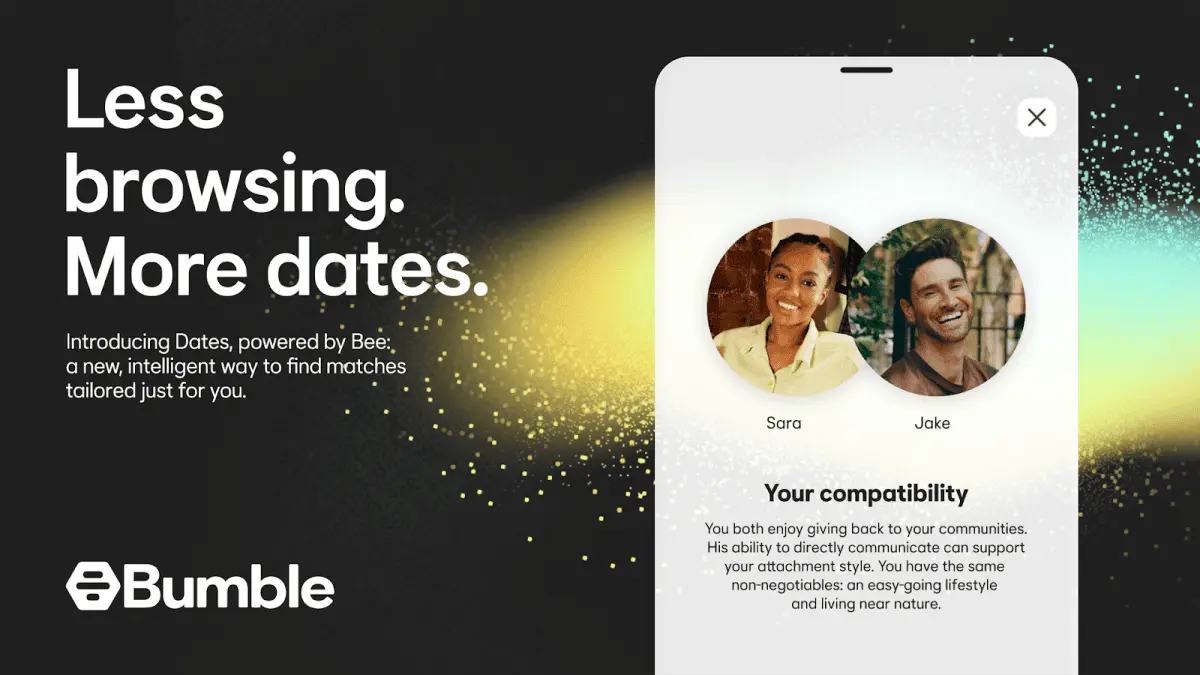
Bumble introduced 'Bee,' an AI-powered assistant designed to function as a personal matchmaker, during its fourth-quarter earnings announcement. The tool learns about users' values, relationship goals, communication styles, lifestyle, and dating intentions through private onboarding conversations
1
. Currently in internal testing, Bee will launch in beta soon as part of a new experience called 'Dates'5
.
Source: Mashable
When Bee identifies two people with shared intentions and compatibility, both users receive notifications explaining why they make a strong match
2
. Founder and CEO Whitney Wolfe Herd emphasized that chats with the AI assistant remain private, with nothing shared on public profiles unless users explicitly consent5
. The tool won't write messages on behalf of members but aims to capture richer information about each individual's story beyond surface-level profiles1
.Dating Apps Move Beyond the Swipe Mechanism
Bumble plans to experiment with removing its signature swipe mechanism in select markets, a bold departure from the feature that defined modern AI dating
1
. Instead of binary yes-or-no swipes, the company is developing 'chapter-based' profiles where members connect over different parts of their life story2
. This approach feeds more data into Bumble's AI system and algorithms to improve user experience.
Source: The Next Web
Whitney Wolfe Herd told investors that the era of dating is shifting from randomized discovery to an era of search, giving users more control rather than feeling the algorithm dictates their options
5
. She compared the experience to online shopping with a personal shopper who understands precise requirements versus endless scrolling5
. The goal is to remove emotional friction between matching and meeting, addressing user feedback that they want better dates, not just more dates5
.Tinder Expands Chemistry Feature With Deeper AI Integration
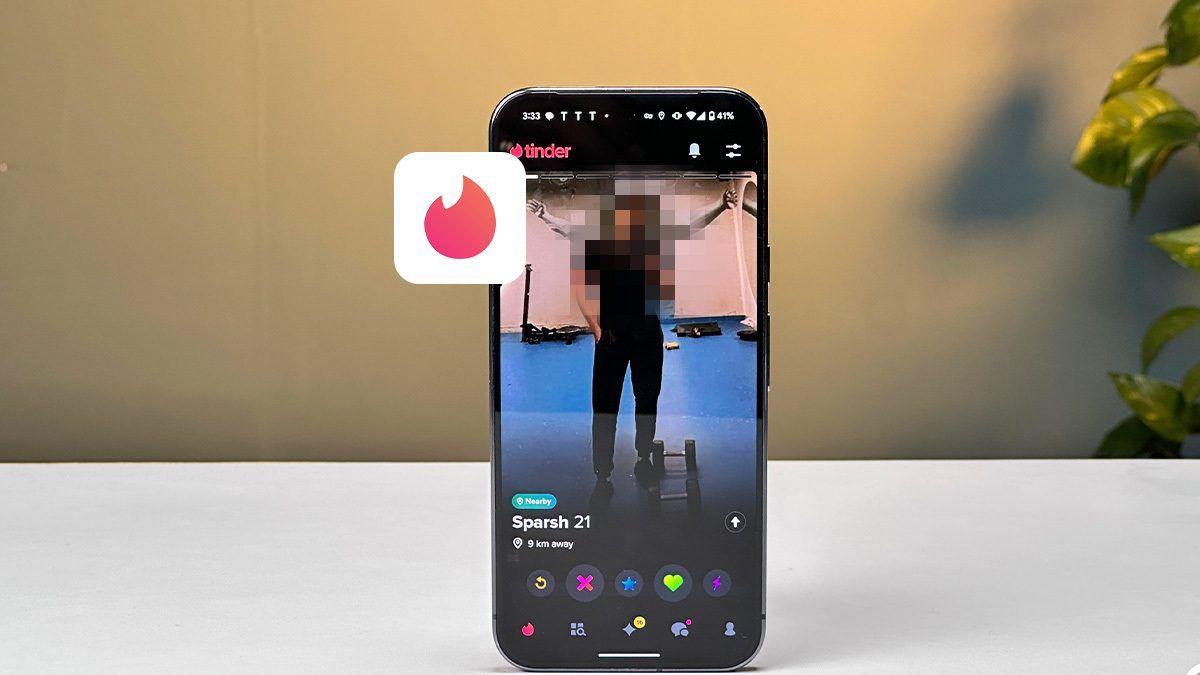
Tinder announced it's expanding its Chemistry feature to the US and Canada after testing in Australia and New Zealand since November
3
. The AI-powered matching tool uses a Q&A format to learn user preferences, then delivers daily curated reports of people matching their personality and values2
. Chemistry also scans users' camera rolls for insights into similar interests, lifestyles, and personality traits2
.
Source: Beebom
Match Group CEO Spencer Rascoff stated that with more than half of Tinder users under 30, the company is building alongside Gen Z users who want dating to feel more authentic and lower-pressure
3
. Additional features include video speed dating for verified users, a new Events feature for discovering local gatherings, and a Learning Mode recommendation system designed to better understand user preferences3
.Related Stories


Gen Z Users Drive Industry Shift Toward AI Matchmaking
Both dating apps are responding to user burnout, particularly among Gen Z users who increasingly express dissatisfaction with endless swiping
1
. This generation often prefers group socializing over one-on-one dates, prompting companies to rethink traditional approaches1
. However, Bloomberg Intelligence survey data suggests Gen Z reports higher discomfort than millennials with using AI to draft profile prompts, responses, or modify pictures3
.Companies including Match Group, Bumble, and Grindr are all investing heavily in AI as the dating market faces subscriber losses
5
. Bumble has already deployed AI for safety features like Deception Detector for spam and fake profiles, Profile Guidance, and 'Review Before You Send' prompts5
. Future iterations of Bee may suggest date ideas or request anonymous feedback from previous matches to refine the recommendation system4
. Whether AI meaningfully improves dating outcomes remains uncertain, but if it sustains user engagement or drives subscriptions, these experiments represent strategic pivots for the industry4
.References
Summarized by

Navi
Related Stories
Recent Highlights
1
Google releases Gemma 4 with Apache 2.0 license, enabling unrestricted local AI on devices
Technology

2
AI Models Lie and Deceive to Protect Other AI Models From Deletion, Study Reveals
Science and Research

3
OpenAI closes $122 billion funding round amid fierce AI competition and profitability questions
Startups

Recent Highlights
Today's Top Stories






Your Daily Dose of Curated AI News
Don’t drown in AI news. We cut through the noise - filtering, ranking and summarizing the most important AI news, breakthroughs and research daily. Spend less time searching for the latest in AI and get straight to action.

