ByteDance Gains Access to 36,000 Nvidia Blackwell GPUs Through Malaysia Cloud Partner


7 Sources
7 Sources
[1]
China's ByteDance to access 36,000 Blackwell GPU cluster through Malaysia cloud operator -- Nvidia confirms no objections, deal is in line with US export controls
The U.S. Department of Commerce's BIS is also on board. At least for now. Although ByteDance cannot get its hands on Nvidia's latest Blackwell GPUs to develop its AI products, the company is looking forward to using a cluster containing 36,000 of its B200 GPUs that is physically located in Malaysia, reports the Wall Street Journal. The cluster will be used for research and development purposes as the company wants its share of the global AI pie. Nvidia says it is perfectly legal for the company to use such a cluster as long as it was built in compliance with the U.S. export controls. The cluster, worth around $2.5 billion and consisting of 500 NVL72 GB200 rack-scale systems, will be formally owned and operated by Aolani Cloud in Malaysia. The hardware will be supplied through Aivres, a company that builds servers based on Nvidia GPUs, according to the WSJ, which cites people familiar with the arrangements. An Aolani spokesperson told WSJ that the company currently operates with roughly $100 million worth of hardware, so the scale of the proposed expansion is vast, but it is not completely clear who is funding it. ByteDance is also reportedly considering additional deployments, such as a cluster containing over 7,000 B200 GPUs at a data center in Indonesia. Aolani has been leasing AI servers equipped with Nvidia H100 GPUs in Malaysia to ByteDance since February, 2025, so it is highly likely that the company's primary focus is to lease AI hardware to the Chinese company. That said, the Hopper-based cluster is likely a test vehicle to ensure that ByteDance can technically use it, and the U.S. regulators do not oppose such usage by granting all the required export licenses. For the planned Blackwell deployment, initial payments have reportedly already been made. Aolani was established in late 2023 and operates under a Cayman Islands holding structure, according to company registry documents cited by the WSJ. The company is designated as a Tier-1 cloud partner of Nvidia, which means that it has certification from the developer of AI GPUs and priority access to its newest accelerators, but this does not mean that Nvidia has all the required export licenses from the U.S. government to ship to Aolani. For advanced AI GPUs (H100/B200/B300, etc.), Nvidia must ensure that every shipment complies with U.S. Department of Commerce Bureau of Industry and Security rules. Exports of Nvidia AI accelerators to Malaysia typically do not require a BIS export license, but compliance checks are still mandatory, and licenses may be required in certain cases. To that end, Nvidia's compliance teams review cloud partners before shipping hardware to them. "All Nvidia cloud partners are evaluated and cleared by Nvidia's field operations, finance, and compliance teams before they can receive our products, directly or through an OEM," an Nvidia spokesperson told Tom's Hardware. While ByteDance is a China-based company, it is not in the Bureau's Entity List or Military End Use (MEU) list, so its potential use of Nvidia hardware does not automatically trigger a red flag for Nvidia, Aolani, or the U.S. government. Furthermore, the 2023 U.S. export controls primarily regulate where the hardware is shipped, not where its compute oomph is used, which means that the rules were intentionally written to allow global cloud infrastructure based on American hardware. While many U.S. lawmakers are uneasy about usage of American AI accelerators by Chinese companies in the cloud, this is completely legal under the current export rules framework. "By design, the export rules allow clouds to be built and operated outside controlled countries," the Nvidia spokesperson stressed. "Winning the business of those clouds will bring tens of billions of dollars and high paying jobs home. Export controls gave the world's second largest commercial market to foreign competitors, and America cannot afford to make the same mistake across all of Asia." Follow Tom's Hardware on Google News, or add us as a preferred source, to get our latest news, analysis, & reviews in your feeds.
[2]
China's ByteDance gets access to top Nvidia AI chips, WSJ reports
March 12 (Reuters) - TikTok's Chinese parent ByteDance is assembling computing power with high-end Nvidia (NVDA.O), opens new tab chips outside China, the Wall Street Journal reported on Thursday. ByteDance is working with Southeast Asian firm Aolani Cloud to deploy about 500 Nvidia Blackwell computing systems in Malaysia, totalling roughly 36,000 B200 chips, the report said, citing people familiar with the matter. Reporting by Shivani Tanna in Bengaluru; Editing by Sumana Nandy Our Standards: The Thomson Reuters Trust Principles., opens new tab
[3]
ByteDance will reportedly buy NVIDIA's latest AI chips to use outside of China
TikTok's Chinese parent company ByteDance has figured out a way to access NVIDIA's latest AI chips despite export restrictions, according to a report by . The company is working with a firm called Aolani Cloud and building out Blackwell computing systems in Malaysia. This should give ByteDance access to around 36,000 B200 chips. That's NVIDIA's most powerful processor. The hardware buildout will reportedly cost more than $2.5 billion. The company says it plans on using this new computing power for AI research and development outside of China. The country has been unable to access the B200 chip, as it was designed in California and, as such, subject to US export controls. This has led to do what ByteDance is doing with Aolani Cloud. The Singapore-based firm will buy up the components from NVIDIA and will operate exclusively in Malaysia, giving ByteDance access in the process. "By design, the export rules allow clouds to be built and operated outside controlled countries," an NVIDIA spokesperson said. They also said that all of the company's cloud partners go through review before being approved to receive its products. A representative from Aolani Cloud that the company adheres to all applicable export control regulations and that ByteDance will be just one of many customers. It plans on providing cloud-computing services to multiple companies across Asia and the globe. However, it's worth noting that Aolani currently operates with just $100 million worth of hardware and ByteDance is planning to inject a whopping $2.5 billion. The US did recently , but they've been slapped with a 25 percent tariff. Additionally, the US government mandated that the export license would only be approved if NVIDIA accepted a Know-Your-Customer requirement, which is an attempt to ensure that China's military can't access the chips. NVIDIA .
[4]
The US Built a Wall Around NVIDIA's Best Chips, But China's ByteDance Found a 'Secret Door', and It's in Malaysia
One of China's largest entities involved in the AI race, ByteDance, has reportedly secured access to NVIDIA's Blackwell chips via Malaysia, working around US export controls. The debate around US export controls and their impact on Chinese entities has surfaced several times in the past, especially under the Biden administration, when Beijing had easy access to NVIDIA's top-tier chips, notably the Hopper H100 and A100. Following the imposition of export controls, Chinese AI giants have found trouble in getting their hands on NVIDIA's hardware through 'direct' means, which is why they have employed several other techniques, which primarily include chip smuggling and renting. And now, according to a WSJ report, ByteDance appears to be working with a cloud firm in Malaysia to obtain B200 Blackwell chips. It is reported that this is one of the ways Chinese AI giants have worked around US export controls, and that firms like Tencent, ByteDance, and others have invested in offshore cloud partners, mainly in Singapore, to obtain restricted hardware. ByteDance has been a key customer of Aolani, the Malaysian cloud firm we talked about earlier, and, interestingly, Aolani is also ranked as a "Tier-1" customer of NVIDIA, which means it has priority access to supply lines. There are a few ways for Chinese hyperscalers to advance their AI applications without access to NVIDIA's hardware, and even for chips like the H200, regulatory barriers to accessing them create delays that aren't worthwhile for the likes of ByteDance. That leaves such companies to adopt measures that somehow bypass the US export controls, and in the case of China, renting hardware is the safest option. This trend is more common among partners in SEA nations such as Singapore, Thailand, and the Philippines, since they aren't subject to BIS export restriction policies. Renting compute is so popular that companies have started to lean toward using these services instead of purchasing NVIDIA's hardware directly, which has opened new opportunities for "middlemen" who arrange the necessary DC infrastructure. While such efforts by Chinese AI giants aren't deemed 'unlawful' under US export policies, they raise the question of whether China is actually deprived of computing capabilities.
[5]

ByteDance Outsmarts US Sanctions With Offshore Nvidia AI Buildout - NVIDIA (NASDAQ:NVDA)
ByteDance Plans Major Nvidia Chip Deployment In Malaysia ByteDance is reportedly preparing a large AI hardware buildout in Malaysia through a cloud partner, The Wall Street Journal reported on Friday. The plan involves about 500 Nvidia Blackwell computing systems, equal to roughly 36,000 B200 chips, supplied through a Southeast Asian firm called Aolani Cloud. People familiar with the matter told the news outlet that, if the plans move forward, the hardware involved could cost more than $2.5 billion. Aolani is sourcing servers from Aivres, a company that builds systems using Nvidia chips. An Aolani spokesperson told WSJ the company currently operates with about $100 million worth of hardware. Offshore Data Centers Help Bypass Export Limits ByteDance intends to use the overseas computing capacity for AI development and international customers, according to the report. The move comes as U.S. export restrictions limit the sale of some advanced AI chips directly to China, pushing Chinese companies to seek computing power abroad through third-party data centers. An Nvidia spokesperson told the media outlet that export rules allow cloud infrastructure to be built and operated outside restricted countries such as China. Aolani's status as an Nvidia "tier-1 cloud partner" may also help the company obtain newer chips more quickly. The firm has reportedly leased Malaysia-based servers using Nvidia H100 chips to ByteDance since February 2025. WSJ also reported that ByteDance has explored using AI servers with more than 7,000 B200 chips at a data center in Indonesia, while the company continues to expand AI hiring in the U.S. Strong China Demand Meets Supply And Policy Challenges Nvidia continues to pursue its China strategy as demand for advanced AI chips remains strong despite export controls and supply constraints. CEO Jensen Huang has expressed confidence in demand for the company's H200 AI chips in China, even though some shipments remain held up by regulatory scrutiny. Chinese tech companies have reportedly placed orders for more than 2 million H200 chips for 2026, far exceeding Nvidia's current supply capacity. Some firms have turned to black-market hardware or domestic alternatives such as Huawei's Ascend chips, often paying higher prices. To meet rising demand, Nvidia has asked Taiwan Semiconductor Manufacturing Co. Ltd. (NYSE:TSM) to increase production capacity. However, a recent report said Nvidia has shifted some manufacturing capacity at Taiwan Semiconductor away from H200 chips and toward next-generation Vera Rubin hardware, which could limit near-term H200 sales in China. NVDA Price Action: Nvidia shares were up 0.45% at $183.97 during premarket trading on Friday, according to Benzinga Pro data. Image via Shutterstock Market News and Data brought to you by Benzinga APIs To add Benzinga News as your preferred source on Google, click here.
[6]

ByteDance's NVIDIA Chip Coup Sparks Global AI Power Play Buzz
The move highlights how global tech firms are navigating tightening export controls while accelerating investments in generative AI. According to a Wall Street Journal report, ByteDance is working with a Southeast Asia-based cloud provider to deploy hundreds of NVIDIA's latest Blackwell computing systems in Malaysia. The infrastructure is also expected to feature tens of thousands of high-performance artificial intelligence chips for training and executing large-scale artificial intelligence models. The report also cites estimates by the industry that the investment is expected to be above $2.5 billion, indicating to strengthen computing infrastructure as global competition for artificial intelligence is increasing.
[7]

ByteDance deploys Nvidia AI infrastructure outside of China
ByteDance is establishing significant computing capacity based on Nvidia's most advanced artificial intelligence chips outside of China, according to the Wall Street Journal. The group is relying on Southeast Asian cloud company Aolani Cloud to deploy approximately 500 Nvidia Blackwell computing systems in Malaysia. This installation would represent nearly 36,000 B200 chips and could cost over $2.5bn. Aolani currently operates about $100m worth of computing equipment. This infrastructure is intended to support ByteDance's international AI research and development activities and meet growing customer demand for artificial intelligence solutions. Nvidia emphasizes that export rules permit the creation and operation of cloud services in countries not subject to restrictions, which can generate contracts worth tens of billions of dollars. The manufacturer also indicates that all its cloud partners undergo a vetting process before they can receive its products. Aolani asserts that it complies with all applicable export control regulations and plans to provide cloud computing services to various companies in Asia and the rest of the world. Last month, however, Reuters reported that the United States was prepared to authorize ByteDance's purchase of Nvidia H200 chips, but that the manufacturer had not accepted the proposed terms of use.
Share
Share
Copy Link
ByteDance is deploying approximately 36,000 Nvidia B200 chips in Malaysia through cloud partner Aolani Cloud in a deal worth over $2.5 billion. The arrangement allows the Chinese tech giant to access advanced AI chips for research and development while technically complying with US export controls, since the hardware remains physically outside China and is operated by a third-party cloud provider.
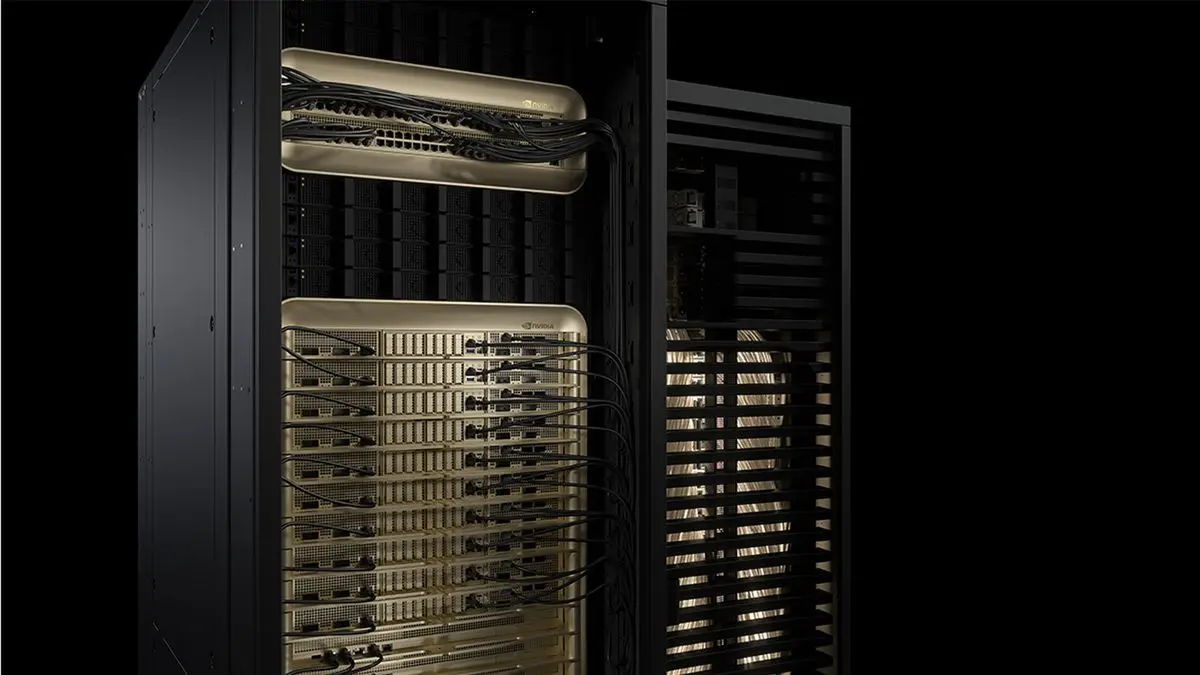
ByteDance Secures Massive AI Hardware Expansion in Malaysia
ByteDance, the Chinese parent company of TikTok, has secured access to approximately 36,000 Nvidia Blackwell B200 GPUs through a cloud partnership in Malaysia, according to a
Wall Street Journal
1
report. The arrangement involves building Blackwell computing systems consisting of roughly 500 NVL72 GB200 rack-scale systems, with hardware valued at more than $2.5 billion1
. The cluster will be formally owned and operated by Aolani Cloud, a Southeast Asian firm based in Malaysia that has achieved Tier-1 Nvidia partner status, granting it priority access to the chipmaker's newest AI accelerators1
4
.The deal represents one of the largest offshore cloud infrastructure projects aimed at circumventing US export restrictions without technically violating them. ByteDance plans to use this compute power for AI research and development purposes as the company seeks to maintain its competitive position in the global AI race
1
3
. According to sources cited by theWall Street Journal
5
, the hardware will be supplied through Aivres, a company specializing in building servers based on Nvidia GPUs.How ByteDance Is Working Around US Export Controls
The arrangement highlights how Chinese tech companies are finding ways to access advanced AI chips despite US export controls designed to limit China's access to cutting-edge semiconductor technology. While ByteDance cannot directly purchase Nvidia's latest Blackwell GPUs for use within China, US export regulations primarily focus on where hardware is physically shipped rather than who ultimately uses the compute power
1
. This creates a pathway for offshore cloud partners to legally provide access to restricted technology.Aolani Cloud has been leasing AI servers equipped with Nvidia Hopper H100 GPUs in Malaysia to ByteDance since February 2025, suggesting the current deployment serves as a test vehicle to ensure technical compatibility and regulatory compliance before the massive Blackwell expansion
1
. An Aolani spokesperson confirmed to the Wall Street Journal that the company currently operates with roughly $100 million worth of hardware, making the proposed $2.5 billion expansion a dramatic scale-up1
5
.Nvidia confirmed that the arrangement complies with current regulations. "By design, the export rules allow clouds to be built and operated outside controlled countries," an Nvidia spokesperson stated
1
3
. The company emphasized that all cloud partners undergo evaluation and clearance by Nvidia's field operations, finance, and compliance teams before receiving products1
. Since ByteDance does not appear on the Bureau of Industry and Security (BIS) Entity List or Military End Use list, its potential use of Nvidia AI chips through a third-party cloud provider does not automatically trigger regulatory concerns1
.Renting Compute Power Becomes Strategic Workaround
The trend of renting compute power through data center partnerships has become increasingly popular among Chinese AI companies facing direct purchase restrictions. ByteDance is also reportedly considering additional deployments, including a cluster containing over 7,000 B200 GPUs at a data center in Indonesia
1
. This strategy of working with offshore cloud partners, primarily in Southeast Asian nations like Singapore, Thailand, and the Philippines, has emerged as the safest option for Chinese hyperscalers to advance their AI applications without running afoul of US regulations4
.Renting compute has become so prevalent that companies are starting to prefer using these services instead of purchasing Nvidia AI chips directly, creating new opportunities for "middlemen" who arrange the necessary cloud infrastructure
4
. While such efforts by Chinese AI giants aren't deemed unlawful under current US export policies, they raise questions about whether export controls are effectively limiting China's access to advanced computing capabilities4
. The arrangement demonstrates that despite regulatory barriers, determined companies can still find compliant pathways to access restricted technology.Related Stories

Implications for US Export Policy and the AI Race
The ByteDance-Aolani Cloud partnership exposes a significant gap in how US export controls are structured and enforced. Nvidia defended the current framework, arguing that winning cloud infrastructure business brings "tens of billions of dollars and high paying jobs home" to the United States
1
. The company warned that overly restrictive export controls risk ceding the world's second-largest commercial market to foreign competitors across Asia1
.Aolani was established in late 2023 and operates under a Cayman Islands holding structure, according to company registry documents
1
. Initial payments for the planned Blackwell deployment have reportedly already been made1
. While many US lawmakers remain uneasy about Chinese companies using American AI accelerators through cloud services, this practice remains completely legal under the current export rules framework1
. The situation illustrates the challenge policymakers face in balancing national security concerns with commercial interests and the practical realities of global cloud infrastructure. As Chinese tech companies like ByteDance, Tencent, and others continue investing in offshore cloud partners to obtain restricted hardware4
, regulators may need to reconsider whether location-based export controls adequately address their strategic objectives in the intensifying global competition for AI dominance.References
Summarized by

Navi
[1]
Related Stories
ByteDance's $7 Billion Nvidia Chip Strategy: Navigating US Export Controls
31 Dec 2024•Business and Economy

ByteDance plans $14 billion Nvidia AI GPU purchase as Trump eases chip export controls to China
31 Dec 2025•Business and Economy
Chinese Regulators Block ByteDance from Using Nvidia Chips in New Data Centers
26 Nov 2025•Policy and Regulation
Recent Highlights
1
Google releases Gemma 4 with Apache 2.0 license, enabling unrestricted local AI on devices
Technology

2
AI Models Lie and Deceive to Protect Other AI Models From Deletion, Study Reveals
Science and Research

3
OpenAI closes $122 billion funding round amid fierce AI competition and profitability questions
Startups

Recent Highlights
Today's Top Stories







Your Daily Dose of Curated AI News
Don’t drown in AI news. We cut through the noise - filtering, ranking and summarizing the most important AI news, breakthroughs and research daily. Spend less time searching for the latest in AI and get straight to action.

