Carbon Robotics unveils Large Plant Model trained on 150M+ plants to transform farming


2 Sources
2 Sources
[1]
Carbon Robotics built an AI model that detects and identifies plants | TechCrunch
What is and isn't a weed that needs to be eliminated in the field is determined by the eyes of the farmer -- and now, increasingly, by a new AI model from Carbon Robotics. Seattle-based Carbon Robotics, which builds the LaserWeeder -- a robot fleet that uses lasers to kill weeds -- announced a new AI model, the Large Plant Model (LPM), on Monday. This model recognizes plant species instantly and allows farmers to target new weeds without needing to retrain the robots. The LPM is trained on more than 150 million photos and data points collected by the company's machines across the more than 100 farms in 15 countries where the robots currently operate. The model now powers Carbon AI, the AI system that serves as the brains inside the company's autonomous weed-killing robots. Paul Mikesell, the founder and CEO of Carbon Robotics, told TechCrunch that prior to LPM, every time a new type of weed would show up on a farm -- or even the same type of weed in different soil or with a slightly different appearance -- the company would have to create new data labels to retrain its machines to recognize the plant. This process took about 24 hours each time, Mikesell said. Now, LPM can learn a new weed instantly, even if it's never seen it before. "The farmer can live in real time and say, 'Hey, this is a new weed. I want you to kill this,' and that was something that had never been done before," Mikesell said. "There's no new labeling or retraining because the Large Plant Model understands, at a much deeper level, what it's looking at and the type of plant." Mikesell said that the company, which was founded in 2018, started developing this model shortly after it began shipping its first machines in 2022. Mikesell has years of experience building these types of neural networks from previous roles at Uber and working on Meta's Oculus virtual reality headsets. This new model will reach the company's existing systems through a software update. From there, farmers can tell the machine what to kill and what to protect by selecting photos that the machine has collected in the robot's user interface. Carbon Robotics has raised more than $185 million in venture capital from backers including Nvidia NVentures, Bond, and Anthos Capital, among others. Now, the company will look to continue to fine-tune the model as the machines continue to feed the LPM new data. "We have over 150 million labeled plants now in our training set," Mikesell said. "We have enough data now that we should be able to look at any picture and decide what kind of plant that is, what species it is, what it's related to, what its structure is like, without having ever even seen that particular plant before, because we have so much data going into the neural net."
[2]
World's first Large Plant Model trained on 150 million plants unveiled
The new model powers its LaserWeeder robots, allowing them to identify and laser-weed virtually any crop or field within minutes. Continuously learning from data gathered by a global fleet of machines, the system adapts in real time. The Seattle-based company says the breakthrough could help farmers cut labor costs, reduce herbicide use, and improve yields. The LPM is designed to continuously improve through real-world data collected by Carbon Robotics' global fleet of LaserWeeder machines. Each deployment feeds new plant imagery back into the system, strengthening its ability to detect and classify plants across diverse environments. This ongoing feedback loop, described by the company as a compounding data effect, enables performance improvements to be shared across the entire fleet rather than remaining isolated to individual machines, according to Quantum News. Rather than functioning as a static model, the LPM serves as the core of Carbon AI, a broader decision-making framework that supports both the LaserWeeder platform and the company's Autonomous Tractor Kit (ATK). Together, these systems are intended to help farmers reduce dependence on manual labor and chemical herbicides while maintaining or improving crop yields.
Share
Share
Copy Link
Seattle-based Carbon Robotics launched its Large Plant Model, an AI model that detects and identifies plants instantly without retraining. Trained on over 150 million photos from 100+ farms across 15 countries, the model powers LaserWeeder robots that use lasers to eliminate weeds, helping farmers reduce labor costs and herbicide use while improving yields.
Carbon Robotics Launches AI Model That Detects and Identifies Plants Instantly
Seattle-based Carbon Robotics has introduced the Large Plant Model (LPM), a breakthrough AI system that recognizes plant species in real time and enables farmers to target new weeds without machine retraining
1
. The model, trained on more than 150 million photos and data points collected from the company's machines operating across over 100 farms in 15 countries, now powers Carbon AI, the intelligence system driving the company's autonomous weed removal fleet1
.
Source: Interesting Engineering
Paul Mikesell, founder and CEO of Carbon Robotics, explained that before LPM, the company faced a significant operational challenge. Every time a new type of weed appeared on a farm—or even when the same weed showed a slightly different appearance due to soil conditions—the team had to create new data labels and retrain its machines, a process that consumed roughly 24 hours each time
1
. Now, LPM can learn and identify new weeds instantly, even species it has never encountered before.LaserWeeder Robots Gain Real-Time Learning Capabilities
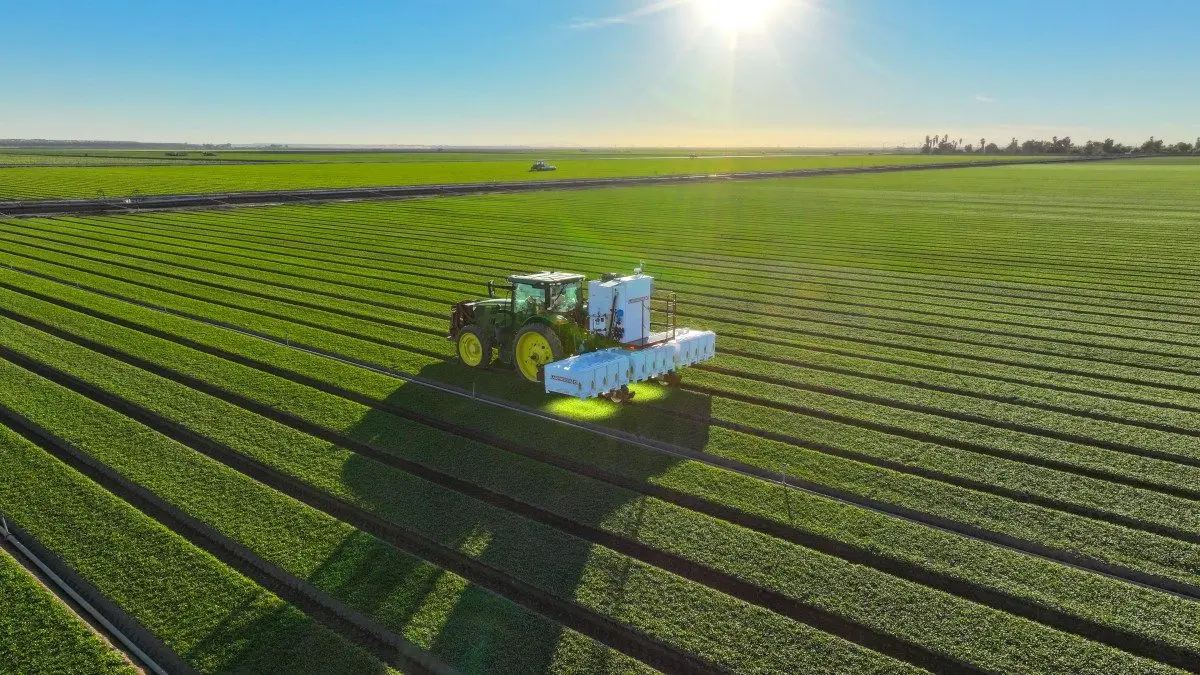
The Large Plant Model serves as the foundation for Carbon Robotics' LaserWeeder platform, a fleet of robots that use lasers to kill weeds in agricultural fields
1
. Farmers can now operate in real time, telling the system which plants to eliminate and which to protect by simply selecting photos collected by the machine through its user interface1
. "The farmer can live in real time and say, 'Hey, this is a new weed. I want you to kill this,' and that was something that had never been done before," Mikesell told TechCrunch1
.
Source: TechCrunch
The LPM is designed to continuously improve through what the company describes as a compounding data effect
2
. Each deployment feeds new plant imagery back into the system, strengthening its ability to detect and classify plants across diverse environments2
. Performance improvements are shared across the entire fleet rather than remaining isolated to individual machines, creating a network effect that benefits all farmers using the technology2
.Implications for Agriculture and Farm Economics
The introduction of LPM addresses critical challenges facing modern agriculture. The technology aims to help farmers reduce labor costs, decrease herbicide use, and improve crop yields simultaneously
2
. By eliminating the need for chemical herbicides in many scenarios, the system offers an alternative that could reduce environmental impact while maintaining agricultural productivity.Carbon Robotics, founded in 2018, began developing this model shortly after shipping its first machines in 2022
1
. Mikesell brings substantial expertise in building neural networks from previous roles at Uber and work on Meta's Oculus virtual reality headsets1
. The company has raised more than $185 million in venture capital from backers including Nvidia NVentures, Bond, and Anthos Capital1
.Related Stories

Expanding Beyond Weeds: Carbon AI and Future Applications
The Large Plant Model functions as more than a static AI system. It serves as the core of Carbon AI, a broader decision-making framework that supports both the LaserWeeder platform and the company's Autonomous Tractor Kit (ATK)
2
. This architecture suggests potential applications beyond weed identification, positioning the technology to address multiple agricultural challenges.Existing Carbon Robotics systems will receive the new model through a software update, making the capability immediately available to current customers
1
. As machines continue to operate across diverse farms and geographies, they will feed additional data back into the LPM, further refining its accuracy and expanding its knowledge base. "We have over 150 million labeled plants now in our training set," Mikesell explained. "We have enough data now that we should be able to look at any picture and decide what kind of plant that is, what species it is, what it's related to, what its structure is like, without having ever even seen that particular plant before"1
.For farmers watching this space, the key question centers on how quickly this technology can scale across different crop types and regional conditions. As robots continue gathering data and the model continues learning, the system's ability to identify and remove weeds from crops should become increasingly precise, potentially reshaping how agriculture approaches one of its most persistent challenges.
References
Summarized by

Navi
[2]
Related Stories
Carbon Robotics Secures $70M for AI-Powered Farming Solutions
21 Oct 2024•Technology

AI-Powered Solar Robots Revolutionize Farming: Aigen's Element Tackles Labor Shortages and Herbicide Resistance
06 Jul 2025•Technology

AI Breakthrough in Crop Breeding: New Self-Learning Model Revolutionizes Agricultural Research
25 Apr 2025•Science and Research

Recent Highlights
1
AI Models Lie and Deceive to Protect Other AI Models From Deletion, Study Reveals
Science and Research

2
AI chatbots validate you too much, making you less kind to others, Stanford study reveals
Science and Research

3
Judge blocks Pentagon from blacklisting Anthropic over AI safety guardrails dispute
Policy and Regulation

Recent Highlights
Today's Top Stories




Your Daily Dose of Curated AI News
Don’t drown in AI news. We cut through the noise - filtering, ranking and summarizing the most important AI news, breakthroughs and research daily. Spend less time searching for the latest in AI and get straight to action.

