China AI leaders warn widening gap with US can't be closed by capital alone after $1B IPO week


8 Sources
8 Sources
[1]
Qwen boss says Chinese AI models have 'less than 20%' chance of leapfrogging Western counterparts -- despite China's $1 billion AI IPO week, capital can't close the gap alone
China's AI sector made a splash this month as a cluster of domestic AI firms raised more than $1 billion through IPOs in Hong Kong. While these listings were undoubtedly meant to signal confidence, they triggered an unusually candid round of warnings from inside China's own AI industry that the gap with the U.S. is widening in ways that fresh capital cannot easily fix. According to reporting by Bloomberg, Justin Lin, head of Alibaba Group's Qwen open-source models, said that Chinese companies have a "less than 20%" chance of "leapfrogging the likes of OpenAI and Anthropic with fundamental breakthroughs" in the near term. His comments were echoed by peers at both Tencent and Zhipu AI, the latter of which is among the first Chinese foundation model companies to go public. Its IPO, along with that of Minimax, comes as Beijing is actively steering tech companies toward domestic listings, both to reduce reliance on U.S. capital markets and to funnel national savings into priority sectors like semiconductors and AI. Getting more than $1 billion in IPOs raised in a single week is impressive for Chinese AI start-ups, a feat that would have been unthinkable even two years ago. The listings also reflect the policy shift being pushed by Chinese regulators, who are prioritizing domestic financing for AI, advanced chips, and data infrastructure. Hong Kong appears to be the preferred "offshore" venue that still offers global capital access. For OpenAI competitor Zhipu AI, training and deploying LLMs is capital-intensive before hardware constraints even come into consideration. IPOs, therefore, offer longer funding runways than traditional venture rounds and simultaneously reduce exposure to a venture market that has cooled down massively since 2021. They also protect geopolitical swings, aligning the private sector with Beijing's national technology priorities. What these IPOs do not provide is leverage over the most expensive part of the AI stack. Capital might help pay for engineers and rent data centers, but it does not create advanced GPUs or high-bandwidth memory (HBM). Following the IPOs and easing of funding pressure, several executives now fear that China's biggest bottleneck is now decisively on compute availability and power. "A massive amount of OpenAI's compute is dedicated to next-generation research, whereas we are stretched thin -- just meeting delivery demands consumes most of our resources," Lin said at the AGI-Next summit in Beijing on Saturday, January 10. That's an interestingly frank admission, as it reframes how you might read into Chinese AI funding. The goal for Chinese firms isn't to outspend U.S. hyperscalers in absolute terms, but to sustain domestic AI development under constrained conditions for as long as possible. IPOs are an endurance tool for that, rather than a shortcut to dominance, which can't be easily bought. One area where China has made undeniable progress is open-source LLMs. Chinese labs have embraced open weights and open architectures at a scale unmatched in the U.S. Models such as Qwen, DeepSeek, and others have closed much of the performance gap on standardized benchmarks, particularly for Chinese-language tasks and domain-specific applications. This has clear advantages, with open models reducing duplication of effort, allowing faster iteration, and making better use of limited compute by spreading training and fine-tuning workloads across a broader ecosystem. They also align with Beijing's preference for technology stacks that are auditable and controllable at a national level. But open models do not eliminate hardware limits, and training systems still require dense clusters of advanced accelerators, fast networking, and large pools of HBM. That's exactly where Chinese firms are hitting a wall. U.S. export controls have cut China off from Nvidia's most capable data center GPUs and the advanced manufacturing tools needed to produce equivalents at scale. Domestic alternatives such as Huawei's Ascend series have improved rapidly, but even optimistic assessments place them behind current-generation U.S. hardware in raw performance and ecosystem support. More importantly, they are produced in far smaller volumes. As a result, Chinese AI developers face a tradeoff that their U.S. counterparts largely do not. They can train more models, or they can train larger models, but doing both simultaneously strains available infrastructure. Several firms have responded by shifting emphasis away from general-purpose foundation models toward narrower, application-specific systems that can be trained and deployed with fewer resources. We have been debating talent pipelines and research output when it comes to the U.S. and China for much of the past decade, but today, the differentiator is the fact that the U.S. controls the bulk of the world's advanced AI compute. U.S. hyperscalers operate GPU clusters measured in the tens of thousands of accelerators, with software stacks tuned over years of production use. Private investment in U.S. AI companies continues to dwarf that in China, even as Chinese firms turn to public markets. Just as important, U.S. companies can deploy capital directly into hardware procurement at a global scale, something Chinese firms cannot match under current geopolitical dynamics. Chinese execs have begun acknowledging this imbalance publicly, warning that U.S. AI infrastructure may be an order of magnitude larger than China's in effective capacity. That gap compounds over time and, unfortunately for China, more compute enables larger models, which attract more users, data, and revenue, which in turn fund even larger deployments. So, while a $1 billion IPO week is impressive on the face of it, it still leaves China well behind the U.S. in all the areas that matter. Yes, it ensures that China's AI firms remain viable and competitive domestically, but it does not, in its own right, alter the global AI race. Public listings also impose discipline and transparency, in theory, and lock firms more tightly into national industrial policy. Over the next few years, that's likely to produce a bifurcated outcome, with China's AI ecosystem advancing quickly in areas where scale isn't quite so important, such as consumer and industrial platforms and applied AI. Meanwhile, the cutting edge of general-purpose AI remains anchored in environments that have access to abundant compute. Capital can sustain progress, sure, but compute ultimately determines whether that progress will have any measurable impact outside of China.
[2]
China AI Leaders Warn of Widening Gap With US After $1B IPO Week
The tech leaders are focusing on areas such as next-generation models, multimodality, and real-world agents, and are urging industry peers to work together to push artificial general intelligence further. Some of China's most prominent figures in generative artificial intelligence warned that the Asian nation is unlikely to eclipse the US in the global AI race anytime soon. Justin Lin, head of Alibaba Group Holding Ltd.'s Qwen series of open-source models, put at less than 20% the chances of any Chinese company leapfrogging the likes of OpenAI and Anthropic with fundamental breakthroughs over the next three to five years. His caution was shared by peers at Tencent Holdings Ltd., and at Zhipu AI, which this week helped lead Chinese large-language model makers in tapping the public market. "A massive amount of OpenAI's compute is dedicated to next-generation research, whereas we are stretched thin -- just meeting delivery demands consumes most of our resources," Lin said during a panel at the AGI-Next summit in Beijing on Saturday. "It's an age-old question: does innovation happen in the hands of the rich, or the poor?" The event, co-organized by Zhipu and Tsinghua University, followed market debuts this week in which Zhipu and Shanghai-based MiniMax Group collectively raised more than $1 billion. MiniMax shares more than doubled on their Friday debut, while Zhipu has climbed 36% since its debut a day earlier. Dealmaking from A to Z. Dealmaking from A to Z. Dealmaking from A to Z. Get the Bloomberg Deals newsletter and find out everything you need to know, from IPOs to startup investing. Get the Bloomberg Deals newsletter and find out everything you need to know, from IPOs to startup investing. Get the Bloomberg Deals newsletter and find out everything you need to know, from IPOs to startup investing. Bloomberg may send me offers and promotions. Plus Signed UpPlus Sign UpPlus Sign Up By submitting my information, I agree to the Privacy Policy and Terms of Service. Still, China's AI heavyweights struck a cautious note on the chances of overtaking the US in developing state-of-the-art models at the gathering in Zhongguancun, a technology hub often described as Beijing's Silicon Valley. Joining Lin in that assessment were Tang Jie, Zhipu's founder and chief AI scientist, and Yao Shunyu, who recently joined Tencent from OpenAI to lead the AI push for China's most valuable company. "We just released some open-source models, and some might feel excited, thinking Chinese models have surpassed the US," Tang said. "But the real answer is that the gap may actually be widening." The breakout success of DeepSeek's R1 model at the start of 2025 spurred a wave of Chinese firms -- from giant Alibaba to startups like Zhipu -- to open-source their latest AI iterations. Such models have rapidly closed the gap with US proprietary offerings from the likes of OpenAI, Anthropic and Google. Key Constraints While acknowledging progress, the speakers cited limited resources and US export controls on chips and lithography equipment as key constraints. Yao urged his industry peers to focus on the bottlenecks of next-generation models -- such as long-term memory and self-learning. The tech leaders also offered a primer on where they're placing bets for the coming year. Yao said he's helping Tencent leverage AI to generate greater value for its massive user base -- for example, by linking the company's Yuanbao assistant with WeChat chat history. Lin highlighted Alibaba's bet on multimodality and real-world agents, while both Tang and Yang Zhilin, who founded Moonshot AI, touted newer releases of their flagship foundation models. "Meaningless internal competition serves no purpose," said Tang. "We should represent China to push AGI further for the world," he added, referring to artificial general intelligence.
[3]
China is closing in on US technology lead despite constraints, AI researchers say
BEIJING, Jan 10 (Reuters) - China can narrow its technological gap with the U.S. driven by growing risk-taking and innovation, though the lack of advanced chipmaking tools is hobbling the sector, the country's leading artificial intelligence researchers said on Saturday. China's so-called 'AI tiger' startups MiniMax and Zhipu AI had strong debuts on the Hong Kong Stock Exchange this week, reflecting growing confidence in the sector as Beijing fast-tracks AI and chip listings to bolster domestic alternatives to advanced U.S. technology. Yao Shunyu, a former senior researcher at ChatGPT maker OpenAI who was named technology giant Tencent's (0700.HK), opens new tab chief AI scientist in December, said there was a high likelihood of a Chinese firm becoming the world's leading AI company in the next three to five years but said the lack of advanced chipmaking machines was the main technical hurdle. "Currently, we have a significant advantage in electricity and infrastructure. The main bottlenecks are production capacity, including lithography machines, and the software ecosystem," Yao said at an AI conference in Beijing. China has completed a working prototype of an extreme-ultraviolet lithography machine potentially capable of producing cutting-edge semiconductor chips that rival the West's, Reuters reported last month. However, the machine has not yet produced working chips and may not do so until 2030, people with knowledge of the matter told Reuters. MIND THE INVESTMENT GAP Yao and other Chinese industry leaders at the Beijing conference on Saturday also acknowledged that the U.S. maintains an advantage in computing power due to its hefty investments in infrastructure. "The U.S. computer infrastructure is likely one to two orders of magnitude larger than ours. But I see that whether it's OpenAI or other platforms, they're investing heavily in next-generation research," said Lin Junyang, technical lead for Alibaba's (9988.HK), opens new tab flagship Qwen large language model. "We, on the other hand, are relatively strapped for cash; delivery alone likely consumes the majority of our computer infrastructure," Lin said during a panel discussion at the AGI-Next Frontier Summit held by the Beijing Key Laboratory of Foundational Models at Tsinghua University. Lin said China's limited resources have spurred its researchers to be innovative, particularly through algorithm-hardware co-design, which enables AI firms to run large models on smaller, inexpensive hardware. Tang Jie, founder of Zhipu AI which raised HK$4.35 billion in its IPO, also highlighted the willingness of younger Chinese AI entrepreneurs to embrace high-risk ventures - a trait traditionally associated with Silicon Valley - as a positive development. "I think if we can improve this environment, allowing more time for these risk-taking, intelligent individuals to engage in innovative endeavours ... this is something our government and the country can help improve," said Tang. Reporting by Laurie Chen; Editing by Emelia Sithole-Matarise Our Standards: The Thomson Reuters Trust Principles., opens new tab * Suggested Topics: * Artificial Intelligence Laurie Chen Thomson Reuters Laurie Chen is a China Correspondent at Reuters' Beijing bureau, covering politics and general news. Before joining Reuters, she reported on China for six years at Agence France-Presse and the South China Morning Post in Hong Kong. She speaks fluent Mandarin.
[4]
Google DeepMind CEO claims China trails Western AI by only months
Demis Hassabis, CEO of Google DeepMind, stated on CNBC's podcast "The Tech Download" that Chinese AI models trail U.S. and Western capabilities by merely months, countering perceptions of a larger gap. Hassabis made this observation during the podcast, which launched on Friday. He specified that Chinese AI models stand closer to U.S. and Western levels than anticipated one or two years prior. "Maybe they're only a matter of months behind at this point," Hassabis told The Tech Download. This view positions China nearer to parity in AI development than previously estimated by some observers. Approximately one year ago, the Chinese AI lab DeepSeek released a model that disrupted markets. This model delivered strong performance using less-advanced chips and at costs lower than those of American counterparts. The release highlighted China's capacity to produce competitive AI systems under resource constraints. DeepSeek has since introduced additional models, diminishing the initial surprise but maintaining attention on its advancements. Following DeepSeek's entry, established Chinese tech giants and emerging firms accelerated their efforts. Alibaba, a major player in cloud computing and e-commerce, unveiled highly capable AI models. Startups including Moonshot AI and Zhipu also launched models demonstrating substantial competence. These developments collectively illustrate a rapid expansion in China's AI ecosystem, with multiple entities contributing sophisticated systems. Hassabis acknowledged China's proficiency in closing gaps but questioned its record on pioneering advances. "The question is, can they innovate something new beyond the frontier? So I think they've shown they can catch up ... and be very close to the frontier ... But can they actually innovate something new, like a new transformer ... that gets beyond the frontier? I don't think that's been shown yet," Hassabis said. This statement underscores a distinction between replication and origination in AI progress. The transformer architecture, referenced by Hassabis, originated from a 2017 scientific breakthrough by Google researchers. This innovation forms the foundational structure for large language models developed across AI laboratories in subsequent years. Products such as OpenAI's ChatGPT and Google's Gemini rely on transformer-based systems to process and generate language at scale. Other prominent technology executives have echoed recognition of China's advancements. Nvidia CEO Jensen Huang commented last year that the U.S. holds no substantial lead in the AI competition. "China is well ahead of us on energy. We are way ahead on chips. They're right there on infrastructure. They're right there on AI models," Huang said. These remarks detail specific domains where China matches or exceeds U.S. strengths. Chinese technology firms encounter significant hurdles, particularly in hardware access. A U.S. export ban restricts shipments of Nvidia's leading-edge semiconductors, essential for training advanced AI models. The White House has signaled potential approval for sales of Nvidia's H200 chip to China, representing an upgrade from previously accessible versions but not Nvidia's most advanced product. Domestic alternatives from companies like Huawei aim to address this shortfall, though their performance remains inferior to Nvidia's semiconductors. Analysts foresee potential long-term consequences from these hardware limitations. Richard Clode, portfolio manager at Janus Henderson, addressed this on CNBC's "The China Connection" last week. "I do suspect, though that we will start seeing a divergence as that superior U.S. AI infrastructure starts iterating those models and starts making those models more capable over time in years to come. So I would expect from here we're probably at peak relative Chinese AI capability versus [U.S.]," Clode told the program. This perspective highlights infrastructure's role in sustained AI iteration. Even within China, industry leaders concede challenges. Lin Junyang, technical lead of Alibaba's Qwen team, spoke at an AI conference in Beijing last week. He estimated less than a 20% chance that a Chinese firm would overtake U.S. tech giants in AI over the next three to five years, according to the South China Morning Post. Lin attributed this to U.S. computing infrastructure being one to two orders of magnitude larger than China's. Hassabis attributes China's absence of frontier breakthroughs primarily to mindset rather than technological barriers. He described DeepMind as a "modern day Bell Labs," fostering "exploratory innovation" instead of solely "scaling out what's known today." Bell Labs, established in the early 1900s, produced numerous Nobel Prize-winning discoveries. "And of course, that's already very difficult, because you need world‑class engineering already to be able to do that. And China definitely has that," Hassabis said. "The scientific innovation part that's a lot harder. To invent something is about 100 times harder than it is to copy it. ... That's the next frontier really, and I haven't seen evidence of that yet, but it's very difficult," he added. These comments differentiate engineering execution from inventive processes. Hassabis ranks among the foremost figures in AI. He founded DeepMind over ten years ago; Google acquired the company in 2014. DeepMind has propelled Alphabet-owned Google's AI initiatives, including the Gemini assistant. In November, Google released Gemini 3, its most recent model. Users and the market have received Gemini 3 positively, as Google addressed concerns of lagging behind competitors like OpenAI.
[5]

China's AI reality check: Why tech leaders say beating US AI giants is unlikely anytime soon
China vs US AI race: China's top AI minds are downplaying hopes of surpassing US rivals soon. Executives from Alibaba, Tencent, and Zhipu AI suggest breakthroughs are unlikely in the next three to five years. Despite strong investor interest and recent IPOs, a significant compute gap remains. Industry leaders are now focusing on collaboration and next-generation AI challenges. China vs US AI race: China's leading figures in generative artificial intelligence are tempering expectations about how quickly the country can catch up to or surpass the United States in the global AI race, even as Chinese AI companies gain momentum in markets and model development, as per a report. At the AGI-Next summit in Beijing, Justin Lin, head of Alibaba Group Holding's Qwen open-source model team, shared that the likelihood of a Chinese company leapfrogging US leaders such as OpenAI and Anthropic with major breakthroughs in the next three to five years is below 20%, as per a Bloomberg report. His view was echoed by executives from Tencent Holdings and Zhipu AI, underscoring a shared sense of realism across China's AI industry. Lin said that, "A massive amount of OpenAI's compute is dedicated to next-generation research, whereas we are stretched thin -- just meeting delivery demands consumes most of our resources," adding, "It's an age-old question: does innovation happen in the hands of the rich, or the poor?" as quoted by Bloomberg. Also read: Bitcoin stalls near $90,000: Why BTC USD can't break $$95,000 yet and what could trigger the next big crypto move The caution comes at a time when Chinese AI companies are enjoying strong investor interest. This week, Zhipu and Shanghai-based MiniMax Group raised more than $1 billion through public listings. MiniMax's shares more than doubled on their first day of trading, while Zhipu's stock has climbed 36% since its debut. Still, speakers at the Zhongguancun event, held in a technology hub frequently compared to Silicon Valley, warned that market success does not necessarily translate into leadership in cutting-edge AI. Zhipu founder and chief AI scientist Tang Jie said that, "We just released some open-source models, and some might feel excited, thinking Chinese models have surpassed the US," adding, "But the real answer is that the gap may actually be widening," as quoted by Bloomberg. Also read: What's different about Social Security's 2026 payment schedule? Key changes explained However, the industry leaders acknowledged meaningful progress. The success of DeepSeek's R1 model in early 2025 triggered a wave of open-source releases from companies ranging from Alibaba to emerging startups, helping Chinese models narrow the gap with offerings from OpenAI, Anthropic and Google. Looking ahead, the focus is shifting toward solving next-generation challenges. Yao Shunyu, who recently joined Tencent from OpenAI, said Tencent is concentrating on applying AI to better serve its massive user base, including integrating its Yuanbao assistant with WeChat chat history, as per the Bloomberg report. Lin pointed to Alibaba's emphasis on multimodal systems and real-world AI agents, while Tang and Moonshot AI founder Yang Zhilin highlighted updates to their core foundation models. Despite competitive pressures, Tang urged the industry to avoid internal rivalries. He said China's AI companies should work together to advance artificial general intelligence, framing the effort as a contribution to global progress rather than a race defined by national rivalry. What did Chinese AI leaders say about catching up with the US? They said it is unlikely China will overtake US AI leaders in the next three to five years. Who shared this view at the Beijing summit? Executives from Alibaba, Tencent and Zhipu AI expressed similar concerns.
[6]
China is closing in on US technology lead despite constraints, AI researchers say - The Economic Times
China can narrow its technological gap with the US driven by growing risk-taking and innovation, though the lack of advanced chipmaking tools is hobbling the sector, the country's leading artificial intelligence researchers said on Saturday. China's so-called 'AI tiger' startups MiniMax and Zhipu AI had strong debuts on the Hong Kong Stock Exchange this week, reflecting growing confidence in the sector as Beijing fast-tracks AI and chip listings to bolster domestic alternatives to advanced US technology. Yao Shunyu, a former senior researcher at ChatGPT maker OpenAI who was named technology giant Tencent's chief AI scientist in December, said there was a high likelihood of a Chinese firm becoming the world's leading AI company in the next three to five years but said the lack of advanced chipmaking machines was the main technical hurdle. "Currently, we have a significant advantage in electricity and infrastructure. The main bottlenecks are production capacity, including lithography machines, and the software ecosystem," Yao said at an AI conference in Beijing. China has completed a working prototype of an extreme-ultraviolet lithography machine potentially capable of producing cutting-edge semiconductor chips that rival the West's, Reuters reported last month. However, the machine has not yet produced working chips and may not do so until 2030, people with knowledge of the matter told Reuters. Mind the investment gap Yao and other Chinese industry leaders at the Beijing conference on Saturday also acknowledged that the US maintains an advantage in computing power due to its hefty investments in infrastructure. "The US computer infrastructure is likely one to two orders of magnitude larger than ours. But I see that whether it's OpenAI or other platforms, they're investing heavily in next-generation research," said Lin Junyang, technical lead for Alibaba's flagship Qwen large language model. "We, on the other hand, are relatively strapped for cash; delivery alone likely consumes the majority of our computer infrastructure," Lin said during a panel discussion at the AGI-Next Frontier Summit held by the Beijing Key Laboratory of Foundational Models at Tsinghua University. Lin said China's limited resources have spurred its researchers to be innovative, particularly through algorithm-hardware co-design, which enables AI firms to run large models on smaller, inexpensive hardware. Tang Jie, founder of Zhipu AI which raised HK$4.35 billion in its IPO, also highlighted the willingness of younger Chinese AI entrepreneurs to embrace high-risk ventures - a trait traditionally associated with Silicon Valley - as a positive development. "I think if we can improve this environment, allowing more time for these risk-taking, intelligent individuals to engage in innovative endeavours ... this is something our government and the country can help improve," said Tang.
[7]

China AI models only months behind US efforts, DeepMind CEO tells CNBC By Investing.com
Investing.com-- China's artificial intelligence models may be only months behind U.S. and Western efforts, Demis Hassabis, CEO of Google (NASDAQ:GOOGL) DeepMind, said in a CNBC podcast. Hassabis said Chinese AI models were just "a matter of months" behind the West, and were closer to U.S. capabilities than seen one or two years ago. Get more breaking AI updates and insights with InvestingPro Hassabis leads Google's AI efforts, specifically its Gemini assistant and AI models. The Deepmind CEO noted that Chinese AI developers were yet to create breakthroughs in the field, and questioned whether developers could innovate beyond frontier models. Chinese AI developers, including DeepSeek and its "AI tiger" peers were seen releasing several advanced AI models in the past year that were close to their U.S. peers in major AI benchmarks. China's tech giants, including Alibaba (NYSE:BABA), Baidu Inc (NASDAQ:BIDU), and Tencent Holdings Ltd (HK:0700), also ratcheted up their AI efforts in the past year, as part of a push by Beijing for complete self-reliance in the sector. A big part of this push is to develop home-grown AI chips. While Beijing has made some progress on that front, Chinese chips were still seen lagging behind advanced offerings from Nvidia.
[8]

China is closing in on US technology lead despite constraints, AI researchers say
BEIJING, Jan 10 (Reuters) - China can narrow its technological gap with the U.S. driven by growing risk-taking and innovation, though the lack of advanced chipmaking tools is hobbling the sector, the country's leading artificial intelligence researchers said on Saturday. China's so-called 'AI tiger' startups MiniMax and Zhipu AI had strong debuts on the Hong Kong Stock Exchange this week, reflecting growing confidence in the sector as Beijing fast-tracks AI and chip listings to bolster domestic alternatives to advanced U.S. technology. Yao Shunyu, a former senior researcher at ChatGPT maker OpenAI who was named technology giant Tencent's chief AI scientist in December, said there was a high likelihood of a Chinese firm becoming the world's leading AI company in the next three to five years but said the lack of advanced chipmaking machines was the main technical hurdle. "Currently, we have a significant advantage in electricity and infrastructure. The main bottlenecks are production capacity, including lithography machines, and the software ecosystem," Yao said at an AI conference in Beijing. China has completed a working prototype of an extreme-ultraviolet lithography machine potentially capable of producing cutting-edge semiconductor chips that rival the West's, Reuters reported last month. However, the machine has not yet produced working chips and may not do so until 2030, people with knowledge of the matter told Reuters. MIND THE INVESTMENT GAP Yao and other Chinese industry leaders at the Beijing conference on Saturday also acknowledged that the U.S. maintains an advantage in computing power due to its hefty investments in infrastructure. "The U.S. computer infrastructure is likely one to two orders of magnitude larger than ours. But I see that whether it's OpenAI or other platforms, they're investing heavily in next-generation research," said Lin Junyang, technical lead for Alibaba's flagship Qwen large language model. "We, on the other hand, are relatively strapped for cash; delivery alone likely consumes the majority of our computer infrastructure," Lin said during a panel discussion at the AGI-Next Frontier Summit held by the Beijing Key Laboratory of Foundational Models at Tsinghua University. Lin said China's limited resources have spurred its researchers to be innovative, particularly through algorithm-hardware co-design, which enables AI firms to run large models on smaller, inexpensive hardware. Tang Jie, founder of Zhipu AI which raised HK$4.35 billion in its IPO, also highlighted the willingness of younger Chinese AI entrepreneurs to embrace high-risk ventures - a trait traditionally associated with Silicon Valley - as a positive development. "I think if we can improve this environment, allowing more time for these risk-taking, intelligent individuals to engage in innovative endeavours ... this is something our government and the country can help improve," said Tang. (Reporting by Laurie Chen; Editing by Emelia Sithole-Matarise)
Share
Share
Copy Link
Despite raising over $1 billion through IPOs in Hong Kong, China's top AI executives admit the country faces a widening gap with US counterparts. Alibaba's Qwen chief puts the odds of leapfrogging OpenAI and Anthropic at less than 20% over the next three to five years, citing compute shortages and US export controls as critical bottlenecks that fresh capital cannot solve.
China AI Firms Raise $1 Billion But Leaders Sound Alarm on Widening Gap
China's AI sector made headlines this month as domestic firms including Zhipu AI and MiniMax collectively raised more than $1 billion through IPOs in Hong Kong
1
2
. MiniMax shares more than doubled on their Friday debut, while Zhipu climbed 36% since its Thursday launch2
. Yet behind the market euphoria, a remarkably candid assessment emerged from the country's own AI leaders: the US-China AI race is tilting further in America's favor, and capital alone cannot reverse the trajectory.
Source: Bloomberg
Justin Lin, technical lead for Alibaba's Qwen open-source models, told attendees at the AGI-Next summit in Beijing that Chinese companies have "less than 20%" chance of leapfrogging the likes of OpenAI and Anthropic with fundamental breakthroughs over the next three to five years
1
2
. His assessment was echoed by Tang Jie, founder and chief AI scientist at Zhipu AI, who warned that "the gap may actually be widening" despite recent progress in Chinese AI models2
. Yao Shunyu, who recently joined Tencent from OpenAI as chief AI scientist, shared similar concerns about the AI gap3
.Hardware Constraints and Compute Power Create Insurmountable Bottleneck
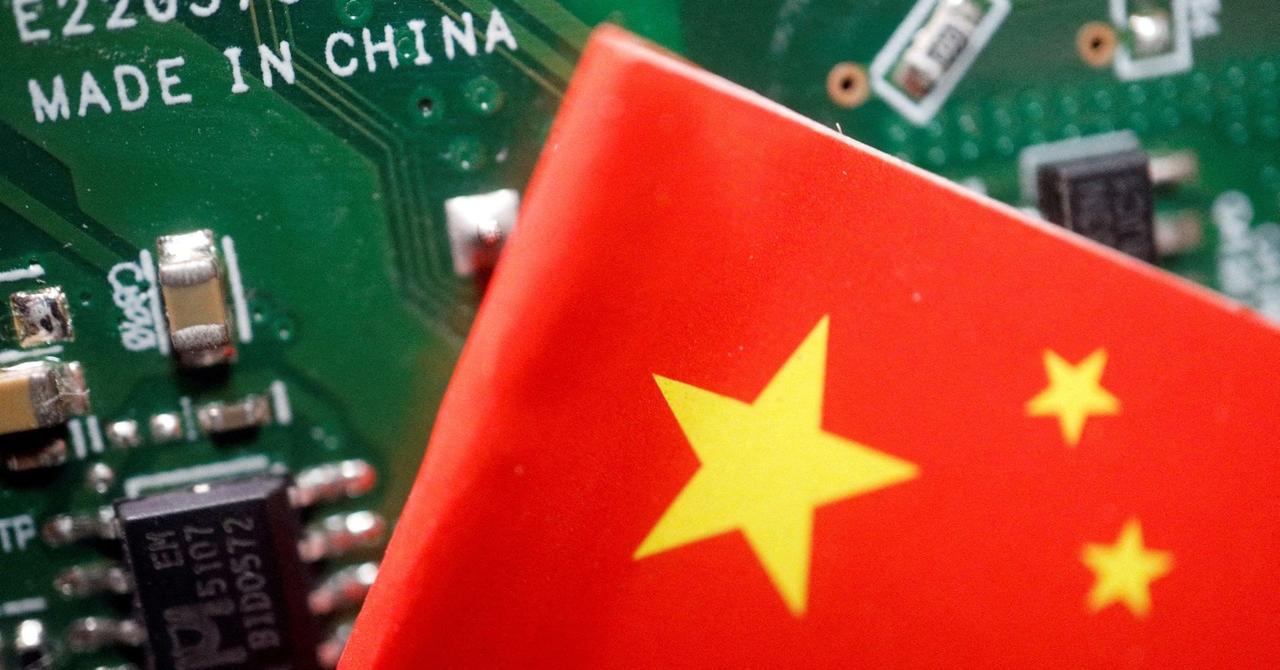
The Chinese AI firms IPO wave reflects Beijing's policy shift toward domestic financing for AI and semiconductors, reducing reliance on U.S. capital markets
1
.
Source: Reuters
But these listings cannot address the sector's most critical constraint: access to advanced computing power. Lin explained that "a massive amount of OpenAI's compute is dedicated to next-generation research, whereas we are stretched thin—just meeting delivery demands consumes most of our resources"
1
2
. He noted that U.S. computer infrastructure is "likely one to two orders of magnitude larger than ours"3
.US export controls have severed China's access to Nvidia's most capable GPUs and the advanced lithography equipment needed to produce equivalents at scale
1
. Yao identified "lithography machines" as the main technical hurdle, though he noted China has advantages in electricity and infrastructure3
. Domestic alternatives like Huawei's Ascend series lag behind current-generation U.S. hardware in raw performance and are produced in far smaller volumes1
.
Source: ET
These hardware constraints force Chinese developers into a tradeoff their U.S. counterparts avoid: they can train more models or larger models, but not both simultaneously
1
.Open-Source Strategy Shows Progress But Cannot Overcome Infrastructure Deficit
China has made notable progress with open-source foundation models. The breakout success of DeepSeek's R1 model in early 2025 spurred Chinese firms from Alibaba to startups like Zhipu to open-source their latest iterations, helping Chinese AI models close much of the performance gap on standardized benchmarks
1
2
. Models like Qwen have demonstrated particular strength in Chinese-language tasks and domain-specific applications1
.Yet even Google DeepMind CEO Demis Hassabis, while acknowledging that Chinese AI models now trail Western capabilities by "only a matter of months," questioned whether China can achieve frontier innovation beyond incremental advances
4
. "The question is, can they innovate something new beyond the frontier?" Hassabis asked, noting China has shown it can "catch up and be very close to the frontier" but hasn't yet demonstrated the ability to pioneer breakthroughs like the transformer architecture that originated from Google researchers in 20174
.Related Stories



Industry Leaders Urge Collaboration Over Competition to Advance AGI
Facing these constraints, Chinese AI leaders are calling for cooperation rather than internal rivalry. Tang urged peers to avoid "meaningless internal competition," stating "we should represent China to push AGI further for the world"
2
5
. Yao urged industry peers to focus on bottlenecks of next-generation models such as long-term memory and self-learning2
.The strategic shift is evident in how firms are deploying resources. Yao said Tencent is leveraging AI to generate value for its massive user base by linking its Yuanbao assistant with WeChat chat history
2
5
. Lin highlighted Alibaba's focus on multimodality and real-world agents2
. Several firms are shifting emphasis from general-purpose foundation models toward narrower, application-specific systems that require fewer resources to train and deploy1
.Analyst Richard Clode of Janus Henderson expects the gap to widen further, telling CNBC that "superior U.S. AI infrastructure starts iterating those models and starts making those models more capable over time in years to come"
4
. For Chinese firms, the IPOs represent an endurance tool to sustain domestic AI development under constrained conditions rather than a shortcut to surpass Western AI companies1
. Tang did note one positive development: the willingness of younger Chinese entrepreneurs to embrace high-risk ventures, a trait traditionally associated with Silicon Valley3
.References
Summarized by

Navi
Related Stories
Recent Highlights



Recent Highlights
Today's Top Stories











Your Daily Dose of Curated AI News
Don’t drown in AI news. We cut through the noise - filtering, ranking and summarizing the most important AI news, breakthroughs and research daily. Spend less time searching for the latest in AI and get straight to action.

