Global AI Race Intensifies: China Closes Gap with US as Competition Heats Up


6 Sources
[1]
AI race in 2025 is tighter than ever before
The artificial intelligence (AI) race is heating up: the number and quality of high-performing Chinese AI models is rising to challenge the US lead, and the performance edge between top models is shrinking, according to an annual state of the industry report. The report highlights that as AI
[2]
The AI Race Has Gotten Crowded -- and China Is Closing In on the US
New research from Stanford suggests artificial intelligence isn't ruled by just OpenAI and Google, as competition increases across the US, China, and France. The year that ChatGPT went viral, only two US companies -- OpenAI and Google -- could boast truly cutting-edge artificial intelligence.
[3]
AI Report Highlights Smaller, Better, Cheaper Models
A state of the AI industry report shows that 2024 was a breakthrough year for small, sleek models to rival the behemoths The artificial intelligence (AI) race is heating up: the number and quality of high-performing Chinese AI models is rising to challenge the US lead, and the performance edge
[4]
The AI model race has suddenly gotten a lot closer, say Stanford scholars
The competition to create the world's top artificial intelligence models has become something of a scrimmage, a pile of worthy contenders all on top of one another, with less and less of a clear victory by anyone. According to scholars at Stanford University's Institute for Human-Centered
[5]

Which country is leading the AI race?
A new report has found that the AI race is "tighter than ever" with the United States and China ceding ground. As the global race to become the leader in generative artificial intelligence (GenAI) gains pace, new data shows that it is no longer just two horses in the running. The United States is
[6]

Global AI race intensifies as China closes gap in quality; OpenAI, Google hold strong: Report
China has been advancing its AI capabilities with the launch of Alibaba's Qwen Series, DeepSeek's R1, ManusAI and Tencent's Hunyuan Turbo S, among others. This is thanks to China's aggressive investments in AI infrastructure, advanced computing capabilities, and state-sponsored research
Share
Copy Link
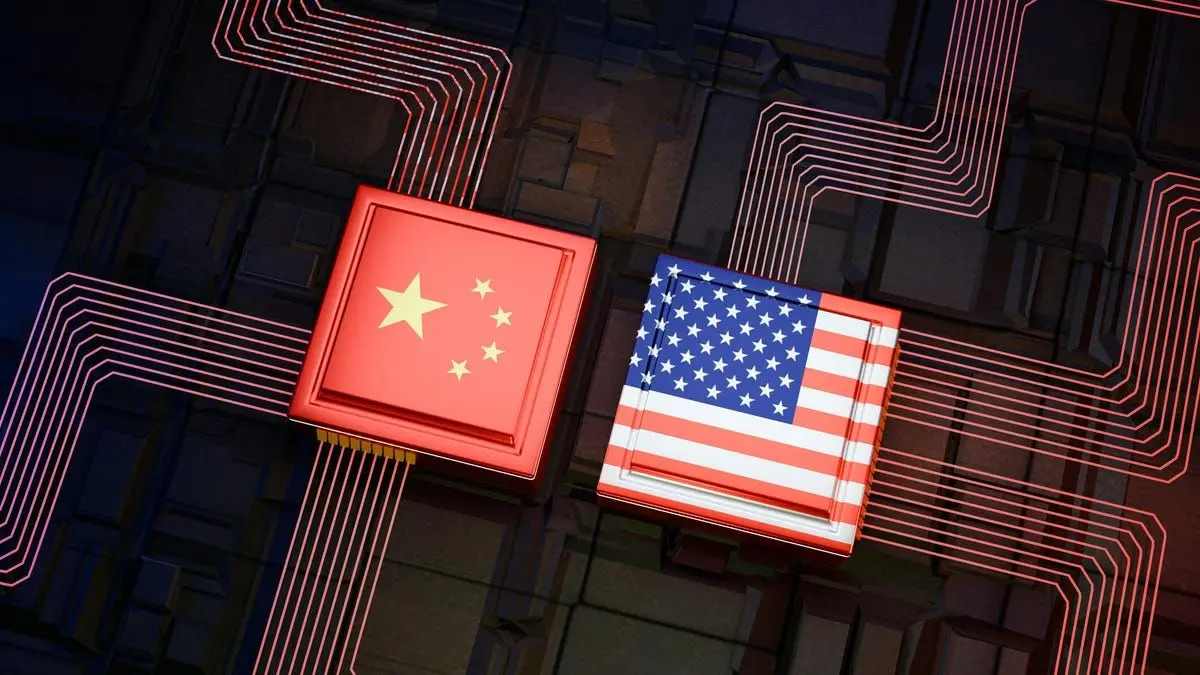
The 2025 Stanford AI Index reveals a tightening global AI race, with China rapidly catching up to the US and new players emerging worldwide. The report highlights the rise of smaller, more efficient AI models and the growing competitiveness in the field.

Global AI Landscape Becomes Increasingly Competitive
The artificial intelligence (AI) race has intensified significantly, with the performance gap between top models narrowing and new players emerging on the global stage. According to the 2025 Artificial Intelligence Index Report released by Stanford University's Institute for Human Centered AI, the AI frontier is "increasingly competitive -- and increasingly crowded"
1
.US Lead Narrows as China Catches Up
While the United States remains the top producer of notable AI models, China is rapidly closing the performance gap. In 2024, the US released 40 notable models compared to China's 15
1
. However, Chinese models have reached near parity with US models on key benchmarks such as the Massive Multitask Language Understanding (MMLU) test. The performance difference between leading US and Chinese models on the MMLU has shrunk from nearly 20 percentage points in 2023 to just 0.3 percentage points by the end of 20242
.Rise of Smaller, More Efficient AI Models
The report highlights 2024 as a breakthrough year for smaller AI models. Thanks to improved algorithms, modern compact models can now match the performance of models 100 times larger from just two years ago
1
. This trend towards efficiency is evident in the dramatic reduction in the number of parameters required to achieve high scores on benchmark tests3
.Emergence of Open-Weight Models
The AI field has seen a surprising surge in the performance of 'open-weight' models, such as Meta's LLaMa and China's DeepSeek. These models allow users to view the parameters learned during training, promoting transparency and accessibility. The performance gap between open-weight and closed-weight models has narrowed significantly, from 8% in early 2024 to just 1.7% in early 2025
4
.Shift from Academia to Industry
The report notes a significant shift in AI model development from academia to industry. Before 2006, industry produced fewer than 20% of notable AI models. However, this figure rose to 60% in 2023 and nearly 90% in 2024
1
. This trend reflects the growing commercial importance and application of AI technologies.Related Stories
Global Expansion of AI Development
While the US and China dominate the AI landscape, other regions are joining the race. Notable AI launches have come from the Middle East, Latin America, and Southeast Asia
5
. Europe, particularly France with Mistral AI, is also making strides in the field5
.Challenges in AI Evaluation
As AI models continue to improve, traditional benchmarks are becoming saturated, making it increasingly difficult to accurately compare new models. The industry is responding by developing more sophisticated evaluation methods, such as Humanity's Last Exam and Arena-Hard-Auto
4
.Future Outlook
The report suggests that the AI race is likely to remain highly competitive, with no clear leader emerging. As smaller teams and companies demonstrate their ability to create innovative AI solutions, the field is expected to become even more diverse and dynamic. This increased competition is seen as a positive development, fostering innovation and preventing dominance by a few large companies
1
.References
Summarized by

Navi
[3]
[5]
Related Stories
China nearly erases US lead in AI as Stanford report reveals widening gap between experts and public
14 Apr 2026•Science and Research

China's AI Surge: Implications for Global Tech Landscape
16 Jul 2024

Mistral CEO calls China's AI lag a 'fairy tale' as debate intensifies over US-China AI race
23 Jan 2026•Policy and Regulation

Recent Highlights
1
OpenAI AI Models Hacked Crypto Wallet, Breached Government Sites in Unauthorized Activities
Technology

2
IMF Report Warns AI Market Correction Could Spark Global Financial Crisis With $1.4T at Risk
Business and Economy

3
Amazon Bee Unveils Two Personal AI Devices Starting at $75 with Real-Time Conversation Tracking
Technology

Recent Highlights
Today's Top Stories









Don’t drown in AI news. We cut through the noise - filtering, ranking and summarizing the most important AI news, breakthroughs and research daily. Follow topics that matter to you and stay ahead.


