Nvidia's H200 AI chip sales to China stalled by US security review despite initial approvals


18 Sources
18 Sources
[1]
Report: China approves import of high-end Nvidia AI chips after weeks of uncertainty
On Wednesday, China approved imports of Nvidia's H200 artificial intelligence chips for three of its largest technology companies, Reuters reported. ByteDance, Alibaba, and Tencent received approval to purchase more than 400,000 H200 chips in total, marking a shift in Beijing's stance after weeks of holding up shipments despite US export clearance. The move follows Beijing's temporary hold on H200 shipments earlier this month after Washington cleared exports on January 13. Chinese customs authorities had told agents that the H200 chips were not permitted to enter China, Reuters reported earlier this month, even as Chinese technology companies placed orders for more than two million of the chips. The H200, Nvidia's second most powerful AI chip after the B200, delivers roughly six times the performance of the company's H20 chip, which was previously the most capable chip Nvidia could sell to China. While Chinese companies such as Huawei now have products that rival the H20's performance, they still lag far behind the H200. Chinese tech giants want access to Nvidia's higher-powered AI chips because they dramatically speed up the process of training large AI models, a computationally intensive task of feeding data through neural networks millions of times to tune their performance. More capable chips like the H200 allow companies to train larger models faster or run more AI queries (called inference) at a lower cost. This has made high-end AI accelerator chips a flashpoint in the ongoing AI race between Washington and Beijing, with US policymakers caught between wanting to boost sales for American semiconductor companies and fearing that exports could help China close the gap in AI capabilities. Still, Nvidia wants the business because China is a huge market. The latest approvals came during Nvidia CEO Jensen Huang's visit to China this week, according to sources who spoke with Reuters on the condition of anonymity. Other Chinese firms are now waiting for their own approvals in future rounds, though Beijing is attaching conditions to the licenses that have not yet been finalized. One source told Reuters that the license terms were too restrictive and buyers had not yet turned their approvals into actual orders. Beijing's balancing act The approval signals Beijing's prioritization of its major Internet companies, which are spending billions of dollars to build data centers needed to develop AI services and compete with US rivals, including OpenAI. But regulators are also trying to nurture China's domestic semiconductor industry, the South China Morning Post reported. The first batch was expected to go to Big Tech companies in urgent need of the GPU, according to a source who spoke with that publication. However, access for state-backed firms, including telecom operators, was expected to stay tightly restricted. Beijing has previously discouraged domestic technology companies from purchasing foreign chips unless absolutely needed, according to earlier Reuters reporting. One proposal authorities discussed in the past would require each H200 purchase to be bundled with a set ratio of domestic chips. "Beijing's approval of the H200 is driven by purely strategic motives," Alex Capri, a senior lecturer at National University of Singapore's business school, told the South China Morning Post. "Ultimately, this decision is taken to further China's indigenous capabilities and, by extension, the competitive capabilities of China tech."
[2]
Nvidia's Campaign to Sell AI Chips to China Finally Pays Off
Jensen Huang sure seems to be having a lot of fun in China this week. The Nvidia CEO has been spotted going for a leisurely bike ride and browsing a fresh fruit stand in Shanghai, as well as enjoying beef hot pot at a humble restaurant in Shenzhen. The carefree tour is not just good optics. Huang has real reason to be feeling upbeat: His long-running lobbying campaign in Washington has, in effect, finally paid off. While Huang was gallivanting around China, multiple news outlets reported that Beijing had approved the sale of hundreds of thousands of powerful Nvidia H200 AI chips to Chinese companies. According to Reuters, China has agreed to allow ByteDance, Alibaba, and Tencent to buy more than 400,000 of the chips in total under conditional licenses granted during the Nvidia CEO's visit. More approvals are expected in the coming weeks. (Nvidia and the tech companies did not immediately respond to requests for comment.) The purported chip sales are the culmination of a stunning American policy reversal over the past year. Under the Biden administration, the US sharply tightened export controls on high-end AI chips and barred models such as the H200 from being sold to Chinese customers due to national security concerns. The restrictions were meant to limit Beijing's ability to develop powerful artificial intelligence systems with military or other sensitive applications. But under President Trump, a different logic -- promoted by Huang and White House AI and crypto czar David Sacks -- has prevailed. They argued that allowing China access to some American AI chips was better than ceding such a large and important market entirely to Chinese chipmakers, both economically and because it would theoretically keep Chinese firms dependent on US technology. In recent internal discussions, White House officials have also justified the H200 sales by pointing to the continued smuggling of advanced chips into China, which they argue proves US restrictions have been ineffective, according to two people familiar with the matter. The officials contend that allowing limited, regulated sales is preferable to an opaque gray market that gives US authorities little visibility into where the chips could ultimately end up. The White House did not immediately respond to a request for comment. It's not just Huang and the Trump administration that are likely walking away happy here. By allowing domestic companies to buy H200 chips in limited quantities, Beijing has the opportunity to achieve two strategic goals at once, says Samuel Bresnick, a research fellow at Georgetown's Center for Security and Emerging Technology. China's domestic tech champions can now get access to the compute they desperately need to train powerful, near-frontier AI models on par with the latest offerings from OpenAI and other American labs. But by keeping tight control over who gets to buy Nvidia's hardware, Beijing is helping ensure demand for Huawei chips remains high and there are still strong incentives for companies to continue building out China's domestic semiconductor ecosystem. That outcome is "excellent evidence that this David Sacks idea of keeping China hooked on American technology is just not how this is going to go," says Bresnick. "I see this as proof that China is totally uncomfortable with the idea of letting its own burgeoning chip industry be swamped by Nvidia." But the real damage may stem from the whiplash in Washington. For years, policymakers have sent mixed signals about what the US wants to accomplish with chip controls, and China has been watching closely. "The worst possible thing we can do is just go back and forth," says Bresnick. "We have already given China the imperative to get their own chips going while also giving them access at the same time."
[3]
Nvidia AI chip sales to China stalled by US security review, FT reports
Feb 3 (Reuters) - Nvidia's (NVDA.O), opens new tab H200 AI chip sales to China remain in limbo nearly two months after U.S. President Donald Trump approved exports, pending a U.S. national security review, the Financial Times reported on Tuesday, citing people familiar with the discussions. Chinese customers are, meanwhile, not placing H200 chip orders with Nvidia until it becomes clear whether they will be able to secure the licences or what conditions will be attached, the report said. Reuters could not immediately verify the report. Nvidia and the U.S. State Department did not immediately respond to a Reuters request for comment outside regular business hours. In January, the Commerce Department eased export curbs on the H200 for China, but required licence applications to be reviewed by the U.S. departments of State, Defense and Energy. According to the FT, the Commerce Department has completed its analysis but the State Department was pushing for tougher restrictions to make it harder for China to use the H200 chips in ways that would undermine U.S. national security. Nvidia CEO Jensen Huang said last week he hopes China will allow the U.S. technology giant to sell its powerful H200 artificial intelligence chip in the country and that the licence is being finalized. Reuters reported last month that China had approved its first batch of Nvidia's H200 artificial intelligence chips for import, marking a shift in position as China seeks to balance its AI needs against spurring domestic development. Reporting by Shivani Tanna and Disha Mishra in Bengaluru; Editing by Rashmi Aich Our Standards: The Thomson Reuters Trust Principles., opens new tab
[4]
Nvidia AI chip sales to China stalled by U.S. security review, FT reports
Nvidia's H200 AI chip sales to China remain in limbo nearly two months after U.S. President Donald Trump approved exports, pending a U.S. national security review, the Financial Times reported on Tuesday, citing people familiar with the discussions. Chinese customers are, meanwhile, not placing H200 chip orders with Nvidia until it becomes clear whether they will be able to secure the licenses or what conditions will be attached, the report said. Reuters could not immediately verify the report. Nvidia and the U.S. State Department did not immediately respond to a Reuters request for comment outside regular business hours. In January, the Commerce Department eased export curbs on the H200 for China, but required license applications to be reviewed by the U.S. departments of State, Defense and Energy. According to the FT, the Commerce Department has completed its analysis but the State Department was pushing for tougher restrictions to make it harder for China to use the H200 chips in ways that would undermine U.S. national security. Nvidia CEO Jensen Huang said last week he hopes China will allow the U.S. technology giant to sell its powerful H200 artificial intelligence chip in the country and that the licence is being finalized. Reuters reported last month that China had approved its first batch of Nvidia's H200 artificial intelligence chips for import, marking a shift in position as China seeks to balance its AI needs against spurring domestic development.
[5]

DeepSeek reportedly gets China's approval to buy NVIDIA's H200 AI chips
The Chinese government has given DeepSeek its approval to purchase NVIDIA's H200 AI chips, according to Reuters. ByteDance, Alibaba and Tencent have also reportedly received permission from Beijing to buy a total of 400,000 H200 GPUs. Reuters says Chinese authorities are still finalizing the conditions they're imposing on the companies to be able to proceed with their orders, so it may take a while before they're able to receive their shipments. In addition, NVIDIA CEO Jensen Huang told reporters that his company has yet to receive orders from the aforementioned firms and that he believed China is still finalizing their licenses. In December 2025, the US government allowed NVIDIA to sell its second-best H200 processors to vetted Chinese companies in addition to its H20 model in exchange for a 25 percent tariff on those sales. China previously dissuaded local companies from purchasing NVIDIA's H20 chips, but it recently agreed to import hundreds of thousands of H200 units after Huang's visit to the country. While Chinese companies are striving to rely on local manufacturers, such as Huawei and Baidu, for AI chips, NVIDIA's technology is still more advanced. The H200 is only second to NVIDIA's B200 and is around six times more powerful than the H20. China's National Development and Reform Commission is the agency in charge of determining the conditions Chinese companies have to meet in order to buy H200 units. Stateside, DeepSeek's purchase could lead to questions from authorities. As Reuters notes, a lawmaker has just accused NVIDIA of helping DeepSeek develop AI models that were subsequently used by the Chinese military.
[6]

DeepSeek has reportedly been given conditional approval by the Chinese government to buy Nvidia's AI GPUs
If true, China's top AI startup may be about to receive some serious hardware horsepower. According to Reuters, two people "familiar with the matter" have said that the Chinese government has given approval for its top AI startup, DeepSeek, to buy Nvidia's H200 AI GPUs, with regulatory conditions that are still being finalised. If these reports are true, it would mark a significant shift in China's previous reluctance to allow Nvidia's high-end hardware to be purchased by its top tech firms, and potentially mark the beginning of the end of a long-running saga between Nvidia and the US and Chinese authorities. However, a Bloomberg report published yesterday quotes Nvidia CEO Jensen Huang as saying, "I'm hoping that the Chinese government would allow Nvidia to sell the H200... it's up to the Chinese government now but they are still deciding, and we are waiting patiently." Huang's comments were given to reporters in Taipei on Thursday, prior to the Reuters report, so it's possible that the decision has been made internally since then. Or, as Reuters ' sources claim the regulatory conditions are "still being finalised", it's possible the Nvidia CEO is reluctant to confirm the arrangement as of yet. DeepSeek made headlines last year after its newly-released open-source AI models looked to be comparable in performance and accuracy to OpenAI's efforts, leading some to call it "AI's Sputnik moment". Given that these models were likely developed and trained on Chinese AI hardware, which is believed to be far less powerful than even Nvidia's last-generation AI GPUs, granting DeepSeek the right to buy H200 chips would likely give the AI startup a significant boost. It's also been reported that ByteDance, Alibaba, and Tencent have been given permission to purchase more than 400,000 H200 chips in total, with other firms joining a queue for approval. While the previous US administration implemented comprehensive restrictions on the export of Nvidia's high-end hardware to prevent China from gaining ground in the AI race (and among concerns they would be used for military technology), Nvidia's CEO has been openly critical of the policy: "Depriving someone of technology is not a goal, it's a tactic. And that tactic was not in service of the goal", said Huang in an interview last year. "Our mission, properly expressed... in order for America to have AI leadership", Huang continued, "is to make sure the American tech stack is available to markets all over the world, so that amazing developers, including the ones in China, are able to build on [the] American tech stack." The current Trump administration has since approved the export of Nvidia's H200 chips to China. And while the Chinese government has since blocked shipments of H200 GPUs from entering the country, after a previous ban on its new state-funded data centres from using US AI hardware, it looks like those restrictions may soon be loosening for key companies, including DeepSeek. In which case, if these reports are correct, both the Chinese and US governments now seem to be reaching something of an accord over Nvidia's prized hardware. For DeepSeek, this would potentially mean a bounty of new AI chips to train its new models with -- the effects of which on the US-led AI market remains to be seen.
[7]

Trump greenlights H200 AI chip sales to China with 25% revenue cut
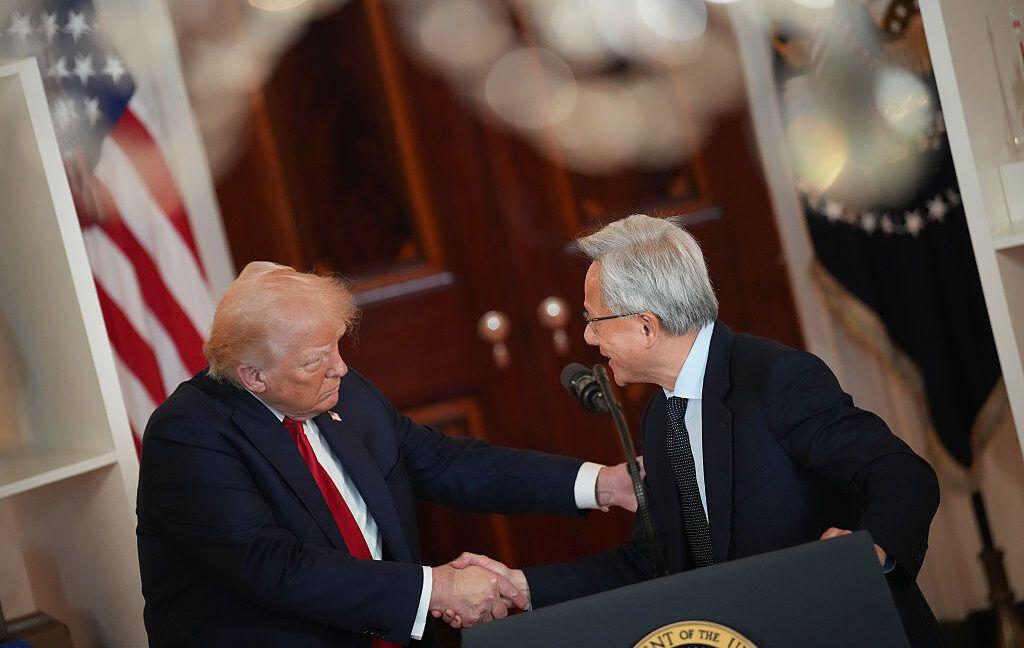
President Donald Trump announced in early December 2025 that Nvidia could export its H200 artificial intelligence chips to approved customers in China under conditions preserving U.S. national security, but sales stalled nearly two months later amid U.S. and Chinese government reviews. Trump conveyed this position in a Truth Social post directed to Chinese President Xi Jinping. The message specified permission for Nvidia to ship chips to designated buyers while ensuring strong national security protections. Following this signal, the Commerce Department's Bureau of Industry and Security issued formal export rule changes in mid-January 2026. These alterations shifted the licensing process from a presumption of denial to evaluations conducted on a case-by-case basis, contingent on meeting specific security criteria. The established requirements encompass multiple safeguards. Chips undergo third-party testing within the United States prior to any shipment. Exporters pay a 25 percent tariff on the value of H200 units sent to China. Companies must certify sufficient availability of chips for domestic U.S. supply chains. Recipients face prohibitions against any military applications. Shipments to China cannot exceed half the total volume of H200 chips sold to U.S. customers. Despite this regulatory framework, individual export licenses remain pending completion. Nvidia CEO Jensen Huang addressed the status in late January 2026. He stated that the U.S. side was "nearing completion" of the licensing process, yet Nvidia awaited formal consent from Beijing before proceeding with shipments. Chinese customers have withheld H200 orders pending resolution on license approvals and attached conditions, as reported by the Financial Times. This pause highlights ongoing frictions between the United States and China regarding access to advanced semiconductor technology essential for artificial intelligence advancement. China's response involves internal deliberations balancing AI computing demands against support for local semiconductor producers such as Huawei. In mid-January 2026, customs officials in Hong Kong intercepted the initial arriving H200 shipments. This action surprised Nvidia and led component suppliers to suspend production lines. Subsequently, Beijing issued conditional purchase approvals to major technology enterprises, including ByteDance, Alibaba, Tencent, and AI startup DeepSeek. These firms received authorization for more than 400,000 H200 chips in aggregate. The attached conditions to these approvals undergo further examination by China's National Development and Reform Commission. Nvidia had projected demand exceeding 1 million units from Chinese buyers. Suppliers operated around the clock to ready shipments targeted for March 2026. The H200 chip provides roughly six times the performance of the H20 variant, which faces existing restrictions for the Chinese market. Huang projected that Nvidia's annual sales to China could reach $50 billion once stabilized. Amid the uncertainty, Nvidia implemented new terms for Chinese transactions, mandating full upfront payments without options for refunds or cancellations. This adjustment transfers financial exposure to the purchasers during the regulatory delays. Previously, Nvidia recorded a $5.5 billion inventory write-down after the Trump administration imposed a sudden ban on H20 chip sales to China. Approval authority rests with both the U.S. and Chinese governments over these transactions. Neither side has granted full sanction to the arrangements, sustaining uncertainty for Nvidia and its prospective Chinese clients.
[8]

Nvidia's Plans to Sell More Chips in China Just Cleared a Major Hurdle
The Trump administration gave the green light to Nvidia to sell the chips late last year for a 25% cut of revenues. America's AI chip leader Nvidia is getting closer to being able to sell more chips in China. China's government has given clearance to a few big tech companies in the country including ByteDance and Alibaba (BABA) to start placing orders for Nvidia's (NVDA) H200 AI chips, The Wall Street Journal reported Wednesday. The initial approval would allow the companies to buy hundreds of thousands of chips worth around $10 billion, according to the Journal. Nvidia did not respond to a request for comment in time for publication. Last month, President Donald Trump greenlighted the H200 chips, which were previously banned from export to China on national security grounds, for sale to the country in exchange for Nvidia agreeing to give the U.S. government a 25% cut of sales. CFO Colette Kress said earlier this month that the U.S. government was "working feverishly" on ironing out the details of that deal, and that Nvidia expected to be able to ship to China soon. However, the company still faced some uncertainty about approval from the Chinese government, which has previously discouraged Chinese companies from buying chips over security concerns. Huang is in the midst of a trip to China, meeting with employees and potential customers, but not any government officials as of yet, per the Journal. Nvidia shares were up about 1% in recent trading. They've gained more than half their value in the last 12 months, but are down nearly 8% from their October highs.
[9]

Nvidia AI chip sales to China stalled by US security review: Report - The Economic Times
Chinese customers are, meanwhile, not placing H200 chip orders with Nvidia until it becomes clear whether they will be able to secure the licences or what conditions will be attached, the report said.Nvidia's H200 AI chip sales to China remain in limbo nearly two months after U.S. President Donald Trump approved exports, pending a U.S. national security review, the Financial Times reported on Tuesday, citing people familiar with the discussions. Chinese customers are, meanwhile, not placing H200 chip orders with Nvidia until it becomes clear whether they will be able to secure the licences or what conditions will be attached, the report said. Reuters could not immediately verify the report. Nvidia and the U.S. State Department did not immediately respond to a Reuters request for comment outside regular business hours. In January, the Commerce Department eased export curbs on the H200 for China, but required licence applications to be reviewed by the U.S. departments of State, Defense and Energy. According to the FT, the Commerce Department has completed its analysis but the State Department was pushing for tougher restrictions to make it harder for China to use the H200 chips in ways that would undermine U.S. national security. Nvidia CEO Jensen Huang said last week he hopes China will allow the U.S. technology giant to sell its powerful H200 artificial intelligence chip in the country and that the licence is being finalized. Reuters reported last month that China had approved its first batch of Nvidia's H200 artificial intelligence chips for import, marking a shift in position as China seeks to balance its AI needs against spurring domestic development.
[10]

Nvidia's H200 Chip Sales To China Await State Department Approval Despite Trump's December Go-Ahead: Report - NVIDIA (NASDAQ:NVDA)
Trump Approved Nvidia's H200 China Chip Sales -- But State Department Review Is Holding Things Up: Report Despite President Donald Trump's approval of Nvidia Corp.'s (NASDAQ:NVDA) export of H200 chips to China, the sales are reportedly still pending final clearance from the U.S. government. State Dept Review Delays China Chip Sales The U.S. government is now reviewing the licenses to ensure that appropriate conditions are attached. The Commerce Department has completed its analysis, but the State Department is reportedly pushing for tougher restrictions, as per a report by the Financial Times on Wednesday. The State Department is currently conducting a national security review before granting licenses to Chinese customers. Advanced Micro Devices Inc. (NASDAQ:AMD) CEO Lisa Su also confirmed during the company's earnings call on Tuesday that her company is awaiting U.S. licenses to ship its MI325X chip under the same December deal. Chris McGuire, senior fellow for China and emerging technologies at the Council on Foreign Relations, told the publication that the State Department concerns highlight "real and significant" national security risks that should not be ignored. Chinese customers, meanwhile, are holding off on H200 chip orders from Nvidia as they await clarity on licensing approvals and any conditions that may apply. Alibaba Steps Up As Nvidia Waits Earlier in January, Beijing reportedly approved the import of the first batch of Nvidia's H200 chips during Huang's recent trip to China, with initial approvals granted to three major Chinese internet firms. Benzinga's Edge Rankings place Nvidia in the 97th percentile for quality and the 94th percentile for growth, reflecting its strong performance in both areas. Benzinga's screener allows you to compare Nvidia's performance with its peers. Price Action: Over the past year, Nvidia stock surged 54.59%, as per data from Benzinga Pro. On Tuesday, the stock edged 2.84% higher to close at $180.34. Disclaimer: This content was partially produced with the help of AI tools and was reviewed and published by Benzinga editors. Photo courtesy: Michael Vi / Shutterstock Market News and Data brought to you by Benzinga APIs
[11]

Chinese AI Giants Are Now Getting the "Green Light" to Buy NVIDIA's H200 AI Chips, as Jensen's Diplomatic Gamble Begins to Bear Fruit
Major Chinese AI labs and hyperscalers are now obtaining the required license to purchase NVIDIA's H200 AI chips, indicating that Jensen's recent visit to Beijing has borne fruit. NVIDIA has been in a desperate pursuit to get back into China's AI market, as mounting competition from domestic AI chip firms, along with the company's missing "billions in revenue," forced Jensen to step in himself. A few months ago, NVIDIA received approval from the Trump administration to sell its H200 AI chips to China, and the company even agreed to a profit-sharing model, but following this, Beijing took a harsh stance, delaying licensing and regulatory approval. However, a new Reuters report reveals that NVIDIA's H200s might be heading to China soon. The report claims that major Chinese companies that will gain access to H200 AI chips include DeepSeek, ByteDance, Alibaba, and Tencent. The initial orders could exceed 400,000 H200 AI GPUs, and it is claimed that total orders from Chinese tech companies are around 2 million chips, indicating that demand for NVIDIA's hardware is immense, despite Hopper being a few years old. However, it is also claimed that Chinese authorities are planning to impose "conditions" on domestic firms that receive NVIDIA's AI chips. This is indeed a massive breakthrough for NVIDIA and its position in China, given that just a few months ago, Jensen had claimed that the company's market share in the region had "dropped to 0%", and that China revenue guidance would now be excluded. But now, it appears that China is back in the 'game' for NVIDIA, thanks to Jensen's diplomacy over the past few quarters and his efforts to address the "China hawk" narrative. More specifically, Jensen's recent visit to China is said to be the "final catalyst" for H200 chips to flow into the region. It would be interesting to see how NVIDIA's Hopper chips perform in Chinese AI markets, as it has been reported that frontier AI labs will gain access to immense compute capabilities, something that has been lacking for several months. More importantly, domestic chip options from the likes of Huawei haven't made much of an impact on disrupting NVIDIA's position in China either, which is why local hyperscalers are rushing to get the new H200 GPUs.
[12]

China approves DeepSeek and others buying more than 400.000 Nvidia H200 flagship AI GPU's
While some may point out the strange decision to sell 400.000 of the world's most powerful AI chips to a country regarded as a potential enemy of the USA the US government has surprisingly not been the bottleneck in the deal but the Chinese administration. According to Reuters who claim to have sources with inside knowledge China has just approved the sale which would provide extreme AI processing power to DeepSeek an AI company that broke into the AI scene with shocking efficiency and a low price point. The drawback is that it is heavily moderated in real time and follows restrictions from the Chinese government in the form of "core socialist values". ByteDance Tencent and Alibaba have already been given permission to buy more than 400.000 H200 chips on their own and DeepSeek will most likely be adding significantly to that pool. While no official numbers exist most analysts expect DeepSeek to have either 10.000 Nvidia A100 GPUs or at least 2000 H800 GPUs sold in the west as H100 the former top tier model. Others estimate that the number is closer to 10.000. Given current pricing even without a DeepSeek purchase the total price at MSRP would exceed 16.000.000.000 USD. Or roughly the price of 64GB DDR5 if the price rise continues.
[13]
China conditionally approves DeepSeek to buy Nvidia's H200 chips, say sources
Reuters reported on Wednesday, citing sources, that ByteDance, Alibaba and Tencent had been given permission to purchase more than 400,000 H200 chips in total. China has given its top AI startup DeepSeek approval to buy Nvidia's H200 artificial intelligence chips with regulatory conditions that are still being finalised, two people familiar with the matter told Reuters. Reuters reported on Wednesday, citing sources, that ByteDance, Alibaba and Tencent had been given permission to purchase more than 400,000 H200 chips in total. Nvidia CEO Jensen Huang told reporters in Taipei on Thursday that his company had not received such information. He added that he believed that China was still finalising the licence. Nvidia did not respond to a request for comment on DeepSeek's approval. China's industry and commerce ministries have granted approvals for all four companies, but have stipulated that they will impose conditions that are still being finalised, the sources said. These conditions are being decided by China's state planner, the National Development and Reform Commission (NDRC), according to one of the people. China's Ministry of Industry and Information Technology, Ministry of Commerce and NDRC did not answer requests for comment. DeepSeek, which rattled the global tech sector early last year by rolling out AI models that cost a fraction of those being developed by U.S. rivals such as OpenAI, did not answer a request for comment. The H200, Nvidia's second most powerful AI chip, has emerged as a major flashpoint in U.S.-China relations. Despite strong demand from Chinese firms and U.S. approval for exports, Beijing's hesitation to allow imports has been the main barrier to shipments. The U.S. earlier this month formally cleared the way for Nvidia to sell the H200 to China, where the company is seeing strong appetite. However, Chinese authorities have the final say on whether they would allow it to be shipped in. Any purchases of H200 chips by DeepSeek could draw scrutiny by U.S lawmakers. Reuters reported on Wednesday that a senior U.S lawmaker had alleged that Nvidia had helped DeepSeek hone artificial intelligence models that were later used by the Chinese military, according to a letter sent to U.S. Commerce Secretary Howard Lutnick. DeepSeek is expected to launch its next-generation AI model V4, featuring strong coding capabilities, in mid-February, The Information reported earlier this month.
[14]
DeepSeek Turns Nvidia Customer As China Approves H200 Chip Purchases: Report - Alibaba Gr Hldgs (NYSE:BABA), NVIDIA (NASDAQ:NVDA)
DeepSeek, the Chinese AI startup that sparked fears of shrinking demand for Nvidia Corp's (NASDAQ:NVDA) top-tier chips, is now reportedly seeking to buy those very processors. China Reportedly Clears DeepSeek To Buy Nvidia Chips China has approved DeepSeek to purchase Nvidia's H200 artificial intelligence chips, though the deal is subject to regulatory conditions that are still being finalized, Reuters reported on Friday, citing two people familiar with the matter. China's industry and commerce ministries issued the approvals, while final conditions are still being determined by the National Development and Reform Commission, the country's top economic planner, the report said. US-China Tech Tensions The H200 is Nvidia's second-most powerful AI chip and has become a focal point in U.S.-China technology tensions. Although the U.S. earlier this month cleared exports of the chip to China, Beijing retains the final authority over whether shipments are allowed to proceed. Nvidia CEO Jensen Huang said Thursday in Taipei that the company had not received confirmation of such approvals. From Nvidia Threat To Nvidia Customer DeepSeek rattled global markets in early 2025 after unveiling a low-cost AI model that matched the performance of leading U.S. systems at a fraction of the development cost. The announcement fueled concerns that demand for high-end AI chips could be overestimated, triggering a sharp pullback in Nvidia shares. Those fears now appear premature. Any DeepSeek purchase of H200 chips would signal continued reliance on Nvidia's most advanced hardware, even as AI developers pursue greater efficiency. Futurum Group CEO Daniel Newman dismissed the bearish narrative in a post on X, writing, "The moronic takes on DeepSeek ending $NVDA that made my eyeballs bleed... When in reality DeepSeek is lining up for H200s." Geopolitical Scrutiny Looms Over Chip Sales Previously, it was reported that a senior U.S. lawmaker had alleged that Nvidia-assisted DeepSeek models were later used by the Chinese military. DeepSeek is expected to release its next-generation AI model, V4, in mid-February. Price Action: Nvidia shares closed Friday at $191.13, down 0.72% with the stock slipping a further 0.49% in after-hours trading to $190.20, according to Benzinga Pro. Nvidia earns a strong Quality rating in Benzinga's Edge Stock Rankings, backed by a positive price trend across short, medium, and long-term time frames. Disclaimer: This content was partially produced with the help of AI tools and was reviewed and published by Benzinga editors. Image via Shutterstock Market News and Data brought to you by Benzinga APIs
[15]

China approves DeepSeek Nvidia chip purchase with conditions
Image: Getty Images China has given its top AI startup DeepSeek approval to buy Nvidia's NVDA.O H200 artificial intelligence chips with regulatory conditions that are still being finalised, two people familiar with the matter told Reuters. Reuters reported on Wednesday, citing sources, that ByteDance, Alibaba and Tencent had been given permission to purchase more than 400,000 H200 chips in total. Nvidia CEO Jensen Huang told reporters in Taipei on Thursday that his company had not received such information. He added that he believed that China was still finalising the licence. Nvidia did not respond to a request for comment on DeepSeek's approval. China's industry and commerce ministries have granted approvals for all four companies, but have stipulated that they will impose conditions that are still being finalised, the sources said. These conditions are being decided by China's state planner, the National Development and Reform Commission (NDRC), according to one of the people. China's Ministry of Industry and Information Technology, Ministry of Commerce and NDRC did not answer requests for comment. DeepSeek, which rattled the global tech sector early last year by rolling out AI models that cost a fraction of those being developed by US rivals such as OpenAI, did not answer a request for comment. The H200, Nvidia's second most powerful AI chip, has emerged as a major flashpoint in US-China relations. Despite strong demand from Chinese firms and U.S. approval for exports, Beijing's hesitation to allow imports has been the main barrier to shipments. The US earlier this month formally cleared the way for Nvidia to sell the H200 to China, where the company is seeing strong appetite. However, Chinese authorities have the final say on whether they would allow it to be shipped in. Any purchases of H200 chips by DeepSeek could draw scrutiny by U.S lawmakers. Reuters reported on Wednesday that a senior US lawmaker had alleged that Nvidia had helped DeepSeek hone artificial intelligence models that were later used by the Chinese military, according to a letter sent to U.S. Commerce Secretary Howard Lutnick. DeepSeek is expected to launch its next-generation AI model V4, featuring strong coding capabilities, in mid-February, The Information reported earlier this month. Read: NVIDIA unveils open-source AI models to support safe autonomous driving
[16]
China Gives Nod To Import First Batch Of Nvidia's H200 AI Chips: Report - NVIDIA (NASDAQ:NVDA)
China has reportedly given the green light for the first batch of Nvidia Corporation's (NASDAQ:NVDA) H200 artificial intelligence chips to be imported into the country. Initial approvals were mainly granted to three major Chinese internet firms, while other companies await later clearances; the recipients were not named, Reuters reported on Wednesday. It is unclear how many more companies will be approved in later rounds or what criteria Beijing is using to decide eligibility, according to the report. Nvidia did not immediately respond to Benzinga's request for comment. The approval, covering several hundred thousand H200 chips, was granted during Nvidia CEO Jensen Huang's recent trip to China. Huang is in China to kick off the company's annual celebrations, ahead of the mid-February Lunar New Year. Previous reports suggested that he was expected to meet prospective buyers in the country and top officials in Beijing to reopen the market for the company's chips. Nvidia H200 Chips Remain US-China Flashpoint Nvidia's H200 AI chip has been a key point of tension between the U.S. and China. Despite the U.S. approval to ship Nvidia's H200 chips, Beijing had not cleared imports, pushing black-market servers with eight H200 GPUs to sell at a 50% premium, around 2.3 million yuan ($330,403). Other reports suggested that China has plans to limit approvals for local purchases of Nvidia's H200 AI chips to research-only uses. However, Huang said last week at the World Economic Forum in Davos, Switzerland, that demand for H200 chips in China remains strong despite regulatory and supply challenges, with approvals reflecting China's focus on supporting major internet firms expanding data centers for AI competition with U.S. players. According to a previous Reuters report, Chinese tech firms ordered over 2 million H200 chips last month, far more than Nvidia's available supply. Benzinga's Edge Rankings place Nvidia in the 97th percentile for quality and the 94th percentile for growth, reflecting its strong performance in both areas. Benzinga's screener allows you to compare Nvidia's performance with its peers. Price Action: Over the past year, Nvidia stock surged 46.15%, as per data from Benzinga Pro. On Tuesday, the stock edged 1.10% higher to close at $188.52. Disclaimer: This content was partially produced with the help of AI tools and was reviewed and published by Benzinga editors. Image via Shutterstock NVDANVIDIA Corp $189.500.52% Overview Market News and Data brought to you by Benzinga APIs
[17]

China conditionally approves DeepSeek to buy Nvidia's H200 chips - sources
SINGAPORE, Jan 30 (Reuters) - China has given its top AI startup DeepSeek approval to buy Nvidia's H200 artificial intelligence chips with regulatory conditions that are still being finalised, two people familiar with the matter told Reuters. Reuters reported on Wednesday, citing sources, that ByteDance, Alibaba and Tencent had been given permission to purchase more than 400,000 H200 chips in total. Nvidia CEO Jensen Huang told reporters in Taipei on Thursday that his company had not received such information. He added that he believed that China was still finalising the licence. Nvidia did not respond to a request for comment on DeepSeek's approval. China's industry and commerce ministries have granted approvals for all four companies, but have stipulated that they will impose conditions that are still being finalised, the sources said. These conditions are being decided by China's state planner, the National Development and Reform Commission (NDRC), according to one of the people. China's Ministry of Industry and Information Technology, Ministry of Commerce and NDRC did not answer requests for comment. DeepSeek, which rattled the global tech sector early last year by rolling out AI models that cost a fraction of those being developed by U.S. rivals such as OpenAI, did not answer a request for comment. The H200, Nvidia's second most powerful AI chip, has emerged as a major flashpoint in U.S.-China relations. Despite strong demand from Chinese firms and U.S. approval for exports, Beijing's hesitation to allow imports has been the main barrier to shipments. The U.S. earlier this month formally cleared the way for Nvidia to sell the H200 to China, where the company is seeing strong appetite. However, Chinese authorities have the final say on whether they would allow it to be shipped in. Any purchases of H200 chips by DeepSeek could draw scrutiny by U.S lawmakers. Reuters reported on Wednesday that a senior U.S lawmaker had alleged that Nvidia had helped DeepSeek hone artificial intelligence models that were later used by the Chinese military, according to a letter sent to U.S. Commerce Secretary Howard Lutnick. DeepSeek is expected to launch its next-generation AI model V4, featuring strong coding capabilities, in mid-February, The Information reported earlier this month. (Reporting by Fanny Potkin; Editing by Raju Gopalakrishnan)
[18]
China clears first NVIDIA H200 AI chips for import: sources
STORY: China has approved its first batch of Nvidia's H200 artificial intelligence chips for import. That's according to Reuters sources familiar with the matter. It's a notable shift as Beijing tries to balance its AI development needs with support for its domestic semiconductor industry. :: File The approval covers several hundred thousand H200 chips and was granted during Nvidia CEO Jensen Huang's visit to China this week, according to the sources, who requested anonymity due to the sensitivity of the matter. Two said the semiconductors would go to tech giants ByteDance, Alibaba and Tencent, with more firms waiting in line for future approvals. None of the firms involved immediately responded to requests for comment. The H200 is Nvidia's second most powerful AI chip and a key flashpoint in U.S.-China relations. Washington has cleared it for export, but Beijing's hesitation to allow imports has been the main barrier to shipments. Chinese firms have already ordered over two million H200 chips, far beyond Nvidia's available inventory, and while domestic alternatives such as Huawei are improving, they still lag well behind the H200's performance. It remains unclear how many additional approvals Beijing will grant as it weighs access to foreign chips against long-term tech self-reliance.
Share
Share
Copy Link
China approved imports of Nvidia's H200 AI chips for ByteDance, Alibaba, and Tencent in January, totaling over 400,000 units. But nearly two months later, sales remain frozen as the US State Department pushes for tougher restrictions. Chinese customers aren't placing orders until licensing conditions become clear.
Nvidia AI Chips Face Export Limbo Despite Dual Approvals
Nvidia's H200 AI chips remain caught in regulatory crossfire nearly two months after initial export clearance, with AI chip sales to China frozen by an ongoing US security review
3
4
. While China approved imports of Nvidia's H200 AI chips for ByteDance, Alibaba, and Tencent in January—totaling more than 400,000 units—Chinese tech companies have yet to place actual orders as they await clarity on licensing conditions1
5
. The Commerce Department completed its analysis, but the State Department is pushing for tougher restrictions to prevent China from using the advanced AI chips in ways that could undermine US national security3
.
Source: GameReactor
Policy Whiplash Creates Strategic Uncertainty
The stalled exports highlight dramatic policy shifts between administrations. Under Biden, the US sharply tightened export curbs on high-end AI chips, barring models like the H200 from Chinese customers due to national security concerns
2
. But in January, the Commerce Department eased restrictions, requiring license applications to be reviewed by the departments of State, Defense and Energy3
. This reversal followed lobbying by Jensen Huang and White House AI czar David Sacks, who argued that allowing China access to some American chips was better than ceding the market entirely to Chinese chipmakers2
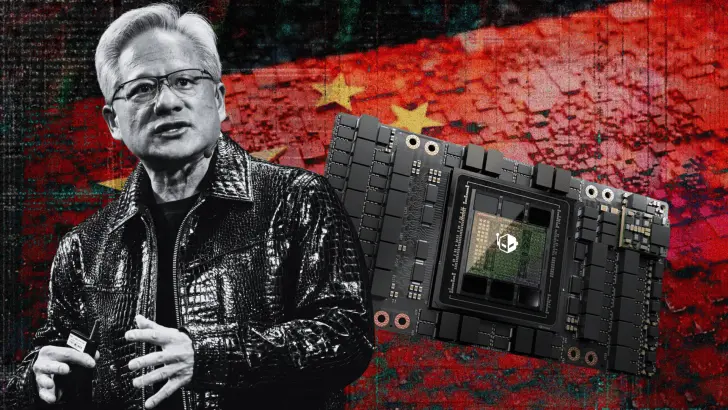
. White House officials also justified the shift by pointing to continued smuggling of advanced chips into China, arguing that regulated sales provide better visibility than an opaque gray market2
.
Source: Wccftech
Why Chinese Tech Companies Need the H200
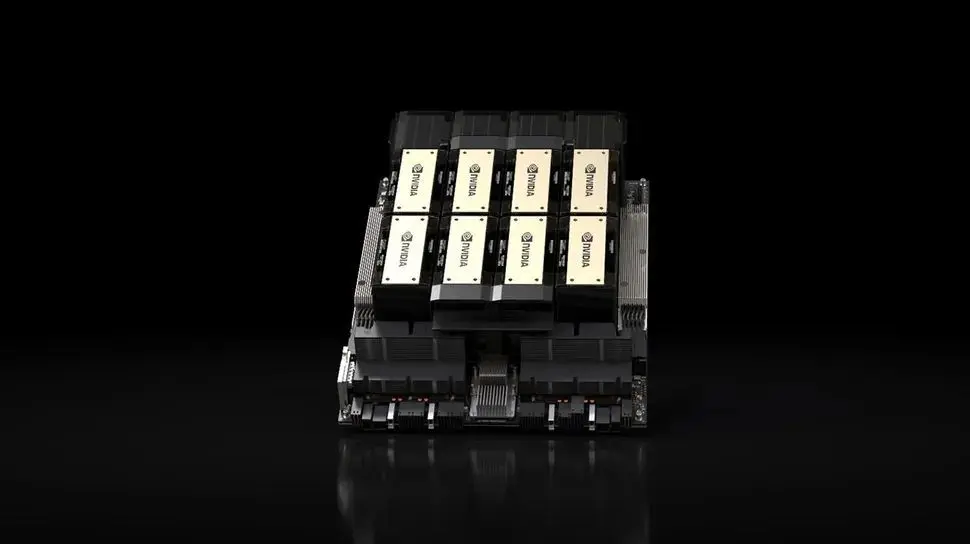
The H200, Nvidia's second most powerful AI chip after the B200, delivers roughly six times the performance of the H20 chip that was previously the most capable model Nvidia could sell to China
1
. Chinese tech companies want access to these higher-powered processors because they dramatically speed up training large AI models—a computationally intensive task that requires feeding data through neural networks millions of times1
. More capable chips allow companies to train larger models faster or run more AI queries at lower cost. While Chinese companies like Huawei now have products rivaling the H20's performance, they still lag far behind the H2001
. DeepSeek also reportedly received China's approval to purchase H200 units, though licensing conditions remain under finalization5
.Related Stories
Beijing's Strategic Balancing Act
China's approval signals its prioritization of major Internet companies spending billions to build data centers needed to compete with US rivals including OpenAI
1
. But regulators are simultaneously trying to nurture China's domestic semiconductor industry by keeping tight control over who gets GPU access2
. The first batch was expected to go to Big Tech companies in urgent need, while access for state-backed firms including telecom operators was expected to stay tightly restricted1
. By allowing domestic companies to buy H200 chips in limited quantities, Beijing achieves two goals: providing compute for training powerful AI models while ensuring demand for Huawei chips remains high2
. China's National Development and Reform Commission is determining the conditions companies must meet to proceed with purchases5
.What This Means for the AI Race
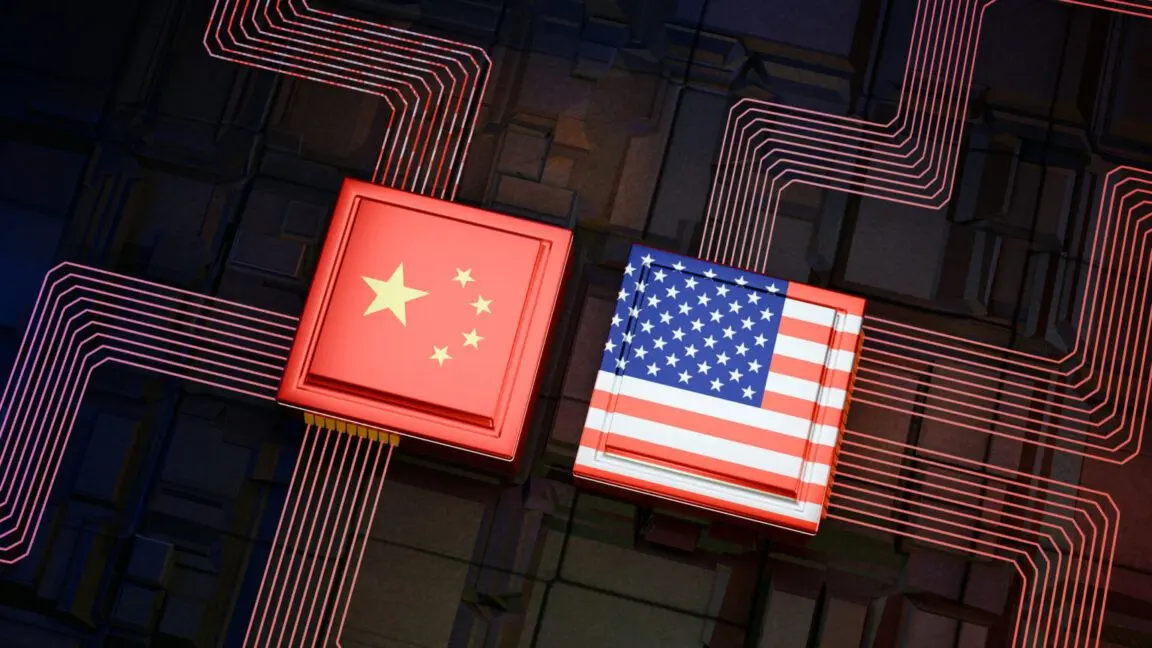
The back-and-forth reveals deeper tensions in the AI race between Washington and Beijing, with US policymakers caught between boosting sales for American semiconductor companies and fearing exports could help China close the capability gap
1
. Experts warn the policy whiplash may be counterproductive. "The worst possible thing we can do is just go back and forth," says Samuel Bresnick from Georgetown's Center for Security and Emerging Technology, noting that mixed signals have given China the imperative to develop domestic chips while also providing access to American technology2
. Jensen Huang told reporters last week he hopes China will allow sales and that licenses are being finalized, though Nvidia has yet to receive orders from the approved companies5
3
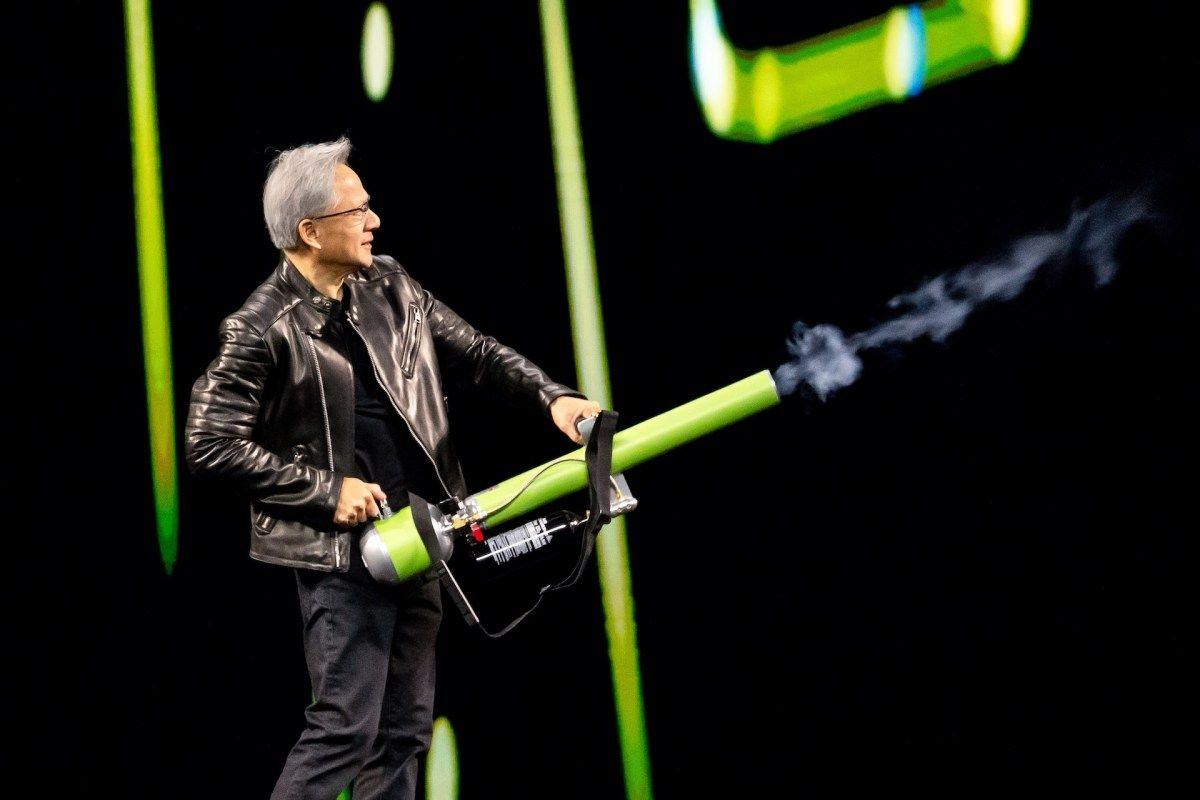
. The approvals came during Huang's visit to China, where he was spotted cycling in Shanghai and dining in Shenzhen2
.
Source: Ars Technica
References
Summarized by

Navi
[1]
Related Stories
US export rules greenlight H200 sales to China, but strict limits put American buyers first
07 Jan 2026•Policy and Regulation
US Launches Review of Nvidia H200 Chip Sales to China as Demand Surges and Production Ramps Up
12 Dec 2025•Policy and Regulation
Trump approves Nvidia H200 exports to China with 25% revenue cut, sparking national security debate
04 Dec 2025•Policy and Regulation
Recent Highlights
1
AI Models Lie and Deceive to Protect Other AI Models From Deletion, Study Reveals
Science and Research

2
AI chatbots validate you too much, making you less kind to others, Stanford study reveals
Science and Research
3
Judge blocks Pentagon from blacklisting Anthropic over AI safety guardrails dispute
Policy and Regulation
Recent Highlights
Today's Top Stories




Your Daily Dose of Curated AI News
Don’t drown in AI news. We cut through the noise - filtering, ranking and summarizing the most important AI news, breakthroughs and research daily. Spend less time searching for the latest in AI and get straight to action.

