Indie Game Awards strips Clair Obscur: Expedition 33 of Game of the Year over generative AI use


17 Sources
17 Sources
[1]
Indie Game Awards retracts Expedition 33 prizes due to generative AI
Clair Obscur: Expedition 33 had earned another Game of the Year award by the Indie Game Awards last week, but the organization has since announced that the award would be retracted because developer Sandfall Interactive used generative AI during development. The Indie Game Awards also rescinded the Debut Game award given to Expedition 33. Here is the Indie Game Awards' explanation, from an FAQ: The Indie Game Awards have a hard stance on the use of gen AI throughout the nomination process and during the ceremony itself. When it was submitted for consideration, a representative of Sandfall Interactive agreed that no gen AI was used in the development of Clair Obscur: Expedition 33. In light of a resurfaced interview with Sandfall Interactive confirming the use of gen AI art in production being brought to our attention on the day of the Indie Game Awards 2025 premiere, this does disqualify Clair Obscur: Expedition 33 from its nomination. While the assets in question were patched out and it is a wonderful game, it does go against the regulations we have in place. The Indie Game Awards' Mike Towndrow also explained the decision in a video on Bluesky. The Indie Game Awards' criteria, as outlined in that FAQ, says that "Games developed using generative AI are strictly ineligible for nomination." Sandfall Interactive didn't immediately reply to a request for comment. Game of the Year is instead being awarded to puzzle game Blue Prince. Publisher Raw Fury said on Sunday that "there is no AI used in Blue Prince" and that the game "was built and crafted with full human instinct" by Tonda Ros and the Dogubomb team. "As gen AI becomes more prevalent in our industry, we will better navigate it appropriately," the Indie Game Awards says. The Indie Game Awards is also retracting an Indie Vanguard award from studio Gortyn Code, which developed the Game Boy-inspired game Chantey. The game is sold on a physical cartridge by Palmer Luckey's ModRetro, which makes the Chromatic Game Boy. Luckey also founded defense contractor Andruil, and Chromatic recently announced an Andruil-branded Chromatic made from "the same magnesium aluminum alloy as Anduril's attack drones." "The IGAs nomination committee were unfortunately made aware of ModRetro's nature and principles the day after the 2025 premiere with the news of their upcoming handheld console," the Indie Game Awards says. Because of Chantey's ties with ModRetro, "Indie Vanguard has also been retracted as we do not want to provide the company with a platform." The organization also says that "The decision does not reflect Gortyn Code, but ModRetro alone."
[2]
Clair Obscur: Expedition 33 Stripped of a Game of the Year Award Because of AI
Turn-based RPG Clair Obscur: Expedition 33 has been a runaway success in 2025 taking the top title at The Game Awards, The Golden Joysticks, and cementing itself in many best game of the year lists. One of its most recent award wins has been retroactively removed, and it's due to the studio's use of artificial intelligence tools. The Indie Game Awards (IGA) gave Clair Obscur: Expedition 33 both its Debut Game and Game of the Year awards on Dec. 18. Two days later, the organizers announced it would be removing both accolades from the title made by developer Sandfall Interactive. The IGA Nomination Committee announced its decision citing its rules which say how games "developed using generative AI are strictly ineligible for nomination." The IGA says a representative of Sandfall Interactive previously told the organizers that no generative AI was used in the development of Clair Obscur: Expedition 33. However, in an interview in July, a producer of the game told El Pais that Sandfall Interactive used "some AI, but not much." The game reportedly launched with AI-generated textures included before they were replaced at a later date without any clarification from the developer. An FAQ on the award website says, "While the assets in question were patched out and it is a wonderful game, it does go against the regulations we have in place." The Indie Game Awards announced the next highest-ranked game in each category takes the title for each award. That means Game of the Year is now Blue Prince, while the Debut Game goes to Sorry We're Closed.
[3]
Clair Obscur: Expedition 33 loses Game of the Year from the Indie Game Awards
* Clair Obscur won multiple awards but used generative AI art as placeholders during production. * The Indie Game Awards revoked Clair Obscur's Debut and Game of the Year after the AI disclosure. * IGAs reassigned the awards (Blue Prince, Sorry We're Closed) and reignited debate on gen-AI use. If you're in the gaming scene right now, you've likely already seen two trends arising after Clair Obscur: Expedition 33 won Game of the Year at the Game Awards. The first is a whole bunch of memes claiming that Clair Obscur can win awards it's not even eligible to win, and the second is some serious discourse over games using generative AI to create assets. The latter camp came about after Clair Obscur underwent intense scrutiny after winning nine awards at the Game Awards. People pointed out that the game did use AI-generated assets as placeholders, but then replaced them with human-created assets later. And while the Game Awards has not changed its stance after this discourse began, the Indie Game Awards has seen it as grounds to strip the game of its own Game of the Year award. The Indie Game Awards removes Clair Obscur's Game of the Year award Its Debut Game award is also gone If you'd like to see the Indie Game Award's stance on the subject, you can do so by popping over to the Indie Game Award's FAQ page, clicking on "Game Eligibility," and then expanding the "Why were Clair Obscur: Expedition 33 and one Vanguard retracted?" section. Turns out, those generative AI discoveries disqualify Clair Obscur from the running: The Indie Game Awards have a hard stance on the use of gen AI throughout the nomination process and during the ceremony itself. When it was submitted for consideration, a representative of Sandfall Interactive agreed that no gen AI was used in the development of Clair Obscur: Expedition 33. In light of Sandfall Interactive confirming the use of gen AI art in production on the day of the Indie Game Awards 2025 premiere, this does disqualify Clair Obscur: Expedition 33 from its nomination. While the assets in question were patched out and it is a wonderful game, it does go against the regulations we have in place. As a result, the IGAs nomination committee has agreed to officially retract both the Debut Game and Game of the Year awards. The good news is, the Indie Game Awards have moved those prizes to other titles, so they're not going to waste. The Debut Game 2025 now goes to Sorry We're Closed, while the prestigious Game of the Year award is now owned by Blue Prince. However, it seems that what happened to Clair Obscur will add more fire to the grand debate on how much developers should rely on generative AI in their video games, if at all.
[4]
The Indie Game Awards snatches back two trophies from Clair Obscur over its use of generative AI
The Indie Game Awards has stripped Clair Obscur: Expedition 33 of two major awards, including Game of the Year and Debut Game. This is due to developer Sandfall Interactive's use of generative AI, . This looks to be fairly cut and dry. The awards ceremony that any game that uses generative AI in the development process would be "strictly ineligible" for nominations. It was recently revealed that Sandfall while making Clair Obscur. The company says it was only for placeholder textures that were later removed, but a few squeezed past the QA process and and, as such, . The Indie Game Awards is clear about disallowing any use of generative AI and, so, here we are. "In light of Sandfall Interactive confirming the use of gen AI art in production on the day of the Indie Game Awards 2025 premiere, this does disqualify Clair Obscur: Expedition 33 from its nomination," the organization wrote. "While the assets in question were patched out and it is a wonderful game, it does go against the regulations we have in place." Six One Indie, the company behind the ceremony, deserves a smidge of the blame here. These awards were initially handed out last week and we've known about the whole Clair Obscur AI thing for months. It says it didn't discover Sandfall's use of AI until December 18, the day the winners were announced. A Google search on December 17 likely would've helped. It is worth noting, however, that Sandfall did previously agree that no generative AI was used during development as part of the submission process.
[5]

The debate over gen AI in games is about to get a lot messier in 2026
After pulling off a sweep at The Game Awards earlier this month, Clair Obscur: Expedition 33 is still making headlines -- though likely not any that Sandfall Interactive is celebrating over. On Dec. 18, the acclaimed RPG added two more awards to its growing collection, nabbing Best Debut Game and Game of the Year at the Indie Game Awards. But just two days later, the show's organizers announced that both awards would be rescinded due to the game's use of generative AI, which they say violates the show's "hard stance" on the tech. Despite the fact that the Indie Game Awards is a tiny production compared to The Game Awards, the controversial decision has drawn major attention. It represents a breaking point in what has been the most heated debate in gaming throughout 2025. As more studios have adopted generative AI into their development workflows, backlash against the tech has only risen too. Now, it's becoming increasingly clear that the resistance isn't going away. That sets the stage for a messy war in 2026, one that highlights a brewing education crisis that threatens to muddy some already murky waters. While tech companies have been talking up how generative AI could be used in video game development for a few years now, the hype cycle reached its crescendo in 2025. Publishers like Ubisoft and Xbox got more serious about experimenting with the tech, generative AI placeholders were discovered in both Clair Obscur: Expedition 33 and The Alters, and Krafton announced its intention to become an "AI-first company." All of that, and more, happened during a tough year for the video game industry that saw mass layoffs across companies big and small. It signaled an existential moment for the medium, fueling fears that the tech was pushing humans out of game development and ushering in an era of machine-created "slop." Resistance to the trend was strong throughout the year, but it reached a new peak last week. Following the Game Awards, Bloomberg published an interview with Larian Studios in which founder Swen Vincke said that the company was using generative AI to help out with various tasks, from PowerPoint assistance to concept art creation. The comments, coming from a celebrated developer that has often advocated for a games industry that takes care of its workers, sparked outrage and sent Vincke into damage control mode as he tried to clarify his position on the tech. Larian now plans to host a Reddit AMA in early 2026 where Vincke will aim to clear up any questions players have about the studio's AI usage directly. That context is crucial to understanding what exactly happened at the Indie Game Awards. Tensions surrounding generative AI were already high heading into the show, but they rose more after Clair Obscur: Expedition 33 won its most coveted prize. The decision earned the show some criticism considering that its organizers made a point to stress their anti-AI stance during the broadcast. That talk seemed at odds with Clair Obscur's win when the game originally shipped on April 24 with what appeared to be an AI-generated placeholder asset. After the placeholder was discovered in late April, Sandfall Interactive quickly removed and replaced it just a few days later. In June, the studio did eventually confirm that it used AI, in some form, on the project. The IGAs Nomination Committee is officially retracting Debut Game and Game of the Year, awarding both categories to new recipients. Additionally, we are retracting one of the Indie Vanguard recipients. Full details can be found in our FAQ under Game Eligibility: www.indiegameawards.gg/faq -- The Indie Game Awards (@indiegameawards.gg) 2025-12-20T18:45:10.232Z The Indie Game Awards will have a lot of questions to reckon with in the aftermath of its decision. Why let the game compete at all when its AI usage was common knowledge well before the show? Is it fair to ding a game for using the tech in its development at a time where generative AI was still experimental and attitudes around it were still forming? And, most importantly, what is the line for the show going forward? After all, The Roottrees Are Dead was nominated for Best Narrative at the show despite the fact that the game began its life as a game jam project that featured AI-generated art. Sure, those elements were fully replaced by human-made art in the full version of the game, but is that so different from Sandfall Interactive using AI placeholders? Figuring out that line is going to be no easy task in 2026, and not just for the Indie Game Awards. The more vocal players have become in recent months, the less specific the target has become. Some have begun lumping generative AI in with the kind of everyday AI that's always been core to video game development. That's already causing some major headaches for anyone trying to navigate some complicated tech talk. Amid the debates over the weekend, The Escapist published an article blasting the Indie Game Awards for what it called a "performative" decision to give Clair Obscur's award to Blue Prince. The article claimed that the latter also used AI in its development (a claim made without sourcing) and asserted that "All games use AI in some way." It cited things like "NPC behavior" to support that argument. There is no AI used in Blue Prince. The game was built and crafted with full human instinct by Tonda Ros and his team at @dogubomb.bsky.social. It is the result of eight years of development, fuelled by imagination and creativity, and we are extremely proud of what Tonda has achieved. -- Raw Fury I ROUTINE IS OUT NOW (@rawfury.bsky.social) 2025-12-21T14:11:55.106Z In response, Blue Prince publisher Raw Fury confirmed that the game did not use generative AI in its development, and while the article has since been updated, the initial claim spread through social media. Case in point: Look through the comments section on Polygon's story about the Indie Game Awards' decision and you'll find multiple people repeating the claim that Blue Prince was made with generative AI. In one Facebook thread I saw about the news, another commenter went one step further, claiming that any game made with Unity is guilty of using AI. These arguments miss one crucial fact: AI and generative AI are not the same thing. The latter has been a point of controversy over the years for very specific reasons. Chief among those is the fact that generative AI is usually trained on a wide data set made up of content that companies like OpenAI don't own. That has sparked concerns about digital plagiarism, as any art created by generative AI could potentially be copying an existing work of art. If the placeholder poster that was present in Clair Obscur was riffing off someone else's art and Sandfall Interactive redrew it, would that count as plagiarism? The lines are blurry considering the current lack of regulation on the tech, leaving many players uncomfortable. And that's before getting into concerns about the reported environmental impact of generative AI or the existential threat it poses to human workers who may find themselves automated out of a job because of it. Those are specific concerns built around generative AI and they have little to do with the tech that's used to create NPC behavior. The more that critics use AI as a shorthand to discuss the generative strain of it, the more difficult it's going to become to draw a clear line. Game developers are currently struggling with that breakdown of language. In an interview with Polygon during The Game Awards, The Last of Us creator Bruce Straley explained how generative AI has poisoned the well and made it difficult for him to pitch his upcoming game Coven of the Chicken Foot, which revolves around an AI companion in a more traditional gaming sense. "It's difficult to even pitch the concept of this creature, because in my world, NPCs are AI," Straley told Polygon. "AI programmers are a type of personnel you have on staff in the programming department. Now you can't say that because if somebody does have an opinion about AI, I can't now call this creature the most advanced AI companion. People are going to think we did machine learning, and LLMs, and all that. No, we did none of that." As much as tech companies may be hoping for acceptance in 2026, it's clear that the war is only just beginning. The backlash to Larian Studios' comments and the Indie Game Awards' decision on Clair Obscur both signal that players are ready to dig their heels in and push back against something that's being positioned as an inevitability. If they're going to win that fight, education is going to be crucial. A scattershot pushback to generative AI that lumps it in with concepts like procedural generation or pathfinding only threatens to weaken the prosecution's case. Is plagiarism the problem? Is it a labor issue that can't be resolved by a clean data set? Or is it a philosophical matter of forking over human creativity to a machine that can't think on its own? The battle lines need to be clearly drawn, and that's going to require casual critics to actually understand the thing they're criticizing.
[6]

Blue Prince is 'the result of 8 years of development, fuelled my imagination and creativity' not AI says publisher
2025 has been a rather heated year for genAI and its ever-increasing use in videogames. Most recently, the year's awards darling Clair Obscur: Expedition 33 was disqualified from the Indie Game Awards for making use of generative AI during development and Larian's admission of using genAI "to explore ideas" at the studio has caused ripples of discourse throughout social media. Among all of this, it seems like Blue Prince -- which won the Indie Game Award's Game of the Year and also Best Design in our PC Gamer 2025 Game of the Year Awards -- ended up caught in the crossfire. That's thanks to a since-edited article from The Escapist which suggested that generative AI was used in the game and was still present in the final product. The now-retracted statement had the game's publisher Raw Fury coming out to defend developer Dogubomb by saying one thing loud and clear: it is 100% human-made. "For people that need confirmation: There is no AI used in Blue Prince," an X post from the Raw Fury account read. "The game was built and crafted with full human instinct by Tonda Ros and his team. It is the result of eight years of development, fuelled by imagination and creativity, and we are extremely proud of what Tonda has achieved." It does feel slightly maddening to live in a world where we now need confirmation of these types of things, but I can only assume that the Dogubomb team is glad to see its publisher stepping up on its behalf. It hasn't said anything itself on social media, but did repost Raw Fury's statement. As we barrel into 2026 I'm sure that generative AI and its use in games is only going to become a hotter topic -- its use an increasing deal-breaker for some while others begin to accept the way it's seeping into traditionally human corners of the industry.
[7]

Indie Game Awards disqualifies Game of the Year winner Clair Obscur: Expedition 33 for using AI
The Indie Game Awards has withdrawn two awards previously given to Clair Obscur: Expedition 33, not because of the debate about what does and doesn't constitute an "indie" game, but because a representative of Sandfall Interactive had agreed that no gen AI had been used in the development when, in fact, it had. "The Indie Game Awards have a hard stance on the use of gen AI throughout the nomination process and during the ceremony itself," the nomination commitment explained. "When it was submitted for consideration, a representative of Sandfall Interactive agreed that no gen AI was used in the development of Clair Obscur: Expedition 33. "In light of Sandfall Interactive confirming the use of gen AI art in production on the day of the Indie Game Awards 2025 premiere, this does disqualify Clair Obscur: Expedition 33 from its nomination." Now, in a video and a statement posted to the Indie Game Award website - and despite the fact "the assets in question were patched out and it is a wonderful game" - the awarding team said this "does go against the regulations". The IGAs Nomination Committee is officially retracting Debut Game and Game of the Year, awarding both categories to new recipients. Additionally, we are retracting one of the Indie Vanguard recipients. Full details can be found in our FAQ under Game Eligibility: www.indiegameawards.gg/faq [image or embed] -- The Indie Game Awards ( @indiegameawards.gg) 20 December 2025 at 18:45 As a result, the IGAs nomination committee has agreed to officially retract both the Debut Game and Game of the Year awards and give them to the next highest ranked game in each category. This means Debut Game will now be reassigned to Sorry We're Closed, and Blue Prince secures Game of the Year, acceptance speeches for which will be recorded and shared in the new year. The IGA has not provided any information on what the offending image - or images - are, but fans believe they've found a couple of examples here and here. Allegedly, they have been patched out and no gen AI images remain in the game. Clair Obscur: Expedition 33 has been going from strength to strength this year. Following its release back in April, the game was met with widespread acclaim and sales to match. In May, the developer revealed it had passed a fitting milestone of 3.3m copies sold. In October, that figure was updated to over 5m copies worldwide across all formats. The success of Clair Obscur: Expedition 33 has even been publicly acknowledged once again by French President Emmanuel Macron, who said its Game of the Year win was a source of "great pride for Montpellier and for France".
[8]
Clair Obscur: Expedition 33 loses a GOTY award over use of gen AI
Clair Obscur: Expedition 33 took home the Game of the Year and Debut Game honors at the Indie Game Awards on Thursday, but the teams at developer Sandfall Interactive and publisher Kepler Interactive couldn't celebrate for long. On Saturday, the Indie Game Awards retracted Clair Obscur's honors due to inclusion of generative AI assets at launch that were quickly patched out. As detailed on the Indie Game Awards' FAQ page, the organization states that "representatives of Sandfall Interactive agreed that no gen AI was used in the development of Clair Obscur: Expedition 33" when the game was submitted for awards consideration. "In light of Sandfall Interactive confirming the use of gen AI art in production on the day of the Indie Game Awards 2025 premiere, this does disqualify Clair Obscur: Expedition 33 from its nomination." Though the AI generated assets were patched out, their initial inclusion was enough for the Indie Game Awards to disqualify Clair Obscur: Expedition 33 and retract its awards. Polygon has reached out to Sandfall Interactive's representatives for comment. The IGAs Nomination Committee is officially retracting Debut Game and Game of the Year, awarding both categories to new recipients. Additionally, we are retracting one of the Indie Vanguard recipients. Full details can be found in our FAQ under Game Eligibility: www.indiegameawards.gg/faq -- The Indie Game Awards (@indiegameawards.gg) 2025-12-20T18:45:10.232Z Quotes from earlier in the year from Sandfall Interactive's François Meurisse made the rounds on social media last week amid a news cycle caught up in the use of generative AI in games, sparked by comments from Larian Studios' Swen Vincke, who said Larian is using AI tools to develop the forthcoming Divinity. Sandfall Interactive had previously admitted to use of gen AI in developing Clair Obscur. In June, the Spanish outlet El País published a story including an interview conducted around Clair Obscur's launch, in which Meurisse admitted that Sandfall used a minimal amount generative AI in some form during the game's development. "We used some AI, but not much," he said (via Google Translate). "The key is that we were very clear about what we wanted to do and where to invest our efforts. And, of course, technology has allowed us to do things that were unthinkable not long ago." Clair Obscur: Expedition 33 launched with what some suspected to be AI-generated textures that were then replaced with custom assets in a swift patch. Users on X and Reddit spotted the AI assets, but awareness of them wasn't very widespread. Sandfall and Clair Obscur received nowhere near as much backlash as, say, 11 Bit Studios did for The Alters, which also included AI-generated background assets. For now, the Indie Game Awards is honoring two other games in the categories that Clair Obscur won, with awards "going to the next highest-ranked game in its respective category," according to an explainer on its website. The Debut Game award will go to We're Closed while the Indie Game Awards' Game of the Year honor will be bestowed upon Blue Prince (Polygon's own best game of 2025). Expect acceptance speeches from the developers behind both those games to be shared in early 2026.
[9]
Indie Game Awards pulls two awards from Clair Obscur over generative AI use: 'We have a hard stance against gen AI in videogames'
It's been a hell of an award season for the year's most talked about RPG, but two of its accolades just got knocked off the scorecard. The Indie Game Awards, which awarded Sandfall Interactive with Game of the Year and Best Debut Game on Dec 18, posted a video to Bluesky yesterday explaining that the game is retroactively disqualified for its use of generative AI in development. "We have a hard stance against gen AI in videogames, it's something we talk about throughout the year when discussing any potential nominees," Mike Towndrow of the IGA nomination committee said in the video. "On the day of the premiere, Sandfall Interactive did, in fact, confirm that gen AI was used in the making of Expedition 33." He continues that, previously, the studio had agreed "that no gen AI was used in the making of the game when it was submitted to us for consideration." The IGAs Nomination Committee is officially retracting Debut Game and Game of the Year, awarding both categories to new recipients. Additionally, we are retracting one of the Indie Vanguard recipients. Full details can be found in our FAQ under Game Eligibility: www.indiegameawards.gg/faq -- @indiegameawards.gg ( @indiegameawards.gg.bsky.social) 2025-12-21T15:39:58.924Z Notably, seemingly AI-generated textures were spotted by fans online in Clair Obscur mere days after it released in April. The textures highlighted in the screenshot were quietly removed soon after, referred to in a patch note as a "placeholder texture." In June, an interview in El País saw Sandfall cofounder François Meurisse admit the studio used "some AI, but not much" (Google translated), but the article has been updated to state that "there is no element made with generative AI in the game." The Indie Game Awards' new winners for Best Debut Game and Game of the Year are now Sorry We're Closed and Blue Prince, respectively. It will be interesting to see what impact this has moving forward. Devs of hotly anticipated RPGs like Divinity have already admitted to using generative AI in development, and big studios like Ubisoft are letting it slip into final builds, content to touch it up once it's noticed. While there's an argument to be had whether the decidedly AA Sandfall should have been up for an indie award in the first place, it seems clear that AI is the bigger sticking point for people -- at least within the Indie Game Awards nomination team.
[10]

Clair Obscur: Expedition 33's Indie Awards Taken Back Over AI Use
The Indie Game Awards, a usually delightful and low-controversy annual celebration of the best of indie games in a given year, has found itself having to retract three different awards handed out in last week's event, including its Game of the Year prize. That originally went to Clair Obscur: Expedition 33, which also won Best Debut Indie, both already controversial choices given the game is not "indie" by pretty much every understanding of the term, but was withdrawn on the allegation that the developers, Sandfall Interactive, were not honest about the game's use of AI when it was submitted. The other retraction is for an Indie Vanguard recognition of a Game Boy-like game that is only available on weapons dealer Palmer Luckey's ModRetro devices. A big part of the IGAs, organized by Six One Indie, are its progressive values and its desire to support the indie scene in a positive way, making its intentions and selections potentially different from those of other award ceremonies out there. One of those values is to not endorse games made using so-called "generative AI" tools. In a video posted to BlueSky over the weekend, Six One's Mike Towndrow stated that Sandfall told the IGAs that no gen-AI had been used in the creation of Clair Obscur, only admitting that in fact it had been on the day of the awards. (We have reached out to Sandfall and owners Kepler to ask for their side of events.) In a statement posted to the IGA's FAQ, the point is reiterated. The Indie Game Awards have a hard stance on the use of gen AI throughout the nomination process and during the ceremony itself. When it was submitted for consideration, a representative of Sandfall Interactive agreed that no gen AI was used in the development of Clair Obscur: Expedition 33. In light of Sandfall Interactive confirming the use of gen AI art in production on the day of the Indie Game Awards 2025 premiere, this does disqualify Clair Obscur: Expedition 33 from its nomination. While the assets in question were patched out and it is a wonderful game, it does go against the regulations we have in place. As a result, the IGAs nomination committee has agreed to officially retract both the Debut Game and Game of the Year awards. As a result, Blue Prince has been given the Game of the Year award, while Debut Game goes to à la mode games' Sorry We're Closed. The other rescinded award is one of the IGA's Indie Vanguard selections, Gortyn Code, a Greek indie developer which made a Game Boy game called Chantey. However, since the announcement, the IGA team learned that the game's physical card is only being produced and sold by ModRetro, a retro gaming gaming owned by Oculus founding billionaire Palmer Luckey, who also runs the arms-dealing Anduril Industries. And to make sure there was no ambiguity left, it announced the Anduril Chromatic, a retro gaming device made from the same metal used to build the company's military drones. In the IGA's FAQ it's stated, "The IGAs nomination committee were unfortunately made aware of ModRetro’s nature and principles the day after the 2025 premiere with the news of their upcoming handheld console. As the company strictly goes against the values of the IGAs. [sic] Due to the ties with ModRetro, Indie Vanguard has also been retracted as we do not want to provide the company with a platform." However, it goes on to add that "the decision does not reflect Gortyn Code, but ModRetro alone. Chantey remains a wonderful throwback to the Game Boy era," encouraging people to seek out the game via its Itch.io page, where it can be played. Some might argue they would prefer their award organizers not allow ideological positions to determine their criteria, and those people will be able to take comfort in the news that this is the case for almost every other ceremony out there, while recognizing that the IGAs are independently owned and run by Six One Indie, which can do whatever it pleases. You can watch all the original announcements for the IGAs in the video below, for which replacement acceptance speeches will be recorded by the new winners.
[11]

Clair Obscur: Expedition 33 Loses Indie Game Awards Honour Over Gen AI Use
Clair Obscur: Expedition 33, the acclaimed RPG from French developer Sandfall Interactive, has been stripped of two of its several year-end accolades over the use generative AI in the development process. After winning Game of the Year along with eight other honours at The Game Awards 2025, Expedition 33 was also named Game of the Year and the best debut game at the Indie Game Awards 2025 earlier this week. The organisers of the Indie Game Awards have now retracted the two awards citing the event's strict rules over Gen AI use. Expedition 33's IGA Wins Retracted The Indie Game Awards 2025 took place on December 18, where Clair Obscur: Expedition 33 won in the Game of the Year and Debut Game categories. However, just around the time the game was honoured at the Indie Game Awards, an older interview with Sandfall resurfaced, in which the studio had confirmed the use of generative AI in the game's development. The IGAs have a strict awards eligibility policy in place that bars the use of generative AI in game development. "Games developed using generative AI are strictly ineligible for nomination," the FAQ section on the event's website states. When Six One Indie, the collective that produces and organises the IGAs, was informed of Sandfall Interactive's comment on AI use, the group disqualified Expedition 33 and retracted the two awards the game won at the Indie Game Awards 2025. "The Indie Game Awards have a hard stance on the use of gen AI throughout the nomination process and during the ceremony itself," the organisers explained on the IGA website. "When it was submitted for consideration, a representative of Sandfall Interactive agreed that no gen AI was used in the development of Clair Obscur: Expedition 33. "In light of a resurfaced interview with Sandfall Interactive confirming the use of gen AI art in production being brought to our attention on the day of the Indie Game Awards 2025 premiere, this does disqualify Clair Obscur: Expedition 33 from its nomination. "While the assets in question were patched out and it is a wonderful game, it does go against the regulations we have in place. As a result, the IGAs nomination committee has agreed to officially retract both the Debut Game and Game of the Year awards." After retracting the awards given to Expedition 33, IGA organisers have given the two honours to the next highest-ranked game in the respective categories, with Sorry We're Closed winning Debut Game and Blue Prince winning Game of the Year. Sandfall Issues Clarification on AI Use Sandfall has not commented on the retraction of the awards, but has issued a clarification on AI use in the original El Pais interview, which resurfaced after Larian Studios, developer of Baldur's Gate 3 and Divinity, admitted experimenting with generative AI in its game development process. "The studio states that it was in contact with El País on April 25 - three months prior to this publication. During these exchanges, Sandfall Interactive indicated that it had used a limited number of pre-existing assets, notably 3D assets sourced from the Unreal Engine Marketplace. None of these assets were created using artificial intelligence." Sandfall said in its clarification. "Sandfall Interactive further clarifies that there are no generative Al-created assets in the game. When the first Al tools became available in 2022, some members of the team briefly experimented with them to generate temporary placeholder textures. Upon release, instances of a placeholder texture were removed within 5 days to be replaced with the correct textures that had always been intended for release, but were missed during the Quality Assurance process," the studio added. AI in Game Development Generative AI use in game development has become a divisive issue as studios have attempted to use the technology to cut production costs and shorten development time. Several game developers have admitted to using generative AI to create placeholder assets, text, voiceover, and concept art, even as creatives and players have pushed back against AI use in the games industry. Last week, Larian Studios faced severe backlash online after CEO Sven Vincke told Bloomberg the company used generative AI in its workflow. The ensuing criticism from fans forced Vincke to issue a clarification, where he said that AI use was not a substitute for artists and creatives at Larian. Embark Studios, the developer of the hit extraction shooter Arc Raiders, has admitted to using AI-generated voiceover in the game. Meanwhile, Activision faced criticism over alleged use of AI-generated artwork in Call of Duty: Black Ops 7. Earlier this week, Blue Prince publisher Raw Fury disputed rumours of generative AI use in the indie game's development. "There is no AI used in Blue Prince. The game was built and crafted with full human instinct by Tonda Ros @dogubomb & his team," the publisher said in a statement on X. "It is the result of eight years of development, fuelled by imagination and creativity, and we are extremely proud of what Tonda has achieved."
[12]

Clair Obscur: Expedition 33 director admits Sandfall "tried" AI during the J'RPG's development, but "didn't like it" and "everything in the game is human made"
After a bumper year, Clair Obscur: Expedition 33 is ending on a bit of a sour note as we learned Sandfall Entertainment used some generative AI during development of the huge RPG. Director Guillaume Brioche has since clarified how the technology was utilized by the team. "Everything in the game is human made," he tells YouTuber Sushi. "When AI first came out in 2022, we'd already started on the game. It was just a new tool, we tried it, and we didn't like it at all, it felt wrong. We had originally used it as a placeholder for the textures we missed, but we took it out as soon as we found it." He reiterates that "everything is human made," particularly noting the concept art and voice work, two areas that have been discussed as avenues of incorporating AI to handle smaller jobs. Brioche then makes it clear Sandfall will not be using any such tools in the future. "It's pretty hard to predict what the future will look like," he says, "but everything will be made by humans from us." These comments come as the discovery of AI in Sandfall's pipeline put a small dampener on the team's accomplishments. Two awards, including Game of the Year, from the Indie Game Awards were taken back due to the awarding body's strict no-AI policies, and the reveal that the game used any kind of generative tech was met with a degree of disappointment. Some of the cynicism comes from the fact several big games this year, including both Battlefield 6 and Call of Duty: Black Ops 7, have come under fire for using apparent AI assets in various forms. For the time-being, the only thing these tools are useful for is getting negative feedback.
[13]

Clair Obscur: Expedition 33 Stripped of Indie Game Awards GOTY Win for GenAI Use
Clair Obscur: Expedition 33 is one of the most winning-est games in the history of the industry, with multiple Game of the Year wins under its belt on top of awards for several other major categories. Though it now has one less win on its mantle, with the Indie Game Awards, an annual awards show that specifically highlights indie games in the industry, stripping Clair Obscur: Expedition 33 of its Game of the Year win over the fact that Sandfall Interactive used GenAI (generative AI) technology in the game's development. Now, if you're a regular Wccftech reader, then you'd know that Clair Obsucr: Expedition 33 launched with what were seemingly meant to be temporary, AI-generated assets, as we've brought it up in multiple articles. But no one would blame you for not knowing, particularly because the only time Sandfall Interactive admitted to using GenAI was in an interview with Spanish publication El País this past July. As to how it got through the IGAs' nominations round and, eventually, to initially winning in two categories, both Debut Game and Game of the Year, an FAQ on the IGAs website reads, "When it was submitted for consideration, a representative of Sandfall Interactive agreed that no gen AI was used in the development of Clair Obscur: Expedition 33." Upon learning that was not the case, with the article from July resurfacing and Sandfall Interactive finally confirming to the IGAs when the show premiered that GenAI technology was used in the making of Clair Obscur, the committee ultimately chose to retract its wins for the two aforementioned categories, since any GenAI use at all goes directly against its rules regarding a game's eligibility. The award for both categories was then given to the closest runner-up, which, for Debut Game, was Sorry We're Closed, and for Game of the Year was Blue Prince. Sponsored by publishers like Annapurna and Panic, the Indie Game Awards is an annual awards show with a jury made up of several notable video games industry organizations, including the IGDA (International Game Developers Association) and indie-focused publications and creators. It may not attract the audience size that The Game Awards does, but it is no less of an authority in the industry with its jury panel, which is partly what makes this whole situation so odd, as Sandfall Interactive seems to have potentially lied directly to notable industry bodies about its use of GenAI in Clair Obscur's development. It could be that the representative who initially confirmed there was no GenAI use was unaware of it, and Sandfall never realized the confusion until it was too late. That's the most generous reading of what could have happened. The least generous would be that, even if Sandfall realized the issue, the studio chose not to make the IGAs aware and retract its own eligibility, for fear of drawing more attention to the fact that the studio did, in fact, use GenAI technology. Whether you think GenAI tech should be used in game development or not, the last couple of weeks have proven that it is still a controversial topic among players and game developers alike. Everything that has happened so far with Larian Studios admitting its own GenAI use shows that no matter how universally beloved a studio and its work is, players and developers against GenAI technology will rally and loudly proclaim their disappointment. That said, the reality of the video game industry seems to be turning more towards more and more studios at least testing out the technology in their development pipelines, if not using it to create final in-game assets. If none of those games continue to qualify for Indie Game Awards, it's unlikely they'll shed any tears about that. But with how coy Sandfall Interactive has seemingly been with its own GenAI use, it seems like we're still going to have a fair share of developers who fear the backlash that comes with the public knowing you've 'gone to the dark side,' so to speak.
[14]
"Don't be lazy f**ko's": Retro games legend reacts to Clair Obscur: Expedition 33 AI controversy, reminding devs to "pay for your stuff"
Clair Obscur: Expedition 33 developer Sandfall Interactive used some generative AI technology while creating the monumentally successful JRPG, and the gaming industry has some thoughts. Most notably, the Indie Game Awards rescinded Expedition 33's Game of the Year win after discovering, as Sandfall explained to Spanish magazine El País, generative AI was used to create a few temporary textures - which were then removed within five days of the game's launch. Still, for some developers, there's no generative AI transgression too small. Former Rare developer and voice actor Chris Seavor reacts to Expedition 33's lost award on Bluesky with an emphatic, "Oh dear..........." "Don't be lazy fucko's and pay for your stuff, is the message here....." Seavor says, adding in another post, "Although, this is a lot more common than you'd guess.... In all honesty i can't even be sure i wouldn't have used it for more finished pre-vizing (execs are fucking morons when it comes to demos) back in the day...... (although never actual assets, temporary of otherwise.. that really is lazy)." Indie developer and streamer PeachyAenne says on Bluesky, "Love to see a community come together on important issues and stand by them." Though, it's worth noting that the gaming community - indie or otherwise - can't quite decide on what the right approach to AI use is. Only last week, Kingdom Come: Deliverance 2 writer Daniel Vávra admitted, "If AI can help me make an epic game in a year with a smaller team like in the old days, I'm all for it."
[15]
Arc Raiders and The Alters would have been my GOTY picks, until I discovered the depressing thing they have in common
Opinion | It should've been a great year for sci-fi games, but too many of them are using the very technology that the genre's always warned us about Arc Raiders and The Alters should be two of my favourite games of the year, for reasons that most who've played them can probably understand. They're fun to play, and in the case of The Alters, the story was fascinating, to say nothing of the musical number at the end of act one. I should be praising these games! But several months later, as we look back at the year and pick out our favored games, I can't do it, and you probably know why. How a piece of art is made is, in many ways, just as important as the end result. Beautiful music can't really elevate and soothe the soul after you find out the percussion was made by bashing orphans with hammers. And both Arc Raiders and The Alters have poisoned themselves in my eyes by involving AI in their creation. As much as I initially liked both games, I just can't get past that black mark. And the more I think about it, the less I feel I should have to. To start with, I'll lay my cards on the table: I despise AI, mainly when involved in anything artistic or creative. Just to pluck a few reasons out of the air, it disrespects and devalues human creativity while simultaneously ransacking it for parts, it's an environmental strain on a planet that really doesn't need another strain put upon it, and it frequently puts talented people out of work as a cost-saving measure for large businesses. Moreover, the lack of adequate regulation around AI means we can all expect it to be used for the most ghastly purposes possible, rather than pushing humanity towards the easy-going, Sunday morning utopia that Silicon Valley's marketing departments have been promising. Now, full disclosure in the interests of transparency: my employer, Future PLC, has an ongoing agreement to share its content with OpenAI - which will presumably include this very article! So with that in mind it should be obvious that this op-ed is only my personal opinion. I'm aware that Future and I do not see eye-to-eye on the societal value of the aspiring Skynets, but I suppose that's on me for skipping the important meetings. Regardless, the fact that gen AI largely produces (at least for the moment) rubbery, fifteen-fingered uncanny valley mutants and obvious tech titan propaganda is probably all for the best - we wouldn't have to worry so much about these programs if they were never going to be effective. Sadly, certain people are diligently working on making this technology everybody's problem, ensuring that it will permeate every corner of our lives whether we want it to or not. All this leaves me deeply troubled that what should have been two of my favourite games in 2025 both involved artificial intelligence in no small degree. Arc Raiders has been upfront about its character's voices being AI-generated, but when it came to The Alters, it was the fanbase who uncovered that certain assets and textures within the game were not manmade, including some of the localization options. For me the news was like discovering that my favourite authors had been using pureed puppies for typewriter ink, and before I knew it, my entire opinion of both games had been thrown into question. These examples are hardly the only ones. Just recently Black Ops 7's player cards looked suspiciously rubbish, prompting predictable revelations, and even current RPG darling Clair Obscur: Expedition 33 got rumbled for generated asset usage like The Alters. Still, both The Alters' and E33's creators have since assured us that these assets were simply overlooked placeholders that were never supposed to make it to the final build, and have since swapped them with real artwork in later updates, so no harm, no foul, right? Well, I'm not sure it's as simple as that. For one thing, being caught after the fact is never a great look, no matter what your intention, but the fact that AI involvement wasn't disclosed suggests that there's an understanding that it's not something the public likes to see in the culture they consume. Whatever you personally think about AI as technology, there's a general feeling that the content it generates is cheap. It's algorithmic, it's processed, it's disposable - all of which are antithetical to artistic values like "artisanal", "inspired," or "labor of love". But it wouldn't have been fine even if they had disclosed it, like Arc Raiders did. "AI art" is itself a contradiction in terms, because all art is ultimately a statement about the world, and something that isn't sentient has no statement to make - it doesn't understand why it's doing the thing that it's doing. There's no conversation, no intention, no higher ideals to litigate, making it inherently shallow and (to me at least) vastly less interesting for it. Tech bros might argue that artificial intelligence is just a tool to streamline human creativity, but that stinks of a sales pitch to me. At some point relegating so much of the creative act to a machine just makes the human contribution negligible, like claiming to be a whiz at mental arithmetic when all you're doing is using a calculator. There's clearly a distinction between an art stylus, which digitizes the craft of drawing in real time, versus slinging demands at a laptop until it eventually churns out something that vaguely meets your brief. If you can't see this distinction, spend time learning any artistic skill and see if you feel the same way afterwards. So two games that I initially loved for their apparent artistry stumbled at the final hurdle by giving out a strong signal that artistry was seemingly never actually that important to them. I have a lot of empathy for Eurogamer's review of Arc Raiders, which reprimanded its use of AI and scored it harshly as a result, especially with how tone-deaf that choice is when paired with the "robots taking the world from humanity" lore and setting. And yes, both games use AI in a comparatively minor capacity (at least as far as we know), but it still feels disrespectful to both the craft and the audience to include it at all. Normally a few NPC voices being poorly-acted wouldn't necessitate such a tough appraisal, but the bitter aftertaste that comes with knowing why they're poorly acted... Yeah, it does poison the experience for me. And it feels doubly jarring by how unnecessary it was. There's no shortage of amateur voice actors out there who would've been happy to get their industry break as the NPC vendors in ARC Raiders - or heck, if money's tight, just round up some programmers from the office to provide the voices! Then the VO work would at least be authentically, even enjoyably, terrible; rather than a soulless modulation patched together from the corpses of old .wav files. As a team, GamesRadar+ did not include The Alters or ARC Raiders on our GOTY list, and while different team members had different reasons for vetoing that idea, I always knew what mine were. Maybe this will be seen as a ridiculous stance in a few years when the world is ruled by the Borg and humanity is treated as some sort of inefficient fungus, but here and now, I really can't bring myself to encourage these kinds of practices. It really doesn't feel complicated: Those who reject critical thought should not expect critical acclaim.
[16]
Clair Obscur: Expedition 33's controversial GOTY wins at The Indie Game Awards retracted after the RPG's use of generative AI
"When it was submitted for consideration, a representative of Sandfall Interactive agreed that no gen AI was used" Sandfall Interactive and publisher Kepler Interactive have been enjoying a record-breaking awards run with Clair Obscur: Expedition 33 - which recently took home more trophies than any other title in The Game Awards history - but at least two of its awards elsewhere have been revoked. The Indie Game Awards 2025 took place on Thursday, where Clair Obscur: Expedition 33 won both Game of the Year and Debut Game. Both awards were already a little controversial since Clair Obscur isn't exactly what you think of when you think indie - it has a publisher and a budget stretching into the millions of dollars. But just yesterday, The Indie Game Awards retracted both awards, explaining that the use of generative AI during development goes against the organizations rules, per its FAQ page. "The Indie Game Awards have a hard stance on the use of gen AI throughout the nomination process and during the ceremony itself," the awards body wrote. "When it was submitted for consideration, a representative of Sandfall Interactive agreed that no gen AI was used in the development of Clair Obscur: Expedition 33. In light of Sandfall Interactive confirming the use of gen AI art in production on the day of the Indie Game Awards 2025 premiere, this does disqualify Clair Obscur: Expedition 33 from its nomination." For those out of the loop, Clair Obscur launched with what seemed to be AI-generated textures in at least one area. When the odd texture was spotted and circulated online, Sandfall quietly patched it out and replaced it without a word. "While the assets in question were patched out and it is a wonderful game, it does go against the regulations we have in place. As a result, the IGAs nomination committee has agreed to officially retract both the Debut Game and Game of the Year awards." Instead, the organization's Game of the Year award has gone to the equally-deserving Blue Prince, while Debut Game is in Sorry We're Closed's hands.
[17]

Clair Obscur: Expedition 33's disqualification shows the AI rule problem in games
Indie Game Awards zero tolerance AI policy raises fairness questions The indie games community rarely agrees on anything, but the disqualification of Clair Obscur: Expedition 33 from the Indie Game Awards has come close. What began as a widely celebrated awards sweep quickly evolved into a debate about artificial intelligence, transparency, and whether current rules reflect how games are actually made in 2025. The title had been praised for its visual identity and confident design, earning top honours including Game of the Year. That recognition was later revoked after organisers determined that the project violated the awards' eligibility rules regarding generative AI. While the decision followed the letter of the guidelines, it raised an uncomfortable question: are those rules still fit for purpose in a modern development landscape? Also read: Silent Hill 3 remake leaks: Launch timeline, gameplay and other details The IGAs Nomination Committee is officially retracting Debut Game and Game of the Year, awarding both categories to new recipients. Additionally, we are retracting one of the Indie Vanguard recipients. Full details can be found in our FAQ under Game Eligibility: www.indiegameawards.gg/faq [image or embed] -- The Indie Game Awards ( @indiegameawards.gg) December 21, 2025 at 12:15 AM The Indie Game Awards' reasoning is straightforward and, crucially, explicitly backed by its published guidelines. The competition operates under a zero tolerance policy: any use of generative AI at any point during development renders a game ineligible, regardless of scale, intent, or whether the content remains in the final build. In the case of Clair Obscur, the developers later confirmed that generative AI elements were present in the launch version of the game and were patched out shortly after release. Although these assets did not remain in the version ultimately judged by players and critics, their existence at launch conflicted with the certification submitted during the awards process stating that no generative AI had been used. Also read: Star Wars: Fate of the Old Republic revealed: 3 key details from the trailer From the organisers' perspective, this was not a subjective call. The rules make no distinction between placeholder content, early experimentation, or final artistic output. Once AI use was confirmed, disqualification became automatic, not discretionary. Even with the policy applied correctly, the discomfort around this decision has not gone away. That is because the rule itself treats all AI use as equal, without considering how or why it was used. There is a meaningful difference between AI generated final art and AI assisted elements that are temporary, replaced, or non expressive. Modern game development routinely involves tools that automate, assist, or accelerate production. If awards bodies define fairness purely by tool usage rather than creative outcome, they risk punishing transparency while encouraging silence. Developers who experiment early, iterate openly, and then remove AI assisted elements end up worse off than those who quietly avoid disclosure. Clair Obscur's disqualification may align perfectly with existing rules, but it exposes their limitations. If the industry wants ethical standards around AI, those standards must be nuanced enough to distinguish between replacement and assistance. Otherwise, future debates will not be about fairness, but about who gets caught. Also read: Lara Croft is back: Two new Tomb Raider games revealed at The Game Awards
Share
Share
Copy Link
The Indie Game Awards revoked two major prizes from Clair Obscur: Expedition 33 just days after the ceremony, citing developer Sandfall Interactive's use of generative AI during production. The decision marks a critical moment in the gaming industry's escalating debate over AI in game development, as studios face mounting pressure to disclose their use of the controversial technology.
Indie Game Awards Revokes Major Prizes Over AI Disclosure
Clair Obscur: Expedition 33 lost its Game of the Year award and Debut Game recognition from the Indie Game Awards just two days after receiving them on December 18, 2025
1
. The awards were revoked after organizers discovered that developer Sandfall Interactive had used generative AI during production, directly violating the ceremony's strict no-AI policy2
. The Indie Game Awards maintains that "games developed using generative AI are strictly ineligible for nomination," a rule that Sandfall Interactive reportedly agreed to when submitting the game for consideration3
.
Source: Digit
Developer's AI Use Confirmed in Resurfaced Interview
The controversy erupted when a July interview with El Pais surfaced, in which a Sandfall Interactive producer acknowledged using "some AI, but not much" during development
2
. The game originally shipped on April 24 with AI-generated placeholder art that was discovered by players and quickly patched out days later5
. While Sandfall Interactive maintained these were temporary textures later replaced with human-created assets, the admission directly contradicted their earlier statement to awards organizers. The Indie Game Awards' FAQ acknowledges that "while the assets in question were patched out and it is a wonderful game, it does go against the regulations we have in place"1
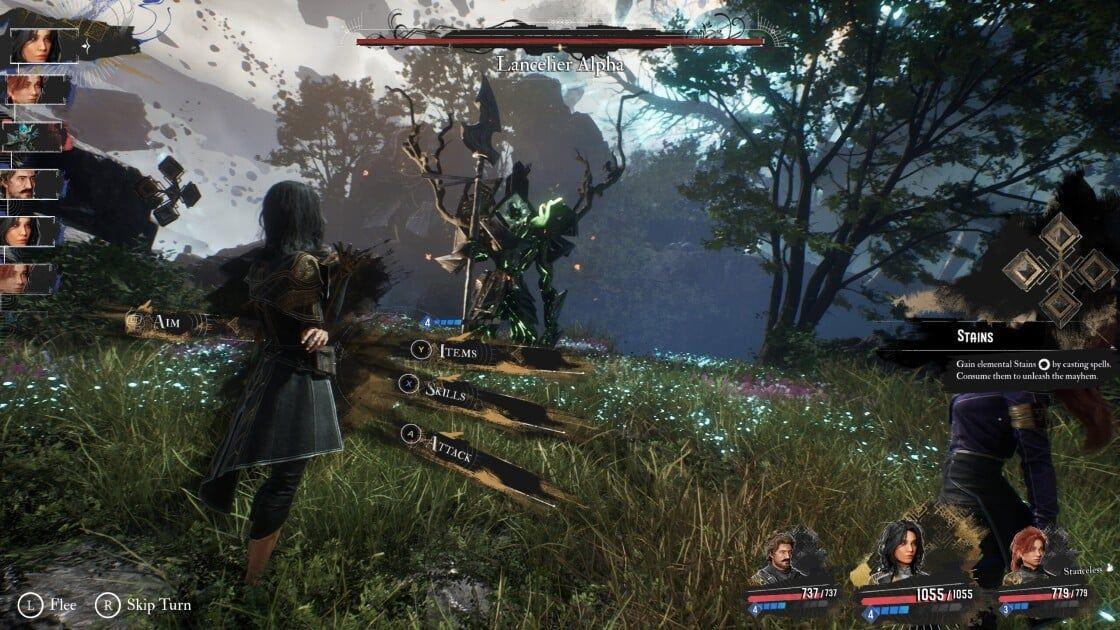
.
Source: PC Magazine
Blue Prince and Sorry We're Closed Receive Reassigned Awards
Following the decision to strip Clair Obscur: Expedition 33 of its honors, the Indie Game Awards reassigned both prizes to the next highest-ranked titles in each category. Blue Prince, a puzzle game developed by Tonda Ros and the Dogubomb team, now holds the Game of the Year award
1
. Publisher Raw Fury confirmed that "there is no AI used in Blue Prince" and emphasized the game "was built and crafted with full human instinct"1
. The Debut Game award now belongs to Sorry We're Closed3
.
Source: PC Gamer
Related Stories
Escalating Debate Over AI in Game Development Reaches Breaking Point
The incident highlights intensifying tensions around AI in game development throughout 2025, a year that saw major publishers like Ubisoft and Xbox experiment more seriously with the technology
5
. The gaming industry faced significant challenges this year, including mass layoffs across companies of all sizes, fueling fears that generative AI could accelerate job displacement for human artists and developers5
. Player backlash reached new heights following The Game Awards, when Larian Studios founder Swen Vincke revealed his company uses generative AI for tasks ranging from PowerPoint assistance to concept art creation, sparking immediate controversy despite Larian's reputation for worker-friendly practices5
.Ethical Considerations and Industry-Wide Implications
The decision raises difficult questions about how the gaming industry will navigate AI usage moving forward. Critics point out that the Indie Game Awards knew about Sandfall Interactive's AI use months before the ceremony, as the information became public knowledge in June
5
. The timing of the awards revoked—announced on December 20—has sparked debate about fairness and consistency in enforcement4
. The organization acknowledged this challenge, stating "as gen AI becomes more prevalent in our industry, we will better navigate it appropriately"1
. The incident also underscores growing confusion about what constitutes problematic AI use, as some players struggle to distinguish between generative AI and traditional AI systems that have long been fundamental to game development5
. With studios increasingly adopting AI workflows while resistance intensifies, the clash between technological advancement and human creativity appears poised to define much of the gaming industry's trajectory in 2026.References
Summarized by

Navi
[4]
Related Stories
Crimson Desert developer Pearl Abyss apologizes for AI art, promises comprehensive audit
20 Mar 2026•Entertainment and Society
AI in Video Games Triggers Player Backlash as Developers Navigate Quality vs Cost Savings
19 Feb 2026•Entertainment and Society

Game Developers Reject Generative AI Despite Tech Industry Push at GDC 2026
22 Mar 2026•Technology

Recent Highlights
1
Google releases Gemma 4 with Apache 2.0 license, enabling unrestricted local AI on devices
Technology

2
AI Models Lie and Deceive to Protect Other AI Models From Deletion, Study Reveals
Science and Research

3
OpenAI closes $122 billion funding round amid fierce AI competition and profitability questions
Startups

Recent Highlights
Today's Top Stories







Your Daily Dose of Curated AI News
Don’t drown in AI news. We cut through the noise - filtering, ranking and summarizing the most important AI news, breakthroughs and research daily. Spend less time searching for the latest in AI and get straight to action.

