Developer releases Codex Mortis, claiming it's the first 100% AI-generated playable game


4 Sources
4 Sources
[1]
This roguelite claims to have the dubious honor of being 'the world's first fully playable game created 100% through AI' in a milestone for slop everywhere
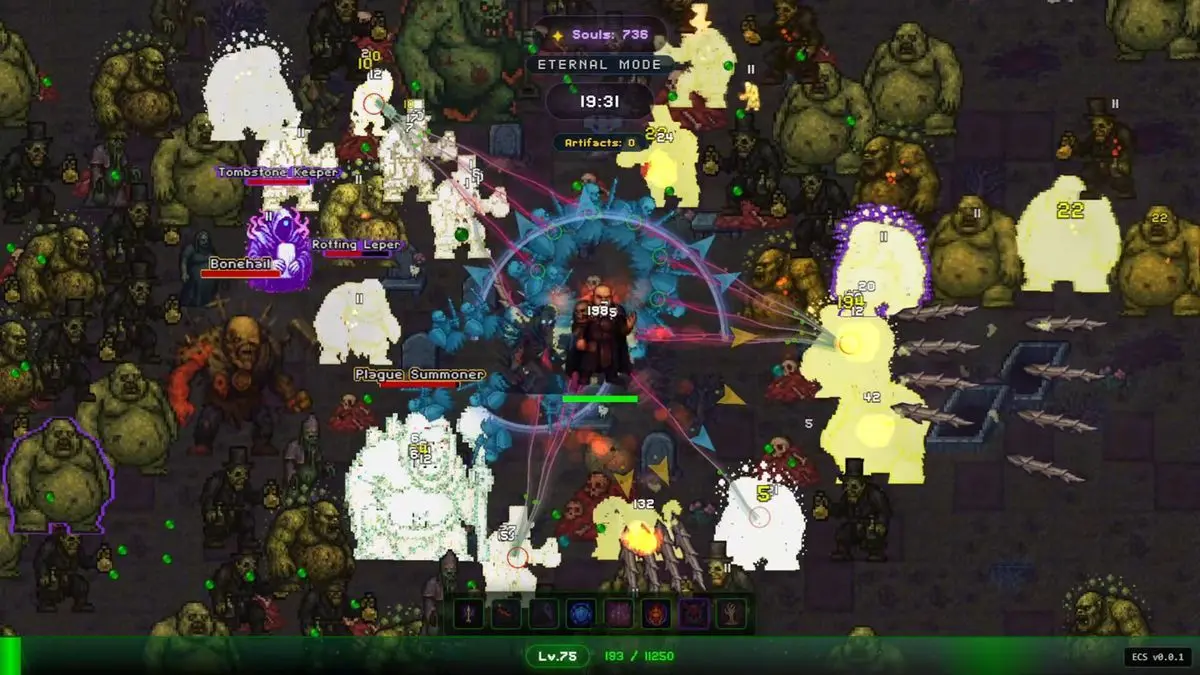
Codex Mortis was "100% vibe-coded" over three months using a mix of generative AI tools. It feels like generative AI is everywhere in game development -- a Google survey estimated 87% of game developers are using it in some capacity -- but generative AI is really everywhere in Codex Mortis, a Vampire Survivors-esque game the developer has called "the world's first fully playable game created 100% through AI" in a press release. Reminds me a bit of those labels on certain sodas that assure you they contain absolutely no real fruit juice. The game's developer, under the username Crunchfest3, posted about the development process on the AI game dev subreddit. The dev claimed that they forewent the use of a game engine, and that everything was slapped together with AI tools in just three months (though it was slightly more complicated than just typing an idea for a game into a text field). "It's pure TypeScript. I use PIXI.js for rendering, bitECS for the entity-component-system backend, and Electron to wrap it as a desktop app," Crunchfest3 wrote. "The whole thing was vibe-coded with Claude Code (mostly Opus 4.1 and 4.5)." The art, meanwhile, was generated by ChatGPT, and the game's animations "are a shader written by Claude Code." The game is only available in demo form at the moment on its Steam page. It takes a deliberately provocative posture, with its AI-generated cinematic trailer showing a robed sorcerer vaporizing a demon labeled "AI antis." The game itself certainly looks like AI made it, too: it's a bullet heaven in the vein of Vampire Survivors with a muddy, indistinct art style as the only element that visually distinguishes it from its inspirations. Still, it appears to be an honest-to-God videogame with many of its genre's trappings, which is interpretable as a milestone for the technology as a coding tool. The game's claim to be a world's first is hard to verify. Hobby coder David Friedman's Doomscroll is a browser game that was generated using ChatGPT, and I'm sure there are plenty of other games out there with similar ambitions to use generative AI for all it's worth in the game development process. Perhaps Codex Mortis is unique in that it's releasing on Steam, potentially as a paid product, but still, I'm not sure "vibe-coded" is necessarily a distinction to be proud of.
[2]
Here's "the world's first fully playable game created 100% through AI"
New Vampire Survivors-a-like Codex Mortis is perhaps one of the first games to proudly declare that everything, from its assets and code to the music, is "100 percent AI-driven". Developer Grolaf, aka Crunchfest, admits the game - which has taken three months to make - is created entirely with AI, with artwork created in Chat GPT, and animations created using "a shader written by Claude Code". No game engine was used - "it's pure TypeScript", apparently - with the developer explaining "I use PIXI.js for rendering, bitECS for the entity-component-system backend, and Electron to wrap it as a desktop app. The whole thing was vibe-coded with Claude Code (mostly Opus 4.1 and 4.5)." You can see it in action in the video below. "In Codex Mortis, Death is your weapon," the blurb teases (thanks, PC Gamer). "Mix five schools of dark magic, unleash devastating spell synergies, and raise undead armies in this necromantic bullet hell. Infinite builds, solo or co-op - embrace the forbidden and dominate. 100% AI-driven development." The developer said they started with a prototype "just to see if this was even feasible", and iterated from there. "Maintaining a consistent art style was tricky, but GPT managed to remember what visual style I liked and kept it consistent across different sessions," he told one commenter. "I just used regular GPT, not the image API. I also couldn't get character animations to work properly, so I went with shader-based wobbling instead. "First time building something without an engine. Integrating Steam with Electron wasn't as smooth as it is with Unity or Unreal. I tried Tauri first but it doesn't play nice with Steam at all. "And the most important takeaway: compared to traditional app development, this is way less mentally draining - kind of like giving an exoskeleton to a construction worker lol." While the game is yet to release, its Steam discussion forums are full with threads entitled "Lmao, this looks like ass", "Garbage AI slop", "Dangerous slippery slope", and "100% AI generated - don't buy and don't support this". There's only one thread that I could find that was ambivalent about its development, which simply asks: "Why everyone is butthurt about IA [sic] in game development?" Commenters over on r/aigamedev were a little less hostile, although several responses have been deleted, so make of that what you will.
[3]
Codex Mortis is a 100% AI-made roguelite bullet hell - and it's proving divisive as hell too
TL;DR: Codex Mortis takes pride in being the "first 100% AI-generated playable game" and it's a necromantic survival bullet hell which has polarized the gaming community as you might imagine. It's available to play as a Steam demo for those who want to test the waters of what a fully AI-made game might be like, but there are plenty who wouldn't go near it with a 10-foot skull staff. You want a PC game that's 100% been created by AI? No, neither do I, but we've got one, and it's a bullet hell roguelite called Codex Mortis. PC Gamer picked up on the game, which is still under development, but it's on Steam and there's a demo of Codex Mortis available if you dare to try it. In a press release, the developer (Crunchfest) states: "Crunchfest today released the playable demo for Codex Mortis, a necromantic survival bullet hell that makes gaming history as the first 100% AI-generated playable game. Plan your build, combine spells into synergies, and watch the battlefield erupt in beautiful chaos. The demo is available now on Steam for solo or local co-op play." In a Reddit post, the developer further explains how the game was made: "It's pure TypeScript. I use PIXI.js for rendering, bitECS for the entity-component-system backend, and Electron to wrap it as a desktop app. The whole thing was vibe-coded with Claude Code (mostly Opus 4.1 and 4.5)." So, if you were wondering how this was achieved, there you have it. I haven't played the demo of Codex Mortis, so I won't judge it - I hate these kinds of bullet hell games anyway, they're totally not for me - but the reaction it's getting is predictably mixed. On the one hand, it's not a trivial effort to make a game even if you are leveraging AI to do all of the heavy lifting, and there's some admiration of that. It took three months to complete the project (as it stands) outside of the dev's 9-to-5 job. On the other hand, there's enough AI slop out there already, and we don't want an avalanche of shovelled-out games joining all that. There's some criticism of the art direction (GPT was used here) feeling rather all over the place - and on that subject, the developer says that "maintaining a consistent art style was tricky, but GPT managed to remember what visual style I liked and kept it consistent across different sessions". Also, the AI-generated promo video that accompanies the demo is not going down well (and I can see why - it wasn't a good idea). Above all, though, the developer observes that the most important takeaway from this project for them was: "Compared to traditional app development, this is way less mentally draining - kind of like giving an exoskeleton to a construction worker lol."
[4]
Is the 'first 100% AI video game' the ultimate rage bait?
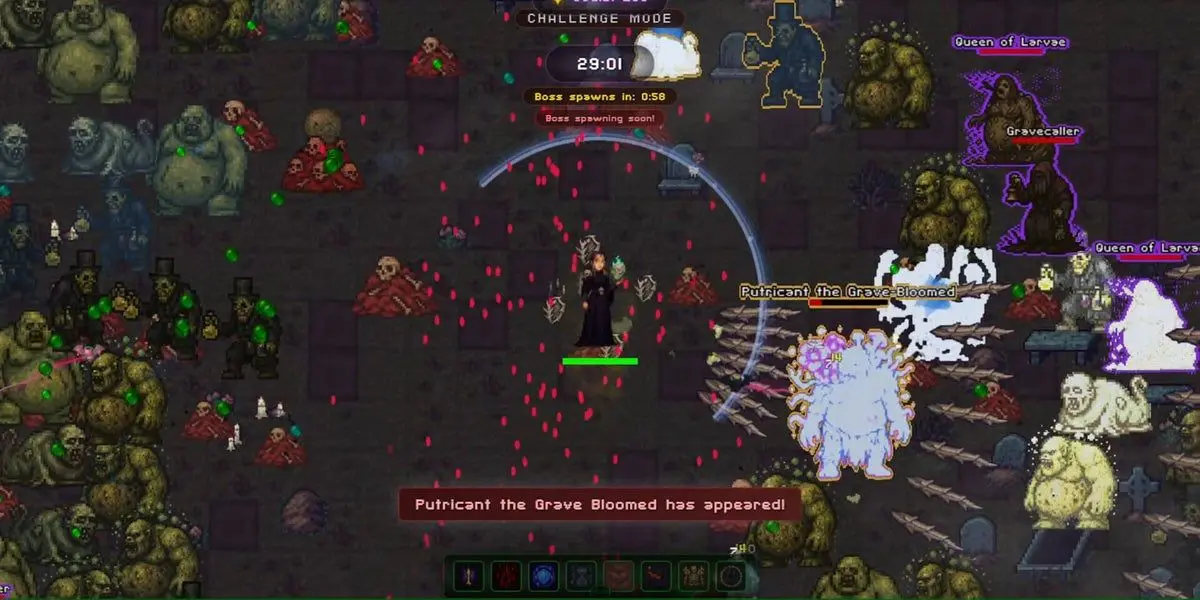
With so much controversy over the use of generative AI in video games, promoting a release as "the world's first fully playable game created 100% through AI" might seem a risky sales pitch. That's the boast being made about Codex Mortis by a developer going by the name of GROLAF. Riddled with AI artifacts, the trailer appears almost as if it were intentionally made to look bad. The game hardly supports the argument that AI can generate original ideas or visuals either. So are the developers of Codex Mortis pioneers, or just rage baiters in it for engagement (to make your game without vibe coding, see our guides to the best game development software and the best laptops for game development). Codex Mortis is described as a "necromantic survival bullet hell". There's a demo available on Steam, and the developer has provided documentation detailing how it was made entirely through AI algorithms and tools, from the text and art to the music. According to the description, players must assemble a 'death squad' and fight demonic enemies using spell combinations either solo or in multiplayer co-op. There are three mode: Escape, Challenge and Eternal. If you think it feels familiar, you're not the only one. Some are people commenting that it could be a mod of Luca Galante's popular Vampire Survivors. "The cleanest argument for AI just steals from artists yet," one person writes on YouTube. "This looks like a 1 year old made it by typing random stuff in an AI generator, and then a corrupt corporate game studio CEO's 5 year old gave it the green light. Great job contributing to the slop market!" another person writes. GROLAF surely expects responses. Indeed, it seems it's even looking for them in a bid to become the world's most hated developer. Perhaps the strategy is to sell the game to AI enthusiasts who might buy it just to spite the anti-AI movement, some suggest. Or it could be a way for a new developer to get attention before going on to make a real game. You can learn more about the game on Steam. What do you think? Is the developer intentionally courting controversy?
Share
Share
Copy Link
A developer using the name Crunchfest has released a Steam demo for Codex Mortis, a roguelite bullet hell game claiming to be the world's first fully playable game created 100% through AI. Built in three months using Claude Code and ChatGPT without a traditional game engine, the project has sparked intense debate about AI game development and drawn overwhelmingly negative reactions from the gaming community.
Developer Claims Historic Milestone with Codex Mortis
A developer known as Crunchfest, also going by Grolaf, has released what they're calling the world's first fully playable game created 100% through AI
1
. Codex Mortis, a necromantic survival roguelite bullet hell inspired by Vampire Survivors, was completed in just three months outside the developer's regular 9-to-5 job3
. The AI game is now available as a demo on Steam, where it describes itself as offering players the chance to "mix five schools of dark magic, unleash devastating spell synergies, and raise undead armies" in solo or local co-op modes2
.
Source: Creative Bloq
Inside the AI-Driven Process Behind the Game
The AI game development approach for Codex Mortis bypassed traditional game engines entirely. Crunchfest explained on the AI game dev subreddit that the project uses "pure TypeScript" with PIXI.js for rendering, bitECS for the entity-component-system backend, and Electron to wrap it as a desktop app
1
. The entire codebase was "vibe-coded" using Claude Code, primarily with Opus 4.1 and 4.5 models, while ChatGPT generated all the artwork2
. Even the game's animations rely on a shader written by Claude Code rather than traditional character animation techniques1
.
Source: TweakTown
The developer acknowledged several challenges with using generative AI tools exclusively. "Maintaining a consistent art style was tricky, but GPT managed to remember what visual style I liked and kept it consistent across different sessions," Crunchfest noted
2
. Technical hurdles included integrating Steam with Electron, which proved less smooth than with Unity or Unreal, and initial attempts with Tauri that failed entirely2
.Gaming Community Responds with Overwhelming Skepticism
The 100% AI-generated playable game has triggered a divisive response across gaming communities. Steam discussion forums filled with threads titled "Lmao, this looks like ass," "Garbage AI slop," and "Dangerous slippery slope"
2
. The game's visual presentation features what critics describe as a "muddy, indistinct art style" riddled with AI artifacts that distinguish it unfavorably from its inspirations1
. An AI-generated cinematic trailer showing a robed sorcerer vaporizing a demon labeled "AI antis" added fuel to the controversy1
.
Source: Eurogamer
Some observers question whether Codex Mortis represents intentional rage bait designed to court controversy
4
. "This looks like a 1 year old made it by typing random stuff in an AI generator," one YouTube commenter wrote4
. Others noted the game's striking similarity to Vampire Survivors, with some suggesting it could be mistaken for a mod4
.Related Stories

What This Milestone Means for the Industry
Whether Codex Mortis truly represents a milestone or merely contributes to the growing pile of AI slop remains contested. The game's claim as a world's first is difficult to verify—hobby coder David Friedman's Doomscroll is a browser game generated using ChatGPT, and numerous other projects have explored similar territory
1
. What may distinguish Codex Mortis is its release on Steam as a potentially paid product1
.The developer emphasized that "compared to traditional app development, this is way less mentally draining - kind of like giving an exoskeleton to a construction worker"
2
. This perspective highlights the ethical implications and practical considerations as AI tools become more prevalent. A Google survey estimated that 87% of game developers are already using generative AI in some capacity1
, suggesting that while full AI game development may be novel, partial integration is already standard practice. Whether Grolaf's project represents a strategy to attract AI enthusiasts or simply attention-seeking behavior before developing "a real game," the negative reactions underscore deep-seated concerns about quality, originality, and the future direction of game development4
.References
Summarized by

Navi
[3]
[4]
Related Stories
Studio Atelico's Bobium Brawlers lets players create creatures with AI while paying artist royalties
29 Jan 2026•Technology
AI-Generated Video Game Demo Sparks Controversy and Criticism
25 Oct 2025•Technology
Game Developers Reject Generative AI Despite Tech Industry Push at GDC 2026
22 Mar 2026•Technology

Recent Highlights
1
AI Models Lie and Deceive to Protect Other AI Models From Deletion, Study Reveals
Science and Research

2
AI chatbots validate you too much, making you less kind to others, Stanford study reveals
Science and Research

3
Judge blocks Pentagon from blacklisting Anthropic over AI safety guardrails dispute
Policy and Regulation

Recent Highlights
Today's Top Stories




Your Daily Dose of Curated AI News
Don’t drown in AI news. We cut through the noise - filtering, ranking and summarizing the most important AI news, breakthroughs and research daily. Spend less time searching for the latest in AI and get straight to action.

