Congress advances AI Overwatch Act, seeking veto power over Trump's AI chip exports to China


11 Sources
11 Sources
[1]
Congress wants veto power over Trump administration for AI chip exports -- new proposed AI Overwatch Act would shift ultimate control of high-performance chip exports
Legislators from the U.S. House of Representatives Foreign Affairs Committee this week advanced the AI Overwatch Act, originally introduced in December, which would give ultimate control over the exports of high-performance data center-grade AI processors to adversary nations to Congress. As reported by Reuters, the bill advanced after the White House introduced its new export rules for fairly advanced AI GPUs from AMD and Nvidia to China, along with a mechanism to get a 25% fee from the exporters. The AI Overwatch Act belongs to the same legislative family as the SAFE Chips Act introduced in early December, designed to curb shipments of advanced AI processors to adversary nations, such as China, Iran, North Korea, and Russia, but it does so in a different way. The new bill codifies existing performance limitations that allow AMD and Nvidia to ship their H20 and MI308 processors to entities in adversary nations that are not specifically blacklisted by the U.S. government without an export license from the U.S. Department of Commerce's Bureau of Industry and Security. However, everything that offers higher performance would not only be subjected to export controls by the DoC but would also require approvals from Congress, which would have veto power, under the new proposals. Essentially, if the bill becomes the law, then the U.S. Congress will be able to ban sales of AMD's Instinct MI325X and Nvidia's H200 processors to any Chinese customer, even if the executive branch explicitly allowed them. In addition, if passed, the legislation will terminate existing licenses, impose a temporary blanket denial until a new national security strategy is submitted, and subject any future approvals to 30-day congressional review. One interesting thing that the bill introduces is that under the AI Overwatch Act, a trusted U.S. person may deploy and operate advanced, otherwise restricted AI GPUs abroad without certain export licenses, provided the hardware remains under U.S. ownership and control, is not placed in a country of concern, and meets strict security, ownership, and audit requirements. In effect, the framework allows the U.S. to export AI capability as a service to allies and partners while keeping physical control of the most powerful processors in American ownership. For now, AMD, Nvidia, and others can sell high-end AI accelerators and servers to all countries except countries of concern without any restrictions. That is set to continue with the AI Overwatch. However, the trusted U.S. person framework is meant to governs ongoing control of AI compute beyond a one-time legal sale. If the bill becomes the law, it will ensure that even when allies access top-tier AI capability, ownership, oversight, and strategic leverage remain permanently with the United States. "Companies like Nvidia are requesting to sell millions of advanced AI chips, which are the cutting edge of warfare, to Chinese military companies like Alibaba and Tencent," said Brian Mast, the chair the U.S. House of Representatives Foreign Affairs Committee These are the same companies that work to spy against the United States of America, companies that the Chinese Communist Party uses to try and defeat the United States. This bill is very simple. It keeps America's advanced AI chips out of the hands of Chinese commie spies." Follow Tom's Hardware on Google News, or add us as a preferred source, to get our latest news, analysis, & reviews in your feeds.
[2]
House Seeks More Say in AI Chip Exports After Nvidia's China Win
Congress is one step closer to gaining the authority to review artificial intelligence chip sales to China, a move likely to open a rift with the Trump administration over plans to let Nvidia Corp. sell its powerful H200 processors to the world's second-largest economy. A House committee focused on foreign affairs approved bipartisan legislation Wednesday that calls for arms-sale style congressional oversight of advanced AI chip exports. Beyond oversight, the text endorsed by the panel's Republicans and Democrats would outright ban sales of Nvidia's more advanced Blackwell chips to China for at least two years, codifying existing export controls into law. The bill marks a response to President Donald Trump's decision last month to ease longstanding export controls on China, a move aimed at spurring adoption of American AI technology in global markets but one that drew strenuous objections from national security hawks in Congress. Trump's approval for Nvidia's H200 sales to Chinese customers was formalized by a new rule issued last week by the Commerce Department. The panel approved the bill by a 42-2 margin. It now heads to the House for a floor vote. The Senate has yet to release a companion version, but lawmakers there have introduced a separate bill that would effectively block H200 sales. "I have been so worried that the president wouldn't stop at just H200s," Representative Gregory Meeks, the top Democrat on the panel, said Wednesday. He added that lawmakers want to "send a clear message that our national security, our foreign policy, and our technological crown jewels are not for sale." Under the legislation, the administration would be required to notify Congress of advanced AI chip sales before they're approved, giving lawmakers the power to review and block export licenses to China, Russia, Iran, and other adversaries through a joint resolution. The measure calls for allowing members of House Foreign Affairs and Senate Banking committees to see the numbers of chips up for export as well as the end-users buying them. It also creates a way for so-called "trusted" US person's AI companies to receive license exemptions when sending chips to US allies and neutral countries -- an approach commended by Microsoft Corp. executive Fred Humphries -- and requires the administration to submit a strategy on its policy for maintaining the US lead in the AI race. Humphries said in a December statement on LinkedIn that Microsoft appreciates lawmakers' focus on ensuring the US leads in AI but has not endorsed a specific bill. Spokespeople for Nvidia didn't respond to a request for comment Wednesday. White House AI Czar David Sacks has publicly criticized the bill, the latest in a series of congressional attempts to rein in Trump administration efforts to let Nvidia and Advanced Micro Devices Inc. reenter China's fast-growing AI chip market. Last year, the White House helped derail a bill that called for giving US customers first dibs over AI chips potentially headed to China. Conservative political activist Laura Loomer also tore into the draft bill in a post on X, saying it "yanks control of advanced AI chip exports away from President Trump." Sacks and other Trump administration officials have argued that selling in China's market will encourage foreign companies to become reliant on American technology, boosting US leadership while offering a product that can compete with Huawei Technologies Co.'s systems. Nvidia has also pushed to be able to sell a modified version of its more-advanced Blackwell chip design to China. Trump's approach has been met with skepticism from Republicans and Democrats on Capitol Hill, who have coalesced around safeguarding US innovation from adversaries. China hawks warn that sending highly advanced American chips to the Asian country may inadvertently strengthen its military and economy, threatening US national security. Representative Brian Mast, a Florida Republican who chairs the committee, over the weekend blasted opposition to the bill, targeting Sacks, Nvidia and other White House allies. Since Trump took office, Nvidia has lobbied against nearly every congressional attempt to stop or restrict its chip sales to China. "We all agree that we are in an AI arms race," Mast, who introduced the bill, said Wednesday. "So why wouldn't we want to know what the AI arms dealers want to sell to our adversaries?"
[3]
Bill seeking oversight of AI exports advances to House
Bill still needs to pass the House and Senate before the president can sign or veto it President Trump's decision to green-light the sale of Nvidia H200 GPUs to China isn't sitting well with some of his Republican colleagues in the House of Representatives. These GOP politicians have proposed a bill that would give Congress final say over the export of AI chips to China and other countries of concern. Introduced by Rep. Brian Mast (R‑FL) in December, the "AI Overwatch Act" would give the House Foreign Affairs Committee, which Mast chairs, and the Senate Banking Committee at least 30 days to review and, if necessary, block the export of sensitive AI chips to adversary nations. On Wednesday, the Foreign Affairs Committee voted overwhelmingly to advance the measure to the House of Representatives with a favorable recommendation. "When the United States considers selling a C-130 or a fighter jet, or an engine that goes on one of those airframes, or ordnance that goes on the wing of a jet, or the avionics that go in a cockpit, or anything that has military use, it goes through a process known as the foreign military sales process," Mast said during a Foreign Affairs Committee meeting on Wednesday. Mast argues that the bill extends this same expectation of congressional oversight to the GPUs and accelerators that are now the subject of the AI arms race. "If we were just talking about war games on Xbox, then Jensen Huang can sell as many chips as he wants to anybody that he wants, and I should have absolutely no business having a say about whether he wants to do that. But this is not about kids playing Halo on their television." For the record, it's been a quarter century since Microsoft shipped an Xbox with Nvidia graphics on board. Mast is not the only Republican lawmaker who has expressed concern over the shift in the Trump administration's trade policy. In a letter to US Commerce Secretary Howard Lutnick last month, John Moolenaar (R-MI), the Chair of the House Select Committee on China, expressed his concerns with the reasoning behind allowing H200 sales to China. Moolenaar cited reports showing that China still trailed American chip designs despite advancements in rack-scale architectures -- specifically, Huawei's CloudMatrix-384, which we explored in detail here. "I am fully committed to advancing President Trump's vision for enduring U.S. AI dominance," Moolenaar wrote at the time. "I have serious concerns that granting China access to potentially millions of chips that are generations beyond its domestic capabilities will undermine those objectives." The H200 export deal itself is unusual in that sales of the chips are contingent on Uncle Sam getting a 25 percent cut of the revenues. These calls for greater oversight of American AI exports have caught the attention of high-level White House officials. Taking to the social network turned deepfake porn generator formerly known as Twitter, White House AI advisor David Sacks endorsed a post that speculated that the bill had been orchestrated by "never Trumpers" with financial support from Anthropic CEO Dario Amodei. "Correct," Sacks wrote in a retweet of the post. Amodei has repeatedly rallied for stiffer controls on the export of American AI accelerators to China. At the World Economic Forum in Davos, Switzerland this week, the exec likened shipments of H200 accelerators to China to giving nukes to North Korea. However, even if the AI Overwatch Act has won support in the House Foreign Affairs Committee, it still faces a long and uncertain road to becoming law. The bill will also need to pass in the House, Senate, and be signed by the president (or have his veto overridden) before Congress will get a say over US AI exports. ®
[4]
US House panel to vote on bill to give Congress authority over AI chip exports
NEW YORK, Jan 21 (Reuters) - A key Republican lawmaker scheduled a committee vote on Wednesday for a bill that would give Congress power over artificial intelligence chip exports, despite pushback from White House AI czar David Sacks, among others. Representative Brian Mast of Florida, chair of the House Foreign Affairs Committee, introduced the "AI Overwatch Act" in December after President Donald Trump greenlighted shipments of Nvidia's (NVDA.O), opens new tab powerful H200 AI chips to China. The legislation would give the House Foreign Affairs Committee and the Senate Banking Committee 30 days to review and potentially block licenses issued to export advanced AI chips to China and other adversaries. One source said the act's odds of passage increased after a coordinated media campaign last week against the bill. The legislation would ensure "our cutting-edge AI chips cannot be used by the Chinese military," Mast said at a hearing last week titled, "Winning the AI Arms Race against the Chinese Communist Party." A spokesperson for Sacks and the White House did not respond to requests for comment. Last week, Sacks reposted a post from an X account called "Wall Street Mav" that claimed the bill was being orchestrated by Never Trumpers and former staffers to Presidents Barack Obama and Joe Biden to undermine Trump's authority and his America First strategy. The post singled out the CEO of AI firm Anthropic, Dario Amodei, claiming he hired former Biden staffers to push the issue. "Correct," Sacks wrote. An Anthropic spokesperson declined to comment on the claims and the bill. But Amodei has been outspoken about preventing China from getting advanced chips like the H200. "It would be a big mistake to ship these chips," Amodei said on Tuesday at the World Economic Forum in Davos, Switzerland. "I think this is crazy. It's a bit like selling nuclear weapons to North Korea." Conservative activist Laura Loomer, among others, also tweeted criticism of the bill last week, calling it "pro-China sabotage disguised as oversight." Mast rejected the criticism. "The president was beyond wise to prevent ASML (ASML.AS), opens new tab from selling the most advanced chip making tools to China, as well as banning Nvidia Blackwell chips," he wrote in response to Sacks' comment. "You can advise him to sell H200 chips to China if you want, I advise the opposite." Nvidia did not respond to requests for comment. Nor did the U.S. Department of Commerce, which oversees export controls. If the bill moves out of committee, it must pass in both the full Senate and the House, and then must be signed by the president. Reporting by Karen Freifeld; Editing by Jamie Freed Our Standards: The Thomson Reuters Trust Principles., opens new tab
[5]

Trump wants Nvidia to sell powerful AI chips to Beijing. Washington's China hawks are pushing back
U.S. President Donald Trump's plan to grant Nvidia licenses to ship some of its more powerful artificial intelligence chips to China is ruffling the feathers of some of Washington's most prominent China hawks, including members of his own party. The pushback intensified this week with the U.S. House of Representatives Foreign Affairs Committee advancing a bill that seeks to expand congressional oversight of AI chip exports. The proposal, known as the AI Overwatch Act, was introduced last month by Rep. Brian Mast, R-Fla., the committee chairman. It would require both the House Foreign Affairs Committee and Senate Banking Committee to approve any shipment licenses for advanced chips in 30 days, giving lawmakers the power to block sales through a joint resolution. The bill comes as the Trump Administration plans to grant licenses allowing Nvidia to sell its H200 chips to China, which are far more powerful than the processors previously permitted for export. If passed, the AI Overwatch Act would revoke existing licenses for such AI chip transfers and impose a temporary ban until the administration submits a national security strategy on AI exports. It includes exemptions for "trusted" U.S. companies shipping chips abroad under U.S. control, provided they meet security standards. "Companies like Nvidia are requesting to sell millions of advanced AI chips, which are the cutting edge of warfare, to Chinese military companies like Alibaba and Tencent," said Chairman Mast, framing it as a national security risk. The bill was also cosponsored by the Republican Chairman of the Select Committee on China, Rep. John Moolenaar, R-Mich., who called it a "critical step toward protecting America's technological edge." Still, it remains unclear the extent of support that the AI Overwatch Act can attract in the House and Senate. Disagreement in Washington The act is likely to serve as a linchpin in a larger battle developing in Washington between lawmakers who see Nvidia chip exports as a national security risk and officials who argue that the exports help maintain U.S. technological dominance. Among the latter camp is White House AI and crypto czar David Sacks, who has already criticized the AI Overwatch Act. The Silicon Valley entrepreneur and investor recently reposted a viral social media claim that the bill would undermine Trump's authority over AI chip exports. Sacks and those in the Trump administration who support more Nvidia shipments overseas have argued that U.S. chip restrictions have been counterproductive and have ceded ground to Chinese competitors. Instead, they say it is advantageous for U.S.-designed chips to remain at the center of global AI infrastructure. This is consistent with arguments made by Nvidia CEO Jensen Huang and industry lobbyists. Bipartisan lawmakers on the other side, however, have argued that Nvidia's H200s could bolster China's AI capabilities and be leveraged by its military. Current U.S. chip controls require individual licenses from the Commerce Department for any exports or transfers of high-performance AI chips to entities in "countries of concern," including China, Cuba, Iran, North Korea, and Russia. These controls have covered Nvidia's H200, one of its most powerful AI chips. But last week, Trump confirmed his administration would approve sales of the processors to China, provided the U.S. receives a 25% cut of the proceeds.
[6]

Washington Is Divided on AI Chip Exports as Anthropic CEO Deems China Sales a 'Mistake'
Washington is divided on AI, yet again. At the center of the clash is AI chip exports. Last month, Trump finally allowed Nvidia to sell its H200 chips to China. The chips are less advanced than Nvidia's latest American offerings, but they are still advanced enough to be used in American industry and are certainly more advanced than the previously allowed China-special H20 chips, which Beijing was not happy about. The move was considered a win-win by some. The U.S. government would take 25% of Nvidia's China sales, Chinese AI companies would get access to even better chips than they used to, and Nvidia could finally start to see sales rise in one of its biggest markets. Nvidia CEO Jensen Huang spent the majority of his public-facing time the past few months trying to convince government officials to get behind this deal. While some in D.C. were worried that sending Nvidia chips to power Chinese AI innovations would not only cause the U.S. to lose the AI race but would also jeopardize national security, Huang argued the opposite. He has claimed that as long as the Chinese AI industry stays dependent on Nvidia's infrastructure, the U.S. will continue to have the upper hand. Although he may have convinced some, like Trump and his AI Czar David Sacks, it seems Congress is not entirely on board. And they are demanding to be heard. "Should Congress have oversight when selling missiles to other countries? Yes, the same should be said for chips," Republican Florida Rep. Brian Mast said in a House Foreign Affairs Committee hearing last week. "Nvidia has made such good chips that if they were sold freely to the CCP, the CCP would likely overtake us in the AI arms race," Mast, who is also the Chairman of the committee, said. "These chips, they're not just kids playing video games on an Xbox, playing war games. They affect real wars, real weapons, real war power, and they will be a part of bringing about real casualties." Last month, following Trump's H200 announcement, Mast introduced the AI Overwatch Act, a bill that gives both the House Foreign Affairs Committee and the Senate Banking Committee the authority to block AI chips export licenses to China and other countries that are deemed to be adversaries. On Wednesday, the House Foreign Affairs Committee voted to advance the bill, and it now faces a full House vote. Although the bill got overwhelming support in the Committee, it's unclear if it will pass Congress. Similar bills trying to restrict chip exports have failed, like the GAIN AI Act, which also drew considerable ire from Nvidia. The bill is proving to be polarizing not just in Washington politics but also within MAGA itself. Despite Mast also being staunchly aligned with Trump, the bill has gotten quite a rise out of other prominent MAGA figures, chief among them being Trump's AI czar, David Sacks. Last week, Sacks confirmed a post on X claiming that the AI Overwatch Act's aim was to "take away President Trump's authority as Commander in Chief and undermine his America First strategy." The post also claimed that the bill was secretly orchestrated by "Never Trumpers and Obama/Biden former staffers" and Anthropic CEO Dario Amodei. MAGA influencer Laura Loomer also took to X to rage against the bill, calling it "pro-China sabotage disguised as oversight." Mast, in return, accused Loomer of repeating "NVIDIA's lobbying talking points to sell chips to China." Anthropic CEO Amodei, for his part, is openly at odds with his company's strategic partner Nvidia, and thinks allowing Nvidia chips to enter China is "crazy" and "a mistake." "It's a bit like selling nuclear weapons to North Korea and [bragging that] Boeing made the casings," Amodei told the World Economic Forum in Davos on Tuesday, per TechCrunch. Amodei's words must not have angered Huang that much, as he took the stage in Davos on Wednesday and spoke very highly of Anthropic's AI assistant Claude.
[7]

Bill to curb chip sales to China advances out of committee
Why it matters: The legislation has riled up the MAGA base, which views it as undermining President Trump's authority. Driving the news: The committee on Wednesday voted 42-2, with one present, to advance Chair Brian Mast's (R-Fla.) bill. * Reps. Rich McCormick (R-Ga.) and Andy Barr (R-Ky.) voted no, with Rep. Darrell Issa (R-Calif.) voting present. * The bill now includes a two-year ban on Nvidia Blackwell chip sales to China as part of a bipartisan agreement. * The legislation would also allow the White House to add more countries, a change that Mast said was done with the technical assistance of the administration. Behind the scenes: Ahead of the vote, tech advocacy group Americans for Responsible Innovation circulated a fact sheet to Republicans on the committee countering arguments against the bill. * The fact sheet notes China's admission that it can't beat the U.S. in AI without better chips. It also states that the legislation would bolster Trump's AI action plan by expediting U.S. exports to allies. The other side: Some argue that the chips the U.S. will permit China to buy aren't the most advanced and that allowing exports keeps Beijing dependent on American tech. Context: Mast introduced the bipartisan AI Overwatch Act in December and is pitching it as a way for the White House to ensure that chip sales take national security conditions into consideration. * White House AI and crypto czar David Sacks has pushed back on the bill, along with MAGA figures like Laura Loomer. What they're saying: Rep. Warren Davidson (R-Ohio) said at the markup that "influencers at the behest of foreign governments and corporate lobbyists have spread immense amounts of lies and half-truths" about the legislation in recent days to try to scuttle it. * "Some have tried to call it somehow 'pro China,' when the opposite is clear. Somehow people have called it 'anti Trump' when the reality is it implements the offensive plan President Trump has laid out for American companies to lead the way," he said. * "I believe that we all agree that we are in an AI arms race, so why wouldn't we want to know what the AI arms dealers want to sell to our adversaries?" Mast said. What we're watching: House Majority Leader Steve Scalise has not taken a position on the bill, and he's key to whether the AI Overwatch Act gets a vote in the full chamber.
[8]

House Republican squares off against Nvidia, Sacks over AI chip bill
Rep. Brian Mast (R-Fla.) is squaring off against chipmaker Nvidia and White House artificial intelligence (AI) and crypto czar David Sacks, as he seeks to defend his legislation that would give Congress the power to block certain AI chip exports. Mast, who serves as chair of the House Foreign Affairs Committee, began fielding pushback to his AI Overwatch Act from several conservative accounts on the social platform X last week, including far-right activist Laura Loomer. The AI Overwatch Act, which the congressman introduced in December, would allow Congress to block advanced chip exports to U.S. foreign adversaries like China and Russia, creating a review process modeled after Congress' oversight of foreign arms sales. Loomer slammed the measure Thursday as "pro-China sabotage disguised as oversight" and called on lawmakers to "kill the bill." "It yanks control of advanced AI chip exports away from President Trump who is aggressively blocking CCP access to these chips, and instead hands veto power to Congress," she wrote on X. "When the Democrats take back the House in 2026, Hakeem Jeffries @RepJeffries could greenlight sales of these chips to China or delay Trump's America First crackdown to help our adversaries," Loomer added. Mast pushed back on Loomer, suggesting this "isn't a serious argument" and is instead "NVIDIA's lobbying talking points to sell chips to China." Sacks also chimed in, agreeing with a post accusing the bill of attempting to take away President Trump's authorities and limit his ability to strategically position the U.S. in relation to China. In response, Mast touted the president's previous decisions to block sales of certain chipmaking tools and Nvidia's most advanced chips to China, saying he is "going to work to continue that momentum." "You can advise him to sell H200 chips to China if you want, I advise the opposite," he added to Sacks. "That's your prerogative." At the heart of this debate are Trump's recent decisions on chip exports, including Nvidia's H200 chips, which have split the president and the China hawks in his party. Last summer, the president agreed to allow sales of Nvidia's H20 chips to China in exchange for a 15 percent cut of revenue. The move faced pushback from Democrats and GOP China hawks, who voiced concerns that the chips could boost Beijing's AI capabilities at a key moment in the race to dominate the technology. Trump announced in December that he would also allow sales of the more powerful H200 chips in exchange for a 25 percent cut, prompting the same concerns. Last week, the administration published new regulations formalizing the shift and announced a 25 percent tariff on some advanced chips, including the H200. Mast took aim at Nvidia over the weekend amid the backlash to his bill, accusing the company of "fighting to sell millions of advanced AI chips to Chinese military companies like Alibaba and Tencent." "I'm trying to stop that from happening. Jensen, if you ever feel like debating the actual facts, I'll meet you anytime, anywhere," he wrote, referring to Nvidia CEO Jensen Huang. "And every so-called MAGA influencer being paid to push this garbage should be embarrassed," the Florida Republican added, criticizing the company for its policy allowing transgender employees to use bathrooms that align with their gender identities. The Hill has reached out to Nvidia for comment. Several other lawmakers have put forward measures to rein in AI chip exports in recent months. The GAIN AI Act, from Sens. Jim Banks (R-Ind.) and Elizabeth Warren (D-Mass.), sought to require chipmakers to give U.S. companies first priority on chips. It passed the Senate in October as part of the National Defense Authorization Act (NDAA) but was ultimately stripped out of the bill in the face of White House resistance to the measure. Sens. Pete Ricketts (R-Neb.) and Chris Coons (D-Del.) also introduced the SAFE Chips Act in December, seeking to lock in existing chip export restrictions for more than two years.
[9]

US House panel to vote on bill to give Congress authority over AI chip exports
A key Republican lawmaker scheduled a committee vote on Wednesday for a bill that would give Congress power over artificial intelligence chip exports, despite pushback from White House AI czar David Sacks, among others. A key Republican lawmaker scheduled a committee vote on Wednesday for a bill that would give Congress power over artificial intelligence chip exports, despite pushback from White House AI czar David Sacks, among others. Representative Brian Mast of Florida, chair of the House Foreign Affairs Committee, introduced the "AI Overwatch Act" in December after President Donald Trump greenlighted shipments of Nvidia's powerful H200 AI chips to China. The legislation would give the House Foreign Affairs Committee and the Senate Banking Committee 30 days to review and potentially block licenses issued to export advanced AI chips to China and other adversaries. One source said the act's odds of passage increased after a coordinated media campaign last week against the bill. The legislation would ensure "our cutting-edge AI chips cannot be used by the Chinese military," Mast said at a hearing last week titled, "Winning the AI Arms Race against the Chinese Communist Party." A spokesperson for Sacks and the White House did not respond to requests for comment. Last week, Sacks reposted a post from an X account called "Wall Street Mav" that claimed the bill was being orchestrated by Never Trumpers and former staffers to Presidents Barack Obama and Joe Biden to undermine Trump's authority and his America First strategy. The post singled out the CEO of AI firm Anthropic, Dario Amodei, claiming he hired former Biden staffers to push the issue. "Correct," Sacks wrote. An Anthropic spokesperson declined to comment on the claims and the bill. But Amodei has been outspoken about preventing China from getting advanced chips like the H200. "It would be a big mistake to ship these chips," Amodei said on Tuesday at the World Economic Forum in Davos, Switzerland. "I think this is crazy. It's a bit like selling nuclear weapons to North Korea." Conservative activist Laura Loomer, among others, also tweeted criticism of the bill last week, calling it "pro-China sabotage disguised as oversight." Mast rejected the criticism. "The president was beyond wise to prevent ASML from selling the most advanced chip making tools to China, as well as banning Nvidia Blackwell chips," he wrote in response to Sacks' comment. "You can advise him to sell H200 chips to China if you want, I advise the opposite." Nvidia did not respond to requests for comment. Nor did the US Department of Commerce, which oversees export controls. If the bill moves out of committee, it must pass in both the full Senate and the House, and then must be signed by the president.
[10]

The US seeks to tighten oversight of AI chip exports to China
The House Foreign Affairs Committee has overwhelmingly passed the AI Overwatch Act, legislation aimed at strengthening Congress's oversight of exports of advanced artificial intelligence chips, particularly to China. Backed by Republican Brian Mast, the bill comes amid heightened geopolitical tensions over transfers of sensitive technology. It follows a recent decision by President Donald Trump to allow exports to China of Nvidia's new H200 chips. The proposal would give the relevant congressional committees 30 days to review-and potentially block-any license to export AI chips to countries deemed hostile. Brian Mast likened the technologies to strategic weapons and argued for oversight on par with that applied to military equipment. The bill must still be approved by the full House and then the Senate before it could take effect. The initiative has drawn sharp reactions on social media, where it has been targeted by a disinformation campaign amplified by some conservative and business figures. David Sacks, the White House's AI chief, fueled the controversy by publicly backing allegations aimed at associates of the Biden administration and Anthropic CEO Dario Amodei. Amodei, in response, denounced AI chip exports to hostile regimes as a serious strategic mistake. Despite the controversy, several committee members defended the bill as necessary to protect national security. Republican Michael McCaul denounced efforts by certain interest groups to derail the measure in favor of their economic interests. Neither Nvidia nor the Commerce Department has so far commented on the AI Overwatch Act's progress, which could mark a turning point in US technology policy toward China.
[11]
US House panel to vote on bill to give Congress authority over AI chip exports
NEW YORK, Jan 21 (Reuters) - A key Republican lawmaker scheduled a committee vote on Wednesday for a bill that would give Congress power over artificial intelligence chip exports, despite pushback from White House AI czar David Sacks, among others. Representative Brian Mast of Florida, chair of the House Foreign Affairs Committee, introduced the "AI Overwatch Act" in December after President Donald Trump greenlighted shipments of Nvidia's powerful H200 AI chips to China. The legislation would give the House Foreign Affairs Committee and the Senate Banking Committee 30 days to review and potentially block licenses issued to export advanced AI chips to China and other adversaries. One source said the act's odds of passage increased after a coordinated media campaign last week against the bill. The legislation would ensure "our cutting-edge AI chips cannot be used by the Chinese military," Mast said at a hearing last week titled, "Winning the AI Arms Race against the Chinese Communist Party." A spokesperson for Sacks and the White House did not respond to requests for comment. Last week, Sacks reposted a post from an X account called "Wall Street Mav" that claimed the bill was being orchestrated by Never Trumpers and former staffers to Presidents Barack Obama and Joe Biden to undermine Trump's authority and his America First strategy. The post singled out the CEO of AI firm Anthropic, Dario Amodei, claiming he hired former Biden staffers to push the issue. "Correct," Sacks wrote. An Anthropic spokesperson declined to comment on the claims and the bill. But Amodei has been outspoken about preventing China from getting advanced chips like the H200. "It would be a big mistake to ship these chips," Amodei said on Tuesday at the World Economic Forum in Davos, Switzerland. "I think this is crazy. It's a bit like selling nuclear weapons to North Korea." Conservative activist Laura Loomer, among others, also tweeted criticism of the bill last week, calling it "pro-China sabotage disguised as oversight." Mast rejected the criticism. "The president was beyond wise to prevent ASML from selling the most advanced chip making tools to China, as well as banning Nvidia Blackwell chips," he wrote in response to Sacks' comment. "You can advise him to sell H200 chips to China if you want, I advise the opposite." Nvidia did not respond to requests for comment. Nor did the U.S. Department of Commerce, which oversees export controls. If the bill moves out of committee, it must pass in both the full Senate and the House, and then must be signed by the president. (Reporting by Karen Freifeld; Editing by Jamie Freed)
Share
Share
Copy Link
The House Foreign Affairs Committee voted 42-2 to advance the AI Overwatch Act, which would give Congress veto power over AI chip exports to China and other adversaries. The bipartisan legislation challenges Trump's decision to allow Nvidia H200 sales to China with a 25% revenue cut, creating a rift between China hawks in Congress and the White House over national security versus technological dominance.
Congressional Oversight Challenges Trump's AI Chip Export Strategy
The House Foreign Affairs Committee advanced the AI Overwatch Act by a 42-2 margin on Wednesday, setting up a potential showdown between Congress and the Trump administration over control of AI chip exports to China and other adversary nations
2
. The bipartisan legislation, introduced in December by Representative Brian Mast, would require both the House Foreign Affairs Committee and Senate Banking Committee to review and potentially block export licenses for advanced AI processors within 30 days through a joint resolution4
.
Source: Bloomberg
The bill represents a direct response to President Donald Trump's decision last month to ease longstanding export controls on China, specifically approving Nvidia H200 processors sales with a 25% revenue cut requirement
5
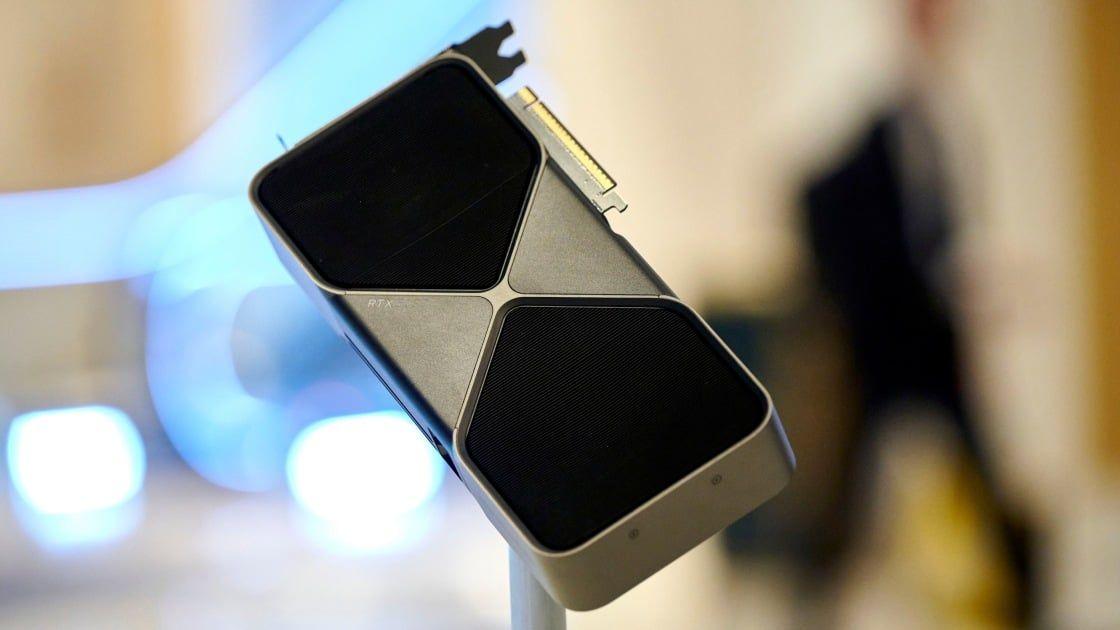
. Under the AI Overwatch Act, Congress would gain veto power over chip exports, allowing lawmakers to ban sales of Nvidia H200 processors and AMD's Instinct MI325X to Chinese customers even if the executive branch explicitly authorized them1
.
Source: Market Screener
Codifying Export Controls and Terminating Existing Licenses
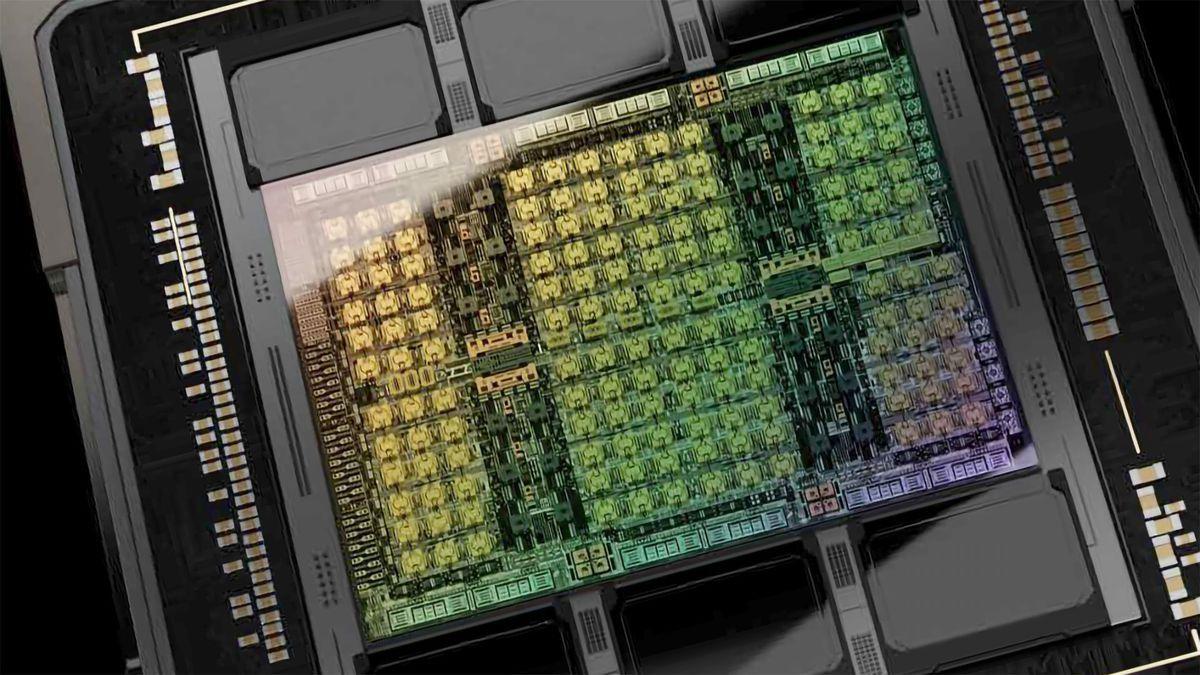
The legislation would codify existing performance limitations that currently allow AMD and Nvidia to ship H20 and MI308 processors to entities in adversary nations not specifically blacklisted by the U.S. government
1
. Beyond oversight, the text endorsed by Republicans and Democrats would outright ban sales of Nvidia's more advanced Blackwell chips to China for at least two years, transforming advanced AI chip export controls from regulatory guidelines into federal law2
.
Source: Tom's Hardware
If passed, the AI Overwatch Act would terminate existing licenses, impose a temporary blanket denial until a new national security strategy is submitted, and subject any future approvals to congressional review
1
. The measure calls for allowing members of the House Foreign Affairs Committee and Senate Banking committees to see the numbers of chips up for export as well as the end-users buying them, providing unprecedented transparency in the approval process2
.Trusted US Person Framework for Allied Nations
One notable provision in the legislation creates a framework for "trusted" U.S. companies to receive license exemptions when sending chips to U.S. allies and neutral countries. Under this arrangement, a trusted U.S. person may deploy and operate advanced, otherwise restricted AI GPUs abroad without certain export licenses, provided the hardware remains under U.S. ownership and control, is not placed in a country of concern, and meets strict security, ownership, and audit requirements
1
. Microsoft executive Fred Humphries commended this approach, though the company has not endorsed a specific bill2
.This framework allows the U.S. to export AI capability as a service to allies and partners while keeping physical control of the most powerful processors in American ownership, ensuring that even when allies access top-tier AI capability, ownership, oversight, and strategic leverage remain permanently with the United States
1
.White House Pushback and Political Tensions
White House AI czar David Sacks has publicly criticized the bill, endorsing social media claims that the legislation was orchestrated by "never Trumpers" to undermine Trump's authority over AI chip exports
3
. Conservative political activist Laura Loomer also attacked the draft bill in a post on X, saying it "yanks control of advanced AI chip exports away from President Trump"2
.Sacks and other Trump administration officials have argued that selling in China's market will encourage foreign companies to become reliant on American technology, boosting US technological leadership while offering a product that can compete with Huawei Technologies' systems
2
. This approach has been met with skepticism from Republicans and Democrats on Capitol Hill, who have coalesced around safeguarding U.S. innovation from adversary nations.Related Stories
National Security Risk Versus Technological Dominance Debate
"Companies like Nvidia are requesting to sell millions of advanced AI chips, which are the cutting edge of warfare, to Chinese military companies like Alibaba and Tencent," said Brian Mast, framing the issue as a national security risk
5
. Mast argued that these are the same companies that work to spy against the United States and that the Chinese Communist Party uses to try and defeat the United States1
.China hawks warn that sending highly advanced American chips to the Asian country may inadvertently strengthen its military and economy, threatening U.S. national security
2
. Representative Gregory Meeks, the top Democrat on the panel, said lawmakers want to "send a clear message that our national security, our foreign policy, and our technological crown jewels are not for sale"2
.The AI Arms Race and Path Forward
Mast compared the proposed congressional oversight to the foreign military sales process used for weapons exports, arguing that AI accelerators now represent the same strategic importance in the AI arms race
3
. Representative John Moolenaar, Chairman of the Select Committee on China and cosponsor of the legislation, cited reports showing that China still trailed American chip designs despite advancements in rack-scale architectures, expressing concerns that granting China access to potentially millions of chips generations beyond its domestic capabilities will undermine U.S. AI dominance objectives3
.The bill now heads to the House for a floor vote, though the Senate has yet to release a companion version
2
. Even if the AI Overwatch Act wins support in the House, it still faces a long road to becoming law, requiring passage in both the Senate and House, and must be signed by the president or have his veto overridden before Congress will gain authority over U.S. AI exports3
. The debate highlights a fundamental tension in U.S. trade policy between maintaining technological dominance through market presence and protecting national security through export restrictions, with geopolitical risk calculations at the center of this emerging battle in Washington.References
Summarized by

Navi
[3]
Related Stories
Senators Push SAFE Chips Act to Block Advanced AI Chips Sales to China for 30 Months
05 Dec 2025•Policy and Regulation
Tech Giants Split as White House Opposes AI Chip Export Restrictions on Nvidia
14 Nov 2025•Policy and Regulation

U.S. Legislator Challenges Trump Administration's Decision to Resume Nvidia H20 GPU Sales to China
19 Jul 2025•Policy and Regulation
Recent Highlights
1
Apple Plans Major Siri AI Overhaul in iOS 27 With Third-Party Chatbot Integration
Technology

2
OpenAI shuts down Sora after six months, ending Disney's $1 billion licensing partnership
Technology

3
AI chatbots validate you too much, making you less kind to others, Stanford study reveals
Science and Research

Recent Highlights
Today's Top Stories






Your Daily Dose of Curated AI News
Don’t drown in AI news. We cut through the noise - filtering, ranking and summarizing the most important AI news, breakthroughs and research daily. Spend less time searching for the latest in AI and get straight to action.

