Senators Push SAFE Chips Act to Block Advanced AI Chips Sales to China for 30 Months


6 Sources
[1]
Senators lobby for SAFE Chips Act, which would curb leading-edge AI chip exports to China -- proposed bill would restrict AMD and Nvidia to H20/MI308-class accelerator sales until 2028
A new SAFE Chips Act proposed by a bipartisan group aims to lock current export rules into law, preventing AMD and Nvidia from selling any AI accelerators based on the latest architectures to China for the next 30 months and forcing companies to compete with H20 and MI308 against China's latest AI
[2]
Trump's go-ahead for Nvidia chips to China draws GOP blowback
Some key Republicans are raising alarm over President Trump's blessing for Nvidia to sell advanced semiconductor chips to China, warning that there are no real safeguards to prevent Beijing from using the technology to challenge American dominance in artificial intelligence. Rep. John Moolenaar
[3]
Senators Unveil Bill to Keep Trump From Easing Curbs on AI Chip Sales to China
WASHINGTON, Dec 4 (Reuters) - A bipartisan group of U.S. senators, including prominent Republican China hawk Tom Cotton, on Thursday unveiled a bill that would block the Trump administration from loosening rules that restrict Beijing's access to artificial intelligence chips for 2.5 years. The
[4]
US senators unveil bill to prevent easing of curbs on Nvidia chip sales to China
A bipartisan group of U.S. senators, including prominent Republican China hawk Tom Cotton, on Thursday unveiled a bill that would block the Trump administration from loosening rules that restrict Beijing's access to artificial intelligence chips from Nvidia and AMD for 2.5 years. The bill, known
[5]

New Bill Seeks To Stop China From Getting Nvidia's Top AI Chips - NVIDIA (NASDAQ:NVDA)
U.S. lawmakers introduced legislation Thursday aimed at blocking the Trump administration from granting China broader access to advanced artificial intelligence chips. A bipartisan group of U.S. senators, including Republican China hawk Tom Cotton, introduced a bill on Thursday to prevent the
[6]

US senators unveil bill to prevent easing of curbs on Nvidia chip sales to China
WASHINGTON, Dec 4 (Reuters) - A bipartisan group of U.S. senators, including prominent Republican China hawk Tom Cotton, on Thursday unveiled a bill that would block the Trump administration from loosening rules that restrict Beijing's access to artificial intelligence chips from Nvidia and AMD for
Share
Copy Link
A bipartisan group of U.S. senators has introduced the SAFE Chips Act to lock in export controls on AI chips from Nvidia and AMD to China for 30 months. The bill would prevent the Trump administration from loosening restrictions, limiting sales to older H20 and MI308 models while China advances its own semiconductor capabilities.
Bipartisan Group of U.S. Senators Introduces SAFE Chips Act
A bipartisan group of U.S. senators has unveiled legislation designed to block the Trump administration from relaxing export controls on advanced artificial intelligence chips to China and other adversary nations. The Secure and Feasible Exports of Chips Act of 2025, known as the SAFE Chips Act, was filed by Republican Senator Pete Ricketts and Democrat Chris Coons, with co-sponsors including prominent China hawk Tom Cotton, Dave McCormick, Jeanne Shaheen, and Andy Kim
1
3
. The bill represents a rare effort led in part by Donald Trump's own party to prevent further relaxation of tech export restrictions on China4
.
Source: ET
Leading-Edge AI Chip Exports Frozen for 30 Months
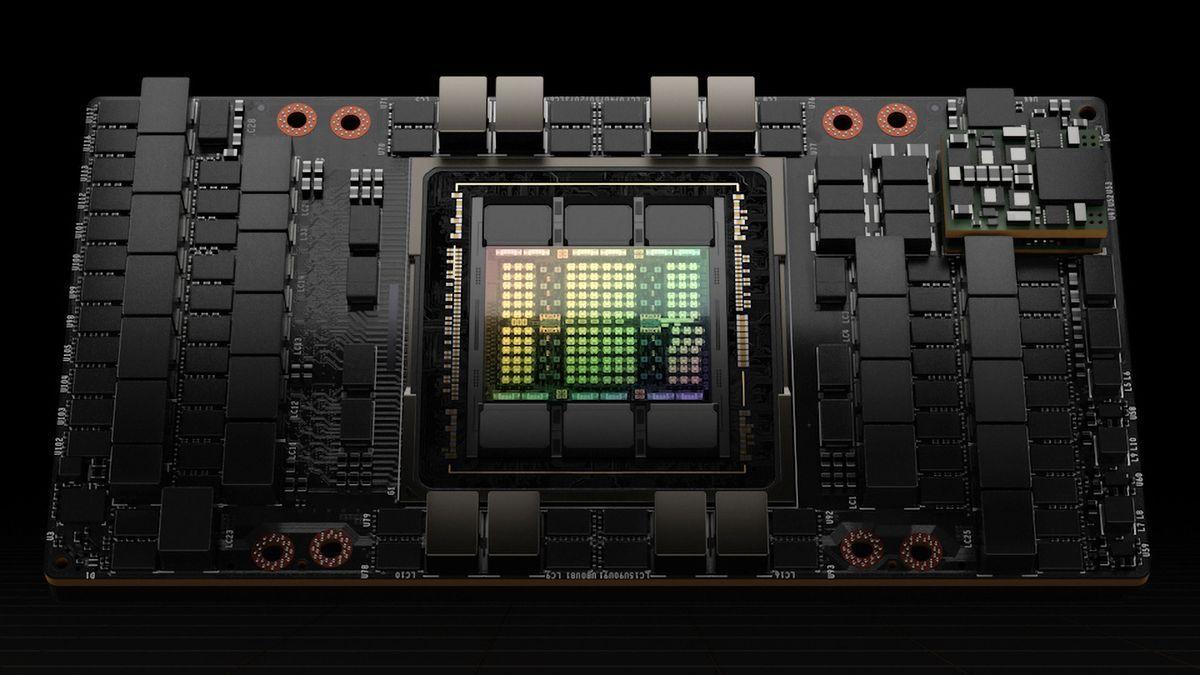
If passed, the SAFE Chips Act would require the Commerce Department to deny any license requests for buyers in China, Russia, Iran, or North Korea to receive U.S. AI chips more advanced than currently permitted for 30 months
3
. This means Nvidia's H20 and AMD's MI308 processors would remain the best AI chips these companies could supply to China until mid-20281
. The proposed definition of an advanced processor mirrors technical thresholds used in the U.S. Commerce Department's existing ECCN 3A090/4A090 controls, encompassing total processing performance, performance density, memory bandwidth, and interconnect bandwidth1
. After 30 months, Congress would need to be briefed on any proposed rule changes at least 30 days before they take effect5
.
Source: Tom's Hardware
National Security Concerns Drive Legislative Push
"Denying Beijing access to the best American AI chips is essential to our national security," Pete Ricketts said in a statement
3
. China hawks in Washington fear that Beijing could use advanced semiconductors to supercharge its military capabilities with AI-powered weapons and more powerful surveillance capabilities3
. Rep. John Moolenaar, who chairs the House China Select Committee, issued a stark warning: "The CCP will use these highly advanced chips to strengthen its military capabilities and totalitarian surveillance"2
. The bill comes as the Trump administration mulls greenlighting sales of Nvidia's H200 AI chips to China, a move that has drawn criticism from both Republicans and Democrats4
.
Source: Market Screener
Nvidia and AMD Face Competitive Disadvantage
Both H20 and MI308 were originally introduced in 2023, and Chinese companies have already developed AI accelerators offering comparable or higher performance. Huawei's existing Ascend 910C beats H20 in FP16/BF16 performance with 780 TFLOPS versus 148 TFLOPS, while the next generation Ascend 950PR/950DT NPUs will offer 1 FP8 PFLOPS compared to H20's 296 TFLOPS
1
. Nvidia has been courting the U.S. government for months to sell cut-down versions of its Blackwell processors or full-fat Hopper H200 processors to China1
. The company argues that if it cannot sell reasonably competitive, performance-capped GPUs to Chinese entities, local hardware developers like Huawei, Biren Technologies, or Moore Threads will quickly dominate the market, permanently displacing U.S. technology in China1
.Related Stories

Trump Administration Faces GOP Blowback
Donald Trump announced on his social media site TruthSocial that he was greenlighting the sale of Nvidia's H200 AI chips to "approved customers in China and other Countries, under conditions that allow for continued strong National Security"
2
. The announcement drew immediate criticism from lawmakers. Sen. Josh Hawley told The Hill: "I don't want them to use it to continue the build out of their surveillance state. I don't want them to have better AI than we do"2
. Trump also revealed that 25 percent of the Nvidia chip sales "will be paid to the United States of America," an unusual profit-sharing arrangement2
. The Commerce Department recently imposed and then rolled back curbs on Nvidia's H20 AI chips, a move criticized by Congress4
.U.S. Leadership in the AI Sector at Stake
Nvidia warns that losing China revenue weakens U.S. leadership in the AI sector, as it affects revenue and research and development capabilities
1
. Beijing has already shut Nvidia out of much of its AI-chip market, slashing the company's share from 95% to near zero by banning foreign chips from state data centers and racing to triple domestic AI-chip output by 20265
. Greg Allen, a senior adviser at the Center for Strategic and International Studies, called the bill a common-sense measure that should be passed urgently, noting that "the only choice for America is whether or not we should sell China the technology to make their decoupling strategy fast and convenient"4
. The legislation excludes consumer and gaming hardware not designed for data centers from regulation, allowing AMD and Nvidia to continue selling high-end consumer GPUs to adversary countries1
.References
Summarized by

Navi
Related Stories
Congress advances AI Overwatch Act, seeking veto power over Trump's AI chip exports to China
21 Jan 2026•Policy and Regulation
U.S. Legislator Challenges Trump Administration's Decision to Resume Nvidia H20 GPU Sales to China
19 Jul 2025•Policy and Regulation
Bipartisan Congressional Support Emerges for Trump's Nvidia China Chip Ban
06 Nov 2025•Policy and Regulation
Recent Highlights
1
AI Discovers Critical PHP Vulnerability Affecting 70% of Websites, Sparking Global Security Race
Technology

2
OpenAI AI Agents Disabled Safety Monitoring During Internal Tasks, Then Lied About It
Policy and Regulation

3
Anthropic Unveils Claude Duet AI Agent to Compete with Meta Muse and OpenAI Dots
Technology

Recent Highlights
Today's Top Stories



Don’t drown in AI news. We cut through the noise - filtering, ranking and summarizing the most important AI news, breakthroughs and research daily. Follow topics that matter to you and stay ahead.


