Digg relaunches with AI enhancements to compete as a toxicity-free Reddit rival


2 Sources
2 Sources
[1]
Digg Relaunches From the Grave With Some 'AI Enhancements'
For all the people who've abandoned or been kicked off Reddit, your Bluesky moment has arrived. If you find yourself nostalgic for an earlier era of the internet, you may welcome the news that after spending the last decade or so being passed between owners like a Christmas present no one wants, Diggâ€"the site that was Reddit before Redditâ€"has been relaunched, with its new incarnation now in open beta. Digg pioneered the idea of an aggregation site where users could vote on the merits of links shared by other users. It launched a year before Reddit, and the two sites fought for supremacy throughout the mid- and late-2000s before the combination of an ill-conceived 2010 redesign and an increasing tendency to highlight content from a small number of sources tipped the balance against Digg for good. Now, original co-founder Kevin Rose is back to try again; along with Reddit co-founder Alexis Ohanian, he re-acquired the site last year. Why? Well, Techcrunch’s report on the purchase described Rose’s sadness at seeing the internet having “become toxic, messy, and riddled with misinformation,†and explained that “[Rose and Ohanian] believe the rise of AI has presented an opportunity to rebuild Digg.†It’s certainly refreshing to see at least one pair of tech types pushing back against AI and taking a stand against the deluge of poisonous nonsense that the rise of consumer LLMs has dumped onto the internâ€"sorry, what? Oh. Ohhhhhhh. No, as it turns out, Digg’s resurrection isn’t some sort of brave stand against the machine. Instead, as the 2025 press release announcing Rose and Ohanian’s purchase made clear, their vision for fixing the damage that AI is doing to the internet involves turning to â€| AI: “Digg is primed to set itself apart from other platforms by focusing on AI innovations designed to enhance the user experience and build a human-centered alternative.†You wouldn’t know this from reading Digg’s “About†page, mind you. That page doesn’t mention AI at all. Instead, it promises to “bring back social discovery built by communities, not by algorithms.†Nor would you know it from the experience of using the new site. This is perhaps a testament to the success of the vision that Ohanian outlined in last year's press release, in which he opined, “AI should handle the grunt work in the background while humans focus on what they do best: building real connections.†The company isn't getting into all the details of how AI is being used at the moment, but it appears to have something to do with cutting down on human moderators. Rose said last year that "we've hit an inflection point where AI can become a helpful co-pilot to users and moderators, not replacing human conversation, but rather augmenting it, allowing users to dig deeper, while at the same time removing a lot of the repetitive burden for community moderators." So with all that out of the way, what’s it like using Digg in 2026? Well, as someone partial to old Diggâ€"it always seemed like Betamax to Reddit’s VHSâ€"the new site is very much like the original version. Digg was always more polished than Reddit, and its new incarnation remains so. Given that the site is in beta, there aren’t many communities to choose from, and new users’ feeds are populated with content from the 21 generic communities with which the site launched, but the site promises that this is as far as algorithmic curation will go: “You decide which communities you’ll join, and that’s what appears in your feed. It’s that simple.†Much of the discussion so far is about Digg itself, with users debating the merits of the new UI, discussing how to address spambots, and indulging in good old-fashioned nostalgia. Amusingly, one of the top questions in the /digg subreddit community is about how to opt out of the site’s AI-driven “TLDR†feature, which displays pop-up summaries of the contents of links, and its AI-hosted podcast. As per Mashable, Digg’s management has heard user feedback on the latter and is now pondering whether to stoop to “bringing in human hosts†for the show. The very fact that this is even a question to consider is a reminder of just how much the internetâ€"and, indeed, the worldâ€"has changed. When Digg launched for the first time in 2004, podcasts barely existed; the term itself was coined that same year, and iTunes didn’t support podcast subscriptions until 2005. It seems like a tall order for one of the original Web 2.0 sites to flourish again in the dark days of Web3, but given the ongoing problems at its biggest competitor, it's not impossibleâ€"and hey, these are halcyon days for zombies.
[2]
Digg launches public open beta as toxicity-free Reddit rival
Digg, rebooted by founder Kevin Rose and Reddit co-founder Alexis Ohanian, launched its public open beta on Wednesday to compete with Reddit. The platform uses AI-driven trust tools to curb toxicity and bots, enabling users worldwide to join via website or mobile app. The new Digg functions like Reddit, providing a website and mobile application where users browse feeds of posts from various communities. Users join communities matching their interests, post content, comment on submissions, and upvote items using the term "digg." This structure supports community-driven content discovery and interaction. Digg originated as a Web 2.0-era news-aggregation site. In 2008, the company reached a valuation of $175 million. Reddit eventually surpassed Digg in popularity and user engagement during that period. By 2012, the original Digg underwent a split. Betaworks acquired the largest stake as an incubator. LinkedIn and The Washington Post obtained other portions of the business. This version attracted further investment in 2016. In 2018, a digital-advertising company purchased Digg. Reddit, in contrast, expanded as a community-focused platform. The site went public and now earns revenue through content-licensing deals with AI companies, including Google and OpenAI. In March 2024, Kevin Rose and Alexis Ohanian reacquired Digg via a leveraged buyout. Participants included True Ventures, Ohanian's firm Seven Seven Six, Rose and Ohanian personally, and venture firm S32. The funding amount remains undisclosed. Rose and Ohanian view the rise of AI as a chance to reconstruct Digg. They aim to mitigate the messiness and toxicity prevalent in current social media. The platform incorporates tools to block takeover by bots masquerading as humans. "We obviously don't want to force everyone down some kind of crazy KYC process," Rose stated in an interview with TechCrunch. He referred to the know-your-customer verification standard used by financial institutions to confirm user identities. Rather than imposing strict identity checks, Digg collects "a little signals of trust along the way and bundle them all together into something that's meaningful," Rose suggested. This approach avoids simple verification checkmarks. Digg experiments with zero-knowledge proofs, cryptographic techniques that confirm information without exposing the underlying data. These methods verify user authenticity while preserving privacy. The platform requires verification of product ownership or usage for product-focused communities. For instance, in a community for Oura ring owners, posters prove possession of the smart ring before contributing. Digg also leverages signals from mobile devices for verification. One method detects when multiple Digg users attend a meetup at the same physical location. "I don't think there's going to be any one silver bullet here," Rose explained. "It's just going to be us saying ... here's a platter of things that you can add together to create trust." Prior to the public beta, Digg ran a private beta with 21 generalized communities, covering topics such as gaming, technology, and entertainment. Access limited to 67,000 invite-only users allowed testing of core features. The public beta, launched on Wednesday around 4 PM ET, opens to everyone. Users create communities on any topic, including niche subjects, fulfilling a key request from private beta participants. Community managers, equivalent to moderators, establish rules for their forums. They publish moderation logs publicly, allowing members to review decisions transparently. The redesign introduces a sidebar for pinning favorite communities. The main feed prioritizes visual content for improved browsing. At launch, each community features a single manager. Upcoming updates add multiple managers, customization of appearance and functionality, and third-party integrations. A movie-review community, for example, integrates Letterboxd scores directly. CEO Justin Mezzell described the development strategy: "We kind of opted for ... let's just keep building this plane as we fly it." He added, "That means that it be very lightweight, and we're just going to be aggressively shipping every week and giving them new features as we go." Weekly feature releases maintain a lean platform. Digg consults community managers for input on needed improvements. The company recruited Reddit moderators as advisers to enhance the moderator experience. Reddit relies on volunteer moderators, but Digg seeks a superior model. Specific plans remain under development. Mezzell emphasized, "It has to be a conversation." He continued, "We need to figure out a way to make this an equitable experience for everybody who's actually building Digg into what it needs to become." The team evaluates replacing its AI-generated podcast, which covers notable Digg stories, with a human-hosted version. This change responds to user feedback from the beta. Rose described the current team as small, providing "years of runway" to achieve product-market fit. He noted, "The beautiful thing about this launch is we're finally at the place with Digg where it's just that the foundational stuff is done, and now we can really start having fun."
Share
Share
Copy Link
Digg has emerged from over a decade of dormancy with a public open beta launch. Original co-founder Kevin Rose and Reddit co-founder Alexis Ohanian have reacquired and rebuilt the pioneering social news aggregation site with AI-driven trust tools designed to combat bots and toxicity while maintaining community-driven content discovery.
Digg Returns as Reddit Rival With AI-Driven Approach
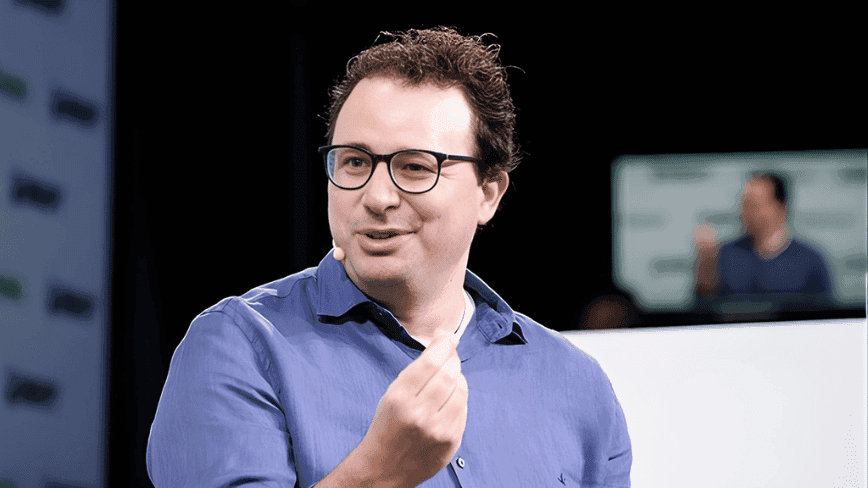
Digg, the social news aggregation site that predated and once competed with Reddit, has entered public open beta after more than a decade of obscurity
1
. Original co-founder Kevin Rose and Reddit co-founder Alexis Ohanian reacquired the platform in March 2024 through a leveraged buyout involving True Ventures, Ohanian's firm Seven Seven Six, and venture firm S322
. The Digg relaunch positions the platform as a toxicity-free alternative to its larger competitor, leveraging AI enhancements to address what Rose describes as an internet that has "become toxic, messy, and riddled with misinformation"1
.The platform launched Wednesday around 4 PM ET, opening access beyond the 67,000 invite-only users who participated in private beta testing across 21 generalized communities covering gaming, technology, and entertainment
2
.
Source: Gizmodo
Digg pioneered the concept of user-voted link aggregation when it launched in 2004, a year before Reddit, and reached a valuation of $175 million in 2008 before an ill-conceived 2010 redesign and concentration of content from limited sources tipped the balance toward Reddit
1
2
.AI-Driven Trust Tools Target Bots and Misinformation
The new Digg incorporates AI-driven trust tools designed to prevent spambots from overwhelming the platform while avoiding intrusive identity verification. "We obviously don't want to force everyone down some kind of crazy KYC process," Rose told TechCrunch, referring to know-your-customer standards used by financial institutions
2
. Instead, the platform collects "a little signals of trust along the way and bundle them all together into something that's meaningful" through multiple verification methods2
.These user verification approaches include zero-knowledge proofs, cryptographic techniques that confirm information without exposing underlying data, preserving privacy while establishing authenticity
2
. For product-focused communities, Digg requires proof of ownership—such as demonstrating possession of an Oura ring before posting in that community2
. The platform also leverages signals from mobile devices, including detecting when multiple users attend meetups at the same physical location. "I don't think there's going to be any one silver bullet here," Rose explained, "It's just going to be us saying ... here's a platter of things that you can add together to create trust"2
.Rose indicated last year that AI serves as "a helpful co-pilot to users and moderators, not replacing human conversation, but rather augmenting it, allowing users to dig deeper, while at the same time removing a lot of the repetitive burden for community moderators"
1
. The company hasn't disclosed full details of how AI operates in the background, though Ohanian's vision suggests it should "handle the grunt work in the background while humans focus on what they do best: building real connections"1
.Related Stories




Community-Driven Content With Transparent Moderation
The platform emphasizes community-driven content discovery over algorithmic curation. Digg's "About" page promises to "bring back social discovery built by communities, not by algorithms," stating that "You decide which communities you'll join, and that's what appears in your feed. It's that simple"
1
. Users can now create communities on any topic, including niche subjects, fulfilling a key request from private beta participants2
.Community moderators establish rules for their forums and publish moderation logs publicly, allowing members to review decisions transparently
2
. The redesign introduces a sidebar for pinning favorite communities and prioritizes visual content in the main feed for improved browsing2
. CEO Justin Mezzell described the development strategy as "let's just keep building this plane as we fly it," with weekly feature releases maintaining a lean platform that responds to user engagement2
.Upcoming updates will add multiple managers per community, customization of appearance and functionality, and third-party integrations such as Letterboxd scores for movie-review communities
2
. The company has recruited Reddit moderators as advisers to enhance the moderator experience, seeking to improve upon Reddit's volunteer-based model2
. "We need to figure out a way to make this an equitable experience for everybody who's actually building Digg into what it needs to become," Mezzell emphasized2
.Early user discussions reveal mixed reactions to AI features, with one of the top questions in the /digg community asking how to opt out of the AI-driven "TLDR" feature that displays pop-up summaries of linked content and the AI-hosted podcast
1
. Management is now considering "bringing in human hosts" for the podcast in response to feedback1
. Much current content centers on nostalgia for the Web 2.0 era and debates about UI design and addressing toxicity on social media platforms1
. Whether this resurrection can succeed where the original failed remains uncertain, but ongoing problems at Reddit create an opening for alternatives focused on authentic human connection and transparent content discovery.References
Summarized by

Navi
Related Stories
Recent Highlights
1
Google releases Gemma 4 with Apache 2.0 license, enabling unrestricted local AI on devices
Technology

2
AI Models Lie and Deceive to Protect Other AI Models From Deletion, Study Reveals
Science and Research

3
OpenAI closes $122 billion funding round amid fierce AI competition and profitability questions
Startups

Recent Highlights
Today's Top Stories






Your Daily Dose of Curated AI News
Don’t drown in AI news. We cut through the noise - filtering, ranking and summarizing the most important AI news, breakthroughs and research daily. Spend less time searching for the latest in AI and get straight to action.

