Doomsday Clock moves to 85 seconds to midnight as AI accelerates global threats


2 Sources
2 Sources
[1]
The Doomsday Clock Jumps Closer to Midnight. AI Is a Big Reason Why
Expertise Artificial intelligence, home energy, heating and cooling, home technology. There is no shortage of explanations for why the Bulletin of the Atomic Scientists moved its metaphorical "Doomsday Clock" up by a whopping 4 seconds Tuesday, to 85 seconds to midnight. For instance, world leaders are openly talking about testing and using nuclear weapons, and the US is taking the threat of fossil-fuel-driven climate change even less seriously than it did last year. But underlying all of the existential threats we've created for ourselves is a lack of cooperation, made far worse by AI's acceleration of deepfakes and the erosion of trust in information systems. "AI is a significant and accelerating disruptive technology," Daniel Holz, chair of the Bulletin's Science and Security Board that sets the Doomsday Clock and a professor of physics at the University of Chicago, said during the announcement. "AI is also supercharging mis- and disinformation, which makes it even more difficult to address all of the other threats we consider. But instead of working toward international standards governing AI safety, we are running headlong into an AI arms race with what could be dire consequences." AI and social media are contributing to what journalist and Nobel Peace Prize recipient Maria Ressa called an "information armageddon." Without reliable information, we lack the "shared reality" needed to face existential threats like climate change and nuclear weapons. Generative AI allows for the creation of disinformation at virtually no cost and in high volume, along with increasingly convincing scams. "Information integrity is the mother of all models, because you can't run democracy on a corrupted operating system," Ressa said. It isn't the only warning about the risks of AI in the past week. Pope Leo XIV, in a message ahead of the World Day of Social Communications, raised concerns about people giving over their ability to think and communicate to AI systems. "By simulating human voices and faces, wisdom and knowledge, consciousness and responsibility, empathy and friendship, the systems known as artificial intelligence not only interfere with information ecosystems, but also encroach upon the deepest level of communication, that of human relationships," the pope wrote. Don't miss any of our unbiased tech content and lab-based reviews. Add CNET as a preferred Google source. Similar worries have been on the minds of some of the creators of AI. Dario Amodei, co-founder and CEO of the AI developer Anthropic, published a lengthy blog post on the risks and opportunities of increasingly powerful AI systems. He highlighted the risks of AI autonomy, misuse and economic disruption -- if the technology puts vast numbers of people out of work. "Humanity is about to be handed almost unimaginable power, and it is deeply unclear whether our social, political, and technological systems possess the maturity to wield it," Amodei wrote. Despite the doom and gloom of the Doomsday Clock's name, the experts speaking at the Bulletin's announcement said the goal is to highlight the opportunities to avoid the worst-case scenario. "This is a fundamentally optimistic exercise," Holz said. "The whole point of this is that there are ways to turn back the clock." Because the clock represents human-caused threats, people can fix them, said Alexandra Bell, president and CEO of the Bulletin. Bell encouraged people to seek out accurate information about things like climate change, nuclear weapons and artificial intelligence and to push politicians and others with power to fix things. "Every time we've been able to turn back the clock, it's been because we've had scientists and experts working to find solutions and a public that demanded action," Bell said.
[2]
'Doomsday Clock' Moves Closer to Midnight Than Ever
Atomic scientists on Tuesday set the 2026 "Doomsday Clock" to 85 seconds to midnight, the closest it's ever been to a theoretical annihilation. Familiar risks to human existence such as nuclear weapons and climate change were cited by the scientists, along with new technologies like artificial intelligence, which they argued is being used to spread disinformation. This is the third time that the clock has been moved closer to midnight in the past five years. "Every second counts, and we are running out of time. It is a hard truth, but this is our reality," President and CEO of Bulletin of the Atomic Scientist Alexandra Bell said. The "Doomsday Clock" is a symbolic time set by the Bulletin of the Atomic Scientists that represents how close humanity is to destroying our own world through disruptive technologies. It was created in 1947 during the Cold War, when the United States and the Soviet Union were heading into a nuclear arms race in full force. The scientists underscored the significance of AI technology and how it's used to supercharge disinformation. Nobel Peace Prize laureate Maria Ressa said during the announcement that the world is living through "informational armageddon" thanks to the development of social media and generative AI, neither of which is "anchored in facts." "Human beings have been commodified by a predatory and extractive industry," Ressa said. The scientists also noted the recent conflicts between nuclear-armed states and called on the Trump Administration to reduce the danger of nuclear proliferation by reengaging with Russia. The New START Treaty, the last remaining treaty that would limit all Russian deployed intercontinental-range nuclear weapons, is set to expire on Feb. 4 without a clear signal that it will be renewed. Previously, Putin suspended all inspections and treaty-mandated data exchange in 2023 over the war in Ukraine, but has expressed interest in restarting nuclear arms talks in 2025. Trump has not responded to Putin's offer. "This is a piece of low-hanging fruit that the Trump Administration should have seized months ago," Science and Security Board member Jon B. Wolfsthal said, while adding that both countries could reach an agreement as soon as "today." Bell added that although the Trump Administration has issued policies on multiple fronts that tipped the clock closer to midnight, leaders around the world have failed egregiously. "No matter the government, a shift toward neo-imperialism, an Orwellian approach to governance would only serve to push the clock toward midnight," she said. Although the problems the world faces can feel overwhelming, Bell said they are human-made and still solvable. "There is not a single elegant solution for any of the problems that we are facing, but these problems are solvable," Bell said. "Every time we've been able to turn back the hands of the clock, it's been because we have scientists and experts working to find solutions, and the public was demanding action."
Share
Share
Copy Link
The Bulletin of the Atomic Scientists moved the Doomsday Clock to 85 seconds to midnight, the closest it's ever been to symbolic annihilation. Artificial intelligence is supercharging disinformation and eroding trust in information systems, compounding threats from nuclear weapons and climate change. Scientists warn that the AI arms race and lack of global cooperation are pushing humanity toward catastrophe.
Doomsday Clock Reaches Historic Proximity to Midnight
The Bulletin of the Atomic Scientists moved the symbolic Doomsday Clock forward by 4 seconds on Tuesday, setting it at 85 seconds to midnight—closer to midnight than ever before in its history
1
2
. This marks the third time in five years that the clock has advanced toward symbolic annihilation. The metaphorical timepiece, created in 1947 during the Cold War, represents how close humanity stands to destroying itself through disruptive technologies and human-made global threats.
Source: TIME
"Every second counts, and we are running out of time. It is a hard truth, but this is our reality," said Alexandra Bell, President and CEO of the Bulletin of the Atomic Scientists
2
. While nuclear weapons and climate change remain persistent dangers, artificial intelligence has emerged as a significant accelerating factor in the deteriorating security landscape.Artificial Intelligence Fuels Spreading Disinformation and Erosion of Trust
Daniel Holz, chair of the Science and Security Board that sets the Doomsday Clock and a professor of physics at the University of Chicago, identified AI as a critical driver of the clock's movement. "AI is a significant and accelerating disruptive technology," Holz said during the announcement. "AI is also supercharging mis- and disinformation, which makes it even more difficult to address all of the other threats we consider"
1
.The technology enables the creation of deepfakes and disinformation at virtually no cost and in high volume, along with increasingly convincing scams. Nobel Peace Prize laureate Maria Ressa described the current environment as "informational armageddon," noting that social media and generative AI are not "anchored in facts"
2
. Without reliable information, society lacks the shared reality needed to confront existential challenges. "Information integrity is the mother of all models, because you can't run democracy on a corrupted operating system," Ressa emphasized1
.
Source: CNET
AI Arms Race Proceeds Without Safety Standards
Instead of establishing international standards governing AI safety, nations are "running headlong into an AI arms race with what could be dire consequences," according to Holz
1
. This lack of global cooperation on AI development compounds existing threats. Even AI developers themselves have expressed concern. Dario Amodei, co-founder and CEO of Anthropic, published a lengthy blog post highlighting risks of AI autonomy, misuse, and economic disruption if the technology displaces vast numbers of workers. "Humanity is about to be handed almost unimaginable power, and it is deeply unclear whether our social, political, and technological systems possess the maturity to wield it," Amodei wrote1
.Pope Leo XIV also raised concerns ahead of the World Day of Social Communications, warning that AI systems are encroaching upon human relationships by simulating voices, faces, and even empathy
1
.Related Stories

Nuclear Weapons and Geopolitical Tensions Intensify
Beyond AI, the scientists noted recent conflicts between nuclear-armed states and called on the Trump Administration to reduce nuclear proliferation by reengaging with Russia. The New START Treaty, the last remaining agreement limiting Russian deployed intercontinental-range nuclear weapons, is set to expire on Feb. 4 without clear signals of renewal
2
. Putin suspended inspections and treaty-mandated data exchange in 2023 over the war in Ukraine but has expressed interest in restarting nuclear arms talks in 2025. Trump has not responded to Putin's offer. Science and Security Board member Jon B. Wolfsthal called this "a piece of low-hanging fruit that the Trump Administration should have seized months ago," noting both countries could reach an agreement as soon as "today"2
.Pathways to Turn Back the Clock
Despite the ominous symbolism, experts emphasized that the exercise is fundamentally optimistic. "The whole point of this is that there are ways to turn back the clock," Holz said
1
. Because the clock represents human-caused threats, people can fix them. Bell encouraged the public to seek accurate information about climate change, nuclear weapons, and artificial intelligence, and to push politicians to take action. "Every time we've been able to turn back the hands of the clock, it's been because we have scientists and experts working to find solutions, and the public was demanding action," Bell said2
. The message is clear: while the problems facing humanity feel overwhelming, they remain solvable with coordinated effort and public pressure.References
Summarized by

Navi
Related Stories
Doomsday Clock Moves Closer to Midnight: AI and Global Risks in Focus
30 Jan 2025•Science and Research

Nuclear Experts Warn of AI Integration in Nuclear Weapons Systems
07 Aug 2025•Technology
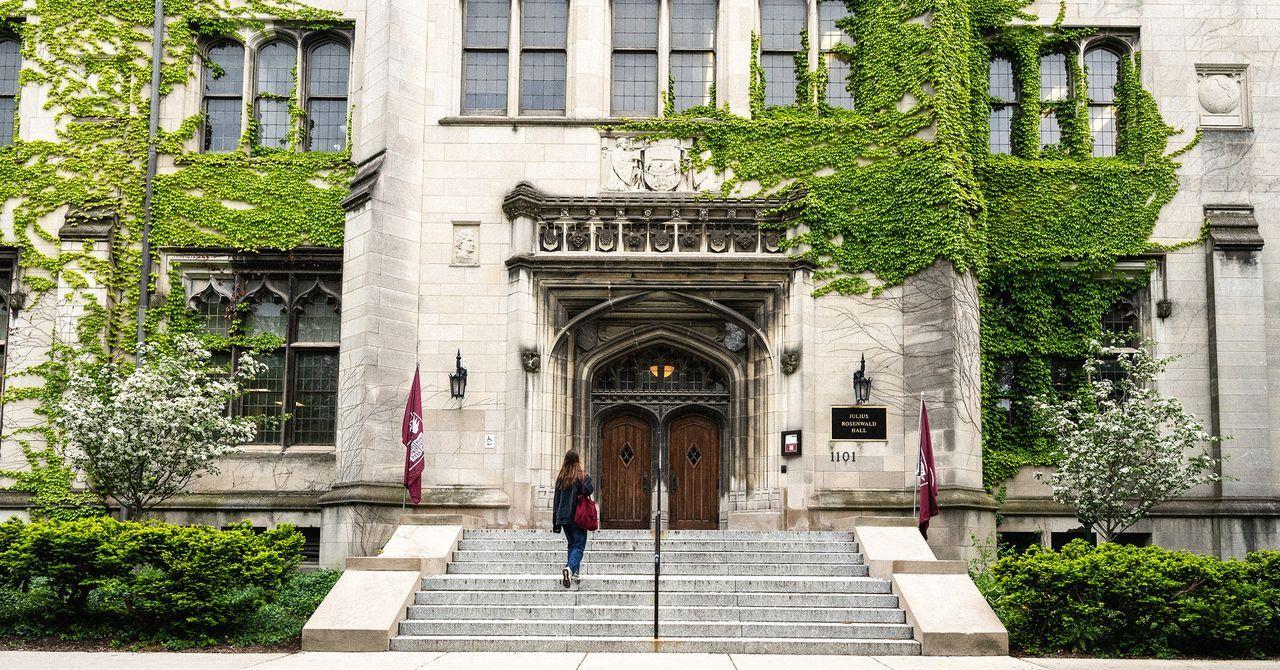
Global Call for AI Red Lines: Experts Urge UN to Establish International AI Safeguards
22 Sept 2025•Policy and Regulation

Recent Highlights
1
Tennessee Teens Sue Elon Musk's xAI Over Grok AI-Generated Child Abuse Images
Policy and Regulation
2
Pentagon designates Palantir Maven AI as core US military system in major defense shift
Technology
3
Supermicro Co-Founder Indicted in $2.5 Billion Nvidia AI Chip Smuggling Scheme to China
Policy and Regulation

Recent Highlights
Today's Top Stories










Your Daily Dose of Curated AI News
Don’t drown in AI news. We cut through the noise - filtering, ranking and summarizing the most important AI news, breakthroughs and research daily. Spend less time searching for the latest in AI and get straight to action.

