DoorDash launches Tasks app that pays couriers to film everyday activities for AI training


9 Sources
9 Sources
[1]
DoorDash launches a new 'Tasks' app that pays couriers to submit videos to train AI | TechCrunch
DoorDash announced on Thursday that it's launching a new, standalone "Tasks" app that will allow the company to pay its delivery couriers to complete assignments aimed at improving AI and robotic systems. Delivery couriers will be able to earn money by completing activities like filming everyday tasks or recording themselves speaking in another language, DoorDash says. "This data helps AI and robotic systems understand the physical world," DoorDash wrote in a blog post. "Pay is shown upfront and determined based on effort and complexity of the activity." Bloomberg reports that the original audio and video footage submitted by workers will be used to evaluate both the company's in-house AI models and those developed by its partners in the retail, insurance, hospitality, and technology sectors. One example of a task involves asking a courier to capture footage of their hands washing at least five dishes while wearing a body camera, holding each clean dish in frame for a few seconds before moving on to the next, Bloomberg reports. DoorDash isn't the only company tapping its delivery workforce to train AI models. Late last year, Uber announced plans to let drivers earn extra income by completing small jobs, such as uploading photos to help train AI models. In addition to the standalone Tasks app, delivery couriers will see new digital "Tasks" listed on the Dasher app. Examples include helping a restaurant showcase its menu by taking real photos of its dishes or taking photos of a hotel entrance so delivery drivers can find the drop-off location more easily. DoorDash's partnership with Waymo, where delivery couriers are paid to close the doors of the self-driving cars, is also listed in the app as a task. "The goal of Tasks is to help more businesses understand what's happening on the ground and gather new insights, all while giving Dashers a new way to earn on their own terms," said Ethan Beatty, General Manager, DoorDash Tasks, in the blog post. "There are more than 8 million Dashers who can reach almost anywhere in the U.S. and who want to earn flexibly beyond delivery. That's a powerful capability to digitize the physical world." The in-app Tasks and the standalone Tasks app are available in select places in the U.S., excluding California, New York City, Seattle, and Colorado. DoorDash plans to expand into more task types and countries in the future.
[2]
I Tried DoorDash's Tasks App and Saw the Bleak Future of AI Gig Work
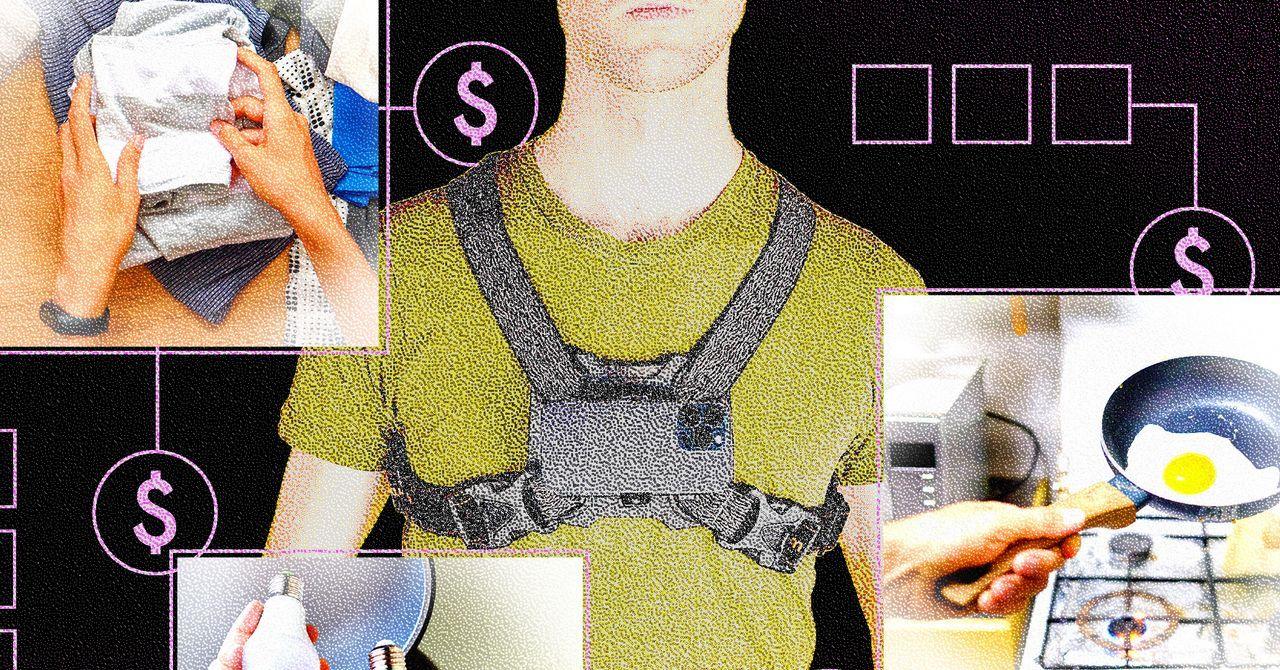
I recorded videos of myself doing laundry, scrambling eggs, and walking around the park in DoorDash's new Tasks app, where gig workers are paid to train AI. The flash from my iPhone camera illuminates my dirty socks and underwear as I hold each item up for the video recording to capture clearly. As I load my smelly clothes into the washer, I tremble a bit each time the phone loudly beeps, detecting that my hands may be out of frame. Gotta see those fingers! No, I haven't pivoted to filming some kind of fetish content to make ends meet -- I'm trying the latest gig work app from DoorDash, called Tasks. The new Tasks app from food delivery app DoorDash has nothing to do with delivering food -- it's all about gathering training data from humans, that's you, for improving generative AI models and humanoid robots. "This data helps AI and robotic systems understand the physical world," reads DoorDash's press release. "Pay is shown upfront and determined based on effort and complexity of the activity." Most of the gigs involve strapping a smartphone to your chest and recording your hands performing specific tasks. This kind of video data can be used by developers of AI models and robotics to improve performance. For example, thousands of videos of people folding laundry, with their hands clearly visible, could help teach a robot how to do the same task using computer vision. DoorDash plans to expand this service to include an even wider range of tasks and users in the future. It's unclear where exactly the app is available for users at launch in the US -- residents of California, New York City, Seattle, and Colorado are explicitly blocked from using Tasks. (I was able to use the Tasks app and complete gigs while residing in Kansas.) Curious about what kinds of tasks DoorDash is offering right now, I signed up to be a "dasher" and downloaded the Tasks app. After logging in, the onboarding quest was to film yourself moving three objects across a table. Easy! I turned the camera on and shifted my coffee cup, pen, and laptop from one side of my desk to the other. My reward for this wasn't cash -- DoorDash shipped a free body-mount for my smartphone camera afterward, so I could complete more gigs in the app. After that quick onboarding session, I could see the full list of potential jobs and start making some cash. The gigs currently available in the Tasks app mainly fall into five major categories: household chores, handiwork projects, cooking food, location navigation, and foreign language conversations. The tasks within these categories are fairly broad. The chore list includes everything from making a bed and loading a dishwasher to repotting plants and taking out the trash. The handiwork projects range from simple tasks, like changing a lightbulb, to more complex ones, like pouring cement. The cooking gigs mostly revolve around eggs: frying them, poaching them, scrambling them. Navigation gigs include exploring a museum and walking around an apartment complex. For the language-based tasks, the app requests "natural conversations" in Russian and Mandarin Chinese, as well as other languages.
[3]
DoorDash's New Tasks App Will Pay You to Train AI
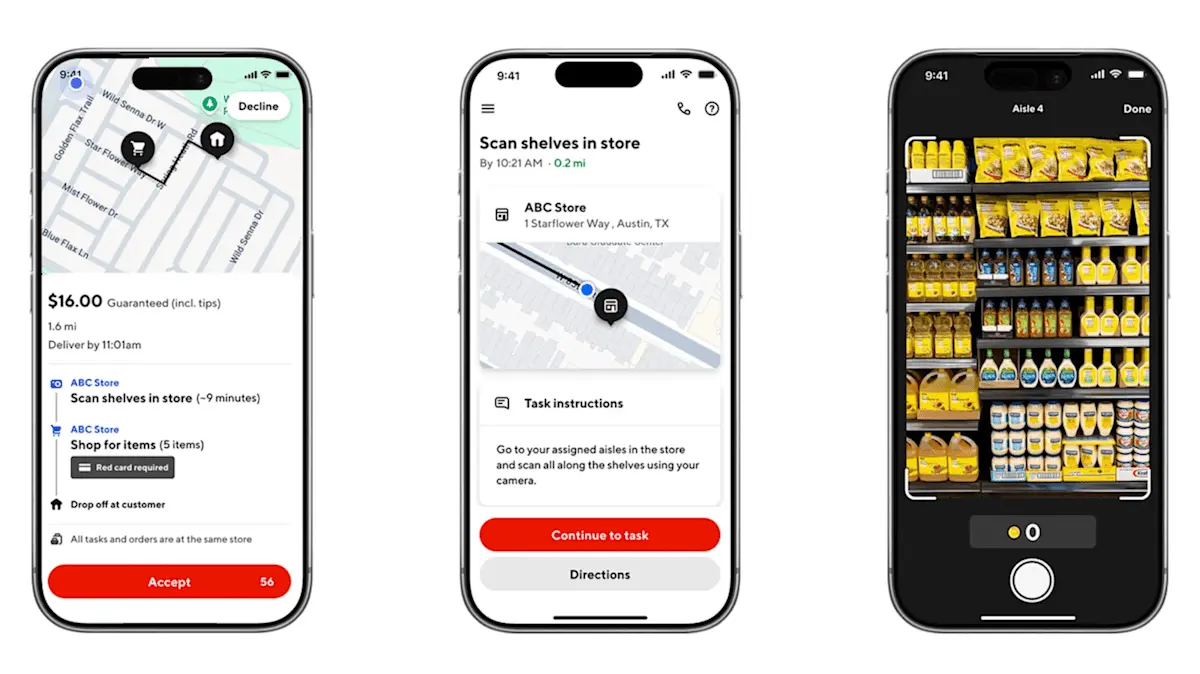
Expertise Smart home | Smart security | Home tech | Energy savings | A/V On Thursday, delivery platform DoorDash announced a new job expansion called Tasks, or small jobs that its Dashers can do to earn a bit of extra money. Some of these tasks are benign additions to the regular delivery app, like taking pictures of menus or entrances to establishments. But DoorDash is also launching a standalone app that really caught our attention. Through it, the company will be assigning basic activities for the purpose of training AI models. "Dashers can complete activities like filming everyday tasks or recording themselves speaking in another language," DoorDash's post explains. "This data helps AI and robotic systems understand the physical world." If you head into the new download pages for the Tasks app, you'll see other examples of tasks, including washing at least five dishes with your hands visible, making your bed and repotting plants. Today's AIs use advanced machine learning to interpret not only text, as in the case of chatbots, but also visual data like objects, actions and even the context behind certain actions. DoorDash's video tasks would presumably be used for this type of training. It's not the first time we've seen companies hire gig workers specifically to train AI -- Uber started its own AI training program late last year. But these programs raise questions. What happens when AI models are deemed sufficiently trained? Would these trained AIs be used to replace employees in other industries? Are the Dashers (uhh, Taskers?) using this app able to protect their own privacy when AI analyzes their videos? When I reached out to Doordash, the company told me it "maintains robust privacy safeguards across all of our products and services, including Tasks," without offering specifics. It's not clear what AI models will be trained on all this visual data, but DoorDash is casting a wide net. The company says that it's partnering with businesses from the retail, insurance, hospitality and technology industries for Tasks training. Maybe some of it will train robots. It's tough to calculate exactly how much someone might get paid for this work. DoorDash says this: "Pay is shown upfront and determined based on effort and complexity of the activity." That doesn't say much, but screenshots of the Task app in action give further clues. In one example, the app offered $16 for scanning store shelves. In another, it offered $20 to have an everyday conversation in Spanish with your friends or family (something that needs to be both "spontaneous" and carefully arranged beforehand to avoid "political content" and "identifiable information," so good luck). Based on the dollar sign icons, jobs like cooking with a frying pan will pay more than tasks like folding clothes. We're not sure where the Tasks app will be available when the rollout is done, but it's currently available in select places in the United States. DoorDash says the app will be banned completely in places like California, New York City, Seattle and Colorado. It didn't give a reason, but it likely has something to do with the privacy and employment legislation that those areas have passed, such as this ruling in California that identifies gig workers as independent contractors.
[4]
DoorDash's New Paid Tasks Turn Couriers Into AI and Robot Trainers
The submitted audio and video footage will be used to evaluate in-house AI models and those used by partners in various sectors, including retail, insurance, and technology. DoorDash Inc. is paying delivery couriers in some markets to submit video clips and complete other digital tasks to help improve artificial intelligence and robotics models, following competitors that have found creative new uses for gig workers in the AI boom. The delivery company has launched a new app called Tasks for those efforts, listing paid opportunities for activities such as recording an unscripted conversation in Spanish, or filming themselves completing various household chores like loading a dishwasher, handwashing dishes or folding clothes. The original audio and video footage that workers submit will be used to evaluate in-house AI models as well as those used by partners in the retail, insurance, hospitality and technology sectors, a DoorDash spokesperson told Bloomberg News. DoorDash is tapping its 8-million-strong contractor workforce in the US to meet an insatiable demand for unique datasets that are sought after by companies needing to train specialized AI models. Uber Technologies Inc. and Instacart have made similar moves in the past year, following in the footsteps of upstarts like Scale AI Inc. in using a network of remote workers to create new data or validate AI outputs. Get the Tech Newsletter bundle. Get the Tech Newsletter bundle. Get the Tech Newsletter bundle. Bloomberg's subscriber-only tech newsletters, and full access to all the articles they feature. Bloomberg's subscriber-only tech newsletters, and full access to all the articles they feature. Bloomberg's subscriber-only tech newsletters, and full access to all the articles they feature. Bloomberg may send me offers and promotions. Plus Signed UpPlus Sign UpPlus Sign Up By submitting my information, I agree to the Privacy Policy and Terms of Service. There will also be new digital tasks listed on the regular DoorDash courier app. Those may include taking pictures of food to populate a restaurant's digital menu, photographing a hotel entrance to indicate the drop-off location, or scanning supermarket shelves for inventory checks, according to a company blog post on Thursday. DoorDash's recently launched pilot program with Alphabet Inc.'s Waymo, in which drivers get paid to close robotaxi doors, is also part of the new crop of paid gigs. DoorDash is making the new tasks available to active couriers in select US markets, skipping tightly regulated areas like California, New York City, Seattle and Colorado. It said it intends to expand into more task types and countries over time. As an example of how the paid video submissions work, instructions for a dishwashing task ask that the person capture footage with a body-worn camera pointed down toward their hands, scrubbing and rinsing at least five dishes and holding each clean dish steady in frame for a few seconds before moving to the next dish. That camera footage may be valuable as robotics firms hone their humanoids' ability to recognize objects. The announcements also dovetail with DoorDash's plans to invest more in growth areas including grocery and retail delivery, new products around AI chatbots and autonomous delivery, as well as internal platform updates. "These are the kinds of real-world problems we've been solving for over a decade, and we realized the same capabilities that helped us could help other businesses too," said Ethan Beatty, general manager of DoorDash Tasks, in a statement. "The goal of Tasks is to help more businesses understand what's happening on the ground and gather new insights."
[5]

DoorDash will start paying gig workers for creating content to train AI models
DoorDash has launched a new option for its gig economy workers to earn some extra cash. The delivery service introduced Tasks, which it describes as "short activities Dashers can complete between deliveries or in their own time." It gives taking pictures of restaurant dishes or recording video of unscripted conversations in languages other than English as examples. These materials will be used to train artificial intelligence and robotics models. A representative from DoorDash told Bloomberg News that it will use Tasks content for evaluating its in-house AI models as well as those made by its partner companies in retail, insurance, hospitality and tech. DoorDash is piloting a standalone app for Tasks where Dashers will submit their content. The blog post notes that pay will be displayed upfront, and compensation will vary based on the complexity of the activity. This idea isn't new. We've seen other startups in AI and robotics offering payment for content filmed by regular people. Considering how many lawsuits are underway against AI companies that have already benefited from unauthorized use of copyrighted materials, at least this approach lets people be directly compensated for training content.
[6]

DoorDash launches Tasks
Here is one way the AI data economy works in practice in 2026: a DoorDash courier straps on a body camera, washes at least five dishes, holds each one up to the lens for a few seconds, and earns a few dollars. That footage, mundane, specific, reproducible at scale, is exactly what AI and robotics companies need to train models that understand physical tasks. And it turns out that a delivery network of eight million people, already dispersed across almost every postcode in the United States, is a remarkably efficient way to collect it. DoorDash on Thursday launched Tasks, a new product that formalises what had been emerging piecemeal across the platform for the past year. It operates on two levels. The first is a set of new task types inside the existing Dasher app: taking photos of restaurant dishes to populate a menu, photographing a hotel entrance so future drivers can find the drop-off point, or scanning supermarket shelves for inventory checks. The second is a standalone Tasks app, designed for activities with no delivery component at all, filming household chores, recording unscripted conversations in another language, or, in a partnership that drew attention back in February, closing open doors on Waymo's self-driving cars in Atlanta. The Waymo door-closing programme, which DoorDash and Waymo confirmed to TechCrunch and Bloomberg in February, already sits inside the Tasks platform. When a Waymo passenger leaves a vehicle door ajar, a safety trigger that prevents the car from moving, nearby Dashers receive a notification and can earn around $11 to drive over and close it. It is a small transaction with an outsized symbolic weight: gig workers, often cited as the group most exposed to displacement by automation, being paid by an autonomous vehicle company to solve a problem its own technology cannot yet handle. Waymo has said future vehicles will include automated door closures. For DoorDash, the logic of Tasks is straightforward. The company has spent more than a decade building the operational infrastructure to dispatch workers to specific physical locations, verify completion, and handle payments at scale. That is exactly the capability that AI data collection requires, and it is not something that can be replicated quickly by companies that do not already have a network like it. "There are more than 8 million Dashers who can reach almost anywhere in the U.S. and who want to earn flexibly beyond delivery. That's a powerful capability to digitize the physical world," said Ethan Beatty, General Manager of DoorDash Tasks, in a statement. The scale claim is significant: companies like Scale AI built entire businesses around remote data labelling workforces, and DoorDash is arriving in that market with a distribution network already in place, operating in-person rather than online, and capable of collecting the kind of embodied, physical-world data that is increasingly scarce and valuable. DoorDash says Dashers have completed more than two million tasks since 2024, a figure that covers the earlier, lower-profile incarnation of the programme before Thursday's formal launch. The company is not the only delivery platform to have moved in this direction: Uber and Instacart have both introduced similar programmes over the past year. There are questions the launch does not answer. DoorDash has not published detail on how it handles consent, data retention, or the rights workers have over footage of themselves in their own homes. The exclusion of California, New York City, Seattle, and Colorado, jurisdictions with significantly stricter gig worker and data privacy regulation than the rest of the country, is conspicuous. Pay is determined upfront on a per-task basis, weighted for effort and complexity, but no average rates or floor guarantees have been disclosed. For a programme that requires workers to bring cameras into their kitchens and record their own voices, those are not minor details.
[7]

DoorDash is now letting its drivers train AI on the side
DoorDash delivery drivers can now add another side gig to their rotation: training AI-powered robots. The food delivery giant launched a standalone app for couriers, called Tasks, that allows the company's 8 million U.S. gig workers to earn money by recording themselves doing various tasks. The data will then be used to help AI and robotics models better "understand the physical world," according to the company's announcement Thursday. Tasks available on the new app include everyday chores like folding clothes, handwashing dishes and making a bed, with each gig offering a payment sum based on effort and complexity. Harder tasks, like pruning and repotting plants, offer more money. Couriers can also get paid for recording speaking content in other languages. One listing on the app prompts Spanish speakers to have a "natural, unscripted conversation with your friends or family on everyday topics." "We think this will be huge for building the frontier of physical intelligence," DoorDash cofounder and chief technology officer Andy Fang wrote in a social media post about the launch. "Look forward to seeing where this goes!" A spokesperson for DoorDash told NBC News that the app will initially focus on activities that could help train AI or robotics, but the company plans to add other types of activities over time. The company added that the Tasks app is a small pilot compared to what's available in the general Dasher app, where a wider array of tasks are listed for couriers to complete in between deliveries. It's part of a growing ecosystem of gigs that aim to farm AI training data from willing humans. Last year, Uber piloted a similar initiative allowing its U.S. gig workers to perform additional digital tasks for money, including uploading photos and recordings used to train AI. And the data annotation industry has boomed in recent years, with dozens of platforms hiring contractors to help train AI models online. Now, companies are increasingly seeking to capture physical data about how people move in the world. Such content is then used to help a humanoid robot, for example, learn how to load a dishwasher. The Los Angeles Times recently reported that Instawork, a staffing app that connects businesses with local hourly workers for same-day gigs, has been recruiting workers in Los Angeles to strap on headbands with a phone mount and record themselves cleaning their homes. Other robotics developers have developed similar data collection strategies. California-based Sunday Robotics ships a "skill capture glove" to people across the country who collect motion data by doing household tasks wearing the robotic glove. The gloves, which remember their movements, are then used to train the AI-powered home robot that the company is building. Aside from DoorDash's new AI training gig app, additional tasks will also roll out within the regular Dasher app for couriers. These could involve checking a restaurant's holiday hours, taking photos of a tricky drop-off location to help delivery drivers navigate, or "giving an autonomous vehicle a hand getting back on the road," the company's news release stated. "These are the kinds of real-world problems we've been solving for over a decade, and we realized the same capabilities that helped us could help other businesses too," Ethan Beatty, general manager of DoorDash Tasks, said in a statement.
[8]

The Gig Economy Is Now the Training Layer for AI | PYMNTS.com
By completing this form, you agree to receive marketing communications from PYMNTS and to the sharing of your information with our sponsor, if applicable, in accordance with our Privacy Policy and Terms and Conditions. The company called the program Tasks, which lists digital assignments couriers can accept in place of or alongside standard delivery orders. Tasks range from recording unscripted conversations in Spanish to filming household activities such as loading a dishwasher, handwashing dishes and folding clothes. Instructions for the dishwashing task require a body-worn camera pointed at the worker's hands, scrubbing and rinsing at least five dishes, and holding each clean dish steady in frame before moving to the next, according to Bloomberg. Robotics firms use that footage to train humanoid systems to recognize objects and execute contact-rich manipulation tasks. The scope of what DoorDash is building extends beyond household video. Through the company's regular courier app, it deploys workers for in-field data capture at commercial locations. Couriers can accept assignments to scan supermarket shelves for inventory checks, photograph hotel entrances to tag drop-off locations, or capture food images to populate restaurant digital menus. A DoorDash spokesperson told Bloomberg that the company uses the submitted audio and video footage to evaluate both in-house AI models and those built by partners across retail, insurance, hospitality and technology sectors. The program currently excludes heavily regulated markets, including California, New York City, Seattle, and Colorado. DoorDash said it plans to expand the types of tasks and its geographic coverage over time. The company's pilot with Alphabet's Waymo, in which drivers close robotaxi doors for pay, also falls under the Tasks umbrella, placing autonomous vehicle training alongside shelf scanning and household footage as parallel outputs of the same distributed workforce. "These are the kinds of real-world problems we've been solving for over a decade, and we realized the same capabilities that helped us could help other businesses too," Ethan Beatty, general manager of DoorDash Tasks, said in a press release. "The goal of Tasks is to help more businesses understand what's happening on the ground and gather new insights, all while giving Dashers a new way to earn." DoorDash is not alone in this shift. Uber introduced a comparable program in October, adding a digital tasks category to its driver app that allows registered drivers to complete short assignments such as uploading restaurant menus and recording multilingual audio samples. The effort operates through Uber AI Solutions, the company's enterprise data services division, which has expanded to 30 countries and offers annotation, translation and model training services to corporate clients, PYMNTS reported. Uber also acquired Segments.ai, a lidar and multi-sensor annotation startup, to deepen its capabilities in perception data for robotics and autonomous systems. Both companies follow a path pioneered by data infrastructure firms like Scale AI, using distributed networks of remote workers to create new datasets or validate AI outputs. What gig platforms add to this model is scale, geographic reach and access to the physical world in its most variable, uncontrolled form. That access is precisely what makes this moment significant. Physical AI systems, including humanoid robots, autonomous vehicles and warehouse automation, cannot be trained solely on clean simulations. Universal Robots and Scale AI made this case directly in an announcement on Monday (March 16), unveiling an imitation learning system designed to capture high-fidelity, synchronized robot and vision data in production environments. Anders Beck, vice president of AI robotics oroducts at Universal Robots, said in the announcement that most training data collected on research robots is not suited for real-world deployment, and that visual feedback alone fails for contact-rich tasks. The gap between lab and factory performance remains one of the central unsolved problems in physical AI, and closing it requires data from real-world environments. The longer-term implication is that real-world data collected at scale from distributed human workers is becoming a meaningful competitive asset. Platforms with large contractor bases, established presence in physical commercial environments and logistics infrastructure to coordinate task-based workflows are positioned to accumulate proprietary training datasets that AI developers and robotics firms cannot easily replicate.
[9]

This company's delivery drivers are being paid to help train AI, here's how
DoorDash plans a standalone app for activities like language recording. AI adoption is becoming more common day by day, as everyone tries to keep up with the future. Be it the people around you or the megacorps that run various things all over the world. While using AI has become common, unfortunately, not every major player has fully aligned itself with training these systems, as it's not an easy task. But between all this, though, the delivery company, DoorDash, has found quite an interesting way to train the AI datasets. And that's using its vast network of delivery partners. Not only are they training AI systems, but they're also paying money to their drivers. Let's take a deep dive into how this new system works. Also Read: Amazon may bring its own smartphone and this time with AI The company explained that this new feature, called 'Tasks', is basically a set of short activities that the delivery partners would be able to complete between their normal deliveries. On the completion of these tasks, the company pays a sum of money to the delivery partners. Speaking of what the tasks include, they are basic things like helping a restaurant showcase its menu by taking real photos of its dishes and helping a hotel make sure a delivery driver can find a drop-off location by taking photos of the hotel entrance. While the 'Tasks' feature is currently available via the official DoorDash delivery partner app, the company also confirmed their plans for the future. As per them, they will be launching a separate and standalone app altogether, which will feature all these tasks separately. DoorDash's official blog post talked about the standalone Tasks app; as they said, "We're also piloting a new standalone app where Dashers can complete activities like filming everyday tasks or recording themselves speaking in another language." As per DoorDash, their new 'Tasks' app is a new way for their delivery partners to earn beyond their delivery fees. Along with that, they also suggest that it's useful for businesses to get the on-the-ground insights. But that's not the full story, as there's a lot more going on here. While DoorDash is targeting it as a way for delivery partners to earn more, their main motive behind launching this is to train AI to understand the real world. Their official blog post reads, "This data helps AI and robotic systems understand the physical world. Pay is shown upfront and determined based on effort and complexity of the activity." Currently, AI is booming, and major companies are trying to invest in these AI solutions to keep up with the future. While implementing the usage of AI isn't tough, training the systems is a much different thing. Something that cannot be done without a strong network like DoorDash's. Given how the company has spent so many years building the network of its delivery partners, it does make sense that it would pivot in this direction.
Share
Share
Copy Link
DoorDash introduced a standalone Tasks app that pays its delivery couriers to submit videos and audio recordings for AI training. Workers can earn money filming household chores, speaking in foreign languages, or capturing everyday tasks—all to help AI and robotics systems understand the physical world.
DoorDash Expands Gig Work Beyond Delivery with New AI Training Platform
DoorDash announced Thursday the launch of its standalone Tasks app, a new platform that pays couriers to train AI by filming everyday activities and recording conversations
1
. The delivery giant is tapping its 8 million Dashers across the United States to meet growing demand for unique datasets needed to train specialized generative AI models and humanoid robots4
. Workers strap smartphones to their chests and record their hands performing specific tasks like washing dishes, folding laundry, scrambling eggs, or repotting plants. "This data helps AI and robotic systems understand the physical world," DoorDash explained in its announcement1
.
Source: Wired
How the Tasks App Works and What It Pays
The Tasks app offers gig workers a range of activities spanning five major categories: household chores, handiwork projects, cooking food, location navigation, and foreign language conversations
2
. Pay varies based on effort and complexity, with examples including $16 for scanning store shelves and $20 for recording spontaneous conversations in Spanish3
. One task requires couriers to capture footage of their hands washing at least five dishes while wearing a body camera, holding each clean dish in frame for several seconds4
. After onboarding by filming themselves moving three objects across a table, workers receive a free smartphone body-mount to complete additional gigs2
.
Source: Engadget
Real-World Data Collection Serves Multiple Industries
The original audio and video footage submitted by gig workers will be used to evaluate both DoorDash's in-house AI models and those developed by partners in retail, insurance, hospitality, and technology sectors
1
. This type of training data for robotics is particularly valuable for computer vision applications—thousands of videos showing hands clearly visible while folding laundry could teach a robot to perform the same task2
. Beyond the standalone app, DoorDash Tasks also includes assignments within the regular Dasher app, such as photographing restaurant dishes for digital menus or capturing hotel entrances to help drivers locate drop-off points more easily1
.
Source: CNET
Related Stories

Privacy Concerns and Geographic Restrictions Raise Questions
The Tasks app is currently available in select US markets but explicitly excludes California, New York City, Seattle, and Colorado
1
. These exclusions likely relate to privacy and employment legislation in those regions, including California's ruling that identifies gig workers as independent contractors3
. When questioned about privacy protections, DoorDash stated it "maintains robust privacy safeguards across all of our products and services, including Tasks," without offering specifics3
. The app raises pressing questions about what happens when AI models are deemed sufficiently trained and whether these trained systems could contribute to job displacement in other industries.DoorDash Joins Growing Trend of AI Gig Work
DoorDash isn't alone in this approach. Uber announced plans late last year to let drivers earn extra income by uploading photos to help train AI models
1
. Companies like Instacart and Scale AI have similarly tapped remote workers to create new data or validate AI outputs4
. DoorDash's partnership with Waymo, where delivery couriers are paid to close the doors of self-driving cars, is also listed as a task within the app1
. "There are more than 8 million Dashers who can reach almost anywhere in the U.S. and who want to earn flexibly beyond delivery," said Ethan Beatty, General Manager of DoorDash Tasks. "That's a powerful capability to digitize the physical world"1
. The company plans to expand into more task types and countries as demand for machine learning training data continues to grow5
.References
Summarized by

Navi
[1]
Related Stories
Uber Drivers Take on New Role: Training AI Models for Extra Cash
16 Oct 2025•Business and Economy
AI agents are hiring humans on RentAHuman, but the reality is far more complicated than it seems
12 Feb 2026•Technology
Uber Ventures into AI Services with New Gig Worker-Powered Division
27 Nov 2024•Business and Economy

Recent Highlights


Recent Highlights
Today's Top Stories








Your Daily Dose of Curated AI News
Don’t drown in AI news. We cut through the noise - filtering, ranking and summarizing the most important AI news, breakthroughs and research daily. Spend less time searching for the latest in AI and get straight to action.

