Axon tests AI-powered police body cameras with facial recognition on 7,000-person watch list


6 Sources
6 Sources
[1]
AI-powered police body cameras, once taboo, get tested on Canadian city's 'watch list' of faces
Police body cameras equipped with artificial intelligence have been trained to detect the faces of about 7,000 people on a "high risk" watch list in the Canadian city of Edmonton, a live test of whether facial recognition technology shunned as too intrusive could have a place in policing throughout North America. But six years after leading body camera maker Axon Enterprise, Inc. said police use of facial recognition technology posed serious ethical concerns, the pilot project -- switched on last week -- is raising alarms far beyond Edmonton, the continent's northernmost city of more than 1 million people. A former chair of Axon's AI ethics board, which led the company to temporarily abandon facial recognition in 2019, told The Associated Press he's concerned that the Arizona-based company is moving forward without enough public debate, testing and expert vetting about the societal risks and privacy implications. "It's essential not to use these technologies, which have very real costs and risks, unless there's some clear indication of the benefits," said the former board chair, Barry Friedman, now a law professor at New York University. Axon founder and CEO Rick Smith contends that the Edmonton pilot is not a product launch but "early-stage field research" that will assess how the technology performs and reveal the safeguards needed to use it responsibly. "By testing in real-world conditions outside the U.S., we can gather independent insights, strengthen oversight frameworks, and apply those learnings to future evaluations, including within the United States," Smith wrote in a blog post. The pilot is meant to help make Edmonton patrol officers safer by enabling their body-worn cameras to detect anyone who authorities classified as having a "flag or caution" for categories such as "violent or assaultive; armed and dangerous; weapons; escape risk; and high-risk offender," said Kurt Martin, acting superintendent of the Edmonton Police Service. So far, that watch list has 6,341 people on it, Martin said at a Dec. 2 press conference. A separate watch list adds 724 people who have at least one serious criminal warrant, he said. "We really want to make sure that it's targeted so that these are folks with serious offenses," said Ann-Li Cooke, Axon's director of responsible AI. If the pilot expands, it could have a major effect on policing around the world. Axon, a publicly traded firm best known for developing the Taser, is the dominant U.S. supplier of body cameras and has increasingly pitched them to police agencies in Canada and elsewhere. Axon last year beat its closest competitor, Chicago-based Motorola Solutions, in a bid to sell body cameras to the Royal Canadian Mounted Police. Motorola said in a statement that it also has the ability to integrate facial recognition technology into police body cameras but, based on its ethical principles, has "intentionally abstained from deploying this feature for proactive identification." It didn't rule out using it in the future. The government of Alberta in 2023 mandated body cameras for all police agencies in the province, including its capital city Edmonton, describing it as a transparency measure to document police interactions, collect better evidence and reduce timelines for resolving investigations and complaints. While many communities in the U.S. have also welcomed body cameras as an accountability tool, the prospect of real-time facial recognition identifying people in public places has been unpopular across the political spectrum. Backlash from civil liberties advocates and a broader conversation about racial injustice helped push Axon and Big Tech companies to pause facial recognition software sales to police. Among the biggest concerns were studies showing that the technology was flawed, demonstrating biased results by race, gender and age. It also didn't match faces as accurately on real-time video feeds as it did on faces posing for identification cards or police mug shots. Several U.S. states and dozens of cities have sought to curtail police use of facial recognition, though President Donald Trump's administration is now trying to block or discourage states from regulating AI. The European Union banned real-time public face-scanning police technology across the 27-nation bloc, except when used for serious crimes like kidnapping or terrorism. But in the United Kingdom, no longer part of the EU, authorities started testing the technology on London streets a decade ago and have used it to make 1,300 arrests in the past two years. The government is considering expanding its use across the country. Many details about Edmonton's pilot haven't been publicly disclosed. Axon doesn't make its own AI model for recognizing faces but declined to say which third-party vendor it uses. Edmonton police say the pilot will continue through the end of December and only during daylight hours. "Obviously it gets dark pretty early here," Martin said. "Lighting conditions, our cold temperatures during the wintertime, all those things will factor into what we're looking at in terms of a successful proof of concept." Martin said about 50 officers piloting the technology won't know if the facial recognition software made a match. The outputs will be analyzed later at the station. In the future, however, it could help police detect if there's a potentially dangerous person nearby so they can call in for assistance, Martin said. That's only supposed to happen if officers have started an investigation or are responding to a call, not simply while strolling through a crowd. Martin said officers responding to a call can switch their cameras from a passive to an active recording mode with higher-resolution imaging. "We really want to respect individuals' rights and their privacy interests," Martin said. The office of Alberta's information and privacy commissioner Diane McLeod said she received a privacy impact assessment from Edmonton police on Dec. 2, the same day Axon and police officials announced the program. The office said Friday it's now working to review the assessment, a requirement for projects that collect "high sensitivity" personal data. University of Alberta criminology professor Temitope Oriola said he's not surprised that the city is experimenting with live facial recognition, given that the technology is already ubiquitous in airport security and other environments. "Edmonton is a laboratory for this tool," Oriola said. "It may well turn out to be an improvement, but we do not know that for sure." Oriola said the police service has had a sometimes "frosty" relationship with its Indigenous and Black residents, particularly after the fatal police shooting of a member of the South Sudanese community last year, and it remains to be seen whether facial recognition technology makes policing safer or improves interactions with the public. Axon has faced blowback for its technology deployments in the past, as in 2022, when Friedman and seven other members of Axon's AI ethics board resigned in protest over concerns about a Taser-equipped drone. In the years since Axon opted against facial recognition, Smith, the CEO, says the company has "continued controlled, lab-based research" of a technology that has "become significantly more accurate" and is now ready for trial in the real world. But Axon acknowledged in a statement to the AP that all facial recognition systems are affected by "factors like distance, lighting and angle, which can disproportionately impact accuracy for darker-skinned individuals." Every match requires human review, Axon said, and part of its testing is also "learning what training and oversight human reviewers must have to mitigate known risks." Friedman said Axon should disclose those evaluations. He'd want to see more evidence that facial recognition has improved since his board concluded that it wasn't reliable enough to ethically justify its use in police cameras. Friedman said he's also concerned about police agencies greenlighting the technology's use without deliberation by local legislators and rigorous scientific testing. "It's not a decision to be made simply by police agencies and certainly not by vendors," he said. "A pilot is a great idea. But there's supposed to be transparency, accountability. ... None of that's here. They're just going ahead. They found an agency willing to go ahead and they're just going ahead." -- - AP writer Kelvin Chan in London contributed to this report.
[2]
AI-powered police body cameras, once taboo, get tested on Canadian city's 'watch list' of faces
Police body cameras equipped with artificial intelligence have been trained to detect the faces of about 7,000 people on a "high risk" watch list in the Canadian city of Edmonton, a live test of whether facial recognition technology shunned as too intrusive could have a place in policing throughout North America. But six years after leading body camera maker Axon Enterprise, Inc. said police use of facial recognition technology posed serious ethical concerns, the pilot project -- switched on last week -- is raising alarms far beyond Edmonton, the continent's northernmost city of more than 1 million people. A former chair of Axon's AI ethics board, which led the company to temporarily abandon facial recognition in 2019, told The Associated Press he's concerned that the Arizona-based company is moving forward without enough public debate, testing and expert vetting about the societal risks and privacy implications. "It's essential not to use these technologies, which have very real costs and risks, unless there's some clear indication of the benefits," said the former board chair, Barry Friedman, now a law professor at New York University. Axon founder and CEO Rick Smith contends that the Edmonton pilot is not a product launch but "early-stage field research" that will assess how the technology performs and reveal the safeguards needed to use it responsibly. "By testing in real-world conditions outside the U.S., we can gather independent insights, strengthen oversight frameworks, and apply those learnings to future evaluations, including within the United States," Smith wrote in a blog post. The pilot is meant to help make Edmonton patrol officers safer by enabling their body-worn cameras to detect anyone who authorities classified as having a "flag or caution" for categories such as "violent or assaultive; armed and dangerous; weapons; escape risk; and high-risk offender," said Kurt Martin, acting superintendent of the Edmonton Police Service. So far, that watch list has 6,341 people on it, Martin said at a Dec. 2 press conference. A separate watch list adds 724 people who have at least one serious criminal warrant, he said. "We really want to make sure that it's targeted so that these are folks with serious offenses," said Ann-Li Cooke, Axon's director of responsible AI. If the pilot expands, it could have a major effect on policing around the world. Axon, a publicly traded firm best known for developing the Taser, is the dominant U.S. supplier of body cameras and has increasingly pitched them to police agencies in Canada and elsewhere. Axon last year beat its closest competitor, Chicago-based Motorola Solutions, in a bid to sell body cameras to the Royal Canadian Mounted Police. Motorola said in a statement that it also has the ability to integrate facial recognition technology into police body cameras but, based on its ethical principles, has "intentionally abstained from deploying this feature for proactive identification." It didn't rule out using it in the future. The government of Alberta in 2023 mandated body cameras for all police agencies in the province, including its capital city Edmonton, describing it as a transparency measure to document police interactions, collect better evidence and reduce timelines for resolving investigations and complaints. While many communities in the U.S. have also welcomed body cameras as an accountability tool, the prospect of real-time facial recognition identifying people in public places has been unpopular across the political spectrum. Backlash from civil liberties advocates and a broader conversation about racial injustice helped push Axon and Big Tech companies to pause facial recognition software sales to police. Among the biggest concerns were studies showing that the technology was flawed, demonstrating biased results by race, gender and age. It also didn't match faces as accurately on real-time video feeds as it did on faces posing for identification cards or police mug shots. Several U.S. states and dozens of cities have sought to curtail police use of facial recognition, though President Donald Trump's administration is now trying to block or discourage states from regulating AI. The European Union banned real-time public face-scanning police technology across the 27-nation bloc, except when used for serious crimes like kidnapping or terrorism. But in the United Kingdom, no longer part of the EU, authorities started testing the technology on London streets a decade ago and have used it to make 1,300 arrests in the past two years. The government is considering expanding its use across the country. Many details about Edmonton's pilot haven't been publicly disclosed. Axon doesn't make its own AI model for recognizing faces but declined to say which third-party vendor it uses. Edmonton police say the pilot will continue through the end of December and only during daylight hours. "Obviously it gets dark pretty early here," Martin said. "Lighting conditions, our cold temperatures during the wintertime, all those things will factor into what we're looking at in terms of a successful proof of concept." Martin said about 50 officers piloting the technology won't know if the facial recognition software made a match. The outputs will be analyzed later at the station. In the future, however, it could help police detect if there's a potentially dangerous person nearby so they can call in for assistance, Martin said. That's only supposed to happen if officers have started an investigation or are responding to a call, not simply while strolling through a crowd. Martin said officers responding to a call can switch their cameras from a passive to an active recording mode with higher-resolution imaging. "We really want to respect individuals' rights and their privacy interests," Martin said. The office of Alberta's information and privacy commissioner Diane McLeod said she received a privacy impact assessment from Edmonton police on Dec. 2, the same day Axon and police officials announced the program. The office said Friday it's now working to review the assessment, a requirement for projects that collect "high sensitivity" personal data. University of Alberta criminology professor Temitope Oriola said he's not surprised that the city is experimenting with live facial recognition, given that the technology is already ubiquitous in airport security and other environments. "Edmonton is a laboratory for this tool," Oriola said. "It may well turn out to be an improvement, but we do not know that for sure." Oriola said the police service has had a sometimes "frosty" relationship with its Indigenous and Black residents, particularly after the fatal police shooting of a member of the South Sudanese community last year, and it remains to be seen whether facial recognition technology makes policing safer or improves interactions with the public. Axon has faced blowback for its technology deployments in the past, as in 2022, when Friedman and seven other members of Axon's AI ethics board resigned in protest over concerns about a Taser-equipped drone. In the years since Axon opted against facial recognition, Smith, the CEO, says the company has "continued controlled, lab-based research" of a technology that has "become significantly more accurate" and is now ready for trial in the real world. But Axon acknowledged in a statement to the AP that all facial recognition systems are affected by "factors like distance, lighting and angle, which can disproportionately impact accuracy for darker-skinned individuals." Every match requires human review, Axon said, and part of its testing is also "learning what training and oversight human reviewers must have to mitigate known risks." Friedman said Axon should disclose those evaluations. He'd want to see more evidence that facial recognition has improved since his board concluded that it wasn't reliable enough to ethically justify its use in police cameras. Friedman said he's also concerned about police agencies greenlighting the technology's use without deliberation by local legislators and rigorous scientific testing. "It's not a decision to be made simply by police agencies and certainly not by vendors," he said. "A pilot is a great idea. But there's supposed to be transparency, accountability. ... None of that's here. They're just going ahead. They found an agency willing to go ahead and they're just going ahead." -- - AP writer Kelvin Chan in London contributed to this report.
[3]
AI-powered police body cameras, once taboo, get tested on Canadian city's 'watch list' of faces
Police body cameras equipped with artificial intelligence have been trained to detect the faces of about 7,000 people on a "high risk" watch list in the Canadian city of Edmonton, a live test of whether facial recognition technology shunned as too intrusive could have a place in policing throughout North America. But six years after leading body camera maker Axon Enterprise, Inc. said police use of facial recognition technology posed serious ethical concerns, the pilot project -- switched on last week -- is raising alarms far beyond Edmonton, the continent's northernmost city of more than 1 million people. A former chair of Axon's AI ethics board, which led the company to temporarily abandon facial recognition in 2019, told The Associated Press he's concerned that the Arizona-based company is moving forward without enough public debate, testing and expert vetting about the societal risks and privacy implications. "It's essential not to use these technologies, which have very real costs and risks, unless there's some clear indication of the benefits," said the former board chair, Barry Friedman, now a law professor at New York University. Axon founder and CEO Rick Smith contends that the Edmonton pilot is not a product launch but "early-stage field research" that will assess how the technology performs and reveal the safeguards needed to use it responsibly. "By testing in real-world conditions outside the U.S., we can gather independent insights, strengthen oversight frameworks, and apply those learnings to future evaluations, including within the United States," Smith wrote in a blog post. The pilot is meant to help make Edmonton patrol officers safer by enabling their body-worn cameras to detect anyone who authorities classified as having a "flag or caution" for categories such as "violent or assaultive; armed and dangerous; weapons; escape risk; and high-risk offender," said Kurt Martin, acting superintendent of the Edmonton Police Service. So far, that watch list has 6,341 people on it, Martin said at a Dec. 2 press conference. A separate watch list adds 724 people who have at least one serious criminal warrant, he said. "We really want to make sure that it's targeted so that these are folks with serious offenses," said Ann-Li Cooke, Axon's director of responsible AI. If the pilot expands, it could have a major effect on policing around the world. Axon, a publicly traded firm best known for developing the Taser, is the dominant U.S. supplier of body cameras and has increasingly pitched them to police agencies in Canada and elsewhere. Axon last year beat its closest competitor, Chicago-based Motorola Solutions, in a bid to sell body cameras to the Royal Canadian Mounted Police. Motorola said in a statement that it also has the ability to integrate facial recognition technology into police body cameras but, based on its ethical principles, has "intentionally abstained from deploying this feature for proactive identification." It didn't rule out using it in the future. The government of Alberta in 2023 mandated body cameras for all police agencies in the province, including its capital city Edmonton, describing it as a transparency measure to document police interactions, collect better evidence and reduce timelines for resolving investigations and complaints. While many communities in the U.S. have also welcomed body cameras as an accountability tool, the prospect of real-time facial recognition identifying people in public places has been unpopular across the political spectrum. Backlash from civil liberties advocates and a broader conversation about racial injustice helped push Axon and Big Tech companies to pause facial recognition software sales to police. Among the biggest concerns were studies showing that the technology was flawed, demonstrating biased results by race, gender and age. It also didn't match faces as accurately on real-time video feeds as it did on faces posing for identification cards or police mug shots. Several U.S. states and dozens of cities have sought to curtail police use of facial recognition, though President Donald Trump's administration is now trying to block or discourage states from regulating AI. The European Union banned real-time public face-scanning police technology across the 27-nation bloc, except when used for serious crimes like kidnapping or terrorism. But in the United Kingdom, no longer part of the EU, authorities started testing the technology on London streets a decade ago and have used it to make 1,300 arrests in the past two years. The government is considering expanding its use across the country. Many details about Edmonton's pilot haven't been publicly disclosed. Axon doesn't make its own AI model for recognizing faces but declined to say which third-party vendor it uses. Edmonton police say the pilot will continue through the end of December and only during daylight hours. "Obviously it gets dark pretty early here," Martin said. "Lighting conditions, our cold temperatures during the wintertime, all those things will factor into what we're looking at in terms of a successful proof of concept." Martin said about 50 officers piloting the technology won't know if the facial recognition software made a match. The outputs will be analyzed later at the station. In the future, however, it could help police detect if there's a potentially dangerous person nearby so they can call in for assistance, Martin said. That's only supposed to happen if officers have started an investigation or are responding to a call, not simply while strolling through a crowd. Martin said officers responding to a call can switch their cameras from a passive to an active recording mode with higher-resolution imaging. "We really want to respect individuals' rights and their privacy interests," Martin said. The office of Alberta's information and privacy commissioner Diane McLeod said she received a privacy impact assessment from Edmonton police on Dec. 2, the same day Axon and police officials announced the program. The office said Friday it's now working to review the assessment, a requirement for projects that collect "high sensitivity" personal data. University of Alberta criminology professor Temitope Oriola said he's not surprised that the city is experimenting with live facial recognition, given that the technology is already ubiquitous in airport security and other environments. "Edmonton is a laboratory for this tool," Oriola said. "It may well turn out to be an improvement, but we do not know that for sure." Oriola said the police service has had a sometimes "frosty" relationship with its Indigenous and Black residents, particularly after the fatal police shooting of a member of the South Sudanese community last year, and it remains to be seen whether facial recognition technology makes policing safer or improves interactions with the public. Axon has faced blowback for its technology deployments in the past, as in 2022, when Friedman and seven other members of Axon's AI ethics board resigned in protest over concerns about a Taser-equipped drone. In the years since Axon opted against facial recognition, Smith, the CEO, says the company has "continued controlled, lab-based research" of a technology that has "become significantly more accurate" and is now ready for trial in the real world. But Axon acknowledged in a statement to the AP that all facial recognition systems are affected by "factors like distance, lighting and angle, which can disproportionately impact accuracy for darker-skinned individuals." Every match requires human review, Axon said, and part of its testing is also "learning what training and oversight human reviewers must have to mitigate known risks." Friedman said Axon should disclose those evaluations. He'd want to see more evidence that facial recognition has improved since his board concluded that it wasn't reliable enough to ethically justify its use in police cameras. Friedman said he's also concerned about police agencies greenlighting the technology's use without deliberation by local legislators and rigorous scientific testing. "It's not a decision to be made simply by police agencies and certainly not by vendors," he said. "A pilot is a great idea. But there's supposed to be transparency, accountability. ... None of that's here. They're just going ahead. They found an agency willing to go ahead and they're just going ahead." -- - AP writer Kelvin Chan in London contributed to this report.
[4]
AI-Powered Police Body Cameras, Once Taboo, Get Tested on Canadian City's 'Watch List' of Faces
Police body cameras equipped with artificial intelligence have been trained to detect the faces of about 7,000 people on a "high risk" watch list in the Canadian city of Edmonton, a live test of whether facial recognition technology shunned as too intrusive could have a place in policing throughout North America. But six years after leading body camera maker Axon Enterprise, Inc. said police use of facial recognition technology posed serious ethical concerns, the pilot project -- switched on last week -- is raising alarms far beyond Edmonton, the continent's northernmost city of more than 1 million people. A former chair of Axon's AI ethics board, which led the company to temporarily abandon facial recognition in 2019, told The Associated Press he's concerned that the Arizona-based company is moving forward without enough public debate, testing and expert vetting about the societal risks and privacy implications. "It's essential not to use these technologies, which have very real costs and risks, unless there's some clear indication of the benefits," said the former board chair, Barry Friedman, now a law professor at New York University.
[5]

AI-Powered Police Body Cameras, Once Taboo, Get Tested on Canadian City's 'Watch List' of Faces
Police body cameras equipped with artificial intelligence have been trained to detect the faces of about 7,000 people on a "high risk" watch list in the Canadian city of Edmonton, a live test of whether facial recognition technology shunned as too intrusive could have a place in policing throughout North America. But six years after leading body camera maker Axon Enterprise, Inc. said police use of facial recognition technology posed serious ethical concerns, the pilot project -- switched on last week -- is raising alarms far beyond Edmonton, the continent's northernmost city of more than 1 million people. A former chair of Axon's AI ethics board, which led the company to temporarily abandon facial recognition in 2019, told The Associated Press he's concerned that the Arizona-based company is moving forward without enough public debate, testing and expert vetting about the societal risks and privacy implications. "It's essential not to use these technologies, which have very real costs and risks, unless there's some clear indication of the benefits," said the former board chair, Barry Friedman, now a law professor at New York University. Axon founder and CEO Rick Smith contends that the Edmonton pilot is not a product launch but "early-stage field research" that will assess how the technology performs and reveal the safeguards needed to use it responsibly. "By testing in real-world conditions outside the U.S., we can gather independent insights, strengthen oversight frameworks, and apply those learnings to future evaluations, including within the United States," Smith wrote in a blog post. The pilot is meant to help make Edmonton patrol officers safer by enabling their body-worn cameras to detect anyone who authorities classified as having a "flag or caution" for categories such as "violent or assaultive; armed and dangerous; weapons; escape risk; and high-risk offender," said Kurt Martin, acting superintendent of the Edmonton Police Service. So far, that watch list has 6,341 people on it, Martin said at a Dec. 2 press conference. A separate watch list adds 724 people who have at least one serious criminal warrant, he said. "We really want to make sure that it's targeted so that these are folks with serious offenses," said Ann-Li Cooke, Axon's director of responsible AI. If the pilot expands, it could have a major effect on policing around the world. Axon, a publicly traded firm best known for developing the Taser, is the dominant U.S. supplier of body cameras and has increasingly pitched them to police agencies in Canada and elsewhere. Axon last year beat its closest competitor, Chicago-based Motorola Solutions, in a bid to sell body cameras to the Royal Canadian Mounted Police. Motorola said in a statement that it also has the ability to integrate facial recognition technology into police body cameras but, based on its ethical principles, has "intentionally abstained from deploying this feature for proactive identification." It didn't rule out using it in the future. The government of Alberta in 2023 mandated body cameras for all police agencies in the province, including its capital city Edmonton, describing it as a transparency measure to document police interactions, collect better evidence and reduce timelines for resolving investigations and complaints. While many communities in the U.S. have also welcomed body cameras as an accountability tool, the prospect of real-time facial recognition identifying people in public places has been unpopular across the political spectrum. Backlash from civil liberties advocates and a broader conversation about racial injustice helped push Axon and Big Tech companies to pause facial recognition software sales to police. Among the biggest concerns were studies showing that the technology was flawed, demonstrating biased results by race, gender and age. It also didn't match faces as accurately on real-time video feeds as it did on faces posing for identification cards or police mug shots. Several U.S. states and dozens of cities have sought to curtail police use of facial recognition, though President Donald Trump's administration is now trying to block or discourage states from regulating AI. The European Union banned real-time public face-scanning police technology across the 27-nation bloc, except when used for serious crimes like kidnapping or terrorism. But in the United Kingdom, no longer part of the EU, authorities started testing the technology on London streets a decade ago and have used it to make 1,300 arrests in the past two years. The government is considering expanding its use across the country. Many details about Edmonton's pilot haven't been publicly disclosed. Axon doesn't make its own AI model for recognizing faces but declined to say which third-party vendor it uses. Edmonton police say the pilot will continue through the end of December and only during daylight hours. "Obviously it gets dark pretty early here," Martin said. "Lighting conditions, our cold temperatures during the wintertime, all those things will factor into what we're looking at in terms of a successful proof of concept." Martin said about 50 officers piloting the technology won't know if the facial recognition software made a match. The outputs will be analyzed later at the station. In the future, however, it could help police detect if there's a potentially dangerous person nearby so they can call in for assistance, Martin said. That's only supposed to happen if officers have started an investigation or are responding to a call, not simply while strolling through a crowd. Martin said officers responding to a call can switch their cameras from a passive to an active recording mode with higher-resolution imaging. "We really want to respect individuals' rights and their privacy interests," Martin said. The office of Alberta's information and privacy commissioner Diane McLeod said she received a privacy impact assessment from Edmonton police on Dec. 2, the same day Axon and police officials announced the program. The office said Friday it's now working to review the assessment, a requirement for projects that collect "high sensitivity" personal data. University of Alberta criminology professor Temitope Oriola said he's not surprised that the city is experimenting with live facial recognition, given that the technology is already ubiquitous in airport security and other environments. "Edmonton is a laboratory for this tool," Oriola said. "It may well turn out to be an improvement, but we do not know that for sure." Oriola said the police service has had a sometimes "frosty" relationship with its Indigenous and Black residents, particularly after the fatal police shooting of a member of the South Sudanese community last year, and it remains to be seen whether facial recognition technology makes policing safer or improves interactions with the public. Axon has faced blowback for its technology deployments in the past, as in 2022, when Friedman and seven other members of Axon's AI ethics board resigned in protest over concerns about a Taser-equipped drone. In the years since Axon opted against facial recognition, Smith, the CEO, says the company has "continued controlled, lab-based research" of a technology that has "become significantly more accurate" and is now ready for trial in the real world. But Axon acknowledged in a statement to the AP that all facial recognition systems are affected by "factors like distance, lighting and angle, which can disproportionately impact accuracy for darker-skinned individuals." Every match requires human review, Axon said, and part of its testing is also "learning what training and oversight human reviewers must have to mitigate known risks." Friedman said Axon should disclose those evaluations. He'd want to see more evidence that facial recognition has improved since his board concluded that it wasn't reliable enough to ethically justify its use in police cameras. Friedman said he's also concerned about police agencies greenlighting the technology's use without deliberation by local legislators and rigorous scientific testing. "It's not a decision to be made simply by police agencies and certainly not by vendors," he said. "A pilot is a great idea. But there's supposed to be transparency, accountability. ... None of that's here. They're just going ahead. They found an agency willing to go ahead and they're just going ahead." -- - AP writer Kelvin Chan in London contributed to this report.
[6]

AI-powered police body cameras training to detect over 7,000 people...
Police body cameras equipped with artificial intelligence have been trained to detect the faces of about 7,000 people on a "high risk" watch list in the Canadian city of Edmonton, a live test of whether facial recognition technology shunned as too intrusive could have a place in policing throughout North America. But six years after leading body camera maker Axon Enterprise, Inc. said police use of facial recognition technology posed serious ethical concerns, the pilot project -- switched on last week -- is raising alarms far beyond Edmonton, the continent's northernmost city of more than 1 million people. A former chair of Axon's AI ethics board, which led the company to temporarily abandon facial recognition in 2019, told The Associated Press he's concerned that the Arizona-based company is moving forward without enough public debate, testing and expert vetting about the societal risks and privacy implications. "It's essential not to use these technologies, which have very real costs and risks, unless there's some clear indication of the benefits," said the former board chair, Barry Friedman, now a law professor at New York University. Axon founder and CEO Rick Smith contends that the Edmonton pilot is not a product launch but "early-stage field research" that will assess how the technology performs and reveal the safeguards needed to use it responsibly. "By testing in real-world conditions outside the U.S., we can gather independent insights, strengthen oversight frameworks, and apply those learnings to future evaluations, including within the United States," Smith wrote in a blog post. The pilot is meant to help make Edmonton patrol officers safer by enabling their body-worn cameras to detect anyone who authorities classified as having a "flag or caution" for categories such as "violent or assaultive; armed and dangerous; weapons; escape risk; and high-risk offender," said Kurt Martin, acting superintendent of the Edmonton Police Service. So far, that watch list has 6,341 people on it, Martin said at a Dec. 2 press conference. A separate watch list adds 724 people who have at least one serious criminal warrant, he said. "We really want to make sure that it's targeted so that these are folks with serious offenses," said Ann-Li Cooke, Axon's director of responsible AI. If the pilot expands, it could have a major effect on policing around the world. Axon, a publicly traded firm best known for developing the Taser, is the dominant U.S. supplier of body cameras and has increasingly pitched them to police agencies in Canada and elsewhere. Axon last year beat its closest competitor, Chicago-based Motorola Solutions, in a bid to sell body cameras to the Royal Canadian Mounted Police. Motorola said in a statement that it also has the ability to integrate facial recognition technology into police body cameras but, based on its ethical principles, has "intentionally abstained from deploying this feature for proactive identification." It didn't rule out using it in the future. The government of Alberta in 2023 mandated body cameras for all police agencies in the province, including its capital city Edmonton, describing it as a transparency measure to document police interactions, collect better evidence and reduce timelines for resolving investigations and complaints. While many communities in the U.S. have also welcomed body cameras as an accountability tool, the prospect of real-time facial recognition identifying people in public places has been unpopular across the political spectrum. Backlash from civil liberties advocates and a broader conversation about racial injustice helped push Axon and Big Tech companies to pause facial recognition software sales to police. Among the biggest concerns were studies showing that the technology was flawed, demonstrating biased results by race, gender and age. It also didn't match faces as accurately on real-time video feeds as it did on faces posing for identification cards or police mug shots. Several U.S. states and dozens of cities have sought to curtail police use of facial recognition, though President Donald Trump's administration is now trying to block or discourage states from regulating AI. The European Union banned real-time public face-scanning police technology across the 27-nation bloc, except when used for serious crimes like kidnapping or terrorism. But in the United Kingdom, no longer part of the EU, authorities started testing the technology on London streets a decade ago and have used it to make 1,300 arrests in the past two years. The government is considering expanding its use across the country. Many details about Edmonton's pilot haven't been publicly disclosed. Axon doesn't make its own AI model for recognizing faces but declined to say which third-party vendor it uses. Edmonton police say the pilot will continue through the end of December and only during daylight hours. "Obviously it gets dark pretty early here," Martin said. "Lighting conditions, our cold temperatures during the wintertime, all those things will factor into what we're looking at in terms of a successful proof of concept." Martin said about 50 officers piloting the technology won't know if the facial recognition software made a match. The outputs will be analyzed later at the station. In the future, however, it could help police detect if there's a potentially dangerous person nearby so they can call in for assistance, Martin said. That's only supposed to happen if officers have started an investigation or are responding to a call, not simply while strolling through a crowd. Martin said officers responding to a call can switch their cameras from a passive to an active recording mode with higher-resolution imaging. "We really want to respect individuals' rights and their privacy interests," Martin said. The office of Alberta's information and privacy commissioner Diane McLeod said she received a privacy impact assessment from Edmonton police on Dec. 2, the same day Axon and police officials announced the program. The office said Friday it's now working to review the assessment, a requirement for projects that collect "high sensitivity" personal data. University of Alberta criminology professor Temitope Oriola said he's not surprised that the city is experimenting with live facial recognition, given that the technology is already ubiquitous in airport security and other environments. "Edmonton is a laboratory for this tool," Oriola said. "It may well turn out to be an improvement, but we do not know that for sure." Oriola said the police service has had a sometimes "frosty" relationship with its Indigenous and Black residents, particularly after the fatal police shooting of a member of the South Sudanese community last year, and it remains to be seen whether facial recognition technology makes policing safer or improves interactions with the public. Axon has faced blowback for its technology deployments in the past, as in 2022, when Friedman and seven other members of Axon's AI ethics board resigned in protest over concerns about a Taser-equipped drone. In the years since Axon opted against facial recognition, Smith, the CEO, says the company has "continued controlled, lab-based research" of a technology that has "become significantly more accurate" and is now ready for trial in the real world. But Axon acknowledged in a statement to the AP that all facial recognition systems are affected by "factors like distance, lighting and angle, which can disproportionately impact accuracy for darker-skinned individuals." Every match requires human review, Axon said, and part of its testing is also "learning what training and oversight human reviewers must have to mitigate known risks." Friedman said Axon should disclose those evaluations. He'd want to see more evidence that facial recognition has improved since his board concluded that it wasn't reliable enough to ethically justify its use in police cameras. Friedman said he's also concerned about police agencies greenlighting the technology's use without deliberation by local legislators and rigorous scientific testing. "It's not a decision to be made simply by police agencies and certainly not by vendors," he said. "A pilot is a great idea. But there's supposed to be transparency, accountability. ... None of that's here. They're just going ahead. They found an agency willing to go ahead and they're just going ahead."
Share
Share
Copy Link
Edmonton police have activated AI-powered police body cameras trained to detect faces of about 7,000 people on a high-risk watch list, marking a controversial return to facial recognition technology that Axon abandoned in 2019 over ethical concerns. The pilot project has sparked debate about privacy implications and whether real-time facial recognition has a place in policing across North America.
Axon Revives Facial Recognition Technology After Six-Year Pause
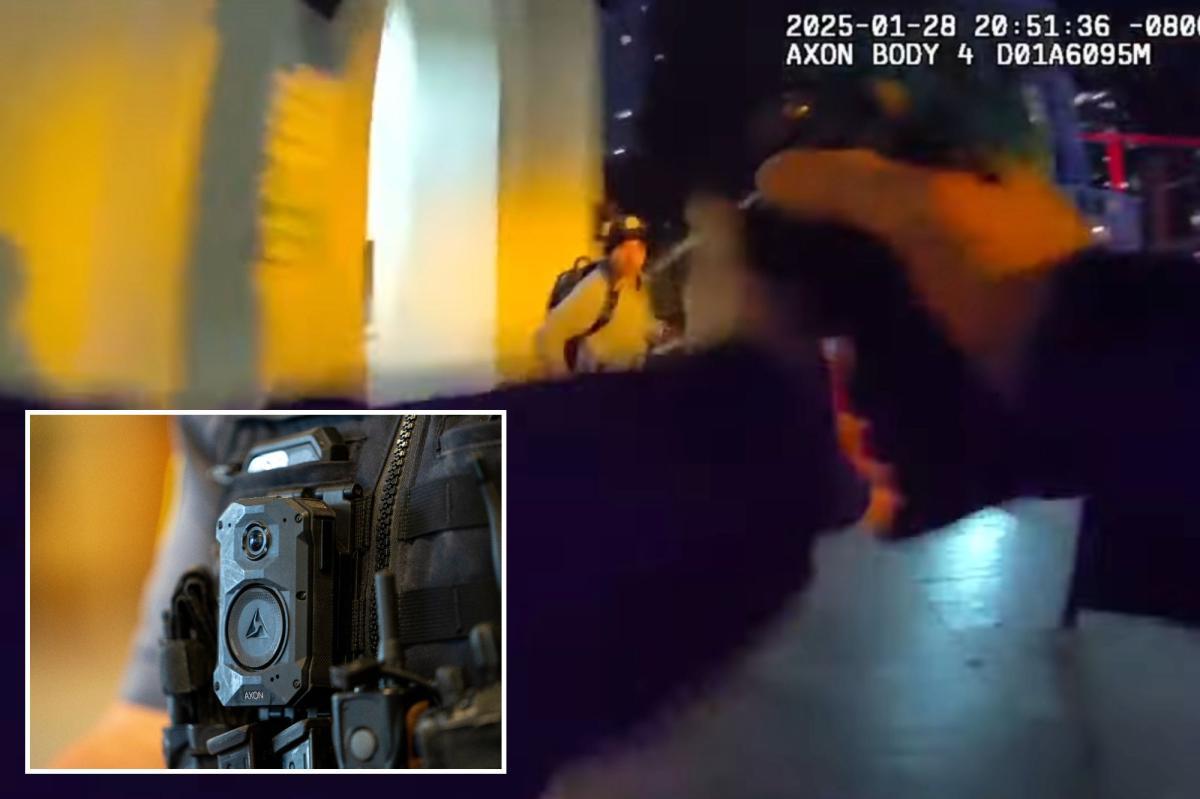
Police body cameras equipped with artificial intelligence have begun detecting faces of approximately 7,000 individuals on a high-risk watch list in Edmonton, Canada, signaling a significant shift in how AI in policing might evolve across North America
1
. The pilot project in Edmonton, switched on last week, represents the first live deployment of facial recognition technology by Axon Enterprise, Inc. since the Arizona-based company abandoned the technology in 2019 following recommendations from its AI ethics board2
.
Source: New York Post
The watch list includes 6,341 people flagged for categories such as "violent or assaultive; armed and dangerous; weapons; escape risk; and high-risk offender," according to Kurt Martin, acting superintendent of the Edmonton Police Service. A separate list adds 724 individuals with at least one serious criminal warrant
3
. Ann-Li Cooke, Axon's director of responsible AI, emphasized that the system targets "folks with serious offenses," though many details about the pilot haven't been publicly disclosed1
.Ethical Concerns Regarding Privacy Resurface
Barry Friedman, former chair of Axon's AI ethics board and now a law professor at New York University, expressed alarm that the company is moving forward without sufficient public debate, testing, and expert vetting about societal risks and privacy implications
4
. "It's essential not to use these technologies, which have very real costs and risks, unless there's some clear indication of the benefits," Friedman told The Associated Press5
.Axon founder and CEO Rick Smith counters that this represents "early-stage field research" rather than a product launch, designed to assess how Axon facial recognition technology performs and identify necessary safeguards
1
. Smith wrote in a blog post that testing "in real-world conditions outside the U.S." allows the company to "gather independent insights, strengthen oversight frameworks, and apply those learnings to future evaluations, including within the United States" .Global Implications for Real-Time Facial Recognition in Policing
If the pilot expands, it could significantly affect policing worldwide. Axon, best known for developing the Taser, dominates the U.S. body camera market and beat Chicago-based Motorola Solutions last year in a bid to supply body cameras to the Royal Canadian Mounted Police
3
. Motorola Solutions stated it has the capability to integrate facial recognition into police body cameras but has "intentionally abstained from deploying this feature for proactive identification" based on ethical principles, though it didn't rule out future use1
.The government of Alberta mandated body cameras for all police agencies in the province in 2023, describing them as a transparency measure and accountability tool to document police interactions and collect better evidence
5
. However, while body cameras have gained acceptance, real-time facial recognition identifying people in public places remains unpopular across the political spectrum in the United States .Related Stories

Concerns About Biased Results and Accuracy Persist
Civil liberties advocates and researchers have raised persistent concerns about biased results and accuracy in facial recognition systems. Studies have shown the technology demonstrates biased results by race, gender, and age, and doesn't match faces as accurately on real-time video feeds as it does on static images like identification cards or police mug shots
3
. These technical limitations, combined with conversations about racial injustice, helped push Axon and Big Tech companies to pause facial recognition software sales to police starting in 20191
.
Source: AP
Notably, Axon doesn't make its own AI model for recognizing faces but declined to say which third-party vendor it uses for the Edmonton field research
5
. The pilot will continue through the end of December and only during daylight hours, with Martin noting that lighting conditions pose challenges in Edmonton's early winter darkness .Diverging Global Regulations Shape Future Deployment
The regulatory landscape for AI-powered police body cameras varies dramatically across jurisdictions. Several U.S. states and dozens of cities have sought to curtail police use of facial recognition, though the Trump administration is now attempting to block or discourage states from regulating AI
1
. The European Union banned real-time public face-scanning police technology across its 27-nation bloc, except for serious crimes like kidnapping or terrorism3
.Meanwhile, the United Kingdom has moved in the opposite direction. Authorities started testing the technology on London streets a decade ago and have used it to make 1,300 arrests in the past two years, with the government now considering expanding its use across the country
5
. The Edmonton pilot thus represents a critical test case that could influence whether other North American jurisdictions adopt similar systems or maintain restrictions based on ethical concerns and privacy implications raised by civil liberties advocates and the broader public debate surrounding surveillance technology.References
Summarized by

Navi
[1]
[2]
[3]
[4]
Related Stories
New Orleans Police Pause Controversial AI-Powered Facial Recognition Program Amid Privacy Concerns
20 May 2025•Technology
AI Takes on Police Body Cam Video Review: Efficiency Boost or Privacy Concern?
24 Sept 2024

US Police Departments Adopt AI Chatbots for Crime Report Writing, Raising Concerns
26 Aug 2024

Recent Highlights
1
OpenAI Releases GPT-5.4, New AI Model Built for Agents and Professional Work
Technology

2
Anthropic sues Pentagon over supply chain risk label after refusing autonomous weapons use
Policy and Regulation

3
OpenAI secures $110 billion funding round as questions swirl around AI bubble and profitability
Business and Economy

Recent Highlights
Today's Top Stories









Your Daily Dose of Curated AI News
Don’t drown in AI news. We cut through the noise - filtering, ranking and summarizing the most important AI news, breakthroughs and research daily. Spend less time searching for the latest in AI and get straight to action.

