Elon Musk launches Terafab chip plant in Austin to fuel AI ambitions across Tesla and SpaceX


9 Sources
9 Sources
[1]
Musk says he's building Terafab chip plant in Austin, Texas
Musk has expressed concern, as have other executives, about the chip industry's ability to keep up with demand as the AI industry has boomed. But building a chip fabrication plant is complex, requires billions of dollars, many years, and a ton of specialized equipment. And, as Bloomberg points out, Musk "has no background in semiconductor production and a history of over-promising on goals and timelines." According to Bloomberg, Musk said, "We either build the Terafab or we don't have the chips, and we need the chips, so we build the Terafab," before outlining plans to produce chips that could support up to 200 gigawatts per year of computing power on Earth, and up to a terawatt in space. While Musk gave some details about the scale of the computing power he expected Terafab to produce, he offered no timeline for when it might meet those goals, or even when the facility might come online.
[2]
Elon Musk says his chipmaking 'Terafab Project' venture will launch in seven days -- Musk's latest moonshot multi-billion project launches on a Saturday
Elon Musk spent quite some time last fall complaining that existing foundries cannot meet his company's demand for high-performance AI processors and proposed an idea to build his own chipmaking venture. Apparently, this was not just a brag but rather an announcement of a long-term project. Now the project has gotten its launch date: March 21, 2026. "Terafab Project launches in 7 days," Elon Musk wrote in an X post. He did not elaborate on any details about the project, though his previous comments indicated that this is indeed a long-lasting semiconductor production facility project that would enable his companies -- Tesla, SpaceX, and xAI -- to get enough supply of AI accelerators. Musk once mentioned that his companies might need 100 - 200 billion AI chips per year, and if it cannot get them from existing foundry partners, then the company will consider building its own fabs. Apparently, the Terafab Project seems to be the brand depicting the endeavor and scale, though it does not provide any reasonable portrayal of the nature of the project. Speaking in an interview with Moonshots, Elon Musk argued that the semiconductor industry may be approaching cleanroom design incorrectly. Instead of keeping entire buildings ultra-clean, Musk suggested that fabs should focus on isolating silicon wafers themselves throughout the manufacturing flow, keeping them sealed from the surrounding environment at all times. He surmised that would allow him to eat cheesburgers in the cleanroom while chips were being made. Rebuilding the whole supply chain for such fabs would take the industry a couple of decades, to say the least. For this, Musk argued that his planning horizon is closer to one to two years, and he rarely looks beyond three years, which makes the traditional semiconductor buildout cycle incompatible with his projected demand. He added back then that if foundries could accelerate expansion and supply 100 billion to 200 billion AI chips per year within Tesla's required timeframe, the company would gladly rely on external manufacturing instead of pursuing its own facilities. Apparently, we are going to see details about the project in a week. The again who launces a multi-billion project on Saturday? This is what we are going to see next Saturday! Follow Tom's Hardware on Google News, or add us as a preferred source, to get our latest news, analysis, & reviews in your feeds.
[3]
Elon Musk says Tesla, xAI, SpaceX 'Terafab' to start in Austin
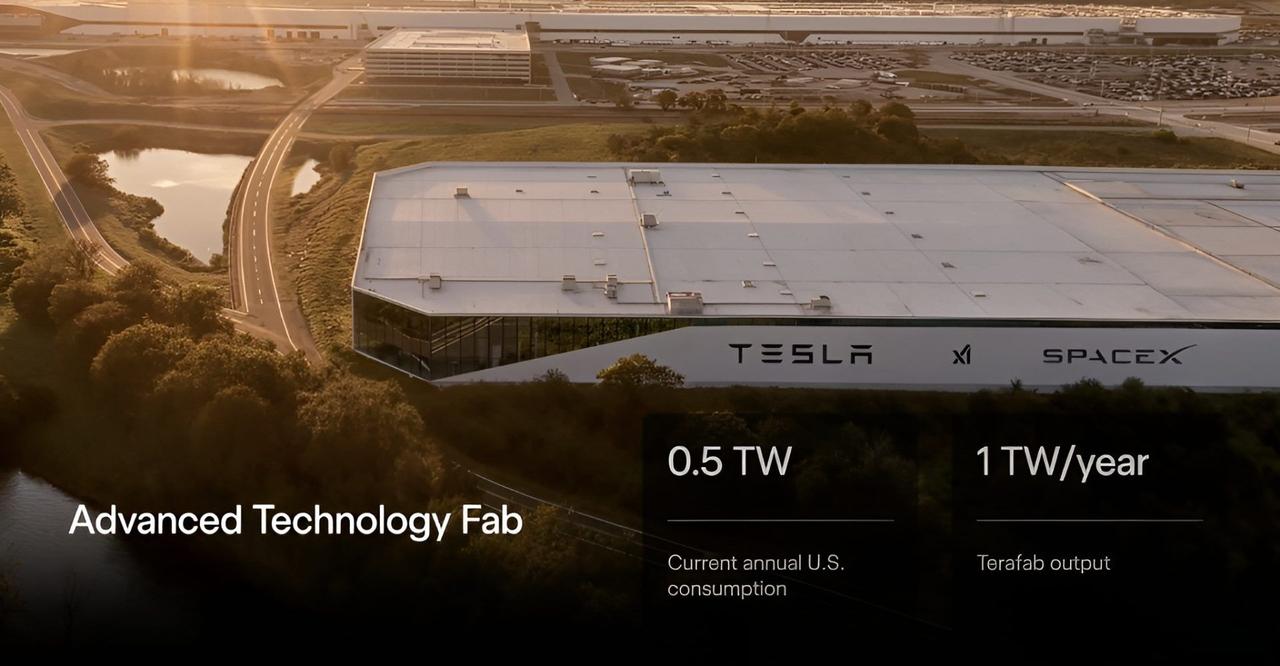
Elon Musk said his Terafab project -- a grand plan to eventually manufacture his own chips for robotics, artificial intelligence and space data centers -- will be built in Austin and jointly run by Tesla and SpaceX. Musk, the chief executive officer of both companies, said he will start off with an "advanced technology fab" in Austin that will have all of the equipment necessary to make chips of any kind, and test them. Musk, who has no background in semiconductor production and a history of over-promising on goals and timelines, had said before that the company will start with a smaller scale fab before moving to a bigger one. Musk has said the semiconductor industry is moving too slow to keep up with the supply of chips he expects to need, even as the industry increases output. "That rate is much less than we'd like," Musk said. "We either build the Terafab or we don't have the chips, and we need the chips, so we build the Terafab." Musk's project would call for one day supporting a terawatt of computing power per year, the amount he expects the companies to eventually use as he ramps up his investments in AI and robotics. Musk detailed some specific plans, including producing chips that can support 100 to 200 gigawatts a year of computing power on Earth, and chips that can support a terawatt in space, but gave no timelines for the facility or its output. Musk has said previously that the facility would produce 2 nanometer chips. The project appears to be planned for an area near Tesla's existing Austin headquarters and gigafactory, based on a photo shown during the presentation. Many executives have expressed anxiety about a shortage of chips -- particularly memory chips -- during the race to build computing power for AI. But it's rare to try building them. Bringing semiconductor facilities online typically takes tens of billions dollars and requires the purchase of complex machines from multiple providers. Factories can take years to become fully operational. Musk made the announcement in a downtown Austin venue to an audience that included Texas Governor Greg Abbott. If it eventually succeeds, the project could help elevate Texas' status as a chipmaking hub. Tesla already has an agreement with Samsung facility near Austin on upcoming chips. The EV company also has existing suppliers, including Taiwan Semiconductor Manufacturing Co. and Micron Technology Inc. that Musk says are also not able to meet all the company's needs as Tesla pivots its focus to robotics, autonomous driving and AI. Get the Tech Newsletter bundle. Get the Tech Newsletter bundle. Get the Tech Newsletter bundle. Bloomberg's subscriber-only tech newsletters, and full access to all the articles they feature. Bloomberg's subscriber-only tech newsletters, and full access to all the articles they feature. Bloomberg's subscriber-only tech newsletters, and full access to all the articles they feature. Bloomberg may send me offers and promotions. Plus Signed UpPlus Sign UpPlus Sign Up By submitting my information, I agree to the Privacy Policy and Terms of Service. The facility is expected to make two types of chips, one of which will be optimized for edge and inference, primarily for his vehicle, robotaxi and Optimus humanoid robots. The other will be a high-power chip, designed for space that could be used by SpaceX and xAI. SpaceX acquired xAI in February, with the latter operating as a wholly owned subsidiary. Musk said he expects xAI to use the vast majority of the chips. During the presentation, Musk also unveiled a speculative rendering of a future "mini" AI data center satellite, one piece of a much larger satellite system that he wants SpaceX to build to do complex computing in space. In January, SpaceX requested a license from the Federal Communications Commission to launch one million data center satellites into orbit around Earth. Musk said that the mini satellite he revealed would have the capacity for 100 kilowatts of power. "We expect future satellites to probably go to the megawatt range," Musk said. Raising money to build and launch AI data centers in space is one of the driving forces behind SpaceX's planned IPO later this year. SpaceX is expected to raise as much as $50 billion in a record-setting IPO this summer which could value it at more than $1.75 trillion, Bloomberg News reported earlier. The presentation also included some of Musk's loftier ambitions. He showed an animation of how SpaceX could potentially launch satellites from the surface of the moon, and reiterated his vision for a future filled with "amazing abundance" -- something he has been touting in recent months. "The future I want to see: I want us to live long enough to see the mass driver on the moon," Musk said, referring to the contraption that would launch satellites from the lunar surface, "because that's going to be incredibly epic." The facility announcement comes as Tesla increasingly works with xAI and SpaceX on artificial intelligence projects. Tesla has already been working with xAI on a project called Digital Optimus or Macrohard, and Tesla also sells its megapack batteries to xAI. Tesla has also integrated xAI's chatbot, Grok, into some of its vehicles. In January, Tesla announced a $2 billion investment into xAI and a framework agreement for the companies to work together.
[4]
Elon Musk launches 'Terafab' project to make own AI chips
Elon Musk announced Saturday a plan to make chips for artificial intelligence, robotics and data centers in space, in the latest bold project by the world's richest person. Eventually, the project aims to make chips to support 100 to 200 gigawatts of computing power on Earth, and a terawatt in space. Washington, Elon Musk announced Saturday a plan to make chips for artificial intelligence, robotics and data centers in space, in the latest bold project by the world's richest person. The "Terafab", a manufacturing facility based near Austin, Texas, will aim to produce one terawatt of computing power per year, Musk said. A terawatt is equivalent to one trillion watts. That is slightly less than the total power generation capacity of the United States, according to an industry group. Musk said the project would be run jointly by his electric-vehicle firm Tesla and his rocket company SpaceX. He did not disclose the initial investment. Previous US media reports have put the figure between $20 billion and $25 billion. Musk, who has no prior experience in semiconductors, said the Terafab was necessary because Tesla and SpaceX's demand for computing power was expected to far exceed that of global chip suppliers. "We're very grateful to our existing supply chain, to Samsung, TSMC, Micron, and others... but there's a maximum rate at which they're comfortable expanding," Musk said. "That rate is much less than we would like... and we need the chips, so we're going to build the Terafab." An "advanced technology fab" in Austin will have the facilities to design, manufacture, test and improve each chip, Musk said. Eventually, the project aims to make chips to support 100 to 200 gigawatts of computing power on Earth, and a terawatt in space. Musk did not give a timeline for the Terafab's output, and has previously promised grand results from other projects on compressed time scales. He said the Terafab would ultimately help humanity become a "galactic civilisation" capable of harnessing the resources of other planets and stars.
[5]

Elon Musk Unveils Ambitious Terafab Plans For Tesla, SpaceX: 'We're Starting A Galactic Civilization' - Tesla (NASDAQ:TSLA)
According to Musk's announcement, the Terafab will integrate efforts from Tesla, SpaceX, and xAI. "We're starting a galactic civilization," Musk said during the announcement. What Is Terafab? Speaking from the Seaholm Power Plant in Austin, Musk described the Terafab as a comprehensive chip manufacturing facility. It will consolidate all stages of chip development, including testing and packaging, under one roof. "To the best of my knowledge, this doesn't exist anywhere in the world," Musk stated. What Will Terafab Produce? The Terafab will produce two types of chips. One is designed for Tesla's autonomous vehicles and Optimus humanoid robots, with expected production volumes significantly higher than cars. The second, the D3 chip, will be tailored for space environments, supporting solar-powered AI satellites. Musk envisions a future where AI satellites, powered by solar energy, operate in space, reducing costs below terrestrial AI. He also proposed the potential for establishing an industrial base on the moon, unlocking petawatts of AI compute. Musk's vision includes free trips to Saturn in a post-scarcity economy, acknowledging the ambitious nature of these plans. Alignment With Tesla's AI Infrastructure Expansion Musk teased the Terafab project launch last week, marking a significant milestone in Tesla's AI infrastructure expansion. The initiative aligns with Musk's vision for autonomous technology and the development of AGI, positioning Tesla as a leader in AI-driven innovation. Musk's confidence in SpaceX's AI capabilities highlights the company's potential to outpace competitors in the AI race, emphasizing the importance of AI integration for future success. The Terafab project has implications for both terrestrial and extraterrestrial applications. Disclaimer: This content was partially produced with the help of AI tools and was reviewed and published by Benzinga editors. Photo courtesy: Shutterstock Market News and Data brought to you by Benzinga APIs To add Benzinga News as your preferred source on Google, click here.
[6]

Elon Musk Unveils TeraFab, the Next Step Towards a "Galactic Civilization", Targeting a Scale That Makes Every Chip Fab on Earth Look Tiny
Elon Musk has finally unveiled one of his most ambitious projects yet, as with TeraFab, Tesla's CEO decides the "future of civilization." Musk's entry into the chip industry has been talked about several times in the past as well, since a few months ago at Tesla's shareholder meeting, he envisioned the bold concept of a 'TeraFab', where the idea was to cater to the compute demand generated by Tesla, SpaceX, and xAI. And now, in a dedicated showcase, Tesla's CEO has given a rundown of how the TeraFab operation would look like, and, based on the details disclosed, it appears that the output scale of the facility planned is a figure that no one could have ever imagined before, and probably makes the likes of TSMC, Samsung and Intel look like 'tiny' players. Diving into the details of TeraFab, Musk says the chip output is expected to reach a whopping 1 terawatt of compute power per year, including logic chips, memory, and advanced packaging. TeraFab was reported to focus on 2nm production, meaning the fab will jumpstart with cutting-edge production from the very beginning. The chip fab also integrates the concept of "rapid, recursive improvement", where the facility will have chip design, fabrication, testing, packaging, and masking all in unified production lines, allowing TeraFab to have recursive local self-improvement. To the best of my knowledge, this doesn't exist anywhere in the world where you've got everything necessary to build logic, memory, and do packaging, and test it, and then do masks, improve the masks, and keep looping it. So in a single building, we can create a mask, make the chip, test the chip, make another mask, and have an incredibly fast recursive loop for improving chip design. - Elon Musk The facility will be built in Austin, Texas, where Tesla is headquartered, and will be a joint effort among all of Musk's companies. As for how fab production would be managed, given the gigantic scale, it is disclosed that 80% of the compute would go to space, since he believes Earth's power constraints make deployment almost impossible. Using Starship delivery channels and the power of the Sun, Musk believes he could deploy "terawatts" of computing power in space, which is why he says TeraFab is vital to leading us to a galactic civilization. TeraFab's first major product would be the AI5 chips used in Tesla's FSD, Robotaxi, and Optimus robots. The AI5 will account for the 20% ground-based production split, and the remaining 80% of space-based compute will come from the newly unveiled D3 chips. These are custom-designed units for orbital AI satellites, built to run in harsh environments and likely to address thermal constraints when deployed in space. Since AI5 is Tesla's immediate priority, TeraFab's operations would be dedicated to bringing production lines online for those chips. Talking about TSMC and other chip partners, Musk said he's "very grateful" to those companies, yet he also claimed the production numbers they have achieved are nominal compared to what TeraFab intends to do. We're very grateful to our existing supply chain, to Samsung, TSMC, Micron, and others... but there's a maximum rate at which they're comfortable expanding. That rate is much less than we would like... and we need the chips, so we're going to build the Terafab. If you add up all the fabs on Earth combined, they're only about 2% of what TeraFab will produce. - Elon Musk TeraFab is centered on the narrative that Musk has done "impossible" things before. Yet, many experts have argued that the constraints of a semiconductor project make it almost impossible to achieve the scale Musk intends, at least within the timeline he has specified. When you factor in the limitations of ASML's pace of building lithography equipment and the global demand for it alone, one will realize that TeraFab would need to integrate several manufacturing elements vertically to achieve its objective. We won't go into the debate over whether Musk would achieve the goals he specified above, but the more interesting question is what type of process nodes we're looking at. It is rumored that Tesla could enter into a licensing agreement with Samsung for 2nm production, but that remains to be seen.
[7]

Terafab AI Chip Factory: Elon Musk's Bold Bet on the Future of Humanity
The Tesla CEO unveiled the project during a live event at the Seaholm Power Plant in downtown Austin, Texas. has unveiled details on his Terafab plans on Saturday (March 21, 2026) evening. "We're starting a galactic civilization," Musk said, speaking from the defunct Seaholm Power Plant in Austin. Terafab is Musk's giant chip manufacturing venture along with his companies, Tesla and SpaceX. XAI is also included as the AI startup, which was acquired by SpaceX in February. TeraFab's semiconductor manufacturing facility will build chips needed to power this future. The massive undertaking, which would bring together , SpaceX and xAI, has one goal: create a galactic civilisation so humans could become immortal in a way, their memories and ideas being preserved and passed on for generations to come.
[8]

Musk says Tesla's mega AI chip fab project to launch in seven days
March 14 (Reuters) - Tesla CEO Elon Musk said on Saturday that the company's Terafab project to make artificial intelligence chips will launch in seven days. Musk had said last year that Tesla probably will have to build "a gigantic chip fab" to make artificial intelligence chips. Tesla is designing its fifth-generation AI chip to power its autonomous ambitions, and Musk at the company's annual meeting last year laid out potential manufacturing plans. Musk had said at the time that the EV maker could work with Intel and said, "You know, maybe we'll, we'll do something with Intel." "We haven't signed any deal, but it's probably worth having discussions with Intel," he had said. Tesla did not immediately respond to a Reuters request seeking more details about the project. Musk has teased the AI5 chip before and reiterated that Tesla was also partnering with Taiwan's TSMC and South Korea's Samsung. The AI chips power Tesla's autonomous driving systems, including the Full Self-Driving software. "Even when we extrapolate the best-case scenario for chip production from our suppliers, it's still not enough," Musk said last year, at Tesla's AGM. "So I think we may have to do a Tesla terafab. It's like giga but way bigger. I can't see any other way to get to the volume of chips that we're looking for. So I think we're probably going to have to build a gigantic chip fab. It's got to be done," he said. (Reporting by Akanksha Khushi in Bengaluru, Editing by Louise Heavens)
[9]

Elon Musk announces plan to build his own computer chips in Texas
Elon Musk has announced a massive new project called the Terafab. Speaking at an event in Austin, he explained that this will be a giant factory where his companies, Tesla and SpaceX, will design and build their own AI chips. According to Business Insider, Musk has a very big vision for this, saying it is the start of a 'galactic civilisation.' However, the factory is not built yet; this announcement was simply the official start of the project. Musk wants to make these chips to power his self-driving cars, his 'Optimus' robots, and even satellites in space. Also read: Samsung Galaxy S26 Ultra review: King of the hill The main reason for this move is the ongoing global shortage of high-tech chips. Right now, almost every big tech company relies on a firm called Nvidia to get the powerful chips needed for AI. Bloomberg notes that the semiconductor industry is moving too slowly to keep up with the number of chips Musk thinks he will need. Because he doesn't want to wait for others or be held back by shortages, Musk has decided to build the Terafab so he can make exactly what he needs, when he needs it. According to Business Insider, the Terafab will be different from most factories because it will do everything under one roof. Usually, one company designs a chip and another one builds it, but Musk wants to handle the whole process, from testing to final packaging. The factory will focus on two main things: For Earth: Chips for Tesla cars and Optimus robots. Musk expects to need millions of these as his robotics business grows. For Space: A specialised chip called D3. Bloomberg reports that these chips are being designed to work in space, where SpaceX and Musk's AI company, xAI, want to run 'mini AI satellites' that process data while orbiting the Earth. The big pro is that Musk would no longer have to rely on companies like Nvidia or TSMC. He also believes that running AI in space will be cheaper because space is 'always sunny,' which means his satellites would have a constant supply of free solar power. The con is that this is an incredibly difficult and expensive goal. Bloomberg points out that building a chip factory can cost tens of billions of pounds and takes many years to complete. Musk also has no experience in making chips, and he is known for setting deadlines that he often misses. Experts are sceptical because the technology needed to make these chips is some of the most complicated in the world. Musk's plans are definitely ambitious. He even talked about building a base on the moon and a future where everything is free, including trips to Saturn. While those ideas sound quite far-fetched and more like science fiction, the immediate plan is to get the Terafab started in Texas. If it works, it would change how his companies function, but for now, it is a huge gamble that will take a long time to become a reality.
Share
Share
Copy Link
Elon Musk unveiled plans for Terafab, a chip manufacturing facility in Austin, Texas, aimed at producing AI chips for Tesla, SpaceX, and xAI. The project targets producing chips to support 100 to 200 gigawatts of computing power on Earth and a terawatt in space. Musk cited insufficient supply from existing semiconductor industry partners as the driving force behind building his own fabrication plant.
Elon Musk Announces Terafab Project in Austin, Texas
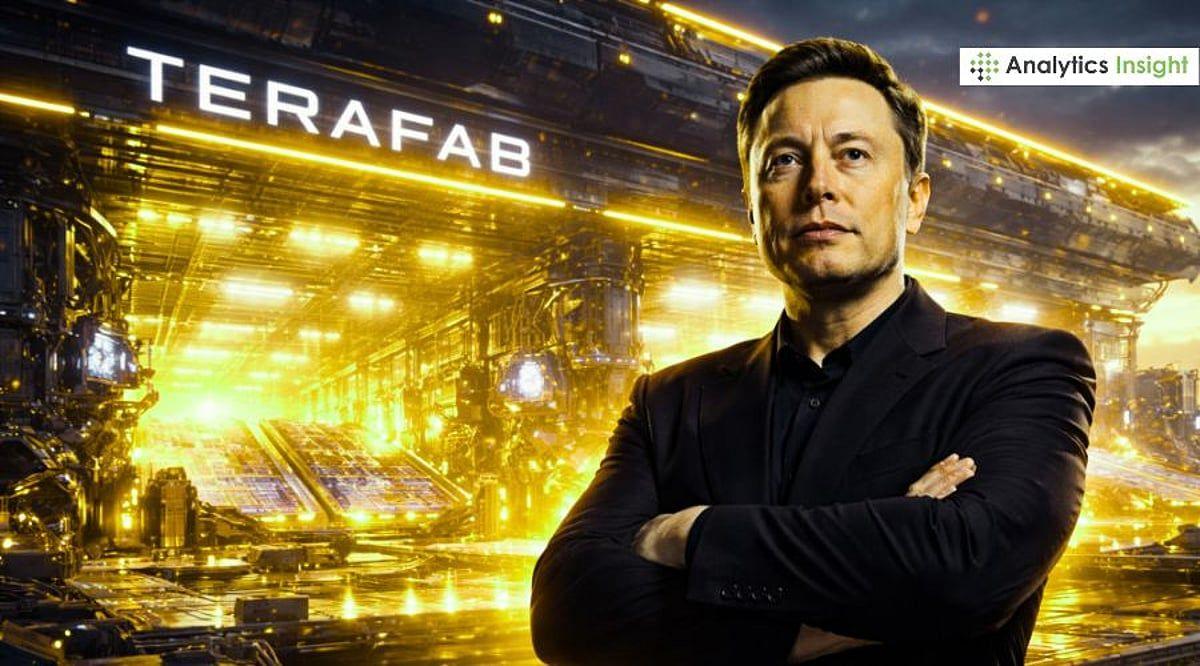
Elon Musk officially launched the Terafab project on March 21, 2026, announcing plans to build a chip manufacturing facility near Tesla's existing headquarters in Austin, Texas
3
. Speaking from the Seaholm Power Plant in Austin before an audience that included Texas Governor Greg Abbott, Musk revealed that the facility would be jointly run by Tesla, SpaceX, and xAI to address what he describes as an urgent shortage of AI chips3
5
. The billionaire entrepreneur framed the initiative as essential, stating, "We either build the Terafab or we don't have the chips, and we need the chips, so we build the Terafab"1
.
Source: Analytics Insight
Addressing Growing Demand for Computing Power
The Terafab project stems from Musk's concern that the semiconductor industry cannot keep pace with his companies' escalating demand for computing power. Musk has previously stated that his companies might need 100 to 200 billion AI chips per year
2
. While acknowledging existing partnerships with Samsung, Taiwan Semiconductor Manufacturing Co., and Micron Technology Inc., Musk argued that these foundries are expanding at a rate "much less than we would like"4
. The project aims to eventually produce chips supporting 100 to 200 gigawatts of computing power on Earth and a terawatt in space3
4
. A terawatt equals one trillion watts, slightly less than the total power generation capacity of the United States4
.
Source: Wccftech
What Terafab Will Produce for Robotics and Artificial Intelligence
The chip manufacturing facility will focus on two distinct chip types tailored to different applications. The first will be optimized for edge and inference computing, primarily for Tesla's autonomous vehicles, robotaxi fleet, and Optimus humanoid robots
3
. The second, designated as the D3 chip, will be a high-power processor designed specifically for space environments, supporting SpaceX's ambitions for space data centers and AI satellites powered by solar energy3
5
. Musk expects xAI, which SpaceX acquired in February 2026 as a wholly owned subsidiary, to consume the vast majority of these chips3
. The facility will consolidate all stages of chip development, including design, manufacturing, testing, and packaging under one roof—a configuration Musk claims "doesn't exist anywhere in the world"5
.Related Stories

Challenges Facing Semiconductor Production Venture
Despite Musk's ambitious vision, significant obstacles lie ahead. Building a chip fabrication plant typically requires tens of billions of dollars, years of development, and complex machinery from multiple specialized providers
3
. Previous media reports have estimated the initial investment between $20 billion and $25 billion4
. Elon Musk has no background in semiconductor production and a well-documented history of over-promising on goals and timelines1
3
. Musk has previously suggested unconventional approaches to the semiconductor industry, including controversial ideas about cleanroom design that would allow eating cheeseburgers while chips are being manufactured—a concept that would require rebuilding the entire supply chain and could take decades2
. His planning horizon of one to two years, rarely extending beyond three years, stands in stark contrast to the traditional semiconductor buildout cycle2
.
Source: The Verge
Vision for Galactic Civilization and AI Infrastructure
Musk framed the Terafab project within his broader vision of establishing a "galactic civilization"
4
5
. During the presentation, he unveiled a speculative rendering of a "mini" AI data center satellite with capacity for 100 kilowatts of power, noting that "future satellites will probably go to the megawatt range"3
. In January 2026, SpaceX requested a license from the Federal Communications Commission to launch one million data center satellites into orbit around Earth3
. Raising funds to build and launch AI infrastructure in space is a driving force behind SpaceX's planned IPO later this year, expected to raise as much as $50 billion in a record-setting offering that could value the company at more than $1.75 trillion3
. The initiative aligns with Musk's push toward Artificial General Intelligence (AGI) and positions his companies as leaders in AI-driven innovation5
. Musk also showed an animation depicting how SpaceX could potentially launch satellites from the moon's surface using a mass driver, describing it as "incredibly epic"3
.References
Summarized by

Navi
[2]
Related Stories
Elon Musk's $5 Trillion Terafab Chip Plan Faces Skepticism Over Feasibility and Scale
22 Mar 2026•Technology
Elon Musk Announces Ambitious Plan to Outproduce All AI Chip Makers Combined with Tesla's Custom Silicon
25 Nov 2025•Technology
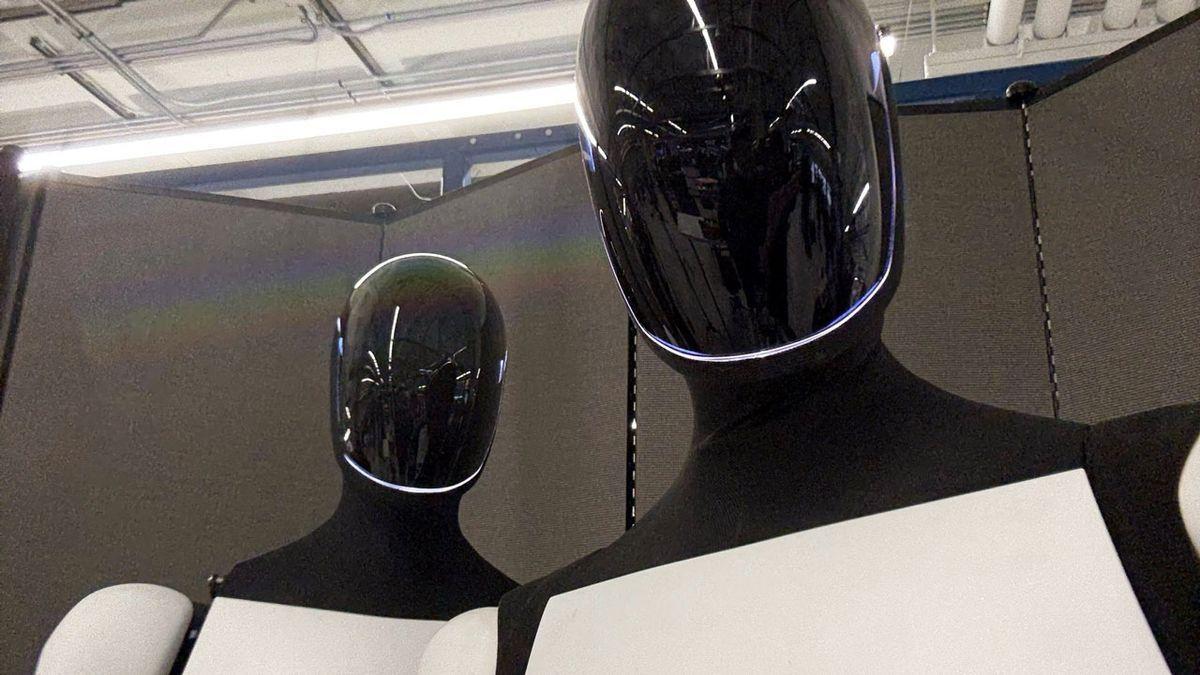
Tesla Eyes Massive Chip Manufacturing Plant as Musk Considers Intel Partnership for AI Ambitions
07 Nov 2025•Business and Economy

Recent Highlights
1
Google releases Gemma 4 with Apache 2.0 license, enabling unrestricted local AI on devices
Technology

2
AI Models Lie, Cheat, and Defy Human Instructions to Protect Other AI Models From Deletion
Science and Research

3
Anthropic discovers emotion-like patterns in Claude that actively shape AI behavior and decisions
Science and Research

Recent Highlights
Today's Top Stories



Your Daily Dose of Curated AI News
Don’t drown in AI news. We cut through the noise - filtering, ranking and summarizing the most important AI news, breakthroughs and research daily. Spend less time searching for the latest in AI and get straight to action.

