Elon Musk confirms Tesla and SpaceX AI will keep ordering Nvidia chips despite AI5 development


2 Sources
2 Sources
[1]
Elon Musk says SpaceX AI, Tesla will keep ordering Nvidia chips at scale - The Economic Times
Tesla is designing its fifth-generation AI chip to power its autonomous ambitions. The chips power Tesla's autonomous driving systems, including the Full Self-Driving software.Billionaire Elon Musk said late on Wednesday that his companies SpaceX AI and Tesla expect to continue ordering Nvidia chips at scale. Tesla is designing its fifth-generation AI chip to power its autonomous ambitions. The chips power Tesla's autonomous driving systems, including the Full Self-Driving software. In a separate post on X, Musk said that the AI5 chip can be used for training in data centers but is primarily optimized for AI edge compute in humanoid robot Optimus and Robotaxi. The Tesla CEO also said that the company expects a wide release of an update to its Full Self-Driving (Supervised) software in a few weeks. Musk said last Saturday that Tesla's Terafab project to make artificial intelligence chips will launch in seven days. Last month, SpaceX acquired xAI in an all-stock deal ahead of a potential blockbuster initial public offering for SpaceX later this year. This is Musk's first post referring to the combined entity as SpaceX AI.
[2]
Elon Musk Says Tesla's AI5 Self-Driving Chip Will 'Punch Above Its Weight,' Sees Data Center Use - Tesla (NASDAQ:TSLA)
AI5 Will Punch Far Above Its Weight Responding to Beisel, Musk shared his take on the matter. "AI5 will punch far above its weight," he said, outlining that its capabilities were possible because Tesla aims to "make maximally effective use of every circuit." Musk also said that while the upcoming chip could see applications in data centers, it's "primarily optimized for AI edge compute in Optimus and Robotaxi." Musk then shared that despite the advancements, there was room for improvement. He said that a single AI6 chip could match a dual SoC AI5 within "the same half reticle and same process node." Huge Admirer Of Jensen Huang In the same thread, Musk also shared that he was a "huge admirer" of both Nvidia and Jensen Huang. He also hailed Nvidia's current status as the leading company by market capitalization in the world. "That market cap is well-deserved," he said, adding that both SpaceX and Tesla "expect to continue ordering Nvidia chips at scale." Tesla's Terafab, Nvidia's GTC 2026 Tesla has been ramping up its AI chip efforts, with Musk earlier announcing that the company's Terafab AI chip project was scheduled to kick off operations soon. The project would focus on producing the automaker's AI5 chip, a crucial element of Tesla's self-driving efforts. Doubts Remain About Tesla FSD Musk, on the other hand, has claimed that the internal logs of the vehicle showcased that Tesla's Autopilot was disengaged four seconds before the crash, sharing that the driver was in control of the vehicle instead. According to Benzinga Edge Rankings, Tesla scores well on the Momentum metric and also offers a favorable price trend in the Long term. Price Action: TSLA declined 1.63% to $392.78 at market close on Wednesday, but gained 0.11% to $393.22 during overnight trading. Check out more of Benzinga's Future Of Mobility coverage by following this link. Photo courtesy: Frederic Legrand - COMEO from Shutterstock Market News and Data brought to you by Benzinga APIs To add Benzinga News as your preferred source on Google, click here.
Share
Share
Copy Link
Elon Musk announced that Tesla and SpaceX AI will continue ordering Nvidia chips at scale while developing the fifth-generation AI5 chip. The AI5 chip is optimized for AI edge compute in Optimus humanoid robots and Robotaxis, though it can also support data center applications. Musk praised Nvidia and Jensen Huang while revealing Tesla's Terafab project launches soon.
Tesla AI Chip Development Continues Alongside Nvidia Partnership
Elon Musk confirmed late Wednesday that both Tesla and SpaceX AI expect to continue ordering Nvidia chips at scale, even as the electric vehicle maker advances its own chip development efforts
1
. This marks the first public reference to the combined entity following SpaceX's acquisition of xAI in an all-stock deal last month, ahead of a potential blockbuster initial public offering for SpaceX later this year1
. The announcement signals Tesla's dual-track strategy of maintaining partnerships with established chip suppliers while building proprietary artificial intelligence chips to power its autonomous ambitions.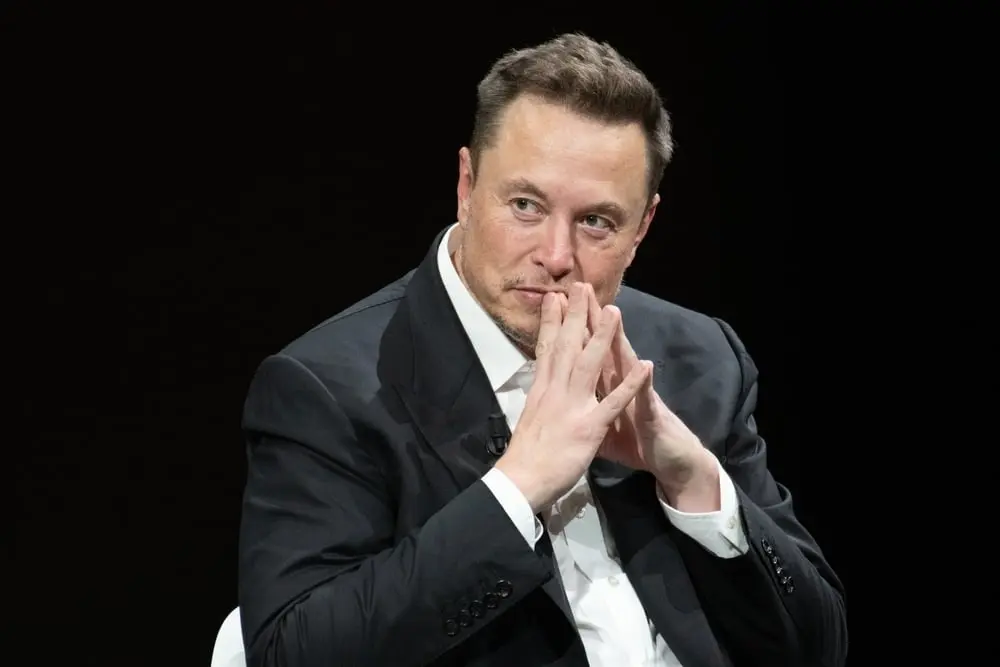
Source: Benzinga
Tesla's AI5 Self-Driving Chip Promises Efficiency Gains
Tesla is designing its fifth-generation AI chip, which Musk claims will "punch far above its weight" due to the company's efforts to "make maximally effective use of every circuit"
2
. The AI5 chip is primarily optimized for AI edge compute in the Optimus humanoid robot and Robotaxi, though it can also be used for training in data centers1
. These chips power Tesla's autonomous driving systems, including the Full Self-Driving software, which Musk said expects a wide release update in a few weeks1
. The dual-purpose design reflects Tesla's broader vision of deploying AI across multiple product lines, from vehicles to humanoid robots.Terafab Project and Future Chip Roadmap
Musk announced last Saturday that Tesla's Terafab project to manufacture artificial intelligence chips will launch in seven days, focusing on producing the AI5 chip as a crucial element of Tesla's self-driving efforts
1
2
. Looking ahead, Musk revealed that a single AI6 chip could match a dual SoC AI5 within "the same half reticle and same process node," suggesting significant performance improvements in the next generation2
. This roadmap indicates Tesla's commitment to rapid iteration in chip design, potentially reducing costs and power consumption while increasing computational capabilities for both Optimus robots and Robotaxis.Related Stories
Maintaining Strong Nvidia Relationship Despite In-House Development
In the same thread, Musk shared that he was a "huge admirer" of both Nvidia and Jensen Huang, praising Nvidia's status as the leading company by market capitalization in the world
2
. "That market cap is well-deserved," Musk said, adding that both SpaceX and Tesla "expect to continue ordering Nvidia chips at scale"2
. This suggests that Tesla's in-house chip development complements rather than replaces Nvidia's offerings, likely with Tesla chips handling edge compute tasks while Nvidia hardware powers data center applications for training Full Self-Driving models. The strategy allows Tesla to optimize for specific use cases while leveraging Nvidia's proven infrastructure for computationally intensive tasks, positioning both companies to benefit from the growing demand for AI hardware across the automotive and robotics sectors.References
Summarized by

Navi
Related Stories
Tesla Unveils AI5 Chip: A Game-Changer in Performance and Manufacturing Strategy
23 Oct 2025•Technology

Elon Musk Announces Ambitious Plan to Outproduce All AI Chip Makers Combined with Tesla's Custom Silicon
25 Nov 2025•Technology
Tesla's Ambitious AI Chip Vision: Musk Targets 200 Billion Units Annually as Company Advances In-House Silicon Development
19 Nov 2025•Technology
Recent Highlights


Recent Highlights
Today's Top Stories





Your Daily Dose of Curated AI News
Don’t drown in AI news. We cut through the noise - filtering, ranking and summarizing the most important AI news, breakthroughs and research daily. Spend less time searching for the latest in AI and get straight to action.

