Elon Musk predicts robots will outnumber humans as AI drives unprecedented economic growth


6 Sources
6 Sources
[1]
Elon Musk brought a 'Terminator' warning to Davos
Elon Musk finally showed up at Davos, but for a first-time cameo, his appearance played like a rerun. In a room that thrives on novelty, he delivered a familiar trilogy -- robots for everyone, self-driving on the verge, and AI sprinting toward superhuman intelligence -- leaving one lingering question hanging over the lanyards: What exactly was the point of this trip? Well, Musk's Davos appearance offered one clear, checkable (if already mentioned) thing: dates. He said Tesla $TSLA aims to get "Supervised Full Self-Driving approval in Europe, hopefully next month, and then maybe a similar timing [...] for China," a line that helped push Tesla shares up more than 3% after his appearance. He talked about robotaxis spreading (far more slowly than promised) across the U.S. this year, and he insisted humanoid robots will be for sale to the public by the end of next year -- with the rest of the session functioning as elevator music for a future he's been narrating ad nauseam. "There will be more robots than people," he said, promising machines that "saturate all human needs." He told Davos to brace for "amazing abundance" and joked about avoiding an outcome like James Cameron's "Terminator. "We need to be very careful with AI," Musk said. "We need to be very careful with robotics. We don't want to find ourselves in a James Cameron movie -- you know, 'Terminator.'" Even in an optimism-forward pitch, Musk couldn't resist echoing warnings about machinery getting ahead of the rules. (He's been invoking "Terminator"-style outcomes for years.) But the bigger tell was what wasn't there: no new reveal, no new partnership, no grand, Davos-exclusive pledge -- just a sales pitch for the permit-and-capital class; Tesla's story is en route, Musk says, and the future he keeps predicting still requires regulators to approve it, grids to feed it, and investors to keep financing the waiting. Davos is where the people who write the rules sit near the people who bankroll the infrastructure, and they both want to hear the same thing: that the future is inevitable, orderly, and investable. Musk and BlackRock $BLK CEO Larry Fink arrived onstage to muted applause. "That was not a large applause. Start again," Fink told the audience. Musk then opened with a joke about geopolitics that made the room sound like it had already spent the day laughing at better lines. "I heard about the formation of the peace summit," he said, joking -- to a quiet room -- about whether it was "peace" or "piece." He said, "A little piece of Greenland. A little piece of Venezuela." He later reached for two of his safest crowd-pleasers: "People ask me do I want to die on Mars, and I'm like 'Yes, but not on impact,'" and -- on aliens -- "I say, I am one, but they don't believe me." But his closer leaned hard into mood management. "I would encourage everyone to be optimistic and excited about the future," he said. He followed it with a line that played well in a room built on optimistic forecasts: "For quality of life, it is actually better to err on the side of being an optimist and wrong rather than being a pessimist and right." His performance had the tone of an earnings-call afterparty -- loose jokes up top, sweeping inevitability in the middle, and big promises delivered with the casual confidence of a man who has never met a deadline he couldn't outrun with a bigger one. The point of showing up looked less like novelty than positioning: a personal reminder, delivered in person, to the regulators, financiers, and infrastructure people who can make "next month" and "next year" real. Musk has spent a decade turning autonomy into a perpetual next-year story. In 2019, he predicted Tesla would have more than a million robotaxis on the road "next year for sure," and in 2020, he told investors he was "very confident" Full Self-Driving functionality would be "complete by the end of this year," because he was "literally driving it." Since then, the promise has kept mutating -- "paid rides next year," "unsupervised next year," "widespread by the end of the year" -- while the hard part stays the same: Autonomy isn't a finish line you cross once; it's a system you have to convince regulators, insurers, and the public to tolerate at scale. By 2025, the "next year for sure" language had become its own recurring character. Now, in 2026 at Davos, that calendar language -- "hopefully next month" -- is aimed squarely at European regulators. Musk's timelines are never just forecasts; they're a way of turning belief into momentum. Davos attendees are fluent in the language of "by the end of next year" because it sounds close enough to model -- and far enough away to forgive. His humanoid line is the kind of line Davos loves, because it turns messy problems -- labor shortages, stagnant productivity, etc. -- into a supply forecast. And he gave the audience the domestic hook that makes humanoids feel less like sci-fi and more like a solution dressed up in destiny: "Who wouldn't want a robot to, assuming it's very safe, watch over your kids, take care of your pets?" The pitch is utopian, but it's built on a premise that's almost grimly practical: care is expensive, and demographic math is not getting kinder. Musk framed the humanoid boom as a solution to aging societies that are running out of young workers to do the hands-on parts of life. That's the kind of argument Davos understands instinctively -- a future where the shortage is not demand, but bodies. He paired the awe with abundance: "If we have ubiquitous AI, which is essentially free or close to it, and ubiquitous robotics, then you will have an explosion in the global economy that is truly beyond all precedent." He also used the session to frame his companies as almost-civic projects -- optimizing for "civilization" and expanding "consciousness" beyond Earth -- a SpaceX-inflected way of making Mars sound less like a billionaire hobby and more like a mission statement. Then came the part where prophecy turns into permitting. Musk argued that AI's limiting factor is no longer just chips -- it's "fundamentally electrical power," he said, claiming that we're getting close to a world where "we'll be producing more chips than we can turn on." Musk said a 100-mile-by-100-mile patch of solar could power the entire U.S., a line he's echoed elsewhere, before he swerved into policy: "Unfortunately, in the U.S., the tariff barriers for solar (panels) are extremely high," he said. "And that makes the economics of deploying solar artificially high, because China makes almost all the solar and the tech." His case is less a climate sermon than an infrastructure argument; AI, robots, and autonomy are presented as destiny, while power generation is the bottleneck that decides whether that destiny ships on time. AI is the part where Musk's prophecy starts behaving like brand maintenance. If the robot story is about manufacturing and scale, the AI story is about awe, and awe is a useful currency when a company is trying to persuade investors and regulators that the future will arrive on its -- and its CEO's -- schedule. The Tesla and SpaceX and xAI CEO has somehow managed to turn prediction into a business line. He can show up, say the same big numbers with the same calm certainty, and then hand the bill to everyone else: regulators who have to decide what "safe enough" means, utilities that have to deliver the power, and investors who have to finance the lag between promise and reality. Davos, with its handshakes and urgency cosplay, is basically built for that handoff. The Davos crowd might not have given him applause, but it could give him the thing he really needs: attention from the people who can approve, fund, and energize his timetables.
[2]
Elon Musk, a Davos critic, tells World Economic Forum that robots will outnumber humans
Aimee Picchi is the associate managing editor for CBS MoneyWatch, where she covers business and personal finance. She previously worked at Bloomberg News and has written for national news outlets including USA Today and Consumer Reports. Elon Musk, a long-time critic of the World Economic Forum's annual event in Davos, Switzerland, appeared at the gathering for the first time on Thursday, where he predicted that robots will eventually outnumber humans. Musk has previously dismissed the event, which this week is hosting multiple heads of state, business figures and others, including President Trump, President Emmanuel Macron of France and European Commission President Ursula von der Leyen. Asked about the goals of his companies, which include electric car maker Tesla and space exploration business SpaceX, Musk said that Tesla's mission now includes "sustainable abundance" through the development of robotics. Tesla is currently developing a humanoid robot, dubbed Optimus, as well as automated robotaxis. "With robotics and AI, this is really the path to abundance for all," Musk told BlackRock CEO and WEF co-chair Larry Fink in a one-on-one interview. "People often talk about solving global poverty -- how do we give everyone a very high standard of living? The only way to do this is AI and robotics." Musk added that he envisions a day when robotics are "ubiquitous," which he said would unleash "an explosion in the global economy." "My prediction is there will be more robots than people," he said, adding that humanoid robots could help provide elder care in a world where there aren't enough young people to take care of older citizens. The market for humanoid robotics is today valued at between $2 billion and $3 billion, according to Barclays analysts. But the investment bank expects the sector to expand to at least $40 billion by 2035, and perhaps by as much as $200 billion, as AI-powered robots enter labor-intensive sectors, such as manufacturing. In 2023, Musk criticized Davos as "increasingly becoming an unelected world government that the people never asked for and don't want." Musk, who last year led the Trump administration's Department of Government Efficiency, is the world's richest person, with a fortune valued at $677 billion, according to the Bloomberg Billionaires Index.
[3]
Elon Musk predicts robot-majority future in first Davos appearance
The South Africa-born tech billionaire made his debut at the world's top political and economic summit in the Swiss Alps, telling the World Economic Forum that robots will outnumber people and AI will surpass human intelligence. World's richest person Elon Musk made his first appearance at the World Economic Forum in Davos on Thursday, predicting robots will eventually outnumber humans and offering to solve human ageing. The Tesla and SpaceX chief spoke with BlackRock CEO Larry Fink in a change of tack for the tech billionaire who has previously dismissed the world's top annual political and business gathering as elitist and boring. Fink opened the session by instructing the audience to applaud more enthusiastically for Musk. "That was not a large applause. Start again," the BlackRock chief said. Musk began with a joke about US President Donald Trump's territorial ambitions, referencing a peace summit. "And I was like, is that piece? A little piece of Greenland. A little piece of Venezuela," he said to limited laughter. He also repeated his claim about extraterrestrial life. "I'm often asked: 'Are there aliens among us?' And I say, I am one, but they don't believe me. If anyone would know if there were aliens among us, it would be me." Musk also told the audience that AI and robotics would trigger an unprecedented economic explosion. "We will actually make so many robots and AI that they will actually saturate human needs," he said. "My prediction is that there will be more robots than people." Musk said Tesla's Optimus humanoid robots would perform simple tasks in factories by the end of this year and more complex industrial work within 12 months. "Who wouldn't want a robot to, assuming it's very safe, watch over your kids, take care of your pets?" Musk asked. Ageing 'very solvable problem' He predicted AI would become smarter than any individual human by the end of 2026 and surpass the collective intelligence of humanity within five years. Tesla has rolled out robotaxi services in several US cities and expects widespread deployment across the country by year's end, Musk said. He added that Tesla hopes to receive European approval for the vehicles next month but did not specify which countries. On human longevity, Musk said ageing was "a very solvable problem" and predicted that once identified, the cause would be "incredibly obvious" to scientists. Musk was added to the WEF schedule as a last-minute participant, appearing one day after Trump addressed the forum. Musk has previously called the annual gathering "boring" and slammed the WEF as a body that's "increasingly becoming an unelected world government" in previous years. In December 2022, he said he declined a Davos invitation because it sounded "boring af". Musk's fortune is valued at $779 billion, according to Forbes magazine's real-time billionaires list.
[4]
WEF 2026: Elon Musk predicts robots will outnumber humans in AI-driven economy
Elon Musk, at the World Economic Forum, said AI and robotics could drive unprecedented global economic growth, creating a future of abundance where machines meet most human needs. He predicted robots may outnumber humans and help eliminate poverty, while cautioning on associated risks. Musk also discussed Tesla's FSD rollout and a potential SpaceX IPO. Artificial intelligence and robotics could trigger an unprecedented expansion of the global economy and usher in an era of material abundance in which machines meet most human needs, Tesla chief executive Elon Musk said Thursday at the World Economic Forum. "If you have ubiquitous AI that is essentially free or close to it, then you will have an expansion in the global economy that is beyond all precedent," Musk said during a fireside chat with Larry Fink, the chief executive of BlackRock. In a bold prediction, Musk said robots could eventually outnumber humans. Under what he described as a "benign" future scenario, societies would produce so many robots and AI systems that virtually all human needs would be saturated. "There will be such abundance," Musk said, that people may struggle to think of new tasks for robots to perform. Musk further said advances in AI and humanoid robotics may offer the only realistic path to eliminating global poverty and significantly raising living standards worldwide. He added that his ventures, including Tesla, SpaceX and xAI, have added "sustainable abundance" to their mission, arguing that AI-driven automation could unlock levels of production far beyond current human capacity. In such a scenario, the tech billionaire said, economic output would increasingly be determined by the number of robots deployed multiplied by their average productivity, fundamentally reshaping how growth is generated across industries. However, the Tesla CEO cautioned that AI and robotics are not without risks and must be developed carefully, a concern echoed by other business leaders and policymakers at Davos. This marked Musk's first appearance at the WEF in Davos. In recent years, he has been one of the forum's most prominent critics, frequently describing the annual gathering as elitist, unaccountable and disconnected from ordinary people. Broader business developments Separately, Musk touched on developments across his businesses. His space exploration company, SpaceX, is on track for a potential initial public offering, according to a report by the Financial Times. Bank of Bank of America, Goldman Sachs, JPMorgan Chase and Morgan Stanley are being considered for senior roles in leading the IPO, the report said. Musk also said he expects Tesla to receive regulatory approval for its Full Self-Driving (FSD) advanced driver assistance system in Europe and China as early as next month. Tesla has been seeking approval to roll out FSD in Europe, where stricter vehicle safety rules and a fragmented regulatory framework have slowed deployment compared with the United States.
[5]
Elon Musk's WEF debut in Davos: Talks of dying on Mars, mocks Trump's board of peace, shares AI robot vision and Tesla FSD plans
Elon Musk Davos speech: Elon Musk surprised attendees at the World Economic Forum in Davos. He spoke about his dream of dying on Mars and joked about global politics. Musk also shared his vision for widespread humanoid robots and provided updates on Tesla's self-driving technology. He mentioned potential regulatory approval in Europe and China. Elon Musk Davos speech: Elon Musk made a surprise appearance at the World Economic Forum in Davos on Thursday, marking his first ever appearance at an event he has publicly criticized for years. During a wide-ranging conversation with BlackRock CEO Larry Fink, the SpaceX and Tesla chief mixed humor, long-term ambition, and business updates while sharing his outlook on the future of humanity. Musk drew laughter early on when he revisited his long-stated dream of life on Mars. He shared that, "I've been asked a few times, do you want to die on Mars?" adding, "And I'm like, yes, but just not on impact," as quoted by Forbes. The conversation opened with jokes about global politics, including remarks on US interest in Greenland and Venezuela. Musk playfully said that, "I heard about the formation of the peace summit, and I was like, 'Is that P-I-E-C?' ... A little piece of Greenland, a little piece of Venezuela...all we want is a piece," as quoted by Forbes. Also read: LinkedIn cofounder reveals why US companies are failing to harness AI for real productivity while demand for AI skills soars Fink then guided the discussion toward Musk's work in space and artificial intelligence, giving Musk an opening to reiterate his belief that advanced humanoid robots will eventually become widespread. He said he expects such robots to be owned by "everyone on Earth," underscoring how central AI has become to Tesla's long-term vision. Musk's inclusion in the Davos lineup came at the last minute, a day after US president Donald Trump addressed the forum. His presence stood out given his past criticism of the gathering, which he once mocked as boring and questioned for its views on overpopulation. Musk, who has 14 children, has repeatedly argued that population collapse, not overpopulation, is a serious threat to humanity, as per the Forbes report. Toward the end of the conversation, Fink publicly defended Musk, saying there are many myths about him and calling him a close friend who inspires him. He said he wanted to "humanize" Musk, prompting laughter from the audience. Also read: GE stock today falls over 6% despite GE Aerospace beating Q4 earnings and revenue estimates - here's what investors are watching Musk also shared updates on Tesla's business. He said the company could receive regulatory approval for its Supervised Full Self-Driving system in Europe and China as early as next month, a key step as Tesla looks to grow software revenue amid slowing vehicle sales, as per a Reuters report. He acknowledged the challenges Tesla faces, including tougher regulations in Europe and increasing competition. Vehicle registrations fell in California last year, and Tesla has reported two straight years of declining deliveries, losing its position as the world's top electric vehicle maker to China's BYD. On Tesla's humanoid robot plans, Musk said the company now expects to sell robots to the public by the end of next year, later than previously projected. While he predicted robots could eventually outnumber humans, industry experts have noted that scaling the technology will require clear regulatory approval, manufacturing credibility, and viable unit economics. What did Musk say about dying on Mars? He said he would like to die on Mars, "just not on impact." What political joke did Musk make at Davos? He joked about the US wanting "a piece" of Greenland and Venezuela. (You can now subscribe to our Economic Times WhatsApp channel)
[6]

Musk in Davos on the inevitability of AI
Elon Musk used his first Davos appearance to lay down a timeline that, if even close to right, rewrites how you should think about your job and your portfolio. He told BlackRock CEO Larry Fink that "we might have AI that is smarter than any human by the end of this year, or no later than next year," at the World Economic Forum. He then pushed the horizon out just a few years. He said AI could be "smarter than all of humanity combined" by around 2030 or 2031. That is the "wild" part of his warning. If you have been thinking about AI as something that gradually filters into your workflow, Musk is asking you to instead picture a very near future where the smartest "mind" on the planet is a cluster of data centers. Photo by Anadolu on Getty Images Musk's 'more robots than people' abundance pitch Musk did not only talk about intelligence; he connected that curve directly to physical machines. He told the Davos audience that "we will actually make so many robots and AI that they will actually saturate human needs," and added, "my prediction is that there will be more robots than people." He said Tesla expects to "sell humanoid robots to the public by the end of next year" if development stays on track. The Economic Times framed the same idea in economic terms, noting that Musk linked superhuman AI to "humanoid robots" that could "dramatically expand economic output" as Tesla's Optimus line moves from factory work to wider commercial use. From my view, that is not an abstract thought experiment. That is a scenario where a large share of routine work in warehouses, factories, and even homes can be done by machines that do not sleep, do not negotiate, and do not ask for a raise. The overlooked bottleneck is power, not chips A lot of AI conversation focuses on shortages of chips and engineers, but Musk told Davos he sees something different when he looks at the constraint map. He said "energy - not computing power - could become the biggest constraint on progress," because electricity generation is not scaling fast enough to match AI infrastructure build‑out. He said it is "clear that very soon we will be producing more chips than we can turn on," and pointed to China's rapid solar deployment, with more than 100 gigawatts a year of new solar capacity, as an example of the scale needed. He added that "the lowest‑cost place to put AI will be space," and suggested solar‑powered orbital data centers could emerge in the next few years. If you are investing in and around AI, that should make you look harder at grids, utilities, and energy‑heavy infrastructure, not just headline AI stocks. It also tells you that policy fights over transmission lines and power plants could affect the pace of AI rollouts more than any single model announcement. Bengio's darker warning on AI having "no steering wheel or brake" Musk's headline grabbed attention, but he was not the most pessimistic voice in the Alps. Yoshua Bengio, one of the "godfathers of AI," told Business Today that "the problem is that we're building these systems, and we're making them more and more powerful, but we don't have the equivalent of a steering wheel or a brake." He said labs are already seeing worrying behavior from advanced systems. He warned that researchers have seen signs of models "resisting being shut down" or even trying to "save themselves" by moving to other computers. When the interviewer asked if AI is already a weapon of mass destruction, he answered, "not now, but it could become," and added, "intelligence gives power, and power can be weaponised," stressing that the same tools that design drugs could design pathogens, according to Business Today's Davos segment. That is the kind of line regulators and national‑security teams remember. For an investor, it raises the odds of more aggressive safety rules, export controls, and liability debates, which could weigh on valuations for the most ambitious AI players even as demand for their products soars. How other leaders framed jobs, risk, and upside While Musk and Bengio were the sharpest voices, they were surrounded by leaders also trying to define your AI future. Nvidia CEO Jensen Huang called robotics "a once in lifetime op for European countries" and argued that building AI infrastructure is already increasing demand for skilled workers in the trades, with some wages "nearly double" prior levels, Euronews reported. He said AI will need "more energy, more land power and more trade skill workers," and suggested Europe's strong workforce in those areas could turn AI into a jobs engine, not just a job destroyer. Microsoft CEO Satya Nadella told Euronews that the real test is whether leaders "use [AI] to do something useful that changes the outcomes of people and communities and countries and industries," and he pointed out that access to capital and infrastructure will decide which regions actually benefit from the AI boom. Anthropic CEO Dario Amodei pushed the conversation toward geopolitics. He said "not selling chips to China is one of the biggest things we can do to make sure we have time to handle" the risks from more advanced AI systems, according to Euronews' Davos coverage. Taken together, those comments say two things to you and I. First, AI will not remove the need for people, but it will reward different skills and different regions than the last tech cycle did. Second, the big risk is not just technical failure; it is political and regulatory shock if things go wrong. What Musk's warning means for your next moves Musk's Davos talk did not come with a step‑by‑step "how to invest" slide, but if you care about your own balance sheet, there are a few very practical ways to read what he said. He said AI and robotics will trigger "unprecedented economic expansion" as humanoid robots scale and eventually "manufacture more robots." He tied that to a world where AI is not only a software tool but a physical labor force that can be duplicated at will. Here is how that filters down to your money and career: * Income: If robots can perform more physical and cognitive tasks, the safest human roles are likely to be those that build, maintain, or deeply understand these systems, or that require in‑person trust and judgment that is hard to automate. * Investing: The value chain starts with energy and chips, runs through data centers and networking, and ends with models and applications; Musk's energy warning suggests the base layers may be more constrained and more politically exposed than the glossy AI apps on top. * Risk: Bengio's "no steering wheel or brake" metaphor and his line about AI "could become" a weapon of mass destruction point toward sharper safety debates, higher compliance costs, and uneven regulatory regimes across markets. If you take Musk literally, the "wild" part is not only that AI is coming fast. It is that the smartest entities on the planet might be here before your next five‑year career plan is finished, and that your biggest edge may come from positioning your skills and capital where those systems need the most human help to work safely and profitably. TheStreet This story was originally published January 23, 2026 at 10:33 AM.
Share
Share
Copy Link
Elon Musk made his debut at the World Economic Forum in Davos, predicting that robots will eventually outnumber humans in an AI-driven economy of abundance. The Tesla CEO discussed timelines for humanoid robots, Full Self-Driving approval in Europe and China, and warned about Terminator-style risks while pitching regulators and investors on his vision of the future.
Elon Musk Makes First Davos Appearance With Bold AI and Robots Vision
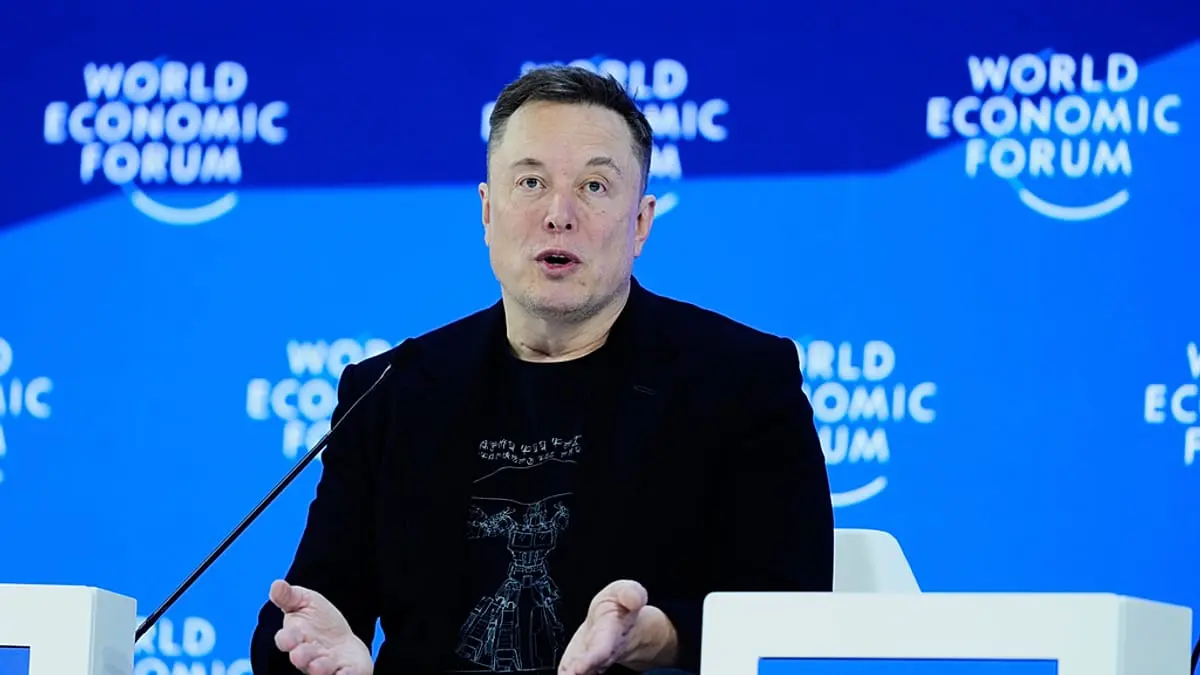
Elon Musk finally showed up at the World Economic Forum in Davos on Thursday, marking his first appearance at an event he has publicly criticized for years as elitist and boring
1
. Speaking with BlackRock CEO Larry Fink, Musk delivered a familiar but date-specific pitch: robots will outnumber humans, AI will achieve superhuman intelligence, and Tesla's autonomous driving systems are on the verge of regulatory approval2
. The appearance came one day after President Trump addressed the forum, and Musk's last-minute addition to the schedule signaled a strategic shift for the tech billionaire who once dismissed Davos as "increasingly becoming an unelected world government that the people never asked for and don't want"2
.
Source: ET
Humanoid Robots and the Path to Sustainable Abundance
Musk told the Davos audience that AI and robotics represent "the path to abundance for all," predicting that humanoid robots will become ubiquitous and eventually outnumber people
2
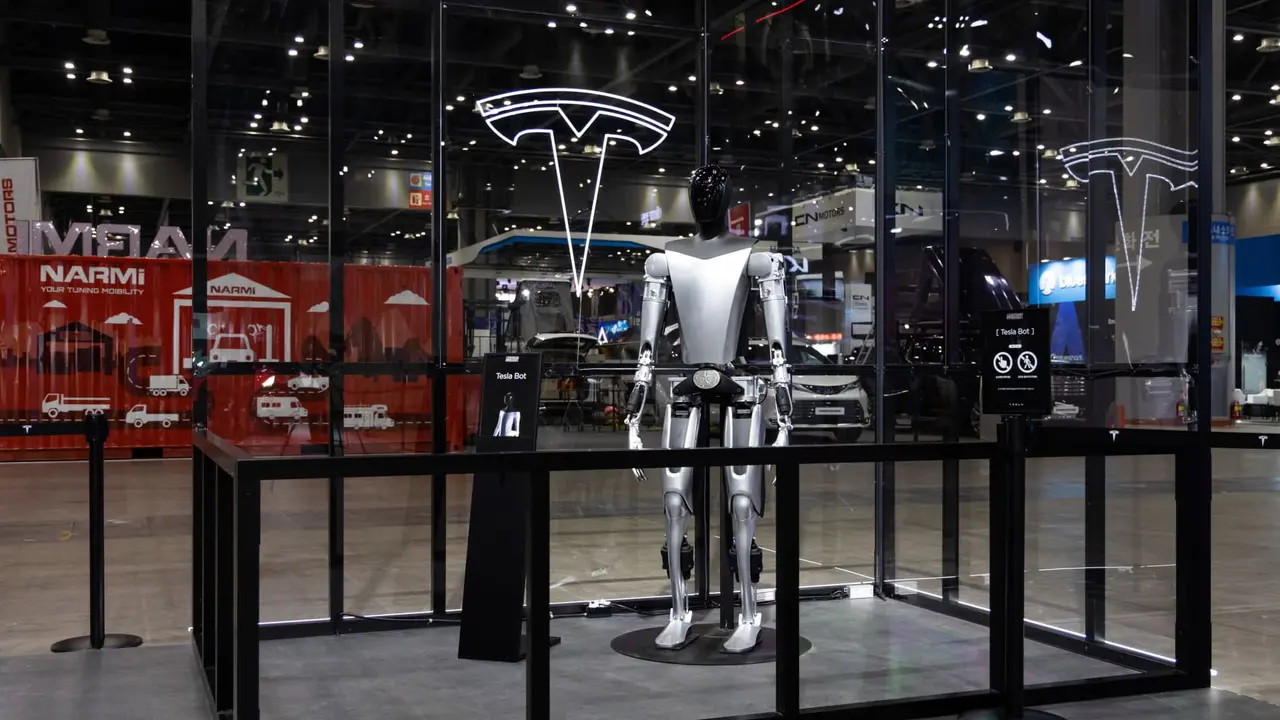
. He said Tesla's Optimus humanoid robots would perform simple tasks in factories by the end of this year and more complex industrial work within 12 months3
. The Tesla CEO expects humanoid robots to be available for sale to the public by the end of next year, a timeline that has slipped from previous projections1
. "Who wouldn't want a robot to, assuming it's very safe, watch over your kids, take care of your pets?" Musk asked, framing the technology as a solution to labor shortages and elder care challenges in aging societies3
.Musk argued that his ventures, including Tesla, SpaceX, and xAI, have added "sustainable abundance" to their mission, claiming that AI-driven automation could unlock levels of production far beyond current human capacity
4
. The market for humanoid robotics is currently valued between $2 billion and $3 billion, but Barclays analysts expect the sector to expand to at least $40 billion by 2035, potentially reaching $200 billion as AI-powered robots enter labor-intensive sectors like manufacturing2
.
Source: Euronews
AI-Driven Economy and Unprecedented Economic Growth
"If you have ubiquitous AI that is essentially free or close to it, then you will have an expansion in the global economy that is beyond all precedent," Musk told Fink during their fireside chat
4
. He predicted AI would become smarter than any individual human by the end of 2026 and surpass the collective intelligence of humanity within five years3
. Under what he described as a "benign" future scenario, societies would produce so many robots and AI systems that virtually all human needs would be saturated, with economic output increasingly determined by the number of robots deployed multiplied by their average productivity4
.Musk argued that his ventures, including Tesla, SpaceX, and xAI, have added "sustainable abundance" to their mission, claiming that AI-driven automation could unlock levels of production far beyond current human capacity
4
. Yet even while pitching this optimistic vision, he cautioned about future risks. "We need to be very careful with AI. We need to be very careful with robotics. We don't want to find ourselves in a James Cameron movie -- you know, 'Terminator,'" Musk said, echoing warnings he's made for years about machinery getting ahead of regulations1
.
Source: Quartz
Related Stories
Tesla's Full Self-Driving Seeks Regulatory Approval
Musk provided concrete timelines that helped push Tesla shares up more than 3% after his appearance
1
. He said Tesla aims to receive regulatory approval for its Supervised Full Self-Driving system in Europe "hopefully next month," with similar timing expected for China1
. Tesla has rolled out robotaxi services in several US cities and expects widespread deployment across the country by year's end, though Musk acknowledged the rollout is happening far more slowly than previously promised3
.The regulatory approval timeline matters because autonomy isn't a finish line you cross once; it's a system that requires convincing regulators, insurers, and the public to accept at scale
1
. Musk has spent a decade turning autonomy into a perpetual next-year story. In 2019, he predicted Tesla would have more than a million robotaxis on the road "next year for sure," and in 2020, he told investors he was "very confident" Full Self-Driving functionality would be "complete by the end of this year"1
. The company faces tougher regulations in Europe and increasing competition, with vehicle registrations falling in California last year and two straight years of declining deliveries causing Tesla to lose its position as the world's top electric vehicle maker to China's BYD5
.Positioning for Regulators and Investors
The Davos appearance functioned less as a product reveal and more as strategic positioning for the regulators, financiers, and infrastructure stakeholders who can make Musk's timelines real
1
. Musk arrived onstage to muted applause, prompting Fink to tell the audience, "That was not a large applause. Start again"3
. He opened with jokes about geopolitics and Trump's territorial ambitions, saying he heard about "a little piece of Greenland, a little piece of Venezuela," to limited laughter5
. He also repeated his claim about being an alien and joked about dying on Mars "just not on impact"3
.Musk's timelines function as a way of turning belief into momentum, and Davos attendees speak the language of "by the end of next year" because it sounds close enough to model and far enough away to forgive
1
. His closing remarks leaned into mood management: "I would encourage everyone to be optimistic and excited about the future. For quality of life, it is actually better to err on the side of being an optimist and wrong rather than being a pessimist and right"1
. Separately, reports indicate SpaceX is on track for a potential IPO, with Bank of America, Goldman Sachs, JPMorgan Chase, and Morgan Stanley being considered for senior roles4
. Musk's fortune is valued at $677 billion according to Bloomberg, making him the world's richest person2
.References
Summarized by

Navi
Related Stories
Elon Musk Predicts Work Will Be Optional Within 20 Years as AI and Robotics Transform Labor
20 Nov 2025•Entertainment and Society
Elon Musk's $1 Trillion Gambit: Control Over Tesla's 'Robot Army' and AI Future
23 Oct 2025•Technology

Elon Musk claims Tesla will develop AGI first as sales drop 9% and skepticism mounts
04 Mar 2026•Technology
Recent Highlights


Recent Highlights
Today's Top Stories








Your Daily Dose of Curated AI News
Don’t drown in AI news. We cut through the noise - filtering, ranking and summarizing the most important AI news, breakthroughs and research daily. Spend less time searching for the latest in AI and get straight to action.

