Elon Musk Slams Apple Google Partnership as Gemini AI Powers Siri in $1 Billion Deal


5 Sources
5 Sources
[1]
Elon Musk Reacts to Apple and Google Teaming on Gemini-Powered Siri
Elon Musk today expressed concern about Apple and Google partnering on a more personalized version of Siri powered by Google's generative AI platform Gemini. "This seems like an unreasonable concentration of power for Google, given that [they] also have Android and Chrome," wrote Musk, in a post on X. Musk serves as CEO of xAI, the company behind Gemini competitor Grok. It is unlikely that Apple or Google will publicly respond to Musk's comment, but we will update this story if the companies have anything to say. In case you missed it, Apple and Google today jointly announced that Gemini will help power future Apple Intelligence features, including a more personalized version of Siri that is set to launch this year. Apple has yet to announce exactly when the revamped Siri will launch, but it is reportedly set to arrive as part of iOS 26.4 in March or April. xAI filed a lawsuit against Apple and OpenAI last year, accusing the two companies of conspiring to "ensure their continued dominance" in the AI market.
[2]
Elon Musk calls AI tie‑up with Apple 'unreasonable concentration of power for Google' - The Economic Times
Apple has chosen Google's Gemini models and cloud infrastructure to power its future foundation models Under this partnership, Gemini will power Apple Intelligence features, including a more personalised Siri, expected to launch this year as part of iOS 26.4, likely in March or April.Elon Musk hit out at Apple and Google on Monday over their newly announced artificial intelligence (AI) partnership, hours after the tech companies revealed their multi-year deal to integrate Gemini AI into Siri and other Apple Intelligence features. "This seems like an unreasonable concentration of power for Google, given that [they] also have Android and Chrome," Musk wrote in a post on X. He serves as CEO of xAI, the company behind Grok, a direct competitor to Google's Gemini AI. Apple has chosen Google's Gemini models and cloud infrastructure to power its future foundation models. Under this partnership, Gemini will power Apple Intelligence features, including a more personalised Siri, expected to launch this year as part of iOS 26.4, likely in March or April. "After careful evaluation, Apple determined that Google's AI technology provides the most capable foundation for Apple Foundation Models and is excited about the innovative new experiences it will unlock for Apple users," the companies said in a joint statement. Apple said it will maintain its "industry-leading privacy standards" by running Apple Intelligence on Apple devices and Private Cloud Compute. While the terms of the deal were not disclosed, Bloomberg had earlier reported that Apple was planning to pay about $1 billion per year to utilise Google's AI technology. This also comes after Apple reportedly tested technology from competitors, including OpenAI and Anthropic. This is not Musk's first legal spat with Apple. Last August, xAI filed an antitrust lawsuit against Apple and OpenAI, alleging that the companies were trying to manipulate competition in the AI chatbot market and disadvantage Grok. Per Musk's lawsuit, Apple systematically favoured ChatGPT in App Store rankings, while putting other chatbots behind. The Apple-Google deal represents a setback for OpenAI, which partnered with Apple in 2024 to integrate ChatGPT into Siri. Neither Apple nor Google have publicly responded to Musk's comments.
[3]
Elon Musk Throws A Tantrum As Apple Steals The Icing On The Siri-Gemini Cake
Much has been written in recent months about the tortoise-like pace of Apple's AI-related advancements at a time when the rest of the tech universe is moving at a rabbit-like sprint. But, in a nod to that age-old tale, the tortoise (Apple) might have just pulled an ace card out of its proverbial sleeves, leveraging Google's Gemini-related prowess to bolster its own network effect via Siri, while leaving the likes of Elon Musk stewing in sullen resentment. As we noted in a dedicated post recently, Apple has formally selected Google's Gemini to power the next generation of its on-device Foundation Models. The tie-up will also allow Apple to launch a revamped version of Siri, possibly with the upcoming iOS 26.4 update, bringing the much-delayed in-app actions, personal context awareness, and on-screen awareness to its bespoke voice assistant. Critically, Apple is reportedly deploying a gigantic 1.2-trillion-parameter custom Gemini AI model on its cloud servers to power AI features under the ambit of its Private Apple Intelligence - where relatively simple AI tasks are performed by using on-device models and the computational resources of the device itself, while the more complex tasks are offloaded to Apple's private cloud servers using encrypted and stateless data for subsequent inference. Elon Musk, quite predictably, is not too keen on the deal, terming it as an "unreasonable concentration of power for Google." Of course, the CEO of Tesla and xAI is not an objective bystander here, having already sued Apple and OpenAI for teaming up to stifle competition. Even so, Musk's gripes against Google are quite flimsy, especially as the tech giant does not gain much from this deal other than the reported $1 billion per year for licensing its Gemini AI models to the iPhone manufacturer. On the other hand, Apple gains a lot from this arrangement. Consider a scenario where you ask the revamped Siri to book a restaurant reservation. Would you then tell your friends that Google's Gemini booked the restaurant reservation? Of course not, as whatever technology powers Apple's bespoke voice assistant at the backend won't matter in the greater scheme of things, especially as users would only see and appreciate Apple's Siri with seemingly enhanced agentic abilities. This is Apple's trump card, one that would substantially boost its network effect and the overall value of its Siri-based AI interface, while allowing Google's Gemini to act as a critical buffer until Apple's own AI abilities reach a satisfactory level.
[4]
Elon Musk Slams Google, Apple Deal: 'Unreasonable Concentration Of Power' - Alphabet (NASDAQ:GOOGL)
Elon Musk, CEO of Tesla, Inc. (NASDAQ:TSLA) and xAI, voiced criticism of the AI partnership between Apple, Inc. (NASDAQ:AAPL) and Alphabet, Inc. (NASDAQ:GOOG) (NASDAQ:GOOGL) announced on Monday. AAPL stock is climbing. See the chart and the price action here. In a post on X replying to the News from Google account, Musk questioned the partnership as possibly allowing Google too much "power," considering it owns the Android operating system and Chrome browser. "This seems like an unreasonable concentration of power for Google, given that the[y] also have Android and Chrome," Musk said. 'Unreasonable' Apple-Google Power Move Musk's frustration stems from the announcement that Google Gemini will power a revamped, personalized Siri for Apple Intelligence. It could be viewed as a significant blow to Musk's AI firm, xAI, and its chatbot, Grok. This is not the first time that Musk has taken issue with Apple's AI partnerships. In August 2025, xAI filed a lawsuit against Apple and OpenAI, accusing them of forming an AI monopoly that deliberately excludes competitors. Now that Apple has an AI deal with Google, the company has effectively partnered with Musk's two biggest rivals -- OpenAI and Google -- leaving Grok on the outside of the world's most lucrative hardware ecosystem. When Musk points to Google's control of Android and Chrome, it seems he is arguing that allowing Google to also infiltrate the iPhone via Gemini creates a platform dominance that no competitor can overcome. Alphabet Antitrust History Musk's "monopoly" claims carry weight because, legally, Google is a confirmed monopolist. Here is a review of the landmark U.S. v. Google case outcomes: The Liability Ruling (Aug. 2024): A federal judge ruled that Google violated the Sherman Act by maintaining a monopoly in general search. The judge specifically targeted the multi-billion dollar deals (such as the $20 billion paid to Apple) that made Google the default search engine on Safari. The Remedy Ruling (Sept. 2025): The Department of Justice initially sought to break Google up by forcing the sale of Chrome or Android. However, the court reached a more moderate conclusion: No Breakup: The judge declined to force a divestiture of Chrome or Android, arguing that the rise of AI (ironically) was already shifting market dynamics. Ban on Exclusivity: Google is prohibited from paying for exclusive default status on any device. Data Sharing: Google must share its search index and user data with qualified competitors to level the playing field. Musk could be attempting to leverage these legal findings to frame the Apple-Gemini deal as a backdoor way for Google to maintain the very dominance the courts just tried to curb. While his concerns about "concentrated power" align with DOJ arguments, Musk's motivation appears to be the survival of xAI in a market increasingly locked down by exclusive alliances. Photo: Shutterstock GOOGLAlphabet Inc$332.250.12%OverviewAAPLApple Inc$259.66-0.23%GOOGAlphabet Inc$333.000.08%TSLATesla Inc$448.35-0.14%Market News and Data brought to you by Benzinga APIs
[5]

Elon Musk says Apple-Google AI deal is bad for all of us, here's why
Musk claims its an unreasonable concentration of power for Google Apple and Google have confirmed a multi-year partnership to integrate Google's Gemini models into the next generation of Siri, a move that effectively bridges the divide between the world's two most dominant mobile ecosystems. While both the companies celebrated with Alphabet hitting a valuation of $4 trillion, Elon Musk wasn't very happy with this development. He saw something far more sinister. Taking to X (formerly Twitter), the xAI CEO wasted no time branding the collaboration a threat to the digital order. Also read: Apple turns to Google Gemini to fix Siri's long-standing AI problems: Here's why Musk's critique, labelled as a warning by some on X while others call it sour grapes, hinges on the sheer scale of the data monopoly being formed. His argument is structural, Google already dominated the world's mobile operating systems with Android and the web browser market with Chrome. By embedding its Gemini AI models directly into the iPhone's consciousness via Siri and Apple Intelligence, Google is basically securing the last major independent fortress of consumer data that is the iOS ecosystem. For Musk, who has positioned his own company, xAI, as a "truth-seeking" alternative to the corporate giants, this deal closes the door on competition. If the world's two largest mobile platforms are fed by the same AI brain, where does a third competitor find the oxygen to breathe? Also read: Sam Altman's problem: Apple's Gemini pick for Siri disempowers ChatGPT It is impossible to look at Musk's comments in isolation away from his own possible commercial interests. His AI startup, xAI, creators of Grok is currently embroiled in a lawsuit against Apple and OpenAI, alleging that their previous partnership constituted an exclusionary monopoly. Musk views this new Apple-Google alliance as an extension of the same "walled garden" tactic. In his view, Apple isn't just choosing a vendor, it is making a kingmaker. By standardising Gemini on iPhones, Apple makes it harder for Grok - or any other chatbot for that matter - to gain a foothold on the world's most premium hardware. Despite Musk's obvious bias, his "power grab" narrative might resonate with regulators and users who already scrutinise big tech. The US Department of Justice has spent years arguing that Google illegally maintains its search monopoly. Musk is bringing up a newer talking point, that Google is leveraging its search dominance to corner the Generative AI market before it fully matures. For now, the alliance stands. Apple gets a working AI infrastructure without the massive R&D sinkhole; Google gets access to 2 billion active Apple devices. But as the ink dries, Musk's warning looms over the industry. Is this finally the dawn of a smarter Siri, or the moment the internet's two gatekeepers decided to lock the gates from the inside?
Share
Share
Copy Link
Elon Musk criticized the Apple Google partnership that brings Gemini AI to power a revamped Siri, calling it an unreasonable concentration of power for Google. The xAI CEO argues the deal gives Google control over Android, Chrome, and now iOS, while his own AI chatbot Grok remains excluded from Apple's ecosystem.
Elon Musk Voices Concern Over Apple Google Partnership
Elon Musk has publicly criticized the newly announced Apple Google partnership, expressing alarm over what he termed an "unreasonable concentration of power" for Google
1
. The xAI CEO's comments came hours after Apple and Google jointly revealed their multi-year deal to integrate Gemini AI into Siri and other Apple Intelligence features. Musk's objection centers on Google's existing control over Android and Chrome, arguing that allowing the tech giant to also infiltrate iOS through Gemini creates a level of market dominance that competitors cannot overcome4
.
Source: Digit
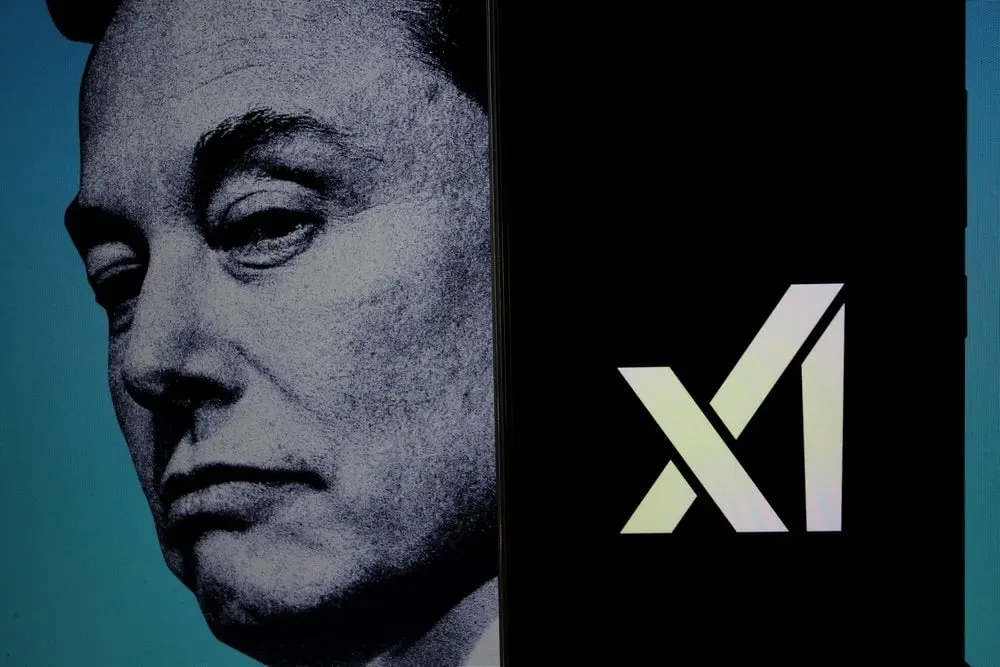
The Elon Musk criticism carries particular weight given his position as CEO of xAI, the company behind Grok, a direct competitor to Gemini AI. This AI partnership effectively leaves Grok on the outside of the world's most lucrative hardware ecosystem, as Apple has now aligned with both OpenAI and Google while excluding xAI
4
. Last August, xAI filed an antitrust lawsuit against Apple and OpenAI, alleging that the companies were conspiring to manipulate competition in the AI chatbot market and systematically disadvantage Grok through App Store rankings2
.
Source: Benzinga
Gemini-Powered Siri Set to Launch with iOS 26.4
Under the new arrangement, Apple has chosen Google's Gemini models and cloud infrastructure to power its future foundation models. The revamped Siri is expected to launch as part of iOS 26.4, likely arriving in March or April this year
2
. The updated voice assistant will bring much-delayed features including in-app actions, personal context awareness, and on-screen awareness3
.Apple is reportedly deploying a gigantic 1.2-trillion-parameter custom Gemini AI model on its cloud servers to power AI features under Private Apple Intelligence. This architecture handles relatively simple AI tasks using on-device models and device computational resources, while offloading more complex tasks to Apple's private cloud servers using encrypted and stateless data for inference
3
. Bloomberg had earlier reported that Apple was planning to pay approximately $1 billion per year to utilize Google's generative AI technology, though the exact licensing fee terms were not officially disclosed.
Source: Wccftech
Market Dominance Concerns and Antitrust Implications
Musk's warnings about market control may resonate with regulators already scrutinizing big tech dominance. A federal judge ruled in August 2024 that Google violated the Sherman Act by maintaining a monopoly in general search, specifically targeting the multi-billion dollar deals that made Google the default search engine on Safari
4
. The subsequent remedy ruling in September 2025 prohibited Google from paying for exclusive default status on any device and required data sharing with qualified competitors4
.Musk appears to be leveraging these legal findings to frame the deal as a backdoor method for Google to maintain the very dominance courts attempted to curb
4
. His argument is structural: by embedding Gemini directly into iPhone consciousness via Siri, Google secures the last major independent fortress of consumer data in the iOS ecosystem5
. If the world's two largest mobile platforms are fed by the same AI brain, third competitors face significant barriers to entry.Related Stories

Strategic Implications for Apple's Network Effect
Despite Musk's objections, Apple gains substantially from this arrangement. The deal allows Apple to leverage Google's Gemini-related prowess to bolster its own network effect via Siri while avoiding massive R&D expenditures
3
. When users ask the revamped Siri to perform tasks like booking restaurant reservations, they will credit Apple's voice assistant rather than the underlying technology powering it3
.This represents Apple's strategic move to substantially boost the value of its Siri-based AI interface while allowing Gemini to act as a critical buffer until Apple's own AI capabilities reach satisfactory levels
3
. For Google, the deal provides access to approximately 2 billion active Apple devices, though it gains relatively little beyond the reported $1 billion annual licensing fee compared to Apple's network effect benefits3
5
.The partnership marks a setback for OpenAI, which partnered with Apple in 2024 to integrate ChatGPT into Siri
2
. Neither Apple nor Google have publicly responded to Musk's comments, and it remains unlikely they will address his concerns directly. As the alliance moves forward, observers will watch whether regulators view this as innovation or whether Musk's warning about the internet's two gatekeepers locking gates from the inside proves prescient5
.References
Summarized by

Navi
[4]
Related Stories
Apple Strikes $1 Billion Deal with Google to Power Next-Generation Siri with Custom Gemini AI Model
07 Nov 2025•Business and Economy

Apple Strikes $1 Billion Annual Deal with Google to Power Next-Generation Siri with Custom Gemini AI
30 Oct 2025•Business and Economy
Google and Apple Near Deal to Integrate Gemini AI into iPhones
01 May 2025•Technology
Recent Highlights


Recent Highlights
Today's Top Stories










Your Daily Dose of Curated AI News
Don’t drown in AI news. We cut through the noise - filtering, ranking and summarizing the most important AI news, breakthroughs and research daily. Spend less time searching for the latest in AI and get straight to action.

