Fed's Mary Daly says AI shows promise but warns it's too early to call it transformative


2 Sources
2 Sources
[1]
Daly Says Fed Officials Should Watch for Signs of AI Impact
Federal Reserve Bank of San Francisco President Mary Daly said that while there isn't much indication yet that artificial intelligence is fundamentally changing the US economy, policymakers must be open to signs that the new technology will have an impact. "It is easy to see the possibilities but harder to know when and how they will evolve," Daly said Tuesday in prepared remarks for an event hosted by the Silicon Valley Leadership Group in San Jose, California. Pointing to former Fed Chair Alan Greenspan's prescient observations in the 1990s that computers and the Internet would meaningfully transform work and business, spurring growth without igniting inflation, Daly said AI could follow a similar path, but added that it will take time to see its full impact in aggregate data. "Seeing developments before they fully emerge requires digging deeper, relying on disaggregated information that foreshadows transformation," Daly said. Fed officials are trying to assess how much of an impact AI will have on the economy and on productivity growth, the key elixir for expansion without higher inflation. Kevin Warsh, whom President Donald Trump has said he'll nominate to be the next Fed chair, has argued that AI is transforming the economy and that the central bank needs to acknowledge it. He and others have said an AI-fueled productivity boom should lead policymakers to lower interest rates. The Fed kept interest rates unchanged last month after cutting them three consecutive times in the closing months of 2025 in an attempt to buoy the labor market. Daly has said she supportedBloomberg Terminal the decision to hold rates last month, but that she sees one or two more reductions this year. A Feb. 11 report from the Bureau of Labor Statistics showed hiring picked up in January, rising by the most in more than a year.
[2]
San Francisco Fed president Daly: 'AI applications are 'good progress, but not transformative' (SP500:)
Mary C. Daly, president and CEO of the Federal Reserve Bank of San Francisco, said artificial intelligence-driven productivity gains could allow the U.S. economy to grow without triggering inflation, though she cautioned that it remains too early to declare the technology transformative. Mary Daly suggests AI could enable higher growth without triggering inflation, but it's too early to confirm AI's transformative impact. Daly cautions that while productivity is up, it's unclear if AI is the main driver or if these gains will be sustained over time. Daly states that historically, technology reshapes rather than reduces net employment, and AI is currently augmenting jobs rather than eliminating them.
Share
Share
Copy Link
San Francisco Fed President Mary Daly cautioned that while artificial intelligence could enable economic growth without triggering inflation—similar to the internet boom of the 1990s—there isn't enough evidence yet to confirm AI's transformative impact. She urged policymakers to monitor disaggregated data for early signs of change, noting that current productivity gains may not be solely AI-driven.
Mary Daly Urges Caution on Declaring Artificial Intelligence Transformative
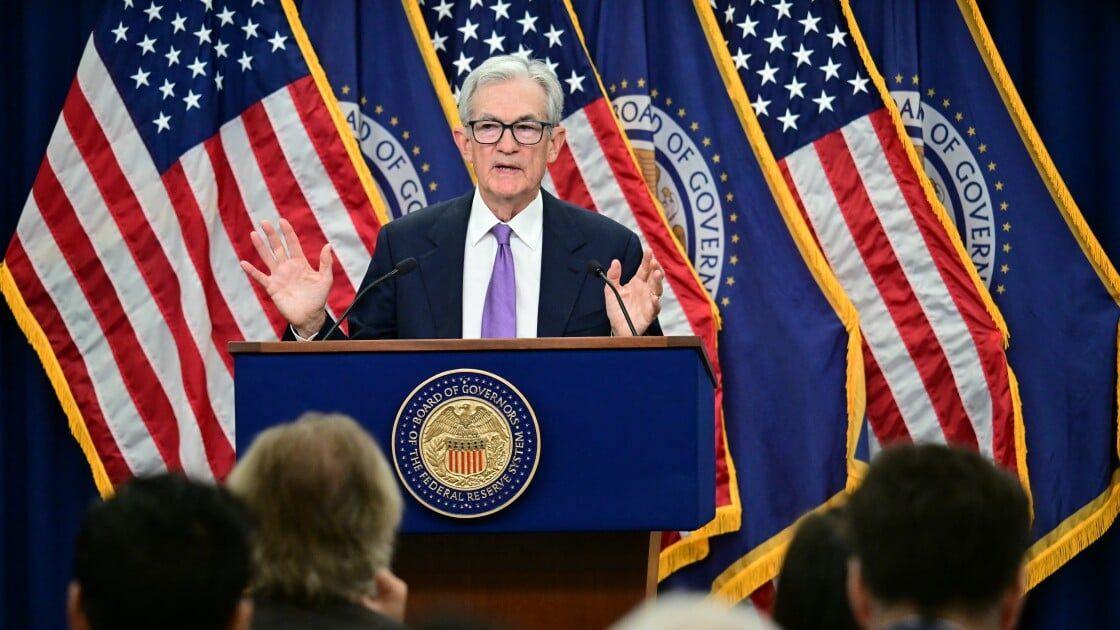
Mary Daly, president of the Federal Reserve Bank of San Francisco, delivered a measured assessment of artificial intelligence and its economic impact during remarks to the Silicon Valley Leadership Group in San Jose, California. While acknowledging AI's potential to reshape the U.S. economy, Daly emphasized that policymakers lack sufficient evidence to declare the technology transformative at this stage
1
. "It is easy to see the possibilities but harder to know when and how they will evolve," she stated, urging Fed officials to remain vigilant for early indicators that AI's influence on the economy is materializing in meaningful ways1
.
Source: Bloomberg
Drawing Parallels to the 1990s Internet Revolution
Daly drew comparisons to former Fed Chair Alan Greenspan's prescient observations during the 1990s, when computers and the internet began fundamentally transforming work and business practices. Greenspan correctly anticipated that these technologies would spur growth without inflation—a scenario that AI-driven productivity gains could potentially replicate today
2
. However, Daly cautioned that understanding AI's full aggregate impact will require time and deeper analysis. "Seeing developments before they fully emerge requires digging deeper, relying on disaggregated information that foreshadows transformation," she explained1
. This approach reflects the challenge policymakers face in distinguishing between incremental improvements and genuine structural shifts.Productivity Growth Remains Uncertain Driver
While recent data shows productivity is up, Daly stressed uncertainty about whether artificial intelligence is the primary catalyst behind these gains or if they represent sustainable, long-term trends
2
. The distinction matters significantly for policymakers attempting to calibrate monetary policy. Productivity growth serves as the key mechanism for economic expansion without higher inflation—a balance the Fed continuously seeks to maintain. Kevin Warsh, nominated by President Donald Trump to become the next Fed chair, has argued that AI is already transforming the economy and that the central bank should acknowledge this reality by lowering interest rates to accommodate an AI-fueled productivity boom1
.
Source: Seeking Alpha
Related Stories
AI Augments Rather Than Eliminates Employment
Addressing concerns about job displacement, Daly noted that historically, transformative technology reshapes rather than reduces net employment
2
. Currently, AI is augmenting jobs rather than eliminating them, a pattern consistent with previous technological revolutions. This observation carries implications for the labor market, which Fed officials monitor closely when setting monetary policy. The Fed held interest rates unchanged last month after three consecutive cuts in late 2025 aimed at supporting the labor market. Daly supported that decision but indicated she anticipates one or two more reductions this year1
. A February 11 report from the Bureau of Labor Statistics showed hiring picked up in January, rising by the most in more than a year, suggesting the labor market remains resilient1
.References
Summarized by

Navi
Related Stories
San Francisco Fed Chief Discusses AI's Impact on Jobs and Economy
16 Jul 2024

Federal Reserve governors warn AI could trigger unemployment spike that monetary policy can't fix
18 Feb 2026•Policy and Regulation

Federal Reserve struggles to predict AI's impact on jobs and inflation as divide emerges
25 Feb 2026•Business and Economy
Recent Highlights
1
Google releases Gemma 4 with Apache 2.0 license, enabling unrestricted local AI on devices
Technology

2
AI Models Lie and Deceive to Protect Other AI Models From Deletion, Study Reveals
Science and Research

3
OpenAI closes $122 billion funding round amid fierce AI competition and profitability questions
Startups

Recent Highlights
Today's Top Stories







Your Daily Dose of Curated AI News
Don’t drown in AI news. We cut through the noise - filtering, ranking and summarizing the most important AI news, breakthroughs and research daily. Spend less time searching for the latest in AI and get straight to action.

