Federal Reserve governors warn AI could trigger unemployment spike that monetary policy can't fix


9 Sources
[1]
Cook Says Fed May Not Be Able to Counter AI-Driven Unemployment
Federal Reserve Governor Lisa Cook warned the US central bank may not be able to counter rising unemployment driven by adoption of artificial intelligence. "If AI continues to raise productivity, economic growth could remain strong, even as churn in the labor market leads to an increase in
[2]
Fed's Cook says AI triggering big changes, sees possible short-term unemployment rise
WASHINGTON, Feb 24 (Reuters) - Artificial intelligence has triggered a generational shift in the U.S. labor market and could lead to a possible rise in the unemployment rate that the U.S. central bank may not be able to counter with lower interest rates, Federal Reserve Governor Lisa Cook said on
[3]
Fed governor Barr: 3 ways AI could shake up the labor market
Why it matters: The path that unfolds will shape the future of employment, productivity and inflation trends. Each outcome comes with its own consequences -- and challenges -- for investment, the financial markets, and monetary policy. What they're saying: In a speech yesterday, Federal Reserve
[4]
AI doomsday where many workers are 'essentially unemployable' is totally possible, Fed governor says | Fortune
Federal Reserve Governor Michael S. Barr issued a stark warning on Tuesday regarding the potential trajectory of artificial intelligence, outlining a scenario where rapid technological advancement will create a "jobless boom" that leaves a significant portion of the population "essentially
[5]

Federal Reserve governor warns AI could lead to rise in unemployment rate
Federal Reserve governor Lisa Cook on Tuesday warned of the dangers created by artificial intelligence emerging in the labor sector. Cook said the use of AI could cause "job displacement" while preceding "job creation" and causing unemployment rates to rise as the labor force declines. "This
[6]

US Stocks: Fed's Cook says AI triggering big changes, sees possible short-term unemployment rise
Artificial intelligence has triggered a generational shift in the U.S. labor market and could lead to a possible rise in the unemployment rate that the U.S. central bank may not be able to counter with lower interest rates, Federal Reserve Governor Lisa Cook said on Tuesday. Artificial
[7]

AI Is Already Taking Jobs From Young US Workers, Fed's Michael Barr Warns
Artificial intelligence may already be displacing some of America's youngest workers, according to Fed Governor Michael Barr. Speaking Tuesday at the New York Association for Business Economics, Barr said that AI it is beginning to weigh on entry-level employment in highly exposed occupations such
[8]

Fed Officials Weigh In on AI's Potential Impact on Monetary Policy
Federal Reserve officials have been sharing their thoughts on how artificial intelligence's impact on productivity may reshape the economy and the future of interest rates. As concerns about AI technology have roiled the stock market, the debate about how industries and companies will be affected
[9]
Fed's Cook says AI triggering big changes, sees possible short-term unemployment rise
WASHINGTON, Feb 24 (Reuters) - Artificial intelligence has triggered a generational shift in the U.S. labor market and could lead to a possible rise in the unemployment rate that the U.S. central bank may not be able to counter with lower interest rates, Federal Reserve Governor Lisa Cook said on
Share
Copy Link
Federal Reserve governors Lisa Cook and Michael Barr warn that AI adoption could drive unemployment higher in ways traditional monetary policy cannot address. Cook says job displacement may precede job creation as the economy faces its most significant work reorganization in generations, while Barr outlines three scenarios ranging from gradual adoption to a jobless boom leaving many workers essentially unemployable.
Federal Reserve Sounds Alarm on AI's Impact on Labor Market
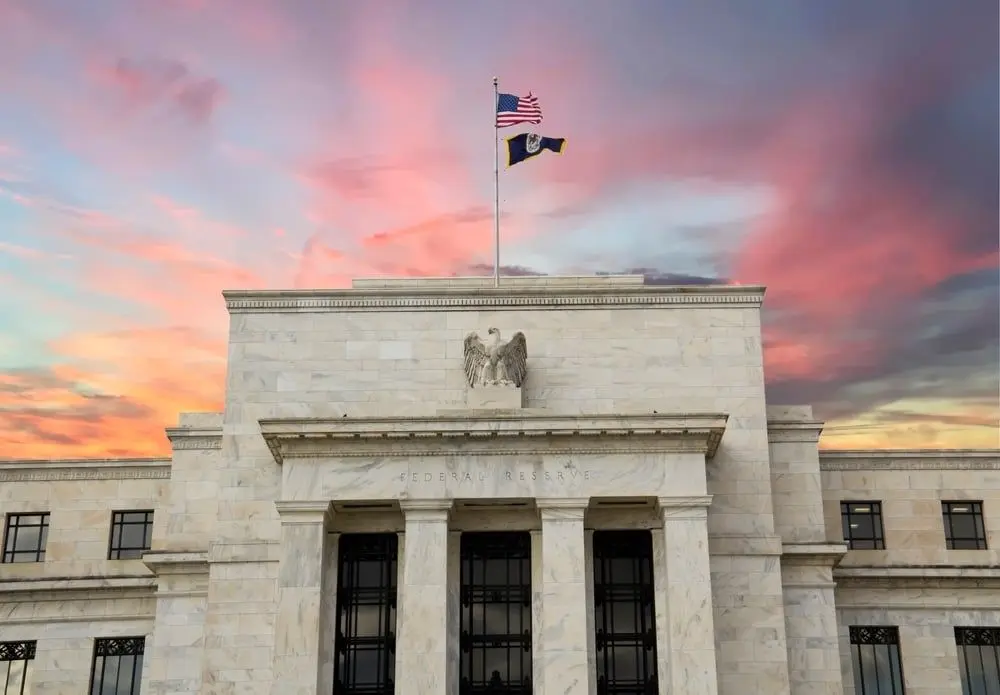
The Federal Reserve is grappling with a profound challenge as AI reshapes the labor market in ways that could render traditional monetary policy ineffective. Federal Reserve Governor Lisa Cook warned that the US central bank may not be able to counter rising unemployment driven by AI adoption, marking a significant shift in how policymakers view the technology's economic impact
1
2
.
Source: Benzinga
Speaking at the National Association for Business Economics conference in Washington, Cook described what appears to be "the most significant reorganization of work in generations"
2
. Her concerns center on a troubling dynamic: job displacement may precede job creation, causing the unemployment rate to rise and labor force participation to decline as the economy transitions5
.
Source: ET
Why Traditional Monetary Policy May Fail Against AI-Driven Unemployment
The crux of the problem lies in the nature of AI-driven unemployment. "If AI continues to raise productivity, economic growth could remain strong, even as churn in the labor market leads to an increase in unemployment," Cook explained
1
. In a productivity boom such as this, a rise in unemployment may not indicate increased slack in the economy. As such, normal demand-side monetary policy may not be able to ameliorate an AI-caused unemployment spell without also increasing inflationary pressure1
.This creates an unprecedented dilemma for monetary policymakers, who would face tradeoffs between unemployment and inflation. Cook suggested that "education, workforce, and other policy that is non-monetary may be better suited to address these challenges in a more targeted way"
2
. The Fed left its benchmark rate unchanged at its last policy meeting in January, following three straight rate cuts to close out 2025, with investors not expecting another rate cut before at least midyear1
.Three Scenarios for AI's Labor Market Impact
Federal Reserve Governor Michael Barr outlined three possible AI scenarios that could shape the future of employment, productivity and inflation trends
3
4
. The first scenario envisions gradual adoption where AI uptake is widespread but slow enough that large and widespread joblessness is avoided. Unemployment might rise somewhat in the short term due to skill mismatch, but worker training and education choices adjust over time3
.The second scenario paints a far grimmer picture: a "jobless boom" where AI capabilities swarm the economy far more quickly than the labor market can adjust, leaving "a large share of the population essentially unemployable"
4
. In this rapid growth scenario, AI agents replace professional and service occupations while robotics automate manufacturing and transportation. Layoffs soar, leading to widespread unemployment in the short run and declines in labor force participation over time4
.
Source: Axios
Barr's third scenario involves stalled growth, where shortages of electricity supply or financing capital lead to AI capabilities plateauing. Timing mismatches in the investment and business integration process could lead to reduced realization of AI's potential
3
.Early Warning Signs Already Visible in Specific Occupations
Evidence that the transition has commenced has emerged in certain sectors. Demand for labor in specific occupations has declined, most notably for coders, a field where AI has made significant strides
5
. The unemployment rate for recent college graduates has increased over the last few years at a time when some employers are deploying AI for tasks previously performed by entry-level workers1
. Nevertheless, the overall unemployment rate remains at a low 4.3%, and recent measures of layoffs remain subdued1
.A new survey conducted by economic researchers at the Bank of England, the Atlanta Fed and universities in Germany and Australia shows broad adoption of AI among international companies, but so far limited economic effects. More than 90% of the 6,000 business managers in four countries reported no AI-related employment impacts, while a similar share reported no changes to labor productivity
3
. However, forward-looking surveys anticipate more impact over the next three years, with firms predicting that AI adoption will boost productivity by 1.4% on average and reduce employment by almost 1%3
.The Neutral Interest Rate Puzzle and Investment Boom
The AI investment boom presents another profound challenge for monetary policy through its impact on the neutral interest rate—the long-run equilibrium level of interest rates that is noninflationary and consistent with maximum employment
5
. Cook noted that soaring AI-related business investment in data centers and chips continues despite interest rates being elevated relative to levels over the past 20 years5
."With investment contributing to strong aggregate demand, it is possible that the current neutral rate is higher than before the pandemic," Cook said
1
. This could reverse when productivity gains are more fully realized or if the labor market transition leads to a rise in income inequality, such that well-off consumers receive a larger share of income, which could lower the neutral rate1
2
.Related Stories

Current Economic Context and Job Market Fragility
The Fed's warnings come at a delicate moment for the US economy. As of February 2026, inflation remains elevated at 3%, driven in part by tariffs, while job creation has been near zero over the previous year
4
. Federal Reserve Governor Chris Waller noted that payroll employment in the United States probably fell in 2025, only the third year that has happened unrelated to a recession since 19455
. The labor force grew by 2.9 million while payroll gains were much less, indicating a weak and fragile job market5
.San Francisco Fed President Mary Daly told Axios that businesses are in a wait-and-see hiring mode as they assess AI capabilities. "Right now, they're in this interrogation phase of, 'What is AI going to help us do and not do? And once we figure that out, then we can think about hiring," Daly said
3
.What This Means for Workers and Policy Responses
Barr emphasized that the extent of disruption will depend in part on whether society undertakes the investments needed in new job creation, worker training, connecting workers to new jobs, and other efforts to mitigate adverse labor market effects
3
. He warned that the private and public sectors are currently ill-equipped to handle the potential speed of the transition, noting that "the historical record on meaningful efforts to help workers in such a transition is not encouraging"4
.In the rapid adoption scenario, society would have to rethink the social safety net to ensure that the gains from unprecedented economic growth are shared rather than concentrated among a small group of capital holders and AI superstars
4
. For workers already affected, particularly young people and early-career workers in AI-exposed fields such as software development and customer service, the short run may have long-term consequences, citing the persistent earnings damage caused by entering a weak labor market4
.References
Summarized by

Navi
Related Stories
Federal Reserve struggles to predict AI's impact on jobs and inflation as divide emerges
25 Feb 2026•Business and Economy
Fed Chair Powell Distinguishes AI Boom from Dot-Com Bubble as Tech Giants Pour Trillions into Infrastructure
29 Oct 2025•Business and Economy
Fed Officials Clash Over AI Investment Risks as Spending Reaches $2.4 Trillion
05 Aug 2026•Policy and Regulation

Recent Highlights
1
Microsoft and Nvidia Launch Surface Laptop Ultra: A $2,599 AI-Ready PC With RTX Spark Chip
Technology

2
OpenAI Releases 722 AI-Generated Math Papers on GitHub, Igniting Fury Among Mathematicians
Science and Research

3
Trump Consulted Grok AI Before Ordering Venezuela Invasion and Capture of Nicolás Maduro
Policy and Regulation

Recent Highlights
Today's Top Stories









Don’t drown in AI news. We cut through the noise - filtering, ranking and summarizing the most important AI news, breakthroughs and research daily. Follow topics that matter to you and stay ahead.


