Flipkart launches SLAP, its conversational AI shopping assistant to compete with Amazon Rufus


2 Sources
2 Sources
[1]
Flipkart to launch SLAP, its conversational AI shopping assistant
Flipkart will launch its new AI shopping assistant, Shop Like a Pro (SLAP), next week as a standalone app, replacing its earlier assistant, Flippi. SLAP will provide personalised recommendations, product suggestions, and answer customer queries. The move follows growing use of AI in ecommerce by Amazon, Walmart, and Google. Flipkart will launch its conversational AI shopping assistant, internally called Shop Like a Pro, or SLAP, next week, according to people familiar with the development. SLAP will be launched as a standalone application. It is the revamped version of Flippi, the generative AI shopping assistant the ecommerce giant first announced in 2023. A separate team has been formed to work on this, which will be launched in phases, ET has learnt. In a statement, a company spokesperson said, "Flipkart is continuously exploring ways to enhance the shopping experience for customers through next-generation conversational commerce and AI-led capabilities. We are working on a range of initiatives in this space and will share more details at an appropriate time." According to sources, SLAP, like Walmart's Sparky or Amazon's Rufus, will be a conversational assistant that uses the latest AI models to help customers shop, through recommendations, product suggestions, and answers to questions to start with, and expand the offerings further. This comes at a time when AI is increasingly being used in ecommerce for shopping, personalisation, and product recommendations, and is already seeing value. Amazon CEO Andy Jassy, during the company's earnings call in November, said that its AI assistant Rufus is expected to generate $10 billion more in annualised sales for the company. Jassy added that about 250 million people will use Rufus in 2025 to do their shopping. Further, early this week, Google launched its Universal Commerce Protocol, which allows AI agents to interact directly with ecommerce sites. Thus, instead of just sharing recommendations, AI can now take care of the entire process, from selection to check out. The tech giant works with firms such as Shopify, Etsy, Target, and Walmart for this.
[2]
Flipkart Enters Conversational AI Commerce With SLAP
Flipkart will launch a new conversational AI shopping assistant called Shop Like a Pro (SLAP) next week, according to an Economic Times report. The company will introduce the tool as a standalone app, replacing its earlier AI assistant, Flippi, which it announced in 2023. SLAP is designed to help users shop through conversation. It will initially offer personalised product recommendations, suggest items based on user needs, and answer customer queries. People familiar with the development told The Economic Times that Flipkart has created a separate team to work on the product and plans to roll it out in phases. The new assistant reflects a broader push across global e-commerce companies to use artificial intelligence to influence how people discover and buy products online. Flipkart positions SLAP alongside similar tools such as Walmart's Sparky and Amazon's Rufus, which guide users through shopping using conversational interfaces. Amazon has publicly linked its AI assistant to revenue growth. During an earnings call in November, Amazon CEO Andy Jassy said Rufus could generate $10 billion in additional annualised sales. The push towards AI-led shopping is not limited to retailers. Earlier this week, Google launched its Universal Commerce Protocol, which allows AI agents to directly interact with e-commerce platforms. This system enables artificial intelligence to go beyond recommendations and complete tasks such as selecting products and checking out. Google is working with companies including Shopify, Etsy, Target, and Walmart as part of this effort. Flipkart's move comes as e-commerce companies increasingly test whether conversational AI can meaningfully change how users shop and how much they spend. While global players have begun sharing revenue expectations and usage figures, Flipkart has not disclosed how SLAP will impact sales, user engagement, or conversion rates, indicating that the product is still at an early stage of deployment. The launch of SLAP aligns with a broader shift in artificial intelligence development towards systems that go beyond chat-based assistance and begin to shape decisions and outcomes. Writing in Reasoned, MediaNama founder Nikhil Pahwa has described this phase as an "execution-layer race" rather than a competition between AI models. "This is not an AI model race. It's an execution-layer race," Pahwa wrote, arguing that companies gain real competitive advantage from how they deploy AI systems across workflows such as commerce, advertising, and customer support. In e-commerce, this shift raises structural questions about trust and risk. As Pahwa notes, once AI systems move from answering queries to influencing or completing transactions, the cost of failure increases sharply. "Content is easy. Money is where people start thinking about what could go wrong, above all else," he wrote in a separate analysis on agentic commerce. He has also warned that AI-driven buying and selling can intensify information asymmetry. "Humans can't out-calculate machines," Pahwa wrote, adding that AI systems optimise for conversion rather than negotiation, which can fundamentally change how prices, recommendations, and choices are shaped. Pahwa has repeatedly emphasised that friction in shopping is not always inefficiency but often a safety mechanism. Referring to autonomous systems, he wrote: "This is not about AI being wrong but misdirected or not directed. Boundary conditions are essential." For platforms like Flipkart, SLAP represents an early step into this execution layer of AI-led commerce. However, the company has not disclosed how the assistant will handle safeguards, decision boundaries, or error mitigation, issues that become critical as AI systems move closer to handling transactions rather than merely assisting discovery, particularly in low-trust markets. Liability concerns closely tie into AI-led shopping assistants when autonomous systems make mistakes. In a MediaNama roundtable discussion on governing AI agents, participants pointed to real-world examples where automated decisions caused unintended outcomes, including a 2017 incident where Amazon Alexa triggered purchases after responding to a television broadcast. Speaking about agentic systems, Pahwa noted that most AI agents today lack built-in protections. "If you look at agentic workflows that are getting created, most of them don't have protections in place right now because the developers don't know what the use cases are right now," he said. The discussion also highlighted that liability may depend on how reversible an AI-driven outcome is. Independent consultant Varun Bahl argued, "The way to think about it is that how irreversible is the outcome or not, and then you want to tighten the dials on the manufacturer, the one with the most amount of information and control, depending on how irreversible the outcome is." As e-commerce platforms experiment with conversational and agent-like shopping assistants, these questions become more consequential. Unlike content or search, shopping involves financial transactions, consumer trust, and asymmetric information, areas where, as Pahwa has previously written, "boundary conditions are essential" to prevent harm from misdirected or poorly constrained automation.
Share
Share
Copy Link
Flipkart is set to launch Shop Like a Pro (SLAP), a conversational AI shopping assistant, as a standalone app next week. The tool replaces Flippi and will provide personalized recommendations and product suggestions. The move positions Flipkart alongside Amazon and Walmart in the AI-driven commerce race, though critical questions about trust and liability remain unresolved.
Flipkart SLAP Takes Center Stage in E-Commerce AI Race
Flipkart will launch its conversational AI shopping assistant, Shop Like a Pro (SLAP), next week as a standalone application, marking a significant step in the company's AI-driven commerce strategy
1
. The new AI shopping assistant replaces Flippi, the generative AI tool Flipkart first announced in 2023, and signals the e-commerce giant's intent to compete directly with similar offerings from Amazon and Walmart2
. A dedicated team has been formed to develop SLAP, with plans to roll it out in phases as the company tests how conversational AI can reshape online shopping behavior.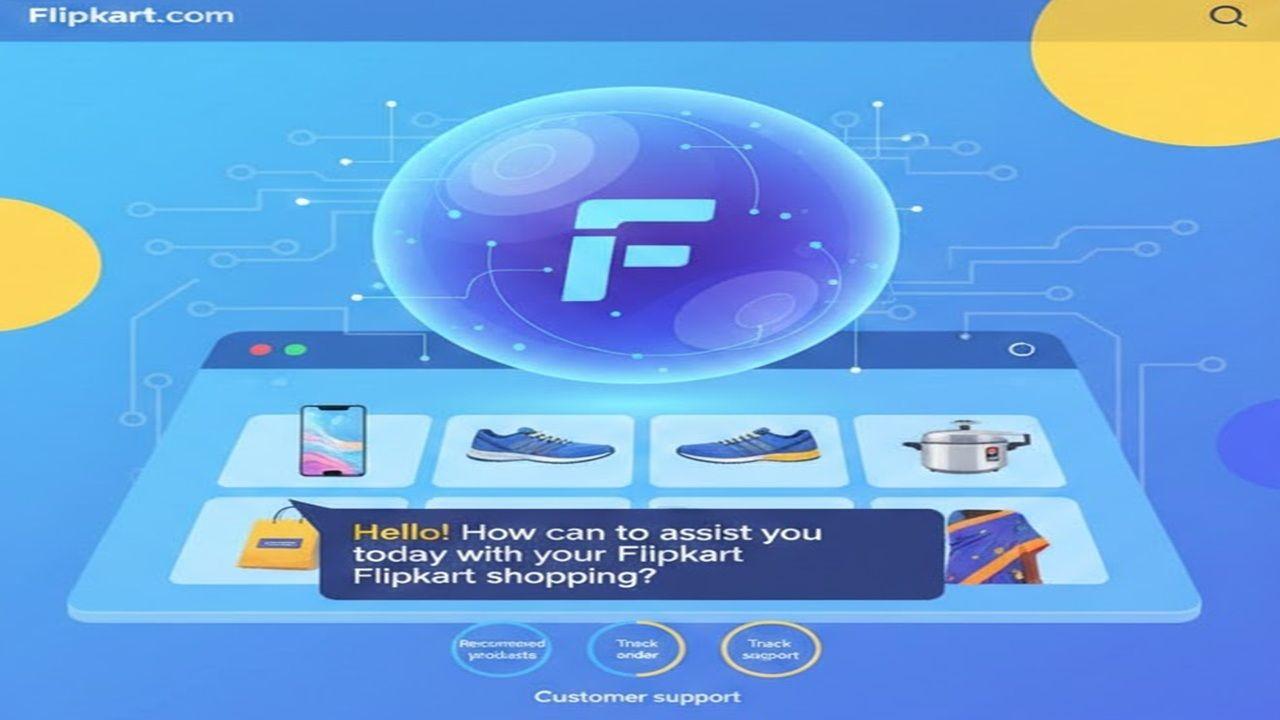
Source: MediaNama
Enhanced Shopping Experiences Through AI-Powered Recommendations
SLAP will function as a conversational AI commerce tool that uses advanced AI models to assist customers throughout their shopping journey. The assistant will initially provide personalized recommendations, offer product suggestions based on user needs, and answer customer queries
1
. This positions Flipkart SLAP alongside Walmart's Sparky and Amazon Rufus, which have already demonstrated the commercial potential of AI-driven shopping tools. Amazon CEO Andy Jassy revealed during an earnings call in November that Rufus is expected to generate $10 billion in additional annualized sales, with approximately 250 million people projected to use the assistant in 20251
. These figures underscore the financial stakes in the execution-layer race unfolding across e-commerce platforms.The Execution-Layer Race in Conversational AI Commerce
The launch comes as Google introduced its Universal Commerce Protocol earlier this week, allowing AI agents to interact directly with e-commerce sites and complete entire transactions from selection to checkout . Google is partnering with Shopify, Etsy, Target, and Walmart for this initiative, signaling a broader industry shift toward AI systems that actively shape purchasing decisions rather than merely providing information. MediaNama founder Nikhil Pahwa characterizes this development as an "execution-layer race" rather than a competition between AI models, noting that real competitive advantage comes from how companies deploy AI across workflows such as commerce, advertising, and customer support
2
.Related Stories


Trust and Liability Questions Loom Over AI-Driven Commerce
While Flipkart has not disclosed how SLAP will impact sales, user engagement, or conversion rates, the assistant raises critical questions about trust and liability in AI-driven commerce
2
. As AI systems move from answering queries to influencing or completing transactions, the cost of failure increases sharply. Pahwa warns that AI-driven buying can intensify information asymmetry, as machines optimize for conversion rather than negotiation, fundamentally changing how prices and recommendations are shaped. The company has not disclosed how SLAP will handle safeguards, decision boundaries, or error mitigation—issues that become critical in low-trust markets2
. During a MediaNama roundtable on governing AI agents, participants cited a 2017 incident where Amazon Alexa triggered unintended purchases after responding to a television broadcast, highlighting the real-world risks of autonomous shopping systems2
. As e-commerce platforms experiment with conversational AI and agent-like assistants, the balance between enhanced shopping experiences and consumer protection will determine whether these tools deliver lasting value or create new vulnerabilities in online commerce.References
Summarized by

Navi
[2]
Related Stories
Recent Highlights



Recent Highlights
Today's Top Stories








Your Daily Dose of Curated AI News
Don’t drown in AI news. We cut through the noise - filtering, ranking and summarizing the most important AI news, breakthroughs and research daily. Spend less time searching for the latest in AI and get straight to action.

