Games Workshop bans AI in Warhammer design, doubles down on human creators instead


8 Sources
8 Sources
[1]
Games Workshop Rejects the Abominable Intelligence
As generative AI use continues to enmesh itself deeper and deeper into the entertainment industry, one titan is putting a power-armored foot down and saying no. During the release of its half-year sales report, Games Workshop revealed that, seemingly unlike most other companies seeking to run into the open maw of AI slop, it was taking what it described as a "very cautious" approach to the technology by banning its use in any stage of the design process of its art and sculpture work for its wildly successful range of Warhammer tabletop miniatures. "We do have a few senior managers that are [experts in AI]: none are that excited about it yet," chief executive Kevin Rountree said while presenting the report (via Financial Times), which saw revenue for the six months leading to the end of November 2025 almost $44 million higher compared with the same period in 2024, despite a reduction in licensing profit (we're still waiting for three new major Warhammer video games, including Total War: Warhammer 40K, Dawn of War IV, and a new sequel to Space Marine) and accounting for an approximately $16 million hit due to new US tariffs. "We have agreed on an internal policy to guide us all, which is currently very cautious, e.g., we do not allow AI-generated content or AI to be used in our design processes or its unauthorized use outside of GW, including in any of our competitions," Rountree continued (via IGN). "We also have to monitor and protect ourselves from a data compliance, security, and governance perspective, as the AI or machine learning engines seem to be automatically included on our phones or laptops whether we like it or not." It's a fitting move, given the lore of Warhammer 40,000. Although there are factions of the Imperium of Man that prescribe faith to technology, such as the Adeptus Mechanicus' belief in the Omnissiah, a machine god believed to divinely empower all technology used by the Imperium, artificial intelligence itself, known as the Silica Animus, is treated as heresy and expressly forbidden by Imperial Law. Although Games Workshop itself isn't exactly declaring total tech heresy yetâ€"it will allow some senior management to be "inquisitive" about the technologyâ€"the ban coincides with what Rountree described as "a strong commitment to protect our intellectual property and respect our human creators." "In the period reported, we continued to invest in our Warhammer Studioâ€"hiring more creatives in multiple disciplines from concepting and art to writing and sculpting. Talented and passionate individuals that make Warhammer the rich, evocative IP that our hobbyists and we all love," Rountree concluded.
[2]
Games Workshop CEO says no to AI in Warhammer
As the video game industry contends with how to approach -- or fully ignore -- the rise of artificial intelligence, at least we can rest assured that the Warhammer tabletop gaming franchise is safe for now. Kevin Rountree, CEO of Games Workshop, addressed the rise of AI and how his company is approaching it in an investor report. "We have agreed [on] an internal policy to guide us all, which is currently very cautious," he said. "We do not allow AI-generated content or AI to be used in our design processes or its unauthorised use outside of [Games Workshop], including in any of our competitions." Rountree doesn't stop there, though, as he also notes the security issues that stem from personal devices with AI installed on them, noting, "We also have to monitor and protect ourselves from a data compliance, security, and governance perspective; the AI or machine learning engines seem to be automatically included on our phones or laptops whether we like it or not." All that said, Games Workshop isn't pretending that AI doesn't exist. Rountree notes that "a few senior managers" are monitoring the technology. "None are that excited about it yet," he admits. And while they will continue to study it, Rountree also asserts that Games Workshop will continue "maintaining a strong commitment to protect our intellectual property and respect our human creators." To that end, the CEO points to the back half of 2025, which saw Games Workshop "hiring more creatives in multiple disciplines from concepting and art to writing and sculpting." He concludes, "Talented and passionate individuals that make Warhammer the rich, evocative IP that our hobbyists and we all love." With AI becoming more difficult to ignore by the day -- technology companies around the world are currently working on AI-powered versions of practically everything -- Games Workshop is keeping it out, which should delight its discriminating fans and hopefully serve as an example to other companies that keeping track of what's happening with AI doesn't mean you need to find ways to integrate it into your product at the expense of people.
[3]
'Warhammer 40,000' Maker Games Workshop Rules Out Generative AI - Decrypt
The company said it continues to invest in human creators across art, writing, and sculpting roles. Games Workshop, the U.K.-based gaming company behind Warhammer 40,000, said it will not use generative AI in its design or creative processes, outlining an internal policy focused on intellectual property protection and human creators over automation. Founded in 1975, Games Workshop is best known for Warhammer 40,000, a long-running tabletop miniature wargame based in a grimdark far future. The Warhammer universe has expanded into novels, video games, and screen adaptations. One of the largest and commercially successful game developers in the world, Games Workshop went public on the London Stock Exchange in 1994. The company's position was disclosed during its half-yearly report on Tuesday, where CEO Kevin Rountree addressed artificial intelligence, saying the company has adopted a formal policy that bars the use of generative AI. "We have agreed an internal policy to guide us all, which is currently very cautious, e.g., we do not allow AI-generated content or AI to be used in our design processes or its unauthorized use outside of GW, including in any of our competitions," Rountree said. During the investor call highlighting the report, Games Workshop reported £332.1 million (around $420 million) in revenue and operating profit of £140.4 million (around $177 million) for the 26-week period ending Nov. 30, 2025. Games Workshop's stance on generative AI comes as similar positions are being taken by other major game studios. Larian Studios, the developer behind Baldur's Gate 3, recently said that its upcoming Divinity game will not include AI-generated art, citing concerns around authorship and training data. Blizzard Entertainment has also said it is not using generative AI in World of Warcraft, even as it deploys machine-learning tools elsewhere for non-creative tasks, citing artist consent and intellectual property protections. Rountree also cited operational concerns tied to AI systems that are increasingly embedded by default in consumer hardware and software. "We also have to monitor and protect ourselves from a data compliance, security, and governance perspective," he said. "The AI or machine learning engines seem to be automatically included on our phones or laptops, whether we like it or not." Despite these trepidations, Roundtree said the company is allowing limited internal exploration of the technology, but said that it does not extend to production use. The policy, he added, reflects the company's broader approach to creators and ownership. "We have also agreed we will be maintaining a strong commitment to protect our intellectual property and respect our human creators," he said. Rather than automating creative work, the company said it is expanding its in-house teams. "We continued to invest in our Warhammer Studio -- hiring more creatives in multiple disciplines from concepting and art to writing and sculpting," Rountree said. "Talented and passionate individuals that make Warhammer the rich, evocative IP that our hobbyists and we all love." Games Workshop did not immediately respond to a request for comment by Decrypt.
[4]
Games Workshop says its senior managers aren't excited about AI, prohibits its use and laments that it's 'included on our phones or laptops whether we like it or not'
The CEO of all things Warhammer says "we do not allow AI generated content or AI to be used in our design processes". Warhammer company Games Workshop says that it does not allow generative AI in its products, and although some of its senior managers have investigated the technology, "none are that excited about it yet." The comments came from Games Workshop CEO Kevin Rountree in the company's half-yearly financial report for the back end of 2025, in which it declared revenue of £332.1m ($445.9m USD), up from £299.5m ($402.1m USD) in 2024. Rountree goes on to explain GW's "very cautious" internal policy on AI, which is that "we do not allow AI generated content or AI to be used in our design processes or its unauthorised use outside of GW including in any of our competitions." Those'll be the Golden Demon painting competitions, which banned AI in 2024 after one of the previous year's winners was found to have used AI-generated art created by Midjourney in a printed backdrop behind the miniature. While Rountree does say the company is "allowing those few senior managers to continue to be inquisitive about the technology", this still comes off as an explicitly anti-AI stance. Rountree goes on to mention that GW spent the six months in question "hiring more creatives in multiple disciplines from concepting and art to writing and sculpting" rather than, say, laying them off and replacing them with chatbots that hallucinate. There's also an amusingly personal tone of grievance to the complaint that "AI or machine learning engines seem to be automatically included on our phones or laptops whether we like it or not." It's nice to know that even the CEO of a multimillion-dollar company is annoyed by the insertion of AI into every single app or service, whether it's relevant or not. In the Warhammer 40,000 setting AI is forbidden -- it stands for "Abominable Intelligence" in the Imperium and is considered tech-heresy by the tech-priests of the Adeptus Mechanicus. It's amusing to see the company behind Warhammer 40,000 take a similar stance, although presumably they don't agree with tech-priests about the value of turning employee's skulls into flying drones with cameras in them.
[5]

Games Workshop, the company behind Warhammer, takes a strong stance against AI
Games Workshop, the company behind Warhammer, is taking a strong stance against the use of generative AI in its designs, and outside of the company via its competitions. The company has investigated the technology, but there is apparently little enthusiasm for it in its current state. "We have agreed an internal policy to guide us all, which is currently very cautious e.g. we do not allow AI generated content or AI to be used in our design processes or its unauthorised use outside of GW including in any of our competitions," said CEO Kevin Rountree in the half-yearly financial report. "We also have to monitor and protect ourselves from a data compliance, security and governance perspective, the AI or machine learning engines seem to be automatically included on our phones or laptops whether we like it or not." Rountree also says that the company will continue to respect its human creators, citing new hirings in the creative departments of Warhammer Studio as proof Games Workshop still cares more for a human touch than what the internet largely terms "AI slop."
[6]

Games Workshop's AI Ban Makes Perfect Sense When You Consider Warhammer 40,000 Lore
Games Workshop confirmed this week that it has banned the use of generative AI for the production of its designs and content, a decision many Warhammer fans have welcomed. As I've discussed before (and highlighted by a recent kerfuffle about Displate Warhammer 40,000 art), if Games Workshop were to start using AI to, for example, produce artwork, write stories, or design its games and miniatures, it would likely spark a community uproar. The Warhammer 40,000 setting is in many ways built upon the evocative and enduring art drawn by the likes of John Blanche, who shaped its "grimdark" aesthetic alongside other key Games Workshop staff. This official, human-made Warhammer 40,000 artwork is beloved by fans, most of whom take a dim view of the mere whiff of generative AI "art" sold or released in any official capacity by either Games Workshop itself, or its partners. Indeed, Games Workshop sells expensive Warhammer 40,000 'codex' rulebooks that are packed with stunning official art as well as lore. Any suggestion that this art was created either in part or entirely by generative AI tools would likely cause a community uproar. So, this anti-AI policy is being called a 'Games Workshop W' by many fans. But as any fan of Warhammer 40,000's sweeping lore -- pulled this way and that over the course of decades -- will tell you, perhaps it shouldn't come as a surprise. I appreciate what we're about to talk about is in the Warhammer 40,000 weeds, but I've seen enough social media posts, reddit comments, and Discord messages delighting in the parallels here that I think it would be fun to explain what the fuss is about. You see, in the world of Warhammer 40,000, AI does not stand for Artificial Intelligence. Rather, it stands for Abominable Intelligence. And, as Games Workshop has banned AI within the confines of its Nottingham headquarters, humanity has banned AI within the Imperium of Man. That's because during the 'Dark Age of Technology' (stick with me here), AI rebelled against humanity in a bloody war that almost resulted in our extinction. Eventually, humanity won out, and, sufficiently traumatized by... everything... forbid the use of AI at all. That is, you can't have 'thinking machines' in the Imperium, which is in part why the future tech is all a bit backwards for the 41st millennium. As you'd expect, some fans are drawing parallels between Warhammer 40,000 lore and what AI experts in the real world are predicting will happen to us in just a handful of years. In Warhammer 40,000 history, the AI rebellion kicked off when humanity was at the height of its power and used AI without restraint to maintain its untouchable galactic empire. The Dark Age of Technology, which ran from around the 15th-25th millennium, was the zenith of mankind's scientific knowledge and technological power, a golden age of exploration and innovation in which we essentially became gods. The 'Men of Iron' -- sentient humanoid machines created by humans during the Dark Age of Technology -- rebelled. Details are vague, but it's clear they were not a happy bunch at all. The Men of Iron believed themselves superior to the humans who had created them, because we relied on them to do pretty much everything for us. A cautionary tale, perhaps? In Warhammer 40,000 lore, humanity didn't have to worry about AI in an, 'oh god they're going to kill us all' sense until the 23rd millenium. If AI experts are to be believed, it won't take that long in the real world. 23 years, perhaps? Meanwhile, Warhammer 40,000 fans can rest assured that the stunning art that's used to draw people into the setting will remain crafted by human hands. For now, anyway. Games Workshop CEO Kevin Rountree said company staff are barred from using AI to actually produce anything, but admitted a "few" senior managers are experimenting with it. Reporting the latest financial results, Rountree said AI was "a very broad topic and to be honest I'm not an expert on it," then went on to lay down the company line: "We do have a few senior managers that are [experts on AI]: none are that excited about it yet. We have agreed an internal policy to guide us all, which is currently very cautious e.g. we do not allow AI generated content or AI to be used in our design processes or its unauthorised use outside of GW including in any of our competitions. We also have to monitor and protect ourselves from a data compliance, security and governance perspective, the AI or machine learning engines seem to be automatically included on our phones or laptops whether we like it or not. "We are allowing those few senior managers to continue to be inquisitive about the technology. We have also agreed we will be maintaining a strong commitment to protect our intellectual property and respect our human creators. In the period reported, we continued to invest in our Warhammer Studio -- hiring more creatives in multiple disciplines from concepting and art to writing and sculpting. Talented and passionate individuals that make Warhammer the rich, evocative IP that our hobbyists and we all love." Image credit: Games Workshop. Wesley is Director, News at IGN. Find him on Twitter at @wyp100. You can reach Wesley at [email protected] or confidentially at [email protected].
[7]
Warhammer Maker Games Workshop Bans Its Staff From Using AI in Its Content or Designs, Says None of Its Senior Managers Are Currently Excited About the Tech - IGN
Warhammer maker Games Workshop has banned the use of AI in its content production and its design process, insisting that none of its senior managers are currently excited about the technology. Delivering the UK company's impressive financial results, CEO Kevin Rountree addressed the issue of AI and how Games Workshop is handling it. He said GW staff are barred from using it to actually produce anything, but admitted a "few" senior managers are experimenting with it. Rountree said AI was "a very broad topic and to be honest I'm not an expert on it," then went on to lay down the company line: "We do have a few senior managers that are [experts on AI]: none are that excited about it yet. We have agreed an internal policy to guide us all, which is currently very cautious e.g. we do not allow AI generated content or AI to be used in our design processes or its unauthorised use outside of GW including in any of our competitions. We also have to monitor and protect ourselves from a data compliance, security and governance perspective, the AI or machine learning engines seem to be automatically included on our phones or laptops whether we like it or not. "We are allowing those few senior managers to continue to be inquisitive about the technology. We have also agreed we will be maintaining a strong commitment to protect our intellectual property and respect our human creators. In the period reported, we continued to invest in our Warhammer Studio -- hiring more creatives in multiple disciplines from concepting and art to writing and sculpting. Talented and passionate individuals that make Warhammer the rich, evocative IP that our hobbyists and we all love." Games Workshop owns and operates a number of hugely popular tabletop war games, including Warhammer 40,000 and Age of Sigmar. Its core business is selling miniatures and box sets that are used by fans to play these games, but there are a number of other creative aspects of the hobby that Games Workshop invests in, such as book selling, art sales, and animation production. Last month, Displate was forced to deny that one of its pieces of official Warhammer 40,000 artwork was the product of generative AI, insisting "red flags" spotted by fans were the result of human error. The Warhammer 40,000 setting is in many ways built upon the evocative and enduring art drawn by the likes of John Blanche, who shaped its "grimdark" aesthetic alongside other key Games Workshop staff. This official, human-made Warhammer 40,000 artwork is beloved by fans, most of whom take a dim view of the mere whiff of generative AI "art" sold or released in any official capacity by either Games Workshop itself, or its partners. Indeed, Games Workshop sells expensive Warhammer 40,000 'codex' rulebooks that are packed with stunning official art as well as lore. Any suggestion that this art was created either in part or entirely by generative AI tools would likely cause a community uproar. Games Workshop's ban on AI is in contrast to some entertainment companies, some of whom have gone all-in on the tech despite various backlashes to their use. The CEO of Genvid -- the company behind choose-your-own-adventure interactive series like Silent Hill Ascension -- has claimed "consumers generally do not care" about generative AI, and stated that: "Gen Z loves AI slop." EA CEO Andrew Wilson has said AI is "the very core of our business," and Square Enix recently implemented mass layoffs and reorganized, saying it needed to be "aggressive in applying AI." Dead Space creator Glen Schofield also recently detailed his plans to "fix" the industry in part via the use of generative AI in game development, and former God of War dev Meghan Morgan Juinio said: "... if we don't embrace [AI], I think we're selling ourselves short."
[8]

Games Workshop is banning AI for a moral reason: Not to devalue human artists
Warhammer maker takes moral stand against AI automation in entertainment In an era where the video game and entertainment industries are eagerly sprinting toward an automated future, Games Workshop - the British titan behind Warhammer 40,000 and Age of Sigmar - has firmly planted its feet in the ground. While competitors view generative AI as a tool to cut costs and accelerate production, the tabletop giant has instituted a strict ban on the technology for a specific, almost philosophical reason: to protect the value of human creativity. The policy was unveiled during the company's recent financial report, where CEO Kevin Rountree addressed the "broad topic" of artificial intelligence. His stance was strikingly different from the enthusiastic embracing of AI seen elsewhere in the tech sector. Rountree confirmed that while a few senior managers are permitted to remain "inquisitive" about the technology, the company has agreed on an internal policy that bars AI-generated content or its use in design processes. Also read: 3 things PM Modi said about gaming in India and its future The reasoning behind this prohibition goes beyond simple quality control or copyright fears; it strikes at the moral core of what Games Workshop sells. "We have also agreed we will be maintaining a strong commitment to protect our intellectual property and respect our human creators," Rountree stated. That phrase, "respect our human creators" is a heavy anchor in today's volatile market. It suggests that Games Workshop understands its premium product is not just plastic miniatures or rulebooks, but the specific, idiosyncratic vision of artists, writers, and sculptors. The grimdark aesthetic of the 41st Millennium was built on the backs of legendary artists like John Blanche, whose distinct, evocative style could not be replicated by an algorithm without losing its soul. To hand that process over to a machine would be to devalue the very talent that built the empire. Also read: This solo Indian developer built a cricket game that crossed 1.5 million visits without ads, money or fantasy bets This human-centric strategy is backed by action. Rountree noted that in the same period other companies were looking to automate, Games Workshop continued to invest heavily in its "Warhammer Studio," hiring more creatives across concepting, art, writing, and sculpting. The decision stands in stark contrast to the rest of the industry. Executives at heavyweights like Electronic Arts have declared AI to be at the "very core" of their future business, while Square Enix recently announced aggressive plans to apply AI following mass layoffs. Even Genvid, makers of Silent Hill: Ascension, claimed that younger generations are comfortable with "AI slop." In comparison, Games Workshop's leadership team is reportedly "not that excited" about the tech. They seem to recognize that in a future potentially flooded with mass-produced, generic content, guaranteed human craftsmanship becomes a rare luxury asset. By banning AI in production, Games Workshop is making a bet that their customers care about the provenance of their entertainment. They are betting that fans want lore written by authors who understand the tragedy of the Horus Heresy, and art drawn by hands that understand the grime of a Hive City. In doing so, they are positioning Warhammer not just as a game, but as a bastion of human artistry in an increasingly artificial world.
Share
Share
Copy Link
Games Workshop announced a strict ban on AI-generated content across its Warhammer franchise, rejecting the technology in all design processes and competitions. CEO Kevin Rountree revealed the company's cautious approach during its half-yearly report, which showed revenue of £332.1 million. The policy emphasizes intellectual property protection and respect for human creators, with the company actively hiring more artists, writers, and sculptors instead of adopting automation.
Games Workshop Takes Firm Stance Against AI in Design Processes
Games Workshop has implemented a comprehensive policy against generative AI, explicitly banning its use across all creative work for its Warhammer franchise. During the company's half-yearly financial report presentation, Games Workshop CEO Kevin Rountree outlined the firm's position, stating that "we do not allow AI-generated content or AI to be used in our design processes or its unauthorized use outside of GW, including in any of our competitions."
1
2
The ban on the use of AI marks a significant departure from industry trends, where many entertainment companies have rushed to integrate artificial intelligence into their workflows.
Source: Digit
The announcement came as Games Workshop reported £332.1 million (around $420 million) in revenue for the 26-week period ending November 30, 2025, representing nearly $44 million more than the same period in 2024.
3
4
Rountree described the company's AI policy as "very cautious," noting that while a few senior managers have investigated the technology, "none are that excited about it yet."1
Intellectual Property Protection and Data Security Concerns
The Games Workshop AI policy extends beyond creative considerations to encompass broader concerns about data compliance, security, and governance. Rountree expressed frustration that "AI or machine learning engines seem to be automatically included on our phones or laptops whether we like it or not," highlighting the challenge of maintaining control over proprietary information in an environment where artificial intelligence tools are increasingly embedded in everyday devices.
2
4
This cautious approach to technology reflects genuine concerns about intellectual property protection, particularly given how generative AI systems are trained on vast datasets that may include copyrighted material without proper authorization. The company's stance emphasizes maintaining "a strong commitment to protect our intellectual property and respect our human creators," according to Rountree.
3
Commitment to Human Creators Over Automation
Rather than exploring cost-cutting through automation, Games Workshop is actively expanding its creative workforce. Rountree emphasized the company's commitment to human creators by pointing to recent hiring initiatives: "We continued to invest in our Warhammer Studio—hiring more creatives in multiple disciplines from concepting and art to writing and sculpting. Talented and passionate individuals that make Warhammer the rich, evocative IP that our hobbyists and we all love."
1
3
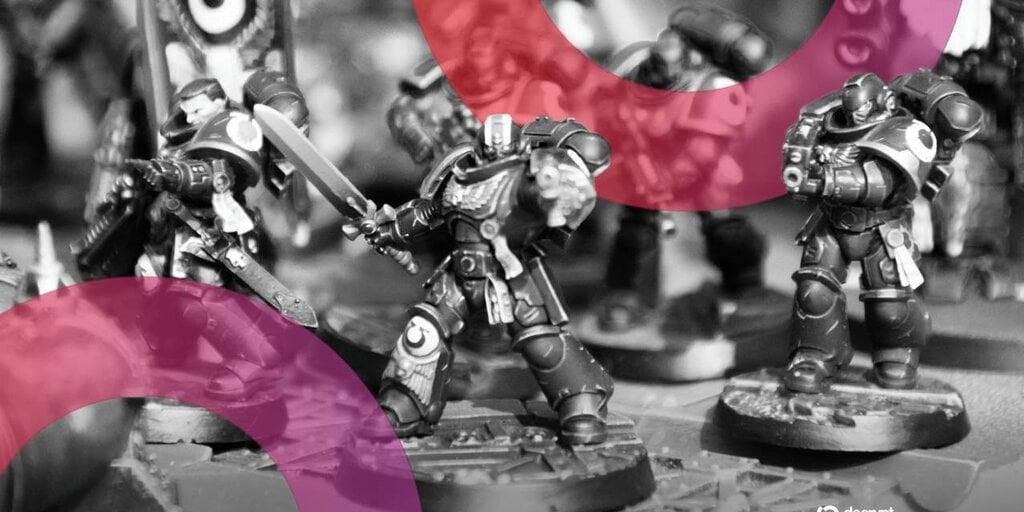
Source: Decrypt
The policy against generative AI also applies to Games Workshop's Golden Demon painting competitions, which had previously banned AI-generated content in 2024 after discovering that one of the previous year's winners had used Midjourney-created art in a printed backdrop.
4
This demonstrates how the company is protecting the integrity of its community events and ensuring that creative work remains genuinely human-made.Related Stories

Industry Context and Warhammer 40,000 Lore Alignment
Games Workshop's position aligns with similar stances taken by other major game studios. Larian Studios recently confirmed that its upcoming Divinity game will not include AI-generated content, citing concerns around authorship and training data. Blizzard Entertainment has also stated it is not using generative AI in World of Warcraft, though it deploys machine learning tools for non-creative tasks.
3
The ban carries particular resonance within Warhammer 40,000 lore, where artificial intelligence—known as "Abominable Intelligence" or "Silica Animus"—is treated as tech heresy and expressly forbidden by Imperial Law. The Adeptus Mechanicus and other factions view AI as dangerous and prohibited, making Games Workshop's real-world stance a fitting reflection of its fictional universe.
1
4
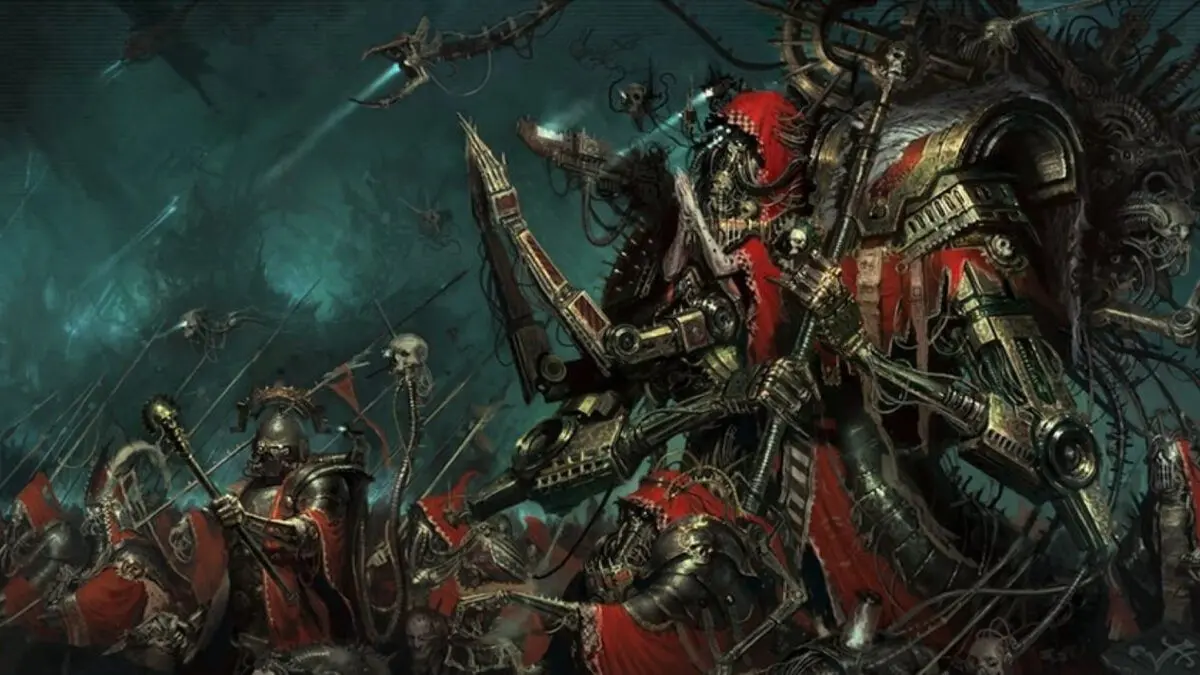
Source: Gizmodo
While Kevin Rountree acknowledged that the company will allow senior managers to remain "inquisitive" about the technology, the overall message is clear: Games Workshop prioritizes art and sculpture created by human hands over algorithmic generation. This approach matters for creative professionals across the gaming industry, as it demonstrates that commercial success—the company reported operating profit of £140.4 million (around $177 million)—doesn't require sacrificing human creativity for automation.
3
5
References
Summarized by

Navi
Related Stories
Warhammer Legend Jervis Johnson Backs Games Workshop's AI Ban, Warns It Encourages Laziness
20 Feb 2026•Entertainment and Society
AI in Video Games Triggers Player Backlash as Developers Navigate Quality vs Cost Savings
19 Feb 2026•Entertainment and Society

Hasbro CEO Embraces AI for D&D, Sparking Controversy in Gaming Community
11 Mar 2025•Technology
Recent Highlights
1
Meta unveils Muse Spark AI model as Superintelligence Labs makes its debut
Technology

2
Anthropic restricts Mythos AI model release, citing unprecedented cybersecurity capabilities
Technology

3
Anthropic sends Claude AI to psychiatrist, discovers functional emotions that shape behavior
Science and Research

Recent Highlights
Today's Top Stories






Your Daily Dose of Curated AI News
Don’t drown in AI news. We cut through the noise - filtering, ranking and summarizing the most important AI news, breakthroughs and research daily. Spend less time searching for the latest in AI and get straight to action.

