Garmin launches AI-powered food tracking feature at CES 2026, exclusive to Connect+ subscribers


2 Sources
2 Sources
[1]
CES 2026: Garmin had the nerve to launch a food-tracking feature in Las Vegas
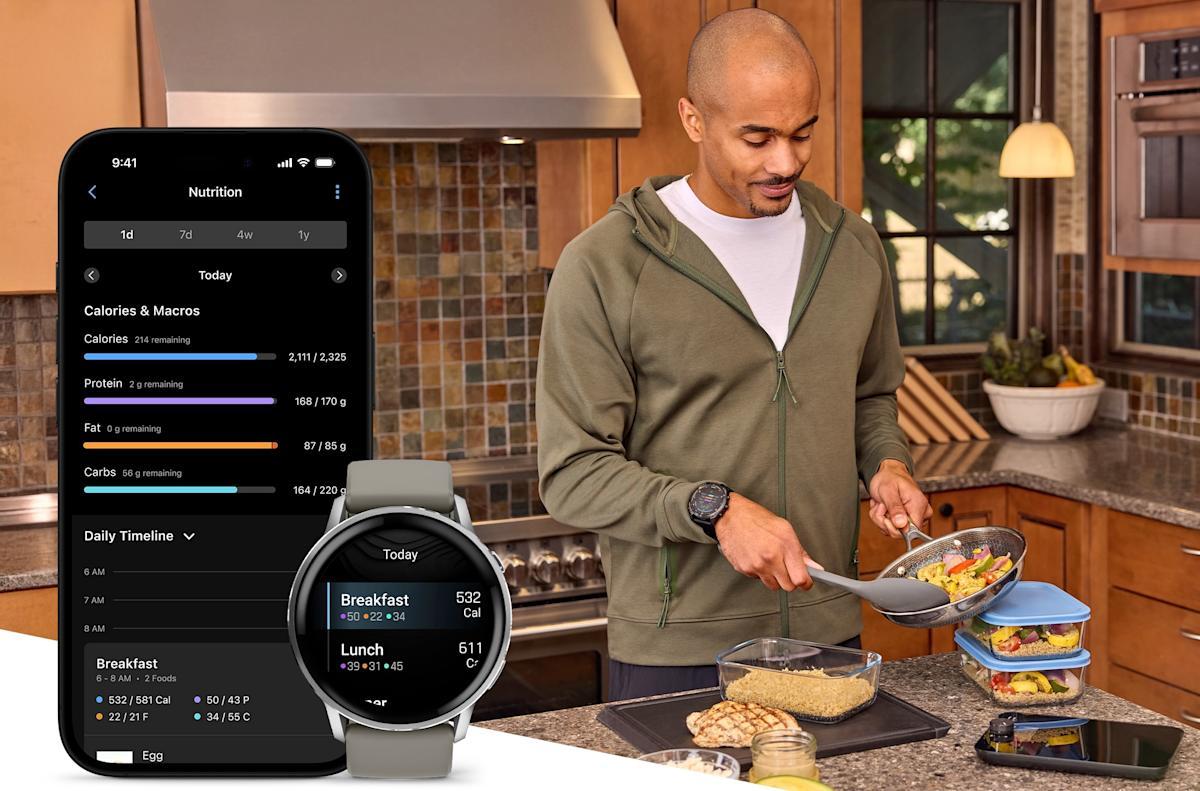
Garmin's big announcement for CES 2026 wasn't another fitness watch. Instead, it revealed it is adding food (and calorie) tracking to its Connect app. It combines AI image recognition with a rich food database, so you can monitor your calorie and nutrient intake without leaving the app -- and even log some food through its watches. The food tracking works similarly to existing apps like MyFitnessPal, Noom, LifeSum and many others. Still, Garmin hopes to make its companion app the best place for tracking nutrition without having to leave its app - and tying it into your other fitness goals. This makes sense in a few ways. If you already use Garmin to track your exercise, the app can provide a more accurate estimate of your calorie expenditure. It'll personalize it based on height, weight and gender, which you've likely already entered on your Garmin profile. It can even offer calorie and macronutrient recommendations tailored to your fitness goals. However, it unveiled the news at CES 2026, a tech conference held in Las Vegas, which seemed like a troll. Las Vegas, where you're never far from a three-foot margarita, a BLT Bloody Mary or fried chicken and waffles. In fact, Garmin selected one of my favorite restaurants, Yardbird, to showcase its new nutrition-tracking feature. Yardbird does incredible chicken and waffles. It's possibly the worst possible place to start monitoring my calorie intake, regardless of the 15,000-odd steps I take each day here. In addition to the food database, you can use the camera to log food. With AI-powered image recognition, the Connect app makes a generally good guess at what you're eating. During the media briefing lunch, the app swiftly recognized grilled salmon, corn and several other vegetables. The quantities were not remotely accurate, however: Five kernels of corn do not equate to one cup. You can manually adjust the serving size, but unfortunately, it can't make a more informed estimate at this point. A Garmin spokesperson noted that the company is looking into how to improve accuracy here. (It's a common issue for any app or service attempting to use AI image detection to analyse meals.) It was, however, quick and easy. You can also create customized meal entries (with the correct ingredient quantities), making it easier to track your regular breakfast habits or midday coffee order. Better still, you can monitor nutrition and calorie intake on compatible Garmin watches. You can even log your favorite (and recently logged foods from your wrist without needing to use your phone. Voice commands also work on compatible Garmin wearables. The feature is now available to Garmin Connect+ subscribers, who pay $6.99 per month. This also includes Active Intelligence, which already offers AI-powered insights into your workouts. It can now factor in your nutrition. Subscribers will also be able to get daily, weekly, monthly and even annual reports on calorie targets (and what you ended up consuming). But let's start monitoring that once I've left Vegas, please.
[2]
Garmin has a new plan to improve your fitness using your food intake -- if you pay for Connect+
The information will be used for personalized fitness recommendations using AI Anyone who takes a keen interest in their health and fitness knows that nutrition is a key piece of the puzzle, which is why the Garmin Connect app that runs on all the best Garmin smartwatches has just launched a way of measuring your food intake within the app itself. According to an official press release (preceded by a leaked snippet of code discovered by Gadgets & Wareables), the latest Garmin Connect update will allow users to "track their calories and macros (proteins, fats and carbs) and receive Active Intelligence insights to help them achieve their nutrition goals". This is designed to create a more "holistic" view of your overall health and fitness, adding nutrition data to your activity and recovery information to create one large wellness dataset. Garmin will let you enter your meal info directly in the app, including the ability to scan barcodes and snap a quick picture of your food with your phone's camera, MyFitnessPal-style. Garmin is using a new global database to search photos and barcodes, using AI-powered image recognition to log home-cooked, store-bought and restaurant meals. However, there's a catch: it's only for users of the app's Garmin Connect+ premium tier, which is bound to be a controversial decision given the tier's negative reception after it was launched last year. Once uploaded, Garmin's Active Intelligence AI model will tprovide guidance and advice based on - or relating to - your food and liquid intake. THe press release was vague on this, but code snippets found by Gadgets & Wearables include "hot conditions can increase hydration needs, so stay on top of fluids and keep carbs steady" and "You'll need a lot of carbs for this ride, so practice your fueling strategy well before race day." Gadgets & Wareables points out that the messages refer to ride durations, weather conditions and hydration targets, and that when these factors are combined with user data like sweat rate and acclimation, you might be able to get dynamic, personalized recommendations rather than simple one-size-fits-all targets. You'll get quick nutrition insights on your watch, and a full breakdown on Garmin Connect's Performance tab. Some voice-enabled watches like the Garmin Venu 4 will be able to quickly log foods using voice commands, although it's not clear how the feature will work yet. There's no indication of when this nutrition feature might make its debut, and Garmin hasn't publicly stated a release date. We assume it's rolling out now, and will update this article if we hear differently.
Share
Share
Copy Link
Garmin unveiled a food tracking feature at CES 2026 in Las Vegas, bringing AI-powered image recognition and calorie monitoring to its Connect+ subscription service. Users can now log food intake directly through the app or compatible smartwatches for $6.99 per month, integrating nutrition data with existing fitness metrics to create personalized wellness insights.
Garmin Brings Food Tracking Feature to Connect+ Subscribers
Garmin made a bold announcement at CES 2026 in Las Vegas, introducing food and calorie tracking capabilities to its Connect app ecosystem
1
. The new feature, available exclusively to Garmin Connect+ subscribers at $6.99 per month, aims to create a more comprehensive wellness dataset by combining nutrition information with existing activity and recovery information2
. This move positions Garmin to compete directly with established nutrition apps like MyFitnessPal, Noom, and LifeSum, while keeping users within its own ecosystem1
.The integration matters because it eliminates the need for separate apps to monitor their nutritional intake. For users already tracking exercise through Garmin wearables and smartwatches, the company can now provide more accurate calorie expenditure estimates by factoring in personalized data like height, weight, and gender already stored in user profiles
1
. This holistic approach enables the platform to deliver personalized calorie and macronutrient recommendations tailored specifically to individual fitness goals1
.AI-Powered Image Recognition and Barcode Scanning Simplify Logging
The food tracking feature leverages AI-powered image recognition technology combined with a global food database to help users log food intake quickly
2
. Users can snap photos of their meals, and the system identifies home-cooked dishes, store-bought items, and restaurant meals with reasonable accuracy2
. During a media demonstration at Yardbird restaurant in Las Vegas, the app successfully recognized grilled salmon, corn, and various vegetables, though portion size estimates proved less reliable1
.Barcode scanning offers another convenient entry method, while users can also create customized meal entries with precise ingredient quantities for frequently consumed foods
1
. Garmin acknowledges the portion accuracy challenge—a common issue across AI-based nutrition apps—and is exploring improvements to make more informed estimates1
. Users can manually adjust serving sizes when needed, maintaining control over their calorie intake data.Active Intelligence Insights Deliver Personalized Fitness Recommendations
The nutrition feature integrates with Garmin's existing Active Intelligence platform, which already provides AI-driven workout insights to Connect+ subscribers
1
. Now the system can factor nutrition data into its Active Intelligence insights, potentially delivering dynamic guidance based on multiple variables2
. Code snippets discovered by Gadgets & Wearables suggest messages like "hot conditions can increase hydration needs, so stay on top of fluids and keep carbs steady" and "You'll need a lot of carbs for this ride, so practice your fueling strategy well before race day"2
.These recommendations appear to consider ride durations, weather conditions, hydration needs, sweat rate, and acclimation data, moving beyond generic one-size-fits-all targets toward truly personalized guidance
2
. Subscribers receive daily, weekly, monthly, and annual reports comparing calorie targets against actual consumption1
. The macronutrient tracking covers proteins, fats, and carbs, giving users detailed visibility into their eating patterns2
.Related Stories


Wrist-Based Logging and Voice Commands Enhance Convenience
Compatible Garmin watches can now display nutrition and calorie intake information directly on the wrist, with quick insights available through the Performance tab on the full Garmin Connect app
2
. Users can log favorite and recently consumed foods from their wearables without needing their phone1
. Voice-enabled models like the Venu 4 support voice commands for food logging, though implementation details remain unclear2
.The Connect+ paywall represents a strategic bet that users value consolidated health tracking enough to justify the subscription cost. Since Connect+ launched last year to mixed reception, adding substantial features like nutrition tracking may help Garmin demonstrate value and reduce subscriber resistance
2
. For serious athletes and fitness enthusiasts already invested in Garmin's ecosystem, the ability to manage all health metrics in one place could prove compelling, particularly as the Active Intelligence system grows more sophisticated at connecting nutrition, activity, and recovery patterns into actionable recommendations.References
Summarized by

Navi
Related Stories
Recent Highlights
1
Tennessee Teens Sue Elon Musk's xAI Over Grok AI-Generated Child Abuse Images
Policy and Regulation

2
Supermicro Co-Founder Indicted in $2.5 Billion Nvidia AI Chip Smuggling Scheme to China
Policy and Regulation
3
Val Kilmer to appear posthumously in As Deep as the Grave through AI-generated performance
Entertainment and Society

Recent Highlights
Today's Top Stories



Your Daily Dose of Curated AI News
Don’t drown in AI news. We cut through the noise - filtering, ranking and summarizing the most important AI news, breakthroughs and research daily. Spend less time searching for the latest in AI and get straight to action.

