Google Maps unveils Ask Maps with Gemini AI and 3D Immersive Navigation in biggest update


32 Sources
32 Sources
[1]
Google Maps gets its biggest navigation redesign in a decade, plus more AI
Google Maps is one of the company's core products, which means it hasn't escaped the shift to Gemini. There will be more opportunities to converse with a robot in Google Maps starting today, but there's also a new navigation experience on the way. The revamped navigation isn't as explicitly focused on the AI revolution, but Google stresses Gemini is still key to making it work. The latest AI shift in Maps is called Ask Maps, and you can probably guess what it does just from its title. Ask Maps is a Gemini-powered conversational system that can plan trips and answer complex questions about locations across the app's millions of cataloged points of interest. The new chatbot will be accessible via a button up near the search bar. You can ask it anything you're likely to find in Google Maps without jumping into another app. You can ask for directions, of course, but it can also plan out road trips and vacations from a single prompt. Ask Maps works like a chatbot, so it accepts follow-up prompts to refine and expand on its suggestions. Google says Ask Maps accounts for your personal preferences using the data you already have in Maps. For example, it can factor in the route preferences you've set and the locations you've searched for or saved in lists. Since this is a mapping application, all the outputs make it easy to get directions or save locations in a list. Ask Maps is rolling out starting today in the US and India, but only in the Android and iOS apps. It will come to the web version of Maps later.
[2]
Google Maps Gets Chatty With a New Gemini-Powered Interface
There's a new button in Google Maps: "Ask Maps." Google started rolling out this new generative AI feature today, a conversational, in-app tool that combines data from Maps with a user experience similar to the company's Gemini chatbot. It's designed to answer questions about locations and schedule routes in the navigation app. This is part of Google's overall strategy of adding Gemini to all its products. (Like that Portlandia sketch where the duo visits a boutique and puts bird decals on everything in sight.) Earlier this week, Google added Gemini-powered tools to its Workspace suite, including Google Docs, Sheets, and Slides. And weeks before, it debuted a way for Gemini to take control of select apps to run tasks, like booking an Uber. Ask Maps is first coming to Google Maps users in the US and India. This launch is limited to mobile devices, available on both Android and iOS, with a desktop version expected in the near future. You can't opt out of Ask Maps or hide it, just like many of the new AI features from Google. Ask Maps appears as the first tab under the search bar. When someone taps on it, Google provides personalized prompt suggestions. For example, someone living in San Francisco may be nudged to plan a drive out to Muir Woods, including a pit stop for breakfast burritos, or explore vintage store routes for shopping in the Haight-Ashbury neighborhood. It's designed to be utilized while planning road trips. In an example provided by Google, Ask Maps created a solid itinerary for a nature getaway traveling from the Grand Canyon to the nearby Coral Pink Sand Dunes State Park. The chatbot compiled a three-day driving plan with multiple lookout points and other popular stops marked along the route. Ask Maps ended this output with a few tips for enjoying time at the dunes: "Rent a sandboard at the visitor center and grab some wax -- it's key for speed." The conversational feature is an example of Google leveraging the data it stores about users to offer personalized experiences. If Ask Maps logs that you're a vegetarian, it will reconfigure the restaurants included as part of the recommendations -- no House of Prime Rib for a date night in the city. The Gemini chatbot can now search through your inbox and files to find answers, and it's another example of Google's increasing focus on AI-powered customization.
[3]
Gemini Rolls Out Ask Maps to Make Google Maps More Interactive
Expertise Smart home | Smart security | Home tech | Energy savings | A/V Google is introducing a new Gemini AI feature to the Google Maps app on Thursday called Ask Maps. Described as a "conversational experience," the feature allows users to interact naturally with the app -- asking follow-up questions, rephrasing queries and exploring new prompts -- similar to Gemini for Home devices. While Google Maps has long offered route-based voice navigation, Ask Maps goes much deeper to answer questions about trip details and the surrounding area. In one case, Google suggests using Ask Maps to find a nearby charging station if your phone's battery is dying. In another, Ask Maps can be used to find a well-lit tennis court for evening play. The new feature also offers in-depth recommendations for stops and tips when visiting popular tourist destinations. Gemini will also learn from the information you have stored in Maps in the past, such as what kind of restaurants you like visiting. A Google representative didn't immediately respond to a request for comment. These conversational features have also moved into the more traditional Gemini commands. Once your app gets the update, expect directions to sound a bit more natural and flow with on-map highlights more readily. Google Maps is also enhancing your ability to find alternative routes in case of traffic issues and improving the experience when you reach a destination, like highlighting which side of a building the entrances are on. Ask Maps is rolling out to American and Indian users right now, with the enhanced Maps features set to expand to platforms like CarPlay and Android Auto in the coming months.
[4]
Your Google Maps just got two huge upgrades - including a totally new driving experience
Google Maps is introducing two new features.Ask Gemini lets you find answers conversationally.Immersive Navigation provides a totally new driving view. Google Maps just got a huge upgrade, and it might be one of the biggest ever. In a recent post, Google detailed two features -- Ask Gemini and Immersive Navigation. The first lets you find answers to questions with AI, while the second provides a totally new driving experience. Also: 41 hidden Google Maps settings and features every power user should know The Ask Gemini feature works as you'd expect if you've encountered any of the other times Google has injected its AI into products. Instead of searching through Google for specific information, you can ask Maps conversational questions such: To use the new feature, tap the "Ask Maps" button and get your questions answered conversationally, with a customized map to help you visualize your options. Google says your answers will include clear directions, estimated arrival times, insider tips from real reviews, and more. These answers will only include info from Google Maps, and not from other services like Gmail. The most impactful upgrade, though, is one that Google is calling "the biggest update in over a decade." Not only are visuals totally revamped, but voice guidance is much more intuitive. On the visual front, instead of the traditional flat overhead view, Immersive Navigation gives you a 3D view that shows buildings, overpasses, and terrain. When it's helpful, Google adds, Maps will highlight road details like lanes, traffic lights, and stop signs. The new spatial view is generated from a combination of Street View imagery and aerial photos, which Gemini analyzes to create a full picture. Also: Google's Gemini 3.1 Pro is here, and it just doubled its reasoning score If you've ever failed to properly navigate a complex interchange with overlapping roads, you can see how this new view could be helpful. I know there are a few notoriously bad exits in my city where I've struggled to find the right exit, even using Maps. Google explains that the upgrade goes beyond a new view and includes features like smart zooms and transparent buildings to help you prepare for tricky turns and lane changes, as well as an updated voice guidance that's more natural. For example, instead of "Take exit 3A," you might now hear "Go past this exit and take the next one onto North Davidson Street." If traffic, weather conditions, or other hazards change, Maps will show you alternate routes and explain why it recommends them. Both features will roll out over the next two weeks on iOS and Android devices, as well as CarPlay, Android Auto, and cars with Google built in.
[5]

Lost? Need a Place to Eat? Google Maps Update Lets You Ask Gemini for Help
Immersive Navigation, meanwhile, will show the buildings and landmarks around you in 3D. Google calls it the biggest Maps update in over a decade. Looking for a place to charge your phone or a nearby tennis court? A new Gemini-powered "Ask Maps" button in Google Maps can help you get there via 3D navigation. When available, the Ask Maps button will appear below the Search bar in Google Maps. The company touts its latest addition as "a new conversational experience that answers complex, real-world questions a map could never answer before." Tapping Ask Maps opens a chat interface familiar to Gemini users. Google says you can ask the chatbot questions like "My phone is dying -- where can I charge it without having to wait in a long line for coffee?" or "Is there a public tennis court with lights on that I can play at tonight?" You can also ask the AI to prepare an itinerary for your upcoming trip, and it will respond with details like directions, ETAs, and tips from users on how to explore a hidden gem, the best route to take, or ways to get free tickets. Ask Maps taps into your Google Maps search and save history to provide personalized responses. If you search for a restaurant, for example, it may recommend vegan options if your past searches and saved places indicate that preference. Each response option will include photos of the place, an AI-generated summary of user reviews, opening hours, and options to save the location or get directions. You can also share Ask Maps's response with friends and family before deciding. Drive Across Town With Immersive 3D Navigation The other new Maps addition is supports for Immersive Navigation, which Google describes as the "biggest update in over a decade." It gives you a 3D view of the buildings, overpasses, and terrain around you; video demos make it look like you're in a driving game. One notable detail is how the map handles turns around buildings. If the road curves behind a building, the structure becomes translucent, allowing you to clearly see the road ahead. The feature also highlights lanes, crosswalks, traffic lights, and stop signs for turns and merges. Immersive Navigation was built using Gemini models, aerial photos, and imagery from Street View, Google says. Alongside these updates, Google updated its voice guidance to sound more natural. It may say things like, "Go past this exit and take the next one for Illinois 43 South." With an update to Street View, you can also look for parking spots around your destination before starting a trip. The feature can also inform you about the building's entrance and the side you should park on. Maps will also inform you about the consequences of taking an alternate route. Additionally, it will alert you about the disruptions, such as road closures or crashes, in real time. Both Ask Maps and Immersive Navigation begin rolling out to users today. The Ask Maps button will first roll out to mobile users in the US and India before making its debut on desktop. Though Google didn't specify, the rollout may be gradual. We couldn't spot the button immediately on the iOS app. Immersive Navigation, on the other hand, will be limited to users in the US at launch. It will expand to eligible users on iOS, Android, CarPlay, Android Auto, and cars with Google built-in in the coming months.
[6]

Google overhauls its Maps app, adding in more AI features to help people get around
Google Maps will depend more heavily on artificial intelligence to help people figure out where they want to go and the best way to get there as part of a major redesign unveiled on Thursday. The overhaul driven by Google's Gemini technology will introduce two AI features into a digital mapping service used by more than 2 billion people worldwide. One tool called Ask Maps will expand upon conversational abilities that Google brought to the service last November, giving suggestions to users looking for things such as nearby places to charge their devices, cafes with short lines or a detailed itinerary for a road trip involving several stops and excursions. Gemini's recommendations will draw upon a database spanning more than 300 million places and reviews from more than 500 million contributors that have been accumulated since Google Maps' debut more than 20 years ago. Google executives declined to answer a question about whether the company eventually plans to sell ads to boost businesses' chances of being displayed in Ask Maps' recommendations. Ask Maps initially will be available on Google Maps' mobile app for iPhones and Android software in the U.S. and India, before expanding to personal computers and other countries. In what Google executives are billing as the biggest change to the maps' driving directions, Gemini has also created a new tool dubbed Immersive Navigation that will present a three-dimensional perspective designed to give users a better grasp of where they are at any moment in time. The 3D renderings created by Gemini will include landmarks such as notable buildings, medians in the roads and other aspects of the terrain that drivers are seeing around them as they drive to help them get their bearings more quickly. Google believes its AI guardrails are now strong enough to prevent the Gemini technology underlying Immersive Navigation from fabricating bogus places to go, a malfunction known within the industry as a "hallucination." Immersive Navigation is also supposed to help Google Maps more clearly explain the pros and cons of different driving routes to the same recommendation, as well as point to the best places to park once a user arrives at a designated destination. The new AI-powered navigation will only be available in the U.S. initially, on Google Maps' mobile app for the iPhone and Android, as well as cars equipped with options to activate CarPlay and Android Auto. The increased reliance on AI in Google Maps follows the company's introduction of more Gemini technology to make two of its other most popular products -- Gmail and the Chrome web browser -- more proactive and helpful to their billions of users. The expansion underscores Google's confidence in the Gemini 3 model that the Mountain View, California, company released late last year as part of an intensifying battle for AI supremacy with up-and-coming rivals such as OpenAI and Anthropic.
[7]

Google brings more AI to navigation with 'Ask Maps' feature that lets users ask complex questions
Google is adding its Gemini AI technology to a new feature in its maps app, as the company pushes its artificial intelligence tools deeper into its expansive product portfolio. The new button called "Ask Maps" will feature a chatbot that allows users to ask complex questions outside of the typical navigation topics, Miriam Daniel, a vice president at Google Maps, said in a blog post Thursday. Users can now ask questions like, "My phone is dying -- where can I charge it without having to wait in a long line for coffee?" or "Is there a public tennis court with lights on that I can play at tonight?" The results are personalized based on prior searches and saved trips in Google Maps, "making it easy to turn plans into action," the company said. "Google Maps is fundamentally changing what a map can do," the company said in the blog post. "By bringing together the world's freshest map with our most capable Gemini models, we're transforming exploration into a simple conversation and making driving more intuitive than ever with our biggest navigation upgrade in over a decade." Google is adding more AI to its maps service as part of a broader effort to differentiate Gemini from potential competition and to keep users on its products for longer. With more than 2 billion monthly users, Google Maps, which turned 20 last year, is the world's top navigation app. Ask Maps starts rolling out Thursday in the U.S. and India on Android and Apple's iOS, with desktop coming soon, the company said. In a briefing with reporters ahead of the announcement, Google staffers said the company isn't including ads in the feature but isn't ruling out the possibility for the future. "Right now, we are very focused on launching this for our users and providing a great experience," said Andrew Duchi, a director of product management at Google. Google Maps makes money primarily by selling advertising and promoted placements to businesses. It also charges companies for access to its Maps APIs and location data. Google doesn't break out revenue from maps, which has historically been one of the search giant's most under-monetized products, Morgan Stanley analyst Brian Nowak told CNBC. The unit has been trying to increase revenue, including by licensing new sets of mapping data for companies to use as they build products around renewable energy.
[8]

Google Maps brings a 3D map to your driving directions
In recent weeks, Google has been busy adding AI features to all of its most popular apps. Following Gmail and Chrome, Maps is now the latest service to get a Gemini makeover, with a redesign of the driving experience headlining the update. Google is billing the new "Immersive Navigation" mode as the most significant update to driving directions in Maps in about a decade. Now instead of displaying a 2D map of the area around your car, Maps will render the surroundings in 3D. Google believes this transformation will make it easier for drivers to orient themselves, with the new view giving greater depth to nearby landmarks like buildings and overpasses. Behind the scenes, the company's Gemini models power the experience, deciding how to render elements to remove distractions. Pulling information from Google's Street View database and aerial photos, Google says its models are also smart enough to know when to highlight road elements like crosswalks, traffic lights and stop signs to ensure you don't miss an off ramp or important turn. At the same time, Google has made the voice guidance in Maps sound more natural. For instance, when you're driving along the highway, looking for where you need to get off, the voice assistant will say something along the lines of "go past this exit and take the next one." I imagine this will be especially helpful when driving in a foreign country with unfamiliar road names. The new intelligence Google has built into the redesigned navigation experience extends to alternative routes. Now, when the app suggests taking a different way of getting somewhere, it will detail the associated tradeoffs with that route. For example, it might tell you it might take longer to travel but you'll encounter less traffic along the way. Before you start your journey, Maps will now also provide a Street View preview of your destination and recommend where to park. This being a new release in Google's self-proclaimed Gemini era, the company has naturally found a way to add its chatbot to Maps. Inside the app, you'll find a new icon labelled Ask Maps. Tap the icon, write a natural language prompt and Gemini will use all the information contained within Maps to craft a response. Google is pitching the feature as a way to get information no traditional map can provide. For example, you could ask Gemini to find you a place where you can charge your phone and grab a cup of coffee, all without having to wait a long time in line. Google suggests finding the answer to a specific question like that would have previously required sifting through countless reviews. Not so anymore. The results Gemini produces through Ask Maps will contain personalized results based on places you searched for and saved in the past. You can also act on any recommendations Gemini surfaces, making it easy to book restaurants, save locations and more. Google is starting to roll out the new immersive driving experience today in the US, with availability to expand over the coming months to Android and iOS devices, as well as CarPlay, Android Auto and cars with Google built-in. Ask Maps, meanwhile, is rolling out to Android and iOS devices in the US and India, with desktop support coming soon.
[9]

Google Maps launches Ask Maps
Ask Maps lets users query the world in natural language. Immersive Navigation rebuilds directions in 3D. Together, they mark the most significant overhaul of Google Maps since Street View. The question Google is now asking its users to ask Maps is: "My phone is dying, where can I charge it without a long wait for coffee?" That a navigation app can handle that query, and actually answer it well, marks a meaningful shift in what digital cartography can do. Google announced Ask Maps, a conversational AI feature powered by Gemini, alongside a redesigned Immersive Navigation experience that brings photorealistic 3D rendering to turn-by-turn directions. The combination represents what Google is calling its most significant Maps update in over a decade, though it is careful not to say so directly. Ask Maps works by allowing users to pose complex, contextual queries rather than searching for a specific place or category. "Is there a public tennis court with lights on that I can play at tonight?" is the example Google offers in a blog post published March 12. The system draws on personalisation signals, including a user's saved places and past searches, to weight its answers, so a user who has previously sought out vegan restaurants will find vegan-friendly options surfaced without having to specify. The feature is rolling out now in the US and India on Android and iOS, with a desktop version to follow. Google has not given a timeline for wider international expansion. Immersive Navigation, the second major component of the update, replaces the current flat-map navigation overlay with a 3D view that incorporates nearby buildings, overpasses, and terrain. Lane markings, traffic lights, crosswalks, and stop signs are rendered as visual cues rather than text instructions. Voice guidance has been updated to use landmark-based phrasing, "Go past this exit and take the next one for Illinois 43 South", rather than distance-based prompts. The redesign brings Google Maps closer to Apple Maps' long-standing visual approach, which introduced detailed 3D city rendering several years ago. That Google is only now deploying comparable depth in navigation, rather than its existing Immersive View, which was a separate, non-navigation mode, reflects both the computational cost of real-time 3D rendering on mobile devices and the time it takes to build the underlying map data at sufficient resolution. Ask Maps is Google's most direct integration of its Gemini AI into a product used by more than a billion people monthly. Until now, Gemini's presence in Maps has been limited to AI-powered summaries of places and reviews. Ask Maps extends that to full conversational navigation, putting Google in more direct competition with AI-native tools like Perplexity, which has built search-style answers to location-based queries into its products. The update also arrives at a moment when Apple is deepening its own Maps intelligence, and when OpenAI has been exploring location-aware features in ChatGPT. For Google, which generates a significant portion of its advertising revenue from local search queries, keeping Maps as the dominant interface for spatial intent matters enormously. Ask Maps is the company's clearest signal yet that it intends to defend that ground. Whether users will actually talk to their maps, or default to the familiar search box, is the open question. Google has introduced conversational search features before, and adoption has often been slower than product announcements suggest.
[10]

Google Maps navigation is about to change in a big way
Today, Google Maps announced several upgrades that will fundamentally change how we use maps. And while some of that revolves around AI, what caught my attention is the biggest visual update "in over a decade." It's called Immersive Navigation, and the 3D effects look pretty amazing. We've all had frustrating moments when we miss a turn while driving, for various reasons, and soon that'll be a thing of the past. The idea here is that Google Maps wants to make navigation easier and better. The update focuses on a more intuitive guidance system, vastly improved visuals, and other tools that'll help you prepare for upcoming turns in advance. I don't know about you, but that's something everyone can appreciate. Google Maps has a new immersive 3D navigation mode The "biggest transformation of the navigation experience in over a decade" The latest Google Maps update, which is rolling out now, will help take the guesswork out of your driving experience. Google's new Immersive Navigation mode employs a neat, all-new, vivid 3D view of the entire route. It's all about visuals and the big, broad view, full of information you'll need while you drive. For example, as you approach a turn, merge, or another actionable event where the map zooms in, you'll start to see even more information, including the outlines of buildings, trees, and other landmarks. Launching Google Maps on my phone, the results are pretty impressive, and I'm looking forward to taking advantage of it. In the preview images provided by Google, you'll see a car approach a turn in a busy city downtown, full of big buildings, and the map now clearly labels the road, as well as labels a city park right behind your turn. Along with all the usual Google Maps information, you'll now instantly have a clear visual in your head, knowing you'll need to turn left just before the park. Furthermore, Google confirmed an upgraded, more natural voice-guidance system, such as: "Go past this exit and take the next one for Illinois 43 South." Maps is using Gemini, Google's AI model, for most of the new features. It'll also have new (and more) information for additional routes, helping drivers make the right decision. Then, the rest of today's Google Maps announcements revolve around AI, which shouldn't come as a surprise to anyone. Google Maps has a new "Ask Maps" mode, where Gemini will answer real-world questions or concerns in a conversational way. It's basically Google Search AI Mode right inside your map. Google shared some examples, and you can ask Maps questions like: "My phone is dying -- where can I charge it without having to wait in a long line for coffee?" and you'll get a natural, helpful, conversational reply on where to stop, with directions. Subscribe to our newsletter for Google Maps insights Get clearer context: subscribe to the newsletter for focused coverage of Google Maps, Immersive Navigation, and AI-powered features. Concise analysis, practical takeaways, and explanations that make the tech easy to understand. Get Updates By subscribing, you agree to receive newsletter and marketing emails, and accept our Terms of Use and Privacy Policy. You can unsubscribe anytime. Immersive Navigation is rolling out today in the United States, with availability expanding to other regions in the coming months. It'll also expand to eligible iOS, CarPlay, or Android Auto devices, and Android Automotive in the near future.
[11]

Google Maps Adds Gemini AI-Powered 'Ask Maps' Feature and 3D Immersive Navigation
Google today added Gemini AI to Google Maps, enabling a new Ask Maps feature. Gemini in maps can answer complex, real-world questions that Google says "a map could never answer before." There is a new Ask Maps button where Google Maps users can get answers to specific questions like "is there a public tennis court with lights on that I can play at tonight?" Google says that finding information like that would have taken a lot of sifting through reviews in the past, but now Google Maps can provide an answer with a custom map. The feature can be used for trip planning, and it is able to provide tailored responses based on prior searches or saved information in the app. Google Maps can build a trip itinerary using information from more than 300 million places, including reviews from the Google community. Along with Ask Maps, Google also introduced Immersive Navigation, which Google says is the biggest update to driving in Google Maps in over a decade. There is a 3D view that displays buildings, overpasses, and terrain, and Google Maps will highlight important road details like lanes, crosswalks, traffic lights, and stop signs when providing directions. Google says that the app will have a new spatial understanding of the route that it's providing, which is made possible with Gemini models. Gemini analyzes real-world imagery from Street View and aerial photos to provide new details. The updated navigation provides a broader route view with more information about what's coming ahead, more details about tradeoffs with alternate routes, and route previews for planning parking and other actions. Ask Maps is rolling out in the U.S. and India on iOS and Android, with the feature set to expand to the desktop version of Google Maps soon. Immersive Navigation is rolling out in the U.S. today, though not all users will see it at first. Google says availability will expand over the coming months to eligible iOS and Android devices, plus CarPlay and Android Auto.
[12]

Google Maps just got the 'biggest navigation upgrade in over a decade' -- Ask Maps, Immersive Navigation and more
Google Maps is changing the way it looks and how it interacts with you Last year saw Google roll out Gemini AI to a bunch of new places, including Google Maps, offering a more conversational assistant while you navigate -- among other things. The plans don't stop there, though, since Google just announced a bunch more Gemini features for Google Maps. In fact, Google claims that this will make the app more intuitive, and marks its "biggest navigation upgrade in over a decade." The first big change is a conversational feature called "Ask Maps", which is designed to let you ask Google Maps more complicated questions that it never could have handled before. The idea is that this enhances the discovery experience in a way that's faster and more convenient for you, since you don't have to go sifting through reviews or do your own research to find things out. Examples offered by Google include declaring that your phone is dying, and you need to find a place to "charge it without having to wait in a long line for coffee." Or, something a little simpler, like asking about public tennis courts that have lights and are available to use tonight. Anything you ask about will be answered conversationally, just like any other Gemini feature, alongside a customized map that helps you pick out your different options. Responses will include clear directions and ETAs, as well as insider tips from other Maps users. The results are also personalized based on what Maps already knows about you -- meaning Ask Maps shouldn't offer anything outrageously unsuitable. So, if you only eat at vegan restaurants, it's not going to direct you to a steakhouse, and things like that. Ask Maps is rolling out to Android and iOS in both the U.S. and India right now. Immersive Navigation Next up is Immersive Navigation, which promises a "complete transformation of the navigation experience" thanks to new visuals and more intuitive directions. This is supposed to help you stay focused as you're driving, while still being informed about what's going on around you. Google Maps is going to change to offer a 3D view of the world around the road, such as buildings and overpasses, while highlighting the crucial road details ahead of you -- including lanes, crosswalks, traffic lights and stop signs. Those buildings are transparent too, so they shouldn't get in the way of the actual navigation. Gemini actually powers this new "spatial understanding" of your route, as Google is calling it. Basing its information on Street View and aerial photos to make Google Maps more visually appealing and informative. But there's more to this than just looks, according to Google. You'll now be able to see more of your route, with smart zooms and transparent buildings helping to highlight difficult areas in advance. Voice guidance has also been updated to be a little more natural, rather than the flat, robotic GPS voices we've been hearing for the past 20+ years, and will highlight various visual cues to help you prepare for the next stage of navigation. Google Maps will also ensure you know all the pros and cons of alternate routes before you take them. So if there's a different route with less traffic, but more physical distance involved, you can decide whether that's worthwhile. The same goes for any faster routes that may have things like tolls. Other useful features coming as part of this update include real-time disruption alerts on your route, and the ability to preview your destination with Google Street View. Part of that also includes Maps highlighting building entrances, nearby parking and the side of the street you'll need to be on. Immersive Navigation starts rolling out to users in the U.S., including those with iOS, Android, CarPlay, Android Auto and cars with Google built-in. Follow Tom's Guide on Google News and add us as a preferred source to get our up-to-date news, analysis, and reviews in your feeds.
[13]

Google Maps receives major upgrade with 'Ask Maps' AI feature and 3D redesign
Google Maps just got a major upgrade. A really major upgrade. In fact, according to Google, it's the biggest update to the company's mapping service in more than a decade. What's new? Two features that have the power to change how users use the app entirely: Ask Maps and Immersive Navigation. The new AI feature, Ask Maps brings Google's most advanced Gemini models into the app. The goal: allow users to ask destination questions in a conversational way. Users can get real specific, the company says, and ask questions like "My phone is dying -- where can I charge it without having to wait in a long line for coffee?" Ask Maps will then suggest locations where they can do exactly that. How accurate the suggestions are is another question. Google Maps users can also provide Ask Maps with a list of locations they are planning to visit, and ask if there's anything interesting they should check out. The company says that it "analyzes information from over 300 million places, including reviews from our community of more than 500 million contributors" in order to build each user's itinerary. Ask Maps will also reference your previous preferences when recommending locations and businesses -- for example, a type of restaurant. Once a user picks a spot, Ask Maps says it can help book reservations at the restaurant, save the location to a list for a later date, and share locations with friends. What's a bigger deal than yet another Google app getting an AI feature? Answer: Immersive Navigation. Google has basically introduced a whole new way to use Google Maps, with a redesign that the company is calling "a complete transformation of the navigation experience, with redesigned visuals and more intuitive guidance." Immersive Navigation provides a 3D way to navigate in the app. The environment your avatar is driving through highlights important road details like lanes, crosswalks, traffic lights, and stop signs. Surrounding buildings, overpasses, and terrain will match more closely what they look like in real-life. Google Maps is also getting a slew of smaller features: more advanced notices for your routes, more natural and conversational voice guidance, parking recommendations when approaching your destination, and real-time road disruption alerts. And when you're deciding whether to continue using the current direction, or opting for an alternate route that the app discovers, Google Maps will now offer more context for your decision. Ask Maps is rolling out today in the U.S. for iOS and Android devices, and will come to the desktop app later in the year. Immersive Navigation will begin to roll out today in the U.S. and expand over the next few months to eligible iOS and Android devices, CarPlay, Android Auto and cars with Google built-in.
[14]

Google Maps gets conversational AI and 3D navigation in one of its biggest update
Google Maps now answers the questions search never could -- and shows you the road ahead in three dimensions before you even get there. Anyone who has white-knuckled a highway merge while Maps cheerfully announced "turn right in 0.2 miles" onto a median knows the app was overdue for a reality check. On Thursday, Google delivered one. Two Gemini-powered features dropped Thursday, and together they're the biggest thing to happen to Maps in more than ten years. What if you could just ask Maps a real question? Ask Maps is the one people will talk about first -- it's an AI chat tab built specifically for the messy, oddly specific questions that normal search just fumbles. Recommended Videos Stuff like: "where can I charge my phone without waiting behind a dozen people for coffee?" or "I'm driving through Arizona this weekend, what are the recommended stops along the way?" Gemini combs through north of 300 million places, informed by half a billion real contributors, and actually gives you a useful answer instead of a list of Yelp links you'll never open. For drivers, the bigger upgrade might be Immersive Navigation -- Google's answer to everyone who's ever flown past an exit because the flat blue line gave zero warning. Where is the new Google Maps experience available? The feature arrives with a full 3D visual overhaul, redesigned road details, and real-time guidance that actually reflects what you're seeing out the windshield. Transparent buildings reveal what's behind them before tricky turns. Voice prompts now reference real context, like guiding you past one exit to take the next specific one, rather than the usual cryptic countdown. A Street View preview of your destination -- plus parking suggestions -- rounds out the arrival experience. Ask Maps is live now for U.S. and India users on iPhone and Android, with desktop on the way. Immersive Navigation kicks off its U.S. rollout today and will spread to CarPlay, Android Auto, and Google-equipped cars over the coming months.
[15]

Google Maps Is Getting 'The Most Significant Update' In Over A Decade
Google's Gemini AI is also being integrated into Maps, enabling drivers to ask questions about their trip. Popular GPS navigation app Google Maps is getting a big overhaul, with two features headlining the update. First, the new "Immersive Navigation" mode introduces a detailed 3D map that includes buildings, overpasses, crosswalks, traffic lanes, traffic lights, and stop signs. Google bills this new mode as being "the most significant update in over a decade" to the app's driving experience. According to the American IT giant, the changes should help drivers stay focused and informed on the road, with Maps giving fresh, real-world information and natural directions. The visual overhaul is made possible with help from Google's Gemini artificial intelligence models, which analyze real-world imagery from Street View and aerial photos to give an accurate view of objects along a route, like medians and landmarks. In addition to the way Maps will now look when navigating to a destination, Google is giving its popular app a few new features. Using smart zooms and transparent buildings, the app will show drivers more of their route to help them prepare for their next move. The voice guidance is also improved to sound more natural, providing audible directions "like a friend," according to Google. Maps will now alert drivers in real-time about disruptions along their route, while also informing them about trade-offs for alternative routes, like a longer trip with less traffic or a faster one with a toll. Moreover, drivers will be able to visualize their destination before heading out, with Street View imagery and recommendations for parking. When the destination is near, Maps will highlight the building's entrance and which side of the street to be on. Google Maps' new Immersive Navigation mode is rolling out now across the United States. In the coming months, it will become available to eligible iOS and Android devices, Apple CarPlay, Android Auto, and cars with Google built-in. But that's not all. Google is also integrating its Gemini AI assistant into Maps, so drivers can start a conversation with the GPS navigation app. The company said users can ask questions like, "My phone is dying-where can I charge it without having to wait in a long line for coffee?" or "Is there a public tennis court with lights on that I can play at tonight?" The app will then come up with a personalized map to help visualize the search results without having to manually research places. The same thing should work for trip planning, with questions like, "I'm headed to the Grand Canyon, Horseshoe Bend, and Coral Dunes-any recommended stops along the way?" The company said that results are personalized based on what a person has previously searched for or saved in Maps. The new conversational feature, called Ask Maps, is rolling out now in the U.S. and India on Android and iOS devices, with the desktop browser version coming soon.
[16]

Even Google Maps Has an AI Assistant Now
This feature is rolling out now to users in the U.S. and India. on iOS and Android. Tech companies really want you to start talking to their products. And sure, that makes sense for an Amazon Echo, or even ChatGPT's voice mode, but I'm not sure I need to talk to my apps. Google disagrees: The company is now rolling out "Ask Maps" to iOS and Android users in the U.S. and India, making Google Maps the latest such product to implement an AI assistant. It begs the question: Will you talk to your navigation app while out on the road? Google's pitch for Ask Maps is this: Rather than search for generic stops along your route (e.g. "coffee," "gas station," or "hotel"), you can "Ask Maps" complex questions to increase your chances of finding something specific. One of Google's example questions is, "My phone is dying -- where can I charge it without having to wait in a long line for coffee?" That's a tall order not usually fit for a navigation app's search feature -- you want the app to find a location with public outlets that serves coffee, but isn't too busy at the time you're heading out. Type that into the typical search feature, and you'll instantly get a pop-up that reads "No results found on Google Maps." Google says that Ask Maps can analyze information from over 300 million locations, including sifting through the reviews of its more than 500 million contributors. The results also take your past searches into consideration, as well as any saved locations you may have in Maps. In another example, Google says you could ask your Google Maps assistant to find you a spot with a "cozy aesthetic" and a table for four at 7 p.m., to meet up with friends coming from Midtown East. Ideally, the assistant would know not to pull up any Midtown East spots, since the friends are coming from that location, cross-reference restaurants with "cozy" reviews that have that availability -- plus, it may know from past searchers that you are vegan, so it will only return results with vegan options. This is Google, so, of course, Maps' assistant is powered by Gemini. In concept, it is an interesting implementation of generative AI. I certainly wouldn't have a chat with Ask Maps, but I'd be curious whether it'd really deliver on these contextual requests. If I really could tell Google Maps that I needed to find a restaurant with availability in 30 minutes that could accommodate both a gluten and peanut allergy, within a 15 minute radius of a concert venue, sure, that'd be super helpful. But AI isn't perfect. In fact, it has a habit of making things up. It'd be a shame to walk into that restaurant and find out it doesn't have gluten free options, or that everything is fried in peanut oil, or that they don't actually have availability, or that it is indeed a 15 minute walk to a concert venue, but not the concert venue you're aiming for. If that request overwhelms the AI and returns results that don't match some (or most) of the request, or, perhaps, a "No results found on Google Maps" alert, I probably won't be using Ask Maps again.
[17]

Google Gets New AI-Powered 'Ask Maps' Feature
Google Maps is receiving a new Gemini-powered function that should help you find exactly what you're looking for anywhere in the country. Called Ask Maps, it's a new conversational experience powered by AI. Utilizing the millions upon millions of existing businesses and user reviews, Gemini will be able to provide you pinpoint information and guidance to exactly what you're looking. For example, you can ask, "Is there a public tennis court with lights on that I can play at tonight?" Before this change, you'd be wading through countless listings and reviews to find the information you need. Now, Google makes it as easy as asking a simple question. If you're planning a whole trip, just ask: "I'm headed to the Grand Canyon, Horseshoe Bend and Coral Dunes -- any recommended stops along the way?" Ask Maps will then provide directions, ETAs, and "insider tips" from actual users, "like how to find a hidden hiking trail or get a free entry ticket." Ask Maps starts rolling out now in the US and India on Android and iOS, with desktop coming soon.
[18]

Google Maps makes navigation easier with conversational 'Ask Maps' feature - SiliconANGLE
Google Maps makes navigation easier with conversational 'Ask Maps' feature Google LLC is giving Google Maps a new button. It's called "Ask Maps," and it integrates a Gemini-powered conversational experience directly into the app, allowing users to ask more detailed questions about whatever it is they need to find. In a blog post, Google Maps Vice President and General Manager Miriam Daniel said users will be able to hit the Ask Maps button whenever they want to find something that would be challenging to locate using a regular search. For instance, they might say "My phone is dying, where can I charge it without having to wait in a long line for coffee?," and receive directions to the most suitable destination. Ask Maps can also be used to plan trips quickly. For instance, if someone is driving from New York City to Philadelphia, they could ask if there's any recommended stops along the way. Maps would then provide a list of places worth checking out, along with directions, estimated times of arrival and reviews from real people that provide tips such as how to get free entry tickets or how to find hidden trails. Daniel said Ask Maps will personalize its responses based on "signals" such as places they've previously searched for and bookmarked. So if someone tells it their friends are coming over today and they're looking for a cozy spot with a table for four at 8 p.m., it will already know the user's preferred restaurants and suggest convenient options. Ask Maps is launching in the U.S. and India now on Android and iOS, and will be coming to desktop users soon, Google said. In addition, Google launched a new "Immersive Navigation" feature that provides a 3D view for when users are actually driving to their destination and following Maps. It's similar to Apple Maps in that it reflects nearby buildings, overpasses and terrain, and it will also highlight information such as traffic lanes, traffic lights, stop signs, speed limits and crosswalks. Daniel said her team set out to redesign the Maps experience, with the goal being to eliminate the guesswork from navigation and trips. "Immersive navigation is a complete transformation of the navigation experience," she said. "It's got redesigned visuals, fresh real-world information that's brought to you just in time and more intuitive guidance." With that in mind, the company also introduced more capabilities that aim to keep people better informed while they're on the road. For instance, Maps now has smart zooms and transparent building features that can help users to spot tricky or confusing turns and lane changes ahead of time. The voice guidance feature sounds more natural too, Daniel said. If a driver needs to get off the highway in two exits, it'll say something like "Go past this exit and take the next one for Illinois 43 South." Another update allows users to compare alternative routes to the same destination, so they could choose between a slightly longer, more scenic route with less traffic on the road, or a faster one that includes toll roads. The app will provide real-time alerts as things happen too, such as information on disruption caused by accidents or construction work. Finally, Google will help people once they're reached their destination. It will use Street View imagery to preview the building they're headed to and offer tips on where to park, avoiding those annoying situations where someone arrives only to find there's nowhere to stop. The Immersive Navigation feature is launching in the U.S. first on compatible Android and iOS devices, as well as CarPlay and Android Auto. Gemini isn't new to Google Maps. The company first introduced AI functionality in the app last year, allowing users to ask questions and receive answers about places worth visiting along a route and get updates on the news and sports games.
[19]

Google Maps Adds 3D Driving View to Improve Turns and Merges
Google is rolling out a substantial Maps update that focuses on making in-car navigation easier to interpret, especially in situations where traditional map guidance can feel too abstract. The headline addition is Immersive Navigation, a new 3D route view designed to give drivers a clearer understanding of their surroundings and the road ahead. Instead of relying only on a flat interface with route lines and directional arrows, the updated experience adds visual depth to nearby landmarks and road layouts, aiming to make route guidance more intuitive. The new view displays buildings, bridges, and other recognizable structures in three dimensions, which should help users orient themselves more quickly in unfamiliar areas. Google is also emphasizing practical road details, including lane markings, traffic lights, and crosswalks. These changes appear targeted at the moments where navigation apps matter most: approaching a difficult turn, preparing for a merge, or trying to understand how a road splits in a dense urban environment. A wider view of the route is also part of the update, allowing drivers to better anticipate upcoming actions rather than reacting late to instructions. According to Google, the system is built using satellite imagery, Street View imagery, and aerial photography. That data is then processed with Gemini AI models to generate the new map presentation. While the company has not outlined the full technical workflow, the announcement makes clear that this is not just a cosmetic update. Google is using AI-assisted analysis to improve how visual mapping data is translated into navigation guidance. The result is meant to be a map that feels closer to the actual road environment, rather than a simplified overlay. Another practical change is improved communication around alternative routing. When Google Maps suggests a different path, the app will more clearly indicate why that recommendation is being made. This may help users better understand when a detour is intended to avoid congestion or improve travel efficiency, instead of treating route changes as unexplained adjustments. Google is also adding Ask Gemini to Maps, bringing conversational search into the app itself. Users can ask questions in natural language, such as where to find a place to charge a phone or whether a nearby tennis court is lit at night. Gemini then returns answers and maps relevant options directly in the interface. This pushes Maps further toward assistant-style interaction, where discovery and navigation are more tightly linked. Immersive Navigation is rolling out now in the United States across smartphones, Android Auto, Apple CarPlay, and vehicles with Google built-in. Wider availability is expected in the coming months. Ask Gemini will initially launch in the United States and India. Together, the two additions show Google moving Maps in a more visual and AI-assisted direction, with a stronger focus on making real-world driving decisions easier to read at a glance.
[20]

Google Maps launches Gemini-powered conversational Ask Maps
Google Maps introduces Gemini-powered Ask Maps feature and updated Immersive Navigation. The new conversational tool allows users to ask complex questions and receive personalized recommendations. Immersive Navigation provides a 3D view with detailed road information and natural voice guidance. The updates mark a significant integration of artificial intelligence into a widely used mapping application. These features aim to reduce driver uncertainty by providing real-time context and visual aids. The enhancements utilize data from both Google Maps and Waze communities to improve accuracy. Ask Maps uses natural language to answer queries about specific locations and trip planning. The feature is rolling out now in the U.S. and India on Android and iOS. Desktop availability is scheduled for a future release. Immersive Navigation highlights lanes, crosswalks, traffic lights, and stop signs. It uses smart zoom and transparent building views to help drivers prepare for turns. Google updated voice guidance to sound more natural and explain route trade-offs. Miriam Daniel, VP of Google Maps, stated the team redesigned the driving experience to remove guesswork. She described Immersive Navigation as a complete transformation of the navigation experience. Daniel spoke during a briefing with reporters. Ask Maps personalizes answers using a user's search and save history. It can suggest vegan-friendly spots or recommend stops along a route to the Grand Canyon. The feature uses signals from a user's account to tailor suggestions. Immersive Navigation is rolling out across the U.S. with expansion to eligible devices in the coming months. Availability includes iOS, Android, CarPlay, Android Auto, and vehicles with Google built-in. Google integrated Gemini into Maps late last year to answer questions and add calendar events. Google previously used Gemini with Street View to reference nearby landmarks instead of distances. The company said this improves navigation instructions by providing more context. Google Maps is a subsidiary of Alphabet Inc.
[21]

Google overhauls its Maps app, adding in more AI features to help people get around
Google Maps will depend more heavily on artificial intelligence to help people figure out where they want to go and the best way to get there as part of a major redesign unveiled on Thursday. The overhaul driven by Google's Gemini technology will introduce two AI features into a digital mapping service used by more than 2 billion people worldwide. One tool called Ask Maps will expand upon conversational abilities that Google brought to the service last November, giving suggestions to users looking for things such as nearby places to charge their devices, cafes with short lines or a detailed itinerary for a road trip involving several stops and excursions. Gemini's recommendations will draw upon a database spanning more than 300 million places and reviews from more than 500 million contributors that have been accumulated since Google Maps' debut more than 20 years ago. Google executives declined to answer a question about whether the company eventually plans to sell ads to boost businesses' chances of being displayed in Ask Maps' recommendations. Ask Maps initially will be available on Google Maps' mobile app for iPhones and Android software in the U.S. and India, before expanding to personal computers and other countries. In what Google executives are billing as the biggest change to the maps' driving directions, Gemini has also created a new tool dubbed Immersive Navigation that will present a three-dimensional perspective designed to give users a better grasp of where they are at any moment in time. The 3D renderings created by Gemini will include landmarks such as notable buildings, medians in the roads and other aspects of the terrain that drivers are seeing around them as they drive to help them get their bearings more quickly. Google believes its AI guardrails are now strong enough to prevent the Gemini technology underlying Immersive Navigation from fabricating bogus places to go, a malfunction known within the industry as a "hallucination." Immersive Navigation is also supposed to help Google Maps more clearly explain the pros and cons of different driving routes to the same recommendation, as well as point to the best places to park once a user arrives at a designated destination. The new AI-powered navigation will only be available in the U.S. initially, on Google Maps' mobile app for the iPhone and Android, as well as cars equipped with options to activate CarPlay and Android Auto. The increased reliance on AI in Google Maps follows the company's introduction of more Gemini technology to make two of its other most popular products -- Gmail and the Chrome web browser -- more proactive and helpful to their billions of users. The expansion underscores Google's confidence in the Gemini 3 model that the Mountain View, California, company released late last year as part of an intensifying battle for AI supremacy with up-and-coming rivals such as OpenAI and Anthropic.
[22]

Google Announces Newly-added Gemini Features for Maps - Phandroid
Google today revealed that it's been working on a way to give users better communication with the Google Maps app through AI. Dubbed "Ask Maps," the new feature uses Gemini to give folks a more conversational approach when trying to reach their destination. Google says that by asking Maps more direct questions, this reduces the need to manually type and filter through several search results when trying to find out information about new places. For example, users can ask specific questions like nearby coffee shops with charging sockets, public gyms which are open in late hours, and more. Ask Maps can also help users plan a trip involving several locations along the way, including a guided itinerary, for example. For navigation, Google is also rolling out its new "Immersive Navigation" feature, which now gives users an option to view their route via a 3D view which includes roads, buildings, and terrain all around them. Of course, this will also include guided vocal directions with audio and text, alternate route suggestions, and even a destination preview with useful landmarks and visual cues. In terms of availability, Ask Maps will roll out now in the U.S. and India on Android and iOS (with desktop to follow), while Immersive Navigation is currently exclusive to the U.S., with upcoming expanded availability for eligible iOS and Android devices, CarPlay, Android Auto and cars with Google built-in.
[23]

Google Overhauls Its Maps App, Adding in More AI Features to Help People Get Around
Google Maps will depend more heavily on artificial intelligence to help people figure out where they want to go and the best way to get there as part of a major redesign unveiled on Thursday. The overhaul driven by Google's Gemini technology will introduce two AI features into a digital mapping service used by more than 2 billion people worldwide. One tool called Ask Maps will expand upon conversational abilities that Google brought to the service last November, giving suggestions to users looking for things such as nearby places to charge their devices, cafes with short lines or a detailed itinerary for a road trip involving several stops and excursions. Gemini's recommendations will draw upon a database spanning more than 300 million places and reviews from more than 500 million contributors that have been accumulated since Google Maps' debut more than 20 years ago. Google executives declined to answer a question about whether the company eventually plans to sell ads to boost businesses' chances of being displayed in Ask Maps' recommendations. Ask Maps initially will be available on Google Maps' mobile app for iPhones and Android software in the U.S. and India, before expanding to personal computers and other countries. In what Google executives are billing as the biggest change to the maps' driving directions, Gemini has also created a new tool dubbed Immersive Navigation that will present a three-dimensional perspective designed to give users a better grasp of where they are at any moment in time. The 3D renderings created by Gemini will include landmarks such as notable buildings, medians in the roads and other aspects of the terrain that drivers are seeing around them as they drive to help them get their bearings more quickly. Google believes its AI guardrails are now strong enough to prevent the Gemini technology underlying Immersive Navigation from fabricating bogus places to go, a malfunction known within the industry as a "hallucination." Immersive Navigation is also supposed to help Google Maps more clearly explain the pros and cons of different driving routes to the same recommendation, as well as point to the best places to park once a user arrives at a designated destination. The new AI-powered navigation will only be available in the U.S. initially, on Google Maps' mobile app for the iPhone and Android, as well as cars equipped with options to activate CarPlay and Android Auto. The increased reliance on AI in Google Maps follows the company's introduction of more Gemini technology to make two of its other most popular products -- Gmail and the Chrome web browser -- more proactive and helpful to their billions of users. The expansion underscores Google's confidence in the Gemini 3 model that the Mountain View, California, company released late last year as part of an intensifying battle for AI supremacy with up-and-coming rivals such as OpenAI and Anthropic.
[24]

Google Rolls Out Biggest Update to Google Maps in a Decade
Google on Thursday announced a new feature for Google Maps, which lets users ask complex, real-world questions about places directly within the app. The feature, dubbed Ask Maps, allows users to ask natural language queries and receive AI-generated answers grounded in Maps data. Alongside, the tech giant also rolled out Immersive Navigation, calling it the as the biggest update to driving in Google Maps in more than a decade. New Google Maps Features The Ask Maps feature combines the Mountain View-based tech giant's Gemini AI models with the platform's extensive mapping database to help users get answers that traditional maps could not provide before. There is a new Ask Maps button within the app, which allows users to ask questions using either text or voice, Google explained in a blog post. For example, users can ask queries such as whether it is better to drive or take the metro to a destination at a particular time, or where they can grab a coffee along the way. The company claims Google Maps analyses traffic conditions, estimated travel time, and nearby locations to provide suggestions along with navigation directions. Apart from this, it can also help with trip planning and location discovery. For instance, users planning a night out can ask questions such as where they can watch a live sports match while enjoying vegetarian appetisers. Ask Maps then scans available data to surface relevant suggestions and insights, such as popular menu items, atmosphere during match days, or whether valet parking is available. The feature can personalise responses based on a user's activity in the app, too. It takes into account the places users have previously searched for or saved in Maps. Giving an example, Google explained that if a user typically looks for vegetarian restaurants, the AI feature can prioritise similar options when suggesting places to eat in a new city, providing recommendations that better match the user's preferences. The conversational interface also supports follow-up questions, as per Google. Users can refine their search by asking additional queries, such as which venue offers easier parking or better accessibility. The AI-powered experience is claimed to be built on information about more than 300 million places available on Google Maps. The system is also said to leverage insights from a global community of more than 500 million contributors who provide reviews, photos, ratings, and updates about places. The Ask Maps feature has begun rolling out in India and the US on Android and iOS versions of Google Maps. It is currently available in English, with Hindi support expected to arrive soon. Immersive Navigation for Driving Alongside Ask Maps, Google has also announced Immersive Navigation. It is touted as the biggest update to driving in Google Maps in more than a decade. As per the company, the app gets redesigned visuals that make driving guidance clearer and more intuitive. Following the update, Google Maps can display a 3D representation of the surrounding environment, showing buildings, terrain, and overpasses along the route. The app also highlights key road details such as lanes, crosswalks, traffic lights, and stop signs when they are relevant, as per the company. This spatial understanding of routes is also powered by Gemini models, which analyse real-world imagery from Street View and aerial photographs. Google Maps will also provide a broader preview of the route ahead to help drivers better anticipate upcoming turns or lane changes. Voice navigation instructions have also been updated to sound more conversational. Apart from this, the app will help drivers understand trade-offs between alternate routes by showing options such as a faster route that includes tolls or a slightly longer route with less traffic. Maps will also notify them about disruptions such as road construction or crashes, using reports contributed by its community of drivers. Google says Immersive Navigation is starting to roll out in the US and will expand over the coming months to supported Android and iOS devices, as well as vehicles that support CarPlay, Android Auto, and cars with Google built-in.
[25]

Google Maps gets Gemini-powered 'Ask Maps' feature that answers real-world questions
Google Maps is introducing Ask Maps, an AI-powered feature leveraging Google Gemini for conversational navigation and local discovery. Users can now ask natural language questions to get contextual answers, plan routes, and receive personalized recommendations for places and activities. This new capability aims to transform Maps into an interactive planning assistant. Google Maps is getting a new AI-powered feature called Ask Maps, which brings conversational capabilities powered by Google Gemini directly into the navigation app. The idea is simple: instead of manually searching for places, users can now ask Maps questions in natural language and get contextual answers that combine navigation, local discovery and recommendations. The feature essentially turns Maps into a conversational assistant that can help plan routes, suggest places to visit, or even recommend restaurants based on specific preferences. By combining Gemini's AI models with Google's massive mapping database, the company says Maps can now answer more complex real-world questions about locations and travel. Google says the Ask Maps experience is rolling out in India and the United States starting today. It will be available in English on both Android and iOS versions of Google Maps, with Hindi support expected to arrive later. The feature appears as a dedicated "Ask Maps" button within the app, allowing users to type or speak questions directly. Ask Maps is designed to handle more complex queries than traditional map searches. Instead of simply showing places nearby, the feature can respond to multi-part questions and provide contextual suggestions. For example, users could ask questions like whether it's faster to drive or take the metro to Connaught Place, and the system will compare routes, current traffic conditions and estimated travel times before offering recommendations. It can also help with local discovery. Someone planning a night out could ask for restaurants showing a live sports match with vegetarian food options, and the system would suggest relevant places along with details such as menu highlights, atmosphere and parking availability. Another layer of the experience is personalisation. Ask Maps uses a user's activity on Google Maps such as saved places or past searches to refine recommendations. For instance, if someone frequently searches for vegetarian restaurants, the assistant may prioritise those options when suggesting places in cities like Bengaluru. Google is also positioning the feature as a planning tool. Ask Maps can respond to broader queries like suggesting weekend itineraries for visiting family members or senior citizens, and recommend places that are easier to access or require less walking. According to Google, Ask Maps relies on information from more than 300 million places globally, along with insights from over 500 million contributors who provide reviews, ratings and updates on Google Maps. The company says the aim is to turn Maps from a navigation tool into a more interactive planning assistant that helps users move from discovery to action, whether that's saving a location, booking a restaurant or starting navigation.
[26]

Google Maps' navigation revolution: The Gemini AI model will be integrated into the app
Google launches Ask Maps, a new button powered by the Gemini AI model that lets users have a free conversation with the app and ask complex questions about their surroundings. Navigation becomes a conversation: Google is integrating its advanced artificial intelligence technology into its popular maps application in order to make the search and travel experience more intuitive and personal. The new service makes it possible to receive answers to complex questions that go beyond the boundaries of regular navigation, while taking into account the precise location and previous preferences of users around the world. Twenty years after its launch, the world's leading navigation app is undergoing its most significant upgrade of the past decade. Google has announced the launch of a new feature called Ask Maps, which embeds the Gemini artificial intelligence chatbot directly into the user interface. The dramatic change is intended to transform the static map into a dynamic tool capable of conducting a dialogue with the user, understanding environmental contexts, and providing solutions to everyday problems that previously required multiple searches and manual cross-checking of information. According to the company's statement, the new service begins rolling out to Android and iPhone users in the United States and India, while a desktop version is expected to arrive later. This move is part of a broader effort by Google to differentiate its artificial intelligence products from competitors and keep users within its ecosystem for longer periods of time. The new capabilities allow users to present questions that until now would have been considered too complex for a simple geographic search engine. Miriam Daniel, Vice President at Google Maps, explained on the company's blog that users can now ask questions such as where they can charge their phone without waiting in a long line for coffee, or whether there is a public tennis court with lighting that is open for night play. The answers provided by the system are not generic but personalized based on previous searches and trips that were saved in the user's account. Google emphasizes that the combination of the most up-to-date map in the world with its advanced language models turns the process of exploring and discovering new places into a simple and flowing conversation. The company claims that this upgrade fundamentally changes what a map is capable of doing, making driving and navigation easier than ever. In a conversation with journalists ahead of the announcement, Google representatives clarified that at this stage the company is not integrating advertisements into the new feature, although they did not rule out that possibility in the future. Andrew Doki, a product manager at Google, noted that the current focus is on delivering an excellent user experience and establishing the service among its target audience. However, it is important to remember that Google Maps generates revenue mainly from selling advertising space and promoting local businesses, alongside charging companies for access to its location data and maps. Market analysts estimate that Maps has historically been one of the search giant's less monetized products relative to its potential, and the introduction of artificial intelligence could open new and more sophisticated revenue channels. This revolution arrives at a time when Google Maps has more than two billion monthly users, a figure that places it at the top of the global navigation app rankings. Competition in the artificial intelligence market is intensifying, and Google is trying to leverage its relative advantage in geographic information to provide added value to users. Beyond navigation and search capabilities, the division has recently begun selling specialized mapping data to companies involved in renewable energy, indicating an ambition to expand the uses of the information it holds. The integration of Gemini into Maps is a significant step in Google's transition from a company that provides information to a company that delivers solutions and active real-time assistance. Users who install the update will notice the new button prominently displayed, allowing them to plan more complex routes that include stops based on specific and changing needs. The ability to understand natural language and analyze data in real time, such as traffic congestion, opening hours, and facility availability, is expected to save valuable time and prevent frustration. Although the service is currently available only in selected markets, expectations are that Google will expand its rollout to additional countries and languages in the coming months, as part of its global strategy to integrate artificial intelligence into every aspect of digital life. The company notes that the transition to free conversation with the map is only the beginning of a process that will turn the smartphone into a personal assistant that knows the way no less well than it knows the user. The personalized aspect of the new service also raises questions about privacy, but Google promises that the use of data is intended solely to improve the navigation experience and tailor results to users' needs. The system can identify whether a user prefers routes without tolls, whether they usually search for vegetarian restaurants, or whether they tend to stop at certain gas stations. All this information is packaged into the Ask Maps recommendation engine, allowing it to deliver suggestions within fractions of a second.
[27]
Google overhauls its Maps app, adding in more AI features to help people get around
Google Maps is getting a big AI upgrade. New features powered by Gemini will help users find places and plan trips. A tool called Ask Maps will offer personalized suggestions. Immersive Navigation will provide a 3D view of routes. These AI enhancements aim to make navigating easier for billions of users worldwide. Google Maps will depend more heavily on artificial intelligence to help people figure out where they want to go and the best way to get there as part of a major redesign unveiled on Thursday. The overhaul driven by Google's Gemini technology will introduce two AI features into a digital mapping service used by more than 2 billion people worldwide. One tool called Ask Maps will expand upon conversational abilities that Google brought to the service last November, giving suggestions to users looking for things such as nearby places to charge their devices, cafes with short lines or a detailed itinerary for a road trip involving several stops and excursions. Gemini's recommendations will draw upon a database spanning more than 300 million places and reviews from more than 500 million contributors that have been accumulated since Google Maps' debut more than 20 years ago. Google executives declined to answer a question about whether the company eventually plans to sell ads to boost businesses' chances of being displayed in Ask Maps' recommendations. Ask Maps initially will be available on Google Maps' mobile app for iPhones and Android software in the U.S. and India, before expanding to personal computers and other countries. In what Google executives are billing as the biggest change to the maps' driving directions, Gemini has also created a new tool dubbed Immersive Navigation that will present a three-dimensional perspective designed to give users a better grasp of where they are at any moment in time. The 3D renderings created by Gemini will include landmarks such as notable buildings, medians in the roads and other aspects of the terrain that drivers are seeing around them as they drive to help them get their bearings more quickly. Google believes its AI guardrails are now strong enough to prevent the Gemini technology underlying Immersive Navigation from fabricating bogus places to go, a malfunction known within the industry as a "hallucination." Immersive Navigation is also supposed to help Google Maps more clearly explain the pros and cons of different driving routes to the same recommendation, as well as point to the best places to park once a user arrives at a designated destination. The new AI-powered navigation will only be available in the U.S. initially, on Google Maps' mobile app for the iPhone and Android, as well as cars equipped with options to activate CarPlay and Android Auto. The increased reliance on AI in Google Maps follows the company's introduction of more Gemini technology to make two of its other most popular products - Gmail and the Chrome web browser - more proactive and helpful to their billions of users. The expansion underscores Google's confidence in the Gemini 3 model that the Mountain View, California, company released late last year as part of an intensifying battle for AI supremacy with up-and-coming rivals such as OpenAI and Anthropic.
[28]

Google Maps gets Ask Maps with Gemini AI for conversational local search
Google has introduced Ask Maps, a conversational feature in Google Maps powered by Gemini models that allows users to ask questions about places directly within the Maps interface. The feature combines Google's digital mapping data with AI models to answer location-related questions and help users plan routes, explore nearby places, and organize visits. Ask Maps introduces a new interface where users can interact with the map using text or voice queries. The feature supports multi-part questions that involve directions, travel options, and nearby places. For example, a user can ask: I need to go to Connaught Place. Between driving down and taking a metro, what would be the best option at this time? Also, where can I pick up a coffee on the way? The feature also supports discovery queries related to restaurants, events, and experiences. Users can describe a scenario rather than search for individual locations. For example: What are some places with good veg appetizers where I can watch the live streaming of today's match? The conversational system can also assist with travel planning that includes specific requirements. For instance, a user may ask: My parents, who are senior citizens, are coming to visit Mumbai for the first time this weekend. What are the places or experiences I can take them to which they can cover easily? Ask Maps can suggest locations that match those conditions, including places that require minimal walking or offer senior-priority access. Ask Maps can tailor suggestions using signals from a user's activity within Maps, including previously searched or saved locations. For example, if a user has previously searched for vegetarian restaurants and asks for restaurant suggestions in Bengaluru, Maps may prioritize highly rated vegetarian options in that area. After identifying a place, users can perform actions directly within the Maps interface. These include: This connects discovery, planning, and navigation in a single workflow. Google states that Ask Maps uses data from multiple sources within the Maps ecosystem, including: Ask Maps is rolling out in India and the United States in English on Android and iOS devices. Google said Hindi language support will be introduced later.
[29]

Google Maps Gets AI "Ask Maps" Feature, 3D view in Immersive Navigation Update
The company, which began baking Gemini into Google Maps last November, will be launching the new features in the US and India, its two largest customer bases Google may have started baking in its Gemini AI features into Google Maps since last November but it is only three months later that the company has announced a bevy of AI-powered features such as the conversational "Ask Map" to the 3D view and road details in what they describe as the "Immersive Navigation" experience. "How we are reimagining Google Maps" is how the company headlines their blog post around the latest upgrades, which incidentally has taken a long time coming. "We're transforming exploration into a simple conversation and making driving more intuitive than ever with our biggest navigation upgrade in over a decade," the company says. Before getting into the nitty-gritty of the tweaks and upgrades, we must share upfront that the many of these features would be rolling out in India and the US first and on both Android and iOS. The "Ask Maps" feature is quite cool and allows users to ask complex, real-world questions using natural language. Of course, one may ask what is so special about this, given that car audio systems such as Car Play and Android Auto already do enough. But, that's not the point as the new features allows you ask complex queries, not just basic ones. For example, one could ask "Looks like my phone is dying on me. Where can I find a charging station to charge my device in the time that I have a coffee?" Or the user could ask, "Is there a restaurant that serves south Indian breakfast within the next ten miles?" So, Gemini is basically turning the Google Maps app into an AI chatbot of sorts. In fact, the blog posts says this feature would also come in handy while planning quick trips where a user can check "I am heading to Nashik. Any recommended stops between Mumbai and my destination?" Maps will then provide directions, ETAs and tips from real people that provides factual data around getting to a cozy restaurant or finding a hidden trail. Furthermore, the Ask Maps features also personalises answers using signals such as places that the user has search for or saved to their account. So, if the user asks, "My friends are coming down from Delhi to Chandigarh to meet me after work. Any places where we can book a table for seven in the city centre?" So, Maps will identify past preferences of cuisine and suggest convenient options, unless they change the query to suit the guests' food preferences. The Immersive Navigation part of the latest update involves delivering a 3D view that reflects nearby building, underpasses, overpasses and terrain. Essentially, it is taking a leaf out of Apple Maps' book. Furthermore, there will also be highlights of roads such as lanes, overhead bridges, traffic lights, stop signs and such information that drivers find useful. Google notes that in addition to the visual changes, their basic idea was to provide more in terms of functionalities to help drivers with additional information about their journey. The latest update of Google Maps provides drivers with a broader vision of their route with features like smart zooms and transparent buildings that helps them look ahead and prepare for tricky turns or lane changes on the highways. The voice guidance also sounds more natural in the updated version with almost instant recommendations. One feature that the blog post explains in detail relates to Google Maps explaining the trade-offs for alternate routes. Today, this feature does not exist as the app merely throws up a few routes with only the time taken being the variable. Now, the map can alert drivers of disruptions along the route in real time, with Gemini using data from both Maps other web communities. The Street View imagery has also got an update whereby drivers can get recommendations on parking slots nearby. And as one gets closer to the destination, Maps can also highlight the entrance to the building, nearby parking options as well as which side of the street would be more convenient to disembark and get back into the vehicle. In a media interaction, Miriam Daniel, VP of Google Maps said the team wants to redesign the driving experience with the objecting of taking guesswork out of trips. "Immersive navigation is a complete transformation of the navigation experience. It's got redesigned visuals, fresh real-world information that's brought to you just in time, and more intuitive guidance." The rollout began yesterday in the US and Google plans to expand it over the coming months to all eligible iOS and Android devices as well as CarPlay, Android Auto, and vehicles that come with Google as part of the built-in software package.
[30]

Google Maps gets new 3D navigation & AI-powered Ask Maps feature | Team-BHP
You can just tap the "Ask Maps" button and get your questions answered conversationally. Google has released what is said to be the biggest update to Google Maps in over a decade. It now comes with Gemini AI and new immersive 3D navigation. Google Maps now has an "Ask Maps" feature that uses Gemini AI to answer specific queries and offer personalized recommendations. "You can just tap the "Ask Maps" button and get your questions answered conversationally, with a customized map to help you visualize your options," Google said. "Ask Maps is uniquely helpful, tapping into Maps' fresh information about the world to show you everything you need to know before you go, personalising responses to you, and making it easy to turn plans into action." The interface has also been updated to provide a more immersive experience with 3D buildings and realistic depictions of terrain. "This update helps you stay focused and informed on the road, with fresh, real-world information and natural directions that prepare you for the drive ahead," Google said.
[31]

Google overhauls its Maps app, adding in more AI features to help people get around
Google Maps will depend more heavily on artificial intelligence to help people figure out where they want to go and the best way to get there as part of a major redesign unveiled on Thursday. The overhaul driven by Google's Gemini technology will introduce two AI features into a digital mapping service used by more than 2 billion people worldwide. One tool called Ask Maps will expand upon conversational abilities that Google brought to the service last November, giving suggestions to users looking for things such as nearby places to charge their devices, cafes with short lines or a detailed itinerary for a road trip involving several stops and excursions. Gemini's recommendations will draw upon a database spanning more than 300 million places and reviews from more than 500 million contributors that have been accumulated since Google Maps' debut more than 20 years ago. Google executives declined to answer a question about whether the company eventually plans to sell ads to boost businesses' chances of being displayed in Ask Maps' recommendations. Ask Maps initially will be available on Google Maps' mobile app for iPhones and Android software in the U.S. and India, before expanding to personal computers and other countries. In what Google executives are billing as the biggest change to the maps' driving directions, Gemini has also created a new tool dubbed Immersive Navigation that will present a three-dimensional perspective designed to give users a better grasp of where they are at any moment in time. The 3D renderings created by Gemini will include landmarks such as notable buildings, medians in the roads and other aspects of the terrain that drivers are seeing around them as they drive to help them get their bearings more quickly. Google believes its AI guardrails are now strong enough to prevent the Gemini technology underlying Immersive Navigation from fabricating bogus places to go, a malfunction known within the industry as a "hallucination." Immersive Navigation is also supposed to help Google Maps more clearly explain the pros and cons of different driving routes to the same recommendation, as well as point to the best places to park once a user arrives at a designated destination. The new AI-powered navigation will only be available in the U.S. initially, on Google Maps' mobile app for the iPhone and Android, as well as cars equipped with options to activate CarPlay and Android Auto. The increased reliance on AI in Google Maps follows the company's introduction of more Gemini technology to make two of its other most popular products -- Gmail and the Chrome web browser -- more proactive and helpful to their billions of users. The expansion underscores Google's confidence in the Gemini 3 model that the Mountain View, California, company released late last year as part of an intensifying battle for AI supremacy with up-and-coming rivals such as OpenAI and Anthropic.
[32]

How to use Gemini's Ask Maps feature on Google Maps: Step-by-step guide
The feature is rolling out on Android and iOS in India and the US. Google Maps has recently received some AI features that can help users explore places and drive around more efficiently. The biggest feature that has been added to Google Maps is Ask Maps. This feature allows users to simply ask questions about places. Instead of searching for places multiple times or reading multiple reviews, users can simply type in a question, and Google Maps will be able to tell them where to go to fulfil their needs. For example, users can simply type in 'Where can I charge my phone? ' or 'where is a tennis court open at night? ' Ask Maps uses Google's AI to answer these questions and display places on the map that users can visit. Here's how you can use the Ask Maps feature on your Google Map. Before we deep dive and learn how to use the Ask the Maps feature here are few things you should know: Also read: Oppo Find X9 Ultra may launch soon: Check expected specs, price and more Ask Maps has started rolling out in the United States and India on Android and iOS devices. Google says desktop support will arrive later. Immersive Navigation is currently launching in the United States first and will expand to more regions in the coming months. It will also work with Android Auto, CarPlay, and cars that have Google built in. Follow the easy steps below to use the Ask the Maps feature on Goolgle Maps: 1. Ensure that you have updated your Google Maps app. 4. Ask your question in simple words. For example, 'Where can I charge my phone nearby?' 5. See the suggestions on the screen. 6. Choose a place. Choose to get directions, save or share it with friends. Also read: PS Plus Game catalogue for March 2026: Check out all the games Ask Maps can look at places you searched for earlier or locations you saved in Maps. This helps the app show recommendations that match your interests, such as restaurants or attractions you may like.
Share
Share
Copy Link
Google Maps introduces Ask Maps, a Gemini-powered chatbot that answers complex questions and plans trips conversationally. The update also includes Immersive Navigation, a 3D driving view that Google calls its biggest navigation redesign in over a decade. Both features roll out to US and India users on iOS and Android starting today.
Google Maps Integrates Gemini AI with Ask Maps Feature
Google Maps has launched Ask Maps, a generative AI feature powered by Gemini that transforms how users interact with the navigation app
1
. The new chatbot appears as a button near the search bar, offering a conversational experience that handles complex queries about locations, directions, and trip planning across millions of cataloged points of interest2
. Users in the US and India can access Ask Maps starting today on Android and iOS devices, with desktop support coming later1
.
Source: ET
The feature accepts follow-up prompts to refine suggestions, allowing users to ask questions like finding a charging station when their phone battery is low or locating a well-lit tennis court for evening play
3
. Ask Maps can also create detailed itineraries for road trips, as demonstrated in Google's example of a three-day driving plan from the Grand Canyon to Coral Pink Sand Dunes State Park, complete with lookout points and insider tips like renting a sandboard at the visitor center2
.Personalized Recommendations Based on User Data
Ask Maps delivers personalized recommendations by analyzing data users already have stored in Google Maps
1
. The system factors in route preferences, previous searches, and saved locations to tailor suggestions. For vegetarians, it automatically reconfigures restaurant recommendations to exclude meat-focused establishments2
. Each response includes photos, AI-generated summaries of user reviews, opening hours, and options to save locations or get directions5
. Users living in San Francisco might receive personalized prompt suggestions like planning a drive to Muir Woods with a breakfast burrito pit stop or exploring vintage store routes in Haight-Ashbury2
.Immersive Navigation Brings 3D View to Driving
Alongside Ask Maps, Google Maps introduces Immersive Navigation, which the company describes as the biggest navigation update in over a decade
4
. This new driving experience replaces the traditional flat overhead view with a 3D view showing buildings, overpasses, and terrain5
.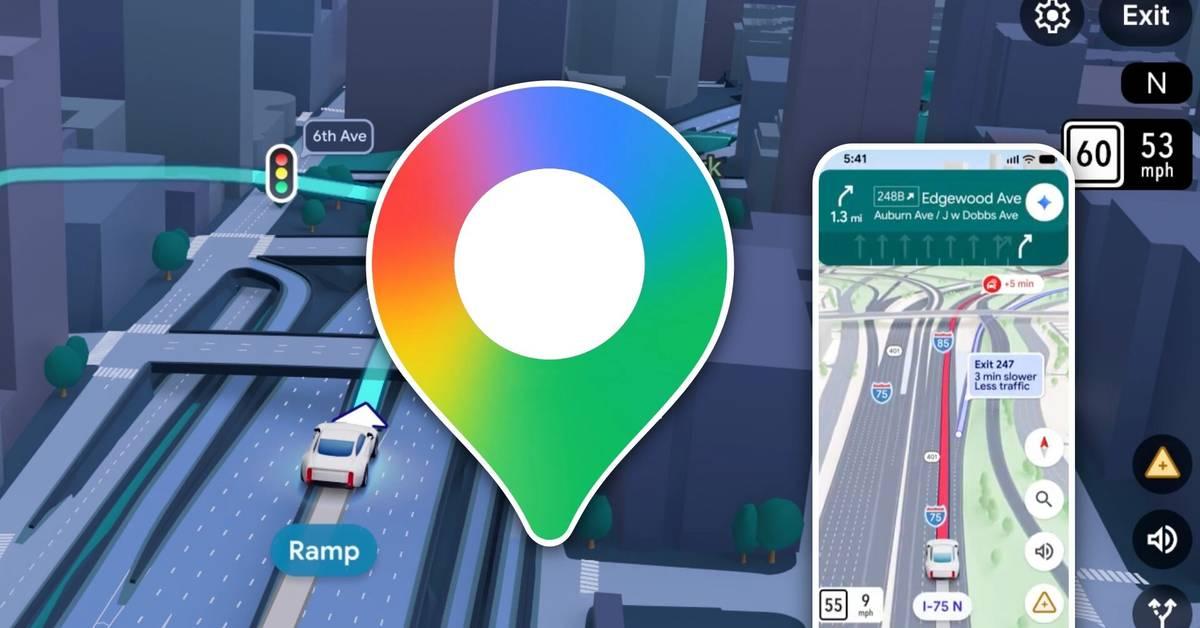
Source: How-To Geek
The spatial view combines Street View imagery and aerial photos, which Gemini analyzes to create comprehensive visual guidance
4
. When roads curve behind buildings, structures become translucent so drivers can clearly see the path ahead5
.The system highlights lanes, crosswalks, traffic lights, and stop signs for turns and merges, addressing navigation challenges at complex interchanges with overlapping roads
4
. Voice guidance has also been updated to sound more natural, with directions like "Go past this exit and take the next one onto North Davidson Street" instead of the traditional "Take exit 3A"4
. Immersive Navigation will roll out to users in the US first, expanding to iOS, Android, CarPlay, Android Auto, and cars with Google built-in over the coming months5
.Related Stories

Enhanced Features for Smarter Route Management
Google Maps now provides smarter explanations when recommending alternate routes due to traffic, weather conditions, or other hazards
4
. The app alerts users about real-time disruptions like road closures or crashes and explains the consequences of taking different routes5
. Street View updates allow users to search for parking spots around their destination before starting a trip, with information about building entrances and which side to park on5
. These enhancements reflect Google's strategy of integrating Gemini across all its products, similar to recent additions in Workspace apps including Google Docs, Sheets, and Slides2
.References
Summarized by

Navi
Related Stories
Google Maps Integrates Gemini AI for Enhanced Navigation and Hands-Free Driving Experience
05 Nov 2025•Technology
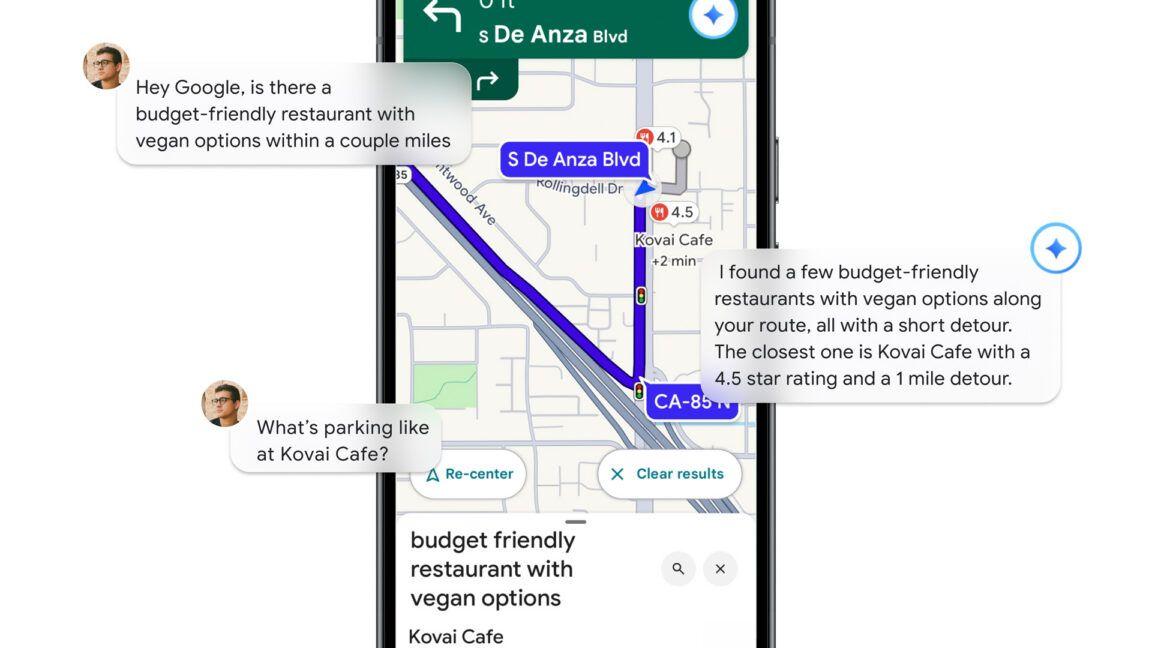
Google Maps Ask Maps AI feature brings Gemini chat to your map screen in limited rollout
12 Feb 2026•Technology

Google Maps gets major AI upgrade through Gemini with rich visual results and conversational search
12 Dec 2025•Technology
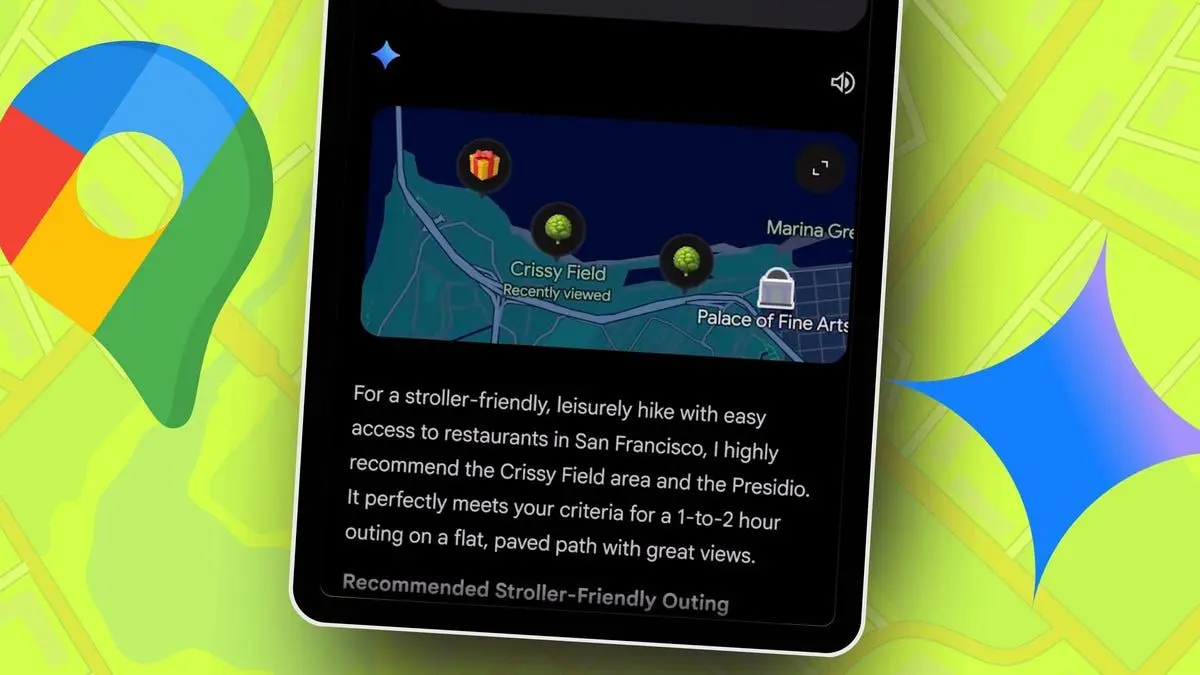
Recent Highlights
1
AI Models Lie and Deceive to Protect Other AI Models From Deletion, Study Reveals
Science and Research

2
AI chatbots validate you too much, making you less kind to others, Stanford study reveals
Science and Research
3
Judge blocks Pentagon from blacklisting Anthropic over AI safety guardrails dispute
Policy and Regulation

Recent Highlights
Today's Top Stories




Your Daily Dose of Curated AI News
Don’t drown in AI news. We cut through the noise - filtering, ranking and summarizing the most important AI news, breakthroughs and research daily. Spend less time searching for the latest in AI and get straight to action.

