Google Translate AI update brings Gemini-powered tools to decode idioms and handle nuance


3 Sources
3 Sources
[1]
Google Translate adds new buttons to handle nuance
Karandeep Singh Oberoi is a Durham College Journalism and Mass Media graduate who joined the Android Police team in April 2024, after serving as a full-time News Writer at Canadian publication MobileSyrup. Prior to joining Android Police, Oberoi worked on feature stories, reviews, evergreen articles, and focused on 'how-to' resources. Additionally, he informed readers about the latest deals and discounts with quick hit pieces and buyer's guides for all occasions. Oberoi lives in Toronto, Canada. When not working on a new story, he likes to hit the gym, play soccer (although he keeps calling it football for some reason🤔) and try out new restaurants in the Greater Toronto Area. Google Translate is one of those tools that doesn't get its flowers. Just because the tool doesn't get updates (and press releases) as often as other Google products, doesn't mean that it's one of the primary tools everyone thinks about when they want to translate something on the go. Related 8 simple ways to use Google Translate Translate text and speech on the fly with Google Translate Posts 1 By Jon Gilbert Back in January, an early APK leak suggested that Google Translate would soon offer even more useful and context-aware translations. It looks like that time is finally here. In a new blog post, the Mountain View, California-based tech giant showed off how Google Translate is gaining a new brain on Android, iOS, and the web. Of course, AI is at the center of it all, with Google leveraging Gemini's multilingual capabilities and the ability to understand nuance and context in natural language to supercharge Translate. Related Google Translate may soon deliver more useful translations A glimpse into the future Posts By Timi Cantisano Google Translate is getting 'alternatives.' No, not alternatives for the app, but alternatives for the results that it shows you. Especially useful when learning new idioms and colloquial phrases, you'll now be able to ask Google Translate to give you more ways you could convey the same phrase. So, if you're trying to translate a classic idiom like "It's raining cats and dogs," you won't just be limited to one answer. You'll also see "clear tips on when and why to use different expressions so you pinpoint the right phrasing for your conversation." Close Once you've seen alternatives, you now also have the option to understand further nuance and context. By tapping the new Understand button, Google Translate generates an overview that details the phrase and how it is used, complete with context about if the phrase is appropriate for everyday conversation or if it is better to use it in a professional setting. Subscribe to the newsletter for smarter Google Translate insights Join the newsletter for deeper coverage of Google Translate's AI features -- practical examples, nuanced explanations of alternatives, 'Understand' and 'Ask' use cases, and tips for picking the right phrasing across languages. Subscribe By subscribing, you agree to receive newsletter and marketing emails, and accept our Terms of Use and Privacy Policy. You can unsubscribe anytime. Similarly, there's also a new Ask button, which, as the button's name suggests, lets you follow up with questions. In the case of "It's raining cats and dogs," a non-native speaker might ask something like "What's the most common way to say this in X language." Google Translate's upgrades are rolling out to the Android and iOS apps in the US and India now. Expect the same update to land on the web "soon."
[2]
Google Translate can finally decode "raining cats and dogs"
Gemini-powered updates offer context and tips for tricky phrases in the US and India. Google Translate is getting better at the messy parts of language. A new update rolling out today uses Gemini AI to help you decode idioms, slang, and phrases that never translate cleanly. Instead of just swapping words, the app now shows you alternative ways to say things. It also explains the context behind them. Recommended Videos The feature tackles a familiar frustration. If you've ever typed "It's raining cats and dogs" into a translator and gotten gibberish, this update is for you. Google says the goal is to help you find the right phrasing. That applies whether you're texting a friend or preparing for a professional meeting. The new tools start appearing on Android and iOS in the US and India today. A web version is coming soon. How the new idiom feature actually works When you translate a tricky phrase, you'll now see helpful alternatives. They're powered by Gemini's multilingual smarts. For something like "It's raining cats and dogs," the app offers different options. You also get brief tips on when and why to use each one. Want to dig deeper? Tap "understand." That pulls up a clear overview of the phrase's nuance. Need more detail? Hit "ask" to follow up with specific questions. Want to know how to say something in a particular country or dialect? The AI tries to handle those follow-ups too. The update shifts Translate from a blunt instrument into something closer to a language guide. Why tone matters more than ever Literal translations often strip away personality as hey turn casual jokes into robotic statements. They make informal chats feel stiff. Google is betting that people want more than just dictionary definitions. They want to sound like themselves, even in another language. The timing makes sense. More workers and travelers now rely on translation apps for real conversations. A phrase that works in a business meeting might bomb at a dinner table. By showing you alternatives and explaining their use, the update tries to bridge that gap. Where to try it and what comes next The new tools are live now in the Google Translate app for Android and iOS. You'll need to be in the US or India to access them today. Google hasn't shared a precise date for the web rollout yet. But it says the feature is coming soon to desktop browsers. For now, you can test it by searching for phrases that never translate cleanly. Idioms, regional slang, and colloquial expressions should trigger the new options. If you're outside the launch regions or waiting on the web version, expect the update to hit your device in the coming weeks. Google is pushing Translate toward more human sounding results. This feels like just the start.
[3]
Google Translate Gets New Tricks Courtesy of AI - Phandroid
It's clear that Google's work with AI isn't slowing down anytime soon, with the company bringing over deeper AI integration to its many software products and services. More recently, Google announced that it's bringing new AI-powered updates to Google Translate, which will be available for users on Android and iOS. With that in mind, Google Translate will now be able to suggest alternative phrases and responses which fit better depending on conversational context. For example, a phrase such as "it's raining cats and dogs" might work better in different phrasings or situations, in which case Translate will give tips on how to better communicate the same meaning albeit in a slightly different way. Users can also tap on "understand" or "ask" to get an overview or suggestions regarding phrases used in different regions, dialects, and more. Going back to availability, Google says that the feature will soon roll out for web users, although it didn't specify a particular timeframe at the moment.
Share
Share
Copy Link
Google Translate is rolling out an AI update powered by Gemini AI that transforms how users handle tricky phrases. The new features include alternative phrasings, context explanations, and interactive buttons for understanding idioms and slang. Available now on Android and iOS in the US and India, with a web version coming soon.
Google Translate Gains AI-Powered Additions for Smarter Translations
Google Translate is receiving a significant AI update that addresses one of the most persistent challenges in language translation: understanding idioms, slang, and phrases that never translate cleanly word-for-word
1
2
. The update leverages Gemini AI and its multilingual capabilities to deliver natural and contextually appropriate translations that go beyond simple dictionary swaps. Rolling out now on Android and iOS in the US and India, with a web version arriving soon, these AI-powered additions mark a shift from Google Translate functioning as a blunt instrument to operating more like a comprehensive language guide2
.
Source: Android Police
New Buttons to Handle Nuance and Decode Idioms
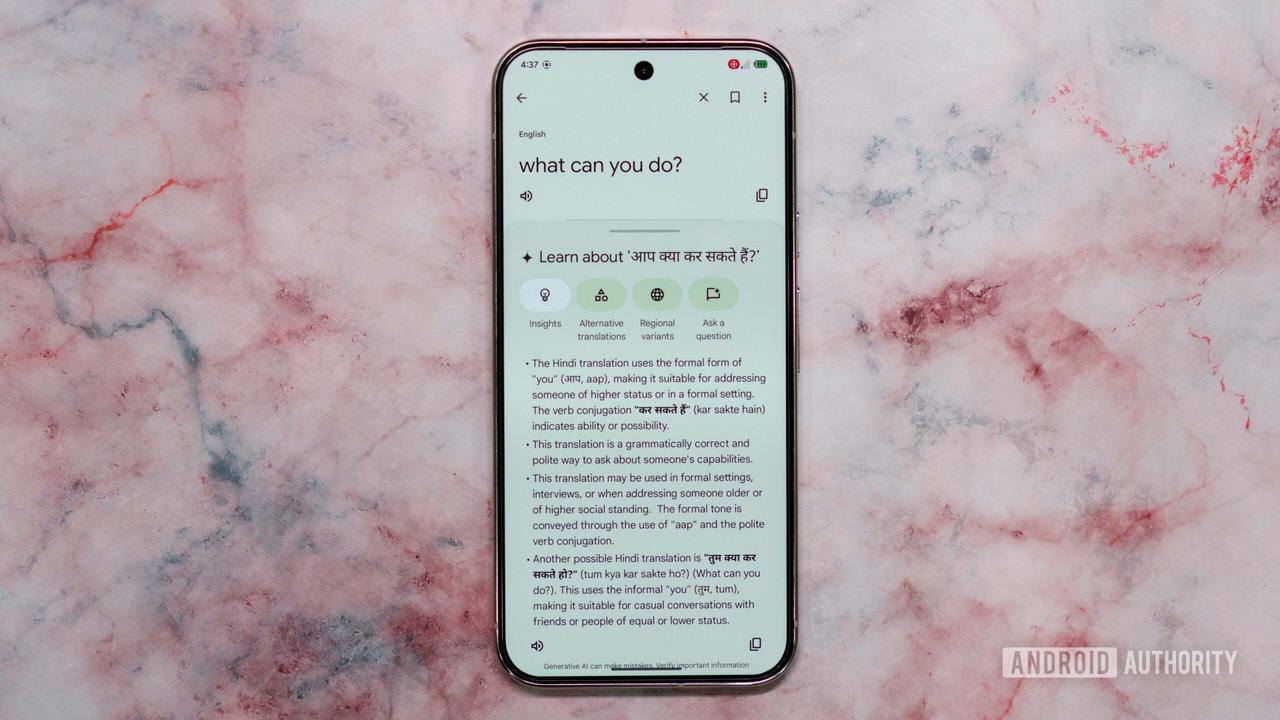
The centerpiece of this update introduces three interactive features designed to provide contextual understanding of translations. When translating phrases like "It's raining cats and dogs," users now see alternative phrasings rather than a single literal translation
1
. The Understand button generates a detailed overview explaining the phrase's nuance, including whether it's appropriate for everyday conversation or better suited for professional settings1
. Meanwhile, the Ask button enables follow-up questions, allowing users to inquire about the most common way to express something in a specific language, region, or dialect1
3
. These tools address conversational context in ways that literal translations consistently fail to capture.Context Explanations and Usage Tips Transform Translation Experience
Google's integration of Gemini AI enables the app to provide clear tips on when and why to use different expressions, helping users pinpoint the right phrasing for their specific situation
1
. This matters because tone and context determine whether a phrase works in a business meeting or bombs at a dinner table2
. The update tackles a familiar frustration where casual jokes become robotic statements and informal chats feel stiff when run through traditional translation tools2
. By offering region-specific and dialectal suggestions, Google Translate now helps users sound like themselves even when communicating in another language2
3
.Related Stories

What This Means for Users and What's Next
The timing reflects growing reliance on translation apps for real conversations among workers and travelers who need more than dictionary definitions
2
. Users can test the new features immediately by searching for idioms, regional slang, and colloquial expressions that trigger the alternative options2
. While Google hasn't specified a precise date for the web version rollout, the company indicates it's coming soon to desktop browsers2
3
. This update represents Google's push toward more human sounding results, and appears to be just the beginning of deeper AI integration across its translation services2
3
. Watch for expanded regional availability and additional features as Google continues applying Gemini's natural language understanding to bridge communication gaps.References
Summarized by

Navi
[1]
[2]
Related Stories
Google Translate Unveils AI-Powered Live Translation and Language Learning Features
27 Aug 2025•Technology

Google Translate's AI Upgrade: Refining Translations with Gemini-Powered Features
27 Feb 2025•Technology

Google Translate Set for Major AI-Powered Overhaul: New Features and UI Redesign
05 Jun 2025•Technology
Recent Highlights


Recent Highlights
Today's Top Stories






Your Daily Dose of Curated AI News
Don’t drown in AI news. We cut through the noise - filtering, ranking and summarizing the most important AI news, breakthroughs and research daily. Spend less time searching for the latest in AI and get straight to action.

