Google Veo 3.1 now generates vertical videos from reference images with 4K upscaling


14 Sources
14 Sources
[1]
Google's updated Veo model can make vertical videos from reference images with 4K upscaling
Google's Veo video AI made stunning leaps in fidelity in 2025, and Google isn't stopping in 2026. The company has announced an update for Veo 3.1 that adds new capabilities when you provide the model with reference material, known as Ingredients to Video. The results should be more consistent, and output supports vertical video and higher-resolution upscaling. With Ingredients to Video, you can provide the AI with up to three images to incorporate into the generated video. You can use that to provide the robot with characters to animate, backgrounds, and material textures. When you do that, the newly upgraded model will allegedly make fewer random alterations, hemming closer to the reference images. You can also generate multiple clips and even prompt for changes to the setting or style while keeping other elements consistent. Google is also expanding its support for mobile-first video in Veo. When using Ingredients to Video, you can now specify outputs in a 9:16 (vertical) ratio. That makes it ideal for posting on social apps like Instagram or TikTok, as well as uploading as a YouTube Short. So get ready for even more phone-centric slop. Google added support for vertical videos via a text prompt last year. Enhanced support for Ingredients to Video and the associated vertical outputs are live in the Gemini app today, as well as in YouTube Shorts and the YouTube Create app, fulfilling a promise initially made last summer. Veo videos are short -- just eight seconds long for each prompt. It would be tedious to assemble those into a longer video, but Veo is perfect for the Shorts format. The new Veo 3.1 update also adds an option for higher-resolution video. The model now supports both 1080p and 4K outputs. Google debuted 1080p support last year, but it's mentioning that option again today, suggesting there may be some quality difference. 4K support is new, but neither 1080p nor 4K outputs are native. Veo creates everything in 720p resolution, but it can be upscaled "for high-fidelity production workflows," according to Google. We are rushing headlong into a world where AI video is essentially indistinguishable from real life. Google, which more or less controls online video via YouTube's dominance, is at the forefront of that change. Today's update is reasonably significant, and it didn't even warrant a version number change. Perhaps we can expect more 2025-style leaps in video quality this year, for better or worse.
[2]
Google's update for Veo 3.1 lets users create vertical videos through reference images | TechCrunch
Google on Tuesday updated its Veo 3.1 AI video generation model with the ability to create native vertical videos for social platforms using reference images. The changes will also make the videos generated from reference images more expressive and dynamic. When producing AI-generated videos for YouTube Shorts or other platforms like Instagram or TikTok, Veo users can now natively choose the 9:16 vertical format to avoid any cropping. Google is also adding the feature directly to the YouTube Shorts and the YouTube Create app. Google first released Veo 3.1 in October 2025 with improved audio output and more granular editing controls compared to previous versions. When you provide reference images, Veo 3.1 now generates videos with better character expressions and movements, even if your prompts are shorter. Google said the update also improves character, object, and background consistency. What's more, users can blend various characters, backgrounds, objects, and textures to create a cohesive output. Users can access these features directly in the Gemini app. Professional users can access them through Google's video editor Flow, the Gemini API, Vertex AI, and Google Vids. The new update also brings an improved upscaling feature to 1080p and 4K resolutions, which is available on Flow, Gemini API, and Vertex AI in Google Cloud.
[3]
Google's Veo now turns portrait images into vertical AI videos
Google is making its Veo 3.1 AI video model pay closer attention to the reference images you want generated clips to be based on. The company is releasing new visual improvements for the "Ingredients to Video" tool that was introduced last year, alongside expanding native vertical video support and resolution upscaling features. The Ingredients to Video tool allows Veo users to generate videos based on up to three reference images, pulling in materials like character subjects, backgrounds, and textures to have more control over how the results will look. Google says this update will make videos "more expressive and creative," and provide "richer dialogue and storytelling." There are also consistency improvements that should be more perceptible -- Veo 3.1 should now ensure a character looks the same across different clips and environments, and will let users reuse objects, backgrounds, and textures across scenes.
[4]
Google Veo 3.1 Now Generates Vertical Videos Based on Reference Images
After rolling out text-based vertical video generation in Veo last year, Google is now expanding the feature by letting it draw inspiration from reference images. With an update to Veo 3.1's Ingredients to Video tool, Google now allows users to upload up to three portrait reference images. Veo then blends the characters, objects, and backgrounds from those images into "a cohesive, high-impact clip," Google says. The update also brings greater consistency to characters. They remain visually coherent even as the setting changes throughout the clip, Google notes. Another major change is native support for a 9:16 aspect ratio. Users can now select the vertical format in Veo and upload outputs directly to YouTube Shorts or TikTok without cropping or compressing. Users can also upscale their videos to a 4K resolution when the previous limit was 1080p. All of these Veo improvements are now rolling out to the Gemini mobile app. Google is also making them available in YouTube Shorts and the YouTube Create app for the first time. Professional and enterprise users, meanwhile, can use these features in Flow, Gemini API, Vertex AI, and Google Vids. The upgraded capabilities could mean more AI slop in YouTube Shorts and similar platforms. A recent study found that nearly 21% of the Shorts we see are AI-generated. If you want to remove Shorts from YouTube search results, you can make use of the platform's new content filters. To check whether a video you received was generated using Google's own AI tools, you can upload the clip to Gemini and ask it to verify it.
[5]

Google Veo 3.1 will generate social-ready vertical videos in Gemini
Google Gemini -- the tech giant's generative AI video model -- is launching the ability to generate social media-ready vertical video. That's all well and good, but it raises the question: Does that mean even more AI slop? Google Veo is widely regarded as the leading AI video model (different versions of Veo claim the top four spots on LMArena's text-to-video leaderboard), so the answer is almost certainly yes. Google announced this week that Veo 3.1 -- the latest version of Gemini's text-to-video generator -- could now generate "social-ready 9:16 videos directly." In other words, the videos are generated with the vertical, scroll-ready format that you see on TikTok, YouTube Shorts, and Instagram Reels. "Designed for mobile-first applications, this mode delivers faster results and optimized composition by generating full-frame vertical video rather than cropping from landscape," read a statement from Google. The online world is increasingly populated by AI-generated vertical video, some of which is the much-maligned slop. Meta, for instance, launched Vibes, a social site entirely dedicated to generating and scrolling AI videos. AI critics call it an "infinite slop machine." It tracks that Google would give users the ability to generate social-ready video -- people want it -- but it might not make your scrolling experience any better.
[6]

Google's Veo just got better at making videos for your social feeds
Google DeepMind's impressive video generation tool Veo just picked up an update, bringing a long-awaited feature to users. The tool now supports native vertical video output, making it ideal for creating content for Instagram Reels, YouTube Shorts, and TikTok. In its announcement, Google notes that Veo now lets users generate videos in a 9:16 aspect ratio, eliminating the need to crop or reframe clips for vertical-first platforms. To create portrait videos, users only need to upload a vertical image and Veo will maintain the aspect ratio and orientation. The update also brings improvements to the tool's Ingredients to Video capabilities, allowing it to make videos "more expressive and creative, even with simple prompts." Identity consistency has also been upgraded in the latest Veo 3.1 release, with generated characters now looking the same even when the setting changes. Google says this makes it easier for creators to tell a full narrative "by having the same character appear across multiple scenes." Additionally, the tool now maintains the integrity of the setting and objects within it, and lets users reuse objects, backgrounds, or textures across different scenes. Creators can now upscale videos to 1080p and 4K Google adds that Veo now also has the capability to combine different elements, such as characters, objects, textures, and stylized backgrounds, to create more cohesive videos. For creators who require high-resolution clips for their projects, the tool has also picked up support for upscaling to 1080p and 4K. Recommended Videos The update is already rolling out, and users can try the portrait mode and Ingredients to Video enhancements in the Gemini app. These features are also coming to Flow, the Gemini API, Vertex AI, and Google Vids. However, the 1080p and 4K resolution upscaling options are currently limited to Flow, the Gemini API, and Vertex AI.
[7]

Veo 3.1 Ingredients to Video: More consistency, creativity and control
This content is generated by Google AI. Generative AI is experimental Today, Veo is getting more expressive, with improvements that help you create more fun, creative, high-quality videos based on ingredient images, built directly for the mobile format. We're excited to bring new creative possibilities for everyone from casual storytellers to professional filmmakers. We're releasing: Whether you are looking for livelier movement, better control over visual elements or broadcast-ready resolution, these updates give you the tools to bring your vision to life. These updates are launching in the Gemini app, YouTube, Flow, Google Vids, the Gemini API and Vertex AI.
[8]
Enhanced Veo 3.1 capabilities are now available in the Gemini API.
Today, we are releasing updates to Veo 3.1 in the Gemini API and Google AI Studio, giving developers greater creative control and production-ready quality. * Enhanced Ingredients to Video: The updated model intelligently synthesizes your inputs to preserve character identity and background details, ensuring your characters and settings remain consistent across videos. * Native Vertical Format Videos for Ingredients to Video (Portrait Mode): Generate social-ready 9:16 videos directly. Designed for mobile-first applications, this mode delivers faster results and optimized composition by generating full-frame vertical video rather than cropping from landscape. * New 4K and Improved 1080p definition: Unlock professional fidelity directly within your workflow. Using state-of-the-art enhancement techniques, the model now outputs clearer, crisp 1080p and creates stunning 4K videos suitable for the big screen. These capabilities, along with our SynthID digital watermark, are available today in the Gemini API and Vertex AI for enterprises. See this in action via the Google AI Studio demo app.
[9]

Google upgrades Veo 3.1 with native vertical video generation
Google updated its Veo 3.1 AI video-generation model Tuesday, enabling native vertical video creation for social platforms using reference images and enhancing expressiveness and dynamism in generated content. Veo users can now select a 9:16 vertical format for AI-generated videos, eliminating cropping for platforms such as YouTube Shorts, Instagram, and TikTok. Google has integrated this feature directly into the YouTube Shorts and YouTube Create applications. The Veo 3.1 update also improves character expressions and movements from reference images, even with shorter prompts. Google said the update enhances character, object, and background consistency, allowing users to blend various elements for cohesive outputs. Google first released Veo 3.1 in October 2025, which included better audio output and more granular editing controls. Users can access the new features through the Gemini app. Professional users can utilize Google's video editor Flow, the Gemini API, Vertex AI, and Google Vids. The latest update also introduces an improved upscaling feature, supporting 1080p and 4K resolutions, available via Flow, Gemini API, and Vertex AI in Google Cloud.
[10]

Google Unveils New AI-Powered Editing Features for Veo 3.1 - Phandroid
If the past couple of years are any indication, you could definitely say that AI has moved on from becoming the latest marketing buzzword to something that's found on nearly everything these days. That in mind, Google recently announced a major update to its Veo 3.1 video generation model, which brings over some new features. Google says that it's bringing more expressive "Ingredients to Video" capabilities for content creation, which allows users to transform reference images into high-quality clips with improved character and background consistency across different scenes. This allows for more cohesive sequences even when using simple text prompts. The update also comes with native vertical outputs, which lets users create 9:16 portrait-mode content. Veo 3.1 will also support upscaling to 1080p and 4K resolutions for sharper and clearer image quality. For transparency, all generated videos will include imperceptible SynthID watermarks, and users can now verify Google-generated video content directly within the Gemini app. The updates will arrive for the Gemini app, YouTube, Flow, and Google Vids. While creators can access these tools through the YouTube Create app and Gemini, enterprise users can use the Gemini API and Vertex AI for high-resolution production.
[11]

Google's Veo 3.1 Can Now Create Instagram Reels-Style Vertical Videos
Google says referenced videos will show higher character consistency Google upgraded its Veo 3.1 artificial intelligence (AI) model with new capabilities and improved instruction following on Tuesday. In particular, the Mountain View-based tech giant is improving the "Ingredients to Video" feature, which lets users add one or more reference images to generate videos based on them. The company says that after the update, users will notice higher character and background consistency, while making it easier to get the desired output without having to type long, detailed prompts. However, the biggest addition is the native support for vertical videos that can be uploaded as YouTube Shorts or Instagram Reels. Google Upgrades Veo 3.1 AI Model In a blog post, the tech giant announced and detailed the changes made to its latest video generation model. These improvements now bring the AI model closer to Sora 2, which grew popular after OpenAI released it within the new Sora app. OpenAI's main focus was on character consistency and prompt adherence while using reference images or videos, and that is exactly where Google's update focuses. Veo 3.1 comes with a feature dubbed "Ingredients to Video." It is essentially the capability that allows users to generate an image-to-video with an additional text prompt for guidance. Users can upload one or more images and instruct the AI model to use them in the narrative of the generated video. Google says that several aspects of this feature have now been improved. Google says Veo 3.1 can better understand prompts, eliminating the need to write long and detailed instructions. Now, even with short prompts, the AI model can generate videos with "richer dialogue and storytelling." In an example, the prompt "Documentary style, a raccoon manages a coffee shop, dialogue" and an image of the said raccoon generated a cinematic video of the animal sitting behind the counter of a coffee shop and interacting with customers. The update also improves the character consistency, meaning no matter the setting or the prompt, the character's appearance and facial details will not change and remain the same throughout the video. This feature is also helpful when a user wishes to stitch together multiple videos with the same character to create a longer story. Additionally, the AI model offers a similar level of consistency to the setting and the objects placed in a scene. Google says this will allow users to reuse an object, background, or texture across scenes. Veo 3.1 also allows combining disparate elements into a cohesive clip, offering more creative freedom. More importantly, with native support for the 9:16 aspect ratio, users can directly upload a generated clip to YouTube Shorts, Instagram Reels, or TikTok without having to worry about cropping or loss of quality. Further, the company is also improving the 1080p resolution quality and adding a new 4K resolution upscaling to let users export the output for larger screens. Veo 3.1's Ingredient to Videos feature is now rolling out to YouTube Shorts and the YouTube Create app. It is also available in the Gemini app for end users. For enterprises and developers, the AI model is available in the Flow app, the Gemini application programming interface (API), Vertex AI, and Google Vids. However, the latter does not support 1080 or 4K video resolution.
[12]

Google expands Veo 3.1 with native 9:16 video, improved 1080p and 4K output, and Gemini API support
Google has released updates to Veo 3.1, enhancing its Ingredients to Video feature with improved visual consistency, native vertical video generation, and higher-resolution output options. The update applies across consumer products and developer platforms, supporting both mobile-first creation and professional video workflows. Veo 3.1 continues to generate videos from reference images, with improved handling of motion, dialogue, and scene flow, even when prompts are brief. The model now produces more coherent and visually consistent clips. Character identity is better preserved across scenes and environments. A character can now appear in multiple clips while maintaining consistent visual traits, supporting longer and multi-scene narratives. Backgrounds, objects, textures, and environments can remain consistent across scenes. Creators can reuse visual elements and maintain scene integrity throughout a sequence. Characters, objects, textures, and stylized backgrounds can be combined more cohesively within a single clip, reducing visual mismatches between elements. Ingredients to Video now supports native portrait (9:16) output. Videos are generated directly in a vertical format instead of being cropped from landscape, improving composition and visual accuracy for mobile and short-form platforms. Veo 3.1 introduces improved 1080p output and adds support for 4K video generation using state-of-the-art upscaling techniques. The updated 1080p output is suited for editing workflows, while 4K output targets large-screen and professional use cases. Videos generated using Google's tools include SynthID, an imperceptible digital watermark used to identify AI-generated content. Video verification has also been added to the Gemini app, allowing users to upload a video and check whether it was generated using Google AI.
[13]

How to Create Vertical Videos from Images Using Google Veo
Google Veo streamlines the conversion process and enables you to publish content on Shorts, Reels, and social-first platforms. Online users mostly consume information in the form of vertical videos. From Instagram Reels to YouTube Shorts, portrait-first clips dominate how people watch, scroll, and share content. Google is monetizing this trend with its latest AI video model, Google Veo. The tool allows users to convert still images into short vertical videos with minimal effort. Veo's image-to-video capability targets creators who want speed and consistency rather than cinematic perfection. The pitch is simple: upload an image, describe the motion you want, and let AI handle the rest.
[14]
Google Veo 3.1 Update Brings Easy Vertical AI Video Creation for Social Media
Google Veo 3.1 Boosts AI Video Creation With Character Motion, Expressions, and Multi-Image Guidance for Creators Google takes a leap forward in AI video creation with its latest Veo 3.1 update. The new version makes it easy to create social media videos. Users can now make vertical video content using reference images. This upgrade fits perfectly with today's mobile-first viewing habits. Short videos trend on social platforms. Apps like YouTube Shorts, Instagram Reels, and TikTok depend on the vertical 9:16 format. Previously, creators often faced cropping issues, and horizontal videos lost key details on mobile screens. With Veo 3.1, one can now choose a vertical format from the start and create videos that appear clean and natural on phones.
Share
Share
Copy Link
Google updated its Veo 3.1 AI video generation model to create native vertical videos using reference images, targeting social platforms like YouTube Shorts and TikTok. The update enhances character consistency across clips and adds 4K upscaling capabilities. Users can now upload up to three images to guide video creation in the 9:16 aspect ratio, eliminating the need for cropping.
Google Veo Expands Capabilities for Social Media Content Creation
Google has rolled out a significant update to Veo 3.1, its AI video generation model, introducing native support for vertical videos created from reference images. The enhancement targets creators making content for mobile-first platforms like YouTube Shorts, TikTok, and Instagram Reels
1
2
. The update focuses on the Ingredients to Video tool, which allows users to upload up to three reference images that the model incorporates into generated clips4
. Users can now specify outputs in a 9:16 aspect ratio, delivering full-frame vertical video rather than cropping from landscape format5
. Google Veo currently holds the top four spots on LMArena's text-to-video leaderboard, cementing its position as a leading generative AI tool5
.
Source: Analytics Insight
Enhanced Character Consistency and Creative Control
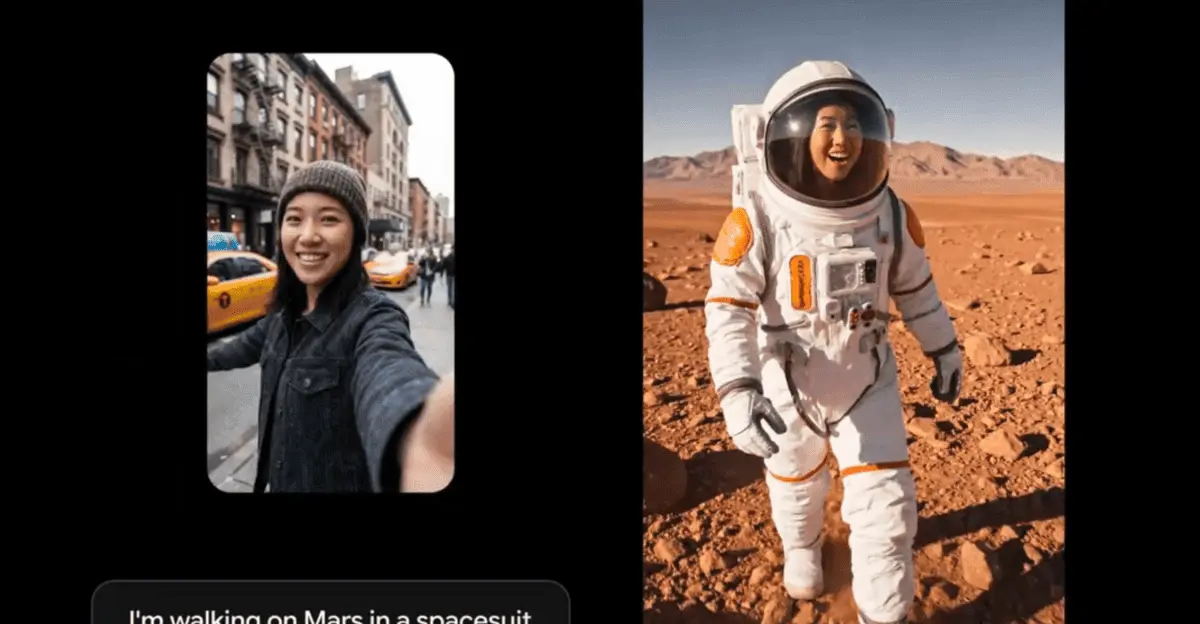
The updated Ingredients to Video feature delivers improved character consistency across different clips and environments. When users provide reference images, Veo 3.1 now generates videos with better character expressions and movements, even with shorter prompts
2
. Google states the update makes videos "more expressive and creative" while providing "richer dialogue and storytelling"3
. Users can blend various characters, backgrounds, objects, and textures to create cohesive outputs, with the model making fewer random alterations and staying closer to the reference material1
. The tool enables creators to generate multiple clips while prompting for changes to setting or style while maintaining other elements consistent throughout scenes1
.
Source: The Verge
4K Upscaling and Platform Integration
Google Veo now supports 4K upscaling alongside existing 1080p options, though neither resolution is native. The model creates everything in 720p resolution before upscaling "for high-fidelity production workflows"
1
. These upscaling features are available through Flow, Gemini API, and Vertex AI in Google Cloud2
. The enhanced capabilities are now live in the Gemini app, YouTube Shorts, and the YouTube Create app, fulfilling promises made last summer1
. Professional and enterprise users can access these features through Google Vids and other professional tools4
. Veo videos remain eight seconds long per prompt, making them ideal for the Shorts format rather than longer productions1
.
Source: Mashable
Related Stories


Implications for Content Creators and Social Platforms
The update arrives as concerns mount about AI slop flooding social platforms. A recent study found that nearly 21% of YouTube Shorts are AI-generated
4
. The ability to generate social-ready 9:16 videos directly could accelerate this trend, particularly as Google controls online video through YouTube's dominance1
. Users wanting to verify whether videos were created using Google's AI tools can upload clips to Gemini for verification4
. The update represents a significant shift toward AI video becoming essentially indistinguishable from real footage, with Google positioned at the forefront of this transformation1
. As the technology continues advancing, creators and platforms face questions about authenticity, content quality, and the balance between accessibility and oversaturation in mobile-first video ecosystems.References
Summarized by

Navi
[1]
[2]
Related Stories
Recent Highlights


Recent Highlights
Today's Top Stories






Your Daily Dose of Curated AI News
Don’t drown in AI news. We cut through the noise - filtering, ranking and summarizing the most important AI news, breakthroughs and research daily. Spend less time searching for the latest in AI and get straight to action.

