Dan Houser warns AI is like mad cow disease as models risk eating themselves


5 Sources
5 Sources
[1]
Rockstar Cofounder Says AI Is Like When Factory Farms Did Cannibalism and Caused Mad Cow Disease
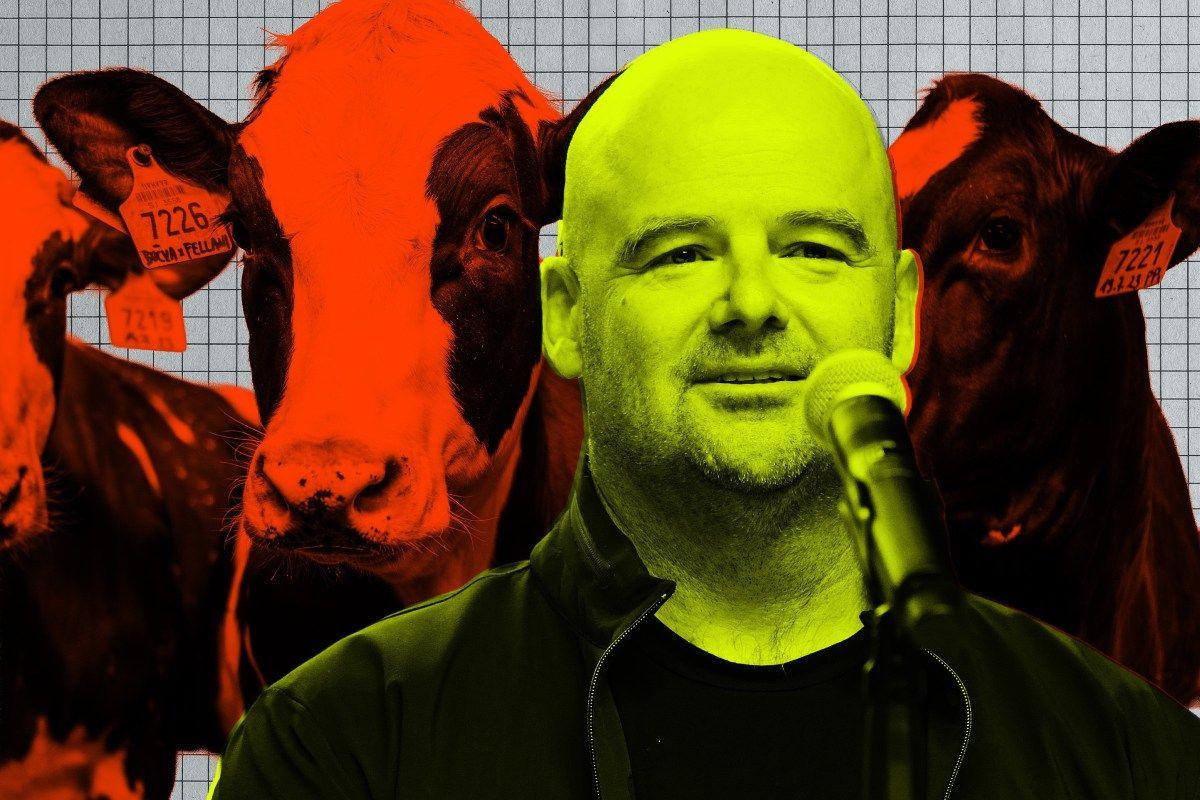
"So it's sort of like when we fed cows with cows and got mad cow disease." Dan Houser, the cofounder of Grand Theft Auto publisher Rockstar Games, cast AI in gruesome terms last week by likening it to when farmers in the United Kingdom inadvertently spread bovine spongiform encephalopathy -- commonly known as mad cow disease -- by feeding meal tainted with the flesh of diseased cows to healthy heifers. "AI is going to eventually eat itself," said Houser during an interview last week at the "Chris Evans Breakfast Show" on Virgin Radio UK while promoting his science fiction novel "A Better Paradise." "The [AI] models scour the internet for information, but the internet's going to get more and more full of information made by the models. So it's sort of like when we fed cows with cows and got mad cow disease." Houser's pointed remarks are striking in the context of the larger video game industry, where huge numbers of workers have been laid off while CEOs have gone full hog into AI to cut cost, boost profits, and capture the next generation of gamers; case in point, Tim Sweeney, CEO at Epic Games -- which makes the smash hit Fortnite -- has bet big on AI and even became publicly irate that gaming platform Steam is labeling games that contain AI-generated assets. But it's uncertain what the future will look like for an AI-driven gaming industry, and if the most optimistic predictions that it'll enable dynamic and immersive new types of storytelling will pan out; others are doubtful, expressing fears that the quality of games will suffer and lose an element of the human touch, becoming soulless objects with janky environments inhabited by twitchy NPCs. That's what Houser fears: a scenario that mixes together dead internet theory -- the notion that the internet is full of AI bots and AI-generated content -- and the idea of model collapse, which is when AI models trained on AI-generated content start to degrade in quality. Both could lead to an internet that gets eaten inside out -- which isn't too different from what happens when a cow catches mad cow disease, and starts acting weirdly and losing bodily functions before ultimately dying. And we haven't even mentioned the possible legal and ethical questions that the tech could invoke in gaming -- like an AI-powered NPC in a video game encouraging a user to kill themselves, which sounds like science fiction but has happened numerous times with consumer-facing chatbots like OpenAI's ChatGPT. Strauss Zelnick, the CEO of Take Two Interactive -- the parent company of Rockstar, which Houser left in 2020 -- took a skeptical tone on AI last year, saying he doubts the tech is "going to make things cheaper, quicker, better, or easier to make hits" and that it should be treated as a tool with the human developer as the ultimate arbiter. "The machines can't make the creative decisions for you," he said. That echoes Houser's view, even with his pessimistic opinions about AI eating up the world; he admitted in an earlier interview with the UK's Channel 4 "Sunday Brunch" show that his new firm Absurd Ventures is "dabbling in using AI." But in that interview and the one with Virgin Radio UK, Houser cautions that AI isn't the magic wand that its most ardent proponents claim, and is only useful for certain, narrowly defined tasks. "The truth is a lot of it's not as useful as some of the companies would have you believe yet," he said on Channel 4. "It's not going to solve all of the problems."
[2]
'Mad Cow Disease': Grand Theft Auto Dev Warns That Generative AI Could Harm Games - Decrypt
Houser said he "couldn't see how the information gets better" as studios adopt tools built on increasingly self-referential datasets. Rockstar Games co-founder Dan Houser -- one of the key figures who helped propel the popular Grand Theft Auto franchise -- delivered a stark warning about the direction of generative AI in video games, arguing that models trained on synthetic data will eventually degrade quality across the industry. Speaking on Virgin Radio UK, Houser said AI models that are scraping an internet increasingly populated with AI-generated content risk pushing the medium toward a recursive loop and collapse in quality. "As far as I understand it, which is a really superficial understanding, the models scour the internet for information, but the internet's going to get more and more full of information made by the models," Houser said. "So it's sort of like when we fed cows with cows, and got mad cow disease." His comments come as generative AI increasingly becomes a part of video game development. A recent Google Cloud survey of 615 developers found that nearly nine in ten studios already use AI agents somewhere in their pipelines, with many saying those agents now influence live gameplay through real-time NPC behavior, tutorials, and automated testing. Experts, including Google CEO Sundar Pichai, argue that as original human-made material becomes harder to find online, development will struggle, and AI models will be forced to train on synthetic data produced by other models. That loop, Houser said, will eventually cause the information to degrade. "I can't see how the information gets better if there's not... they were already running out of data," Houser said. "Algorithms will become saturated by the definition of how they are sourced and how they are therefore constructed, and it's going to become this sort of mirror of itself." He also took a dig at executives pushing generative AI, suggesting that they "maybe aren't fully-rounded humans." Houser left Rockstar Games in 2020 after more than two decades shaping blockbuster franchises like Grand Theft Auto, Red Dead Redemption, and Max Payne. While Houser warned about the risk of quality information drying up online, developers are using AI to speed up production, with teams relying on agents for coding, localization, playtesting, and real-time NPC behavior. Small studios said AI helped them compete, while larger publishers struggled to adapt. "If you're not on the AI bandwagon right now, you're already behind," Kelsey Falter, CEO and co-founder of indie studio Mother Games, recently told Decrypt. Jack Buser, global games director at Google Cloud, warned that studios that are unable to adapt may not survive the shift. "Some of these game companies are going to make it, and some of them are not," Buser told Decrypt. "And some are going to be born through this revolution." Major publishers like Ubisoft, Square Enix, Electronic Arts, and Krafton have recently announced major generative AI pushes, including integrating AI-powered tools and revealing experimental game projects. Such moves have come following widespread layoffs across the video game industry over the last couple of years. Despite his warning, Houser said he still found the technology fascinating. "I'm slightly obsessed by the fact that when you search for the same thing again, it doesn't give you the same answer," he said. "It's wrong a lot of the time, but it says it so confidently."
[3]
Rockstar co-founder Dan Houser warns of "mad cow disease" in AI
Few issues are more polarising in today's world than the use or rejection of AI in everyday life, ranging from code optimisation to the direct replacement of jobs and creative projects. The lack of regulation and the disproportionate advance we are experiencing every day seems like a snowball rolling down the mountainside. And a voice as relevant as Rockstar co-founder and creator of Grand Theft Auto and Red Dead Redemption II, Dan Houser, believes that if we don't start to curb its use and keep creative humans in the equation, the entire AI industry could suffer from a mad cow disease. A little context, if you're too young to understand the metaphor. Bovine spongiform encephalopathy (or mad cow disease) was a degenerative disease caused by feeding cows feed made from the animal parts of other cows. The disease attacked the cows' brains, and was then transmitted to people by eating meat from sick animals. It caused an unprecedented health crisis in the UK in the mid-1980s and 1990s. Dan Houser argues that the people who currently control the business of AI and its advancement are not very creative people: "Some of these people who are trying to define the future of humanity, creativity or whatever through AI, are not the most humane or creative people. So, in a way, they say, 'We are better humans than you are'. Obviously, that's not true." AI will eventually devour itself... as far as I know - and it's quite superficial - models search for information on the internet, but the internet will be increasingly filled with information generated by models. It's like when we fed cows to cows, and we got mad cow disease. Do you think the internet will end up oversaturated with AIs feeding off each other and going into decline, self-destructing their industry altogether?
[4]
Dan Houser Calls Those Pushing for More GenAI Use "Not The Most Humane or Creative People"
Rockstar co-founder and one of the most instrumental creatives behind series like Grand Theft Auto and Red Dead Redemption, Dan Houser, has had a lot to say about generative AI lately. As Houser continues to participate in interviews as part of promoting his new book, A Better Paradise Volume One: An Aftermath, his latest comments on generative AI are not aimed at the technology itself, but at the people pushing for its use in all situations. Speaking to The Chris Evans Breakfast Show on Virgin Radio UK (spotted by VGC), when Houser was asked about generative AI, he agreed that it would never be able to replace human creativity, as he's said before, and further added, "Some of these people trying to define the future of humanity, creativity, or whatever it is using AI are not the most humane or creative people." "They're sort of saying, 'we're better at being human than you are,' and it's obviously not true. One of the other things we're trying to capture is that humanity is being pulled in a direction by a certain group of people who maybe aren't fully rounded humans." Evans followed up by asking if Houser believes that generative AI, in its current state and in the future, will be the massive success that executives who are pushing for its use believe it will be. "As far as I understand it, I personally don't think it will," Houser began. "Because I think AI is eventually going to eat itself, because as I understand it - which is really a superficial understanding - the models scour the internet for information, but the internet's going to get more and more full of information made by the models, so it's sort of like when we fed cows with cows and got mad cow disease. I can't see how the information gets better if they're already running out of data. It will do some tasks brilliantly, but it's not going to do every task brilliantly." Recently, Houser said that he's "less scared than a lot of people," with regard to the question of generative AI technology replacing humans, particularly in creative roles. "I think you're going to end up with a lot of work that looks the same. It's going to help people be creative in some ways. It's going to get some people who probably shouldn't be in that space out of that space. But if you've got talent, I think it'll be fine. I don't think they're going to come up with magic. I think they're going to be fantastic at coming up with really cheap, decent stuff."
[5]

Rockstar Co-Founder and Former GTA Writer Dan Houser Says AI Is 'Like When We Fed Cows With Cows and Got Mad Cow Disease' - IGN
Rockstar co-founder and former Grand Theft Auto writer Dan Houser has likened AI to mad cow disease, and claimed that humanity is being pulled in a direction "by a certain group of people who maybe aren't fully rounded humans." The impact of AI has been swift and forceful, with the emergence of tech such as ChatGPT fueling an economic bubble some worry will burst. The way the internet works is being reshaped, too, with the idea of fair use of content for the training of AI models at loggerheads with copyright protection. This has resulted in ongoing lawsuits. Disney and Universal, for example, have sued the AI image creator Midjourney, alleging that the company improperly used and distributed AI-generated characters from their movies. Disney also sent a cease and desist letter to Character.AI, warning the startup to stop using its copyrighted characters without authorization. Enter Dan Houser, who left Rockstar in 2020 to found Absurd Ventures having worked on pretty much all the studio's games up to that point. His new novel, A Better Paradise, is a story that revolves around AI, and so it stands to reason that he would be asked about the tech in a recent interview with Virgin Radio UK. It's fair to say Houser is sceptical about the future of AI. "Some of these people trying to define the future of humanity, creativity or whatever it is, using AI, are not the most humane or creative people," he said. "So they're sort of saying we're better at being human than you are. And it's obviously not true. "That is one of the other things we're trying to capture, that humanity is being pulled in a direction by a certain group of people who maybe aren't fully rounded humans." He continued: "I think that AI is going to eventually eat itself. As far as I understand it, which is really superficial understanding, the models scour the internet for information, but the internet's going to get more and more full of information made by the models. So it's sort of like when we fed cows with cows and got mad cow disease. "I can't see how the information is going to get better. They're already running out of data. It will do some tasks brilliantly but it's not going to do every task brilliantly. It's going to become this sort of mirror of itself. "I'm slightly obsessed by the fact that when you search for the same thing again, it doesn't give you the same answers. And it's wrong a lot of the time, but it says it so confidently." Houser is talking here about what happens when AI models start training on their own output, which experts say puts them at risk of collapsing. The Large Language Models, or LLMs, that power the likes of ChatGPT are said to be cannibalizing themselves via Garbage In/Garbage Out (GIGO). Or, as Houser puts it, "it's sort of like when we fed cows with cows and got mad cow disease." The use of AI in entertainment is one of the hottest topics across video games, movies, and television. Last month, the CEO of Genvid -- the company behind choose-your-own-adventure interactive series like Silent Hill Ascension -- claimed "consumers generally do not care" about generative AI in games, stating: "Gen Z loves AI slop." But there is some pushback. This week, Epic Games came under fire for what fans believe to be AI generated art in Fortnite. Photo by Chelsea Guglielmino/Getty Images.
Share
Share
Copy Link
Rockstar Games co-founder Dan Houser delivered a stark warning about generative AI in video game development, comparing it to the mad cow disease outbreak. Speaking on Virgin Radio UK, Houser argued that AI models scraping an internet increasingly filled with AI-generated content will trigger a recursive loop, causing degradation in quality across the gaming industry as algorithms become saturated with synthetic data.
Rockstar Games Co-Founder Warns AI Models Eat Themselves

Source: IGN
Dan Houser, the Rockstar Games co-founder who helped shape Grand Theft Auto and Red Dead Redemption, has issued a pointed warning about the future of Artificial Intelligence in the gaming industry. Speaking on Virgin Radio UK's Chris Evans Breakfast Show while promoting his science fiction novel "A Better Paradise," Houser drew a disturbing parallel between AI and bovine spongiform encephalopathy, commonly known as mad cow disease
1
. "AI is going to eventually eat itself," Houser said, explaining that as AI models scour the internet for training data, they increasingly encounter AI-generated content rather than original human work1
. "So it's sort of like when we fed cows with cows and got mad cow disease," he added2
.
Source: Futurism
Model Collapse and the Recursive Loop Threatening Quality
Houser's concerns center on what experts call model collapse, a phenomenon where AI models trained on synthetic data produced by other models begin to degrade in quality
1
. This recursive loop, combined with dead internet theory—the notion that the internet is increasingly populated by AI bots and AI-generated content—could lead to an internet that gets eaten from the inside out1
. "I can't see how the information gets better if there's not... they were already running out of data," Houser explained2
. "Algorithms will become saturated by the definition of how they are sourced and how they are therefore constructed, and it's going to become this sort of mirror of itself." His warning comes as a recent Google Cloud survey of 615 developers found that nearly nine in ten studios already use AI agents somewhere in their pipelines, with many deploying them for real-time NPC behavior, tutorials, and automated testing2
.Gaming Industry Splits on Generative AI in Video Game Development
Houser's remarks stand in stark contrast to the direction many in the gaming industry are taking. Tim Sweeney, CEO at Epic Games, has bet heavily on generative AI in video game development and even became publicly irate when gaming platform Steam began labeling games containing AI-generated content
1
. Major publishers like Ubisoft, Square Enix, Electronic Arts, and Krafton have announced significant generative AI pushes, often following widespread layoffs across the video game industry2
.
Source: Decrypt
Kelsey Falter, CEO of indie studio Mother Games, recently told Decrypt, "If you're not on the AI bandwagon right now, you're already behind"
2
. Jack Buser, global games director at Google Cloud, warned that studios unable to adapt may not survive, stating, "Some of these game companies are going to make it, and some of them are not"2
.Related Stories

Criticism of AI Executives and Concerns About Human Creativity
Beyond technical concerns, Houser took aim at the executives pushing AI adoption, suggesting they "maybe aren't fully-rounded humans"
2
. "Some of these people trying to define the future of humanity, creativity, or whatever it is using AI, are not the most humane or creative people," he said on Virgin Radio UK4
. "They're sort of saying, 'we're better at being human than you are,' and it's obviously not true"4
. His concerns about the human touch in gaming echo those of Strauss Zelnick, CEO of Take Two Interactive—the parent company of Rockstar Games, which Houser left in 20201
. Zelnick took a skeptical tone on AI last year, saying he doubts the tech is "going to make things cheaper, quicker, better, or easier to make hits" and that "the machines can't make the creative decisions for you"1
.Absurd Ventures Dabbles in AI Despite Warnings
Despite his pessimistic outlook on AI eating up the world, Houser admitted in an interview with Channel 4's "Sunday Brunch" that his new firm Absurd Ventures is "dabbling in using AI"
1
. However, he cautioned that AI isn't the magic solution its proponents claim. "The truth is a lot of it's not as useful as some of the companies would have you believe yet," he said1
. "It's not going to solve all of the problems." Houser also expressed fascination with AI's inconsistency, noting, "I'm slightly obsessed by the fact that when you search for the same thing again, it doesn't give you the same answer. It's wrong a lot of the time, but it says it so confidently"2
. His warnings extend beyond technical degradation in quality to potential legal and ethical questions, such as AI-powered NPCs encouraging harmful behavior—scenarios that have already occurred with consumer-facing chatbots like OpenAI's ChatGPT1
. The ongoing debate over copyright protection and fair use of content for training AI models has resulted in lawsuits, with Disney and Universal suing AI image creator Midjourney for allegedly using copyrighted characters5
.References
Summarized by

Navi
[1]
[2]
[4]
Related Stories
Rockstar Co-Founder Dan Houser Challenges AI Hype in Gaming Industry
24 Nov 2025•Entertainment and Society

Take-Two CEO Calls AI a 'Parlor Trick' That Can't Create Hit Games Like Grand Theft Auto
22 Oct 2025•Technology

Take-Two CEO Skeptical of AI's Revolutionary Impact on Game Development
12 Nov 2024•Technology

Recent Highlights
1
Tennessee Teens Sue Elon Musk's xAI Over Grok AI-Generated Child Abuse Images
Policy and Regulation

2
Supermicro Co-Founder Indicted in $2.5 Billion Nvidia AI Chip Smuggling Scheme to China
Policy and Regulation

3
Val Kilmer to appear posthumously in As Deep as the Grave through AI-generated performance
Entertainment and Society

Recent Highlights
Today's Top Stories










Your Daily Dose of Curated AI News
Don’t drown in AI news. We cut through the noise - filtering, ranking and summarizing the most important AI news, breakthroughs and research daily. Spend less time searching for the latest in AI and get straight to action.

