Hachette pulls horror novel Shy Girl after widespread allegations of AI use in writing


7 Sources
7 Sources
[1]
Writer denies it, but publisher pulls horror novel after multiple allegations of AI use
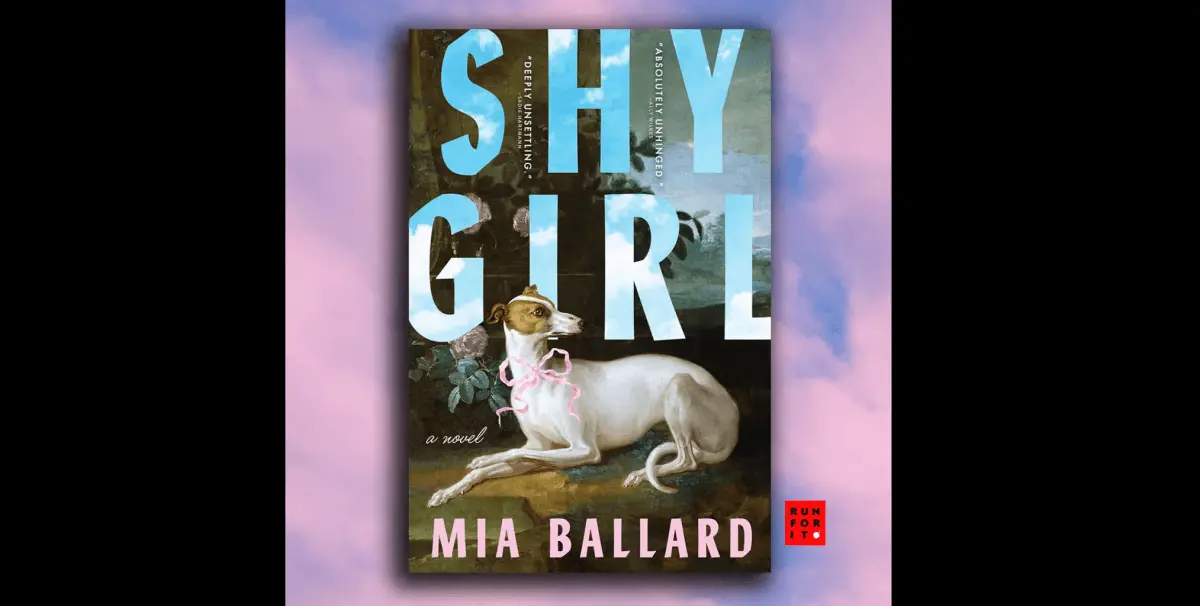
Shy Girl, a horror novel by Mia Ballard, was one of those buzzy books that leapt from self-published prominence into full-on trade publication. Until yesterday, that is, when publisher Hachette pulled the book from the UK market and canceled plans to bring it to the US. The move came after a New York Times investigation suggested that AI had been used in significant parts of the work. "If it isn't AI, she's a terrible writer" Shy Girl was self-published in 2025 and quickly found an audience on social media. The novel follows a depressed, OCD woman named Gia who, down on her luck, encounters a "sugar daddy" who pays off her debts. All she has to do? Live as his literal pet. Eventually, of course, living like an animal makes her into an animal, and things apparently get nasty. Creepy. And the prose? "I'm obsessed with the way Mia Ballard writes," said one reviewer on Goodreads. Not everyone thought the book was good, though, or even well-written. Another reviewer on the site called the book "absolute f -- ing garbage. overwritten, repetitive, poorly executed, atrocious formatting. nothing to do with actual feminine rage and revenge." Soon, the questions moved beyond the literary. Had the book really been "written" at all? Complaints started to surface that the prose sounded, at least in places, like chatbot writing. In January 2026, someone claiming to be a long-time book editor posted a long Reddit thread claiming the books had all the hallmarks of AI lit. "If so, I find it repulsive that it has been picked up and published by the second largest publishing company, at least in the UK," said the Reddit post. "If it isn't AI, she's a terrible writer. Her writing is truly indistinguishable from an LLM." Then a two-and-a-half hour (!) YouTube video dropped, making the same claims. It garnered 1.2 million views. Even AI detection companies like Pangram got in on the action, claiming that the book had the hallmarks of being largely AI-generated. Still, Hachette appeared to be moving forward with plans for a US release later this year. Yesterday, The New York Times published its own investigation, in which it "analyzed passages from the novel using several AI detection tools and found recurring patterns characteristic of AI generated text, like gaps in logic, excessive use of melodramatic adjectives and an overreliance on the rule of three." That did it. Hachette pulled the book in the UK and canceled its upcoming US debut. Late last night, the Times received a comment from Ballard, the author, denying that she had used AI to write the novel. And yet, Ballard added, it was possible that a friend who helped edit the book did use AI. "This controversy has changed my life in many ways and my mental health is at an all-time low and my name is ruined for something I didn't even personally do," Ballard added and claimed that she was pursuing legal action. But what if it's "good enough"? This is one of the first major AI controversies to hit the world of traditional trade publishers, where the old-school gatekeepers still largely ban AI -- at least for drafting. (Outlining, edit feedback, plot suggestions... all of these are far murkier.) Whatever actually happened in this situation, publishing is likely to see similar disruptive patterns to those roiling the music industry right now, where tools like Suno are increasingly used to crank out songwriting demos and even (at least on places like Spotify) fully AI-produced music. Many artists and even distributors such as LANDR resist such AI use, but plenty of ordinary people don't care. Their view seems to be: If the music sounds good -- or good enough -- what difference does it make where it came from? And, frankly, how different is super-glossy pop from the kind of thing Suno turns out? In the case of Shy Girl, despite numerous claims that AI writing sucks and that it can be easily identified, plenty of readers enjoyed the book and even promoted it online. That may both terrify and horrify actual writers, but it remains a reality they'll need to face.
[2]
This Book Just Became the First to Get Canceled for AI
Jason Chun is a CNET writer covering a range of topics in tech, home, wellness, finance and streaming services. He is passionate about language and technology, and has been an avid writer/reader of science fiction for most of his life. He holds a BA from UC Santa Barbara and an MFA from The New School. When Mia Ballard's self-published novel was picked up last June by Hachette Book Group, she probably thought she'd hit the jackpot. Now, she might be wishing she'd never been noticed. Hachette has canceled the US publication of Ballard's novel Shy Girl, following allegations that generative AI was used in its writing. Originally self-published in February 2025, the horror novel was traditionally released by Hachette's science fiction and fantasy label Orbit in the UK in November. After The New York Times provided evidence of AI usage in Shy Girl on Thursday, Hachette canceled the planned spring US release and removed the book from its website completely. "Hachette remains committed to protecting original creative expression and storytelling," the publisher said in a statement to the Times. Authors are required to disclose to Hachette whether AI was used in the creation of their work. Ballard has denied using AI tools to write the book, claiming an editor was responsible for the portions that appear to be AI-generated. "My name is ruined for something I didn't even personally do," Ballard wrote on Thursday in an email to the New York Times. The cancellation of Shy Girl by Hachette marks the first time a major publisher has publicly pulled an existing title due to suspicions of AI-generated prose. For the past few months, readers online have raised concerns about the book's apparent use of AI. A video from YouTuber frankie's shelf provides a lengthy analysis of the novel, pointing out linguistic patterns that are characteristic of AI writing. The video also lists words in Shy Girl that are repeated with unusual frequency ("edge" is used 84 times and "sharp" 159 times), often in ways that are abstract and nonsensical. In January, Max Spero, founder and chief executive of Pangram, ran the text of Shy Girl through his AI detection program. He claimed that the novel was 78% AI-generated. The rise of AI has caught the publishing industry off-guard. Though AI writing has already appeared in many self-published books, traditional publishers like Hachette are more critical of the technology. Representatives for Hachette didn't immediately respond to a request for comment.
[3]
Horror Novel 'Shy Girl' Canceled Over Suspected A.I. Use
Its publisher, Hachette, will not release the novel in the United States and will discontinue its U.K. edition, citing its commitment to "original creative expression and storytelling." Hachette Book Group, one of the largest publishers in the United States, pulled a forthcoming horror novel on Thursday in a decision that followed widespread allegations online that the author relied heavily on artificial intelligence to write the book. On Thursday, a day after The New York Times approached Hachette citing evidence that the novel appeared to be A.I.-generated, the company said it was pulling the book from publication. By Thursday afternoon, the novel was removed from Amazon and the Hachette website. Hachette told The Times that its Orbit imprint decided not to publish "Shy Girl," which was due out in the United States this spring, after conducting a thorough and lengthy review of the text. Hachette said it will also discontinue the book in the U.K., where it was published last fall and has sold 1,800 print copies, according to NielsenIQ BookData. "Hachette remains committed to protecting original creative expression and storytelling," a Hachette spokeswoman said. She added that Hachette requires all submissions to be original to the authors, and asks authors to disclose to the company whether they are using A.I. during the writing process. Attempts to contact the author, Mia Ballard, on Thursday afternoon were unsuccessful. "Shy Girl," about a desperate young woman who is held hostage by a man she met online and forced to live as his pet, was self-published in February 2025. The cancellation of the novel reveals the challenges the book world is navigating as the adoption of A.I. becomes more widespread and as traditional publishers increasingly look to self-published books as a pipeline for hits, particularly in genre fiction. Publishers have maintained a firm line against A.I.-generated text and images, and require authors to attest that their work is original in their publishing contracts. But few have clear policies or measures to prevent users from writing with A.I. "This is the proof positive of what many of us have considered an issue, that this will happen, and now it has happened," Thad McIlroy, a publishing industry consultant, said of the controversy around "Shy Girl." Readers and many writers remain ferociously opposed to the use of the technology for writing, which they regard as cheating or a form of theft. And A.I.-generated writing is not always easy to spot. "Shy Girl" received some rave reviews when it was self-published, eventually drawing more than 4,900 ratings on Goodreads, and averaging 3.52 stars. Still, the tide turned as more readers began flagging what they surmised was A.I. slop, slamming the book for its generic and confusing metaphors and repetitive phrasing. "Really bad," one reader wrote in a one star review. "Pretty sure this was A.I. generated."
[4]
Shy Girl by Mia Ballard: Horror novel pulled by publishers over alleged AI use
The US release of a horror novel has been cancelled by its publisher over concerns that AI was used to help write it. Shy Girl by US author Mia Ballard had been scheduled for publication in the US next month, but that will no longer go ahead, publisher Hachette said. The UK version, which was released in November, will also be discontinued. A spokesperson for Hachette told BBC News the company "remains committed to protecting original creative expression and storytelling". Ballard, who sold almost 2,000 copies of the book in the UK, has denied using AI to write the book - telling the New York Times an acquaintance she hired to edit the original self-published version of the novel had used AI. "This controversy has changed my life in many ways and my mental health is at an all time low and my name is ruined for something I didn't even personally do," she said, noting she was pursuing legal action. The New York Times, which first reported the story, said it "appears to be the first commercial novel from a major publishing house to be pulled over evidence of AI use". The publisher said: "Hachette remains committed to protecting original creative expression and storytelling. "Orbit (in the US) will not publish Shy Girl, and Wildfire (in the UK) have decided to no longer continue publishing their edition," it added, referring to its imprints. Originally self-published last February, Shy Girl was described in its promotional material as a "buzzy BookTok sensation" and "a harrowing tale of survival and revenge" and well as being "bloody and unapologetic". However, one reviewer on the GoodReads website claimed the book appeared to be "written by ChatGPT", while another noted the "bizarre formatting, typos and repetitive turns of phrase". BBC News has approached Ballard for a further comment.
[5]

Hachette pulls horror novel Shy Girl after suspected AI use
The publisher has cancelled the US release of Shy Girl by Mia Ballard and withdrawn the UK edition after weeks of online speculation about the novel's origins Hachette Book Group has withdrawn a horror novel after allegations circulated online that its author relied heavily on artificial intelligence. The book is to be discontinued in the UK after being published in November 2025, and its US launch date has been cancelled. The book, Shy Girl by Mia Ballard, had been scheduled for release in the US this spring under Hachette's Orbit imprint. However, the publisher confirmed it had halted publication after an internal review. The title has also been removed from online retailers including Amazon, and will no longer be distributed in the UK. The decision was first reported by the New York Times and comes after weeks of online speculation about the novel's origins, during which readers on platforms such as Goodreads and Reddit had questioned whether sections of the text bore hallmarks of AI-generated prose. The book had sold approximately 1,800 print copies in the UK, according to NielsenIQ BookData. In a statement to the New York Times, the publisher said: "Hachette remains committed to protecting original creative expression and storytelling." Ballard has denied personally using AI to write the novel. In comments to the New York Times, she said an acquaintance she had hired to work on an earlier self-published version incorporated AI tools. "This controversy has changed my life in many ways and my mental health is at an all time low and my name is ruined for something I didn't even personally do," she wrote in an email to the newspaper. Originally self-published in February 2025, Shy Girl has almost 5,000 ratings on Goodreads with an average score of 3.51 stars. However, questions began to be raised in early 2026 as social media users dissected passages from the novel. "I am quite certain that this was written by ChatGPT," one Goodreads review says. A widely shared Reddit thread drew hundreds of comments, with many alleging that the prose resembled output from AI tools. A YouTube video posted in January, titled "I'm pretty sure this book is ai slop", amassed more than 1.2m views. An online blurb of the book reads: "Lonely, broke and depressed with a serious case of OCD, Gia finds herself at a crossroads when her financial troubles lead her to Nathan, a mysterious and affluent man she encounters on a sugar daddy website. Desperate for a solution, Gia is intrigued by Nathan's unconventional offer: in exchange for living as his devoted pet, all her debts will be erased." The episode highlights the growing challenge publishers face when it comes to AI. Last week, the Society of Authors introduced a logo aimed at distinguishing human-authored books from AI-generated content. The scheme, the first of its kind from a UK trade association, enables authors to register their works and display the logo on their books. It follows a similar initiative launched by the US Authors Guild in early 2025.
[6]

Novel Pulled From Shelves After Author Is Accused of Using AI
Can't-miss innovations from the bleeding edge of science and tech A prominent publisher is pulling a horror novel after the author was widely accused of using AI to help write the book, The New York Times reports. Hachette Book Group, one of the largest publishing houses in the US, said it will discontinue selling "Shy Girl" by Mia Ballard in the UK, where it was released last fall and sold 1,800 print copies, per data cited in the reporting. It will also cancel plans to publish a US edition, which was slated to release this spring through its Orbit imprint. "Hachette remains committed to protecting original creative expression and storytelling," a Hachette spokeswoman said. The spokesperson noted that Hachette requires all submissions to be original to the authors and that the authors disclose whether AI is used during the writing process, suggesting it views alleged AI usage not merely as an affront to creative principles, but as a contractual violation. (Several publishers have released books whose marketing explicitly mentioned experimenting with AI.) In a statement to the Wall Street Journal, the Hachette spokeswoman said that both its US and UK imprints conducted a "lengthy investigation in recent weeks" before the decision was made not to publish. Ballard, the author, denies personally using AI, claiming that an editor she hired to go over the book when she originally self-published it was responsible for using AI instead. "This controversy has changed my life in many ways and my mental health is at an all time low and my name is ruined for something I didn't even personally do," Ballard wrote in a statement to the NYT. Ballard said she couldn't provide more details on how the book was edited with AI because she was pursuing legal action. The novel's cancellation is illustrative of a mounting anti-AI sentiment that has especially taken a hold in the arts, and is one of the first examples of a major publisher dropping a book deal over accusations of AI usage. Accusations of AI usage have swirled around "Shy Girl" since it became a minor hit in the self-published world last year, picking up steam among readers on TikTok. Initial glowing praise soon gave way to suspicion. In January, a Reddit post from a user who claimed to be a book editor generated significant discussion around "Shy Girl," flagging its prose for having the hallmarks of a large language model. (Some in the discussion also accused Ballard of using AI to write her responses in a written interview.) In a YouTube video essay that's since racked up over 1.2 million views, a reviewer thoroughly unpacked, over the course of nearly three hours, how the book appeared to be AI written. "i'm pretty sure this book is ai slop," read the video title. Max Spero, the founder and CEO of the AI detection software Pangram, conducted his own test and found evidence that 78 percent of the book is AI-generated. While both the publisher and readers both seem to feel they have a strong case that the book is AI written, the incident raises tough questions about how the industry will handle AI's rapid but sneaky invasion into books. The self-publishing world, which major publishers are increasingly turning to find social-media-ready diamonds in the rough, is already rife with low effort, AI-generated dreck. Given the tech's popularity, it's inevitable that other authors will use AI in their writing process, too. The question becomes whether it's sustainable for a publisher to respond in dramatic fashion each time evidence of AI usage pops up as it's done here. Will AI be off the table entirely for a major book deal, or will authors merely be encouraged to be upfront about using ChatGPT? We're years into the AI boom, but are still just beginning to grapple with these problems.
[7]

Did AI write 'Shy Girl'? A messy detection controversy rocks the world of book publishing
A new drama has taken the book publishing world by storm: The upcoming U.S. release of the horror book Shy Girl was canceled by publisher Hachette Book Group just weeks ahead of its release due to suspicion of AI use in its making. Authored by U.S. poet and fiction writer Mia Ballard, Shy Girl is a novel described as focusing on the life of a girl with severe obsessive-compulsive disorder (OCD) who agrees to be held captive as an affluent man's pet in order to rid herself from financial woes. The book was first self-published early last year, with another version released in November by Hachette's U.K. imprint Wildfire. Hachette confirmed the cancellation to the New York Times, which first reported on the story. While the self-published version of the book initially received positive reviews, its recent version has drawn speculation online regarding the novel's writing.
Share
Share
Copy Link
Hachette Book Group has withdrawn Mia Ballard's horror novel Shy Girl from publication after The New York Times investigation suggested AI-generated prose. The book sold 1,800 UK copies before being pulled, marking the first time a major publisher has canceled an existing title over suspected AI use.
Hachette Pulls Horror Novel Amid AI Controversy
Hachette Book Group has canceled the US release of Shy Girl and discontinued its UK edition after mounting allegations of AI use in the horror novel by Mia Ballard. The decision came after The New York Times presented evidence suggesting significant portions of the work were AI-generated, marking a watershed moment for the publishing industry
3
. The cancellation of Mia Ballard's novel represents the first time a major publisher has publicly pulled an existing title due to suspicions of AI-generated prose2
.
Source: Futurism
Originally self-published in February 2025, Shy Girl quickly gained traction on social media platforms and accumulated nearly 5,000 ratings on Goodreads with an average of 3.52 stars
1
. The novel follows Gia, a depressed woman with OCD who accepts an unconventional arrangement with a wealthy man named Nathan, agreeing to live as his pet in exchange for debt relief. Hachette's Orbit imprint picked up the book last June, releasing it in the UK in November 2025, where it sold approximately 1,800 print copies according to NielsenIQ BookData3
.Growing Online Speculation and Reader Concerns
The controversy began building in early 2026 when readers started questioning whether the prose bore hallmarks of artificial intelligence. A long Reddit thread in January claimed the book had "all the hallmarks of AI lit," with one self-described book editor stating, "If it isn't AI, she's a terrible writer. Her writing is truly indistinguishable from an LLM"
1
. Online speculation intensified when a YouTube video titled "I'm pretty sure this book is ai slop" garnered 1.2 million views, providing a lengthy analysis of linguistic patterns characteristic of generative AI writing5
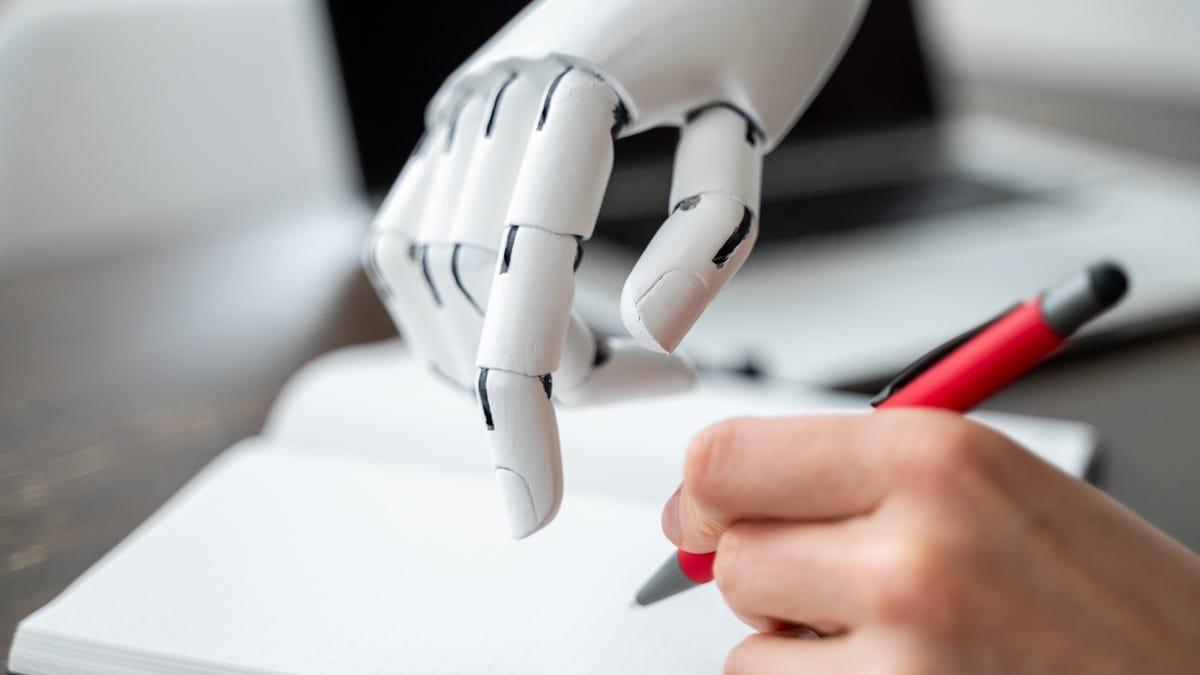
.AI detection tools added fuel to the fire. Max Spero, founder of Pangram, ran Shy Girl through his AI detection program and claimed the novel was 78% AI-generated
2
. The New York Times conducted its own investigation, analyzing passages using several AI detection tools and finding "recurring patterns characteristic of AI generated text, like gaps in logic, excessive use of melodramatic adjectives and an overreliance on the rule of three"1
.
Source: CNET
Publisher Response and Author's Defense
After conducting what it described as a "thorough and lengthy review," Hachette pulled the book from publication, removing it from Amazon and the Hachette website
3
. "Hachette remains committed to protecting original creative expression and storytelling," the publisher stated, noting that it requires all submissions to be original and asks authors to disclose AI use during the creative writing process3
.Mia Ballard has denied personally using AI to write the horror novel, claiming instead that an acquaintance hired to edit the original self-published version incorporated AI tools without her knowledge
4
. "This controversy has changed my life in many ways and my mental health is at an all-time low and my name is ruined for something I didn't even personally do," Ballard wrote to The New York Times, adding that she was pursuing legal action1
.Related Stories



AI-Related Challenge for Publishing Industry
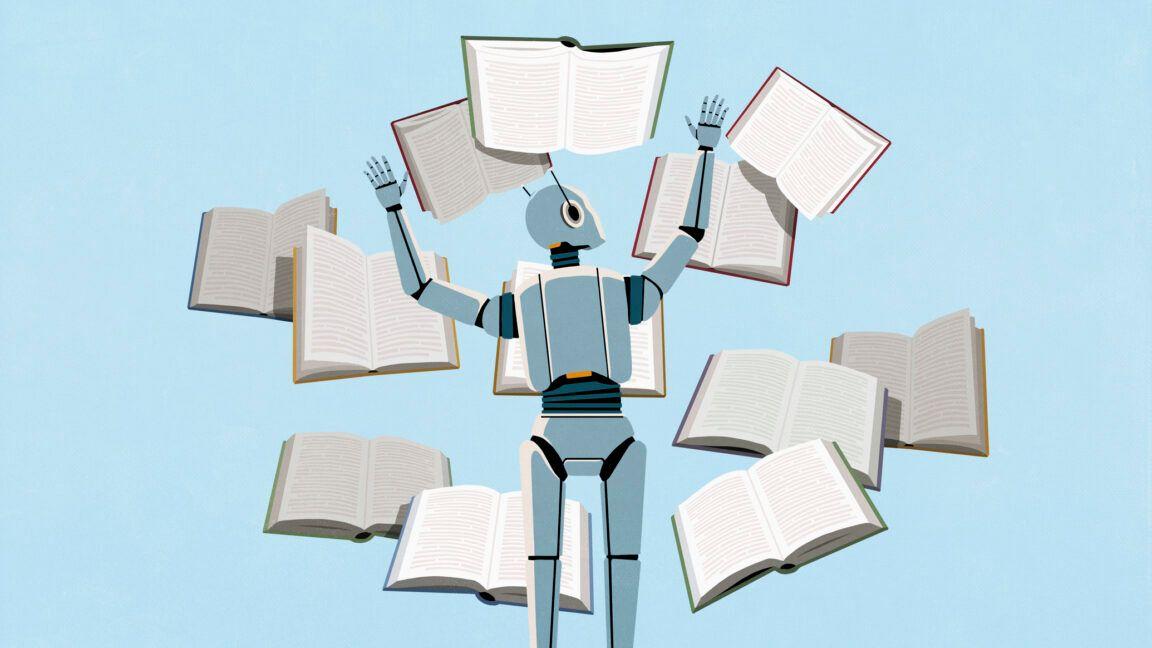
This incident highlights the growing challenges the publishing industry faces as adoption of artificial intelligence becomes more widespread. "This is the proof positive of what many of us have considered an issue, that this will happen, and now it has happened," said Thad McIlroy, a publishing industry consultant
3
. Traditional publishers like Hachette Book Group increasingly look to self-published books as a pipeline for hits, particularly in genre fiction, but few have clear policies to prevent authors from using AI3
.
Source: Ars Technica
The book cancellation raises questions about what readers will tolerate. Despite allegations of AI use, many readers enjoyed Shy Girl and promoted it online, with one Goodreads reviewer stating, "I'm obsessed with the way Mia Ballard writes"
1
. This disconnect between critical reception and reader enjoyment mirrors patterns in the music industry, where AI-generated content increasingly appears on platforms like Spotify. The question remains: if content seems "good enough," do consumers care about its origins1
?In response to these challenges, the Society of Authors recently introduced a logo to distinguish human-authored books from AI-generated content, following a similar initiative from the Authors Guild in early 2025
5
. As AI detection becomes more sophisticated and reader awareness grows, publishers will need to develop clearer standards for disclosure and verification to maintain trust in original creative expression.References
Summarized by

Navi
[1]
[5]
Related Stories
Recent Highlights



Recent Highlights
Today's Top Stories






Your Daily Dose of Curated AI News
Don’t drown in AI news. We cut through the noise - filtering, ranking and summarizing the most important AI news, breakthroughs and research daily. Spend less time searching for the latest in AI and get straight to action.

