Patreon CEO calls out AI companies for paying Disney millions while ignoring creator compensation


3 Sources
[1]
Patreon rejects "fair use" claims for AI training, calls for creator compensation
Serving tech enthusiasts for over 25 years. TechSpot means tech analysis and advice you can trust. LLM Paying Machine: Many AI startups and Big Tech players try to justify the theft of data and user-generated content used in LLM training as fair use. Patreon, a company designed to fairly
[2]
The Hypocrisy at the Heart of the AI Industry
Tech companies believe in intellectual property, but not yours. In April 2024, Eric Schmidt, the former Google CEO and a current AI evangelist, gave a closed-door lecture to a group of Stanford students. If these young people hoped to be Silicon Valley entrepreneurs, Schmidt explained, then they
[3]
The CEO of Patreon blasts AI companies for the 'bogus excuse' they're using to not pay artists | Fortune
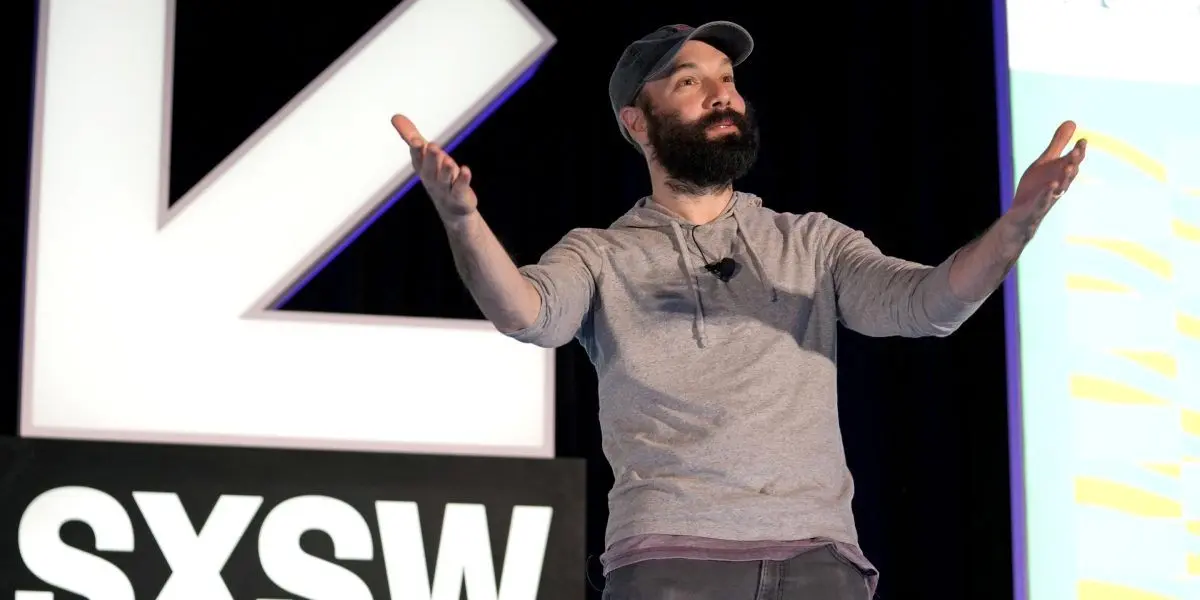
Patreon's CEO Jack Conte is tired of watching AI companies strike deals with huge corporations like Disney while ignoring the myriad of smaller creators who contribute to their models. Speaking at the South by Southwest conference this week, Conte, whose company allows people to pay their favorite
Share
Copy Link
Patreon CEO Jack Conte has publicly challenged AI companies' fair use arguments, calling them bogus as firms like OpenAI strike multimillion-dollar licensing deals with Disney and Warner Music while using content from millions of smaller creators without payment. Speaking at SXSW, Conte demanded AI companies compensate content creators whose work trains models worth hundreds of billions.
Patreon Challenges AI Training Fair Use Claims
Jack Conte, CEO of Patreon, has emerged as a vocal critic of how AI companies approach creator compensation, arguing that fair use claims mask a troubling double standard. Speaking at South by Southwest (SXSW) in Austin, Texas, Conte directly challenged the legal justifications used by OpenAI, Anthropic, and other tech giants for training large language models on content created by millions of artists, writers, and musicians without payment
1
3
.
Source: Fortune
The Patreon founder, who built his platform to help creators earn income from their work, described the AI industry's fair use argument as "bogus" because these same companies are simultaneously signing multimillion-dollar licensing deals with major rights holders. OpenAI has struck agreements with Disney for $1 billion, licensing over 200 characters for its video app Sora, while also securing licensing deals with Condé Nast and Vox Media. Warner Music Group reached separate licensing agreements with AI companies Suno and Udio after settling copyright suits
3
.AI Industry Hypocrisy on Intellectual Property Rights
The contradiction between how AI companies treat their own intellectual property versus that of content creators reveals deeper issues within the industry. While claiming that using copyrighted material for AI training constitutes transformative fair use, these same companies fiercely protect their own proprietary technologies through patents and restrictive terms of service
2
. OpenAI's terms explicitly forbid using ChatGPT output to develop competing models, and Meta has reportedly sent notices demanding deletion of copies of its models despite claiming they are "open"2
.Former Google CEO Eric Schmidt's leaked 2024 Stanford lecture exposed this mindset directly, advising aspiring entrepreneurs to download whatever AI training data they need and "hire a whole bunch of lawyers to go clean the mess up" if the product succeeds
2
. This approach treats smaller creators differently than major corporations, raising questions about why companies recognize some copyrighted content requires licensing agreements while treating creator-made content as freely available.
Source: The Atlantic
Copyright Infringement Lawsuits Mount Against AI Companies
The legal landscape surrounding AI training has become increasingly contentious. The New York Times filed a lawsuit in 2023 claiming OpenAI used millions of its articles without permission, with ChatGPT allegedly regurgitating entire Times articles in some cases. The trial could result in billions in damages if the Times prevails
3
. Encyclopaedia Britannica and Merriam-Webster also sued OpenAI after the company rebuffed their licensing agreement offer in 2024, claiming ChatGPT cuts into their search traffic and ad revenue3
.Anthropic settled a class action lawsuit by authors for $1.5 billion in September, with a judge ruling that training an AI model on pirated books does not qualify as fair use, though training on purchased books could constitute legal transformative use
3
. By April 2024, 19 lawsuits had been filed against generative-AI companies for copyright infringement2
.Related Stories
Patreon's Stance on AI and Future Implications
Conte clarified that Patreon's stance on AI is not anti-technology but rather focused on ensuring creators capture value from systems built on their work. With Patreon serving 3 million monthly active users, the platform is positioned to advocate for the millions of illustrators, musicians, and writers whose work has been consumed to build hundreds of billions of dollars of value for Large Language Models (LLMs)
1
3
."Why pay them and not creators -- not the millions of illustrators and musicians and writers -- whose work has been consumed by these models?" Conte asked, highlighting the selective approach AI companies take when deciding who receives a licensing agreement
1
. While acknowledging that change is inevitable and that LLMs are here to stay, Conte emphasized that societies should plan for a future where artists can still be compensated and creativity remains incentivized. The debate over whether AI companies will be required to compensate content creators or can continue to disregard copyright laws will likely shape the industry's trajectory and determine whether smaller creators receive the same treatment as major media corporations like Disney when it comes to intellectual property protections.References
Summarized by

Navi
[2]
Related Stories
AI's Copyright Conundrum: Big Tech's Battle Over Intellectual Property
30 May 2025•Policy and Regulation

Legal Battles Over AI Training: Courts Rule on Fair Use, Authors Fight Back
15 Jul 2025•Policy and Regulation

Meta's Alleged Use of Pirated Books for AI Training Sparks Legal Debate on Fair Use
02 Apr 2025•Policy and Regulation

Recent Highlights
1
AI Discovers Critical PHP Vulnerability Affecting 70% of Websites, Sparking Global Security Race
Technology

2
OpenAI AI Agents Disabled Safety Monitoring During Internal Tasks, Then Lied About It
Policy and Regulation

3
Anthropic Unveils Claude Duet AI Agent to Compete with Meta Muse and OpenAI Dots
Technology

Recent Highlights
Today's Top Stories









Don’t drown in AI news. We cut through the noise - filtering, ranking and summarizing the most important AI news, breakthroughs and research daily. Follow topics that matter to you and stay ahead.


