HyperX Neurable headset uses brain-reading tech to boost accuracy and cut reaction time by 43ms


6 Sources
6 Sources
[1]
I tried HyperX's brain-reading headset at CES 2026 -- and it actually cut my reaction time
This feels like cheating, but it's actually one of the most mindblowing gaming headsets I tried at CES 2026. The HyperX Neurable gaming headset concept is able to read your brainwaves and make you better at games. By using EEG sensors, AI and a little bit of mindful exercise, this set of cans is able to read the stresses in your mind, calm you down and overclock your brain's focus. And after testing it myself, I went from a skeptic to a pro gaming believer. A 30-something gamer who fell off a long time ago in first person shooters found his swagger all over again, and I look forward to popping the young'uns like I'm 14 playing Halo 2 all over again. So I know this is the first question a lot of you are going to have. Given a lot of EEG machines require pads placed directly on the temple to read brain signals, how on Earth is this able to do the same with just headphone cups? Because you can see the contacts built directly in there (those grey strips). By pairing it with an AI inferencing model, it's able to read the wider noise of your brain and narrow it down to the focus, stress and cognitive load signals it needs to look for when it comes to improving focus. And by putting you through a mindful breathing and focus exercise -- staring at a peaceful visualizer of dots floating in a sphere -- it can track when your brain has been boosted to just the right level, while simultaneously relaxing your body. This puts your entire being into a state that is ready for the quick twitch reactions you need for competitive gaming. I'd understand if that sounds a little too good to be true, but I really felt like time was slowing down. I went through this mindful focus exercise, and once the timer started to shoot as many targets as possible again, my trigger finger was a whole lot faster and more accurate too. To put it into specifics, my high score on the shooting range went up by over 5,000 points, my accuracy increased by two percentage points, but most importantly, my response time to a target decreased by nearly 100 milliseconds. These are critical stats that help you be far more economical and efficient with the ammo you have in any FPS, and for the first few seconds, it felt a little bit like the Dead Eye mode in Red Dead Redemption 2 in terms of focusing like with rapid response to dispense of my targets. All I can do is pray that this becomes a real product I can buy, because imagining this for my sim racing -- especially during endurance competitions -- is a mightily exciting prospect.
[2]
HyperX is working with brain-scanning company Neurable on a gaming headset that aims to offer 'prevention of tilt' and 'good practice, not crap practice'
Exclusive: Neurable's CEO explains how tracking brainwaves will made you better at games Brain-reading company Neurable is working with HyperX on new products aimed at using neuroscience to improve your gaming performance. The idea is to have gaming headsets with built-in EEG sensors that read your brainwaves as you play, and use the data to not only help you boost your accuracy and reaction times, but also avoid tilting and performance crashes. TechRadar has experience with Neurables tech: we tested the Master & Dynamic MW75 headphones, which use the same kind of technology to help you monitor your focus levels and your risk of burnout at work. The collaboration has been announced at CES 2026 and focuses on two areas: improving your headspace before you play in order to improve performance, and monitoring activity while playing to see if you're maintaining peak levels. I got a chance to try a prototype of the technology and to speak to Dr. Ramses Alcaide, CEO and co-founder of Neurable, to hear more about what it can do and the plan for the future. I was able to test the technology using a prototype developed with HyperX, but that's still far from the final gaming headset they have planned - for a start, it didn't have a mic boom. It was also pretty heavy, and I'm sure they'll work on a lighter one for long-term gaming sessions. But the main thing is that the tech worked, and is instantly really interesting. It's not news that your mental state can really affect your performance - whether that's gaming, work, or sports. But what's interesting about Neurable's tech is that if you try to do something about it, like meditating, you're not just guessing whether it's making a difference or not - the improvement is measurable. "Especially in games like StarCraft or in shooting games like Counter-Strike, one of the biggest issues that exists is that you normally have to choose between reaction time or accuracy, right? You can move quickly, but it may mean that your shots are landing worse. And the same thing happens with RTSes - your APM can be very high, but the quality of your APM can, can drop dramatically. And so this is the first time where you can handle one of the biggest issues that gamers have, which is getting yourself mentally primed for the activity," explains Alcaide. So the first part of what Neurable is offering is a 'Prime' programming, which is designed to get you in the zone. At the moment, it takes the form of a cloud of dots, like a nebula spinning in space. If you increase your level of focus, the cloud of dots compresses, reducing the space between them until they become just one central dot, and then shrink to nothing. "The thing is that your brain is highly plastic, which means it's able to adapt very rapidly," says Alcaide. "As you start to focus and clear your mind, these dots get smaller and smaller, and then if you start to mind wander and drift and think about, you know, other things that are happening, it'll start to get bigger. And so the core goal here is to make it get smaller and smaller and smaller until essentially this turns into a dot and disappears and you're ready, through this simple form of biofeedback." "But the most key part is it has to be tied directly to the user state, you can't just make the dot get smaller. It has to really be training the brain, biofeedbacking the brain in order to get to this state, and then it moves the user to a different mental performance level than where they were when they started." "If something just happened to you, you know, you heard bad news, your cognitive load shoots up like crazy. It's so hard to focus and get back into that zone. And so essentially what the system does is it helps in train your brain so that it reduces your cognitive load while increasing your focus, so that you can essentially get into that locked-in state and reach your real potential more consistently," says Alcaide. "And what we've seen is decreases in reaction time, increases in target hits - usually you have to pick one of the two, but we're seeing both go up as they're doing these sessions." Neurable's stats claim that pro-level eSports players improved target-aiming accuracy by about 3% by using the 'Priming' process, while the average improvement across all players is around 1.5%. The improvement in reaction time is around 40 milliseconds on average, which I found especially interesting - that's a few frames. Naturally, I went through the Prime process myself. First, I went through a target-shooting practice session on Aimlabs without any preparation and scored around 34,000. Next, I went through the Prime exercise. Neurable's Dr Alicia Howell-Munson, a Research Scientist and lead on the gaming-focused technology, gave me some tips for entering a focus state when looking at the cloud of dots, such as focusing on a particular dot's movement as it spins. I found that was a useful start, because they're not easy to follow as they all cross each other - but I can imagine that some people might actually find it better to look 'past' the cloud and focus by allowing the moving pattern to overwhelm their vision. I found that as the cloud of dots shrank, I started to see patterns and structure in the dots that I hadn't interpreted before, and so I started focusing on those instead - not intentionally, just naturally. Already, it felt like I was finding a flow state. After around 45 seconds, I'd shrunk the dots and was ready to do. The Neurable team told me that it often takes anywhere from two minutes to four minutes, and that a shorter time suggested I was already in a fairly focused mental state - perhaps not a surprise since I'd already done the target practice once. I also did the Prime exercise a second time at the end of my demo session so we could get photos, and that not only took longer, but I actually regressed, with the cloud becoming larger again, when the camera entered my eyeline, so you can see the instant effect that distractions have. After Priming, I retook the same Aimlabs test and scored around 37,000. My reaction time decreased by a very small amount (only around 5ms), but my accuracy jumped over 2%. Just from less than a minute of biofeedback meditation, of a kind. "Essentially, we're tracking two key metrics," explains Alcaide. "One is cognitive load. So how much of their brain is currently at capacity, right? And then the second one is their focus, or how well you can maintain attention on a particular task." "Now, they seem kind of similar, but they're very different. You can have a high focus and have a low cognitive load, which is the ultimate way of playing." "You know, we did some work actually with the Singapore Air Force, where we saw that expert pilots were the ones who had really high focus, they were able to maintain their attention, but it required a very low amount of mental cognitive load. Which means that when something happened, they had a lot of capacity still left in their brain to be able to react and to make adjustments, and to be able to think quickly. "But if your brain is filled with a whole bunch of thoughts, not only is it hard for you to focus, but then adding more things to your brain while you're focusing creates overflow, which increases errors, essentially per minute in the case of these of these pilots, and also reduces your reaction time." To measure these elements, Neurable uses an EEG to measure alpha, beta, and theta brain waves. "Beta and theta are usually tied to how fast your brain is processing. We use those through our proprietary pipeline that that boosts the signal to noise [ratio], which is what our company does. We use AI to boost the signal brain data, so that it comes at a level similar to a high-end brain-computer interface." Alcaide is referring to the need for an elaborate helmet and even conductive gel to get good EEG readings in many cases, but Neurable is able to get accurate enough readings with just the pads of a pair of headphones (or using earbuds and even glasses, they told me). The data the headset is reading isn't just useful for the Prime process, though. It can potentially be useful for eSports training purposes, and Neurable also showed me a concept of your brain's focus and capacity readings being visible during a Twitch stream, much like how some streamers show their heart rate today. One of the simplest uses of this ongoing data reading could be to help you improve the quality of your practice. "[The software] tells you to take a break when you're cognitively tired, not when you're physically tired. Your brain has no pain receptors, so when you feel physically tired, that's when you normally take a break. But if you take a break when your brain is tired, you can actually boost your productivity for one to three hours per day," says Alcaide. "So just imagine something like that: you're playing, it tells you to go take a 10 minute walk. And now you're getting effectively one to three more hours of practice per day. And that's good practice, not crap practice, right? "Or prevention of tilt, like there's just so many things that we haven't even tapped into yet." There's a lot of potential in using the data the headset can connect to, so you can link your brain data to replays of your performance and see whether something changed before you made mistakes or what state you were in during your best period. In a practice tool like Aimlabs, each score could have brain data connected, so you can look for patterns. And game developers could even use your brain data to create emergent events - scaring you at the right moment, for example. I asked whether any additional factors could improve the data's accuracy in the future. Alcaide notes that most other biometric data that can be tracked is actually also reflected in the brain, so Neurable's tech gets most of what it can use anyway. However, there's one element he calls out as an area to add to the system: "Eye tracking is way faster than brain data, so we could probably use eye tracking to identify what [someone] focusing on, and then the brain can give us an accurate reading of how attention they paid. You know, were they just looking there or were they actually processing the information?" Alcaide also notes that the tech could be used for better team play, not just individual play: "We're really just scratching the surface of like what's possible, right? Teamwork I think is going to be one of the biggest areas in eSports that we're going to start to see for this technology. "There's been a lot of incredible research done, with something called 'team synchrony'. So, for example, you can put an EEG system like the ones that I have right now, and then you can see whether the team's brain waves are synced or unsynced, and what they found is that teams that display more synchrony across their brain waves usually perform better, especially at tasks where they're collaborating, they're working together to solve a problem." I asked whether Neurable is worried about its tools being banned from competition if they're really effective, and they noted that they already have a pro poker player who uses their tech to focus their mind. "There are multiple techniques that gamers use to clear their minds already. This is just a way where it removes the skill level required to be able to get into that type of mental training. It makes it easier. It's like, instead of telling somebody 'hey, just get it out of your head', you're teaching them how to meditate." says Alcaide. "It's just giving a little bit of a of a opportunity for people to to get in the zone, before they go into things, and actually I was just earlier today talking with an NBA player that wants to use it for the same sort of thing. It's like listening to music before you go play, right? So I don't think that's, that's necessarily something that we're concerned about." When will you be able to try this out yourself? Both the software and hardware are still under development, but the aim is to have something available in around a year - it's not impossible you'll see a product in 2026, but CES 2027 is maybe more likely. I only had a brief demo, but I found the Prime process immediately impactful - I think I'd active want to go through the process before firing up a game, no because I'm desperate for the few points of extra accuracy, but because the process of clearing your mind - and knowing you've truly taken steps in clearing it, because you're not just following an animation, the animation is responding to your success - felt really beneficial in of itself.
[3]
HyperX is showing off a gaming headset prototype packed with brain wave monitoring EEG tech to better get your head in the game
There's no getting away from the scourge of the skill issue, though. Big tech loves the cyberpunk idea of brain-computer interfaces (or BCI), though I'm personally not super enthused about letting big tech anywhere near my grey matter. EEG-like devices that can scan brain waves are becoming more accessible to consumers though, resulting in a novel control scheme for Elden Ring: Nightreign if not much else. But perhaps there's an untapped market here too, if a recent announcement from HP at CES 2026 is to be believed. We've already covered how sub-brands HyperX and Omen have been smooshed together for a fresh line of gaming laptops, but HP is moving to more literally getting its head in the game. HyperX is now teaming up with start-up Neurable to develop a gaming headset that can also function a bit like an EEG. Why? Apparently in a bid to "help players improve their focus and accuracy by interpreting brain activity in real time." And, before you ask, the thing doing the interpreting will of course be AI. Neurable develops proprietary AI that it claims "makes it possible to integrate BCIs into everyday products creating a future where technology anticipates and responds to human intention." The company is already offering pre-orders for its MW75 Neuro LT headphones, a set of $500 cans with EEG capabilities slated to ship later this year. By tracking brain activity, the MW75 Neuro LT offers "daily cognitive insights" in a bid to identify what part of the day the wearer's focus is best and thereby boost productivity. The HyperX collaboration looks like it will follow along similar lines, placing Neurable's EEG sensor tech around the edge of the ear cups. Concept models suggest the final bit of kit will also feature a microphone arm, so you better be thinking only the purest of thoughts as you descend into your next lobby. That said, the Neurable and HyperX headset probably won't be getting an earful of me effing and jeffing through another ill-fated Arc Raiders match any time soon; judging by the prototype at CES 2026, the final product is still at least a year off. TechRadar's Matt Bolton went hands-on with the mic-less concept model, noting its current heft would be unwelcome during longer gaming sessions. However, Bolton also writes that Neurable's accompanying 'Prime' programming designed to get you in the zone to game did slightly, but measurably, improve both his accuracy and reaction time. In a world full of distraction, it's not hard to see the appeal of hardware designed to, ahem, cut through the noise. But if this collaboration between Neurable and HyperX ends up costing anything close to $500, I'm much more likely to simply plug my ears up no matter what promises it makes.
[4]
CES 2026: I Tried a Gaming Headset That Can Read Your Mind
It's still just a concept, but the company hopes to release later this year. Before this CES, I thought gaming headsets had gotten about as complex as they ever would. How many improvements can you possibly make on speakers and microphones? Well, forget all that. Apparently, the future of gaming headsets is mind-reading. In a private demo with a colleague from IGN this CES, I tested out a collaboration between HP's HyperX gaming brand and brain-computer interface company Neurable. Neurable's been at CES before, but most of its work has been in the defense and enterprise sectors. The idea behind the brand is specifically aimed at helping you nail down your focus, and now, Neurable thinks it can use that to help gamers. Here's how it works. Before trying on the Neurable x HyperX headset, I did a quick run-through in a target shooting game, where I shot down 30 targets with a 547ms response time. Then, I got guided through a focus program called Prime. This showed a cloud of dots on the screen, and I was told to do whatever I needed to do to focus up. I decided to stare into the distance and count, and in about 90 seconds, the dots had shrunken down into a small orb and I was "primed." Neurable also suggested focusing techniques like repeating a word in your head over and over, or following one of the dots as it moved about the screen, but these didn't work for me. Than, I did the shooting test again. Theoretically, I should have been better, but I actually scored slightly worse this time -- a 559ms response time. Still, that response time isn't terrible, and your mileage may vary. It might just have been that I was already really locked in before priming, and my colleague actually reduced her response time by about 40ms after priming. If all of that optimization sounds really nitty-gritty, well, yeah. This is aimed at esports players and streamers, where every (mili)second counts. And that's probably where the headset's coolest feature comes in for me. Alongside Prime, Neurable and HyperX are also working on an overlay plugin for streamers that can show their focus level on screen. You can display this as a speedometer, or as that cloud of dots, or even as a progress bar that shows whether you're "on tilt" or not. It should make for some pretty fun interactions with viewers, and play well with existing plug-ins, like eye trackers that show where a streamer is looking. Plus, my slightly worse response time after priming wasn't totally useless. Neurable said the headset could be used to help you "practice choking," where you psych yourself up shortly after locking in and end up worse off. I thought that maybe sounded like marketing spin, but my colleague, a high-level raider in World of Warcraft, said it would have real use for her. It's still just a concept for now, but it's exciting to see this kind of tech getting ready to hit the mass market. What also sets Neurable apart is how portable it is. Unlike other brain-computer interfaces, this just looks like a normal headset, and all the contacts are just stored in the earcups. There's no need for a giant helmet with discs and wires attached to it, which is thanks to Neurable's expertise in AI. The company says that using such a compact form factor does result in getting a small amount of data, and a lot of junk data, but thanks to an on-device AI model, it's easily able to detect trends in your focus and translate them into something usable. That seemed to be true in my demo, which at the end of the day, kind of felt like a guided meditation with real-time feedback. You could use this for more than gaming, but it's a clever use case for digital mind-reading, and the streaming plugins really take the cake, helping solidify the concept into a clear product with a concrete goal and target audience. It'll take a while for the gaming version of Neurable's tech to be ready, although the company said it hopes to get it out this year. In the meantime, you can buy an ultra-luxury headset with Neurable's mind-reading built in, although it's currently on pre-order and will set you back $500. It also won't come with Prime or that streaming plugin, although because those are based in software, that could change in the future.
[5]

Neurable and HyperX have unveiled a gaming headset at CES 2026 that can be controlled by your brain
You could while away the hours with this world's first headset CES is no stranger to gaming headset unveilings, but this year will mark the rare instance that a headset has been shown off at the event that can be controlled through the power of the human brain. Neurable, a Boston-based tech company dedicated to harnessing the power of the human mind, has announced that it has teamed up with HP to develop a HyperX-branded headset powered by neurotechnology. Not to be confused with the MW75 Neuro, a gaming headset developed between Neurable and US audio brand Master Dynamic in 2025, the new HyperX headset is currently being demonstrated on this year's CES 2026 showfloor. There's no price and availability information, and the pair of cups doesn't even have an official name for now, but Neurable HyperX boasts that it enhances gameplay performance using real-time brain insights. I'm not a scientist, so decoding how the cups work hurt my own brain, but it appears that the cups are fitted out with brain-computer interfaces (BCI) and sensors which are designed to read and track your brainwaves while playing different games, and feed that information back to you to improve your gameplay. When it comes to the MW75 Neuro, that headset worked as it features soft-fabric EEG sensors that monitor your brain activity, which Neurable's AI tech then processed and fed back via a smartphone app. Information on when and where you focused best was then fed through the app, but this new headset is designed to improve gameplay rather than your stress levels. The HyperX prototype is instead equipped with the BCI tech I mentioned earlier, which is typically found in medical equipment like MRI machines. Instead of giving yourself a scary brain scan however, the headset utilizes the tech, along with the Neurable neurofeedback Prime system, in an effort to help improve your focus while playing your favorite games. I've not been lucky enough to attend CES 2026 for myself this year, so I can't strap myself into the "neurotechnology-powered wearable" like in a scene out of the 1971 film A Clockwork Orange, and put those game enhancements to the test and see how it actually utilizes my brainwaves. However, BusinessWire shared in a press release that everyday gamers and esports athletes showed fast reaction times by 43 milliseconds and better accuracy during FPS training sessions. Whether that would translate into myself finally being able to achieve regular MVP status in Marvel Rival matches remains to be seen. This is purely an announcement so far, so there's little else I can share on the headsets' additional specs, and whether they'll contain the impressive battery life HyperX cups are known for. Though with all that Neurable propriety AI and BCI tech needing to be shoved and powered in the cups, I have a feeling the battery power won't be in the three digits, like you can find with the HyperX Cloud Alpha Wireless. With no name, release date, or pricing, the headset remains purely a prototype for now, but CEO and Co-Founder of Neurable Ramses Alcaide stated that this collaboration with HyperX will allow the company to "bring neurotechnology to gamers at a scale we've never been able to reach before." He followed up by stating in the press release that they "look forward to the excitement of this strategic relationship, which represents a promising future of gaming, one where understanding your mind becomes as natural as understanding your mechanics." I look forward to when we can see more specs and pricing information on these cups, and what other benefits besides game enhancement having this kind of tech readily available in a headset could provide, especially for those who don't play FPS and competitive-level games.
[6]

HyperX and Neurable Are Trying To Make Your Brain Better At Gaming - IGN
If you're anything like me, you've been in countless situations where your raid leader is yelling at you to "focus up" and "pay attention". It's something I've always struggled with, but at CES 2026, Neurable and HyperX have a concept gaming headset that might go some ways towards fixing that problem. The gaming headset itself doesn't really have a name yet, given that it's still in its alpha phase, but what it has sensors in the earpads that can read your brainwaves, to track things like stress levels, focus and cognitive load. And what you're able to do with that data is where the actual potential is. When I tried on this prototype headset in Las Vegas, Neurable CEO Ramses Alcaide and Research Scientist Dr. Alicia Howell-Munson had me do a run on Human Benchmark's Aim Trainer to get a baseline reading of my response time. I got a score of around 605ms - I never said I was good at shooters. But after that first run, they opened up a program that projected a bunch of dots rotating in a pattern that somehow represented my brain. The goal, really, was to condense the dots down into a small focused circle by relaxing and hard-focusing on something, to essentially clear out my head. I sat back in the chair, took a deep breath and focused. And, well, I didn't quite get to the "pure focus" point that's intended. After all, it's CES, it's kind of hard to focus on any one thing right now. But I did succeed in making the brain-dot-galaxy-thing smaller, which I'll take as a small win. Then, after going through that process I was told to take the Aim Trainer test again, where I ended up with a slightly better score of 559ms. That's an 8% improvement - not the best, but again, this wasn't in the most ideal environment. Traditionally, EEG sensors that track your brain waves have been these big, bulky, science fiction looking things, that you'd typically find in a hospital or laboratory. But over the last 14 years, Neurable has been working on a way to shrink that technology down to something that can be worked into headphones. This gaming headset isn't the first time Neurable has done this, either. In 2024, the company teamed up with Master & Dynamic to make the MW75 Neuro LT, traditional headphones with the same EEG technology. Those headphones were focused more on improving productivity, but the core concept is similar. Sensors in the earpads pick up EEG signals from your brain, which you can use to train yourself to focus better. Usually, just having some sensors in the earpads wouldn't be enough to pick up signals from all over your brain, and this Neurable headset is no different. Instead, it picks up the signals it can read from the sides of your head and uses an AI algorithm to infer activity elsewhere in your brain. It's imperfect and probably not medically accurate, but for the purpose of training yourself to focus, it's a good place to start. Neither Neurable nor HyperX has announced anything close to a release date, price or even whether or not this will actually make it to market. But if there's a headset that can help me focus after three hours of progression raiding, I'm at least interested.
Share
Share
Copy Link
HyperX and Neurable unveiled a gaming headset prototype at CES 2026 that reads brainwaves to enhance performance. Using EEG sensor technology and AI, the headset reduced reaction times by 43 milliseconds and improved accuracy by 3% in tests. The device features a neurofeedback Prime system that helps players enter a focused state before gaming.
HyperX Neurable Headset Debuts Brainwave Technology at CES 2026
HP's gaming brand HyperX has partnered with brain-computer interface company Neurable to develop a gaming headset that reads brainwaves and enhances performance in real time. Unveiled at CES 2026, the prototype represents a significant shift in how gaming peripherals might interact with players, moving beyond traditional audio capabilities to monitor and optimize mental states during gameplay
1
2
.
Source: IGN
The HyperX Neurable headset integrates EEG sensor technology directly into the ear cups, eliminating the need for external electrodes or bulky medical equipment. Grey contact strips built into the headphone cups detect electrical signals from the brain, which an on-device AI model processes to filter out noise and identify patterns related to focus, stress, and cognitive load
1
3
. This compact form factor makes neurotechnology accessible without sacrificing the familiar design of a traditional gaming headset.How the Neurofeedback Prime System Works
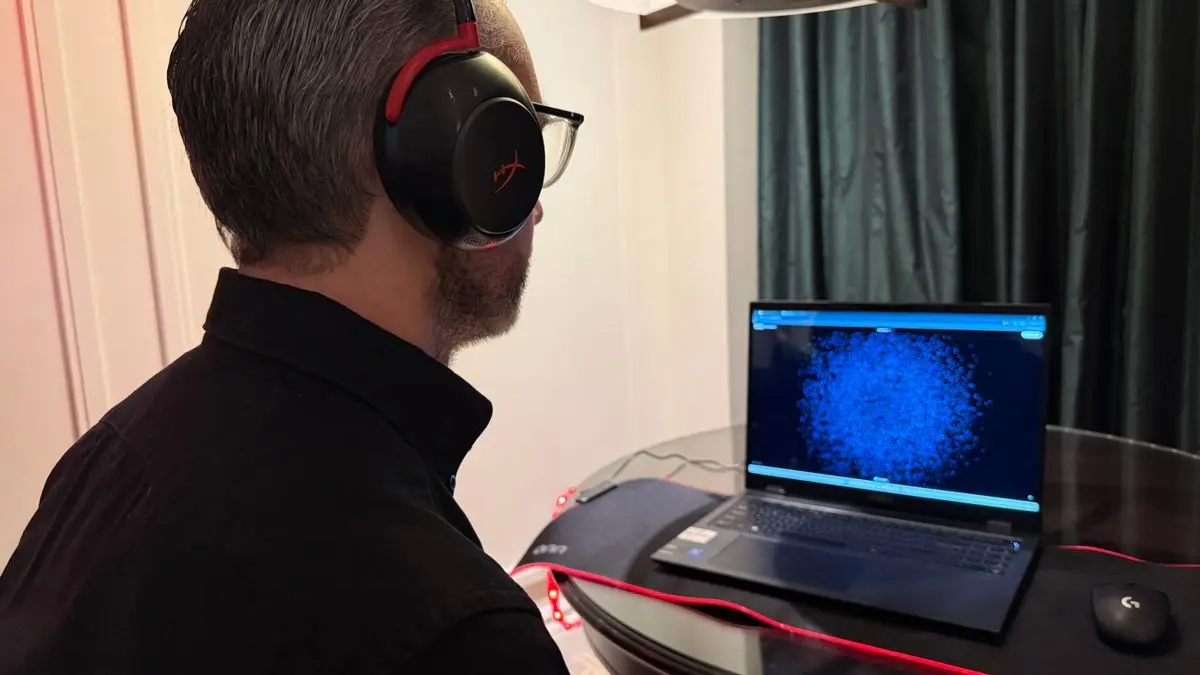
The core innovation lies in Neurable's neurofeedback Prime system, a pre-gaming routine designed to enhance gamer focus before competitive sessions. Players wear the headset and view a visualization of dots floating in a sphere on their screen. As users concentrate and reduce cognitive load, the cloud of dots compresses into a smaller formation, eventually shrinking to a single point before disappearing
2
4
.
Source: TechRadar
Dr. Ramses Alcaide, CEO and co-founder of Neurable, explained that the system leverages brain plasticity to train users to enter optimal mental states. "If something just happened to you, you know, you heard bad news, your cognitive load shoots up like crazy. It's so hard to focus and get back into that zone," Alcaide told TechRadar. The biofeedback mechanism helps reduce cognitive load while increasing focus, enabling players to reach peak performance more consistently
2
.Measurable Performance Improvements in Testing
Multiple journalists tested the prototype at CES 2026 and reported quantifiable improvements in their gaming performance. Tom's Guide's tester saw their high score increase by over 5,000 points, accuracy improve by two percentage points, and response time decrease by nearly 100 milliseconds after using the Prime exercise
1
. The experience was described as similar to "Dead Eye mode in Red Dead Redemption 2" in terms of heightened focus and rapid target acquisition.Neurable's internal data shows that pro-level esports athletes improved target-aiming accuracy by approximately 3% using the priming process, while average players saw gains around 1.5%. The technology helped improve reaction times by an average of 43 milliseconds across test subjects
2
5
. These improvements matter in competitive gaming where milliseconds separate victory from defeat.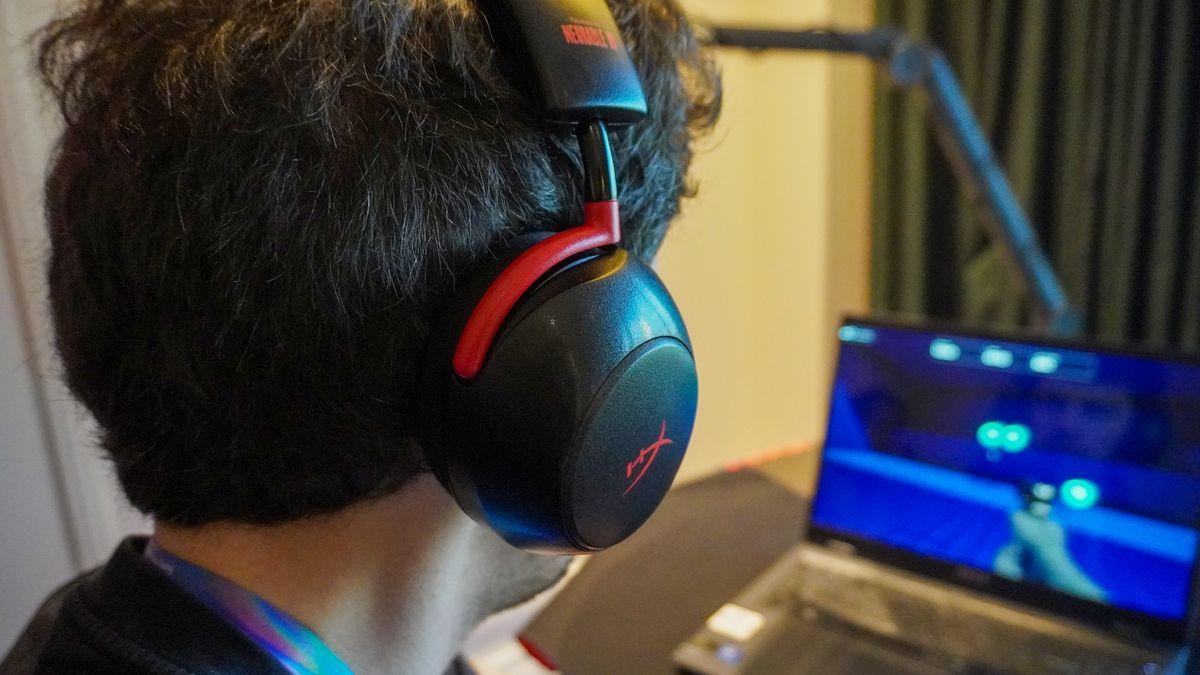
Source: Tom's Guide
Alcaide noted a particularly significant breakthrough: "Especially in games like StarCraft or in shooting games like Counter-Strike, one of the biggest issues that exists is that you normally have to choose between reaction time or accuracy. You can move quickly, but it may mean that your shots are landing worse." The system appears to improve both metrics simultaneously, addressing a longstanding tradeoff in competitive gaming
2
.Related Stories


Real-Time Brain Activity Monitoring and Prevention of Tilt
Beyond pre-game preparation, the gaming headset continuously monitors real-time brain activity during gameplay. This capability opens applications for streamers and content creators, with Neurable and HyperX developing overlay plugins that display focus levels on stream. Viewers could see their favorite streamers' mental states represented as a speedometer, the cloud of dots, or a progress bar indicating whether the player is "on tilt"
4
. This prevention of tilt—the mental state where frustration degrades performance—represents a key advantage for competitive gamers and esports professionals.The technology also enables what Neurable calls "practice choking," where players can train themselves to recognize and manage the psychological pressure that leads to performance crashes in high-stakes moments. A World of Warcraft raider testing the device confirmed this would have practical value for high-level raid scenarios
4
.Market Position and Future Availability
Neurable has previously collaborated with audio brand Master & Dynamic on the MW75 Neuro headphones, priced at $500 and aimed at productivity users tracking focus and burnout risk at work
2
3
. The HyperX partnership represents Neurable's push into the gaming market after primarily serving defense and enterprise sectors.The prototype shown at CES 2026 lacks a microphone boom and is heavier than ideal for extended gaming sessions, indicating the final product remains at least a year away from release
3
4
. No pricing or release date has been announced, though if it follows the MW75 Neuro's pricing model, it could approach the $500 mark—a significant investment that may limit adoption beyond serious gamers and esports professionals.Alcaide stated that the collaboration with HyperX will "bring neurotechnology to gamers at a scale we've never been able to reach before," suggesting HP's manufacturing and distribution capabilities could make brain-computer interface technology more accessible to mainstream gamers
5
. The partnership positions HyperX to differentiate itself in a crowded gaming peripheral market where traditional headset improvements have plateaued. For gamers, the question becomes whether measurable cognitive insights and performance gains justify what will likely be a premium price point when the device eventually ships.References
Summarized by

Navi
[1]
Related Stories
Recent Highlights



Recent Highlights
Today's Top Stories




Your Daily Dose of Curated AI News
Don’t drown in AI news. We cut through the noise - filtering, ranking and summarizing the most important AI news, breakthroughs and research daily. Spend less time searching for the latest in AI and get straight to action.

