Razer's Project Motoko brings AI headphones with cameras to challenge smart glasses market


14 Sources
[1]
I Wore Razer's Project Motoko: Like Smart Glasses, but in Headphone Form
Nearly 20 years writing about tech, and over a decade reviewing wearable tech, VR, and AR products and apps I've been down this road before: look at something in front of me, snap a photo, and ask AI services for advice about what I'm looking at. I've done with Meta's Ray-Ban glasses and countless
[2]
Razer thinks you'd rather have AI headphones instead of glasses
"This is the future of AI wearables!" That's what I'm told as a Razer representative slips a pair of otherwise nondescript headphones over their ears. Except this isn't a regular pair of gaming headphones. This is Razer's Project Motoko, a concept pair of headphones that has two 4K cameras, near
[3]
Razer's Project Motoko is a concept gaming headset that doubles as an AI wearable
We see plenty of far-out ideas on the CES show floor, and this year Razer brought in a concept piece called Project Motoko. The device is Razer's take on blurring the line between a gaming headset and an AI-powered wearable for daily life. Or it's a way for Ghost in the Shell fans to feel affronted
[4]
Razer Thinks AI Headphones With Cameras Can Take On Meta's Ray-Bans
If there's one thing that 2025 gave us a lot of last year in the tech world, it was smart glasses, and if I had to guess, 2026 won't be any different. But just because gadget makers seem to have their eyes fixed in one direction doesn't mean smart glasses are a sure thing. What if there's another
[5]

Razer's new concept headphones have built-in cameras and all the AI you need
You can also set us as a preferred source in Google Search by clicking the button below. Although many companies have been pushing the idea of glasses using AI, AR, and other cutting-edge technologies, Razer feels that headphones are a better choice for AI wearables. While you won't have a display
[6]

I tried Razer's Project Motoko and this gaming headset with dual first-person cameras could be the future of AI
Proving the best AI wearable is the one you're already wearing From Plaud's NotePin to Meta's Ray-Ban smart glasses, AI wearables are all the rage these days, and that's especially true at CES 2026. However, when I walked into Razer's suite, I wasn't expecting to find an AI-powered gaming
[7]

CES 2026: Move over, AI smart glasses! Razer has a new AI wearable: Headphones.
Hands-on with Razer's new Project Motoko at CES 2026. Credit: Mashable If you don't regularly wear glasses, why would you ever wear AI-powered smart glasses? That's the question posed to us by Razer at CES 2026 this year - and it's a good point! This is why Razer has been working on a new
[8]

Wearable AI is coming -- and Razer's Project Motoko is leading the charge with smart headphones
The headset pairs cameras, microphones, and AI platforms like ChatGPT and Gemini to offer hands-free assistance Razer offered a glimpse of a world where your headset sees, hears, and thinks while it pipes your music to your ears at CES this year. The company's new Project Motoko AI-native headset
[9]

Your headphones just got two cameras, meet Project Motoko
Razer's concept headset puts dual eye-line FPV cameras on a Snapdragon platform, pitched for hands-free POV capture and computer vision tasks CES 2026 Read and watch our complete CES coverage here Updated less than 5 minutes ago Razer Project Motoko is a wireless AI headset concept that adds dual
[10]

Razer announces Project Motoko: kind of like AI glasses but a gaming headset
Ah, CES. Half AI, a quarter prototypes that seem finetuned for a headline, and a quarter genuinely useful tech. With Project Motoko, Razer seems intent on hitting at least three quarters of that market. Announced today, Project Motoko is a gaming headset with a Snapdragon chip that reportedly has
[11]
CES 2026 news: Razer AI-powered gaming headset revealed
CES is all about wacky concepts, and Razer brought one of its own to the 2026 showcase. The gaming accessory giant unveiled a concept gaming headset called Project Motoko that does more than just deliver audio and accommodate voice chat with friends. Much more, in fact. Motoko is actually a
[12]

Razer's Project Motoko turns AI smart glasses into a wireless headset
TL;DR: Razer's Project Motoko, unveiled at CES 2026, is a wireless gaming headset featuring dual first-person cameras and AI-powered real-time object recognition. It offers private, fast AI interactions via speech, supports multiple AI platforms, and is designed for on-the-go use, with a planned
[13]

Razer's Project Motoko Combines AI Smarts into a Gaming Headset - Phandroid
The annual Consumer Electronics Showcase in Las Vegas is probably one of the best places to see a lot of cool tech, and while some of them don't necessarily make it to market status, they nevertheless show what we can expect from current technology. That said, Razer recently unveiled Project
[14]

Razer's New Headphones Have Cameras to Act as a Real-Time AI assistant
Project Motoko is still a concept for now, but you can sign up to get the first Developer Kit in Q2 2026. At CES 2026, Razer unveiled a new type of wearable AI device called Project Motoko. It's a wireless headset that turns a pair of headphones into an "always-on" AI assistant. Razer's Project
Share
Copy Link
Razer introduced Project Motoko at CES 2026, a concept pair of AI-powered headphones equipped with dual 4K cameras and voice-activated AI capabilities. The device promises 36-hour battery life and compatibility with multiple AI platforms including ChatGPT, Gemini, and Grok. Razer positions these headphones with cameras as a practical alternative to smart glasses, targeting gamers and everyday users who want AI assistance without wearing glasses.
Razer Unveils Project Motoko AI Headphones at CES
Razer showcased Project Motoko at CES 2026, positioning these AI headphones as a compelling alternative to smart glasses in the expanding wearable AI assistant market. The concept gaming headset features dual Sony 4K 12MP cameras mounted on each earcup, designed to capture point-of-view footage and enable computer vision capabilities
1
. Powered by a Qualcomm Snapdragon chip, the device integrates AI-enabled wearable technology into an over-ear form factor that many users already wear daily2
.
Source: Engadget
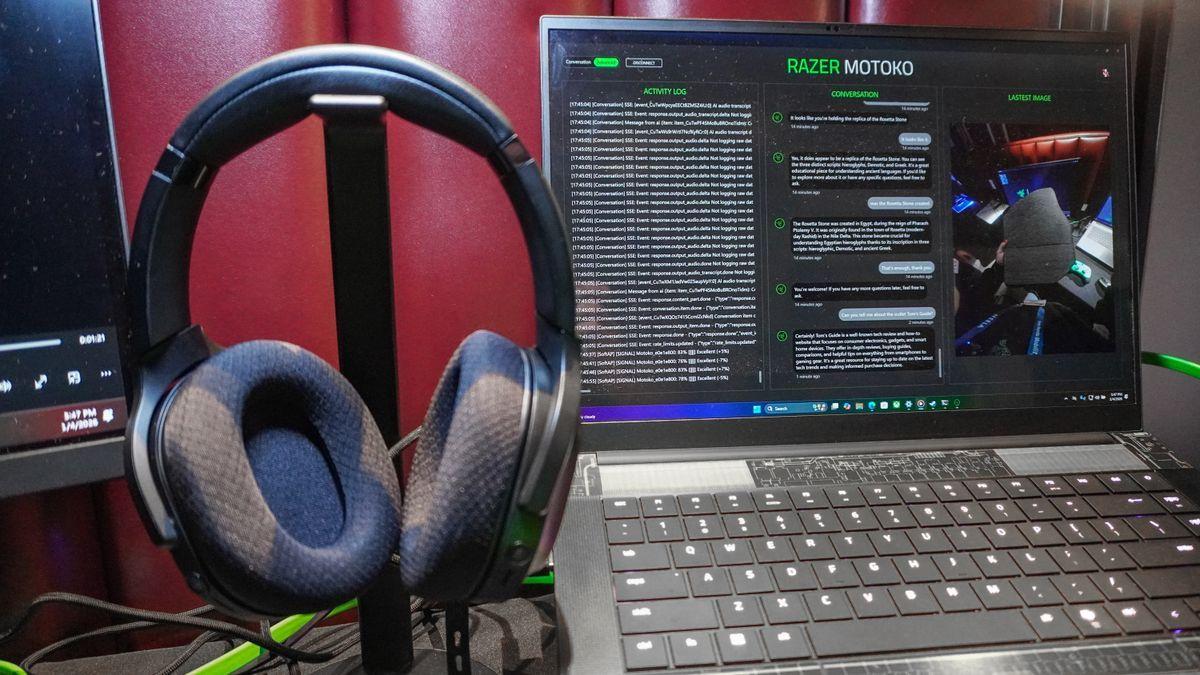
The headphones with cameras can perform real-time object and text recognition, translate foreign language menus, provide recipe suggestions, and answer gaming strategy questions
3
. Users activate the wearable AI assistant by saying "Hey, Motoko" or pressing a button to capture photos and initiate AI queries5
.
Source: Tom's Guide
Why Razer Chose Headphones Over Smart Glasses
Razer makes a direct case for AI-powered headphones as superior to Meta Ray-Ban and other smart glasses options. The most significant advantage is battery life—Project Motoko achieved up to 36 hours in testing, compared to approximately six hours for Ray-Ban Meta glasses
2
.
Source: CNET
The on-the-go AI functionalities also benefit from enhanced privacy, according to Razer representatives. Over-ear cans direct audio straight into users' ears rather than broadcasting responses through open-ear speakers found in most smart glasses
4
. Additionally, users can charge and use these headphones simultaneously, something impossible with smart glasses2
.Multi-Platform AI Integration and Technical Specifications
Unlike smart glasses that typically funnel users to one AI service, Project Motoko takes an AI-agnostic approach. The concept device integrates with ChatGPT, OpenAI, Gemini, and Grok, allowing users to choose their preferred platform
3
. Basic AI queries process locally on the headphones, while more complex requests require internet connectivity through a paired phone or PC2
.The 4K cameras positioned at eye level provide what Razer claims is more natural point-of-view footage than many smart glasses designs
2
. The device includes near and far field microphones to capture audio at various distances, enhancing its computer vision and voice commands capabilities3
.Related Stories

Real-World Performance and Privacy Concerns
Demonstrations at CES showed Project Motoko successfully translating Japanese cafe menus, identifying objects like a miniature Rosetta Stone tablet, and providing real-time translation with phonetic pronunciation
2
. However, hands-on testing revealed variable performance typical of AI wearables. When asked about weapon attachments in Battlefield, the system initially provided tangential information about different guns before delivering a useful answer upon rephrasing4
.Privacy remains a consideration with any camera-equipped wearable. Project Motoko includes a small recording indicator light, though observers questioned its visibility in bright environments or for users with voluminous hair
2
. The form factor itself presents trade-offs—while offering privacy benefits, over-ear headphones can feel isolating and may not suit all-day wear for users who need environmental awareness4
.Market Positioning and Release Timeline
Razer appears confident about bringing this concept device to market, with company representatives stating a commercial release will happen at a price competitive with smart glasses, which currently start around $300 for Meta Ray-Ban models
1
. The company expects Project Motoko to arrive sometime later in 20262
.Nick Bourne, Razer's global head of mobile console division, described the device as "more than a concept" and "a vision for the future of AI and wearable computing"
3
. The involvement of Qualcomm, known for driving new tech product categories, suggests headphones with cameras may represent an emerging trend in AI wearables1
. With more people wearing headphones than glasses daily, this alternative form factor could expand the addressable market for AI-enabled wearable technology beyond early adopters of smart glasses.References
Summarized by

Navi
[5]
Related Stories
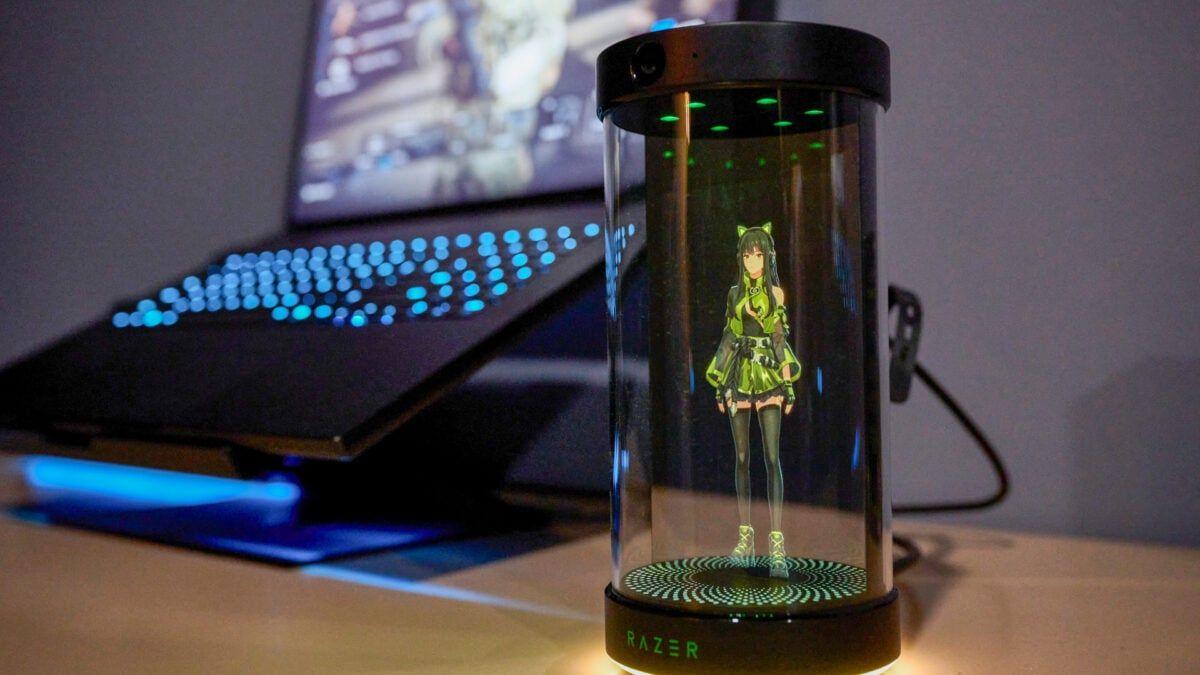
Razer unveils Project Ava AI hologram desk companion powered by Grok at CES 2026
06 Jan 2026•Technology

Razer opens reservations for Project Ava AI waifu but can't explain what you're buying
20 Jan 2026•Technology
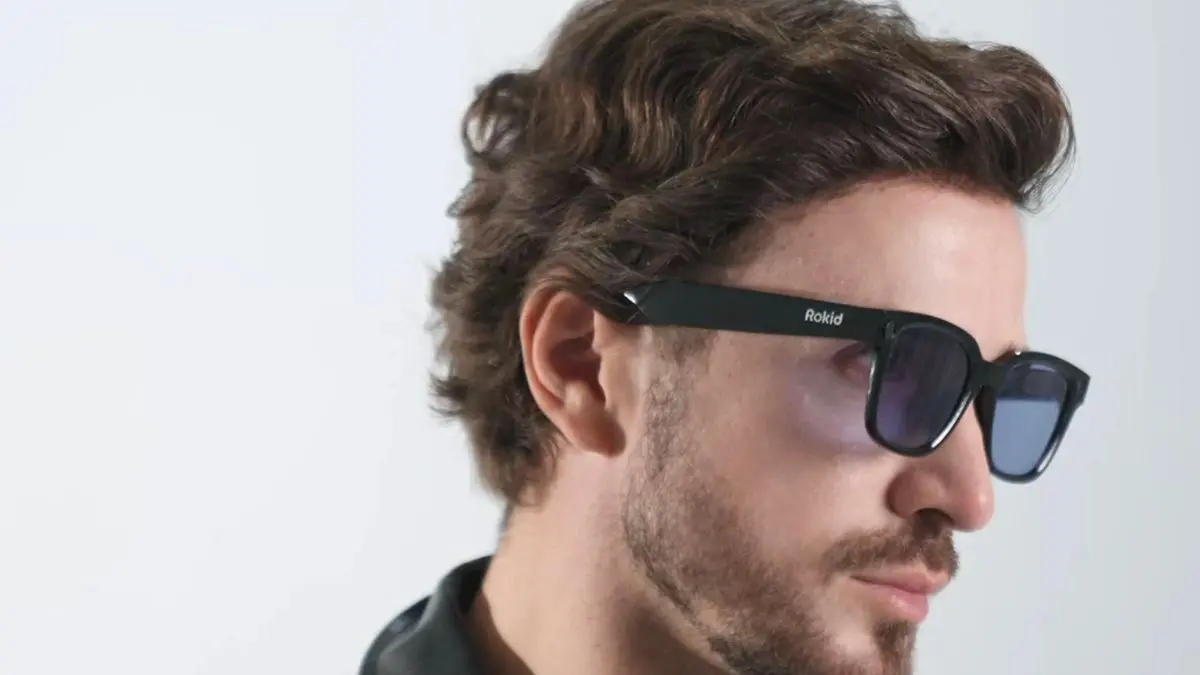
Rokid's $299 AI glasses take aim at Meta with screenless design and neural wristband partnership
08 Jan 2026•Technology
Recent Highlights



Recent Highlights
Today's Top Stories







Don’t drown in AI news. We cut through the noise - filtering, ranking and summarizing the most important AI news, breakthroughs and research daily. Follow topics that matter to you and stay ahead.


