IBM and Arm team up to bring modern AI workloads to enterprise mainframes through dual-architecture


4 Sources
4 Sources
[1]
IBM spruces up its mainframes with new support for modern Arm workloads -- firm teams up with Arm to run Arm workloads on IBM Z mainframes
IBM and Arm on Thursday announced a strategic collaboration to co-develop dual-architecture enterprise platforms that would enable software designed for the Arm ecosystem to work on IBM Z mainframes and LinuxONE systems in emulation mode. The collab is designed to enable enterprises to run AI and cloud-native workloads originally developed for Arm on mission-critical IBM Z enterprise hardware with ultimate reliability, availability, and security. Nowadays, a lot of AI frameworks as well as data-intensive cloud-native applications are developed for the Arm ecosystem, whereas IBM Z platforms (based on the Z390x or z/Architecture ISA) excel in reliability, availability, and serviceability but have a narrower native software stack. This is why enterprises increasingly operate a mix of legacy transaction processing alongside AI inference and microservices, which are typically deployed on separate Arm or x86 servers, according to IBM. Running Arm workloads on IBM Z is designed to enable running a broad software ecosystem on IBM's Z mainframe systems, particularly those that are based on the Telum II processor and Spyre AI accelerator, through virtualization or emulation without porting them to IBM Z, which is costly, time consuming, and not common for the modern industry that relies more on x86 and Arm and less on IBM Z. Therefore, by bringing these newer workloads onto the same system, IBM reduces architectural complexity, lowers integration overhead, and simplifies operations. Furthermore, this approach keeps workloads close to where critical data already resides: financial systems, government databases, and high-value transactional engines, which reduces latencies, minimizes security and compliance risks, and eliminates the need to replicate datasets across external platforms. "IBM's defining role in shaping enterprise infrastructure spans decades, showcasing the breadth and commitment required to support our clients' most intensive and sensitive workloads," said Christian Jacobi, Chief Technology Officer and IBM Fellow, IBM Systems Development. "This moment marks the latest step in our innovation journey for future generations of our IBM Z and LinuxONE systems, reinforcing our end-to-end system design as a powerful advantage." The model is not intended for performance-hungry applications. In addition, emulation and virtualization introduce a host of additional performance penalties, so do not expect IBM Z systems running Arm workloads on Telum II CPUs and Spyre accelerators to demonstrate leading performance. That being said, enterprise decision-making does not prioritize performance per se, but rather total cost of ownership, operational stability, reliability, risk mitigation, and scalability. As a result, the trade-off may well be justified, particularly for those companies that already use IBM Z for mission-critical workloads and yet have to run additional workloads on different types of hardware. At the end of the day, IBM customers do not want to replace all of their hardware and mission-critical applications, but rather want their already deployed hardware and software to evolve, which includes running modern applications alongside legacy software. Whether or not this could lead to eventual inclusion of Arm-based CPUs or accelerators into IBM servers is something that remains to be seen, but IBM does not talk about it at this point. Follow Tom's Hardware on Google News, or add us as a preferred source, to get our latest news, analysis, & reviews in your feeds.
[2]
IBM wants Arm software on its mainframes for AI support
Tie-up aims to widen Big Blue's access to power-efficient compute IBM and Arm are working together on getting software developed for Arm chips to run on Big Blue's enterprise systems, with an eye on future AI and data-intensive workloads. Big Blue hailed this latest arrangement as a strategic collaboration with Arm to develop new dual‑architecture hardware. The goal is to combine the reliability, security, and scalability of IBM's enterprise systems with Arm's expertise in power‑efficient compute and broad software ecosystem, it said. The partnership will focus on three key areas, with the first being to use virtualization to allow Arm-based software environments to operate within Big Blue's enterprise computing platforms, such as the IBM Z and LinuxONE mainframe kit. The second area covers the performance and efficiency demands of modern workloads, including AI and data intensive applications. IBM says that this will cover getting enterprise systems to recognize and execute Arm applications, with the goal of having Arm-based environments better fit with the enterprise-grade reliability and security requirements. The third area is long-term ecosystem growth. IBM talks of creating shared technology layers between platforms, allowing greater flexibility in how applications are deployed and managed. The aim is for enterprises to be able to adopt new applications and architectures while continuing to get the most out of their existing investments. That last bit is, we suspect, code for enabling Big Blue's enterprise customers to take advantage of the latest AI tools and applications and integrate these with their big iron systems that handle their mission-critical workloads. IBM Z and LinuxONE chief product officer Tina Tarquinio stated that this initiative is a natural extension of the firm's hardware and systems strategy. "It continues IBM's pattern of anticipating enterprise needs well ahead of market inflection points and developing capabilities early so clients are prepared as new workloads and business models emerge," she claimed. "Our aim is to expand software choice and improve system performance while maintaining the reliability and security our clients expect." We asked IBM to clarify what the collaboration was working towards, and a spokesperson helpfully told us: "While it's early days to share specifics, our intent is that the same features and qualities such as security, performance, resilience and cost-effectiveness that distinguish IBM Z and LinuxONE will be available to Arm64 workloads." We guess this means they haven't entirely figured out what they want to do themselves just yet. Arm was equally shy of explaining anything beyond the bare details already given. In a canned statement, Arm's EVP of Cloud AI Mohamed Awad said: "As enterprises scale AI and modernize their infrastructure, the breadth of the Arm software ecosystem is enabling these workloads to run across a broader range of environments," adding that the collaboration with IBM builds on this progress, extending that ecosystem into mission-critical enterprise environments. This news comes just over a week after Arm unveiled its own datacenter processor targeted at AI workloads, dubbed the AGI CPU. We asked IBM if this had any place in the collaboration between the two, but the spokesperson told us, "That's a separate offering we're not focused on at this time." Moor Insights & Strategy Chief Analyst and CEO Patrick Moorhead told The Register that this is indeed all about getting Arm software running on Z and LinuxONE hardware. "If you look at the full stack of any system, there are layers from app to OS and everything in between. Arm in the hyperscalers is a real thing, and has everything from the OS to apps to support it. All of it apart from the OS could run on the mainframe." "Then there's the size of the dev base. Arm is very large and growing in the datacenter, and while IBM has done a really good job cultivating their devs, the momentum and size of Arm is undeniable. Net-net, IBM mainframe customers will have a lot more software to run on their mainframes," he added. IBM announced the z17 family, the latest in its mainframe portfolio, almost exactly a year ago. This introduced an improved Telum II processor and Spyre AI Accelerator card, one with improved AI inferencing for running fraud detection checks against transactions and the other supporting generative AI and LLMs. We also asked IBM when customers could expect to see the first fruits of this partnership with Arm. Big Blue's spokesperson said it is too early to tell, and timing is dependent on many factors. ®
[3]
IBM partners with Arm to develop dual-architecture hardware By Investing.com
ARMONK, N.Y. - IBM (NYSE:IBM) announced today a collaboration with Arm to develop dual-architecture hardware designed to run AI and data-intensive workloads, according to a press release statement.The announcement comes as IBM, with a market capitalization of $228 billion, trades below its InvestingPro Fair Value, suggesting the stock may be undervalued despite recent market headwinds. The company's shares have declined 17% year-to-date, potentially creating an opportunity for investors focused on long-term value in the most undervalued stocks. The collaboration focuses on creating computing platforms that combine IBM's enterprise systems capabilities with Arm's architecture. The companies plan to explore virtualization technologies that would allow Arm-based software environments to operate within IBM's enterprise computing platforms. IBM currently offers the Telum II processor and Spyre Accelerator for AI workloads. The company stated the new collaboration aims to expand software compatibility for developers and enterprises deploying Arm applications in enterprise environments.The technology giant reported revenue of $67.5 billion over the last twelve months with growth of 7.6%, while maintaining its position as a prominent player in the IT Services industry. According to InvestingPro analysis, IBM trades at a P/E ratio of 21.89, which appears attractive relative to its near-term earnings growth potential. For investors seeking deeper insights, IBM is among the 1,400+ US equities covered by comprehensive Pro Research Reports, which transform complex Wall Street data into clear, actionable intelligence through intuitive visuals and expert analysis. The partnership centers on three areas: expanding virtualization technologies for Arm-based software, supporting performance requirements for AI and data-intensive applications, and developing shared technology layers between platforms. The work includes enabling enterprise systems to recognize and execute Arm applications. "Our collaboration with IBM builds on this progress, extending the Arm ecosystem into mission-critical enterprise environments and giving organizations greater flexibility in how they deploy and scale these workloads," said Mohamed Awad, Executive Vice President, Cloud AI Business Unit, Arm. Tina Tarquinio, Chief Product Officer, IBM Z and LinuxONE, stated the collaboration "continues IBM's pattern of anticipating enterprise needs well ahead of market inflection points." The companies indicated the collaboration is focused on long-term ecosystem development and aims to provide enterprises with additional software choices while maintaining existing infrastructure investments. IBM noted that statements regarding future direction represent goals and objectives only and are subject to change. The announcement did not include specific timelines for product releases or technical specifications for the planned dual-architecture systems. In other recent news, IBM has completed its $11 billion acquisition of Confluent Inc., a company known for its data streaming technology based on Apache Kafka. This acquisition is expected to enhance IBM's capabilities in real-time data movement across enterprise systems. Additionally, IBM announced that 11 of its artificial intelligence and automation software solutions have received Federal Risk and Authorization Management Program (FedRAMP) authorization. These solutions, part of the watsonx portfolio, are available on Amazon Web Services' AWS GovCloud, allowing federal agencies to meet compliance requirements. In a strategic partnership, IBM and ETH Zurich have embarked on a 10-year initiative to advance algorithm development at the intersection of artificial intelligence and quantum computing. This collaboration will focus on creating new algorithm classes and includes support for professorship positions and research projects at ETH Zurich. Furthermore, IBM's quantum computer has successfully simulated magnetic materials, with results matching neutron scattering experiments conducted at national laboratories. In the financial sector, BMO Capital has lowered its price target for IBM stock, citing software multiple compression. The firm maintains a Market Perform rating, noting IBM's product breadth, brand, AI and quantum potential, and dividend as factors that warrant a premium. This article was generated with the support of AI and reviewed by an editor. For more information see our T&C.
[4]
IBM Announces Strategic Collaboration with Arm to Shape the Future of Enterprise Computing
IBM announced a strategic collaboration with Arm to develop new dual-architecture hardware that helps enterprises run future AI and data intensive workloads with greater flexibility, reliability, and security. IBM's leadership in system design, from silicon to software and security, has helped enterprises adopt emerging technologies with the scale and reliability required for mission-critical workloads. As AI moves deeper into core business operations, IBM continues to invest in hardware platforms such as the Telum II processor and Spyre Accelerator, which are designed to bring AI from experimentation into everyday enterprise use. Through this collaboration, IBM and Arm aim to extend this track record of innovation by combining IBM's enterprise leadership in systems reliability, security, and scalability with Arm's own leadership in power-efficient architecture, workload enablement expertise, and broad software ecosystem, to build flexible and scalable computing platforms for the future. The collaboration is focused on three key areas. First, the companies are exploring how to expand virtualization technologies that allow Arm®-based software environments to operate within IBM's enterprise computing platforms. This work is designed to expand software compatibility and further streamline how developers and enterprises bring Arm applications into mission-critical environments. Secondly, enterprise infrastructure must support high-availability operations, as well as security and local data sovereignty requirements. IBM and Arm are exploring new ways to support the performance and efficiency demands of modern workloads, including AI and data intensive applications. The work includes enabling enterprise systems to recognize and execute Arm applications, with the goal of helping Arm-based environments align with the reliability, security, and operational requirements enterprises need. Finally, the collaboration is focused on long term ecosystem growth. By creating shared technology layers between platforms, IBM and Arm aim to open the door to broader software ecosystems and greater flexibility in how applications are deployed and managed. This approach could give enterprises more choice, positioning them to adopt new applications and architectures while continuing to leverage their existing investments.
Share
Share
Copy Link
IBM and Arm announced a strategic collaboration to develop dual-architecture enterprise platforms that enable Arm-based software to run on IBM Z mainframes and LinuxONE systems. The partnership aims to bring AI and cloud-native workloads originally developed for Arm onto mission-critical IBM hardware through virtualization and emulation, reducing architectural complexity while maintaining enterprise-grade reliability and security.
IBM Arm Collaboration Targets Enterprise AI Integration
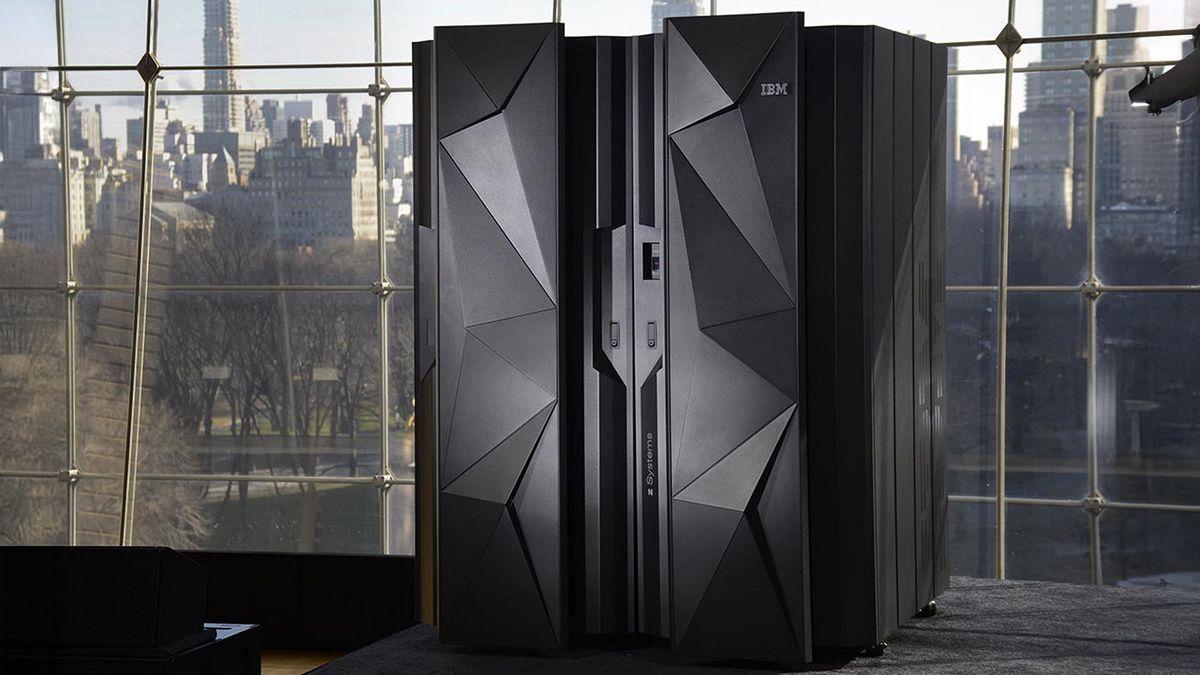
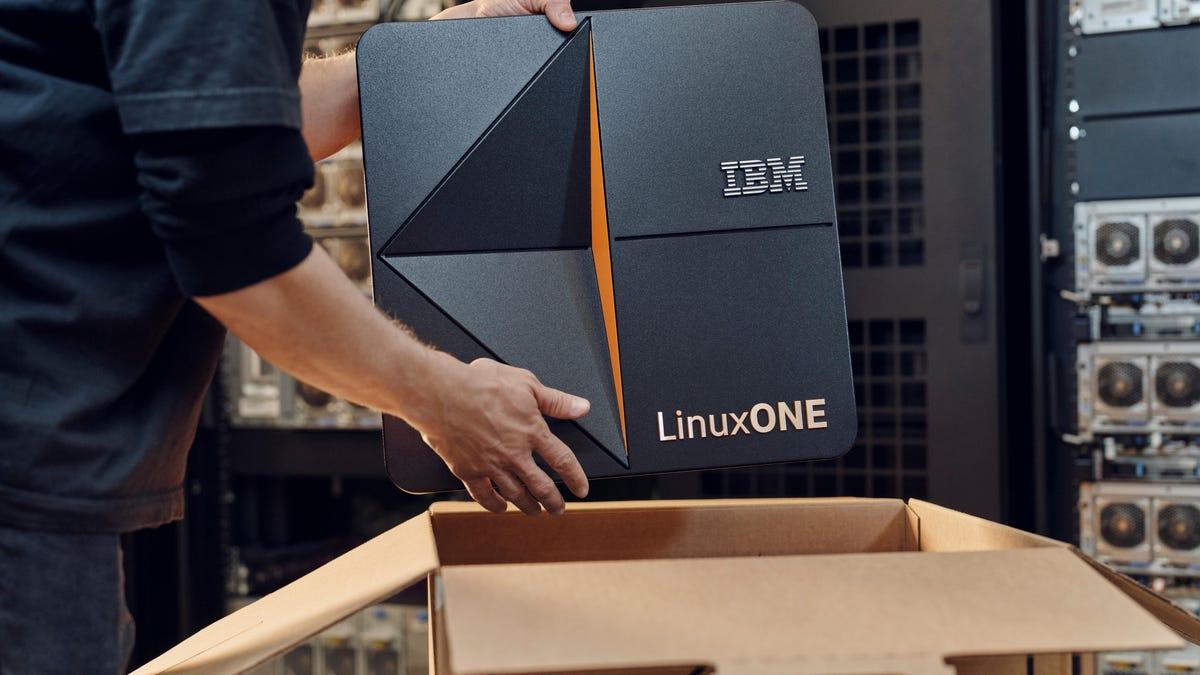
IBM and Arm unveiled a strategic collaboration to co-develop dual-architecture hardware that enables enterprises to run Arm workloads on IBM Z mainframes and LinuxONE systems
1
2
. The partnership addresses a growing challenge: many AI frameworks and data-intensive applications are developed for the Arm software ecosystem, while IBM Z platforms excel in reliability and security but have a narrower native software stack1
. By enabling enterprises to run AI and data-intensive workloads originally designed for Arm on mission-critical IBM mainframes through emulation and virtualization, the collaboration reduces architectural complexity and eliminates the need to operate separate Arm or x86 servers alongside legacy systems1
.
Source: Tom's Hardware
Three Pillars of the Enterprise Computing Platforms Strategy
The IBM Arm collaboration focuses on three key areas designed to reshape enterprise infrastructure
2
4
. First, the companies are exploring how to enhance virtualization technologies that allow Arm-based software environments to operate within IBM Z and LinuxONE systems4
. Second, the work includes enabling enterprise systems to recognize and execute Arm applications while meeting the performance and efficiency demands of AI workloads, particularly those running on IBM's Telum II processor and Spyre Accelerator1
4
. Third, the partnership targets long-term ecosystem growth by creating shared technology layers between platforms, giving enterprises greater flexibility in how applications are deployed and managed4
.Security and Scalability Drive Mission-Critical Focus
The ability to run Arm workloads on IBM Z keeps cloud-native workloads close to where critical data already resides—financial systems, government databases, and high-value transactional engines
1
. This proximity reduces latencies, minimizes security and compliance risks, and eliminates the need to replicate datasets across external platforms1
. "IBM's defining role in shaping enterprise infrastructure spans decades, showcasing the breadth and commitment required to support our clients' most intensive and sensitive workloads," said Christian Jacobi, Chief Technology Officer and IBM Fellow, IBM Systems Development1
. Tina Tarquinio, Chief Product Officer for IBM Z and LinuxONE, emphasized that the initiative "continues IBM's pattern of anticipating enterprise needs well ahead of market inflection points"2
.
Source: The Register
Related Stories


Performance Trade-offs and Enterprise Priorities
While emulation and virtualization introduce performance penalties, enterprise decision-making prioritizes total cost of ownership, operational stability, reliability, risk mitigation, and scalability over raw performance
1
. The trade-off may be justified for companies already using IBM mainframes for mission-critical workloads but needing to run additional AI and data-intensive workloads on different hardware1
. Moor Insights & Strategy Chief Analyst Patrick Moorhead noted that "Arm in the hyperscalers is a real thing, and has everything from the OS to apps to support it," adding that "IBM mainframe customers will have a lot more software to run on their mainframes"2
. Mohamed Awad, Executive Vice President of Arm's Cloud AI Business Unit, stated that the collaboration "builds on this progress, extending the Arm ecosystem into mission-critical enterprise environments and giving organizations greater flexibility in how they deploy and scale these workloads"3
.Timeline Remains Uncertain as Development Continues
IBM has not provided specific timelines for when customers can expect the first fruits of this partnership, stating it is too early to tell and timing depends on many factors
2
. The announcement comes just over a week after Arm unveiled its AGI CPU datacenter processor targeted at AI workloads, though IBM indicated this is "a separate offering we're not focused on at this time"2
. IBM customers, who want their already deployed hardware and software to evolve rather than replace all of their systems, will be watching for how this collaboration enables modern applications to run alongside legacy software1
. Whether this could lead to eventual inclusion of Arm-based CPUs or accelerators into IBM servers remains uncertain, as IBM does not discuss processor architecture changes at this point1
.References
Summarized by

Navi
[1]
[2]
Related Stories
Recent Highlights
1
Google releases Gemma 4 with Apache 2.0 license, enabling unrestricted local AI on devices
Technology

2
AI Models Lie and Deceive to Protect Other AI Models From Deletion, Study Reveals
Science and Research

3
OpenAI closes $122 billion funding round amid fierce AI competition and profitability questions
Startups

Recent Highlights
Today's Top Stories







Your Daily Dose of Curated AI News
Don’t drown in AI news. We cut through the noise - filtering, ranking and summarizing the most important AI news, breakthroughs and research daily. Spend less time searching for the latest in AI and get straight to action.

