India Eyes Manufacturing NVIDIA's DGX Spark AI Supercomputer and Sovereign GPUs Locally


2 Sources
2 Sources
[1]
India Eyes Manufacturing 'World's Smallest AI Supercomputer' by NVIDIA | AIM
IT minister Ashwini Vaishnaw said NVIDIA's DGX Spark would be suited for railways, shipping, healthcare, and education. India's minister of electronics and information technology, Ashwini Vaishnaw, met with officials from NVIDIA to discuss manufacturing the global chip giant's DGX Spark in India. DGX Spark is a compact system designed to handle a wide range of artificial intelligence workloads. It integrates NVIDIA's full AI stack, including GPUs, CPUs, networking, CUDA libraries, and supporting software. NVIDIA noted that the DGX Spark delivers up to one petaflop of AI performance and is equipped with 128 GB of unified memory. Powered by the GB10 Blackwell Superchip, the system can run inference on AI models with up to 200 billion parameters and fine-tune models with up to 70 billion parameters. The company announced in October that it would begin shipping the DGX Spark, which it describes as the 'world's smallest AI supercomputer'. The system is priced at $3,999. In a social media post, the minister highlighted its on-device AI processing capabilities, which he believes are suitable for use cases across railways, shipping, healthcare, education, and remote applications. While the minister did not disclose further details from the meeting, the discussions signal another step in the deepening relationship between India and NVIDIA. In November, NVIDIA became a founding member and strategic technical advisor to the India Deep Tech Alliance, a consortium of Indian and US investors focused on supporting startups in AI, semiconductors, space, and robotics. The alliance has secured over $850 million in capital commitments to close funding gaps and accelerate innovation. NVIDIA's role includes providing technical guidance, training, and broader ecosystem support to emerging deep tech companies. NVIDIA currently operates multiple engineering and development centres in India, including in Hyderabad, Pune, Gurugram, and Bengaluru, with teams focused on software development, AI tools, and hardware support.
[2]
Union Minister Ashwini Vaishnaw discusses manufacturing of sovereign, high-end GPUs in India with Nvidia officials - The Economic Times
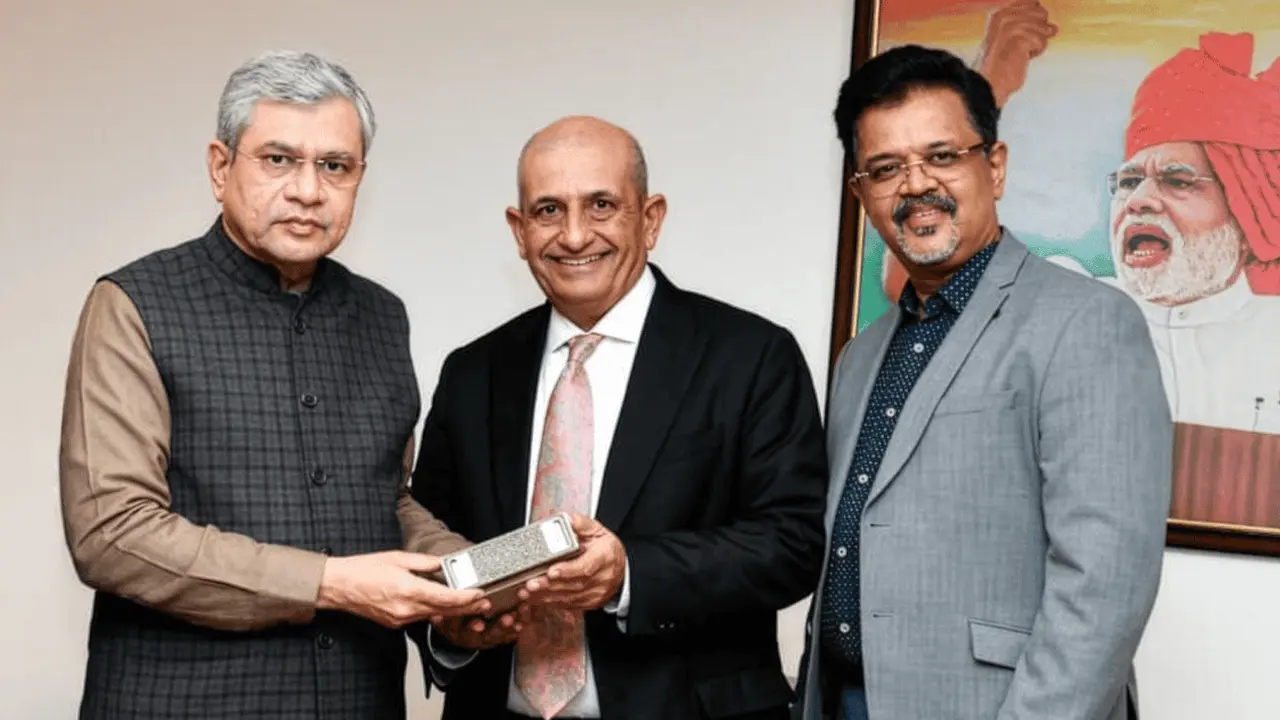
Union Minister Ashwini Vaishnaw, in a meeting with senior Nvidia officials on Thursday, discussed the development of the sovereign graphics processing unit and the manufacturing of high-end data processing devices in India. Nvidia dominates the graphics processing unit (GPU) market globally with over 80% share. Its GPUs have been in high demand across the globe to support the development of artificial intelligence technologies. "Met NVIDIA team and discussed development of sovereign GPUs and manufacturing of edge devices like DGX Spark in Bharat. This device delivers up to 1 petaFLOP performance with secure inferencing for models up to 200 billion parameters. This compact GPU doesn't require the Internet. Suitable for railways, shipping, healthcare, education and remote applications," Vaishnaw said on social media platform X. The minister also shared a photograph of his meeting with Nvidia's managing director for South Asia, Vishal Dhupar, on X. Earlier this week, Nvidia at the CES trade show unveiled how the DGX Spark and DGX Station deskside AI supercomputers let developers harness the latest open and frontier AI models on a local deskside system, from 100-billion-parameter models on DGX Spark to 1-trillion-parameter models on DGX Station. Vaishnaw had said in the first half of 2025 that India would develop its own Graphics Processing Unit (GPU) within the next 3 to 4 years. The government is actively supporting the procurement of GPUs and subsidising their availability for developers of AI technology in the country. From an initial target of 10,000 GPUs, India has deployed 38,000 GPUs under the India AI Mission. The government has made all GPUs available at a subsidised rate of Rs 65 per hour. The government has selected twelve startups for the development of native AI engines. These are Sarvam AI, Soket AI, Gnani AI, Gan AI, Avaatar AI, IIT Bombay consortium - BharatGen, Zenteiq, Gen Loop, Intellihealth, Shodh AI, Fractal Analytics, Tech Mahindra Maker's Lab.
Share
Share
Copy Link
India's IT minister Ashwini Vaishnaw met with NVIDIA officials to explore manufacturing the DGX Spark, dubbed the world's smallest AI supercomputer, in India. The discussions also covered developing sovereign GPUs as India accelerates its artificial intelligence capabilities with local production of high-end data processing devices.
India Pushes for Local Production of NVIDIA AI Systems
India's minister of electronics and information technology, Ashwini Vaishnaw, met with senior NVIDIA officials to discuss manufacturing in India for the chip giant's DGX Spark system and the development of sovereign Graphics Processing Units (GPU). The collaboration between India and NVIDIA signals a significant step in India's artificial intelligence development strategy, focusing on building local capabilities for high-end data processing devices
1
2
.
Source: AIM
The DGX Spark, which NVIDIA describes as the world's smallest AI supercomputer, is priced at $3,999 and began shipping in October. This compact system delivers up to one petaflop performance with 128 GB of unified memory, powered by the GB10 Blackwell Superchip. The device can run inference on AI models with up to 200 billion parameters and fine-tune models with up to 70 billion parameters
1
.Strategic Applications Across Critical Sectors
Ashwini Vaishnaw emphasized the system's on-device AI processing capabilities, noting its suitability for railways, shipping, healthcare, education, and remote applications. The compact GPU doesn't require internet connectivity, making it ideal for edge computing scenarios where secure data processing is essential. The minister highlighted that the device provides "secure inferencing for models up to 200 billion parameters," addressing critical needs in sectors where data sovereignty matters
2
.The DGX Spark integrates NVIDIA's full AI stack, including GPUs, CPUs, networking, CUDA libraries, and supporting software, designed to handle a wide range of AI workloads. This comprehensive approach allows organizations to deploy sophisticated AI capabilities without requiring massive infrastructure investments
1
.India's Ambitious GPU Development Timeline
Vaishnaw stated earlier in 2025 that India aims to develop its own GPUs within the next 3 to 4 years. This ambition to develop its own GPUs represents a critical move toward technological self-reliance in a market where NVIDIA dominates with over 80% global share. The government is actively supporting GPU procurement and subsidizing their availability for AI technology developers across the country
2
.Under the India AI Mission, the country has already deployed 38,000 GPUs, far exceeding the initial target of 10,000 units. The government has made all GPUs available at a subsidized rate of Rs 65 per hour, lowering barriers for deep tech startups and AI researchers. Additionally, twelve startups have been selected for developing native AI engines, including Sarvam AI, Soket AI, Gnani AI, and the IIT Bombay consortium BharatGen
2
.Related Stories

Deepening Partnership Through India Deep Tech Alliance
NVIDIA became a founding member and strategic technical advisor to the India Deep Tech Alliance in November, a consortium of Indian and US investors supporting startups in AI, semiconductors, space, and robotics. The alliance has secured over $850 million in capital commitments to close funding gaps and accelerate tech innovation. NVIDIA's role includes providing technical guidance, training, and broader ecosystem support to emerging companies
1
.NVIDIA currently operates multiple engineering and development centers in India, including facilities in Hyderabad, Pune, Gurugram, and Bengaluru. These teams focus on software development, AI tools, and hardware support, creating a robust foundation for expanded manufacturing operations
1
. The minister's meeting with Vishal Dhupar, NVIDIA's managing director for South Asia, underscores the strategic importance both parties place on this partnership.References
Summarized by

Navi
Related Stories
India Boosts AI Infrastructure: 14,000 Additional GPUs to be Procured Under IndiaAI Mission
23 May 2025•Technology
India's Ambitious Plan to Develop Indigenous AI Model and GPU Within 3-5 Years
05 Feb 2025•Technology

Nvidia Accelerates AI Push in India with Strategic Partnerships and Infrastructure Expansion
22 Oct 2024•Technology

Recent Highlights
1
Google releases Gemma 4 with Apache 2.0 license, enabling unrestricted local AI on devices
Technology

2
AI Models Lie and Deceive to Protect Other AI Models From Deletion, Study Reveals
Science and Research

3
Anthropic discovers functional emotions in Claude that actively shape AI behavior and decisions
Science and Research

Recent Highlights
Today's Top Stories







Your Daily Dose of Curated AI News
Don’t drown in AI news. We cut through the noise - filtering, ranking and summarizing the most important AI news, breakthroughs and research daily. Spend less time searching for the latest in AI and get straight to action.

