India Pushes Digital Public Infrastructure Model to Democratise AI Access Nationwide


2 Sources
2 Sources
[1]
Govt Shares Vision on Making AI Infrastructure in India More Accessible
The government suggests taking a digital public infrastructure approach The Office of the Principal Scientific Adviser (PSA) to the Government of India has published a white paper titled "Democratising Access to AI Infrastructure," outlining key aspects of expanding access to artificial intelligence (AI) infrastructure across the country. The PSA states that the document was prepared with input and feedback from domain experts, stakeholders, and colleagues, and was released on Monday. It examines physical and digital AI infrastructure, current capacities in India, and considerations for broader and more equitable access to compute, datasets and model ecosystems. India's Vision to Create Democratic Access to AI Infrastructure In a post on X (formerly known as Twitter), the official handle of the Office of the Principal Scientific Adviser shared the white paper, stating, "For India, democratising access means treating AI infrastructure as a shared national resource, empowering innovators across regions to build local-language tools, adapt assistive technologies, and create solutions aligned with India's diverse needs." The white paper defines democratising access to AI infrastructure as making essential elements of AI, such as computing power, datasets, and model toolchains, available and affordable, so that a wider set of users can participate in developing and deploying AI technologies. It suggests that access to these building blocks should not be limited to a small group of global players and urban hubs, but should instead be treated as shared resources that support innovation across institutions and regions. In its assessment of AI infrastructure, the paper distinguishes between physical infrastructure and digital infrastructure. Physical infrastructure includes data centres, Graphics Processing Units (GPUs), Tensor Processing Units (TPUs) and other specialised processors that support training and deploying large AI models. The report points out that while India hosts nearly 20 percent global data, its share of global data centre capacity is just three percent. It also highlights the planned expansion of compute capacity through initiatives under the IndiaAI Mission, including a secure GPU cluster with 30,000 next-generation units for sovereign and strategic applications. PSA's white paper notes that data centres in India are geographically concentrated, with Mumbai and Navi Mumbai holding the largest share, followed by hubs in Chennai, Bengaluru, Hyderabad, the Delhi NCR region, Pune and Kolkata. Alongside physical compute capacity, the document discusses how high-quality datasets and foundational model ecosystems are critical for AI development and highlights the need for these resources to be more widely accessible. The core of vision highlighted in the white paper is the "digital public infrastructure (DPI)" approach. As per the PSA, the approach includes treating AI systems as digital public goods, which will enable stakeholders to utilise data, compute, and the ecosystem of models and algorithms without needing to be in physical proximity. However, instead of using a single platform or a monolithic system, the PSA advises using a set of modular public-good enablers to address the gaps in the AI ecosystem. In the initial phase, the focus is recommended to be on lighter-weight elements, such as directories, metadata standards, access protocols, or registries. After developing capacity, the focus should be on data access systems, consent-based data flows, and a "coordinated computer-exchange mechanism," commonly known as compute. The white paper does not propose formal policy changes. Instead, it can be understood as a broad vision outlined by the government to shape the country's AI infrastructure at the infant stage, so that when the technology is scaled, there is no need to make large changes to the infrastructure to expand access to non-urban centres and individual stakeholders.
[2]
White paper signals push to build AI on DPI rails, democratise compute access
The white paper was developed through consultations with domain experts and key stakeholders, including the NITI Aayog, with the aim of providing direction to India's AI policy and governance framework. The paper signalled a push towards extending the government's Digital Public Infrastructure (DPI) model to AI, seeking to platformise AI access, instead of owning AI systems. The government of India has published a white paper on Tuesday creating a policy narrative around democratising artificial intelligence (AI) infrastructure across the public and private sectors. The paper signalled a push towards extending the government's Digital Public Infrastructure (DPI) model to AI, seeking to platformise AI access, instead of owning AI systems. The white paper was developed through consultations with domain experts and key stakeholders, including the NITI Aayog, with the aim of providing direction to India's AI policy and governance framework. It highlighted that scaling AI data centres will require an additional 45-50 million square feet of real estate by 2030, underscoring the need to integrate sustainable planning with compute expansion. Issued under the Office of the Principal Scientific Adviser, the report stated that the country would likely accelerate the expansion of AI data centres as demand for compute-intensive workloads rises. India generates nearly 20% of the world's data, however, it only has only about 3% of the global data centre capacity. The installed data centre capacity is estimated to be around 960 MW, and is projected to reach 9.2 GW by 2030. Democratisation of AI The core idea behind democratisation is to empower users to engage with and benefit from AI. With access to AI infra, institutions shall design local language tools and assistive technologies for socio-economic impact. Through tools and platforms like AIKosha, India AI Compute, and TGDeX, India's AI ecosystem is supporting innovation and services by increasing access. The document called for moving beyond a focus on hardware alone and instead build governance frameworks that treat these foundational resources as Digital Public Goods. Under this approach, access to AI would no longer depend on physical proximity to data centres or ownership of expensive infrastructure. Instead, researchers, startups, and public institutions would be able to remotely use datasets, compute, and model ecosystems through shared digital layers. The focus is on integrating data and compute through shared technical architectures, developed in stages, from basic registries and standards to advanced federated and consent-based systems. Industry initiatives Indian startups and researchers are already utilising commercial cloud services like AWS open data registry, Google Cloud public datasets, and Microsoft Azure open datasets to access AI-ready datasets globally. Companies like Yotta Data Services, NTT, CtrlS, and AdaniConneX have made large investments in hyperscale and sovereign cloud storage facilities. Yotta Data Services operates Asia's largest single-building data centre in Navi Mumbai with 72 MW IT load capacity. CtrlS operates 19 facilities with a combined load of 250 MW. State of AI infra Under the IndiaAI Mission, India is building a secure cluster of 3,000 next-generation GPUs for sovereign and strategic AI use. This is backed by the Rs 76,000-crore India Semiconductor Mission, which has approved 10 advanced chip fabrication and packaging projects to strengthen domestic AI hardware capabilities. The National Supercomputing Mission has also deployed more than 40 petaflops of computing power across academic and research institutions. The IndiaAI Compute Portal, under the IndiaAI Mission, led by the Ministry of Electronics and Information Technology (MeitY), has provided access to more than 38,000 GPUs, and 1,050 TPUs, according to the report. Compute is offered at subsidised rates of under Rs 100 per hour, which is roughly half the global market rate, reducing a major barrier to AI development. The platform was described as a "compute-as-a-service" model that allows users to train and fine-tune AI models without owning or managing physical infrastructure. On the regulation front, the approach is such that startups, researchers, public institutions, and smaller organisations come together to contribute to AI development. The aim is to mitigate AI risks, improve accountability, and strengthen public trust in AI systems.
Share
Share
Copy Link
The Office of the Principal Scientific Adviser released a white paper outlining India's vision to treat AI infrastructure as a shared national resource. Despite generating 20% of global data, India holds only 3% of data center capacity. The government proposes extending its successful Digital Public Infrastructure approach to AI, enabling startups, researchers, and institutions across regions to access compute, datasets, and models without owning expensive hardware.
India Frames Vision for Democratising Access to AI Infrastructure
The Office of the Principal Scientific Adviser to the Government of India has published a white paper titled "Democratising Access to AI Infrastructure," setting out a comprehensive vision for expanding AI infrastructure access across the country
1
. Developed through consultations with domain experts and key stakeholders, including NITI Aayog, the document aims to provide direction to India's AI policy and governance framework2
. The core proposition treats AI infrastructure as a shared national resource, empowering innovators across regions to build local language tools, adapt assistive technologies, and create solutions aligned with India's diverse needs1
.
Source: ET
Bridging the Gap Between Data Generation and Compute Capacity
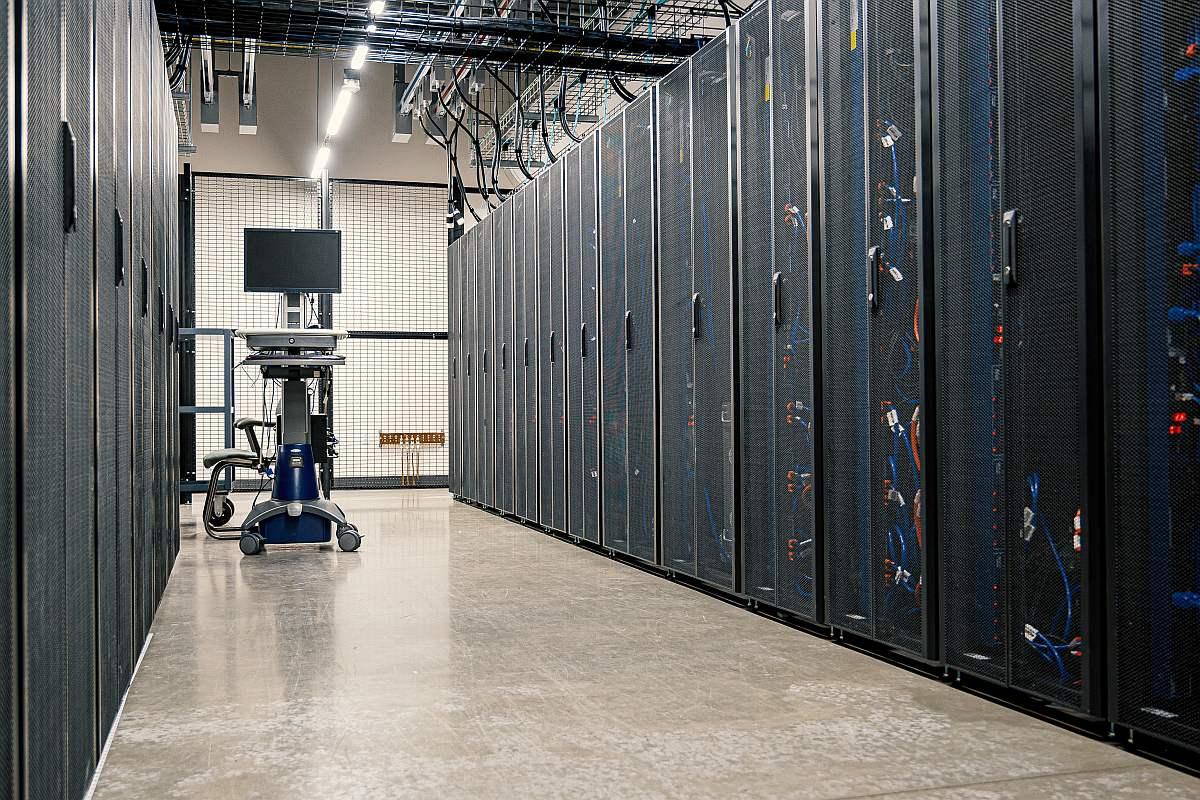
India faces a striking imbalance in its AI infrastructure landscape. While the country generates nearly 20% of the world's data, it holds only about 3% of global data center capacity
2
. The installed data center capacity currently stands at around 960 MW and is projected to reach 9.2 GW by 20302
. Scaling AI data centers will require an additional 45-50 million square feet of real estate by 2030, underscoring the need to integrate sustainable planning with compute expansion2
. The white paper notes that data centers in India remain geographically concentrated, with Mumbai and Navi Mumbai holding the largest share, followed by hubs in Chennai, Bengaluru, Hyderabad, Delhi NCR, Pune and Kolkata1
.
Source: Gadgets 360
Extending the Digital Public Infrastructure (DPI) Model to AI
The white paper signals a push towards extending the government's successful digital public infrastructure (DPI) model to AI, seeking to platformise AI access rather than owning AI systems
2
. Under this approach, access to AI would no longer depend on physical proximity to data centers or ownership of expensive infrastructure. Instead, researchers, startups, and public institutions would be able to remotely use datasets, compute capacity, and model ecosystems through shared digital layers2
. The document calls for moving beyond a focus on hardware alone and instead building governance frameworks that treat these foundational resources as Digital Public Goods2
. Rather than using a single platform or monolithic system, the approach advises using a set of modular public-good enablers to address gaps in the AI ecosystem1
.IndiaAI Mission Drives Access to Compute Resources
Under the IndiaAI Mission, led by MeitY, India is building a secure cluster of 3,000 next-generation GPUs (Graphics Processing Units) for sovereign and strategic AI use
2
. The white paper highlights the planned expansion of compute capacity through initiatives including a secure GPU cluster with 30,000 next-generation units1
. The IndiaAI Compute Portal has provided access to more than 38,000 GPUs and 1,050 TPUs, offering compute at subsidized rates of under Rs 100 per hour—roughly half the global market rate . This "compute-as-a-service" model allows users to train and fine-tune AI models without owning or managing physical infrastructure, reducing a major barrier to AI development2
.Related Stories

Private Sector Investments and Strategic Initiatives
Indian startups and researchers are already utilizing commercial cloud services like AWS open data registry, Google Cloud public datasets, and Microsoft Azure open datasets to access AI-ready datasets globally
2
. Companies like Yotta Data Services, NTT, CtrlS, and AdaniConneX have made substantial investments in hyperscale and sovereign cloud storage facilities2
. Yotta Data Services operates Asia's largest single-building data centre in Navi Mumbai with 72 MW IT load capacity, while CtrlS operates 19 facilities with a combined load of 250 MW2
. The Rs 76,000-crore India Semiconductor Mission has approved 10 advanced chip fabrication and packaging projects to strengthen domestic AI hardware capabilities2
.Phased Approach to Democratise Compute Access
The white paper recommends a staged implementation strategy. In the initial phase, the focus should be on lighter-weight elements such as directories, metadata standards, access protocols, and registries
1
. After developing capacity, the focus should shift to data access systems, consent-based data flows, and a coordinated computer-exchange mechanism1
. The approach aims to enable startups, researchers, public institutions, and smaller organizations to contribute to AI development while mitigating AI risks, improving accountability, and strengthening public trust in AI systems2
. The white paper does not propose formal policy changes but serves as a broad vision to shape the country's AI infrastructure at an early stage, ensuring that when the technology scales, there is no need for large infrastructure changes to expand access to non-urban centers and individual stakeholders1
.References
Summarized by

Navi
Related Stories
Modi pitches India as affordable AI hub at summit, drawing $200 billion in investments
17 Feb 2026•Business and Economy

India AI push at Davos 2026: Infrastructure, sovereignty and real-world use cases take center stage
21 Jan 2026•Policy and Regulation

India's Ambitious Plan to Democratize AI: Balancing Innovation and Regulation
07 Oct 2024•Policy and Regulation

Recent Highlights
1
Google releases Gemma 4 with Apache 2.0 license, enabling unrestricted local AI on devices
Technology

2
AI Models Lie and Deceive to Protect Other AI Models From Deletion, Study Reveals
Science and Research

3
OpenAI closes $122 billion funding round amid fierce AI competition and profitability questions
Startups

Recent Highlights
Today's Top Stories







Your Daily Dose of Curated AI News
Don’t drown in AI news. We cut through the noise - filtering, ranking and summarizing the most important AI news, breakthroughs and research daily. Spend less time searching for the latest in AI and get straight to action.

