India launches SAHI and BODH initiatives to advance safe AI in healthcare at AI Impact Summit


10 Sources
10 Sources
[1]
JP Nadda launches SAHI and BODH initiatives at AI India Summit to promote safe AI in healthcare
New Delhi: Interoperable systems have been enabled across platforms and large-scale, consent-based health-data frameworks are being developed to empower citizens while ensuring data privacy and security, Union Health Minister J P Nadda said on Tuesday. He made the remarks while launching two pioneering digital-health initiatives -- SAHI (Secure AI for Health Initiative) and BODH (Benchmarking Open Data Platform for Health AI) -- during the India AI Impact Summit 2026 here. The launch marks a significant milestone in advancing safe, ethical and evidence-based deployment of artificial intelligence (AI) in India's healthcare ecosystem. Describing the summit as both timely and necessary, Nadda emphasised that AI does not operate in isolation, but thrives on strong digital infrastructure and high-quality data. Recognising this early, India began laying its digital foundations more than 10 years ago. Under Prime Minister Narendra Modi's leadership, the government launched the Digital India programme in 2015 to transform the country into a digitally-empowered society and knowledge economy, Nadda said. He noted that the health sector has aligned itself decisively with this national vision. The National Health Policy, 2017, envisages the creation of a comprehensive digital-health ecosystem that would be interoperable, inclusive and scalable, Nadda said. Building on this vision, the government launched the Ayushman Bharat Digital Mission (ABDM) in 2020 to establish a robust digital public architecture for healthcare, he noted. Highlighting the progress achieved, the minister said sustained efforts have led to the creation of a strong digital public infrastructure in health. Interoperable systems have been enabled across platforms and large-scale, consent-based health-data frameworks are being developed to empower citizens while ensuring data privacy and security, he said. In this context, the minister referred to the launch of SAHI, describing it as not merely a technology strategy but a governance framework, policy compass and national roadmap for the responsible use of AI in healthcare. He said SAHI will guide India in leveraging AI in a manner that is ethical, transparent, accountable and people-centric. Nadda also emphasised that SAHI provides a structured framework for collaboration, ensuring that innovation flourishes while public interest remains paramount. He also underlined the transformative potential of AI in pharmaceuticals and life sciences. AI-driven tools can accelerate drug discovery, shorten research timelines, enhance clinical-trial precision and make research processes more cost-effective, thereby strengthening affordable healthcare delivery, he noted. Nadda further highlighted the critical role of academic institutions in developing a future-ready healthcare AI workforce. The collaboration between the government and academia has led to the development of BODH, which provides a structured mechanism for testing and validating AI solutions before deployment at scale, the health minister said. He reiterated that AI solutions must be rigorously evaluated for performance, reliability and real-world readiness. Together, SAHI and BODH represent India's commitment to building a trustworthy, inclusive and globally-competitive health-AI ecosystem grounded in innovation, responsibility and public trust, he stressed. Addressing the gathering, Union Health Secretary Punya Salila Srivastava said under Modi's visionary leadership, India has made tremendous strides in leveraging technology to make governance more inclusive, transparent and efficient. She emphasised that the launch of SAHI and BODH marks an important step in advancing the application of AI in healthcare. SAHI, she said, represents a long-term policy commitment of the Centre and provides a common framework for the Union and state governments, as well as private partners, to guide AI evaluation, adoption and integration within the healthcare ecosystem. Srivastava further highlighted that BODH will play a critical role in ensuring that the AI tools used by clinicians are safe, reliable and validated against real-world parameters before deployment. She stressed that trust, safety and accountability must remain central to India's health-AI journey.
[2]
India represents remarkable opportunity in AI transformation in health: Royal Philips CEO
Jakobs said globally healthcare systems, including in India are facing unprecedented pressure due to rising demand, growing complexity, stretched workforces and this pressure would have accelerated the adoption of data and AI-driven innovations. A shift has already begun in that direction for creating an intelligent health system, he said in his address. Healthcare is at an inflection point globally with artificial intelligence (AI) set to have its greatest impact in the sector and India represents a "remarkable opportunity" in this transformation, Royal Philips CEO Roy Jakobs said on Tuesday. Acknowledging India's role, Jakobs while speaking at AI Impact Summit 2026, said the country is uniquely positioned to lead this change, armed with its scale, digital infrastructure, and ambition. Royal Philips is a Dutch multinational health technology company. "Initiatives such as Ayushman Bharat, Digital Health Mission are laying the groundwork for interoperable data and continuity of care at population scale. Exactly the kind of foundation AI needs to deliver meaningful impact," he said. Jakobs said globally healthcare systems, including in India are facing unprecedented pressure due to rising demand, growing complexity, stretched workforces and this pressure would have accelerated the adoption of data and AI-driven innovations. A shift has already begun in that direction for creating an intelligent health system, he said in his address. "We are moving towards an integrated AI-enabled healthcare system, where intelligent systems support clinicians and nurses to make faster, better decisions," he said. This opportunity is going to expand further as data scales and AI evolves, Jakobs added. However, he said AI alone cannot transform healthcare, it must be embedded in systems where data workflow and clinical expertise should work seamlessly together. Jakobs also cautioned "Healthcare runs on trust" and stressed for a responsible AI ecosystem, which must operate within evolving regulatory frame works. "Responsible AI is foundational. Human oversight remains central," he said adding "AI therefore must be transparent. It must be validated continuously. It must protect patient data rigorously. It must operate within evolving regulatory frameworks." He suggested that governments and innovation in AI must move together to protect trust and building confidence. "Why is this so crucial? Because if trust erodes, adoption stops," Jakobs said. The Netherlands-based company is one of the leading players in health technology. It has a comprehensive portfolio ranging from patient monitoring solutions, ultrasound machines, MRI systems and solutions to CT solutions. He further said Philips, which has been operating in India for almost 100 years, is not only a market but also a global innovation engine for the company. Philips has two R&D centres in India -- Pune-based Healthcare Innovation Centre (HIC) and an innovation campus in Bengaluru.
[3]
Union Health Ministry Leads AI in Public Health Dialogue at India AI Impact Summit 2026
The Government of India is hosting the India AI Impact Summit 2026 from 16th to 20th February 2026 at Bharat Mandapam, New Delhi, marking the first-ever global AI summit to be held in the Global South. The Summit brings together global leaders, policymakers, industry experts, academia, and innovators to deliberate on the transformative potential of Artificial Intelligence (AI) across sectors, with a special emphasis on inclusive and sustainable development. As a key participating Ministry, Ministry of Health and Family Welfare is playing a significant role in the Summit through a high-level panel discussion, the launch of key initiatives, and the showcasing of AI-driven healthcare solutions at its dedicated exhibition stall. Delivering the keynote address, Union Health Secretary Smt. Punya Salila Srivastava stated that over the past decade, India's health system has transitioned from basic digitisation of records and improved data reporting to building a nationally interoperable digital health ecosystem. She recalled that the National Health Policy set the vision of achieving the highest attainable standard of health and well-being for all citizens, which was further operationalised through the National Digital Health Blueprint by promoting open standards, interoperability, privacy-by-design, and the adoption of emerging technologies including Generative AI. She highlighted that the Ayushman Bharat Digital Mission (ABDM) has evolved into a robust digital public infrastructure for health, with over 859 million ABHA accounts linked to more than 878 million health records. With more than 1.80 lakh Ayushman Arogya Mandirs operational across the country, digital platforms are being integrated at the primary care level. E-Sanjeevani, powered by AI-assisted Clinical Decision Support Systems (CDSS), has enabled over 449 million teleconsultations through more than 2.2 lakh registered healthcare providers, making it the world's largest telemedicine initiative in primary healthcare.
[4]
What Do SAHI and BODH Initiatives Mean For AI Use In Healthcare?
The Ministry of Health and Family Welfare (MoHFW) launched two artificial intelligence-related initiatives for the healthcare sector at the India AI Impact Summit 2026 on February 17, namely: The SAHI strategy document aims to set a vision for adopting AI in a way that is safe, ethical, evidence-based, and inclusive. It notes that AI applications in healthcare range from low- and moderate-risk areas, such as operations and record-keeping, to high-impact applications that could influence clinical decision-making, diagnosis, treatment, and patient triage. "While national AI initiatives provide horizontal capabilities and enabling infrastructure, they do not sufficiently guide how healthcare AI efforts should be channelled towards national health priorities. A dedicated AI strategy for healthcare is therefore essential to align innovation with public health needs, support the development of AI solutions across the risk spectrum, and enable coordinated, safe, and equitable adoption across India's federal and mixed-delivery health system," the SAHI document reads. The MoHFW said that the Digital Personal Data Protection Act (DPDP Act) provides the overarching legal basis for the use of personal data. And the National Health Authority (NHA)'s Health Data Management Policy and the ICMR's Ethical Guidelines for AI in Biomedical Research and Healthcare state how to use personal data in the healthcare sector specifically. "Collectively, these instruments define consent, purpose limitation, data access, and accountability across healthcare actors, enabling responsible use of health data for innovation and service delivery," reads the MoHFW document. It also says that the IndiaAI Governance Guidelines (2025) recognise that current laws and institutional frameworks are adequate to address most AI-related risks, and that there is no need for a separate AI-specific law. The MoHFW listed the following use cases for AI in healthcare: Further, the document specified how India's private healthcare ecosystem is deploying AI in its workflows: The SAHI strategy document has given 32 specific recommendations across five pillars. Here are some of the key recommendations: "Liability should be appropriately allocated depending on whether the harm was caused by the developer, deployer, application service provider or user of the AI application. In all circumstances, liability should be ascertained based on technical and clinical considerations, assessed on a case-by-case basis," MoHFW recommends. Notably, the SAHI document hasn't clearly defined high-risk versus low-risk AI uses. It only broadly distinguishes diagnosis, patient triage, clinical decision-making and treatment as high-risk, while routine tasks like record-keeping are low-risk use cases. However, the Central Drugs Standard Control Organisation (CDSCO) released draft guidelines in October 2025 for software as medical device (SaMD), that includes AI/ML-based software. It also categorises risks based on low- and high-risk ranges. "SAHI recommends a FRAC (Framework of Roles, Activities and Competencies) based approach to AI competence rather than uniform or tool-specific training. Foundational awareness should be widespread, while progressively advanced competencies should be developed among those exercising greater decision-making authority. "This ensures that all health workers can safely interact with AI-enabled systems, while ethical, legal, and accountability-related competencies are deliberately strengthened at higher levels of responsibility," the MoHFW says. For context, the Department of Personnel and Training published the 2020 document FRAC [Part-1 & Part-2] under Mission Karmayogi to map every government position across ministries, departments, and organisations at the national, state, and local levels, and to define what each role entails and the skills it requires. Manindra Agrawal, Director of IIT Kanpur, explained that BODH is designed to collect and secure medical data, letting developers train their models on-site. "The model developer will not get access to the data. They can train their model and retrieve the trained model weights. And those who hold the new data will be incentivised to upload it and get credits for further training," he said. "BODH has two objectives: enable AI model providers to benchmark their models on real-world healthcare data, and provide trustworthy third-party evaluation," Sunil Kumar Barnwal, NHA's CEO explained. He also said that almost every AI solution provider claims 98% or 99% efficacy, adding that third parties must evaluate these solutions to ensure they are safe for real-world use cases.
[5]
Niti Aayog member flags AI as key to healthcare overhaul in India
Artificial Intelligence offers a significant chance to reshape India's healthcare system. It can speed up progress towards universal health coverage. AI integration with digital health infrastructure will improve service delivery and health outcomes. This technology can enhance primary care, aid early diagnosis, and strengthen disease surveillance. Collaboration between government, academia, and industry is crucial for developing effective AI solutions. New Delhi: Artificial Intelligence (AI) presents a strategic opportunity to transform India's healthcare landscape and accelerate progress towards universal health coverage, Dr V K Paul, Member (Health), NITI Aayog, said on Tuesday. Addressing a session during the India AI Impact Summit 2026 at Bharat Mandapam, Dr Paul noted that given India's scale, diversity and dual burden of communicable and non-communicable diseases, technology-driven, evidence-based interventions are essential to strengthen service delivery and improve health outcomes. He said that integrating AI with India's growing digital public health infrastructure will ensure interoperability, real-time analytics and more efficient resource allocation across the health system. "Artificial Intelligence presents a strategic opportunity to transform India's healthcare landscape and accelerate progress towards universal health coverage," he said. Paul highlighted that AI can significantly enhance primary healthcare, enable early diagnosis, strengthen disease surveillance and support data-driven policy formulation. He further underscored the importance of robust regulatory frameworks, ethical safeguards and continuous validation to maintain safety and public trust. Paul called for sustained collaboration between government, academia and industry to develop scalable, affordable and indigenous AI solutions capable of delivering measurable impact at population scale. Speaking at the session, Roy Jakobs, chief executive officer of Royal Philips, said AI will have its greatest impact in the field of healthcare. He observed that health systems across the globe are under immense pressure due to rising demand, workforce shortages and increasing complexity of care, making the integration of AI not just an opportunity but a necessity. He emphasised that AI alone cannot transform healthcare; it must be supported by robust data governance, seamless data handling and strong clinical integration. "Technology must align with clinical needs and workflows," he noted, underlining that meaningful AI deployment requires quality data, interoperability and clearly defined use cases. He further stressed that healthcare runs on trust and, therefore, AI systems must be transparent, explainable and continuously validated to maintain clinical confidence and patient safety. Commending India's digital health initiatives, he noted that programmes such as Ayushman Bharat Yojana are laying the groundwork for interoperable data systems and continuity of care at population scale -- precisely the kind of foundation AI requires to deliver meaningful and sustainable impact. He also remarked that solutions built in India are increasingly being deployed globally, demonstrating that technologies designed for scale, diversity and complexity tend to be resilient and adaptable worldwide. Reaffirming Royal Philips' commitment to collaborative innovation, Jakobs expressed confidence that partnerships between government and industry will accelerate AI-driven transformation and improve health outcomes globally. (You can now subscribe to our Economic Times WhatsApp channel)
[6]
India AI Impact Summit 2026: Centre Sets AI Healthcare Guardrails with SAHI, BODH Rollout
AI is widely used in diagnostic imaging, administrative automation, and patient monitoring. help healthcare providers spend less time on administrative tasks and more time providing direct, in-person patient care. According to authorities, BODH will evaluate systems for accuracy, bias, reliability, and adaptability while maintaining patient data privacy. is a powerful tool whose impact depends on how responsibly it is deployed. If handled carefully, the technology could strengthen healthcare systems, turning cautious optimism into lasting progress. The government is introducing strict data privacy rules, validation parameters, accountability systems for improved data practices, and a renewed focus on human-centered care. The Minister also focused on the potential of AI in pharmaceutical research and clinical trials. He claimed that advanced algorithms could shorten drug discovery cycles, improve trial precision, and lower costs, thereby enabling affordable healthcare delivery.
[7]
India AI Impact Summit 2026 Day 2: AI-powered healthcare drives speed, scale and affordability
If Day 1 of the India AI Impact Summit 2026 established the architecture of governance and cooperation, Day 2 has turned decisively toward application, and nowhere is that shift more visible than in healthcare. At Bharat Mandapam today, conversations around artificial intelligence are focusing on one of the most urgent public priorities: faster diagnosis, scalable health systems and affordable access. The question is no longer whether AI can assist medicine. It is how quickly it can transform it. Across sessions, the emphasis has been on AI-enabled diagnostic systems capable of analysing medical images, identifying disease markers and supporting clinical decisions in real time. For a country with vast geographic spread and uneven access to specialist care, the implications are significant. AI tools that reduce diagnostic turnaround time could bridge gaps between urban hospitals and rural clinics. Speed, however, is only one part of the equation. Affordability remains central. Day 2 discussions highlight how AI-powered medical devices and decision-support systems can lower operational costs while maintaining accuracy. Automated triage systems, predictive analytics for early disease detection and remote health monitoring platforms are being positioned as force multipliers in public health infrastructure. By integrating these systems into existing digital frameworks, the goal is to expand capacity without proportionally expanding cost. This aligns closely with the summit's broader framing under the Sutras of People, Planet and Progress. Healthcare innovation sits at the intersection of all three: strengthening human capital, improving resilience and contributing to long-term economic productivity. Another emerging theme is the integration of AI into national health architecture rather than standalone pilots. India's digital public infrastructure provides a foundation upon which AI-enabled health services can scale. The conversation has shifted from experimentation in isolated hospitals to systemic deployment across networks. Public health surveillance has also entered the spotlight. AI-driven analytics can identify patterns across datasets, detect outbreaks earlier and optimise resource allocation. For a country of India's scale, such systems could significantly enhance preparedness while reducing response delays. Importantly, governance remains embedded within the healthcare discussion. As AI tools influence medical decision-making, questions of accountability, validation and ethical oversight intensify. Day 2 sessions reflect a clear awareness that trust in health AI depends on transparency, regulatory clarity and rigorous evaluation standards. The international dimension is equally visible. With participation from over 100 countries, healthcare AI is not being framed as a domestic opportunity alone. Emerging economies face similar constraints, limited specialist availability, rising disease burden and resource gaps. Scalable AI health solutions developed in India could carry broader Global South relevance. What distinguishes today's discussions is their practicality. The focus is on deployment models, measurable outcomes and cross-sector collaboration between technologists, clinicians and policymakers. Artificial intelligence is being positioned not as a replacement for medical expertise, but as a clinical accelerator. As the India AI Impact Summit 2026 moves deeper into its five-day agenda, Day 2 reinforces a central message: the impact of AI will ultimately be judged not by model sophistication, but by human outcomes. In healthcare, that outcome is clear, faster diagnosis, wider access and more affordable care. Follow https://ai.economictimes.com/ai-summit for comprehensive coverage.
[8]
AI can address health inequities, but cannot replace human touch: Union MoS Health Anupriya Patel
New Delhi: Union Minister of State for Health and Family Welfare Anupriya Patel highlighted the transformative role of artificial intelligence (AI) in healthcare on Tuesday. Speaking at the AI Impact Summit in the national capital, Patel asserted that India's governance model positions AI as an enabler and force multiplier, bringing the country closer to the goals of inclusivity and health equity. "The real measure of the power of AI lies in the extent to which it is able to touch, it is able to address the health inequities. That's the governance model we follow, in which AI becomes an enabler and a force multiplier, and it is able to take us closer to the goals of inclusivity and health equities," Anupriya Patel said. She noted that India faces unique challenges due to its vast and diverse population, the rural-urban divide, and the dual burden of communicable and non-communicable diseases. Patel emphasised that technology is being strategically integrated into the national healthcare framework to address these challenges, generating real-time alerts for disease outbreaks and strengthening disease surveillance nationwide. "India has unique challenges: our vast and diverse population, rural and urban divide, and also the dual burden of non-communicable as well as communicable diseases. So, when we look at these unique challenges, it becomes extremely important that we make use of technology, and we have had a comprehensive technological integration in our national healthcare framework, which we don't see as only adoption of technology, but a strategic response to the unique challenges that we have used," said Anupriya Patel. Under the One Health Mission, she highlighted the launch of an AI tool by the Indian Council of Medical Research that analyses genomes and predicts zoonotic outbreaks before transmission from animals to humans. She also cited the adoption of AI-supported handheld X-rays in tuberculosis screening programs as an example of AI augmenting healthcare efforts. "This helps us to generate real-time data alerts for the disease outbreaks, and showcases the strength of AI, the power of AI in augmenting our efforts towards disease control and enhances our surveillance capacity in India. We also have one health mission. Now, under this mission, the Indian Council of Medical Research has also launched an AI tool which surveys the genomes and predicts the zoonotic outbreaks before the transmission actually takes place from the animals to the humans. And I heard one of our expert panelists talk about the use of the adoption of AI-supported handheld X-rays in our TB screening program," said Anupriya Patel. While acknowledging AI's potential, Patel stressed the importance of the human touch in medicine, noting that only a clinician can communicate with a patient and provide the compassion and empathy they need. "When a treatment proceeds, healthcare thrives not just on algorithms. Healthcare thrives on human touch, on empathy, on compassion, on communication between a clinician and a patient. And this human touch can never be provided by AI. It is only a clinician, it is only a doctor who can communicate with this patient and provide that compassion and empathy that is needed by a patient," she said. Patel urged medical professionals to focus on AI literacy and noted that the National Board of Examinations in Medical Sciences has launched an online training program on AI in healthcare for doctors across India. "So, what the doctors need to worry about today is AI literacy. I urge all the members of the medical fraternity who are present here today to spread this message that AI cannot compete with clinicians. It can only compensate for their absence, and our doctors and our clinicians need to be AI literate. And I'm very happy to mention that the National Board of Examination in Medical Sciences in India has very recently launched an online training program on AI in healthcare for our doctors all over the country," she said. The India AI Impact Summit is a five-day programme anchored in three foundational pillars, or "Sutras": People, Planet, and Progress.
[9]
AI should reduce burden on our health care workforce: MoHFW secretary
The integration of AI into India's healthcare framework is poised to revolutionise service delivery by bridging critical gaps and reducing the burden on the medical workforce. A core objective of the national AI strategy is to support rather than replace human intervention. The integration of Artificial Intelligence (AI) into India's healthcare framework is poised to revolutionise service delivery by bridging critical gaps and reducing the burden on the medical workforce. A core objective of the national AI strategy is to support rather than replace human intervention. Punya Salila Srivastava, IAS and Secretary, Ministry of Health & Family Welfare, explained that while digital systems capture and store information, AI enables them to interpret and prioritise data more effectively. "One of the key expectations from AI, especially in public health, is that it should reduce the burden on our health care workforce," she stated. Delivering the keynote speech for the panel titled "National AI Strategy for Health" at the India AI Impact Summit 2026 in New Delhi, Punya Salila Srivastava, IAS and Secretary, Ministry of Health & Family Welfare, detailed the nation's transition toward an interoperable digital health ecosystem. She noted that the physician-patient relationship remains central to healthcare delivery, and AI is intended to complement this bond by making the lives of healthcare workers easier, particularly in high-pressure government systems where daily outpatient department (OPD) footfalls can reach 15,000. Srivastava noted that the sector has evolved significantly over the last decade, starting with the digitisation of records and progressing to a national-scale interoperable system under the Ayushman Bharat Digital Mission (ABDM). "Over the past decade, our entire health system has undergone a steady digital transformation," she said, adding that the National Digital Health Blueprint of 2019 laid the essential principles for this ecosystem. This blueprint promotes open standards and adopts emerging technologies, such as generative AI, to strengthen service delivery and enable early disease detection while ensuring privacy. The Secretary highlighted the massive scale of the ABDM, noting that 859 million citizens now have Ayushman Bharat Health Account (ABHA) accounts linked to more than 878 million health records. She emphasised that the system's robustness is tested daily by the country's high patient volumes. India's telemedicine initiative, eSanjeevani, is now among the world's largest in primary healthcare, supported by an AI-assisted clinical decision support system. According to Srivastava, this platform "has facilitated over 449 million consultations through over 2.2 lakh registered healthcare providers." The Secretary also shared successful AI applications currently in use, such as the MadhuNETrAI under the National Diabetic Retinopathy Screening Program. This tool "allows non-specialist health workers to capture retinal images" and has already benefited over 7,000 patients across 38 facilities. In the fight against tuberculosis, AI-enabled handheld X-rays and tools like 'Cough Against TB' are contributing to a decline in disease incidence. Srivastava further mentioned the Media Disease Surveillance (MDS) system, which uses AI to assist the National Centre for Disease Control (NCDC) in detecting health incidents that might otherwise go unreported. Looking ahead, the Secretary noted that the government has established three Centres of Excellence for AI in healthcare at AIIMS Delhi, PGIMER Chandigarh, and AIIMS Rishikesh. Srivastava expressed keen interest in hearing feedback from private-sector partners and state governments to inform the evolution of procurement models and data frameworks. She reiterated that these initiatives align with the vision of Viksit Bharat by 2047. "Digital public infrastructure is a tool for inclusion and equity," she said, emphasising that the government's commitment to AI is an extension of that core commitment.
[10]

India AI Impact Summit 2026: SAHI, BODH and latest in Indian AI healthcare
The India AI Impact Summit 2026 at Bharat Mandapam has marked a transition from experimental AI pilots to a unified national framework. While the tech industry often obsesses over general-purpose models, this summit has pivoted the conversation toward "sovereign health intelligence." The centerpieces of this shift are two landmark initiatives: the Strategy for Artificial Intelligence in Healthcare for India (SAHI) and the Benchmarking Open Data Platform for Health AI (BODH). Together, they represent a structured attempt to move AI from high-end urban hospitals to the bedrock of India's public health infrastructure. Also read: Future of work and AI jobs: What key Indian leaders predict and warn Launched by Union Health Minister J.P. Nadda, SAHI and BODH address the two biggest hurdles in medical AI: governance and data validation. SAHI acts as the national "rulebook," providing a guidance framework for the safe and ethical adoption of AI. It moves beyond abstract ethics to provide concrete direction on data stewardship and evidence-based validation. It is designed to ensure that as states and private entities deploy AI, they do so within a standardized, inclusive, and accountable ecosystem. Complementing this is BODH, a platform developed by IIT Kanpur in collaboration with the National Health Authority. BODH is essentially a high-trust "test lab" for medical algorithms. Using a privacy-preserving benchmarking mechanism, it allows developers to evaluate their AI models against diverse, real-world health data without ever accessing the underlying datasets. As a digital public good under the Ayushman Bharat Digital Mission (ABDM), BODH is the gatekeeper that ensures only high-quality, validated tools reach the public frontline. The summit was not just about policy; it was a showcase of "boots-on-the-ground" technology already impacting rural health. One of the most discussed tools was MadhuNetrAI, an AI-driven screening system for diabetic retinopathy. By automating retinal analysis, it allows non-specialized healthcare workers to identify early signs of vision loss, a critical need given India's massive diabetic population. Similarly, the Cough Against TB (CA-TB) tool highlighted the power of acoustic AI. By analyzing the sound of a cough via a standard smartphone, CA-TB provides a rapid, non-invasive screening method for tuberculosis in remote areas. Also read: India AI Impact Summit: AI agents to empower 10 crore farmers with Rs 15,000 weather stations Other notable innovations included AI-powered Clinical Decision Support Systems (CDSS) integrated into the e-Sanjeevani telemedicine platform. These systems assist doctors with structured, multilingual symptom capture and data-driven diagnostic suggestions. The Ministry also demonstrated a Voice-to-Text AI model that converts spoken clinical notes into digital prescriptions, seamlessly integrating with existing Hospital Management Information Systems (HMIS) to reduce the administrative burden on physicians. The success of these tools rests on the massive scale of India's Digital Public Infrastructure (DPI). With over 859 million ABHA accounts linked to 878 million health records, the ABDM provides the data backbone necessary for AI to scale. This infrastructure is supported by new Centres of Excellence (CoE) at AIIMS Delhi, PGIMER Chandigarh, and AIIMS Rishikesh, which are tasked with indigenous research and model development. The message from the summit is clear: India is not looking to replace doctors with algorithms. Instead, the focus is on "augmentation" - using tools like SAHI and BODH to ensure that AI strengthens the physician-patient relationship. By standardizing how models are tested and deployed, India is positioning itself as a global leader in responsible, population-scale healthcare AI.
Share
Share
Copy Link
Union Health Minister JP Nadda unveiled two pioneering digital health initiatives—SAHI and BODH—at the India AI Impact Summit 2026 in New Delhi. The launch marks a significant step toward safe, ethical AI deployment in India's healthcare ecosystem. SAHI provides a governance framework for responsible AI use, while BODH offers a platform for testing and validating AI solutions before large-scale deployment.
India Unveils Framework for Safe and Ethical AI in Healthcare
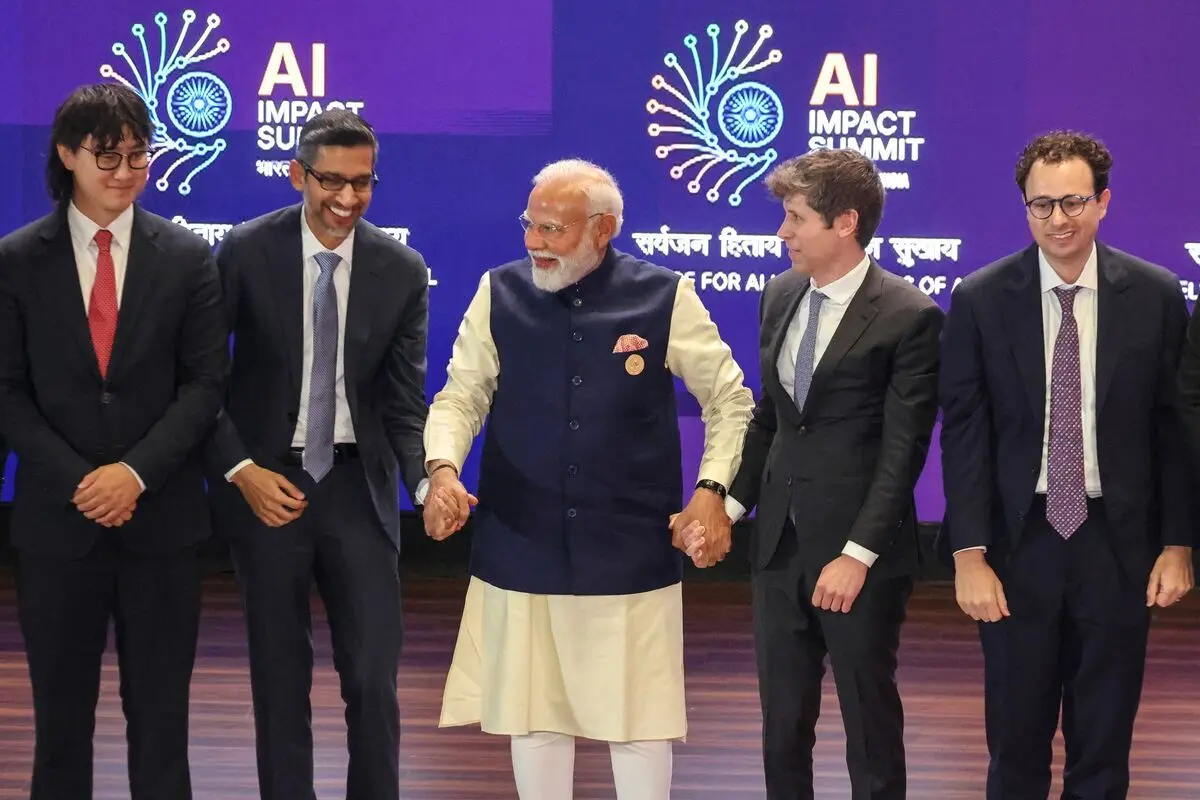
Union Health Minister JP Nadda launched two groundbreaking digital health initiatives at the India AI Impact Summit 2026 held at Bharat Mandapam in New Delhi. The SAHI and BODH initiatives represent India's commitment to advancing safe and ethical AI deployment across its healthcare ecosystem
1
. The India AI Impact Summit, taking place from February 16 to 20, 2026, marks the first-ever global AI summit hosted in the Global South, bringing together policymakers, industry experts, and innovators to explore AI's transformative potential3
.
Source: Digit
SAHI: A Governance Framework for Responsible AI Transformation in Healthcare
The Secure AI for Health Initiative (SAHI) establishes a comprehensive governance framework and policy compass for AI in healthcare. Nadda described SAHI as more than a technology strategy, emphasizing its role in guiding India toward ethical, transparent, and accountable AI use
1
. The strategy document addresses AI applications ranging from low-risk operations like record-keeping to high-impact uses influencing clinical decision-making, diagnosis, treatment, and patient triage4
. SAHI provides 32 specific recommendations across five pillars, ensuring that liability is appropriately allocated among developers, deployers, and users based on technical and clinical considerations assessed case-by-case4
. The Union Health Ministry emphasized that the Digital Personal Data Protection Act provides the legal basis for personal data use, while the National Health Authority's Health Data Management Policy guides healthcare-specific applications4
.
Source: ET
BODH Platform Enables Rigorous Testing of AI-Driven Healthcare Solutions
The Benchmarking Open Data Platform for Health AI (BODH) provides a structured mechanism for testing and validating AI solutions before deployment at scale. Manindra Agrawal, Director of IIT Kanpur, explained that BODH collects and secures medical data, allowing developers to train models on-site without direct access to sensitive information
4
. National Health Authority CEO Sunil Kumar Barnwal stated that BODH addresses the challenge of AI providers claiming 98% or 99% efficacy by enabling trustworthy third-party evaluation against real-world healthcare data4
. Union Health Secretary Punya Salila Srivastava emphasized that BODH ensures AI tools used by clinicians are safe, reliable, and validated before deployment, with trust, safety, and accountability remaining central to India's health-AI journey1
.Building on a Decade of Digital Health Infrastructure
Nadda emphasized that AI thrives on strong digital infrastructure and high-quality data, noting that India began laying digital foundations over 10 years ago. The government launched the Digital India programme in 2015 under Prime Minister Narendra Modi's leadership to transform the country into a digitally-empowered society
1
. The National Health Policy 2017 envisioned creating a comprehensive digital health ecosystem that is interoperable, inclusive, and scalable1
. The Ayushman Bharat Digital Mission, launched in 2020, has evolved into robust digital public infrastructure for health, with over 859 million ABHA accounts linked to more than 878 million health records3
. E-Sanjeevani, powered by AI-assisted Clinical Decision Support Systems, has enabled over 449 million teleconsultations through more than 2.2 lakh registered healthcare providers, making it the world's largest telemedicine initiative in primary care3
.Industry Leaders Highlight India's Strategic Position in AI Transformation in Healthcare
Roy Jakobs, CEO of Royal Philips, stated that healthcare is at an inflection point globally, with India representing a remarkable opportunity in this AI transformation in healthcare
2
. Jakobs noted that India is uniquely positioned to lead this change, armed with its scale, digital infrastructure, and ambition. He emphasized that initiatives like the Ayushman Bharat Digital Mission are laying the groundwork for interoperability and continuity of care at population scale—exactly the foundation AI needs to deliver meaningful impact2
. However, Jakobs cautioned that healthcare runs on trust and stressed the need for a responsible AI ecosystem operating within evolving regulatory frameworks, with human oversight remaining central and AI systems being transparent, continuously validated, and protecting patient data rigorously2
.
Source: ET
Related Stories



Accelerating Universal Health Coverage Through AI Integration
Dr. V K Paul, Member (Health) at NITI Aayog, emphasized that AI presents a strategic opportunity to accelerate progress towards universal health coverage
5
. Given India's scale, diversity, and dual burden of communicable and non-communicable diseases, technology-driven, evidence-based interventions are essential to strengthen service delivery and improve health outcomes. Paul highlighted that AI can significantly enhance primary care, enable early diagnosis, strengthen disease surveillance, and support data-driven policy formulation5
. He called for sustained collaboration between government, academia, and industry to develop scalable, affordable, and indigenous AI solutions capable of delivering measurable impact at population scale, while maintaining robust regulatory frameworks and ethical safeguards5
.Transforming Drug Discovery and Clinical Workflows
Nadda underlined the transformative potential of AI in pharmaceuticals and life sciences, noting that AI-driven tools can accelerate drug discovery, shorten research timelines, enhance clinical-trial precision, and make research processes more cost-effective, thereby strengthening affordable healthcare delivery
1
. The minister also highlighted the critical role of academic institutions in developing a future-ready healthcare AI workforce through collaboration with government. India's private healthcare ecosystem is already deploying AI across various workflows, from administrative operations to clinical applications4
. With more than 1.80 lakh Ayushman Arogya Mandirs operational across the country, digital platforms are being integrated at the primary care level, creating opportunities for AI to support clinicians and nurses in making faster, better decisions3
. The initiatives ensure that innovation flourishes while public interest and patient safety remain paramount, with interoperable systems enabled across platforms and large-scale, consent-based health-data frameworks being developed to empower citizens while ensuring data privacy and security1
.References
Summarized by

Navi
[1]
Related Stories
Recent Highlights
1
Google releases Gemma 4 with Apache 2.0 license, enabling unrestricted local AI on devices
Technology

2
AI Models Lie and Deceive to Protect Other AI Models From Deletion, Study Reveals
Science and Research

3
OpenAI closes $122 billion funding round amid fierce AI competition and profitability questions
Startups

Recent Highlights
Today's Top Stories






Your Daily Dose of Curated AI News
Don’t drown in AI news. We cut through the noise - filtering, ranking and summarizing the most important AI news, breakthroughs and research daily. Spend less time searching for the latest in AI and get straight to action.

