AI in Healthcare: Revolutionizing Diagnosis and Patient Care in India

2 Sources
[1]
AI diagnosis is just what the doctor ordered
In India, where the healthcare system is under constant strain, AI can help minimise oversight, make diagnostics more accurate and support clinical decision-making. Swathi Moorthy and Annapurna Roy give an AI-led prescription.A man in his 70s came to the Jiwan Jyoti Christian hospital in
[2]
ET Infographic | AI: the right prescription for healthcare?
Access to healthcare is a major challenge not just in India, but globally too. However, the advancements in technology, especially AI, can play a significant role in improving disease diagnostics and patient care. A recent report by Bessemer Venture Partners says AI in Healthcare is at a tipping
Share
Copy Link
AI is transforming healthcare in India by improving diagnostics, supporting clinical decisions, and addressing the shortage of medical professionals. This story explores the impact, challenges, and future of AI-powered healthcare solutions.

AI's Growing Role in Indian Healthcare
Artificial Intelligence (AI) is emerging as a powerful tool to address India's healthcare challenges, offering solutions for improved diagnostics, clinical decision-making, and patient care. With a doctor density of 7.3 per 10,000 people in 2020, compared to the global average of 17.2, India's healthcare system is under significant strain
1
. AI technologies are stepping in to bridge this gap and revolutionize healthcare delivery.Innovative AI Applications in Diagnostics
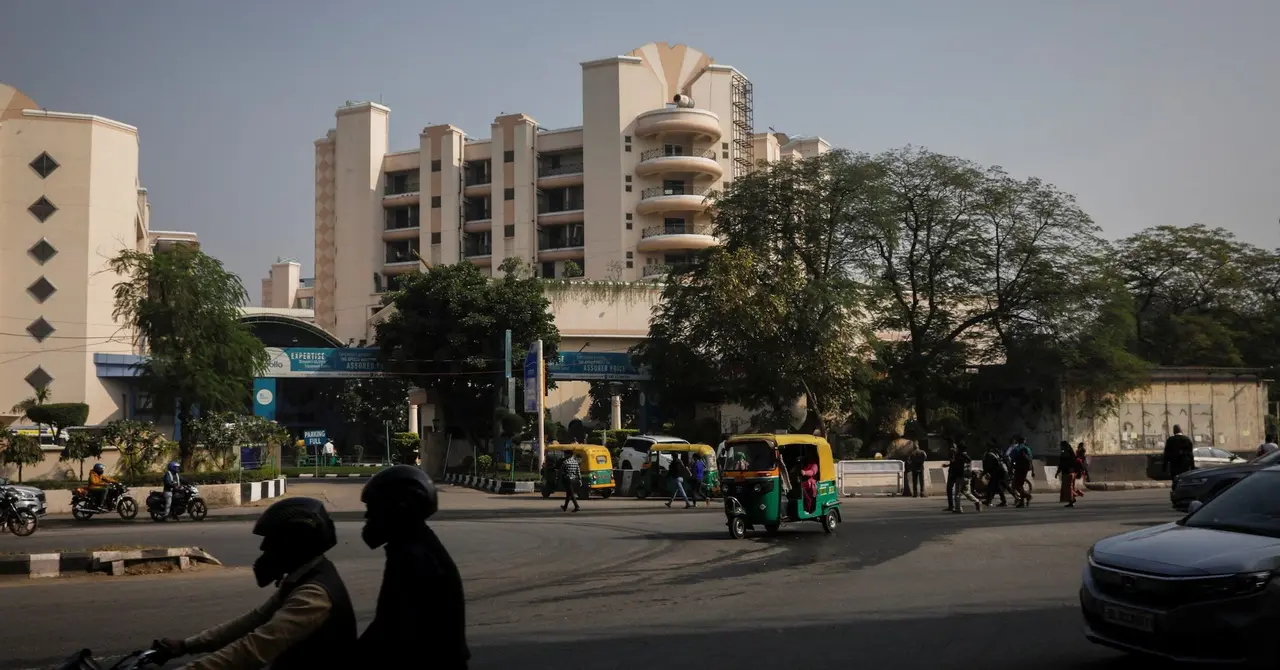
One striking example of AI's impact comes from the Jiwan Jyoti Christian hospital in Uttar Pradesh. A 70-year-old patient with a persistent fever was diagnosed with tuberculosis using qTrack, an AI application developed by Mumbai-based startup Qure.ai. The AI-powered system analyzed chest X-rays and detected abnormalities that led to an accurate diagnosis
1
.Qure.ai is also collaborating with state governments in Karnataka and Maharashtra for early detection of lung cancer and tuberculosis. Their AI and deep learning algorithms analyze chest X-rays to identify lung abnormalities, demonstrating the potential for AI to enhance early disease detection
1
.AI Initiatives by Major Players
Large hospital chains and tech giants are investing heavily in AI-powered healthcare solutions:
-
Apollo Radiology International is utilizing Google's AI models to conduct 3 million free AI-powered screenings for TB, lung cancer, and breast cancer in underserved Indian communities
1
. -
Google is developing health acoustic representations foundation models trained on bioacoustic sounds to help researchers build disease detection models
1
. -
Microsoft, in partnership with Sankara Eye Hospital, has developed CataractBot, an 'expert-in-the-loop' chatbot for cataract patients available on WhatsApp in multiple Indian languages
1
.
Startups and Non-Profits Driving Innovation
Several startups and non-profit organizations are at the forefront of AI-driven healthcare innovation:
-
Khosla Labs is piloting CARE, a voice-enabled generative AI tool trained in 10 major Indian languages, and developing tele-health ICU solutions to address specialist shortages
1
. -
Wadhwani AI is creating AI solutions for TB detection, predicting patient follow-up likelihoods, and improving maternal and child care
1
.
Related Stories

Investment Trends and Market Potential
The healthcare AI sector is attracting significant investment. According to a report by Silicon Valley Bank, one in four healthcare investments is now in AI-linked firms, with total investments reaching $2.8 billion
2
. Bessemer Venture Partners notes that AI in healthcare is at a tipping point, driven by the digitization of healthcare records and years of research resulting in viable products2
.Challenges and Considerations
Despite the promising advancements, several challenges remain:
-
Data availability and quality: While India generates vast amounts of data, systematic collection and storage for AI training remain problematic
1
. -
Last-mile connectivity: Implementing AI solutions in remote areas poses logistical challenges
1
. -
Market complexity: The Indian healthcare market's complexity and price sensitivity can deter smaller startups
1
. -
Over-reliance on AI: There are concerns about junior doctors becoming too dependent on AI diagnostics
1
. -
Regulatory considerations: Implementing regulations for patient consent and data anonymization requires careful thought, given the healthcare industry's size and unorganized nature
1
.
As AI continues to reshape India's healthcare landscape, addressing these challenges will be crucial for realizing its full potential in improving patient outcomes and healthcare accessibility across the country.
References
Summarized by

Navi
Related Stories
AI in Healthcare: ChatGPT and Other AI Tools Show Promise and Pitfalls in Medical Diagnosis
21 Apr 2025•Health

Apollo Hospitals Invests in AI to Ease Healthcare Staff Workload and Improve Patient Care
13 Mar 2025•Health
AI and Tech Startups Revolutionize Healthcare in India, Addressing Critical Gaps
21 Oct 2024•Health

Recent Highlights
1
Microsoft and Nvidia Launch Surface Laptop Ultra: A $2,599 AI-Ready PC With RTX Spark Chip
Technology

2
OpenAI Releases 722 AI-Generated Math Papers on GitHub, Igniting Fury Among Mathematicians
Science and Research

3
Trump Consulted Grok AI Before Ordering Venezuela Invasion and Capture of Nicolás Maduro
Policy and Regulation

Recent Highlights
Today's Top Stories










Don’t drown in AI news. We cut through the noise - filtering, ranking and summarizing the most important AI news, breakthroughs and research daily. Follow topics that matter to you and stay ahead.


