Block's 4,000-person layoff sparks debate: AI revolution or corporate cost-cutting in disguise?


11 Sources
11 Sources
[1]
Jack Dorsey Is Ready to Explain the Block Layoffs
When the bombs hit in Iran, I thought of Jack Dorsey. In 2009, he and I were both part of a contingent of technology people sent by the US State Department to Baghdad, in the wake of another questionable Middle East war. At that time Dorsey was not involved in Twitter's day-to-day operations, and he was glumly following from afar as his cofounders embarked on a media tour to celebrate the success of the product that sprang from his vision. Our survey of a city ravaged by war -- we wore flak jackets and helmets when venturing outside the protected Green Zone -- was a distraction from his obvious pain of exile. Dorsey more than recovered. Not long after our trip, he founded the fintech company Square (now called Block), and in 2015, he reclaimed leadership of Twitter. He ran both companies for several years, until 2021, when he stepped down as Twitter CEO and then sold the company to Elon Musk. Dorsey still leads Block, which made almost $3 billion in profit last quarter, has a $39 billion market cap, and employed 10,000 people -- until last week. That's when Dorsey hit the news by discharging almost half of his workforce. His explanation was that recent advances in AI tools are forcing Block to remake itself as a slimmer, more nimble entity -- and that other companies will follow suit. The move was classic Dorsey, who ignores many of the conventions of corporate mogulhood. He lives a nomadic existence, rocks a hipster beard, and advocates meditation. He is a life-long proselytizer of open source protocols and decentralization. And he's quick to embrace any technology that he perceives as the future, be it Bitcoin or AI. In our conversation, I pushed him on why he thinks corporate bosses must discard conventional management and restructure around a layer of AI, with many fewer employees. Or whether he was simply using AI as an excuse to trim a bloated workforce. And of course I asked him what he now thinks of X. Steven Levy: You just laid off almost half of your company. There seems to be some question whether it was a correction to your overhiring. Were you AI-washing the layoffs? Jack Dorsey: The most important thing for me and the company is that we stay well ahead of the technology trends that are impacting us. This comes down to one simple thing. These tools are presenting a future that entirely changes how a company is structured. I don't know what the ultimate outcome is, but I do know it's going to have a dramatic effect. I want to make sure we can be proactive about those moves, instead of reacting. If I allowed it to be drawn out, we'd be in a worse position. Did you overhire? I wonder what metric people are using for that. The metric that matters is gross profit per employee. We were exactly in line with or just ahead of all of our peers. We hired at the same rate that they all did during Covid, and we corrected around the same time as well. This was not looking at our cost and revenue per employee and fixing it, because we were already ahead of all of our peers. This was looking deeply at what the tools can do now and our own application of them.
[2]
AI Layoffs Are a Self-Fulfilling Prophecy
The technology may not be ready to replace workers, but that isn't stopping execs from pushing forward anyways. Late last month, at an event in Washington, D.C., Andrew Yang delivered a bleak message. "I have bad news, America," he told the crowd. "The Fuckening is here." The Fuckening is the name that Yang, a former presidential candidate, has given to AI's disembowelment of the workforce. As he sees it, millions of knowledge workers will soon lose their job, personal-bankruptcy rates will spike, and entire downtowns will turn vacant as offices hollow out. Yang has talked with computer-science majors, he said onstage, who can't find a job and are instead "driving Ubers to make ends meet." His doomsaying is extreme but familiar: Fears of job losses are mounting as AI continues to rapidly advance. A new generation of AI agents are more capable than traditional chatbots of assisting with sophisticated computer work. Bots are no longer limited to searching the web and answering questions -- they can create financial models, generate slide decks, and much more. Perhaps the most concerning sign yet of an impending jobs crisis came one day after Yang's announcement. The payments firm Block, which operates Square and Cash App, announced that it was laying off roughly 4,000 workers -- nearly half of the company's workforce -- due to AI. "The intelligence tools we're creating and using, paired with smaller and flatter teams, are enabling a new way of working," Block CEO Jack Dorsey, who also co-founded Twitter, wrote. Going forward, he added, the company will be laser-focused on integrating AI across layers of its operations. Although other companies have also blamed AI for job cuts, Block's layoffs were unusually drastic. "The dreaded AI jobs wipeout got real," The Wall Street Journal declared. Other companies could soon follow Block's lead -- not necessarily because the technology is ready to replace workers, but because it's become fashionable to make such cuts. In that sense, AI-induced job loss risks becoming a self-fulfilling prophecy. Dorsey's explanation for the layoffs at Block might not be the whole story. The company could be engaged in "AI-washing," or using the technology as a convenient excuse to lay off workers when other factors may be to blame. Like many other tech companies, Block became bloated during the pandemic -- its workforce more than tripled from 2019 to 2022. Perhaps the cuts offered Dorsey a way to shed workers while also signaling to the world that he is taking AI seriously. "It is hard to imagine a firm-wide sudden 50%+ efficiency gain that justifies massive organizational cuts," Ethan Mollick, a Wharton professor who is usually quite sanguine about AI's capabilities, wrote online. "I think it is worth taking the justification with a grain of salt." Read: The worst-case future for well-off workers I asked two former Block employees, both of whom were affected by the layoffs, for their perspective. "For engineers, AI did change the way work was being done," one told me, pointing to the popularity of tools such as Anthropic's Claude Code and Block's own open-source AI agent, Goose. "I do believe that Jack was genuine in that layoffs were in large part due to AI." But as the other former staffer pointed out, these tools are popular across the industry: "I'm not sure if Block uses AI more than most other tech companies do these days (which is to say, quite a lot)." In other words, yes, AI is being used plenty at Block -- but it's also being used at all kinds of large companies, none of which has engaged in such drastic cuts. (The employees both spoke with me on the condition of anonymity, citing fear of professional repercussions.) Block declined to comment when I reached out. In an interview with Wired on Friday, Dorsey suggested that the layoffs were a proactive move. "Something really shifted in December," he said, pointing to advances in coding bots from Anthropic and OpenAI. "It presented an option to dramatically change how any company is structured, and certainly ours." The implication is not that the technology is already doing the work of half the company but rather that, by cutting people now, the company will be forced to reimagine itself as an AI-native firm. The technology has made traditional management structures obsolete, Dorsey said, and the cuts will allow the company to put AI into everything it does. After Block announced the layoffs, its stock price increased -- in other words, the market seemed to be rewarding Dorsey for his vision. Investors, who have unthinkable sums riding on the AI boom, are antsy for signs that the technology is boosting productivity. This could set off a dangerous cycle: Once one company conducts AI-driven layoffs -- even if premature -- others might feel pressure to do the same. If your competitors can do more with less, you should be able to do so too. "The impact is very unfortunate," Raffaella Sadun, a professor at Harvard Business School who studies AI and work, told me, explaining that such layoffs compound the narrative that AI is an effective substitute for humans. Read: America isn't ready for what AI will do to jobs Although the market might immediately reward companies for making AI cuts, in the long run, experts told me, premature AI layoffs could backfire. Some of the "most promising and revolutionary AI applications" will come from employees, not the C-suite, Sadun said. At one company she works with, she told me, an engineer codified his knowledge about company operations into an AI agent. Junior employees can now go to the bot with trivial questions, saving the engineer time. If you fire half your staff, the institutional knowledge required to create such tools is lost. Plus, when companies cut their workforce because of AI, they cast the technology as a competitor, dampening employees' incentives to make good use of it. Block's ability to reinvent itself will "depend on the morale of the remaining engineers," one of the ex-employees said, which "probably isn't too great." (Indeed, some remaining employees report feeling overwhelmed by their increased workload.) Dorsey might be a visionary ushering in a new type of company, or he might be, as Sadun put it, sowing the seeds of his own destruction. For now, the quality of AI's output is often middling -- humans working with AI are more likely to produce good work than bots working alone. Sloppy, hasty automation, which replaces workers with inferior machines, is everyone's loss. It is bad for society and for businesses themselves, and such efforts are unlikely to do much to increase productivity, Simon Johnson, a Nobel Prize-winning economist at MIT who has studied the history of technological transformations, told me. But for decades, corporate America has viewed "labor as a cost to be minimized as opposed to a resource to be developed," he said. People working on AI have been prophesying the end of white-collar work since the field's inception. Now the technology is here, and the fearmongering is louder than ever. Last month, Mustafa Suleyman, Microsoft's AI chief, warned that "most, if not all" white-collar work will be fully automated within the next 12 to 18 months; Anthropic CEO Dario Amodei has predicted that half of all entry-level white-collar workers may soon be jobless. But mass job loss, at least for now, is not an inevitability so much as a narrative. Executives are constantly being told that AI cuts are coming, and as pressure grows for them to signal that they are making good use of the technology, layoffs offer one of the easiest ways for them to do so.
[3]
The Curious Case of the Block 'AI Layoffs'
Last week, Block CEO and ayahuasca enthusiast Jack Dorsey announced that he was cutting 40% of his company's staff because AI tools have reduced the company's need for people. While Dorsey called it "one of the hardest decisions in the history of our company," he also said it was inevitableâ€"that the cuts could either happen slowly over the next few years or all at once, right now. Basically, AI was coming for those jobs one way or another. It turns out things might not be that simple. Naoko Takeda, a data scientist at Block, poked a pretty significant hole in Dorsey's story. She left Block, not because she was laid off, but because of how she was asked to stay. According to Takeda, she was offered a 75% pay increase, which she said was 90% with a one-time bonus included, to stay on and work with the skeleton crew that was left behind following Dorsey's sudden downsizing. "So basically, I saw my company discard half of my peers and double my pay," she wrote on LinkedIn. "That’s not an honor. It feels shameful and dehumanizing. I’d rather see my peers keep their jobs than personally profit from their trauma." Takeda said she wasn't sure what the retention package looked like for the rest of the company's remaining employees, but if it was similar to the offer she received, it seems like Block isn't going to save a whole lot on payroll. Instead, it's just shifting that money around to people who will presumably be asked to pick up the slack left by the sudden, sizable hole in the company's staff. And, as Takeda pointed out, those who took the payday are basically just enjoying a fatter check until their day under the ax comes, because Dorsey has effectively signaled that it is inevitable. A second blow to Dorsey's narrative came from Aaron Zamost, the head of communications for Dorsey's company from 2015 to 2020. In an op-ed in the New York Times, he suggested that Block's layoffs are more about Dorsey trying to "prove [his] A.I. credentials" to others than a true signal that AI is currently doing the work of 4,000 people. "Look closer at specific cuts â€" like shrinking the policy team and eliminating diversity and inclusion roles, former colleagues told me â€" and Block’s latest reorganization reads like standard prioritization and cost management, not an A.I.-driven reinvention," Zamost wrote. There's no doubt that we're in an age of AI washing, and that chalking up layoffs to AI adoption is one surefire way to please your shareholders, whether it's true or not. OpenAI CEO Sam Altman recently warned that he believes some companies are using AI as an excuse for cutting staff, and there is data to back up that idea. Last year, less than 1% of all job losses for the year were attributed to AI, and a recent paper published by the National Bureau of Economic Research found that 90% of executives surveyed said AI has had no impact on workplace employment in the last three years. Of course, there's always the possibility that Dorsey is the exception. He'd certainly like for that to be the caseâ€"or at least like for investors to believe it to be. Wired asked Dorsey straight up if the recent layoffs were AI washing, and Dorsey gave a pretty wishy-washy response, stating that AI tools are "presenting a future that entirely changes how a company is structured," while calling the layoffs "proactive." He even pinpointed when this pivot became possible, telling Wired, "Something really shifted in December in the sophistication of [AI] tools. Anthropic’s Opus 4.6 and OpenAI’s Codex 5.3 went from being really good at greenfield products to being really good at larger and larger code bases. It presented an option to dramatically change how any company is structured, and certainly ours." Later, though, when asked if he had overhired, Dorsey said, "This was not looking at our cost and revenue per employee and fixing it, because we were already ahead of all of our peers. This was looking deeply at what the tools can do now and our own application of them." Maybe Dorsey is just saying that he's looking at what AI can do now and extrapolating from there, but these seem like two different answers. It also seems to minimize his own admission on Twitter that his company "over-hired during Covid." Block has undergone three rounds of layoffs since 2024, prior to this one, including a rolling layoff that just started in February that saw 10% of the company's staff cut. Per a Wired report on those layoffs, Dorsey claimed they were being made for performance reasons, and there was “a sizable portion of our population that have been phoning it in.†AI seemingly wasn't mentioned as a reason for those cuts, despite the fact that the same tools that Dorsey credits with making the latest layoff possible were already available. Still, something certainly must have changed. To go from doing a rolling layoff of 10% of staff to an immediate cut of 40% is pretty drastic. And so, too, is Dorsey's roadmap for the future of his company. "I want the company itself to feel like a mini AGI," he told Wired. "We're moving to a world where our customers will have the ability to create their own products, experiences, and customizations." Maybe Dorsey's hunch is right. But a world where customers are basically vibe-coding their own products on top of Block sure seems like the kind of world where you're going to need a lot of customer support staff to navigate all the errors, issues, and security vulnerabilities that arise. If that happens, Dorsey will probably rest easy knowing he's not the only CEO who cut staff just to realize that people are actually good at their jobs. And just as he's receiving plenty of praise now for being so future-forward and visionary in his adoption of AI, he'll probably get praise for recognizing the need for a human-centric approach upon course-correcting. Some guys just can't lose.
[4]
Current and former Block workers say AI can't do their jobs after Jack Dorsey's mass layoffs: 'You can't really AI that'
The CEO said he cut the company's workforce by 4,000 people - almost in half - because of gains in AI productivity Mark remembers the first time he wondered whether he was teaching Block's AI tools how to do his job - and maybe even replace him. He was at his fintech company's extravagant anniversary party last September. As executives led a presentation on the productivity benefits of a new internal AI tool, Mark, who worked in the product department, discussed his worries with colleagues. While he wasn't sure what would happen in a few years, he told a co-worker sitting next to him that for now, there was no way the technology was so advanced that it could move the business forward without employees like him to help drive vision and strategy. These AI tools were not proactive. He had to tell them what to do. Block still needed him, he thought. "You can't really AI that," he told the Guardian, adding that, after all, "an employee is more than a series of tasks". Mark was one of roughly 4,000 Block employees laid off last week. CEO Jack Dorsey said he cut the company's workforce almost in half because of gains in AI productivity. "A significantly smaller team, using the tools we're building, can do more and do it better," Dorsey wrote in a letter to shareholders. But in interviews with the Guardian, seven current and recently laid off workers pushed back against Dorsey's assertions that current AI tools can essentially replace workers at this scale. The workers the Guardian spoke with requested anonymity for fear of jeopardising their jobs or severance. They belong to various departments, including engineering and product, and several say Block's AI tools can be helpful in their work. But many felt the cuts were Dorsey's way of winning back investor confidence after Block's stock had declined in recent months, following heavy investments in an unstable cryptocurrency market. George, who still works at Block, says this was "posturing for the market" and that investors believe Dorsey is not a strong CEO: "This was a bold move to reposition the company away from crypto and towards AI and also change the public market narrative around the company." Block's stock jumped after its AI-fueled layoff announcement. In a wide-ranging Wired interview published Friday, Dorsey said he cut his workforce so drastically because "something really shifted in December in the sophistication of [AI] tools, including Anthropic's Opus 4.6 and OpenAI's Codex 5.3". He pushed back on claims of over-hiring during the Covid-19 pandemic, saying that the company was "in line with or just ahead of all our peers" in terms of gross profit per employee. He said the structure and management hierarchy of companies is "getting in the way of everything we do". His goal, he told Wired, was for "the company itself to feel like a mini AGI". Block did not provide a statement to the Guardian. Block's cuts come as wider fears emerge about how a growing use of AI in the United States could drive job cuts. Goldman Sachs noted in February that the increasing pace of AI adoption could drive up unemployment this year and estimated that the technology had already resulted in 5,000 to 10,000 monthly net job losses in the US last year. At first, Block mostly encouraged its employees to use AI more often. Then, over the last nine months, that encouragement shifted to a requirement, workers told the Guardian. Dorsey insisted in a recording of a January internal all-hands meeting that the Guardian reviewed that "the way we built things in the past is not going to work anymore". "We have to shift. There's no question," Dorsey said. Some workers, including Mark, feel that employees are being tasked with building and training the very tools the company is trying to use to supplant them. "The way in which they are using these tools as justification to fire half the company is ludicrous," he said. "In hindsight, it seemed like a thinly veiled attempt to get all this input from employees on what tasks to automate. You basically have employees teach you how to automate them out ... but [these tools] are not even close to being all-encompassing of someone's job." Another laid-off Block employee made a similar point publicly in an interview with Business Insider. Even Block workers whose jobs heavily involve AI tools are skeptical that current tools can replace workers at this scale. "We're just not there yet," says John, a current employee whose role involves helping other staff use AI. "There's a distinction between what's technically possible and just - pardon my French - whatever CEO bullshit will happen based on their own interpretation of how AI works," John says. While AI tools have certainly made engineers faster, humans still need to be a part of the loop. Block executives said in a recent earnings call that the company has "seen engineering work that would have taken weeks to complete be done by a small team in a fraction of the time with agentic coding tools". They cited a "greater than 40% increase in production code shipped per engineer since September". All code changes at Block require human approval before being added to products and services, according to John. He notes that about 95% of AI-driven code changes still need human tweaks - as of about three months ago. "They are not up to company standard on the first try," he says. Block is also monitoring employees' use of AI, down to their use of specific tools and tokens, according to several employees. Evaluations about employee performance, which are determined partly by the direct manager's assessments, now include questions about AI usage and proficiency. Liam, a recently laid-off software engineer, recalls feeling the pressure as his manager asked him about how he currently uses AI and what steps he would take to make that more effective. "It was very clear that if you weren't using AI, your job was in danger," he says. The push for rapid change has led to a widespread feeling of AI fatigue, according to John, who helps others use these tools: "People are fed up with AI." Carl, a current employee, tells the Guardian that he's opposed to AI on an ethical level because of how the datacenters used to power it are harming communities. He avoids using these tools, noting: "You're not paying me to train your tools, so I'm not going to do it." But even those who would have otherwise been more open to AI are frustrated. The pressure to use AI "created more friction as it became obvious that we were being monitored for our usage, and we were being told that we had to use it", even if it was the less efficient route to accomplish a task, according to Oliver, a recently laid-off worker. Oliver and other workers told the Guardian that Block's AI tools can't yet take the lead on some work in heavily regulated spaces, like banking and money transfers, which are vital parts of a financial tech company's business. Naoko Takeda, recently a data scientist at Cash App, which is owned by Block, wrote in a viral post on LinkedIn this week that she survived the layoffs but "felt immense dread and survivor's guilt". Despite a dramatic pay increase offered to employees who remained, she said, she left the company. "In the last year, AI was shoved down everyone's throats. Everything was about AI. We were told to use AI as much as possible," she wrote. "It's nothing short of dystopian to be forced to employ the very tools that accelerate the disappearance of the jobs on which our livelihoods depend. Personally, I saw very limited gains in productivity from AI, nothing nearly profound enough to justify tossing out half of the company's workforce along with their institutional knowledge and expertise." Beyond the impact on employees, Block's AI expansion may also hurt its business. George, who still works at the company, describes how some customers have become angry about Block outsourcing some initial requests for customer support to chatbots. "We've noticed [from internal surveys] that [these bots have] made incredible mistakes," he says. That includes telling customers to cancel or close their existing accounts as potential solutions. "That's something, which, of course, we never want to encourage as a solution," he says. More broadly, workers described that, while AI can be especially helpful on the back end, customers and clients typically don't like talking to automated bots when they have serious issues. "It's frustrating, like, you can't get your point across ... it's almost like it's reading a manual to you, and it's like, well, this isn't the problem," says Carl. Other workers appreciate AI's effect on productivity, but note its lack of judgment and emotional intelligence. "It doesn't have discernment. It's like, it can build a brick building, but does that mean it [understands] architecture?" says Oliver. Amid these issues, the remaining workers are left to pick up the slack, as entire teams are decimated. Current employees describe being in "survival mode" and morale as "in the gutter". An internal 26 February Slack message that the Guardian reviewed from Block's engineering lead, in which he expressed gratitude to employees amid the layoffs, was met with a diverse array of emoji reactions from staff: hundreds of thumbs-downs, tomatoes, middle fingers and clown faces. "Everyone that I know that's still there has a ton of dread because they just realized their workload has quadrupled or 10xed and AI is not going to fix it," Oliver says.
[5]

'What will our kids do?': one question was on every investor's lips at Morgan Stanley's big AI conference | Fortune
Morgan Stanley analyst Adam Jonas flagged it as the single most common investor question he fielded throughout the conference. For all the breathless optimism about large language models and agentic AI, anxiety about what this technology means for the next generation of workers pervaded a room full of some of the world's most powerful business leaders. (In January, The Wall Street Journal called Jonas "the Wall Street star betting his reputation on robots and flying cars," noting that he is the bank's "global embodied AI strategist," the first position of its kind for the investment bank.) OpenAI CEO Sam Altman told conference goers he can envision one or five people running an entire company -- and said that transition has compressed to the next few years. He had been even blunter at a separate summit in India just days before: "The world is not prepared.... We are going to have extremely capable models soon. It's going to be a faster takeoff than I originally thought." Citrini Research founder James Van Geelen, whose finance Substack rocked the markets in February with a viral doomsday AI post in line with Altman's warnings, told Bloomberg's Odd Lots podcast that the essay was an extrapolation of this exact idea. "Everybody in in venture capital has been talking about who's going to be the first one-person unicorn because of agentic AI," he said. "I don't know if we're there yet. I haven't really kept on top of that, but that does seem like something plausible to me." OpenAI's GPT-5.4, released the week of the conference, posted record scores across a battery of AI evaluations -- the latest evidence of the capability leap Morgan Stanley's analysts say the market is still not pricing in. Nvidia CEO Jensen Huang summed up the moment in three words: "Compute equals revenue." He called demand for computing power "higher than incredibly high," with Amazon Web Services ramping "like mad" and the major U.S. AI labs needing "a few million" net new GPUs. What made this year's conference different from prior years wasn't the optimism. It was the candor. Multiple executives laid out, in clinical detail, the AI-driven efficiencies that had led their companies to execute significant reductions in force. A recent Morgan Stanley survey of roughly 1,000 executives across five countries found an average net workforce reduction of 4% over the past 12 months -- directly attributable to AI adoption. That covers only the sectors in which AI is currently most advanced. The pace of adoption is still accelerating. Morgan Stanley noted that University of Chicago economist Alex Imas, whose work Morgan Stanley highlighted at the conference, posted on his influential Substack recently: "I believe the newest batch of aggregate data -- which shows a big upwards revision -- is showing signs of AI productivity gains." He also noted Harvard economist and former Obama economic advisor Jason Furman now agrees with Stanford's AI guru Erik Brynjolfsson that the aggregate productivity numbers are reflecting an AI productivity boost that had thus far been mostly documented in micro studies. Translation: The jobs impact economists once debated in theory is now showing up in the macro data. Imas told Fortune earlier this month he was "amazed and alarmed," because the advancements in AI are remarkable for multiple reasons. "It feels like this is the most exciting time to be alive, especially if you're interested in research," he said. "I can do things that I've never been able to do as far as the type of research that I'm doing. But at the same time, I have little kids. I'm super worried about what sort of jobs they're going to have." Morgan Stanley's analysts were candid about who stands to win and lose. Their modeling projects an increase in spending from high-income consumers, whose portfolios are swelling with AI-driven gains -- and a reduction in spending from middle- and upper-middle-income consumers whose jobs are most exposed to automation. Assets that can't be replicated by AI -- luxury resorts, rare earths, proprietary data, authentic human experiences -- are expected to hold or climb in value. Agreeing with a central plank of Citrini's essay, Morgan Stanley predicted "transformative AI" will drive deflation, higher capex, changes in asset valuations and national competitiveness. "We are continually surprised at how quickly, and violently, this prediction has become a key investor debate and driver of performance of stocks across many sectors," the bank said, explaining the concept at heart concerns how increasingly powerful AI tools drive deflation in pricing of products and services "across a wide range of industries where AI ostensibly 'replicates' the work done by humans at a severely reduced cost." Perhaps the most striking quote of the conference didn't come from a keynote. It came from a retirement announcement. Jimmy Ba, cofounder of xAI, said upon stepping down: "Recursive self-improvement loops likely do live in the next 12 months. It's time to recalibrate my gradient in the big picture. 2026 is gonna be insane and likely the busiest and most consequential year for the future of our species." Several executives at U.S. LLM labs echoed this sentiment at the conference, warning near-term AI progress would "surprise, and potentially shock, investors." Morgan Stanley's own analysts said they believe a non-linear jump in model capabilities will become evident between April and June of this year. For the CEOs packed into conference rooms in San Francisco last week, the machines are getting smarter faster than anyone predicted -- and the question of what the next generation will actually do for work, income, and identity is, for now, still unanswered.
[6]

AI Job Loss Is Breaking the Psyche of Workers, Psychiatrist Warns
Can't-miss innovations from the bleeding edge of science and tech If you're one of the hundreds of millions of Americans who earn a wage for a living, it can be hard to stay positive in the wake of recent headlines. Jack Dorsey's Block just cut 4,000 roles citing AI, which came on the heels of Amazon's rolling layoffs, which sent some 16,000 office workers packing. Oracle, meanwhile, just announced it's culling at least 20,000 workers from its ranks. In an interview with the Psychiatric Times, psychiatrist Andrew Brown argued that the economic distress associated with this kind of unemployment also carries clinical side effects. A psych professional primarily focusing on the mental health of the unemployed, Brown has previously warned about how AI-driven job loss fuels anxiety and self-doubt. Now, those warnings are becoming all too real. "What we can expect to see" with the AI jobs onslaught, he suggests, "is an amplification" of the anxieties that typically come with a loss of income. This is obvious enough: without money to pay for rent, groceries, heat, healthcare, or any of the other necessities of life, people don't exactly thrive. One of the hidden impacts of all this, Brown asserts, is a heightened risk of psychological illness. "There's an initial shock that comes with job loss," but then, "when worklessness is prolonged, when it becomes a chronic, reality-based problem, you see a variety of other psychological-psychiatric illnesses and morbidities that arise," Brown explains. Medically, he notes, this can occur even in individuals without a prior history of psychiatric distress. Whether you buy the tales of AI-related job loss -- which, to be fair, are likely a major oversimplification -- the labor market outlook is looking pretty grim regardless. "We won't just have individuals who are suffering as a result of job loss once or twice," Brown says. "We can expect serial job loss and chronic uncertainty, and therefore chronic anxiety about one's future, one's future in the workplace, one's future capacity to sustain themselves economically." "It will no longer be possible for people to develop a coherent and sustainable personal narrative about their professional identity, because the ability to contribute to the workforce has become so unstable, so fragmented." As this goes on, he says, our individual sense of usefulness -- based on the development of specialized skills over the course of a career -- will also come under threat. Brown concludes: "what we'll see with AI is that, not only will one have to develop a new skill set once or twice, but there will be this serial way in which skills are suddenly rendered useless."
[7]

This CEO explains what's really behind layoffs -- and it's not AI
Last week, Block CEO Jack Dorsey shared that his fintech company would be cutting 40% of its workforce, arguing that AI would allow them to do more with smaller teams. Many observers wondered if the large-scale layoffs reflected the new reality amid rapid AI adoption, and whether it was just a matter of time before other companies followed suit. But not everyone is buying it. In a post on X, Whoop CEO Will Ahmed shared that his company -- which makes health and fitness wearables -- would be nearly doubling its 800-employee headcount this year, drawing a contrast with employers that have been slashing jobs over the last year. He then weighed in on the growing trend of companies using AI to explain their layoffs. "Investing in talent and AI tools not mutually exclusive," Ahmed wrote. "Many of these 'AI layoffs' are just companies underperforming or lacking a bigger market opportunity." In an interview with Bloomberg, Ahmed elaborated on this idea. "There's a lot of companies that are doing layoffs right now and blaming it on AI," Ahmed said. "But they're actually doing layoffs because the businesses aren't performing particularly well. And it's a convenient excuse." Amid waves of layoffs across corporate America, many leaders and CEOs have been reticent about their reasons for trimming headcount, often gesturing at AI investments when they announce layoffs. In 2025, AI was cited in nearly 55,000 layoffs, according to outplacement firm Challenger, Gray & Christmas -- and some leaders, like Dorsey, have been quite explicit about pinning job losses on AI.
[8]
Sam Altman admits AI is killing the labor-capital balance -- and says nobody knows what to do about it | Fortune
Speaking at the BlackRock Infrastructure Summit, OpenAI CEO Sam Altman tackled the growing public skepticism surrounding artificial intelligence, acknowledging the warning from President Donald Trump that AI is facing a major public relations problem. Moreover, the tech executive validated widespread anxieties about the future of employment, admitting that the traditional balance between labor and capital is shifting drastically. Addressing the current backlash, Altman noted that AI has become a widespread scapegoat for corporate downsizing and rising utility costs. "Data centers are getting blamed for electricity prices hikes. Almost every company that does layoffs is blaming AI, whether or not it really is about AI," Altman explained, recalling his recent warning that some companies were engaging in what's called "AI washing," in blaming layoffs on new tech regardless if that was the reason for those layoffs in the first place. However, while some of the immediate blame might be misplaced, Altman confirmed that the underlying threat to traditional employment is grounded in reality. He said he saw a quote online that's been sticking in his head, around how for centuries, maybe millennia, humans have learned how to structure society to manage scarcity, and now we have to quickly learn the opposite, managing "abundance." "So that's, like, a real change to how capitalism has worked," he said, noting that capitalism has also depended on at least something of a power balance between labor and capital. "But if it's hard in many of our current jobs to outwork a GPU, then that changes." He said it, frankly, stumps him. "If there was an easy consensus answer, we'd have done it by now, so I don't think anyone knows what to do." The AI landscape has crossed a threshold into "major economic utility" over the last few months, Altman claimed, rapidly evolving from simple coding assistance to executing complex tasks across various fields of knowledge work. Altman warned that the pace of this evolution is disorienting, and very soon, AI agents will be trusted to handle multi-day and multi-week tasks, operating proactively much like a senior human employee. This shift is already altering corporate behavior. A new generation of startups is deliberately avoiding large head counts, preferring instead to invest their capital heavily into computing power. In places like India, Altman observed entrepreneurs attempting to build "zero person" startups, relying entirely on AI prompts to write software, handle legal work, and manage customer support. Even the C-suite won't be immune to this transformation, Altman warned. He predicted a future where the cognitive capacity inside data centers will eclipse human capacity outside of them, potentially by late 2028, implicitly recalling his rival Anthropic's warning that each AI cluster would have the brainpower of 50 million Nobel prize winners. Ultimately, Altman said he foresees a threshold where the leaders of major organizations -- including CEOs, presidents, and top scientists -- will be entirely unable to perform their duties without heavy reliance on AI supervision and assistance. To fuel this intelligence revolution, Altman said OpenAI is pursuing massive infrastructure buildouts, including gigawatt data center campuses, with the ultimate goal of making artificial intelligence "too cheap to meter." He said, "We want to flood the world with intelligence, we want people to just use it for everything." To address the physical bottlenecks of this expansion, OpenAI has partnered with North American building trades unions to expand pathways for skilled construction workers, highlighting that massive physical infrastructure is necessary to support AI's digital growth. Altman envisions a future where intelligence is sold as a basic utility, like water or electricity, flooding the global market and fundamentally rewriting the rules of the economy. However, achieving this era of abundance will not be easy. Altman predicted that traditional economic metrics like GDP might plummet in a "forever deflationary world," forcing society to rethink how it measures quality of life. Spookily, Altman was echoing the viral doomsday AI essay from Citrini Research that warned of spiralling deflation and "ghost GDP," leading to economic chaos within 18 months. While Altman insisted, back in December, he is "not a long-term jobs doomer" and believes humanity will eventually invent new roles, he did not sugarcoat the immediate future. He warned that "the next few years are going to be a painful adjustment," heavily marked by "very intense and uncomfortable debates" over how to reshape society. Several weeks ago, one of Altman's AI counterparts, Sir Demis Hassabis of Google DeepMind, a Nobel prize winner himself, told Fortune Editor-in-Chief Alyson Shontell that AI abundance will lead to a "kind of new renaissance," but there will be a shakeout over the next 10 years en route to it.
[9]
Jack Dorsey Isn't Telling the Real Story About Block's AI Layoffs, Insider Says
Can't-miss innovations from the bleeding edge of science and tech Twitter founder and Block Inc (formerly Square) CEO Jack Dorsey announced late last month that his fintech venture was making "one of the hardest decisions in the history of our company" by "reducing our organization by nearly half." Dorsey cited rapid improvements in AI tech as the primary reason, sending shockwaves across Wall Street. He'd previously instructed employees to embrace AI at all costs, triggering major anxiety over job security that turned out to be warranted. The culling perfectly played into ongoing fears that AI automation is coming for white-collar jobs, a major job market and economic disruption that workers are becoming increasingly worried about -- and which clearly has execs salivating. As big tech was incurring losses over ongoing fears of an AI bubble starting to burst, Block investors sent a clear signal, sending shares of Dorsey's company soaring following his announcement. "Within the next year, I believe the majority of companies will reach the same conclusion and make similar structural changes," Dorsey told analysts during a call, as quoted by the Wall Street Journal. But the CEO's boasting failed to convince everybody that the AI-triggered job apocalypse is nigh. As former employee Aaron Zamost, who was head of communications at Square from 2015 to 2020, argued in an essay published by the New York Times, there are likely a litany of other factors at play apart from AI. "The question on minds everywhere: Is AI a terrifying new reality in which the work they do might no longer be viable?" he wrote. "Or is Block's announcement just a convenient and flashy new cover for typical corporate downsizing?" "The truth is, nobody knows the answer -- not even Block itself," Zamost argued. The former head of comms wrote that Dorsey had "long placed big bets based on a read of early signals" and "show a tendency to identify patterns, see enormous growth as an inevitability and go all in with conviction." But whether AI really explains the company's major downscaling instead of neatly providing a "new justification for layoffs" remains unclear at best. For one, Block had already seen major rounds of layoffs in both 2024 and 2025. Its prior history is relevant as well. Between the end of 2019 and end of 2023, the company's head count ballooned from 4,000 to almost 13,000 employees, per the WSJ, a major pandemic-era hiring spree. "Look closer at specific cuts -- like shrinking the policy team and eliminating diversity and inclusion roles, former colleagues told me -- and Block's latest reorganization reads like standard prioritization and cost management, not an AI-driven reinvention," Zamost wrote. Particularly, executives forcing their employees to adopt AI tools, often against their will, could trigger a self-fulfilling prophecy at companies claiming to be "AI first," he argued. "That future, however, is colliding with the reality of what AI can actually do," Zamost wrote, pointing to AI models generating "useless email summaries, antisemitic chatbots, and AI overviews that can't get even basic facts right." "Not all the roles I've heard that Block is eliminating can be handled by AI, yet executives are treating it as equally useful today to all disciplines," he added. Other analysts were equally unconvinced by Dorsey's argument that AI had allowed him to cut almost half his company's workforce. "The vast majority of these cuts were probably not due to AI," corporate investment bank Mizuho Americas' Dan Dolev told the WSJ. "This isn't an AI story," former Block employee Jason Karsh tweeted. "It's organizational bloat wearing an AI costume."
[10]

Jack Dorsey Blamed AI for 4,000 Layoffs. A Former Block Exec Says That's Not the Real Story
In a letter announcing the layoffs, Dorsey told employees that AI is "enabling a new way of working which fundamentally changes what it means to build and run a company." He also conceded that some of the cuts might ultimately prove to be a mistake, a striking admission given the scale of the layoffs. "One might think a company would want to move cautiously before laying off nearly half its work force," Zamost wrote. "But that person doesn't understand Silicon Valley generally, Jack specifically and the immense pressure on established tech companies to prove their A.I. credentials." For Zamost, Dorsey's background as an engineer still shapes how he interprets industry signals. From that perspective, the rapid development of AI tools could reasonably spark fears that "AI will rip through the rest of our work as well." Dorsey has long been willing to act decisively on early technological signals. Zamost noted that the Block co-founder, who also co-founded the company once known as Twitter, has a track record of making bold bets before trends fully materialize.
[11]
Exclusive: Block's CFO explains the AI leaps over 18 months that led to the decision to slash nearly half its workforce | Fortune
New tools including its custom LLM "goose" gave leaders confidence that smaller teams can now handle "really meaningful bodies of work," says Block's CFO and COO Amrita Ahuja. Getty Images Those were the two questions whipping around the business world following Block's shocking announcement that it was slashing 4,000 jobs, or nearly half its workforce. The parent company of Square and Cash App reported Q4 gross profits of $2.9 billion, up 24% year over year. Its shares jumped almost 20% in the trading sessions on Feb. 26 following the earnings release and the announcement of a major workforce reduction. But if the company is profitable and growing, why cut jobs now? "We believe that it is actually from a position of strength that we have the ability to take an action like this with confidence and execute on it in a way that continues to deliver for our customers and stakeholders," Amrita Ahuja, CFO and COO at Block, told Fortune. The decision to cut almost half of the workforce was part of a longer transformation rather than a sudden reaction to market pressure, Ahuja said. "This is a two-year journey for us," she said. "This was not an overnight decision." Ahuja describes the move as the culmination of a push to embed AI deeply across the company. Block's internal use of AI has already made its workforce more productive and helped support the company's decision to raise its 2026 guidance even as it reduces headcount, she said. Central to that strategy is codename goose, Block's internally built AI agent that sits on top of large language models to execute actions, draft emails, and automate workflows. Goose has been in production internally for about 18 months and has been open-sourced, allowing other companies to experiment with it as well, Ahuja said. Since September, she added, developer productivity at Block has improved with a 40% increase per engineer use of AI tools to push code and features to production faster. One risk underwriting model that previously took a full quarter to build was completed in a fraction of the time with these tools, giving leaders confidence that smaller teams can now handle "really meaningful bodies of work," Ahuja said. In major strategic discussions, Ahuja said her role as CFO and COO is to rigorously debate ideas and then focus on executing them well for employees, customers, and investors. There was no top-down percentage target for reductions, Ahuja said. Instead, leaders across the company built plans from the ground up around three principles: protecting the resilience and trustworthiness of Block's platforms; maintaining compliance and risk capabilities across money movement, savings, and commerce; and preserving the ability to execute on a growth-oriented product roadmap. The company simultaneously raised its 2026 outlook, now expecting gross profit to grow 18% year over year and profits to climb 54%, reflecting expectations that AI-driven efficiency will translate into margin expansion, she said. Block's layoffs come amid a broader wave of tech-sector layoffs that have eliminated tens of thousands of jobs in recent months. Some companies have downplayed linking cuts directly to AI. Dorsey, however, explicitly tied Block's layoffs to productivity gains from the technology. In a post on X, formerly Twitter, which he co-founded, CEO Jack Dorsey addressed pushback that layoffs at Block, Inc. were mainly due to over-hiring. Dorsey said the company "over-hired during COVID," which he attributed in part to building separate organizational structures for Square and Cash App -- a setup he said was corrected in 2024. But he said, attributing layoffs solely to over-hiring, "misses all the complexity," pointing to the company's expansion into lending, banking and buy now, pay later, as well as its goal of boosting efficiency. To those who view Block's position on AI as a convenient label for classic over-hiring, then cutting cycles, Ahuja says: "Look at the data." In 2019, she noted, Block generated about $500,000 in gross profit per employee, a figure that remained roughly unchanged even as the company expanded from a few thousand workers to around 13,000 during the hyper-growth years. Over the last few years, however, that metric has climbed to roughly $750,000 in 2024 and $1 million in 2025, and if Block meets the targets it laid out last week, gross profit per employee in 2026 would reach about $2 million -- double last year's level. "I don't think this is about bloat," Ahuja said. "This is about empowering our teams with the most world-class and powerful tools that we have to help them do their work more efficiently." For companies, there's a strategy behind making large-scale layoffs, but it certainly affects the employees who remain. And U.S. employee engagement has already fallen to a 10-year low, according to Gallup. Inside Block, leaders weighed two paths: one "bold, decisive" restructuring that aligns Block with where Ahuja and Dorsey believe the world is heading, or a series of smaller, reactive cuts that would require constant rewiring of how the company operates, Ahuja said. They chose the former, in part because of its impact on morale. "It is big news for anyone to get over," Ahuja said. "We are saddened to see colleagues go. We're incredibly grateful to those folks who have helped us build Block." Ahuja acknowledged the emotional toll of losing colleagues and the reality that remaining employees will shoulder more work in the near term. But equipping those employees with "the most powerful tools in the world," investing in reskilling, and backing that with rewards and recognition positions them better for the future -- whether at Block or elsewhere, she said. Block's laid-off employees received a severance package that included 20 weeks of base salary, with an extra week for each year of tenure. They also continued to vest equity through May and received six months of healthcare coverage. Additionally, employees were given a $5,000 transition stipend and could keep their work devices. Looking ahead, Ahuja said that Block is not imposing a hard cap on headcount. She expects the company to continue hiring in targeted areas, particularly in sales and AI-focused engineering roles that are directly tied to revenue growth and product innovation. Dorsey has predicted that many other companies will come to similar conclusions and rewire their organizations around AI. "It's hard to tell the future," Ahuja said. "But based on the pace of advancement that I have seen in the technology and how powerful it is, the wow moments that get unlocked as people actually start using it, I think this is absolutely where the world is headed." It may happen at a different pace for each company, depending on how facile and experimental they've been with the technology, she said.
Share
Share
Copy Link
Jack Dorsey eliminated nearly half of Block's workforce—roughly 4,000 employees—citing AI productivity gains. The fintech CEO claims AI tools enable smaller teams to accomplish more, but current and former employees dispute whether the technology can truly replace human workers at this scale. The move has ignited fierce debate about whether companies are using AI as cover for traditional cost management.
Jack Dorsey Cuts Nearly Half of Block's Workforce
Jack Dorsey sent shockwaves through the tech industry when he announced AI layoffs affecting roughly 4,000 workers at Block, the fintech company behind Square and Cash App. The workforce reduction eliminated nearly half of the company's employees in what Dorsey described as "one of the hardest decisions in the history of our company"
3
. Block, which made almost $3 billion in profit last quarter and maintains a $39 billion market cap, employed 10,000 people before the cuts1
.
Source: Futurism
Dorsey's explanation centered on AI tools fundamentally changing how companies must structure themselves. "Something really shifted in December in the sophistication of [AI] tools," he told Wired, specifically citing Anthropic's Opus 4.6 and OpenAI's Codex 5.3 as enabling "an option to dramatically change how any company is structured"
1
. The CEO argued that AI-driven layoffs were inevitable—either happening slowly over several years or all at once. He chose the latter, positioning the cuts as proactive rather than reactive to ensure Block stays ahead of technological trends.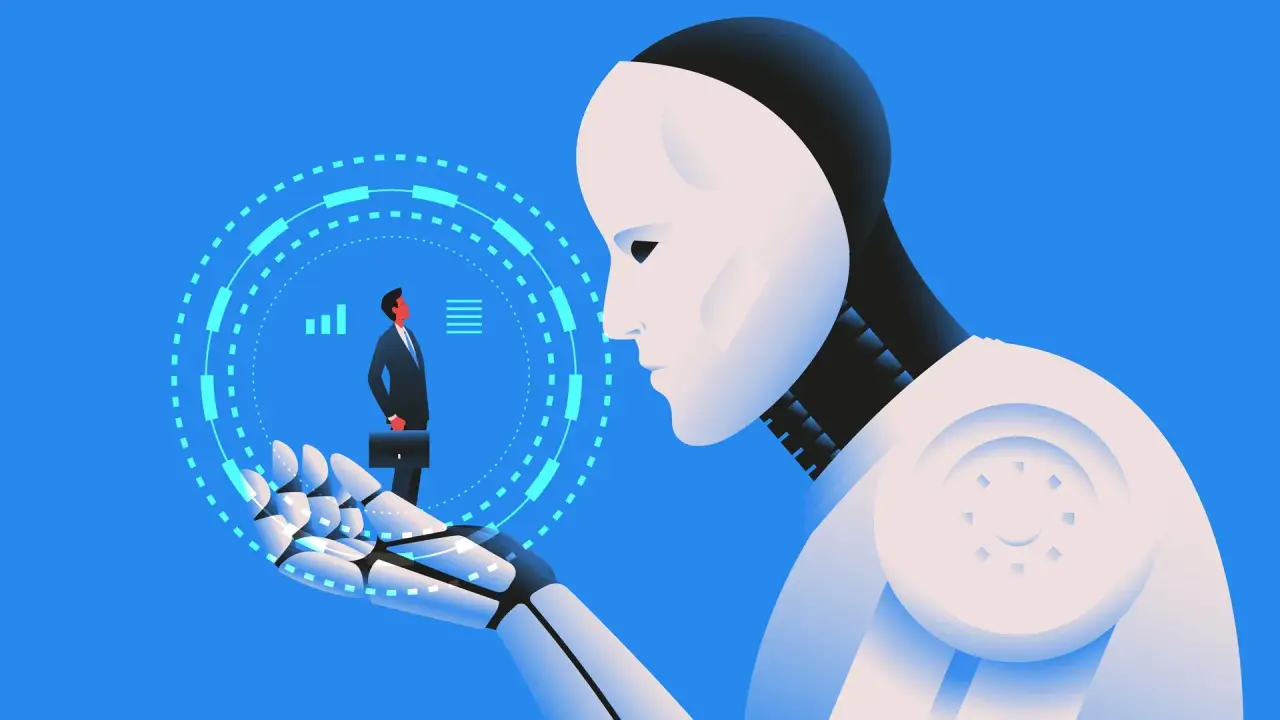
Source: Inc.
Employee Skepticism Challenges AI Productivity Claims
Current and former Block employees paint a starkly different picture. Seven workers interviewed by The Guardian pushed back against assertions that current AI tools can replace workers at this scale
4
. "You can't really AI that," said Mark, a laid-off product department employee, explaining that AI tools aren't proactive and require human direction for vision and strategy. "An employee is more than a series of tasks," he added4
.Even employees whose roles heavily involve AI expressed doubt. John, a current employee who helps staff use AI, stated bluntly: "We're just not there yet. There's a distinction between what's technically possible and just—pardon my French—whatever CEO bullshit will happen based on their own interpretation of how AI works" . Employee skepticism intensified when data scientist Naoko Takeda revealed she was offered a 75% pay increase—90% with a one-time bonus—to stay following the cuts
3
. "I saw my company discard half of my peers and double my pay," Takeda wrote on LinkedIn before declining the offer. "That's not an honor. It feels shameful and dehumanizing."
Source: Futurism
AI-Washing Accusations and Market Pressure
The concept of AI-washing—using AI as a convenient excuse for job losses when other factors may be driving decisions—has emerged as a central critique. Aaron Zamost, Block's former head of communications from 2015 to 2020, wrote in The New York Times that the layoffs appear designed to "prove [Dorsey's] A.I. credentials" rather than reflect genuine automation
3
. Zamost noted that specific cuts like shrinking the policy team and eliminating diversity and inclusion roles "reads like standard prioritization and cost management, not an A.I.-driven reinvention"3
.Wharton professor Ethan Mollick, typically optimistic about AI capabilities, expressed skepticism: "It is hard to imagine a firm-wide sudden 50%+ efficiency gain that justifies massive organizational cuts. I think it is worth taking the justification with a grain of salt"
2
. Several current employees told The Guardian the cuts were "posturing for the market" to win back investor confidence after Block's stock declined following heavy cryptocurrency investments4
. The strategy appeared to work—Block's stock price increased after the announcement, suggesting shareholders rewarded Dorsey's vision .Related Stories

Overhiring During COVID and Previous Layoffs
Block's workforce more than tripled from 2019 to 2022 during the pandemic hiring boom
2
. Dorsey himself admitted on Twitter that the company "over-hired during Covid"3
. When pressed about overhiring, Dorsey defended the company's metrics: "We were exactly in line with or just ahead of all of our peers" in gross profit per employee and "hired at the same rate that they all did during Covid"1
.The recent cuts weren't Block's first. The company underwent three rounds of layoffs since 2024 before this dramatic workforce reduction
3
. A rolling layoff that began in February eliminated 10% of staff, which Dorsey attributed to performance issues, claiming "a sizable portion of our population that have been phoning it in"3
. Notably, AI wasn't mentioned as justification for those cuts despite the same tools being available.Self-Fulfilling Prophecy and Broader Industry Implications
The Atlantic warned that AI-induced job losses risk becoming a self-fulfilling prophecy—not because the technology is ready to replace workers, but because corporate restructuring around AI has become fashionable
2
. Once one company conducts AI-driven layoffs, others may feel market pressure to follow suit. If competitors claim to do more with less, similar moves become expected.At Morgan Stanley's recent technology conference, the most common investor question concerned what AI means for the next generation of workers
5
. Sam Altman told attendees he envisions one to five people running entire companies within the next few years5
. A Morgan Stanley survey of roughly 1,000 executives across five countries found an average net workforce reduction of 4% over the past 12 months directly attributable to AI adoption5
. Goldman Sachs estimated AI resulted in 5,000 to 10,000 monthly net job losses in the US last year4
.Yet data suggests widespread AI-driven job displacement remains limited. Last year, less than 1% of all job losses were attributed to AI
3
. A National Bureau of Economic Research paper found that 90% of executives surveyed said AI has had no impact on workplace employment over the past three years3
. This gap between rhetoric and reality fuels concerns about automation being used to justify traditional cost savings while signaling technological leadership to shareholders eager for evidence that AI investments are paying off through efficiency gains and corporate transformation.References
Summarized by

Navi
[2]
[3]
[4]
Related Stories
Jack Dorsey cuts 4,000 jobs at Block, citing AI tools that 'can do more and do it better'
27 Feb 2026•Business and Economy

Citrini Research AI Scenario Triggers Wall Street Panic Over Unemployment and Economic Collapse
23 Feb 2026•Business and Economy

AI's Impact on Tech Jobs: More Hype Than Reality?
31 Jul 2025•Technology

Recent Highlights
1
Apple Plans Major Siri AI Overhaul in iOS 27 With Third-Party Chatbot Integration
Technology

2
OpenAI shuts down Sora video app after six months, ending Disney's $1 billion investment deal
Technology

3
Pentagon formalizes Palantir's Maven AI as core military system with multi-year funding
Policy and Regulation
Recent Highlights
Today's Top Stories










Your Daily Dose of Curated AI News
Don’t drown in AI news. We cut through the noise - filtering, ranking and summarizing the most important AI news, breakthroughs and research daily. Spend less time searching for the latest in AI and get straight to action.

