5 Sources
5 Sources
[1]
AI Research Is Getting Harder to Separate From Geopolitics
The world's top AI research conference, the Conference on Neural Information Processing Systems -- better known as NeurIPS -- became the latest organization this week to become embroiled in a growing clash between geopolitics and global scientific collaboration. The conference's organizers announced and then quickly reversed controversial new restrictions for international participants after Chinese AI researchers threatened to boycott the event. "This is a potential watershed moment," says Paul Triolo, a partner at the advisory firm DGA-Albright Stonebridge who studies US-China relations. Triolo argues that attracting Chinese researchers to NeurIPS is beneficial to US interests, but some American officials have pushed for American and Chinese scientists to decouple their work -- especially in AI, which has become a particularly sensitive topic in Washington. The incident could deepen political tensions around AI research, as well as dissuade Chinese scientists from working at US universities and tech companies in the future. "At some level now it is going to be hard to keep basic AI research out of the [political] picture," Triolo says. In its annual handbook for paper submissions, issued in mid-March, NeurIPS organizers announced updated restrictions for participation. The rules stated that the event could not provide services including "peer review, editing, and publishing" to any organizations subject to US sanctions, and linked to a database of sanctioned entities. It included companies and organizations on the Bureau of Industry and Security's entity list and those on another list with alleged ties to the Chinese military. The new rules would have affected researchers at Chinese companies like Tencent and Huawei who regularly present work at NeurIPS. The database also includes entities from other countries such as Russia and Iran. The US places limits on doing business with these organizations, but there are no rules around academic publishing or conference participation. The NeurIPS handbook has since been updated to specify that the restrictions apply only to Specially Designated Nationals and Blocked Persons, a list used primarily for terrorist groups and criminal organizations. "In preparing the NeurIPS 2026 handbook, we included a link to a US government sanctions tool that covers a significantly broader set of restrictions than those NeurIPS is actually required to follow," the event's organizers said in a statement issued Friday. "This error was due to miscommunication between the NeurIPS Foundation and our legal team." Before they reversed course, the conference organizers initially said that the new rule was "about legal requirements that apply to the NeurIPS Foundation, which is responsible for complying with sanctions," adding that it was seeking legal consultation on the issue. The new rule drew swift backlash from AI researchers around the world, particularly in China, which produces a large quantity of cutting-edge machine learning papers and is home to a growing share of the world's top AI talent. Several academic groups there issued statements condemning the measure and, more importantly, discouraging Chinese academics from attending NeurIPS in the future. Some urged Chinese academics to contribute instead to domestic research conferences, potentially helping increase the country's influence in relevant science and tech fields. The China Association of Science and Technology (CAST), an influential government-affiliated organization for scientists and engineers, said Thursday that it would stop providing funding for Chinese scholars traveling to attend NeurIPS and would use the money instead to support domestic and international conferences that "respect the rights of Chinese scholars." CAST also said it will no longer count publications at the 2026 NeurIPS conference as academic achievements when evaluating future research funding. It's unclear if the organization will reverse course now that NeurIPS has walked back the new rule.
[2]
China boycotts top AI conference after ban on papers from US-sanctioned entities
SHANGHAI, March 27 (Reuters) - China's largest federation for science and technology professionals on Friday announced a boycott of a top artificial intelligence conference after the California-based foundation that runs the gathering stopped accepting submissions from entities under U.S. sanctions. The Conference on Neural Information Processing Systems, known as NeurIPS, announced earlier this week a policy change that effectively banned entities like Chinese tech companies Huawei and SMIC (0981.HK), opens new tab under U.S. sanctions from submitting papers. The decision sparked outrage in China, which is locked in an intensifying race with the United States to develop the most cutting-edge AI models. NeurIPS provides a crucial forum for researchers and companies worldwide to submit peer-reviewed research, discuss the latest breakthroughs in AI and recruit the best talent in the industry. In response, China Association for Science and Technology (CAST) said in a statement that it would stop accepting funding applications for members wanting to attend NeurIPS and would instead redirect them to domestic conferences or "international conferences that respect the rights and interests of Chinese academics." NeurIPS' new policy, which it said was enacted to comply with U.S. laws, means that previous Chinese sponsors of the conference, such as Huawei, are excluded from submitting research papers. CAST added that papers accepted at NeurIPS would no longer be recognised as qualifying research outputs for its funding programmes. However, it will still acknowledge their academic impact if evaluated by Chinese academic societies. The escalating conflict highlights the effect of geopolitical tensions on cutting-edge AI research, as the U.S. and China try to use state power to influence each other's frontier technology capabilities. Washington has in recent years increased scrutiny on Chinese scientists at U.S. universities, investigating a growing number over alleged ties to entities in mainland China. It has also imposed sanctions on hundreds of Chinese universities and companies, preventing them from legally acquiring a wide range of advanced U.S. technology. China has also recently tightened its regulatory screws, reportedly barring two executives of AI agent startup Manus from leaving the country as regulators review whether Meta Platforms' (META.O), opens new tab $2 billion acquisition of the Chinese-founded firm originally violated investment rules. Reporting by Eduardo Baptista in Shanghai; Editing by Jamie Freed Our Standards: The Thomson Reuters Trust Principles., opens new tab * Suggested Topics: * Artificial Intelligence Eduardo Baptista Thomson Reuters Eduardo Baptista is a Senior Correspondent for Reuters based in Beijing, covering China's technology, space, and automotive industries. He has led enterprise and investigative reporting on China's military-linked companies, artificial intelligence and semiconductor supply chains, as well as macroeconomic and industrial policy. Baptista has reported from China for nearly a decade and holds a BA in History from the University of Cambridge.
[3]
China Boycotts Top AI Conference After Ban on Papers From US-Sanctioned Entities
SHANGHAI, March 27 (Reuters) - China's largest federation for science and technology professionals on Friday announced a boycott of a top artificial intelligence conference after the California-based foundation that runs the gathering stopped accepting submissions from entities under U.S. sanctions. The Conference on Neural Information Processing Systems, known as NeurIPS, announced earlier this week a policy change that effectively banned entities like Chinese tech companies Huawei and SMIC under U.S. sanctions from submitting papers. The decision sparked outrage in China, which is locked in an intensifying race with the United States to develop the most cutting-edge AI models. NeurIPS provides a crucial forum for researchers and companies worldwide to submit peer-reviewed research, discuss the latest breakthroughs in AI and recruit the best talent in the industry. In response, China Association for Science and Technology (CAST) said in a statement that it would stop accepting funding applications for members wanting to attend NeurIPS and would instead redirect them to domestic conferences or "international conferences that respect the rights and interests of Chinese academics." NeurIPS' new policy, which it said was enacted to comply with U.S. laws, means that previous Chinese sponsors of the conference, such as Huawei, are excluded from submitting research papers. CAST added that papers accepted at NeurIPS would no longer be recognised as qualifying research outputs for its funding programmes. However, it will still acknowledge their academic impact if evaluated by Chinese academic societies. The escalating conflict highlights the effect of geopolitical tensions on cutting-edge AI research, as the U.S. and China try to use state power to influence each other's frontier technology capabilities. Washington has in recent years increased scrutiny on Chinese scientists at U.S. universities, investigating a growing number over alleged ties to entities in mainland China. It has also imposed sanctions on hundreds of Chinese universities and companies, preventing them from legally acquiring a wide range of advanced U.S. technology. China has also recently tightened its regulatory screws, reportedly barring two executives of AI agent startup Manus from leaving the country as regulators review whether Meta Platforms' $2 billion acquisition of the Chinese-founded firm originally violated investment rules. (Reporting by Eduardo Baptista in Shanghai; Editing by Jamie Freed)
[4]
China boycotts top AI conference after ban on papers from US-sanctioned entities - The Economic Times
The decision sparked outrage in China, which is locked in an intensifying race with the United States to develop the most cutting-edge AI models. NeurIPS provides a crucial forum for researchers and companies worldwide to submit peer-reviewed research, discuss the latest breakthroughs in AI and recruit the best talent in the industry.China's largest federation for science and technology professionals on Friday announced a boycott of a top artificial intelligence conference after the California-based foundation that runs the gathering stopped accepting submissions from entities under U.S. sanctions. The Conference on Neural Information Processing Systems, known as NeurIPS, announced earlier this week a policy change that effectively banned entities like Chinese tech companies Huawei and SMIC under U.S. sanctions from submitting papers. The decision sparked outrage in China, which is locked in an intensifying race with the United States to develop the most cutting-edge AI models. NeurIPS provides a crucial forum for researchers and companies worldwide to submit peer-reviewed research, discuss the latest breakthroughs in AI and recruit the best talent in the industry. In response, China Association for Science and Technology (CAST) said in a statement that it would stop accepting funding applications for members wanting to attend NeurIPS and would instead redirect them to domestic conferences or "international conferences that respect the rights and interests of Chinese academics." NeurIPS' new policy, which it said was enacted to comply with U.S. laws, means that previous Chinese sponsors of the conference, such as Huawei, are excluded from submitting research papers. CAST added that papers accepted at NeurIPS would no longer be recognised as qualifying research outputs for its funding programmes. However, it will still acknowledge their academic impact if evaluated by Chinese academic societies. The escalating conflict highlights the effect of geopolitical tensions on cutting-edge AI research, as the U.S. and China try to use state power to influence each other's frontier technology capabilities. Washington has in recent years increased scrutiny on Chinese scientists at U.S. universities, investigating a growing number over alleged ties to entities in mainland China. It has also imposed sanctions on hundreds of Chinese universities and companies, preventing them from legally acquiring a wide range of advanced U.S. technology. China has also recently tightened its regulatory screws, reportedly barring two executives of AI agent startup Manus from leaving the country as regulators review whether Meta Platforms' $2 billion acquisition of the Chinese-founded firm originally violated investment rules.
[5]
China boycotts top AI conference after ban on papers from US-sanctioned entities
SHANGHAI, March 27 (Reuters) - China's largest federation for science and technology professionals on Friday announced a boycott of a top artificial intelligence conference after the California-based foundation that runs the gathering stopped accepting submissions from entities under U.S. sanctions. The Conference on Neural Information Processing Systems, known as NeurIPS, announced earlier this week a policy change that effectively banned entities like Chinese tech companies Huawei and SMIC under U.S. sanctions from submitting papers. The decision sparked outrage in China, which is locked in an intensifying race with the United States to develop the most cutting-edge AI models. NeurIPS provides a crucial forum for researchers and companies worldwide to submit peer-reviewed research, discuss the latest breakthroughs in AI and recruit the best talent in the industry. In response, China Association for Science and Technology (CAST) said in a statement that it would stop accepting funding applications for members wanting to attend NeurIPS and would instead redirect them to domestic conferences or "international conferences that respect the rights and interests of Chinese academics." NeurIPS' new policy, which it said was enacted to comply with U.S. laws, means that previous Chinese sponsors of the conference, such as Huawei, are excluded from submitting research papers. CAST added that papers accepted at NeurIPS would no longer be recognised as qualifying research outputs for its funding programmes. However, it will still acknowledge their academic impact if evaluated by Chinese academic societies. The escalating conflict highlights the effect of geopolitical tensions on cutting-edge AI research, as the U.S. and China try to use state power to influence each other's frontier technology capabilities. Washington has in recent years increased scrutiny on Chinese scientists at U.S. universities, investigating a growing number over alleged ties to entities in mainland China. It has also imposed sanctions on hundreds of Chinese universities and companies, preventing them from legally acquiring a wide range of advanced U.S. technology. China has also recently tightened its regulatory screws, reportedly barring two executives of AI agent startup Manus from leaving the country as regulators review whether Meta Platforms' $2 billion ?acquisition of the Chinese-founded firm originally violated investment rules. (Reporting by Eduardo Baptista in Shanghai; Editing by Jamie Freed)
Share
Share
Copy Link
The world's premier AI research conference NeurIPS sparked international controversy after announcing restrictions on US-sanctioned entities like Huawei and SMIC. China's largest science federation CAST responded with a boycott, redirecting funding to domestic conferences and refusing to recognize NeurIPS publications. The organizers quickly reversed course, calling it a miscommunication, but the incident highlights deepening geopolitical tensions threatening global scientific collaboration in AI research.
The Conference on Neural Information Processing Systems, the world's leading AI research conference, found itself at the center of escalating geopolitical tensions between US and China this week. In its annual handbook for paper submissions issued in mid-March, NeurIPS organizers announced updated restrictions stating the event could not provide services including peer review, editing, and publishing to any organizations subject to US sanctions
1
. The ban on papers from US-sanctioned entities would have affected researchers at Chinese tech companies like Huawei and SMIC, as well as organizations from Russia and Iran2
.
Source: Reuters
The California-based foundation initially claimed the new rule was necessary to comply with US sanctions laws. However, after swift backlash, organizers reversed course and updated the handbook to specify restrictions apply only to Specially Designated Nationals and Blocked Persons, a list used primarily for terrorist groups and criminal organizations
1
. In a statement issued Friday, NeurIPS called it an "error due to miscommunication between the NeurIPS Foundation and our legal team"1
.Before the reversal, the China Association for Science and Technology responded decisively. CAST, an influential government-affiliated organization for scientists and engineers, announced it would stop providing funding for Chinese scholars traveling to attend NeurIPS
1
. The organization stated it would redirect funding applications to domestic conferences or "international conferences that respect the rights and interests of Chinese academics"3
.
Source: Wired
CAST also declared that papers accepted at the 2026 NeurIPS conference would no longer be recognized as qualifying research outputs for its funding programmes, though it would still acknowledge their academic impact if evaluated by Chinese academic societies
4
. Several academic groups in China issued statements condemning the measure and urging Chinese academics to contribute to domestic conferences instead, potentially increasing the country's influence in relevant science and tech fields1
. It remains unclear if CAST will reverse its position now that NeurIPS has walked back the policy.The incident represents what Paul Triolo, a partner at advisory firm DGA-Albright Stonebridge who studies US-China relations, calls "a potential watershed moment." Triolo argues that attracting Chinese researchers to NeurIPS benefits US interests, yet some American officials have pushed for American and Chinese scientists to decouple their work, especially in AI research, which has become particularly sensitive in Washington
1
. "At some level now it is going to be hard to keep basic AI research out of the [political] picture," Triolo notes1
.
Source: ET
NeurIPS provides a crucial forum for researchers and companies worldwide to submit peer-reviewed research, discuss the latest breakthroughs in AI, and recruit top talent in the industry
2
. China produces a large quantity of cutting-edge AI research papers and is home to a growing share of the world's top machine learning talent1
. The escalating conflict highlights how geopolitical tensions affect cutting-edge AI research as the US and China use state power to influence each other's frontier technology capabilities5
.Related Stories
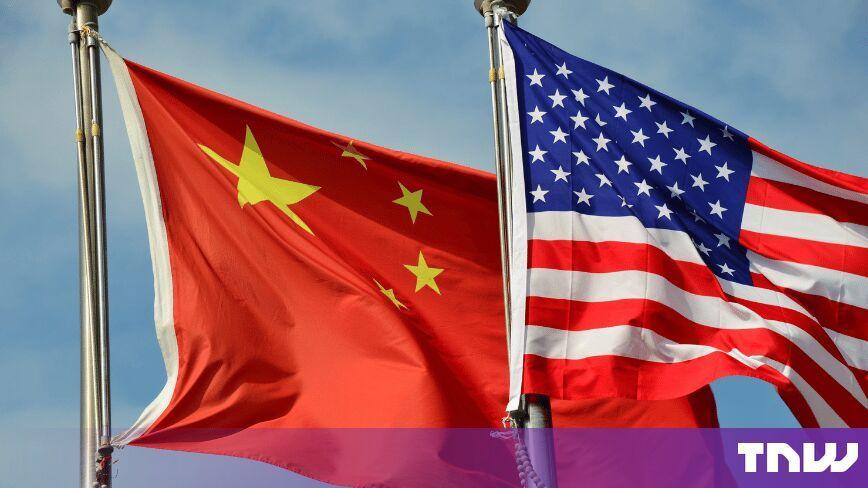
Washington has increased scrutiny on Chinese scientists at US universities in recent years, investigating growing numbers over alleged ties to entities in mainland China. The US has imposed sanctions on hundreds of Chinese universities and companies, preventing them from legally acquiring advanced US technology
3
. Meanwhile, China has tightened its regulatory approach, reportedly barring two executives of AI agent startup Manus from leaving the country as regulators review whether Meta Platforms' $2 billion acquisition of the Chinese-founded firm violated investment rules2
.The controversy could deepen political tensions around AI research and dissuade Chinese scientists from working at US universities and tech companies in the future
1
. The incident demonstrates how international collaboration between American and Chinese scientists faces mounting pressure, with both nations locked in an intensifying race to develop the most advanced AI models2
. As geopolitics increasingly intersects with scientific collaboration, the global scientific community must navigate whether shared research forums can remain neutral spaces or will fragment along national lines, potentially slowing innovation across the entire field.Summarized by
Navi
1
Technology

2
Policy and Regulation

3
Policy and Regulation