Jensen Huang says AI infrastructure buildout will create more jobs for skilled trades workers


20 Sources
20 Sources
[1]
Nvidia CEO expects AI to create more jobs for construction workers, electricians, plumbers, and many others
But human-AI collaboration will likely lift certain industries to new levels. Artificial intelligence is expected to reshape the labor market by eliminating white-collar positions that do not require a lot of creativity or experience, but at the same time increase demand for blue-collar employees like construction workers, electricians, or plumbers, as AI infrastructure requires a massive built-out, according to Jensen Huang, chief executive of Nvidia. That build-out spans many industries, so while some roles will vanish, others will flourish, reports Bloomberg. "This is the largest infrastructure buildout in human history that is going to create a lot of jobs," Huang said in a conversation with Laurence D. Fink, the head of BlackRock, at the World Economic Forum 2026. "We are going to have plumbers, electricians, construction and steel workers, network technicians, and people who install and fit out the equipment. In the United States we are seeing quite a significant boom in [these areas]: salaries have gone up, nearly doubled. We are talking about six-figure salaries for people who are building uh chip factories or computer factories or AI factories. We have a great shortage in that." However, the benefits of AI-driven growth are unevenly distributed across the labor market. Anthropic CEO Dario Amodei once warned that AI-enabled automation could trigger a 'white-collar bloodbath,' which could eliminate up to 50% of entry-level office jobs. He noted that Anthropic's Claude AI has become particularly great at coding tasks, which could displace junior software developers and even erode portions of more senior software engineering work. Still, even Amodei believes the long-term gains from AI will outweigh the damage. Nonetheless, he warns that large-scale unemployment or underemployment remains a serious risk over the next five years. By contrast, Huang argues that some professions that can greatly benefit from both AI and human touch will actually increase demand for certain specialists, which will lift certain industries to new heights. "Ten years ago, one of the first professions that everybody thought was going to get wiped out was radiology," Huang noted. "The reason for that was that the first thing AI [gpy] superhuman in capability was computer vision, and one of the largest applications of computer vision is studying scans by radiologists. Well, 10 years later, it is true that AI has now completely permeated and diffused into every aspect of radiology. It is true that radiologists use AI to study scans. [...] However, [...] the number of radiologists have gone up. Is that because a lack of trust of or is that because the human interaction with the results of AI is a better outcome? [...] The fact that they are able to study scans now infinitely fast allows them to spend more time with patients diagnosing their disease, interacting with the patients, interacting with other clinicians. [...] As a result of that, the number of patients that the hospital can see has gone up, [driving revenues of hospitals]." In short, while AI can be a disaster for certain industries and professions, its impact on the quality of life will likely be comparable to the impact of electricity, automobiles, computers, broadband Internet, and telecommunications, all of which created many more professions and employment opportunities than they eliminated. However, one should note that the impact of AI can be compared to the cumulative impact of the aforementioned technologies combined in a very short time, so making exact predictions here is hardly a good business. Follow Tom's Hardware on Google News, or add us as a preferred source, to get our latest news, analysis, & reviews in your feeds.
[2]
Future AI jobs will come with a hardhat and boots: tech CEOs
Jensen Huang and Alex Karp talk up trade skills as AI datacenters multiply, while Satya Nadella says the real test comes later The leaders of the AI world descended on Davos, Switzerland, this week for the World Economic Forum, where they took turns lobbing their best guesses about what the next phase of AI would mean for jobs, as well as whether the AI bubble was real and when it may pop. In a 30-minute sit-down, Nvidia CEO Jensen Huang told Blackrock CEO Larry Fink that there is no bubble, and pointed out that previous bubbles had encapsulated their markets, whereas AI spending - while it seems big - cuts across nearly every vertical. "One good test on the AI bubble is to recognize that Nvidia has now millions of Nvidia GPUs in every cloud. We're everywhere and if you try to rent an Nvidia GPU these days, it's so incredibly hard. The spot price of rentals is going up. Not just the latest generation, but two-generation-old GPUs," he said during the interview. "The reason for that are the number of AI companies that are being created, the number of companies that are shifting their R&D budget. (Pharmaceutical giant) Lilly is a great example. Three years ago most of their R&D budget was probably wet labs. Notice the big AI supercomputer they've invested in? The big AI lab? Increasingly that R&D budget is going to shift to AI. So the AI bubble comes about because the investments are large. The investments are large because we have to build the infrastructure necessary for all of the layers of AI above it. We need more energy. We need more land, power, and shell. We need more trade-skilled workers. This is the single largest infrastructure buildout in human history. Get involved." Microsoft CEO Satya Nadella also said he does not see a bubble, saying that AI has become diffused across industries and economies. "I think a telltale sign of if it's a bubble would be if all we're talking about were the tech firms. If all we're talking about is what's happening to the technology side, then it's just purely supply side," he said. "Ultimately if we are not talking about a drug that was brought into the market that was super successful because AI accelerated the clinical trial. By the way, that's happening. This is why I'm much more confident." He said the success of AI and the willingness of users to adopt it depend greatly on whether it is capable of producing the surplus that prognosticators have forecast. "Demand all over the world will only be there if there is a local surplus," Nadella said. "I think we will quickly lose the social permission to take something like energy, which is a scarce resource, and use it to generate these tokens, if these tokens are not improving health outcomes, education outcomes, public sector efficiency, private sector competitiveness across all sectors, small and large. That to me is ultimately the goal." One point where Nadella and Huang differed is around jobs. Forrester's most recent AI job replacement research estimates that the technology could uproot 6 percent of jobs by 2030, or about 10.4 million total, through robotic process automation, business process automation, physical robotics and generative AI. In a more alarming but perhaps not as well-sourced report, minority staff for the US Senate Committee on Health, Education, Labor, and Pensions (HELP) warned that artificial intelligence and automation could put up to 97 million American jobs at risk over the next decade. Staff compiled the report by reviewing economic and corporate data, then asking ChatGPT to analyze federal job descriptions and estimate which occupations are most vulnerable to replacement. When asked about potential job losses caused by AI, Huang preferred to point to the "tradecrafts" such as plumbers, electricians, and construction workers needed to build out the datacenters and infrastructure inside them. "Energy is creating jobs. The chips industry is creating jobs. The infrastructure layer, land power, and shell is creating jobs. I mean jobs, jobs, jobs, it's incredible. This is the largest infrastructure buildout in human history and that's going to create a lot of jobs. And it's wonderful that the jobs are related to tradecraft ... We're talking about six-figure salaries for people who are building chip factories or computer factories or AI factories." Nadella in a separate interview acknowledged those jobs created by a one-time capital expenditure, but he said they must be separated from the discussion about AI's eventual diffusion, bringing a surplus to other areas of human life. "This is a technology that will build on the rails of cloud and mobile, diffuse faster, and bend the productivity curve, and bring local surplus and economic growth all around the world," he said. "Not just economic growth driven by capital expenses. That's a narrow point-in-time calculation." Nadella said for AI to be a success for humans, it must come with masterable skills that can make people better at earning a living. "Growing up, there used to be a real relationship between learning Excel skills or Word skills and getting a job," he said. "That needs to come back. People need to know 'If I pick up this AI skill, then now I'm a better provider of some product or service in the real economy.' " However, another AI leader, Palantir cofounder and CEO Alex Karp, told Fink that he expects labor and technical trades will be the future of the steady job market for the time being. "If you went to an elite school and you studied philosophy - use myself as an example - hopefully you have some other skill," he said. "That one is going to be hard to market. But like technicians. If you're a vocational technician ... those jobs are going to become more valuable. There will be more than enough jobs for the citizens of your nation. Especially those with vocational training." One person at Davos sounding a warning on AI was Salesforce CEO Marc Benioff. No one has cheered more loudly for the technology than Benioff, whose company was among the first SaaS enterprises to announce it had deployed AI agents into its stack. Salesforce has also struck deals with Google Gemini and OpenAI to bring those models into its platform as the brains behind its Agentforce, as well as letting users access OpenAI as a control plane for Salesforce tasks. "By uniting the world's leading frontier AI with the world's #1 AI CRM, we're creating the trusted foundation for companies to become Agentic Enterprises," Benioff said in October. Yet at Davos on Tuesday, Benioff white-knuckle clutched his pearls when describing the need for government regulation as he described the several failure points for AI and a report alleging a chatbot encouraged self-harm and played a role in the lead-up to a child's suicide. "I can't imagine anything worse than that," Benioff told CNBC. "It can't be just growth at any cost. There has to be some regulation. Everyone is on a large language model. Everyone knows these things are not that accurate, that they hallucinate a lot. They lie. They don't really understand what's going on. They can make a right turn very fast and then when it involves your children. That's a big deal. In the US we have zero regulation and we fully indemnify all the tech companies. It's kind of the worst of all worlds." ®
[3]
Nvidia CEO Says AI Will Create Jobs For Electricians and Plumbers
The technology will require a significant infrastructure buildout with trillions of dollars in new investment, according to Huang. As artificial intelligence threatens to upend job markets in countries around the world, Nvidia Corp. Chief Executive Officer Jensen Huang brushed off longer term concerns and made the case that skilled vocational workers are seeing increasing demand now. Plumbers, electricians and construction workers are going to be able to command "six-figure salaries," thanks to demand to build data centers that run and train artificial intelligence, he said in an interview with BlackRock Inc. CEO Larry Fink at the World Economic Forum in Davos, Switzerland on Wednesday. The technology will require one of the biggest infrastructure buildouts in history, with trillions of dollars in new investment, Huang said. "We're seeing quite a significant boom in this area. Salaries have gone up nearly double," Huang said. "Everybody should be able to make a great living. You don't need to have a PhD in computer science to do so." Huang's comments echo remarks made at Davos on Tuesday by Palantir Technologies Inc. CEO Alex Karp., who praised workers with "vocational training" and said AI would create more local jobs and largely eliminate the need for mass immigration. Coreweave's Michael Intrator also touched on the "physicality" of the AI boom at a panel later on Wednesday, with the data center firm's CEO describing the need for growing numbers of plumbers, electricians and carpenters. Nvidia, the leading maker of chips that help power and run the latest AI models, has benefited from the huge rush to build data centers. The company is on track to generate almost $200 billion in data center chip sales for 2025, according to an average analyst estimate compiled by Bloomberg. To date, the bulk of its revenue comes from the biggest data center builders -- Microsoft Corp., Meta Platforms Inc., Amazon.com Inc., Alphabet Inc. -- but it's striking deals with a growing number of smaller data center operators. Tech firms have committed to spend a combined $500 billion in data center leases in the coming years. AI's impact on the job market is already being felt. Anthropic CEO Dario Amodei has warned about a "white-collar bloodbath" that could wipe out 50% of entry-level jobs. The company's Claude AI is gaining attention for its coding abilities, a feature that could displace more junior programmers. Get the Tech Newsletter bundle. Get the Tech Newsletter bundle. Get the Tech Newsletter bundle. Bloomberg's subscriber-only tech newsletters, and full access to all the articles they feature. Bloomberg's subscriber-only tech newsletters, and full access to all the articles they feature. Bloomberg's subscriber-only tech newsletters, and full access to all the articles they feature. Bloomberg may send me offers and promotions. Plus Signed UpPlus Sign UpPlus Sign Up By submitting my information, I agree to the Privacy Policy and Terms of Service. "We're entering a world where the junior-level software engineers -- maybe many of the tasks of the more senior-level software engineers -- are starting to be done most of the way by AI systems. Now that's going to go further," Amodei said in an interview at Bloomberg House in Davos on Tuesday. While he believes the good from the technology will outweigh the bad, high unemployment and underemployment are a risk that needs to be mitigated. "There's going to be unfortunately a whole class of people who are, across a lot of industries, going to have a hard time coping," he said. On Wednesday, Fink noticeably avoided probing Huang on sensitive topics, most notably China. Nvidia's sales to the country are controversial, and the company is waiting to hear whether it will be able to sell its chips to the country and in what quantities. Just yesterday, Amodei called shipping Nvidia chips into China similar to selling nuclear weapons to North Korea. Huang is expected to visit China at the end of this month as he works to reopen a crucial market for the company's artificial intelligence chips. It's a pivotal time for the business, after the US moved to ease limits on chip exports to China it's had in place since 2022. Nvidia is still blocked from shipping the top-of-the-line chips to the country, stymieing Beijing's ability to innovate beyond the cutting-edge of AI, but will be able to ship older-generation H200 AI chips. China, meanwhile, is expected to clear H200 imports for commercial use in the first three months of 2026, though it won't allow the chips for use in the military, sensitive government agencies, critical infrastructure or its state-owned enterprises, Bloomberg News reported. Some of the country's most prominent tech firms, including Alibaba Group Holding Ltd. and ByteDance Ltd., have privately expressed interest in ordering than 200,000 units each of the chip.
[4]
Nvidia CEO Jensen Huang says AI won't be the job killer everyone fears. Here's why
Nvidia CEO Jensen Huang said Wednesday that artificial intelligence will lead to more jobs, not fewer. In an interview with BlackRock CEO Larry Fink at the World Economic Forum in Davos, Switzerland, Jensen methodically explained how AI differs from other technological innovations of the past and how it can be an incredible engine for economic growth and prosperity. Jensen's sitdown with Fink, who co-chairs the WEF, was a high-level conversation about what AI is and what it is not, and what investments are needed and why, and how much. At the heart of the exchange, the CEO of Club name Nvidia said that AI is a platform shift. Examples of platforms include personal companies, the internet, smartphones, and the cloud -- both physical and digital infrastructure that applications that we all use in our daily life are built on top of. Just as those platforms laid the foundation for so much economic growth, so too will AI. While ChatGPT and other large language models may technically be applications themselves, the difference is that new, AI-oriented applications will be built on top of these LLMs. Jensen sees five layers to the buildout of the AI platform: (1) enough energy to run everything; (2) chips/compute infrastructure, where Nvidia dominates; (3) cloud infrastructure/services; (4) AI models; and (5) the application layer, which is the key layer where the economic benefits of AI will be realized. Tempering the not-so-irrational fears out there about AI replacing human workers, Jensen offered a more optimistic view. Outside of the jobs being created by the physical build-out of AI infrastructure -- such as electricians, plumbers, construction workers, and so on -- Jensen said that implementing AI will lead to more demand for goods and services that, in turn, will lead to more hiring. Not as many employees per customer may be needed, but the customer growth that comes with a more efficient corporation can still result in demand for more workers For example, Jensen said that the number of radiologists has increased because hospitals can now process more patients thanks to AI. While AI may be reading the scans, humans are still needed to review and confirm diagnoses. More patients, more scans to review, more human radiologists needed. The bonus is that with AI doing the scans, the radiologists have more time to spend with patients or to discuss results with peer clinicians. Jevons Paradox ? Seeing a radiologist becomes easier as the radiologist becomes better and more efficient at their job, resulting in an overall increase in demand from patients looking to see radiologists. Radiology was a timely analogy as Club name Bristol Myers Squibb said Tuesday it will work with Microsoft's AI-powered radiology platform to develop and launch imaging algorithms aimed at accelerating early detection of lung cancer. These new tools, which can be used to analyze X-rays and CT scans, will help clinicians see hard-to-spot lung nodules and identify patients with earlier stages of disease. The alliance is the latest way health care and artificial intelligence are rapidly intersecting. On stage with Fink on Wednesday, Jensen noted a similar dynamic in nursing to what's going on in radiology. Nurses spend about half of their time charting. Thanks to AI, however, Jensen said nurses can spend more time visiting patients and providing that human touch that is often lacking when a hospital suffers a staffing shortage. By reducing the nursing bottleneck, hospitals can see more patients more quickly. As a result, more demand for hospitals leads to improved financials and, in turn, the ability to hire more nurses. In Jensen's view, the key to understanding how AI will impact a given job is to first differentiate between the purpose and the task. Going back to the radiology example, he said the purpose of a radiologist is to diagnose patients -- and that at the end of the day, the job for both radiologists and nurses is to care for people. Reading charts and scans is crucial to that purpose, but it is a task that needs to be done to achieve the job's ultimate objective. By automating certain tasks, we can make people better at their actual jobs. So, AI, in the context of medical settings, should not result in fewer doctors and nurses, Jensen argued, but should lead to more doctors and nurses spending more time with their patients while providing better outcomes. Asked about investments in AI, Jensen pretty much put to bed the idea of a spending bubble. So, when asked instead if investment levels are too low, he provided an easy way to think about the spending and whether there's a bubble or if more spending is warranted. He said it comes down to the fact that despite millions of Nvidia GPUs (graphics processing units) now available in the cloud, the spot price for GPU rentals is increasing, not only for the latest generation, but even for those chips two generations in the rear view mirror. He attributed this to the number of AI companies being created. When a two-generation-old GPU is seeing its rental price increase, it's clear that supply (overall, not just as it relates to the latest chips) is falling well short of demand. Bottom line While there may be bubble-like areas of the market, that word has no place in the conversation when discussing names like Nvidia or the mega-cap cloud infrastructure players that generate real earnings and trade at reasonable valuations. We remain in the early stages of the AI infrastructure buildout, before we even start to really think about the application layer of the stack touching every aspect of our daily lives. (Jim Cramer's Charitable Trust is long NVDA, BMY, BLK. See here for a full list of the stocks.) As a subscriber to the CNBC Investing Club with Jim Cramer, you will receive a trade alert before Jim makes a trade. Jim waits 45 minutes after sending a trade alert before buying or selling a stock in his charitable trust's portfolio. If Jim has talked about a stock on CNBC TV, he waits 72 hours after issuing the trade alert before executing the trade. THE ABOVE INVESTING CLUB INFORMATION IS SUBJECT TO OUR TERMS AND CONDITIONS AND PRIVACY POLICY , TOGETHER WITH OUR DISCLAIMER . NO FIDUCIARY OBLIGATION OR DUTY EXISTS, OR IS CREATED, BY VIRTUE OF YOUR RECEIPT OF ANY INFORMATION PROVIDED IN CONNECTION WITH THE INVESTING CLUB. NO SPECIFIC OUTCOME OR PROFIT IS GUARANTEED.
[5]

Nvidia CEO Says the AI Boom Will Lead to More Jobs for Plumbers
Worried about your job? Well, 'largest infrastructure buildout in human history' will require more plumbers, Huang says. While tech billionaire Elon Musk argues that advances in AI and robotics will render saving for retirement irrelevant, claiming that automation will lead to lower costs and abundance for everyone, another tech billionaire is pitching a very different, more believable future. Nvidia CEO Jensen Huang says the AI boom will actually increase demand for tradespeople like plumbers and electricians, as well as steel and construction workers. Huang said these workers could make "six-figure salaries" thanks to what he's dubbed the "largest infrastructure build out in human history," which he claims is already a few hundred billion dollars in. Huang made the comments today during a conversation with BlackRock CEO Larry Fink at the World Economic Forum in Davos. At the conference, Fink pressed Huang on how he sees AI reshaping the economy and the labor market. To explain his thinking, Huang broke AI down into what he called a "five-layer cake." Applications sit at the top, followed by AI models, cloud services, chips, and energy at the bottom. According to Huang, the real economic gains from AI will come as industries like healthcare, manufacturing, and financial services adopt AI. But to get there, countries first need to build out the lower layers of that cake, which is where trade jobs come in. "And so we're talking about six-figure salaries for people who are building chip factories or computer factories or AI factories," said Huang. "Everybody should be able to make a great living. You don't need to have a PhD in computer science to do so." For everyone else, Huang pushed back on fears that AI will rapidly wipe out white-collar professions. He pointed to radiology, a field seen as especially vulnerable because AI systems are good at analyzing images. Instead of replacing radiologists, Huang said AI has helped them become more productive, see more patients, and actually increase the number of radiologists. When asked how this applies to developing countries, Huang argued they should treat AI infrastructure the same way they treat roads and energy. "I really believe that every country should get involved to build AI infrastructure, build your own AI, take advantage of your fundamental natural resource, which is your language and culture," Huang said. "Develop your AI, continue to refine it, and have your national intelligence be part of your ecosystem." That sentiment vaguely echoed comments made by Palantir CEO Alex Karp at Davos, who said that while AI will destroy jobs in the humanities, it will still leave plenty of work for people with vocational training. "There will be more than enough jobs for the citizens of your nation, especially those with vocational training," Karp said. "I do think these trends really do make it hard to imagine why we should have large-scale immigration unless you have a very specialized skill." Huang ultimately wrapped the conversation with a call for even more investment in AI. All of which is pretty convenient coming from someone whose wealth is tied to a company that powers one of the bottom layers of this AI cake.
[6]

"Largest Infrastructure Buildout In Human History": Jensen Huang on AI's "Five-Layer Cake" at Davos
From skilled trades to startups, AI's rapid expansion is the beginning of the next massive computing platform shift, and for the world's workforce a move from tasks to purpose. At a packed mainstage session at the annual meeting of the World Economic Forum in Davos, Switzerland, Huang described artificial intelligence as the foundation of what Huang called "the largest infrastructure buildout in human history," driving job creation across the global economy. Huang framed AI not as a single technology but as a "a five-layer cake," spanning energy, chips and computing infrastructure, cloud data centers, AI models and, ultimately, the application layer. Because every layer of AI's five-layer stack must be built and operated, Huang said the platform shift is creating jobs across the economy -- from energy and construction to advanced manufacturing, cloud operations and application development. The application layer might focus on integrating AI into financial services, healthcare, or manufacturing. "This layer on top, ultimately, is where economic benefit will happen," Huang said. From energy and power generation to chip manufacturing, data center construction and cloud operations, Huang said the AI buildout is already creating demand for skilled labor. He added that the largest economic benefit will come from the application layer, where AI is transforming industries such as healthcare, manufacturing and financial services -- and changing the nature of work across the economy. Huang pointed to venture capital investment as a signal of how quickly AI is reshaping the global economy. He said 2025 was one of the largest years for VC funding on record, with most of that capital flowing to what he described as "AI-native companies." These firms span healthcare, robotics, manufacturing and financial services -- industries where, Huang said, "for the first time, the models are good enough to build on top of." That investment, Huang said, is translating directly into jobs. He highlighted demand for plumbers, electricians, construction workers, steelworkers, network technicians and teams responsible for installing and operating advanced equipment. Jobs with Purpose AI, Huang said, likely won't destroy jobs. Instead, it's increasing demand in fields such as radiology, and helping handle administrative work in fields impacted by labor shortages - such as nursing. AI has become a key tool in radiology, he said, yet there are now more radiologists than ever. "If you reason from first principles, not surprisingly, the number of radiologists has gone up," Huang said. He explained that the purpose of a radiologist's job is to diagnose disease and help patients, while studying scans is just one task. "The fact that they're able to study scans now infinitely fast allows them to spend more time with patients," he said, adding that AI enables greater interaction with patients and other clinicians. And because they can also see more patients, there is a need for more radiologists. Huang said the same dynamic is playing out in nursing. The U.S. faces a shortage of roughly five million nurses, in part because nurses spend nearly half their time on charting and documentation. "Now they can use AI to do the charting and the transcription of patient visits," he said, pointing to work being done by companies such as Abridge and its partners. As productivity improves, Huang said, outcomes improve as well. "Hospitals do better, and they hire more nurses," he said. "Surprisingly -- or not surprisingly -- AI is increasing productivity, and as a result, hospitals want to hire more people." To illustrate the broader point, Huang joked that if someone simply watched him and Fink doing their jobs, "you would probably think the two of us are typists." Automating typing, he said, would not eliminate their jobs because that task is not their purpose. AI helps with tasks, enabling people to fulfill their purpose and become more productive, making workers more valuable. "So the question is, what is the purpose of your job?" Huang said. AI as Critical Infrastructure Huang framed AI as essential national infrastructure. "AI is infrastructure," he said, arguing that every country should treat AI like electricity or roads. "You should have AI as part of your infrastructure." He urged countries to build their own AI capabilities, drawing on local language and culture. "Develop your AI, continue to refine it, and have your national intelligence be part of your ecosystem," he said. Fink asked whether only the most educated people can use or benefit from AI. Huang countered that idea, emphasizing that AI's rapid adoption stems from its accessibility. "AI is super easy to use -- it's the easiest software to use in history," he said, noting that in just two to three years, AI tools have reached nearly a billion people. As a result, Huang said AI literacy is becoming essential. "It is very clear that it is essential to learn how to use AI -- how to direct it, manage it, guardrail it, evaluate it," he said, comparing those skills to leadership and people management. Closing Technology Divides For developing countries, Huang said AI offers a chance to narrow long-standing technology gaps. "AI is likely to close the technology divide," he said, citing its accessibility and abundance. Turning to Europe, Huang highlighted manufacturing and industrial strength as a major advantage. "You don't write AI -- you teach AI," he said, urging countries to fuse industrial capability with artificial intelligence to unlock physical AI and robotics. "Robotics is a once-in-a-generation opportunity," he said, particularly for nations with strong industrial bases. Fink summarized the discussion by saying that what he heard suggested the world is far from an AI bubble. Instead, he posed a different question: are we investing enough? Huang agreed, saying large investments are required because "we have to build the infrastructure necessary for all of the layers of AI above it." The opportunity, he said, "is really quite extraordinary, and everybody ought to get involved." He reiterated that 2025 was the largest year for global VC investment, with more than $100 billion deployed worldwide, most of it into AI-native startups. "These companies are building the application layer above," Huang said, "and they're going to need infrastructure -- and investment -- to build this future." Fink added that broad participation in that growth is critical. "I actually believe it's going to be a great investment for pension funds around the world to be a part of that, to grow with this AI world," Fink said. "We need to make sure that the average pensioner and the average saver is part of that growth. If they're just watching it from the sidelines, they're going to feel left out."
[7]

'This is the single largest infrastructure buildout in human history. Get involved': Nvidia CEO Jensen Huang says AI and robotics offers 'once in a lifetime' opportunity
* Jensen Huang and Satya Nadella have ruled out fear of an AI bubble * AI and robotics touch every industry, not just the tech sector * New jobs could be created, but upskilling and adapting is a must Nvidia CEO Jensen Huang has asserted that humanity is seeing one of the biggest revolutions in human history from AI and robotics. Speaking at the World Economic Forum in Davos, Switzerland, Huang ruled out fears of an AI bubble by stating artificial intelligence reaches all sectors - it's not just a term used in tech businesses. "The spot price of rentals is going up. Not just the latest generation, but two-generation-old GPUs," Huang argued in an interview with Blackrock CEO Larry Fink (via The Register), referring to the sheer reach of AI. AI bubble fears Artificial intelligence has already been seen to require ongoing investment across data centers, but energy infrastructure is also under higher-than-ever pressure and demand for skilled professionals is equally as high. Also speaking at Davos, Microsoft CEO Satya Nadella also ruled out an impending AI bubble, noting, "I think a telltale sign of if it's a bubble would be if all we're talking about were the tech firms," he said, remarking AI's global and cross-industry reach. We're also seeing AI evolve into physical devices, with Huang stating that robotics provide a "once-in-a-generation" opportunity for European manufacturing. Huang also made positive remarks on AI's effects on the labor market - he believes that "tradecrafts" will be vital to the buildout of data centers and infrastructure. "This is the largest infrastructure buildout in human history and that's going to create a lot of jobs," he said. Nadella's opinion differed, focusing instead on jobs affected by AI. He compared today's landscape to previous workforce trends, where prospective employees would have to prove competency across various office software like Word and Excel. AI upskilling is just the next phase of that. In short, it's clear that both leaders see AI and robotics drastically changing the way we see work, but quite how that translates into job creation or job losses is yet to be seen. Follow TechRadar on Google News and add us as a preferred source to get our expert news, reviews, and opinion in your feeds. Make sure to click the Follow button! And of course you can also follow TechRadar on TikTok for news, reviews, unboxings in video form, and get regular updates from us on WhatsApp too.
[8]

At Davos, NVIDIA, Microsoft CEOs deny AI bubble
In Jan. 2026, the gap between the haves and the have-nots could hardly be more stark -- even in AI world. On the have-not side, there's OpenAI CEO Sam Altman. Long the hype man for imminent digital superintelligence (aka AGI), Altman backtracked and said we're in an AI bubble last year. He's made odd deals to feed the money hog known as ChatGPT; subscriptions ain't paying the bills. Last week, Altman rolled out what in 2024 he called "the last resort" for the company -- selling ads on ChatGPT. A popular LinkedIn post this week used an AI image of Altman out in the cold, begging for change with a self-mocking cardboard sign: "AGI = Ads Generate Income." And then there are the haves in warm rooms in snowy Davos, Switzerland -- where the weather report for the AI economy, from the annual World Economic Forum, is just peachy. Jensen Huang, Nvidia CEO, who rode the company to a $4 trillion valuation on the back of powerful GPU chip sales growth that hasn't quite slowed yet, flipped the script when asked about the AI bubble. "This is the largest infrastructure build-out in human history," Huang said of active and promised data center projects. "And so the AI bubble is, comes about because the investments are large. And the investments are large, because we have to build the infrastructure necessary for all of the layers of AI above it." Huang wasn't denying the existence of a bubble, exactly -- he just suggested it was a misreading of our current economic outlook. Just look at all that infrastructure coming down the pipe! Left unsaid was whether those massive projects would dry up if AI itself continues to not show returns on investment for regular businesses (especially if AI models like DeepSeek can be built with minimal data center usage, the opposite of what made Nvidia successful). In Nvidia's telling, the tail is now wagging the dog. And the rest of Davos, a popular confab for billionaires, pretty much wagged along in agreement. "I think there will be big failures, but I don't think we are in a bubble," said Larry Fink, CEO of Blackrock, a top tech investment firm. (Blackrock holds more than $200 billion in Nvidia stock.) Also at Davos, one Nobel Prize-winning economist described what was currently happening in AI as a "rational bubble", comparing it favorably to the infamous tulip bulb panic of the 17th century. Why? Because with AI, insisted Peter Howitt, economics professor at Brown University, "there's something real out there." Howitt didn't suggest what that real thing was, but insisted there would be a winner -- and their arrival would herald the bursting of the bubble. "At some point, when it becomes a little clearer who the winners are going to be, the values of the other firms are going to start to fall, and that's when the crash will take place." So who is that winner, other than Nvidia and its circular OpenAI deals? Microsoft, with its own favorable OpenAI deal, might be in a position to "win" the AI economy. Microsoft currently owns a 27 percent stake in the ChatGPT maker. If Altman can't keep the lights on long-term, Microsoft CEO Satya Nadella could well ride in to the rescue and snap up OpenAI itself. Nadella, on the surface, seemed just as optimistic about AI's future as the rest of the titans. And yet in his appearance, the Microsoft CEO also sounded a note of alarm. If the AI economy doesn't root itself in non-tech sectors, it will be a bubble -- and soon. "The real question in front of all of us is how do you ensure that the diffusion of AI happens, and happens fast," Nadella said. "For this not to be a bubble by definition, it requires that the benefits of this are much more evenly spread." (Nadella has been criticized by investors for too much AI infrastructure spending.) So to summarize the view from the Davos bubble: We're not in an AI bubble, we're in a massive infrastructure investment that will benefit workers. Well, maybe we're in a rational bubble. But we will be in an irrational bubble if everyone doesn't get on board with the AI economy real soon, presumably by sending poor Sam Altman some ad dollars. Got that?
[9]

Jensen Huang says AI bubble fears are dwarfed by 'the largest infrastructure buildout in human history' | Fortune
Speaking in conversation with BlackRock CEO Larry Fink, the interim co-chair of the World Economic Forum, Huang detailed an industrial transformation that extends far beyond software code, reshaping global labor markets and driving unprecedented demand for skilled tradespeople. While much of the public debate focuses on the potential for AI to replace white-collar jobs, Huang pointed to an immediate boom in blue-collar employment required to physically construct the new computing economy. "It's wonderful that the jobs are related to tradecraft, and we're going to have plumbers and electricians and construction and steel workers," Huang said. He noted the urgency to erect "AI factories," chip plants, and data centers has radically altered the wage landscape for manual labor. "Salaries have gone up, nearly doubled, and so we're talking about six-figure salaries for people who are building chip factories or computer factories," Huang said, emphasizing the industry is currently facing a "great shortage" of these workers. Ford CEO Jim Farley has been warning for months about the labor shortage in what he calls the "essential economy," exactly the type of jobs mentioned by Huang in Davos. Earlier this month, Farley told Fortune these 95 million jobs are the "backbone of our country," and he was partnering with local retailer Carhartt to boost workforce development, community building, and "the tools required by the men and women who keep the American Dream alive." It's time we all reinvest in the people who make our world work with their hands," Farley said. In October, at Ford's Pro Accelerate conference, Farley shared that his own son was wrestling with whether to go to college or pursue a career in the trades. The Ford CEO has estimated the shortage at 600,000 in factories and nearly the same in construction. Fink brought up the bubble talk for a good reason: Fear of a popping bubble gripped markets for much of the back half of 2025, with luminaries such as Amazon founder Jeff Bezos, Goldman Sachs CEO David Solomon, and, just the previous day in Davos, Microsoft CEO Satya Nadella, warning about the potential for pain. Much of this originated in the underwhelming release of OpenAI's GPT-5 in August, but also the MIT study that found 95% of generative AI pilots were failing to generate a return on investment. "Permabears" such as Albert Edwards, global strategist at Société Générale, have talked about how there's likely a bubble brewing -- but then again, they always think that. Huang, whose company became the face of the AI revolution when it blew past $4 trillion in market capitalization (a bar recently reached by Alphabet on the positive release of its Gemini update), tackled these fears in conversation with Fink, arguing the term misdiagnoses the situation. Critics often point to the massive sums being spent by hyperscalers and corporations as unsustainable, but Huang countered the appearance of a bubble happens because "the investments are large ... and the investments are large because we have to build the infrastructure necessary for all of the layers of AI above it." Huang went deeper on his food metaphor, describing the AI industry as a "five-layer cake" requiring total industrial reinvention, with Nvidia's chips a particularly crunchy part of the recipe. The bottom layer is energy, followed by chips, cloud infrastructure, and models, with applications sitting at the top. The current wave of spending is focused on the foundational layers -- energy and chips -- which creates tangible assets rather than speculative vapor. Far from a bubble, he described a new industry being built from the ground up. "There are trillions of dollars of infrastructure that needs to be built out," Huang said, noting that the world is currently only "a few 100 billion dollars into it." To prove the market is driven by real demand rather than speculation, Huang offered a practical "test" for the bubble theory: the rental price of computing power as seen in the price of Nvidia's GPU chips. "If you try to rent an Nvidia GPU these days, it's so incredibly hard, and the spot price of GPU rentals is going up, not just the latest generation, but two-generation-old GPUs," he said. This scarcity indicates established companies are shifting their research and development budgets -- such as pharmaceutical giant Eli Lilly moving funds from wet labs to AI supercomputing -- rather than simply burning venture capital. Beyond construction and infrastructure, Huang addressed the broader anxiety regarding AI's impact on human employment. He argued AI ultimately changes the "task" of a job rather than eliminating the "purpose" of the job. Citing radiology as an example, he noted that despite AI diffusing into every aspect of the field over the last decade, the number of radiologists has actually increased. Because AI handles the task of studying scans infinitely faster, doctors can focus on their core purpose: patient diagnosis and care, leading to higher hospital throughput and increased hiring. Fink reframed the issue, based on Huang's pushback. "So what I'm hearing is, we're far from an AI bubble. The question is, are we investing enough?" Fink asked, positing that current spending levels might actually be insufficient to broaden the global economy. Huang appeared to say: not really. "I think the the opportunity is really quite extraordinary, and everybody ought to get involved. Everybody ought to get engaged. We need more energy," he said, adding the industry needs more land, power, trade, scale and workers. Huang said the U.S. has lost its workforce population in many ways over the last 20-30 years, "but it's still incredibly strong," and in Europe, pointing around him in Switzerland, he saw "an extraordinary opportunity to take advantage of." He noted 2025 was the largest investment year in venture capital history, with $100 billion invested around the world, mostly on AI natives." Huang concluded by emphasizing this infrastructure buildout is global, urging developing nations and Europe to engage in "sovereign AI" by building their own domestic infrastructure. For Europe specifically, he highlighted a "once-in-a-generation opportunity" to leverage its strong industrial base to lead in "physical AI" and robotics, effectively merging the new digital intelligence with traditional manufacturing. Far from a bubble, he seemed to be saying, this is just the beginning.
[10]

Nvidia CEO's Davos message: The AI boom is a data center boom
Davos loves a story that sounds like inevitability. Jensen Huang showed up on the main stage with one that sounds like cold, hard concrete. The Nvidia $NVDA CEO called AI "the largest infrastructure buildout in human history," then built an argument sturdy enough for the room he was in: executives who approve budgets, policymakers who approve permits, and investors who approve the approving. He made a technology story sound like a construction story, and a construction story sound like a jobs story, and a jobs story sound like a pension-fund story. In Huang's 2026 version of the story, AI has already graduated from novelty to utility -- the kind of utility that needs power, people, and a lot of approvals before anyone can actually get to the fun part. The top -- where hardware turns into margins -- is "ultimately" the one where "where economic benefit will happen," Huang said, describing a world where AI shows up inside financial services, healthcare, manufacturing, and whatever else still has inefficiencies to squeeze. Larry Fink, the CEO of BlackRock $BLK, sitting beside Huang, summarized the mood the way a capital allocator does. Basically, if this is an AI bubble, it's a strange one -- the kind where the constraint looks less like demand and more like build capacity. Fink's question landed on the practical anxiety that haunts every Davos year: Are we investing enough? The rooms in Davos contain plenty of people who worry about social backlash the way they worry about inflation, as a force that arrives suddenly and ruins the mood. A jobs story anchored in trades gives AI a sturdier public-facing shape. Huang is suggesting that a platform shift that needs physical buildout spreads the payroll beyond engineers and venture-backed founders. Every layer of the stack needs people who can build and run it. Energy systems get expanded. Facilities get wired. Racks get installed. Networks get maintained. The "cloud" keeps behaving like a warehouse with a utility bill. Huang also pulled the conversation upward to the startup layer, saying 2025 was among the biggest years for VC funding on record, with most capital flowing into "AI-native companies," and he treated that cash as downstream job creation. Capital builds the application layer. Infrastructure and labor follow. He used healthcare as Exhibit A. AI, he said, is "a key tool in radiology," and yet there are "more radiologists than ever." He added, "If you reason from first principles, not surprisingly, the number of radiologists has gone up," claiming that AI accelerates the scan-reading task and frees people to do the higher-stakes parts. The U.S., Huang said, faces "a shortage of roughly five million nurses," partly because "nurses spend nearly half their time on charting and documentation." He pointed to the use of AI for charting and transcription and claimed the productivity loop ends with more hiring. "Surprisingly -- or not surprisingly," he said, "AI is increasing productivity, and as a result, hospitals want to hire more people." The room heard what it wanted to hear: the idea that AI expands capacity, improves outcomes, and keeps the labor story calm. He also leaned hard on accessibility, a crucial ingredient if you want "infrastructure" to sound like a public good. "AI is super easy to use -- it's the easiest software to use in history," he said, noting that in "two to three years," AI tools have reached "nearly a billion people." He treated that speed as inevitability driven by usability, then defined the new baseline skill set. "It is very clear that it is essential to learn how to use AI -- how to direct it, manage it, guardrail it, evaluate it." Fink closed the loop the way Davos likes best, with ownership, which sits underneath every Davos conversation. "I actually believe it's going to be a great investment for pension funds around the world to be a part of that, to grow with this AI world," he said. "We need to make sure that the average pensioner and the average saver is part of that growth." Huang didn't resist the ending. "The opportunity," he said, "is really quite extraordinary, and everybody ought to get involved." In Davos, that's the cleanest kind of promise: The buildout is massive, the work is widespread, the politics are manageable, and the upside has room for everyone. The room, predictably, loved it.
[11]

What Bubble? Nvidia CEO Says AI Needs Trillions More in Investments - Decrypt
Huang defended AI spending at Davos, claiming that energy, chips, and data centers need continued expansion. Jensen Huang wants you to know the AI industry isn't a bubble -- despite looking like a bubble. At the World Economic Forum in Davos this week, the Nvidia CEO told BlackRock's Larry Fink that the infrastructure powering artificial intelligence needs "trillions of dollars" more investment over the coming years. The alternative? Ultimate failure. Huang framed AI as a "five-layer cake" that starts with energy at the bottom, then chips, cloud infrastructure, AI models, and finally applications at the top. Each layer, he explained, requires massive buildout before the ones above can properly function. "We're now a few hundred billion dollars into it," Huang said. "There are trillions of dollars of infrastructure that needs to be built out." The industry committed roughly $1.5 trillion to AI development in 2025 alone, according to Gartner -- more than any group of companies has spent on virtually anything in nominal terms. Huang insists this isn't excess, however. It's the largest infrastructure buildout in human history, he said, and it's only beginning. Just for reference, that spending is roughly the market capitalization of all the Bitcoin in the world. For a more normie comparison, thanks to the AI boom, Nvidia is now almost as valuable as all the silver that has been mined to date. Huang's words have a lot of interests behind them. In late January 2025, Chinese startup DeepSeek rattled markets with an unexpectedly capable chatbot, triggering a 17% single-day drop in Nvidia shares. The company recovered, but the jolt intensified warnings from figures like JPMorgan's Jamie Dimon, who said AI is "real" but cautioned that "some money invested now will be wasted." A study from MIT found that despite $30-40 billion in enterprise investment, 95% of organizations are seeing zero return on generative AI. The circular nature of AI financing has also drawn scrutiny. Nvidia recently committed $100 billion to OpenAI, which then uses that capital to buy Nvidia chips. Similar arrangements connect Microsoft, CoreWeave, and other major players in what critics call a closed loop that artificially inflates demand. Companies are already hedging against Nvidia's dominance. OpenAI signed a $10 billion deal with Cerebras, an AI chip startup promising inference speeds up to 15 times faster than GPU-based systems. The company also inked partnerships with AMD and Broadcom, and committed $38 billion to Amazon Web Services. Meanwhile, Google has been pushing its custom Tensor Processing Units as an alternative, with Anthropic agreeing to use up to one million TPU chips. Even Meta is reportedly exploring Google's silicon for its data centers. Huang's message at Davos was unambiguous: The world needs more energy, more land, more chips, and more data centers to power the AI revolution. Fink seemed to agree, asking whether current spending is actually enough to broaden the global economy. Huang's answer was essentially no. The opportunity, he said, is "really quite extraordinary." Whether that opportunity materializes or collapses under its own weight remains the million-dollar question -- or rather, the trillion-dollar one.
[12]

Jensen Huang talks AI's insatiable appetite for GPUs at the World Economic Forum: 'spot price of GPU rentals is going up, not just the latest generation, but two generation old GPUs'
Jensen Huang has well and truly escaped gaming obscurity these days. The Nvidia CEO just took the stage at the World Economic Forum to talk about AI demand, bubbles, and the impact that artificial intelligence has on the job market now and into the future. Of course, being the man in charge of shipping billions of dollars of AI chips, he has a particularly positive take on the lot. Chatting to Larry Fink, CEO of Blackrock, who called Nvidia 'nuh-vidia' throughout the conversation, Huang had a few things to say about his booming business. "One good test on the AI bubble is to recognize that Nvidia now has now millions of Nvidia GPUs in the cloud. We're in every cloud. You know. We're used everywhere. "And if you try to rent an Nvidia GPU these days, it's so incredibly hard, and the spot price of GPU rentals is going up, not just the latest generation, but two generation old GPUs. The spot price of rentals are going up, and the reason for that is because the number of AI companies that are being created, the number of companies shifting their R&D budget." Nvidia's datacentre business, the topic of conversation here, has soared to many times its gaming revenue in recent years. It hit a record $51.2 billion through August to September last year. Gaming revenue during the same period was $4.3 billion. Though the demand for datacentre GPUs, such as upcoming Rubin chips, B100/200, and older chips like the H100/H200, do have a knock-on effect in gaming GPUs. Just look to the price of the RTX 5090 -- a more than capable card for smaller-scale AI deployment -- which launched at $1,999 and is now selling for around $4,000+. Capacity for production is one factor in all of this, as when AI comes knocking for chips, be those GPUs or memory, there's only so much readily available at any one time. That's why we're seeing RAM prices skyrocket: AI demand outstrips supply and datacenter buildout is more valuable than availability for consumers. In Huang's words, the fervour to buy more AI chips is "the largest infrastructure build out in human history." "That's going to create a lot of jobs," he says, citing skilled labor requirements for building out massive datacenters and increasing energy output to meet their demands. The impact of AI on the job market was one of the main topics of discussion through the talk. Huang, in no uncertain terms, suggested that AI will create a labour shortage, rather than take jobs from humans. He suggests one way to understand his way of thinking is to look beyond the tasks required to do a job and instead determining the purpose of a job. "Now, the easiest way to think about whether what is the impact of AI on a particular job is to understand what is the purpose of the job and what is the task of the job," Huang says. "If you just put a camera on the two of us and just watched us, you would probably think the two of us are typists, because I spend all of my time typing and and so if AI could automate so much word prediction and help us type, then we would be out of jobs. But obviously that's not our purpose. And so the question is, what is the purpose of your job? In the case of radiologists and nurses, it's to care for people, and that purpose is enhanced and made more productive because the task has been automated." I do think there are instances where this is not the case. When AI is entirely replacing the purpose of someone's job -- or intrinsically changing it or shifting it further away -- such as generative AI and artists or musicians, or closer to home, when AI tools are used to summarise news stories. When the AI is not owned or run by those professions affected by its use, it's not as often beneficial. Jobs may be created in some sectors, but similarly, jobs may move from other sectors entirely as it permeates into the wider market. Though Huang aims to keep things positive about AI, as you would expect from a CEO in his position signing off with a request for people to "get involved". And if anything is clear from this talk, according to these two, it wouldn't appear there's signs of slowing for the rapid buildout of AI. If anything, they suggest the large-scale investment in AI is only just beginning.
[13]

Nvidia's Jensen Huang Says This Is the Best Way for Normal People to Get a High-Paying Job in AI
According to recently released LinkedIn data, four out of five of the fastest-growing jobs in the U.S. are all technical positions related to AI like AI engineers, strategists, and researchers. Does that mean that if you want to take advantage of the current AI boom, you need to have advanced AI skills? Not according to Jensen Huang, CEO of Nvidia, the chip maker at the center of the AI revolution. Speaking with BlackRock CEO Larry Fink at the World Economic Forum in Davos, Switzerland recently, the boss of Huang offered unexpected advice for everyday workers who would like to leverage AI into a lucrative career. Train to become a plumber. Huang described the AI boom as the "largest infrastructure buildout in human history" and promised it would create "a lot of jobs." A great many of those will not involve sitting behind a computer at all. "It's wonderful that the jobs are related to tradecraft and we're going to have plumbers and electricians and construction and steelworkers," he continued. "Everybody should be able to make a great living," Huang said. "You don't need to have a Ph.D. in computer science to do so." Huang's suggestion might be unexpected, but it's backed by plenty of data. By the end of the decade an estimated $7 trillion (yes, trillion with a T) is expected to be invested in data center construction. A fair chunk of that will end up in the pockets of tradespeople. And there aren't enough to go around. "One McKinsey report estimated that between 2023 and 2030, there will be a need for an additional 130,000 trained electricians -- as well as 240,000 construction laborers and 150,000 construction supervisors -- in the U.S. alone," Fortune points out.
[14]

A.I.'s Data Center Rush Will Create Six-Figure Trade Jobs, Jensen Huang Predicts
The A.I. race is creating a global hiring surge for blue-collar workers. Much has been said about A.I.'s potential to replace jobs. But Nvidia CEO Jensen Huang is more concerned about A.I. creating a labor shortage -- at least in the short term. As tech companies race to build data centers across the U.S. and around the world, they will need tradespeople such as plumbers, electricians and construction workers to make it happen. "This is the largest infrastructure buildout in human history. That's going to create a lot of jobs," said Huang during an interview with BlackRock CEO Larry Fink at the World Economic Forum in Davos, Switzerland on Jan. 21. Sign Up For Our Daily Newsletter Sign Up Thank you for signing up! By clicking submit, you agree to our <a href="http://observermedia.com/terms">terms of service</a> and acknowledge we may use your information to send you emails, product samples, and promotions on this website and other properties. You can opt out anytime. See all of our newsletters New labor opportunities will be especially concentrated in the trades, where Huang claims pay has already nearly doubled. Those who help build semiconductor plants, computer factories and data centers will soon be making "six-figure salaries," according to the executive. "Everyone should be able to make a great living," said Huang. "You don't need a Ph.D. in computer science to do so." The median annual pay for electricians in 2024 was around $62,000, according to the U.S. Bureau of Labor Statistics. It was roughly $46,000 for construction laborers and nearly $63,000 for plumbers, pipefitters and steamfitters. Growth for all three professions from 2024 to 2034 is expected to outpace the average occupational growth rate of 3 percent, with demand for electricians in particular surging. The field is projected to expand by 9 percent over the next decade, with about 81,000 openings projected annually on average. The U.S. is already seeing a "significant boom" in these areas, according to Huang -- so much so that it has led to a "great shortage" in tradecraft roles. The A.I. boom is expected to worsen a worker deficit the industry was already facing. In December 2022, some 490,000 construction positions went unfilled, according to a McKinsey report, the highest level recorded this century. Huang isn't the only CEO who believes A.I. will be a boon for trade jobs. Alex Karp, CEO of Palantir, described vocational skills as "very valuable, if not irreplaceable," while speaking in Davos earlier this week. Ford CEO Jim Farley has made similar arguments on behalf of the blue-collar community, saying the country does not yet have a large enough workforce to support its data center ambitions. "I think the intent is there, but there's nothing to backfill the ambition," he told Axios in August. The opportunity for A.I.-driven manual labor jobs won't be limited to the U.S., Huang added, but will extend around the world as data center construction accelerates. "There is not one country in the world I can imagine where you [don't] need to have A.I. as part of your infrastructure."
[15]

Nvidia boss sees 'trillions' in AI spending ahead
The infrastructure to develop and power generative artificial intelligence models will require further "trillions" of dollars in investment, the head of top AI chipmaker Nvidia said Wednesday. Nvidia boss Jensen Huang spoke at the World Economic Forum in Davos, where AI boosterism has been overshadowed by a transatlantic confrontation over US President Donald Trump's desire to annex Greenland. But today's AI boom "has started the largest infrastructure buildout in human history," Huang said. "We're now a few hundred billion dollars into it... there are trillions of dollars of infrastructure that needs to be built out" in fields including energy, cloud computing and electronics, he added. Nvidia has come to dominate spending on the processors needed for training and operating the large language models (LLMs) behind chatbots like OpenAI's ChatGPT or Google Gemini. Sales of its graphics processing units (GPUs) -- originally developed for 3D gaming -- powered the company's market cap to over $5 trillion in October, although the figure has since fallen back by more than $600 billion. LLM developers like OpenAI are directing much of the mammoth investment they have received into Nvidia's products, rushing to build GPU-stuffed data centres to serve an anticipated flood of demand for AI services. Huang on Wednesday dismissed warnings from some observers that the spending spree looks increasingly like a bubble that could soon burst. "The AI bubble comes about because the investments are large. And the investments are large because we have to build the infrastructure necessary for all of the layers of AI above it," he said. "I think the opportunity is really quite extraordinary". Huang also sought to dispel fears of AI destroying large numbers of jobs as its use filters into workplaces, saying instead that it would create new forms of work. Microsoft chief executive Satya Nadella had on Tuesday struck a more cautious note, saying widespread AI adoption was needed to avoid a crash in the industry. "For this not to be a bubble by definition, it requires that the benefits of this are much more evenly spread," he said. Nadella was nevertheless "confident that this is a technology that will in fact build on the rails of cloud and mobile, diffuse faster," making for "economic growth all around the world," he added.
[16]
Jensen Huang's Next AI Prediction? A Blue-Collar Jobs Boom
Huang believes AI is driving what he calls the "largest infrastructure buildout in human history," which "is going to create a lot of jobs," according to Fox. "It's wonderful that the jobs are related to tradecraft, and we're going to have plumbers and electricians and construction and steelworkers," he said to BlackRock CEO Larry Fink at the World Economic Forum (WEF) in Davos, Switzerland. Demand -- and Pay -- Are High Many employees in these roles, who are building the chip, computer, and AI factories, make over $100,000, and yet a significant number of roles remain open. According to a McKinsey report, in the years from 2023 to 2030, the U.S. industry will need another 130,000 trained electricians, 240,000 construction workers, and 150,000 construction supervisors.
[17]

Nvidia CEO Says AI Drives Demand for Energy, Infrastructure and Workers | PYMNTS.com
Speaking at the World Economic Forum in Davos, Switzerland, Huang said the demand for Nvidia GPUs, measured by the spot price of renting them, continues to rise due to the number of AI companies being created and the number of other companies shifting their research and development budgets toward the technology. "The 'AI bubble' comes about because the investments are large, and the investments are large because we have to build the infrastructure necessary for all of the layers of AI above it," Huang said. "So, I think the opportunity is really quite extraordinary, and everybody ought to get involved, everybody ought to get engaged." The AI boom has created a need for more energy, infrastructure and trade-skilled workers, Huang said. It has also driven growing opportunities and scale of investments, making 2025 the largest investment year for AI in venture capital history around the world. "These AI companies are building basically the application layer above, and they're going to need infrastructure, they're going to need our investment, to go build this future," Huang said. It was reported Tuesday (Jan. 20) that Nvidia invested $150 million as part of a $300 million funding round for AI inference startup Baseten, a firm that said it provides AI companies with the infrastructure they need to "take performance and reliability for granted." That investment is part of Nvidia's larger push into inference that has seen the company license inference technology from Groq, commit to invest up to $100 billion in OpenAI, and take stakes in dozens of smaller companies that develop technology for AI apps. Microsoft CEO Satya Nadella said Tuesday that AI could become a bubble if the adoption of the technology does not expand beyond Big Tech and wealthier economies to a wide range of industries. Still, Nadella said he was confident that AI would ultimately be transformative across industries. "I'm much more confident that this is a technology that will, in fact, build on the rails of cloud and mobile, diffuse faster, and bend the productivity curve, and bring local surplus and economic growth all around the world," Nadella said. For all PYMNTS AI coverage, subscribe to the daily AI Newsletter.
[18]

Nvidia CEO discusses AI bubble, infrastructure buildout at Davos
Nvidia (NVDA) CEO Jensen Huang said AI has started the largest infrastructure buildout in human history, and more energy, land, and skilled workers are needed, as he discussed the breakthrough technology with BlackRock's (BLK) CEO Larry Fink AI is prompting the largest infrastructure buildout ever, with extensive needs for energy, land, and skilled labor supported by significant chip and data center investments. The AI-driven infrastructure buildout is creating many jobs, notably in trades like construction, electrical work, and technical fields, reflecting a significant employment boom especially in the US. Large investments in AI are required for new infrastructure, yet sustained demand for GPUs and rising rental prices suggest the adoption is widespread rather than speculative, supporting ongoing investment.
[19]

Nvidia's Huang: AI boom will create six-figure trade jobs By Investing.com
Investing.com -- Nvidia CEO Jensen Huang emphasized that the artificial intelligence boom will create high-paying trade jobs while speaking at the World Economic Forum in Davos on Wednesday. "This is the largest infrastructure build-out in human history that's going to create a lot of jobs," Huang said during his speech. "It's wonderful that the jobs are related to trade craft, and we're going to have plumbers and electricians and construction and steel workers, and network technicians, and people who install and fit out the equipment." Don't miss fast-moving market developments. InvestingPro gives you live headlines, analyst notes, and data as it happens -- get 55% today. The tech executive noted a significant boom in these sectors, with salaries nearly doubling. "We're talking about six-figure salaries for people who are building chip factories or computer factories or AI factories," he added. Huang's comments come as several major companies including Amazon, Salesforce, Accenture, and Lufthansa cited AI as a reason for employee layoffs in 2025. "Everybody should be able to make a great living. You don't need to have a PhD in computer science to do so," Huang said, striking an optimistic tone about AI's impact on the labor market despite concerns about automation eliminating white-collar positions.
[20]

Jensen Huang: AI will create wealth for plumbers, builders, factory workers, here's how
AI data centers drive demand for plumbers electricians builders workers At the World Economic Forum in Davos this week, NVIDIA CEO Jensen Huang delivered a refreshingly optimistic take on AI's future impact on jobs, one that flips the usual narrative of automation-driven unemployment. Speaking in a panel discussion with BlackRock CEO Larry Fink, Huang argued that AI isn't just a white-collar revolution for coders and engineers. Instead, the explosive demand for AI infrastructure is sparking "the single largest infrastructure build-out in human history" - and it's creating high-paying opportunities for plumbers, electricians, construction workers, steel workers, factory fit-out specialists, and network technicians. Also read: YouTube CEO: Reducing AI slop videos, enhancing kids and teen content key focus in 2026 "This is going to create a lot of jobs," Huang said, "and it's wonderful that the jobs are related to tradecraft." The infrastructure gold rush The core of Huang's argument: Building the massive data centers and "AI factories" needed to power advanced models requires enormous physical construction. These aren't small server rooms, they're sprawling facilities demanding plumbing for cooling systems, electrical grids for unprecedented power loads, steel frameworks, and specialized installation. In the United States, Huang noted, this has already triggered a boom. "Salaries have gone up nearly doubled," he said, with many roles now commanding six-figure pay for workers building chip and AI factories. "We've got a great shortage in that." The beauty, in Huang's view, is accessibility: "Everybody should be able to make a great living, you don't need a PhD in computer science to do so." He's delighted that countries worldwide are recognizing the opportunity and investing accordingly. Also read: xAI's turbulent week: Open source code, a 120M euro fine, and global Grok bans Beyond the hard hats: Democratizing "programming" Huang extended his optimism beyond physical labor. AI's natural-language interfaces mean traditional programming barriers are crumbling. "For many people who don't have a computer science degree, all of you can be programmers now," he declared. In the past, coding required learning complex languages. Today, anyone can prompt an AI in plain English: "How do I build a website?" or even "I don't know how to use an AI, explain it to me." The model guides step-by-step, asks clarifying questions, and generates the code. This accessibility is especially powerful for emerging markets. Huang urged developing countries to "build your infrastructure" and embrace AI, predicting it will "close the technology divide because it's so easy to use and abundant and accessible." A counter-narrative to AI anxiety While many fear AI will displace millions of jobs through automation, Huang's message at WEF26 was clear: The net effect will be job creation, both in massive physical build-outs and in democratized digital tools. By investing in AI infrastructure now, nations can generate widespread wealth, from factory floors to emerging economies. As Huang put it, the future of work isn't just for elites, it's for everyone willing to build it.
Share
Share
Copy Link
Nvidia CEO Jensen Huang argued at the World Economic Forum that AI will drive demand for plumbers, electricians, and construction workers as the industry undertakes what he calls the largest infrastructure buildout in human history. While AI threatens white-collar displacement, Huang says trade workers could earn six-figure salaries building chip factories and data centers needed to power the AI boom.
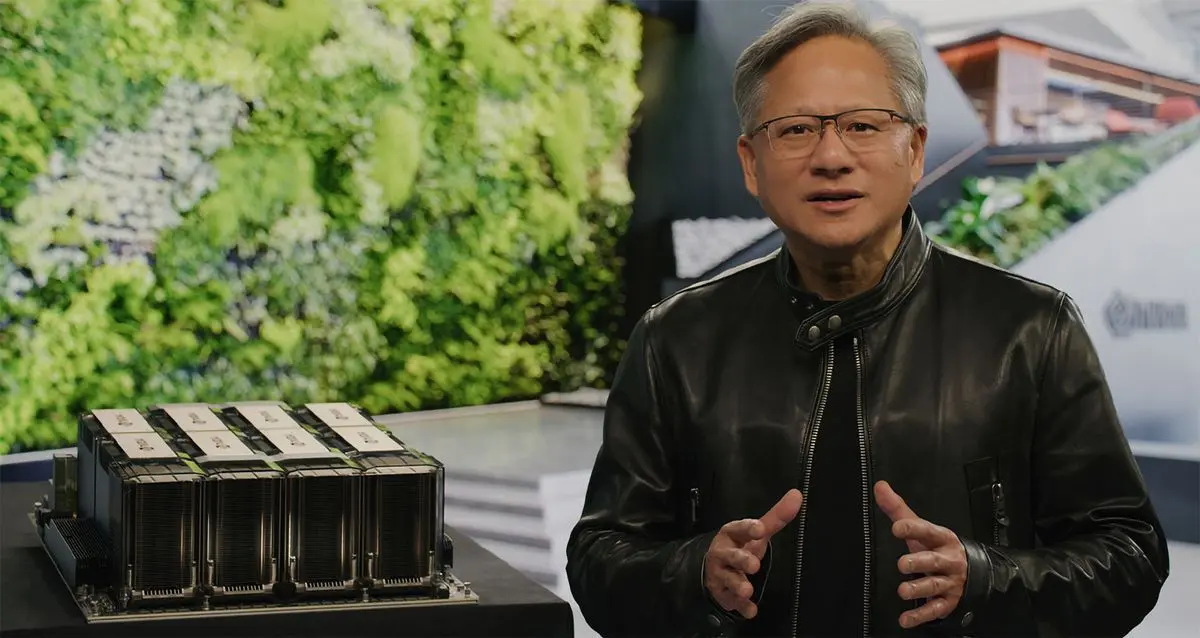
Jensen Huang Predicts AI Jobs Surge in Skilled Trades
Nvidia CEO Jensen Huang made a striking prediction at the World Economic Forum in Davos, Switzerland: artificial intelligence will create more jobs than it destroys, particularly for workers in skilled trades. Speaking with BlackRock CEO Larry Fink, Huang described the AI boom as driving what he termed the "largest infrastructure buildout in human history," one that will require massive numbers of plumbers and electricians, construction workers, steel workers, and network technicians
1
. The infrastructure buildout spans energy, data centers, and chip factories, creating demand across multiple sectors."We are going to have plumbers, electricians, construction and steel workers, network technicians, and people who install and fit out the equipment," Huang explained during the conversation
1
. He noted that in the United States, salaries for these roles have nearly doubled, with workers building chip factories or AI factories commanding six-figure salaries3
. "Everybody should be able to make a great living. You don't need to have a PhD in computer science to do so," Huang emphasized3
.White-Collar Displacement vs Blue-Collar Demand
While Huang's optimism about job creation focuses on skilled trades, concerns about white-collar displacement remain prominent. Anthropic CEO Dario Amodei warned of a potential "white-collar bloodbath" that could eliminate up to 50% of entry-level office jobs
1
. Amodei noted that Anthropic's Claude AI has become particularly effective at coding tasks, which could displace junior software developers and portions of more senior software engineering work3
. "We're entering a world where the junior-level software engineers -- maybe many of the tasks of the more senior-level software engineers -- are starting to be done most of the way by AI systems," Amodei said in an interview at Bloomberg House in Davos3
.Despite these warnings, Amodei believes the long-term gains from AI will outweigh the damage, though he acknowledges that high unemployment and underemployment remain serious risks over the next five years
1
. A report from minority staff for the US Senate Committee on Health, Education, Labor, and Pensions warned that AI and automation could put up to 97 million American jobs at risk over the next decade2
.The Platform Shift and Economic Growth Potential
Huang framed AI as a platform shift comparable to personal computers, the internet, smartphones, and the cloud—infrastructure that enables applications used in daily life
4
. He described AI as a "five-layer cake" with energy at the bottom, followed by chips, cloud infrastructure, AI models, and applications at the top. The real economic growth and benefits will materialize as industries adopt AI applications, but building the foundational layers requires substantial capital expenditure and labor4
.Microsoft CEO Satya Nadella, also speaking at the World Economic Forum, distinguished between jobs created by one-time capital expenditure and the future of AI diffusion across industries. "This is a technology that will build on the rails of cloud and mobile, diffuse faster, and bend the productivity curve, and bring local surplus and economic growth all around the world," Nadella said
2
. He emphasized that demand will only persist if AI produces tangible benefits: "Demand all over the world will only be there if there is a local surplus" in health outcomes, education, public sector efficiency, and private sector competitiveness2
.AI Bubble Concerns and GPU Demand
Addressing speculation about an AI bubble, Huang argued that the investment levels are justified and not indicative of a bubble. He pointed to a key metric: despite millions of Nvidia GPUs now deployed in cloud environments, spot prices for GPU rentals continue to rise, not just for the latest generation but even for two-generation-old chips
2
. "One good test on the AI bubble is to recognize that Nvidia has now millions of Nvidia GPUs in every cloud. We're everywhere and if you try to rent an Nvidia GPU these days, it's so incredibly hard," Huang noted2
.Huang explained that AI spending differs from previous bubbles because it cuts across nearly every vertical rather than being confined to a single market
2
. Tech firms have committed to spend a combined $500 billion in data center leases in the coming years, and Nvidia is on track to generate almost $200 billion in data center chip sales for 20253
. Nadella echoed this sentiment, stating that a telltale sign of a bubble would be if discussions focused solely on tech firms rather than AI's impact across industries2
.Related Stories
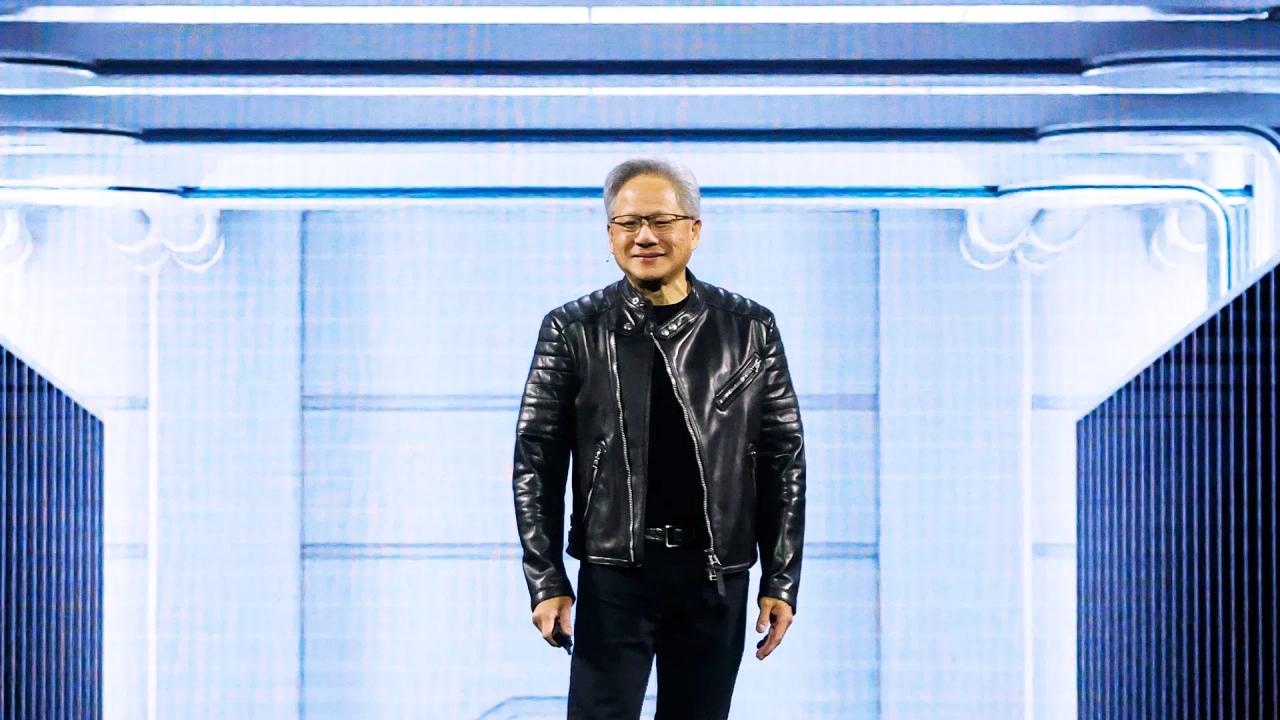
Radiology Example Shows Human-AI Collaboration
To illustrate how AI can enhance rather than replace human workers, Huang pointed to radiology, a field many predicted would be automated away. Ten years ago, computer vision capabilities made radiology seem vulnerable to automation. Today, AI has permeated every aspect of radiology, yet the number of radiologists has actually increased
1
. "The fact that they are able to study scans now infinitely fast allows them to spend more time with patients diagnosing their disease, interacting with the patients, interacting with other clinicians," Huang explained1
. As hospitals can see more patients, revenues increase, driving demand for more radiologists4
.This example demonstrates what Huang calls the difference between purpose and task. The purpose of a radiologist is to diagnose patients and provide care; reading scans is merely a task that supports that purpose. By automating tasks through automation, AI enables professionals to focus on their core purpose
4
. Bristol Myers Squibb recently announced it will work with Microsoft's AI-powered radiology platform to develop imaging algorithms for early lung cancer detection, illustrating how AI and human expertise combine to improve outcomes4
.What to Watch in the Future of AI Employment
The short-term outlook appears favorable for skilled trades as the infrastructure buildout accelerates, but the longer-term implications for white-collar workers remain uncertain. Observers should monitor whether AI-driven productivity gains translate into job creation or displacement across different sectors. The next five years will be critical in determining whether Amodei's warnings about underemployment materialize or whether Huang's vision of expanded opportunities prevails. Countries investing in AI infrastructure as a national priority—treating it like roads and energy—may see different employment outcomes than those that lag behind
5
. As Nadella emphasized, the ultimate test will be whether AI generates measurable surplus in health, education, and economic competitiveness, maintaining social permission to continue consuming scarce resources like energy2
.References
Summarized by

Navi
[1]
[2]
Related Stories
Jensen Huang says AI infrastructure buildout needs trillions more after $700 billion spent
11 Mar 2026•Technology

AI's Impact on the Job Market: CEOs Predict Boom in Skilled Trades Amid White-Collar Uncertainty
03 Oct 2025•Business and Economy
Nvidia CEO Jensen Huang Weighs In on AI's Impact on Jobs and Innovation
14 Jul 2025•Technology
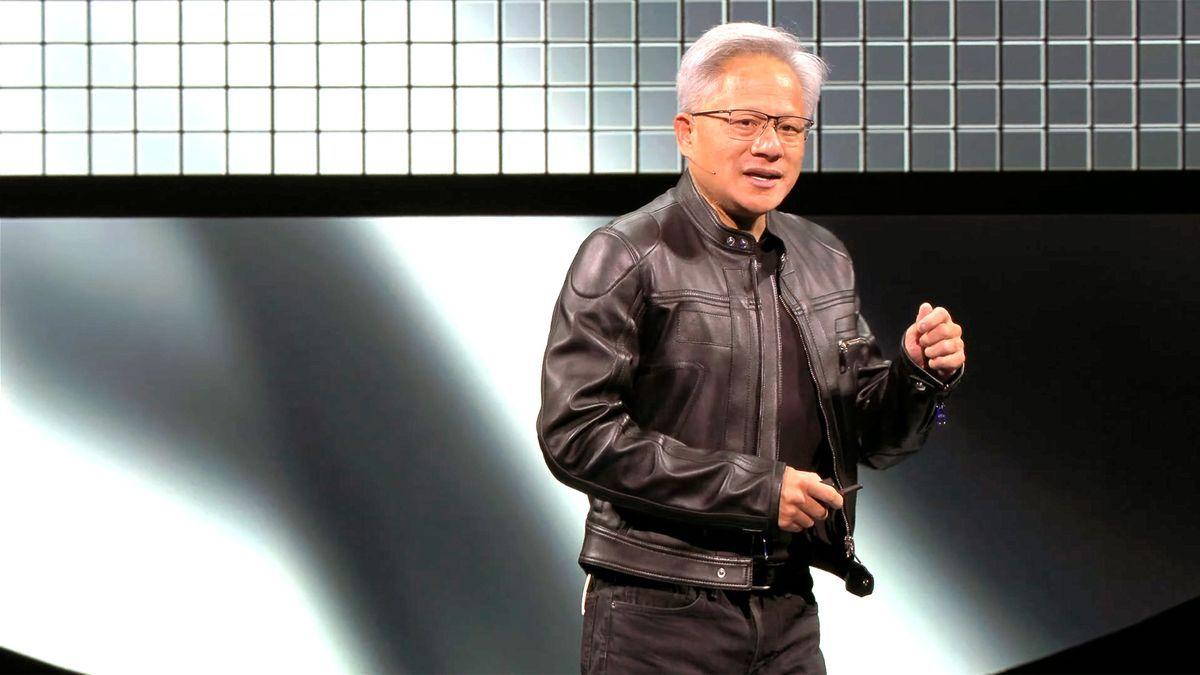
Recent Highlights
1
OpenAI Releases GPT-5.4, New AI Model Built for Agents and Professional Work
Technology
2
Anthropic sues Pentagon over supply chain risk label after refusing autonomous weapons use
Policy and Regulation

3
OpenAI secures $110 billion funding round as questions swirl around AI bubble and profitability
Business and Economy

Recent Highlights
Today's Top Stories






Your Daily Dose of Curated AI News
Don’t drown in AI news. We cut through the noise - filtering, ranking and summarizing the most important AI news, breakthroughs and research daily. Spend less time searching for the latest in AI and get straight to action.

