Nvidia CEO Jensen Huang Weighs In on AI's Impact on Jobs and Innovation


10 Sources
[1]
Jensen Huang adds voice to those warning of AI-induced job losses - but only 'if the world runs out of ideas'
There is a wide belief that artificial intelligence (AI) has the potential to greatly increase productivity, which may also lead to widespread job displacement. This could happen sooner rather than later, if humanity loses its ability to innovate, indicated Jensen Huang, chief executive of Nvidia,
[2]
The CEO of Nvidia Admits What Everybody Is Afraid of About AI
As the AI chipmaker rockets past a $4 trillion valuation, CEO Jensen Huang lays out a stunning vision of a future with robot assistants and revived American factories, but admits the transition won't be painless. This week, Nvidia became the first company in history to be worth $4 trillion. It’s
[3]
Nvidia CEO Jensen Huang says AI job losses will come - " ifthe world runs out of ideas"
Huang has been warned by senators before an upcoming trip to China It's long been prophesied AI will lead to mass unemployment, with several CEOs and tech leaders warning AI will wipe out millions of jobs, and firms such as Microsoft laying off thousands of workers whilst bringing in new AI
[4]
Behind the Curtain -- Jensen vs. Dario: "There will be more jobs"
Both of them agree we'll soon have AI that's smarter than humans -- and will radically reshape how people work and companies operate. Amodei told us AI could wipe out half of entry-level white-collar jobs in a few years. His comments sparked weeks of national debate over the dangers of fast and
[5]

Jensen Huang says AI isn't likely to cause mass layoffs unless 'the world runs out of ideas'
Jensen Huang is not an AI doomer, but he said developing tech could cause job losses if humans can't come up with new ideas. As CEO of Nvidia, the chipmaker now worth $4 trillion, Huang has a unique insight on the acceleration of AI adoption, and most of what he sees is positive. While some AI
[6]

Nvidia's CEO says AI is coming for workflows, not jobs
If your job feels safe from AI, it probably isn't. But Nvidia CEO Jensen Huang isn't sounding the alarm. He's looking to draw the blueprint for what's next. In a recent interview on CNN's "Fareed Zakaria GPS," the man steering the world's most valuable company didn't talk much about any AI-related
[7]
AI's Goldilocks problem: Powell, Huang, and Amodei can't agree -- And Gen Z's fate lies in the balance
The Gen Z generation entering the workforce (aged roughly 13 to 28 years old) has a much more urgent question on its mind: Just how badly will the artificial intelligence revolution mangle their careers? Predictions range from too cold to too hot, and in the summer of 2025, prominent business and
[8]

Nvidia CEO Says He Has Plans to Either Change or Eliminate Every Single Person's Job With AI
Wall Street was bristling earlier this month as the chipmaker Nvidia behind the AI boom hit a record market value of $3.92 trillion, narrowly eclipsing Apple's record of $3.915 trillion set last December. Just days later, Nvidia became the most valuable company in history, breaking the $4 trillion
[9]

Nvidia CEO Says '100% of Everybody's Jobs Will Be Changed' Due to AI
Huang, who has been leading the company since co-founding it in 1993, said in a new interview that AI would transform "100% of everybody's jobs." In a new interview, Nvidia CEO Jensen Huang says AI is "the greatest technology equalizer" the world has ever seen -- and that "100% of everybody's jobs
[10]

Sam Altman endorses Jensen Huang's view on AI and its impact on jobs - The Economic Times
In a post on X, Altman noted key themes Huang has emphasised: AI will not eliminate jobs wholesale but will fundamentally change how work is done.OpenAI CEO Sam Altman has expressed agreement with Nvidia CEO Jensen Huang's forward-looking perspective on how artificial intelligence (AI) will impact
Share
Copy Link
Jensen Huang, CEO of Nvidia, discusses the potential effects of AI on employment and productivity, emphasizing the importance of continued innovation to prevent job losses.
Nvidia CEO's Perspective on AI and Employment
Jensen Huang, CEO of Nvidia, has added his voice to the ongoing debate about artificial intelligence (AI) and its potential impact on jobs. In a recent interview with CNN, Huang offered a nuanced view on the subject, emphasizing the importance of continued innovation in preventing job losses
1
.
Source: Futurism
The Role of Innovation in Job Creation
Huang's central argument is that job losses due to AI are not inevitable, but rather dependent on society's ability to generate new ideas. He stated, "If the world runs out of ideas, then productivity gains translates to job loss"
2
. This perspective contrasts with more pessimistic predictions, such as those from Dario Amodei of Anthropic, who suggested that AI could eliminate half of all entry-level office positions within five years1
.Historical Precedent and Future Predictions
Huang drew parallels with past technological revolutions, noting that advancements have historically led to both job creation and improved productivity. He pointed out that over the last 300 years, including the computer era, both productivity and employment have increased
5
. This historical perspective informs his optimistic outlook on AI's potential impact.AI's Transformative Effect on Work
While acknowledging that AI will affect all occupations, Huang expects many new roles to emerge. He emphasized that AI is already changing how work is performed, with over half of large American firms planning to use AI for routine tasks like invoice processing
1
. Huang sees AI as a tool for augmenting human capabilities rather than replacing workers entirely.Nvidia's Role in the AI Boom
As the CEO of Nvidia, a company that recently reached a $4 trillion market capitalization, Huang's views carry significant weight in the tech industry. Nvidia's GPUs are central to AI development, powering major tech companies' AI initiatives
2
. This positions Huang as a key figure in shaping the future of AI and its impact on the workforce.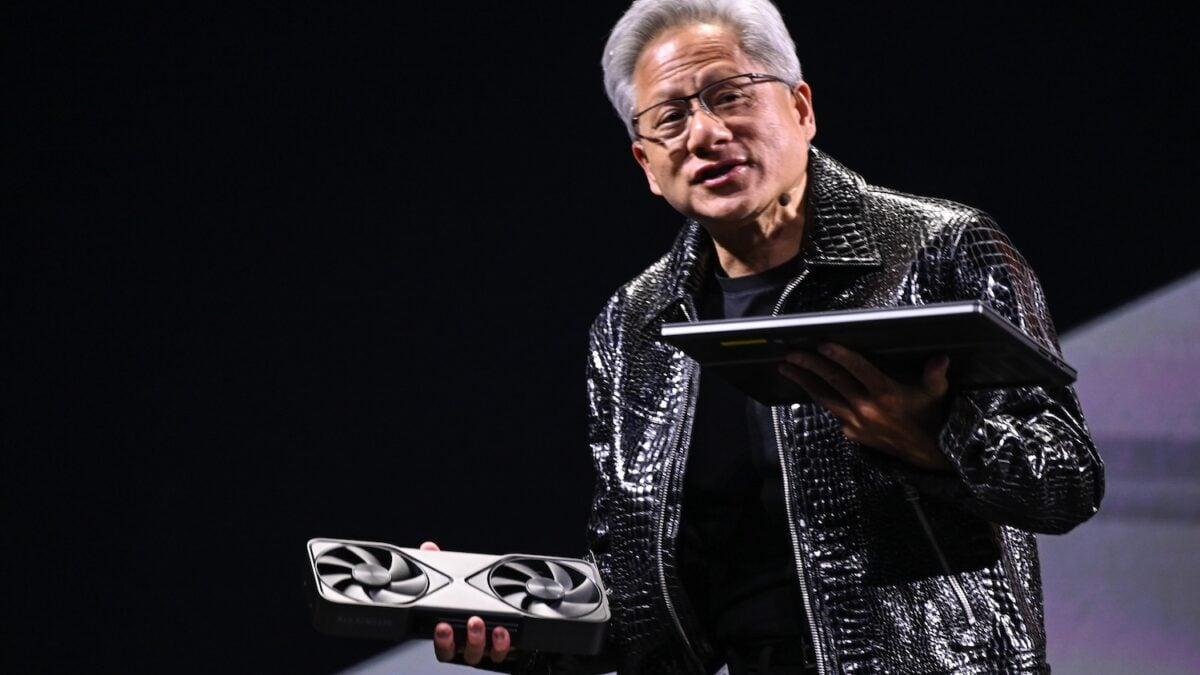
Source: Gizmodo
Related Stories

Potential Benefits and Challenges of AI
Huang highlighted several potential benefits of AI, including its ability to revolutionize medicine, speed up drug discovery, and even help cure diseases
2
. He also discussed the development of physical, intelligent robots that could become commonplace within the next three to five years.Concerns and Safeguards
Despite his optimism, Huang acknowledged the need for responsible AI development. He mentioned that most AI models already use other AIs for fact-checking, and safety tools are continually improving
2
. However, some critics argue that as a major player in the AI industry, Nvidia's influence raises questions about who controls the direction of AI development and its societal impacts.
Source: Axios
Global Implications and Policy Considerations
Huang's recent meetings with U.S. government officials and planned discussions with Chinese leaders underscore the global significance of AI development
4
. These interactions highlight the complex interplay between technological advancement, economic growth, and national security concerns surrounding AI.As the AI revolution continues to unfold, Huang's perspective offers a counterpoint to more alarmist views, emphasizing the potential for innovation and growth. However, the true impact of AI on jobs and society remains a topic of ongoing debate and careful consideration.
References
Summarized by

Navi
[1]
[3]
Related Stories
Jensen Huang Warns AI Leaders Against Fearmongering as Nvidia Pushes Optimistic Vision
16 Mar 2026•Technology

Jensen Huang says AI job displacement fears miss the point: You'll lose to coworkers who use AI
20 Apr 2026•Business and Economy
Nvidia CEO Jensen Huang Pushes for Maximum AI Automation While Promising Job Security
25 Nov 2025•Business and Economy
Recent Highlights
1
Microsoft and Nvidia Launch Surface Laptop Ultra: A $2,599 AI-Ready PC With RTX Spark Chip
Technology

2
Google Unveils Gemini 4 Argon AI Model, Restricts Access to Trusted Cyber Defenders
Technology

3
Trump Consulted Grok AI Before Ordering Venezuela Invasion and Capture of Nicolás Maduro
Policy and Regulation

Recent Highlights
Today's Top Stories






Don’t drown in AI news. We cut through the noise - filtering, ranking and summarizing the most important AI news, breakthroughs and research daily. Follow topics that matter to you and stay ahead.


