Jensen Huang teases AI chip that will 'surprise the world' at Nvidia's GTC Conference in March


3 Sources
3 Sources
[1]
Jensen Huang says Nvidia will 'surprise the world' with a mystery chip -- here's what to expect
Nvidia GTC 2026 will have 'new chips the world has never seen before' Nvidia GTC 2026 is gearing up to be quite the show, with CEO Jensen Huang now hyping up the annual AI conference with "several new chips the world has never seen before." But what chips can we expect? During an interview with media site Korean Economic Daily, Huang expressed that GTC 2026, taking place from March 16, will unveil "a chip that will surprise the world." While there's no indication of what this chipset could be, it's easy to think the upcoming Nvidia N1X for PCs is a likely candidate. However, this may not be the case. Huang is teasing something big from Team Green next month, and while it's looking to be next-gen chips to power future AI data centers, it could be the beginning of the architecture that we'll see in RTX 60-series GPUs. A mystery chip to 'surprise the world' During the interview, Huang notes that "nothing is easy because all technologies are at their limits," but with the partnership between Nvidia and SK Hynix, one of the three semiconductor companies, "nothing is impossible." This only makes Huang's statement of revealing "several new chips the world has never seen before" at GTC 2026 more bold, and while the long-anticipated Nvidia N1X and N1 chips for desktops and laptops are a good contender, looking to take on Intel's Panther Lake CPU lineup (especially in terms of integrated graphics performance), we've heard N1X is rumored to be delayed. As with past GTC events, Nvidia generally focuses on the expansion of AI-driven software and chipsets, and we've heard about Team Green's new Vera CPUs and Rubin GPU that offers 5x more power than Blackwell to drive the AI data centers of the future at CES 2026. This indicates we could see its new Rubin GPUs for AI take the spotlight at the show, as they've been in full production as of January 2026, as announced by Huang during CES 2026. However, Nvidia could throw a curveball by revealing its Feynman microarchitecture for next-gen GPUs. That's considering Huang stating, "this team has worked incredibly hard to meet the great challenge of Vera Rubin and HBM4," referring to SK Hynix and its development of HBM4 (High Bandwidth Memory 4), designed for AI data centers and cutting-edge computing. This remains to be seen, of course, but if Nvidia is set to unveil a world-surprising chip, then we can expect Team Green to bring the next evolution of implementing AI in the entire tech industry. A glimpse of RTX 60-series? With reports of Nvidia not releasing a new gaming GPU this year, this not only pushes back RTX 50 Super GPUs, but also RTX 60-series. And this is due to the RAM crisis. For consumers, this is disappointing, and having a new chip for AI data centers likely being the big surprise at GTC 2026 isn't ideal. However, consider this. Nvidia Blackwell architecture (what you'll find in the latest RTX 50-series GPUs) was first designed for data centers, and then for consumer GPUs, around a year or two later. With this in mind, with the developments of Rubin now in place, we may see how this architecture comes to Team Green's next-gen graphics cards. For now, we'll have to wait and see what Huang has up his (leather) sleeve, and it won't be much longer, seeing as Nvidia GTC 2026 is kicking off on March 16. Don't expect all-new RTX GPUs or N1X, but do expect a big reveal that could deliver a taste of Nvidia's consumer graphics cards lineup down the line. Follow Tom's Guide on Google News and add us as a preferred source to get our up-to-date news, analysis, and reviews in your feeds.
[2]
Jensen Huang teases reveal of 'a chip that will surprise the world' at next month's GTC
Nvidia's regular GTC conference will soon kick off, taking place in San Jose, between March 16 and 19. From its very beginnings in 2008, the event has been all about what GPUs can be used for, other than gaming. And as he is wont to do, CEO Jensen Huang has been talking up what to expect. In an interview with the Korea Economic Daily, Huang teased, "A chip that will surprise the world will be unveiled at GTC next month." Naturally, he did not specify much more about the chip beyond this, though one has to wonder what it would really take to 'surprise' tech fiends these days. For instance, 'a fresh GPU well within my budget' may sound ridiculous, but a girl can dream. As for the 'surprising chip' itself, one could speculate that Huang is gesturing at the long-awaited N1X Arm chip for consumer PCs. For one thing, recent reports suggest the N1X could drop as soon as the end of March -- so a deep dive right before, at GTC, would make sense. Alternatively, the wider interview's focus on AI could also be a clue as to the identity of the chip. Huang discusses Nvidia's collaboration with SK hynix, and the latter company's plans for HBM4. It's hoped this latest iteration of super-fast memory can maximize the performance of Nvidia's Vera Rubin chip (Nvidia has also reportedly already placed an order for Samsung's next-gen High Bandwidth Memory, too). But besides that, Huang also told Korean media, "There is no AI bubble. We are just at the beginning of the largest infrastructure project in human history, worth tens of trillions of dollars." That alone suggests a continuing strong commitment to the industry -- even if Nvidia's $100 billion investment plan in OpenAI has reportedly 'stalled'. In fact, when Korean media specifically asked about future investments in AI companies like the ChatGPT creator or Anthropic, Huang was reportedly evasive; he answered, "AI is not just a model; it's an entire industry encompassing energy, semiconductors, data centers, the cloud, and the applications built on top of it." So, while Nvidia is not pulling away from AI, it does sound like the company may be looking to diversify its portfolio. And lest you fret that Nvidia is becoming an AI-only company, there is reportedly an RTX 5090-beating GPU in the works too. Sources say this is much further off than the N1X Arm chip, suggesting a September release. But then surely it wouldn't be completely ridiculous to expect the unveiling of a fresh GPU at the GPU Technology Conference, right? ...Right?
[3]
Nvidia Set to Unveil New Chip that will 'Surprise the World': Jensen Huang
The event is still about a month away, but given this reveal we can rest assured that the entire AI industry would be watching with bated breath Nvidia is preparing to unveil a new chip "that will surprise the world" in March at the company's GTC Conference 2026 scheduled to be held in San Jose, company CEO Jensen Huang has said. While he did not share any technical details or the name, Huang said the microprocessor would mark a major leap forward, both in performance and design. Huang revealed this during dinner hosted by SK Hynix and Nvidia, says a report in the Korea Economic Daily. It report said the Nvidia CEO noted that the company would introduce hardware designed to push the current AI technology to its limits. The Nvidia GTC is scheduled for March 16 where Huang's annual keynote would be watched with bated breath by the industry. Of course, market analysts believe that the new chip could be using advanced packaging as a means to solve memory bottlenecks, hitherto considered a major bottleneck in modern AI computing power enhancement. There are also reports that Nvidia is working with SK Hynix on the HBM4 memory technology. The report also quoted Huang as saying that Nvidia had prepared several new chips "that the world hasn't seen before" though he did not divulge any details. He also noted that pushing the performance of chips was becoming harder as technology nears physical limits. In the past, Huang had described Nvidia and SK Hynix engineers as "one team" tackling the same problem. Given that Nvidia has already outlined its next datacentre platform called Nvidia Vera Rubin with hits HBM4-based Rubin GPUs, the latest comment from Huang is sure to make the markets excited. Recently, Reuters reported an intensified HBM4 competition and supply ramp efforts that could include Samsung's plan to start product to supply to Nvidia. Given that the Nvidia CEO chose the forum of Nvidia-SK Hynix staff meet as the venue, we can safely assume that a joint team from these two entities are the ones behind the new chip, which Huang hopes would resolve some of the extremely challenging situation that chip technologies are facing to keep pace with growing inference demand. For now, all we can speculate is that the new chip could be a more robust version based on the Rubin architecture, which as readers would recall, was first teased at Computex 2024 in Taipei and then launched officially at last year's GTC event. There is one more possibility, which is farfetched - could Nvidia be bringing forward their next generation Feynman architecture, which was set to succeed Rubin only by 2028? Published reports had claimed that Feynman would use A16 1.6 nm process technology and silicon photonics that would allow data transmission with light instead of electricity.
Share
Share
Copy Link
Nvidia CEO Jensen Huang has promised to unveil a chip that will surprise the world at GTC 2026 on March 16. While details remain scarce, speculation points to advanced Rubin architecture developments, HBM4 memory integration, or possibly an early reveal of Feynman architecture. The mystery chip emerges from Nvidia's partnership with SK Hynix and could address critical memory bottlenecks in AI computing.
Nvidia CEO Promises World-Surprising Chip Reveal
Jensen Huang has set the tech industry buzzing with his bold promise to unveil new chip technology at the upcoming GTC Conference. During an interview with the Korea Economic Daily, the Nvidia CEO teased that "a chip that will surprise the world will be unveiled at GTC next month," scheduled for March 16-19 in San Jose
1
2
. The announcement came during a dinner hosted by SK Hynix and Nvidia, where Huang revealed the company had prepared "several new chips the world has never seen before"3
. While technical details remain under wraps, the reveal promises to mark a major leap forward in both performance and design for pushing AI technology to new limits.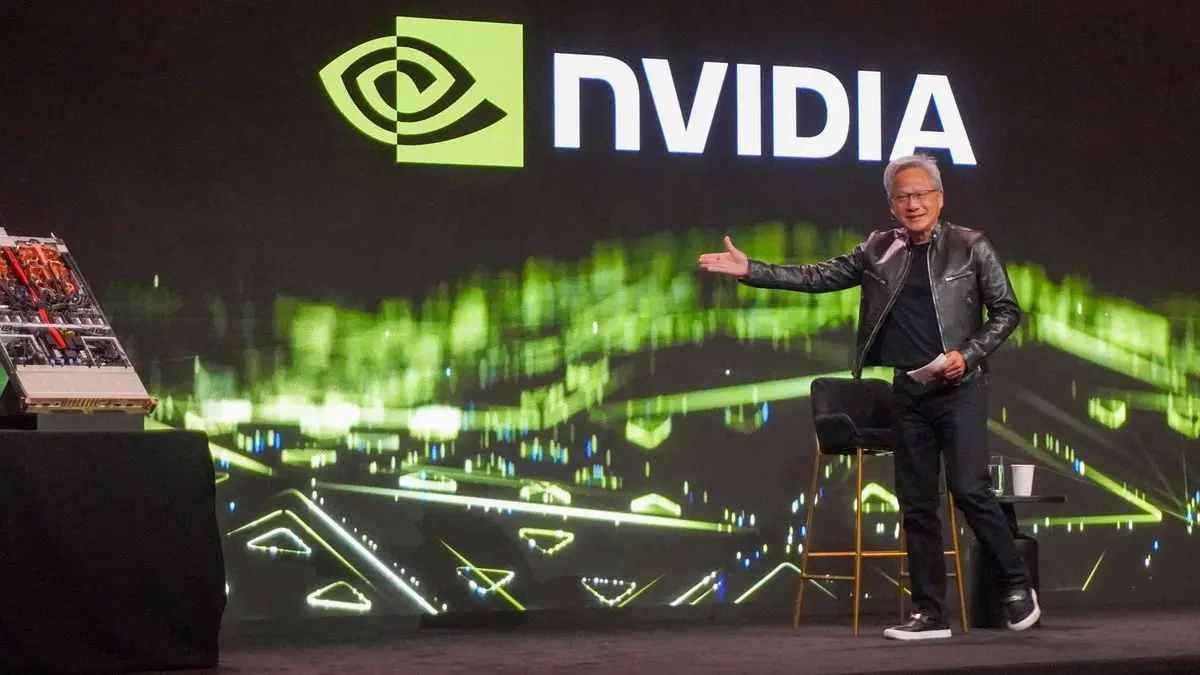
Source: Tom's Guide
Speculation Points to Advanced AI Data Centers Architecture
Market analysts believe the mystery AI chip could leverage advanced packaging to solve memory bottlenecks, which have become a critical constraint in modern AI computing power enhancement
3
. The Nvidia partnership with SK Hynix provides crucial context, as Huang emphasized that "nothing is impossible" when these semiconductor companies collaborate1
. The CEO specifically referenced the team's work on "Vera Rubin and HBM4," indicating that High Bandwidth Memory 4 integration could be central to the announcement. Nvidia's Rubin GPUs, which offer 5x more power than Blackwell and entered full production in January 2026, remain strong candidates for the spotlight1
. The Rubin architecture was first teased at Computex 2024 in Taipei before its official launch at last year's GTC event, making GTC 2026 a logical venue for its next evolution.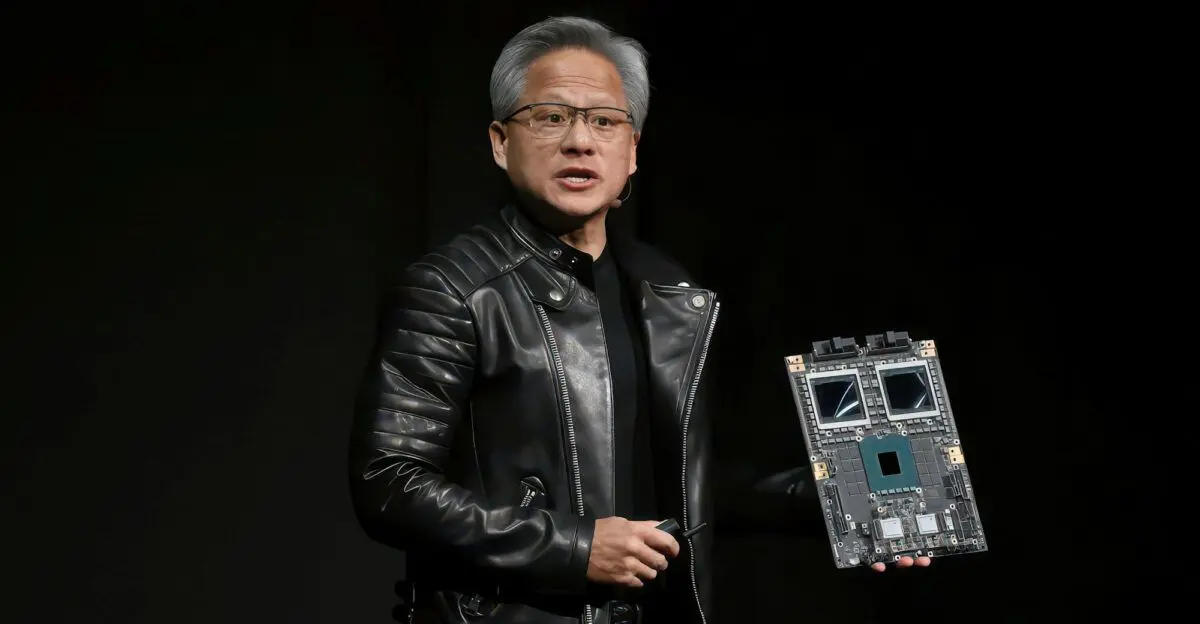
Source: CXOToday
Could Feynman Architecture Arrive Earlier Than Expected?
A more speculative possibility involves Nvidia bringing forward its next-generation Feynman architecture, originally slated to succeed Rubin only by 2028
3
. Published reports claim Feynman would use A16 1.6 nm process technology and silicon photonics that would allow data transmission with light instead of electricity. Huang acknowledged the mounting challenges, noting that "nothing is easy because all technologies are at their limits," which could justify an accelerated timeline for breakthrough innovations1
. The N1X Arm chip for consumer PCs has also surfaced as a possibility, with recent reports suggesting it could drop as soon as the end of March2
. However, rumors of delays make this less likely as the headline announcement.Related Stories


Implications for Consumer GPUs and AI Infrastructure
While GTC 2026 typically focuses on AI infrastructure and data center technology, the event could offer a glimpse into future consumer GPUs. The Blackwell architecture that powers RTX 50-series GPUs was first designed for AI data centers before trickling down to consumer products around a year or two later
1
. This pattern suggests that whatever Rubin architecture developments emerge could preview the RTX 60-series lineup down the line. Reports indicate Nvidia won't release new gaming GPUs this year due to the RAM crisis, pushing back both RTX 50 Super GPUs and RTX 60-series cards1
. However, sources claim an RTX 5090-beating GPU is in development for a potential September release2
.Addressing Growing Inference Demand and Industry Stakes
Huang's broader comments reveal Nvidia's strategic vision for addressing inference demand and scaling AI infrastructure. He told Korean media that "there is no AI bubble" and described the current moment as "just the beginning of the largest infrastructure project in human history, worth tens of trillions of dollars"
2
. When asked about investments in AI companies like OpenAI or Anthropic, Huang emphasized that "AI is not just a model; it's an entire industry encompassing energy, semiconductors, data centers, the cloud, and the applications built on top of it"2
. This suggests Nvidia may be diversifying its portfolio beyond pure model development. The intensified HBM4 competition adds urgency, with Reuters reporting that Samsung plans to start production to supply Nvidia alongside SK Hynix3
. The choice of venue for Huang's announcement—a joint Nvidia-SK Hynix staff meeting—signals that collaborative engineering between these semiconductor companies has produced the breakthrough technology set for reveal at GTC Conference.References
Summarized by

Navi
[1]
Related Stories
Recent Highlights



Recent Highlights
Today's Top Stories








Your Daily Dose of Curated AI News
Don’t drown in AI news. We cut through the noise - filtering, ranking and summarizing the most important AI news, breakthroughs and research daily. Spend less time searching for the latest in AI and get straight to action.

