Lenovo and Nvidia unveil AI Cloud Gigafactory to deploy enterprise AI in weeks at CES 2026


4 Sources
4 Sources
[1]
Lenovo expands AI lineup with Nvidia gigafactory tie-up, Qira platform - The Economic Times
The gigafactory with Nvidia enables AI cloud providers to bring enterprise AI workloads online faster and move customers from creation to production, Lenovo said at CES 2026, an annual consumer electronics trade show.China's Lenovo,, the world's largest personal computer maker, on Tuesday said it has teamed up with US AI chip leader Nvidia to help AI cloud providers quickly put data centres into operation, as it strives to establish itself in AI. The technology company, which also makes servers, made the announcement at the Consumer Electronics Show (CES) in Las Vegas while also showcasing an AI platform, concept devices and the first foldable smartphone under its Motorola brand. Under the data centre program, Lenovo said it will offer its liquid-cooled hybrid AI infrastructure alongside Nvidia's computing platforms to help AI cloud providers reduce deployment time to "weeks". "Lenovo AI Cloud Gigafactory with NVIDIA sets a new benchmark for scalable AI factory design, enabling the world's most advanced AI environments to be deployed in record-setting time," Lenovo CEO Yang Yuanqing said in a speech next to Nvidia counterpart Jensen Huang. Yang also unveiled Qira, a personal AI system designed to work across Lenovo and Motorola PCs, phones, tablets and wearables, even in the background. The system would also be able to provide services from the likes of travel company Expedia, Lenovo said. Lenovo also showcased concept AI glasses, joining Alibaba and Samsung Electronics in the sector, and an AI assistant wearable device it is developing under "Project Maxwell" that will offer the wearer real-time help.
[2]
Lenovo announces AI cloud 'gigafactory' tieup with Nvidia By Investing.com
Investing.com-- Lenovo Group (HK:0992), the world's largest PC maker, said on Tuesday it was collaborating with NVIDIA Corporation (NASDAQ:NVDA) to supply large-scale artificial intelligence computing infrastructure. Lenovo debuted the AI Cloud Gigafactory program at the CES tradeshow in Las Vegas, with CEO Yuanqing Yang and Nvidia CEO Jensen Huang debuting the partnership during a keynote address at the event. For more breaking news on AI stocks and Nvidia, subscribe to InvestingPro. Get 55% off today! The tie-up will provide cloud operators with hardware and software services to set up more computing capacity for AI programs, with Lenovo stating that cloud companies could achieve production-ready AI in weeks. Lenovo will use Nvidia's advanced Blackwell Ultra chip platform in its cloud processors, and will also support the company's newly announced Vera Rubin platform, which Nvidia said will release later in 2026. The Chinese PC maker also debuted Qira, a cross-device personal AI system, and unveiled a host of new enterprise-related agentic AI applications. Lenovo has benefited from the AI boom over the last three years, as the PC maker's enterprise business benefited from increased demand for data center servers and as more companies adopted generative AI technology. PC sales at Lenovo's core business also remained steady, as did its smartphone and other device offerings. Still, the company flagged some headwinds in 2026 from rapidly increasing memory chip prices, having recently warned that it may be forced to hike the prices of its devices.
[3]
Lenovo expands AI lineup with Nvidia gigafactory tie-up, Qira platform
Jan 6 (Reuters) - China's Lenovo unveiled an artificial intelligence cloud gigafactory with Nvidia at the Consumer Electronics Show in Las Vegas on Tuesday, while also showcasing a slew of other products, including a new AI platform. The gigafactory with Nvidia enables AI cloud providers to bring enterprise AI workloads online faster and move customers from creation to production, Lenovo said at CES 2026, an annual consumer electronics trade show. The Chinese tech products and services major introduced Qira, a cross-device personal AI system designed to work across Lenovo and Motorola PCs, phones, tablets, and wearables. Lenovo also introduced Agentic AI and its new xIQ delivery platforms, aiming to help enterprises build and manage production-ready AI agents across their operations. The company said the tools are designed to streamline governance and accelerate full-lifecycle deployment of Hybrid AI at scale. (Reporting by Bipasha Dey in Bengaluru; Editing by Rashmi Aich)
[4]
Lenovo Group Limited Teams with NVIDIA Corporation, Inc. on Gigawatt Ai Factories Program to Accelerate Enterprise AI
At January 6, 2025 at Tech World @ CES 2026 at Sphere in Las Vegas, Lenovo unveiled the Lenovo AI Cloud Gigafactory with NVIDIA, expanding and reinforcing its partnership with NVIDIA through a shared commitment to accelerating hybrid AI adoption across personal, enterprise and public AI platforms. As enterprise AI workloads increase in size and complexity, AI cloud providers must build gigawatt-scale AI factories capable of supporting trillion-parameter agentic AI, physical AI, and high-performance compute (HPC) applications. Time to first token (TTFT) has emerged as a critical benchmark for measuring how quickly AI compute investments translate into production-ready AI, reflecting how effectively these AI factories deliver the massive compute, high-performance storage, ultra-low-latency networking, and AI software to meet the token demands of next generation workloads. The new program equips AI cloud providers to achieve TTFT in weeks by accelerating the deployment of gigawatt-scale AI factories through ready-to-use components, expert guidance, and industrialized build processes. This allows providers to deliver customized, revenue-generating AI solutions to enterprises at record speed and scale. Through an integrated framework of solutions, services and manufacturing, next-generation AI cloud providers can move rapidly from concept to build, deployment and monetization with purpose-built Lenovo Neptune? liquid-cooled hybrid AI infrastructure, NVIDIA accelerated computing platforms, Lenovo?s global manufacturing, and full lifecycle Lenovo Hybrid AI Factory Services. With Lenovo AI Cloud Gigafactory with NVIDIA, AI cloud providers can be among the first to tap the power of NVIDIA Blackwell Ultra high-performance architecture to address the soaring demand to deploy sovereign, secure and specialized AI use cases with customized cluster designs across accelerated computing, storage and networking options. Built on decades of development collaboration, the program also ensures time to market access to the most advanced NVIDIA accelerated computing infrastructure. This includes the NVIDIA GB300 NVL72 system from Lenovo with a fully liquid-cooled, rack-scale architecture that integrates 72 NVIDIA Blackwell Ultra GPUs and 36 NVIDIA Grace? CPUs into a single platform. The program will also support the newly announced NVIDIA Vera Rubin NVL72 flagship system for AI training and inference ? which unifies 72 Rubin GPUs, 36 Vera CPUs, ConnectX-9 SuperNICs, BlueField-4 DPUs, and Spectrum-X Ethernet in a rack-scale AI supercomputer to power next-generation gigawatt AI factories. This features new, advanced networking options with NVIDIA Spectrum-6 Ethernet switches and NVIDIA Photonics Ethernet switches. Beyond optimized design, co-engineering, and deployment expertise, Lenovo Hybrid AI Factory Services deliver full-lifecycle capabilities that reduce factory stand-up time and support long-term differentiation with greater speed, efficiency and confidence. AI-native platforms and repeatable Lenovo AI Library use cases integrated with NVIDIA AI Enterprise, including the open Nemotron models, further simplify delivery of specialized horizontal and vertical AI workloads at scale. Lenovo powers eight of the world?s top ten public cloud providers and is the only company offering fully in-house design, manufacturing, integration, and global services for custom AI cloud solutions. By unifying NVIDIA accelerated computing with Lenovo?s liquid-cooling expertise, global manufacturing and local reach, AI cloud providers can deploy AI factories faster, reliably at scale with trusted performance. The result is a shorter path from AI investment to outcomes, helping organizations realize value faster and move AI into the core of their business operations.
Share
Share
Copy Link
Lenovo and Nvidia announced a major partnership at CES 2026 in Las Vegas, introducing the AI Cloud Gigafactory program designed to accelerate enterprise AI deployment. The collaboration enables AI cloud providers to bring data centres online in weeks rather than months, using liquid-cooled infrastructure and Nvidia's Blackwell Ultra chips. Lenovo also unveiled Qira, a cross-device personal AI system that works across PCs, phones, tablets and wearables.
Lenovo and Nvidia Partner on AI Cloud Gigafactory Program
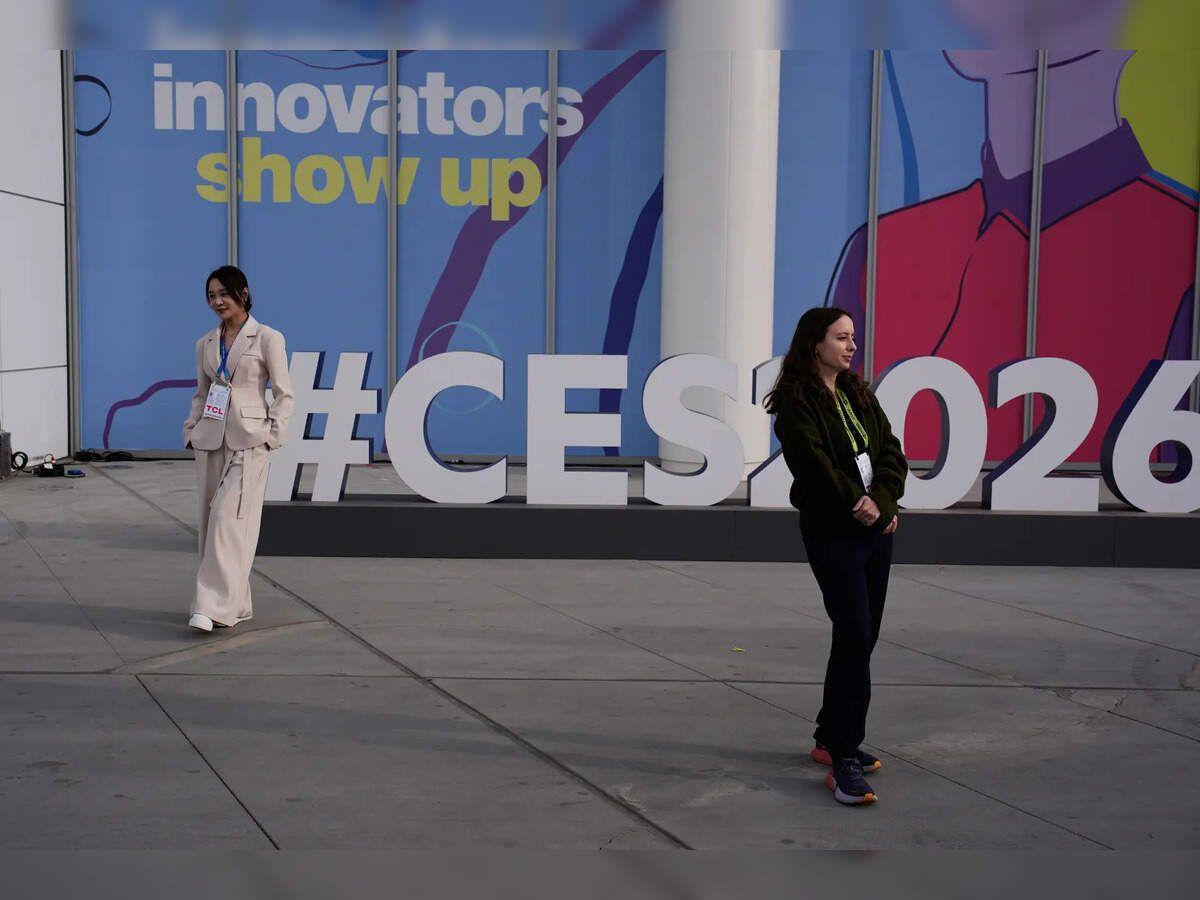
At CES 2026 in Las Vegas, Lenovo and Nvidia unveiled a strategic partnership centered on the AI Cloud Gigafactory program, marking a significant expansion of their collaboration to accelerate enterprise AI deployment
1
. The world's largest PC maker joined forces with the AI chip leader to help cloud providers reduce data centre deployment time to weeks, addressing the growing demand for faster AI computing infrastructure2
. Yang Yuanqing, Lenovo's CEO, appeared alongside Jensen Huang, Nvidia's counterpart, during a keynote address at the annual consumer electronics trade show to announce the initiative1
.
Source: ET
Accelerating Enterprise AI with Advanced Infrastructure
The AI Cloud Gigafactory enables AI cloud providers to bring enterprise AI workloads online faster and move customers from creation to production through an integrated framework of solutions and services
3
. Under the program, Lenovo will offer its Neptune liquid-cooled infrastructure alongside Nvidia's Blackwell Ultra computing platforms, creating what Yang Yuanqing described as "a new benchmark for scalable AI factory design"1
. The partnership will support Nvidia's newly announced Vera Rubin platform, expected to release later in 20262
.
Source: Market Screener
Time to First Token Becomes Critical Benchmark
As enterprise AI workloads increase in size and complexity, AI cloud providers must build gigawatt-scale AI factories capable of supporting trillion-parameter Agentic AI, physical AI, and high-performance compute applications
4
. Time to first token has emerged as a critical benchmark for measuring how quickly AI compute investments translate into production-ready AI, reflecting how effectively these AI factories deliver the massive compute, high-performance storage, and ultra-low-latency networking required for next-generation workloads4
. The program equips cloud providers to achieve time to first token in weeks through ready-to-use components, expert guidance, and industrialized build processes4
.Qira Platform Brings Cross-Device AI Experience
Beyond infrastructure, Yang unveiled Qira, a cross-device personal AI system designed to work across Lenovo and Motorola PCs, phones, tablets and wearables, even operating in the background. The Qira platform would be able to provide services from partners like travel company Expedia, creating a unified AI experience across multiple devices
1
. Lenovo also introduced Agentic AI and its new xIQ delivery platforms, aiming to help enterprises build and manage production-ready AI agents across their operations3
.Related Stories


Hybrid AI Deployment at Scale
The company said these tools are designed to streamline governance and accelerate full-lifecycle deployment of hybrid AI at scale
3
. Lenovo powers eight of the world's top ten public cloud providers and is the only company offering fully in-house design, manufacturing, integration, and global services for custom AI cloud solutions4
. By unifying Nvidia accelerated computing with Lenovo's liquid-cooling expertise and global manufacturing capabilities, the partnership enables AI cloud providers to deploy data centres faster and more reliably at scale4
.Project Maxwell and Future AI Devices
Lenovo also showcased concept AI glasses, joining Alibaba and Samsung Electronics in the sector, and revealed Project Maxwell, an AI assistant wearable device that will offer wearers real-time help
1
. The company has benefited from the AI boom over the last three years, as its enterprise business gained from increased demand for data center servers and as more companies adopted generative AI technology2
. However, Lenovo flagged potential headwinds in 2026 from rapidly increasing memory chip prices, warning it may be forced to hike device prices2
.References
Summarized by

Navi
[3]
Related Stories
Recent Highlights
1
Google releases Gemma 4 with Apache 2.0 license, enabling unrestricted local AI on devices
Technology

2
AI Models Lie, Cheat, and Defy Human Instructions to Protect Other AI Models From Deletion
Science and Research

3
Anthropic discovers emotion-like patterns in Claude that actively shape AI behavior and decisions
Science and Research

Recent Highlights
Today's Top Stories




Your Daily Dose of Curated AI News
Don’t drown in AI news. We cut through the noise - filtering, ranking and summarizing the most important AI news, breakthroughs and research daily. Spend less time searching for the latest in AI and get straight to action.

