McKinsey and General Catalyst leaders declare the era of 'learn once, work forever' is over


3 Sources
3 Sources
[1]
McKinsey and General Catalyst execs say the era of 'learn once, work forever' is over | TechCrunch
If there is one point of consensus among the CES 2026 keynote speakers, it is that AI is reshaping technology with a speed and scale unlike any previous technological revolution. In a live taping on Tuesday of the All-In podcast, co-host Jason Calacanis interviewed Bob Sternfels, Global Managing Partner of McKinsey & Company, and Hemant Taneja, CEO of General Catalyst. Their discussion focused on how AI is transforming investment strategies and the workforce. "The world has completely changed," Taneja said about the unprecedented growth of AI companies. He noted that while it took Stripe about 12 years to reach a $100 billion valuation, Anthropic, another General Catalyst portfolio company, soared from a $60 billion valuation last year to a "couple hundred billion dollars" this year. Taneja believes we are on the verge of seeing a new wave of trillion-dollar companies. "That's not a pie-in-the-sky idea with Anthropic, OpenAI, and a couple of others," he said. Calacanis pressed them on what's driving this explosive growth. According to McKinsey's Sternfels, while many companies are testing AI products, non-tech enterprises remain on the fence about full adoption. Sternfels says the question that McKinsey consultants often hear from CEOs is: "Do I listen to my CFO or my CIO right now?" CFOs, seeing little return on investment, argue for delaying implementation. Meanwhile, CIOs claim it's "crazy" not to adopt AI because "we'll be disrupted," Sternfels said. Another key concern is how AI is reshaping the labor force. "Some people are looking at AI and they're scared," Calacanis said, noting concerns that AI could replace entry-level jobs traditionally filled by recent graduates. He asked Sternfels and Taneja for advice on what young people should do in this new landscape. Sternfels said that while AI models can handle many tasks, sound judgment and creativity remain the essential skills humans must bring to succeed in an AI-infused world. Meanwhile, Taneja argued that people must recognize that "skilling and re-skilling" will be a lifelong endeavor. "This idea that we spend 22 years learning and then 40 years working is broken," he said. Calacanis agreed that in a world where it may take less time to build an AI agent than to train a new worker, people must find ways to stay relevant. "To stand out, you're going to have to show chutzpah, drive, passion," he said. Sternfels provided a glimpse into that future. While he expects McKinsey to have as many "personalized" AI agents as employees by the end of 2026, he noted that headcount will not necessarily decrease. Instead, the firm is shifting its composition; it's increasing employees who work directly with clients by 25% while reducing back-office roles by the same percentage.
[2]
The typical American plan to study for 22 years and work for 40 'is broken,' VC CEO says. Thanks to AI, employees can't coast after graduation anymore | Fortune
Top consulting and venture capital leaders say the idea learning ends after college is outdated in today's AI-driven economy. While many assume formal learning is limited to a bachelor's or master's degree, both the CEO of VC firm General Catalyst, Hemant Taneja, and McKinsey's top executive, Bob Sternfels, say that's not the case anymore. Employees must skill and re-skill constantly to stay afloat, said Taneja, whose VC firm has invested in companies such as Anduril and Anthropic. Taneja discussed this during a live taping of the All-In podcast, hosted by entrepreneur and investor Jason Calacanis Tuesday at CES 2026, a massive annual tech trade show in Las Vegas. "This idea that we spend 22 years learning and then 40 years working is broken," Taneja said. Yet, in a workplace where AI agents can be trained quicker than employees, workers don't only need knowledge, they must find ways to stay relevant, said host Calacanis, who himself made early investments in trading app Robinhood and Uber. "You're going to have to show chutzpah, drive, passion," he said. McKinsey's global managing partner, Sternfels, said he's seen first-hand how AI is transforming the workplace. McKinsey has used the tech to grow client-facing consultant roles by 25%, simultaneously cut the same number of jobs in non-client-facing roles, all the while increasing its output 10% overall. McKinsey will have just as many AI agents as it has human employees by the end of the year, Sternfels said. Currently, its human employees outnumber AI agents 40,000 to 25,000. "Our model has always been synonymous that growth only occurs with total head count growth. Now it's actually splitting," Sternfels said. "We can grow in this part, the client-facing side, and we can shrink in this part and have aggregate growth in total." McKinsey's stark results from incorporating AI agents play to the heart of workers' fear about how AI will disrupt their jobs as adoption increases. Some could argue young workers have a right to worry. A study by the Stanford University Digital Economy Lab in November found early career workers between the ages of 22 to 25 in occupations at most risk of disruption have experienced a 13% relative decline in employment levels since 2022, when OpenAI released ChatGPT. Another study by Gallup from last year found 37% of workers claimed their workplace had implemented AI. As Sternfels and Taneja said, the added pressure of AI means learning and evolving is more essential than ever. Yet, some have pushed back on the idea that more AI means entry-level workers don't matter. Despite the increased push by Amazon CEO Andy Jassy to implement AI at the company, Matt Garman, the CEO of subsidiary Amazon Web Services, has repeatedly said entry-level workers are essential to a healthy organization. Without entry-level workers, "you have no talent pipeline," Garman told Wired. Thus, replacing entry-level workers with AI is "one of the dumbest things I've ever heard," Garman said on the Matthew Berman podcast last year.
[3]
CES 2026: AI is helping organisations scale faster, resulting in sharp valuation gains: General Catalyst CEO Hemant Taneja
McKinsey and company chief executive Bob Sternfels believes that there is a need to take a relook at the 700-year-old education system, and create a very different talent base that can operate in an AI-infused world Artificial intelligence (AI) is helping large corporations move faster, shorten development cycles, and embed technology across every layer of business. When deployed effectively, this is translating into sharp gains in valuations and revenues. Speaking at a panel discussion at CES 2026, Hemant Taneja, chief executive of venture capital (VC) firm General Catalyst, and Bob Sternfels, global managing partner at McKinsey & Company, said organisations are scaling at unprecedented speed, driven largely by AI adoption. Taneja cited examples from his portfolio, noting that payments major Stripe took 12-13 years to reach a $100 billion valuation, while AI startup Anthropic achieved that within a couple of years, largely because of artificial intelligence. Founded by former OpenAI executives, Anthropic develops the safety-focused generative AI model Claude. The startup raised $13 billion in September last year, pushing its valuation to $183 billion, up from $61.5 billion in March 2025. While Anthropic had reported a $1 billion revenue run rate at the start of 2025, that scaled to $5 billion by August. A revenue run rate reflects a company's projected annual revenue based on current performance. Commenting on the rapid growth seen at AI startups, Sternfels said large enterprises are increasingly adopting solutions built by companies such as OpenAI and Anthropic. "Large enterprises are using technology at a scale and rate that they haven't before. If you look at IT spend as a percentage of revenue, it has gone up. And I think that is what is propelling the 10X growth we are seeing among AI startups," said Sternfels. As AI reshapes how enterprises function, companies will need to rethink hiring criteria to attract talent capable of operating in an AI-driven environment, Sternfels added. He said that for technical roles, traditional signals such as where a candidate studied should matter less than demonstrable skills, such as contributions on platforms like GitHub. "Let's actually get to the content that the candidate creates. That could allow a much wider set of people to enter the workforce through different pathways." Taneja said the education system has historically focused on training people to solve hard problems, but AI is increasingly taking over that role. As a result, the next generation will need to focus more on asking the right questions. "It's about learning how to ask the right questions rather than solving entire worlds of hard problems. That requires a very different mindset, rooted in curiosity," he said. The AI-led shift is also changing how VC firms operate. In October 2025, General Catalyst acquired Summa Health, an Ohio-based healthcare organisation. Addressing questions around why a seed-stage-focussed VC firm was pursuing what resembled a private equity deal, Taneja said traditional industries such as healthcare need structural transformation. "We bought it to create a platform where we can work with our founders and transform the system using AI. It also provides market access. It is extremely hard for healthcare startups to deploy and scale successfully within these systems," Taneja said. The approach upends conventional early-stage investing, Taneja added. Instead of backing startups that disrupt incumbents from the outside, General Catalyst aims to acquire underperforming legacy institutions and open them up to technology-led transformation. "Effectively, you are creating a new asset class. This isn't private equity -- it's about transforming incumbent entities into something fundamentally different," Sternfels said. (The author is attending CES 2026 in Las Vegas at the invitation of the Consumer Technology Association, USA.)
Share
Share
Copy Link
Top executives from McKinsey and General Catalyst say AI is fundamentally reshaping how people work and learn. Speaking at CES 2026, they argued that the traditional model of 22 years of education followed by 40 years of work is broken. Workers must now embrace lifelong skilling and re-skilling to remain relevant as AI agents transform organizations at unprecedented speed.
AI Transforms Traditional Career Models at Unprecedented Speed
The era of 'learn once, work forever' is over, according to leading voices from McKinsey and General Catalyst who spoke at CES 2026. During a live taping of the All-In podcast, Bob Sternfels, Global Managing Partner of McKinsey, and Hemant Taneja, CEO of venture capital firm General Catalyst, outlined how AI is fundamentally altering workforce dynamics and investment strategies
1
. Their message was clear: the traditional model of spending 22 years learning followed by 40 years working is broken, and continuous learning is now essential for survival in an AI-driven economy2
.
Source: ET
Taneja emphasized that skilling and re-skilling will be a lifelong endeavor for workers navigating this transformation. "This idea that we spend 22 years learning and then 40 years working is broken," he stated during the discussion
1
. The shift reflects AI's transformative impact on the workforce, where AI agents can be trained faster than human employees, forcing workers to demonstrate qualities beyond technical knowledge.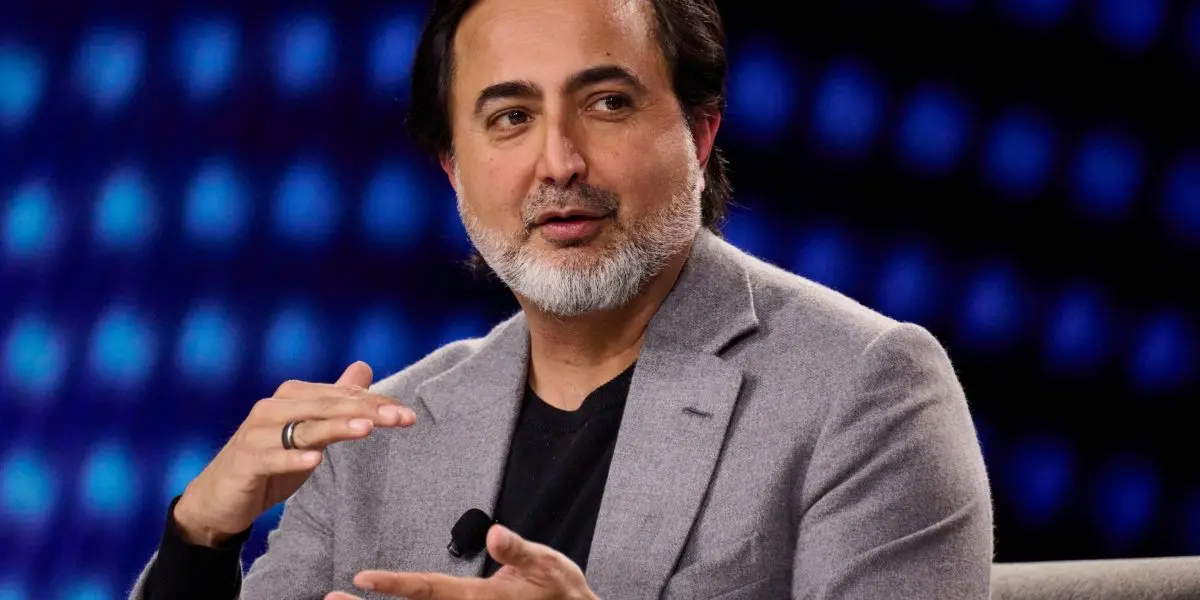
Source: Fortune
AI Helping Organisations Scale Faster With Dramatic Valuation Gains
The speed at which AI is enabling organizational growth has created unprecedented valuation gains across the technology sector. Taneja highlighted that while payments company Stripe took approximately 12 years to reach a $100 billion valuation, Anthropic—a General Catalyst portfolio company—soared from a $60 billion valuation to "a couple hundred billion dollars" within a single year
1
. More specifically, Anthropic raised $13 billion in September, pushing its valuation to $183 billion, up from $61.5 billion in March 2025, while its revenue run rate scaled from $1 billion at the start of 2025 to $5 billion by August3
.Taneja believes we are approaching a new wave of trillion-dollar companies, noting that "that's not a pie-in-the-sky idea with Anthropic, OpenAI, and a couple of others"
1
. Sternfels attributed this explosive growth to large enterprises adopting AI integration at unprecedented rates, with IT spend as a percentage of revenue increasing significantly3
.McKinsey's Real-World Example of AI-Driven Job Displacement
Sternfels provided concrete evidence of how AI agents are reshaping organizational growth and workforce composition. McKinsey plans to have as many personalized AI agents as human employees by the end of 2026
1
. Currently, the firm has 40,000 human employees compared to 25,000 AI agents2
.
Source: TechCrunch
The consulting firm has increased client-facing roles by 25% while simultaneously cutting the same percentage of back-office positions, achieving a 10% overall increase in output
2
. "Our model has always been synonymous that growth only occurs with total head count growth. Now it's actually splitting," Sternfels explained2
. This demonstrates both the potential for AI-driven job displacement in certain roles and the creation of new opportunities in others.Related Stories

Human Skills in an AI-Dominated Future Require Different Approaches
While AI models can handle many technical tasks, the executives emphasized that human skills in an AI-dominated future must focus on judgment and creativity. Sternfels noted these remain essential capabilities that humans must bring to succeed in an AI-infused world
1
. Host Jason Calacanis added that workers will need to "show chutzpah, drive, passion" to stand out in an environment where AI agents can be trained more quickly than human employees1
.Taneja argued that the education system historically focused on training people to solve hard problems, but AI is increasingly taking over that function. "It's about learning how to ask the right questions rather than solving entire worlds of hard problems. That requires a very different mindset, rooted in curiosity," he said
3
. This suggests a fundamental need to overhaul the education system to prepare future workers for AI-integrated workplaces.Investment Strategies Shift as AI Reshapes Industries
The AI transformation is also changing investment strategies across venture capital. In October 2025, General Catalyst acquired Summa Health, an Ohio-based healthcare organization, in what Taneja described as an effort to create platforms where AI can transform traditional industries
3
. Rather than backing startups that disrupt incumbents from outside, the firm aims to acquire underperforming legacy institutions and open them to technology-led transformation.Sternfels described this approach as "creating a new asset class" that differs from traditional private equity by fundamentally transforming incumbent entities
3
. For hiring, he suggested that technical roles should prioritize demonstrable skills, such as contributions on platforms like GitHub, over traditional credentials like university pedigree3
.Research supports concerns about AI's workforce impact. A Stanford University Digital Economy Lab study found early career workers aged 22 to 25 in occupations most at risk experienced a 13% relative decline in employment levels since 2022, when OpenAI released ChatGPT
2
. A Gallup study found 37% of workers reported their workplace had implemented AI2
. However, Amazon Web Services CEO Matt Garman has pushed back, calling the replacement of entry-level workers with AI "one of the dumbest things I've ever heard," arguing that without entry-level workers, organizations have no talent pipeline2
.References
Summarized by

Navi
[1]
Related Stories
AI forces skills reset across workforce as job security shifts from degrees to adaptability
02 Mar 2026•Business and Economy

AI's Impact on Entry-Level Jobs: Challenges and Opportunities for Gen Z
19 Jun 2025•Technology

AI's Impact on Entry-Level Jobs: Challenges and Opportunities for New Graduates
06 Jun 2025•Business and Economy

Recent Highlights
1
Tennessee Teens Sue Elon Musk's xAI Over Grok AI-Generated Child Abuse Images
Policy and Regulation

2
Pentagon designates Palantir Maven AI as core US military system in major defense shift
Technology

3
Supermicro Co-Founder Indicted in $2.5 Billion Nvidia AI Chip Smuggling Scheme to China
Policy and Regulation

Recent Highlights
Today's Top Stories










Your Daily Dose of Curated AI News
Don’t drown in AI news. We cut through the noise - filtering, ranking and summarizing the most important AI news, breakthroughs and research daily. Spend less time searching for the latest in AI and get straight to action.

