Google unveils AppFunctions to let Gemini automate tasks across Android apps


3 Sources
[1]
Google details MCP-like 'AppFunctions' that let Gemini use Android apps
Following the Gemini automation announcement today, Google is detailing how all this works under the hood on Android. Google is "introducing early stage developer capabilities that bridge the gap between your apps and agentic apps and personalized assistants, such as Google Gemini." While we are
[2]
Android 17 could turn Gemini into your personal app butler
New AppFunctions and UI automation previews give a first look at AI that completes tasks for you in the background. Google just gave us a real glimpse of how Android 17 might change the way you use your phone. New developer tools announced Tuesday let AI agents like Gemini dive directly into your
[3]
Google details Android roadmap for AI agents and app automation
Google has outlined its vision for an "intelligent OS," introducing new AI-powered capabilities for Android apps in a blog post by Matthew McCullough, VP of Product Management, Android Development. As users increasingly rely on AI assistants to complete tasks instead of navigating apps manually,
Share
Copy Link
Google introduced AppFunctions and a UI automation framework that enable Gemini to execute tasks directly within Android apps. Starting with Galaxy S26 and Pixel 10 devices, users can ask Gemini to find photos, manage calendars, or order food without manually opening apps. Android 17 will expand these AI agent capabilities to more users and developers.
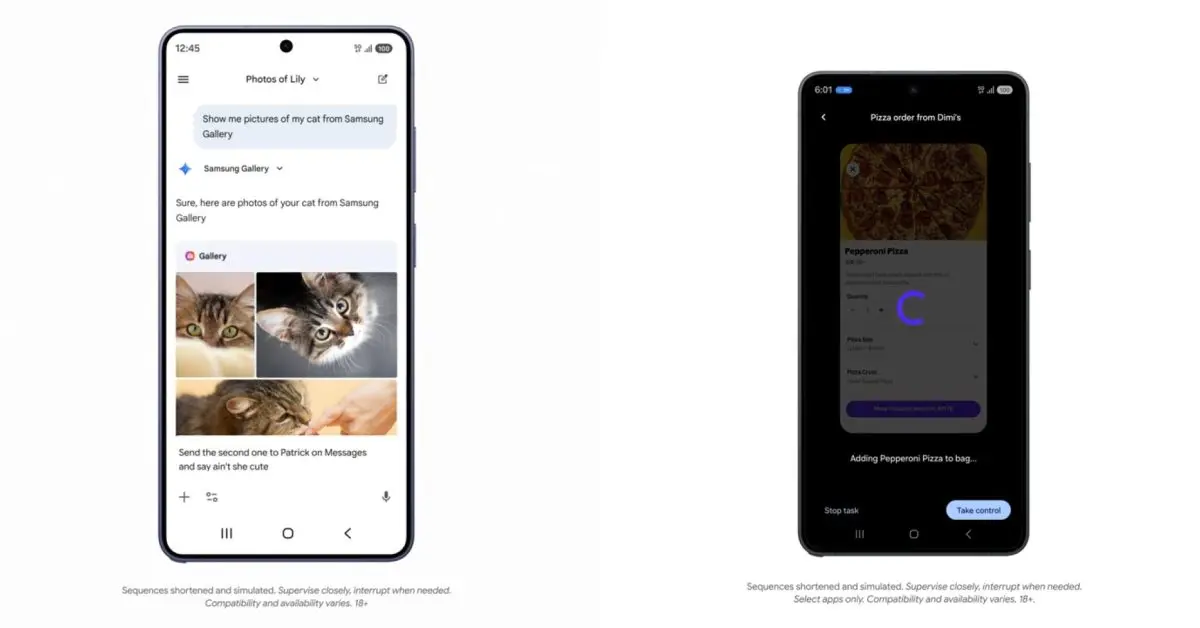
Gemini Gets Direct Access to Android Apps Through New Developer Tools
Google announced new developer capabilities that transform how Gemini interacts with Android apps, moving toward what the company calls an "intelligent OS" model. The update introduces AppFunctions, a framework that lets developers expose specific app features directly to AI agents and AI assistants like Gemini
1
. Google equates AppFunctions to the Model Context Protocol (MCP) used for agents and server-side tools, but these functions execute locally on Android devices rather than remote servers3
.The Samsung Gallery integration on the Samsung Galaxy S26 demonstrates how app automation works in practice. Instead of manually scrolling through albums, users can ask Gemini to "show me pictures of my cat from Samsung Gallery." Gemini processes the request, triggers the relevant function, and displays photos directly within the Gemini app without requiring users to switch applications
1
. This multimodal experience supports both voice and text input, and retrieved content can be used in follow-up actions like sharing images in messages.Two Approaches Power the Agentic Future on Android
Google is building this vision on two tracks. AppFunctions provides a structured framework where developers define self-describing functions using the AppFunctions Jetpack library and related platform APIs
3
. The Gemini app already uses AppFunctions to power integrations with Calendar, Notes, and Tasks across Google apps and OEM defaults1
.For apps without dedicated integrations, Google is developing a UI automation framework that enables AI agents to execute multi-step tasks within installed apps. This system requires zero code from developers, as the platform handles the automation layer
2
. Users can delegate complex tasks by long-pressing the power button on supported devices. The beta initially supports curated apps in food delivery, grocery, and rideshare categories in the United States and South Korea3
.User Privacy and Control Built Into On-Device Execution
Google designed these developer capabilities with user privacy and security as foundational elements. When Gemini runs tasks through UI automation, users can monitor progress via notifications or a live view, and take manual control if something appears incorrect
2
. Sensitive actions like purchases trigger alerts before completion. The on-device execution model means actual work happens locally rather than on remote servers3
. These safeguards aim to maintain user control while automation runs in the background.Related Stories

Android 17 Will Expand AI Agent Reach Across Devices
The Samsung Gallery integration is currently available on the Galaxy S26 lineup and will expand to Samsung devices running OneUI 8.5 and higher
1
. The UI automation preview launches on the Galaxy S26 series and Google Pixel 10 devices as a beta feature within the Gemini app3
. Google plans to broaden these capabilities in Android 17 to reach more users, developers, and device manufacturers1
. The company is currently working with a limited group of app developers to refine integrations before a broader rollout, with further details expected later this year3
. This shift from manually opening apps to telling AI what you need represents a fundamental change in how users interact with their phones.References
Summarized by

Navi
[2]
Related Stories
Google Gemini Set to Revolutionize Android 16 with Advanced In-App Task Automation
22 Nov 2024•Technology

Google's Gemini gains screen automation to control Android apps and perform tasks for you
04 Feb 2026•Technology
Google unveils Gemini Intelligence, transforming Android into an AI-first smartphone platform
12 May 2026•Technology

Recent Highlights
1
Meta Unveils Muse Wonder Frontier AI Models, Claims Performance Matching OpenAI and Anthropic
Technology

2
IMF Report Warns AI Market Correction Could Spark Global Financial Crisis With $1.4T at Risk
Business and Economy

3
OpenAI Releases 722 AI-Generated Math Solutions, Triggering Existential Crisis in Mathematics
Technology

Recent Highlights
Today's Top Stories






Don’t drown in AI news. We cut through the noise - filtering, ranking and summarizing the most important AI news, breakthroughs and research daily. Follow topics that matter to you and stay ahead.


