McKinsey tests graduates on AI tool Lilli as firm deploys 20,000 agents alongside human staff


2 Sources
2 Sources
[1]
McKinsey asks graduates to use AI chatbot in recruitment process
Blue-chip consultancy's boss says firm has an AI 'workforce' of 20,000 agents operating alongside its 40,000 staff McKinsey is asking graduate applicants to "collaborate" with an artificial intelligence tool as part of its recruitment process, as competence with the technology becomes a requirement in competing for top-level jobs. The blue-chip consultancy is incorporating an "AI interview" into some final-round interviews, according to CaseBasix, a US company that helps candidates apply for posts at leading strategic consulting companies. In an online post, CaseBasix said candidates in "select final rounds" in the US have been asked to complete tests using McKinsey's internal AI tool, Lilli. They are required to carry out practical consulting tasks with the help of Lilli. "In the McKinsey AI interview, you are expected to prompt the AI, review its output, and apply judgment to produce a clear and structured response. The focus is on collaboration and reasoning rather than technical AI expertise," CaseBasix said. "In practice, candidates are typically given a business question or scenario similar to real consulting work. Instead of relying only on their own analysis, they use the AI as a support tool to explore information, structure thinking, and refine insights." CaseBasix said candidates are not expected to know advanced techniques for prompting - the term for asking AI to carry tasks or answer queries. However, applicants should show they can use AI as a "productive thinking partner" and communicate their reasoning clearly, in a manner akin to how consultants interact with junior team members. "Based on early reporting and candidate feedback, the McKinsey AI interview appears to assess how candidates think, judge and collaborate with an AI tool rather than their technical AI knowledge," CaseBasix said. The use of Lilli in the interview process for business school graduates was first reported by the Financial Times. McKinsey declined to comment. CaseBasix said the AI interview would take place with two other assessments: problem solving and structured thinking; and personal impact, leadership and values. Microsoft announced in 2024 that McKinsey would be an early adopter of its Copilot Studio project that can handle autonomous AI agents, or virtual employees, which can perform tasks such as handling client queries and identifying sales leads. Other companies taking part as initial users included the law firm Clifford Chance and the retailer Pets at Home. The McKinsey chief executive, Bob Sternfels, told the Harvard Business Review's IdeaCast that the company had a "workforce" of 20,000 agents operating alongside its 40,000 staff. Last year UK recruitment specialists told the Guardian that an affinity and competence with AI was becoming a crucial part of the selection process.
[2]
McKinsey challenges graduates to master AI tools as it shifts hiring hunt toward liberal arts majors | Fortune
A year-and-a-half ago, management consulting firm McKinsey had just 3,000 AI agents in its possession, with its 40,000 employees far outnumbering its agentic fleet. But in just 18 months, that number has grown more than 500% to about 20,000 AI agents supporting the company's work, CEO Bob Sternfels said on Harvard Business Review's Ideacast. Now, the company is evaluating how well job candidates can work with its AI tool as part of the interview process. The consulting firm is asking candidates to use its internal AI tool Lilli in a test during its hiring process, according to consulting interview preparation company CaseBasix, which helps candidates solve McKinsey, BCG, and Bain cases. In a blog post, CaseBasix says it gathered information from internal sources who say some candidates would be asked to work with the company's AI tool as part of a final round AI interview. The Financial Times also reported on McKinsey's focus on business school students using Lilli, citing people familiar with the matter. The move comes as the blue-chip company seeks to further implement AI into its operations, pursuing skills that extend beyond the interpersonal and problem-solving traits usually required of a consultant. Companies like McKinsey are looking for candidates who can be AI-ready on day one as the technology becomes essential to job functions. In his interview with HBR, Sternfels said AI models have developed an expertise in problem-solving, and that the company would be "looking more at liberal arts majors, whom we had deprioritized," for potential sources of creativity as the firm moves to find creative solutions beyond "logical next steps." It's not just McKinsey, other leaders are looking to hire liberal arts graduates like CEO of IT firm Cognizant Technology Solutions Ravi Kumar S, who says he's recruiting candidates with liberal arts degrees. McKinsey hasn't shied away from AI in the hiring process. The company encourages AI use in the application process on its career page, saying that candidates can use the technology to refine résumés and practice interview questions. Though it cautions candidates to use the technology responsibly, saying use of the technology during assessments and for generating interview responses, as well as embellishment, is not permitted. "We welcome those who share our curiosity about AI and its potential," the company's career page says. But the pilot program goes a step further. According to Casebasix, the AI interview may be an additional step in the application process, alongside the case interview and a personal experience interview for candidates in the U.S. and North America. "In the McKinsey AI Interview, you are expected to prompt the AI, review its output, and apply judgment to produce a clear and structured response," the Casebasix post said. The post says that McKinsey is looking to test soft skills essential to working at the consulting firm -- and for working with the company's AI -- including collaboration and reasoning. A McKinsey spokesperson did not immediately respond to Fortune's request for comment. Sternfels predicted the company will adopt AI aggressively within the following months. "In another 18 months I think every employee will be enabled by one or more agents," Sternfels said on HBR's Ideacast. "We'll have a workforce that is human and agentic, and we're going to have to navigate that." That change could dramatically shift the work that McKinsey performs. With AI agents making the company's employees more productive, Sternfels says that the AI adoption could fundamentally change McKinsey's model. "We're migrating away from pure advisory work, away from the fee-for-service model," Sternfels said. "We're moving to more of an outcomes-based model, where we identify a joint business case with our clients, and we underwrite the outcome by tying our fees to the impact our work delivers for them" But the human skills that Sternfels says AI can't replace: creativity, aspiration, and judgment. "There isn't truth in AI models; there isn't judgment," Sternfel said. "Humans need to impose those parameters."
Share
Share
Copy Link
McKinsey is incorporating AI interviews into its graduate recruitment process, requiring candidates to demonstrate collaboration skills with its internal tool Lilli. The blue-chip consultancy now operates 20,000 AI agents alongside 40,000 employees, marking a 500% increase in just 18 months. CEO Bob Sternfels signals the firm is shifting toward liberal arts majors for creativity as AI handles problem-solving tasks.
McKinsey Integrates AI Chatbot in Recruitment Process
McKinsey has begun incorporating tests of AI tool proficiency into its graduate recruitment process, asking final-round candidates to collaborate with Lilli, the firm's internal AI chatbot. According to CaseBasix, a consulting interview preparation company, select candidates in the US are now required to complete an AI interview alongside traditional case interview assessments
1
. The move signals that AI competence in professional roles has become essential for competing at the blue-chip consultancy, where demonstrating collaboration skills with AI is now as critical as traditional problem-solving abilities.
Source: Fortune
In the AI interview, candidates receive business questions or scenarios similar to real consulting tasks and must use Lilli as a support tool to explore information, structure thinking, and refine insights
1
. CaseBasix notes that applicants are expected to prompt the AI, review its output, and apply judgment and reasoning to produce clear, structured responses. The focus remains on collaboration rather than technical AI expertise, with candidates assessed on how they interact with the tool as a "productive thinking partner"1
.Massive Expansion of AI Agents at the Consulting Firm
The AI recruitment strategy reflects McKinsey's aggressive adoption of artificial intelligence across its operations. CEO Bob Sternfels revealed on Harvard Business Review's IdeaCast that the company now operates a "workforce" of 20,000 AI agents alongside its 40,000 human employees
1
2
. This represents a staggering 500% increase from just 3,000 agents 18 months ago2
. Bob Sternfels predicts that within another 18 months, every employee will be enabled by one or more agents, creating a hybrid workforce that is both human and agentic2
.McKinsey became an early adopter of Microsoft's Copilot Studio project in 2024, which enables autonomous AI agents to perform tasks such as handling client queries and identifying sales leads
1
. This partnership with Microsoft has accelerated the firm's workforce transformation, positioning it to fundamentally reshape how consulting work gets delivered.Shift Toward Liberal Arts Majors and Human Skills
As AI models develop expertise in problem-solving, Sternfels indicated the consulting firm would be "looking more at liberal arts majors, whom we had deprioritized" as potential sources of creativity
2
. This shift acknowledges that while AI agents can handle logical analysis, human skills like creativity, aspiration, and judgment remain irreplaceable. "There isn't truth in AI models; there isn't judgment," Sternfels explained. "Humans need to impose those parameters"2
.The emphasis on liberal arts majors represents a notable departure from traditional consulting recruitment patterns, which historically favored business and analytical backgrounds. McKinsey's career page now openly welcomes candidates who share curiosity about AI and its potential, though it cautions against using the technology to generate interview responses or embellish applications
2
.Related Stories


Transformation of McKinsey's Business Model Through an Outcomes-Based Approach
The integration of AI agents is driving McKinsey away from its traditional fee-for-service model toward an outcomes-based approach. "We're migrating away from pure advisory work," Sternfels said, explaining that the firm now identifies joint business cases with clients and underwrites outcomes by tying fees to the impact delivered
2
. This shift suggests that AI tool proficiency enables consultants to deliver measurable results more efficiently, fundamentally altering the economics of consulting work.For candidates navigating this new landscape, the message is clear: demonstrating competence with AI tools like Lilli during the graduate recruitment process has become as essential as mastering the traditional case interview. The ability to collaborate effectively with AI, exercise sound judgment, and bring creative thinking to consulting tasks will define the next generation of consultants at one of the world's most prestigious firms.
References
Summarized by

Navi
[1]
Related Stories
Recent Highlights
1
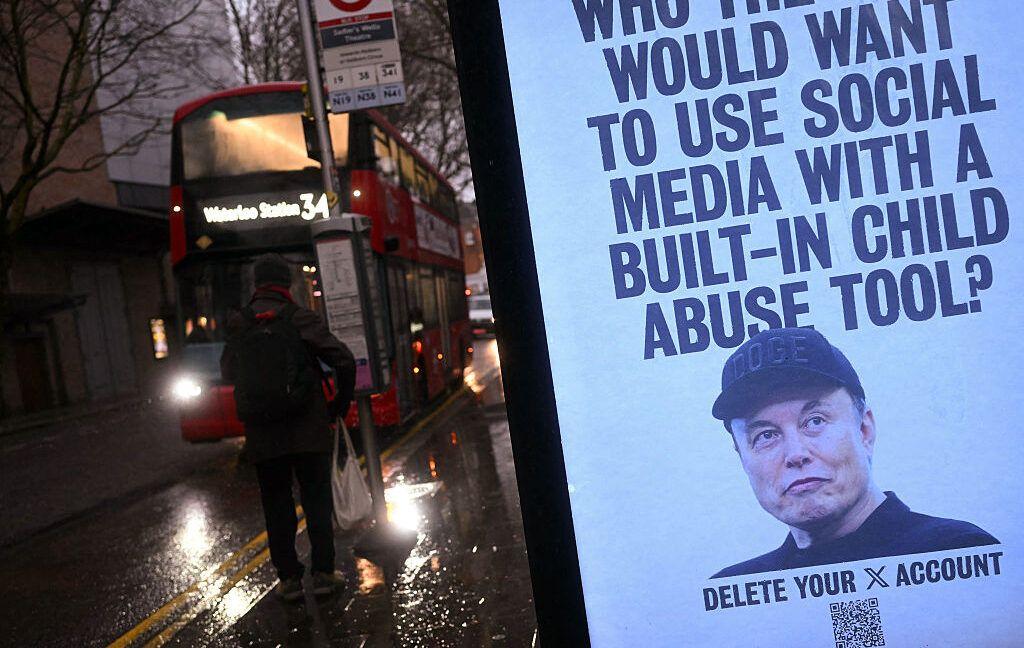
Tennessee Teens Sue Elon Musk's xAI Over Grok AI-Generated Child Abuse Images
Policy and Regulation
2
Supermicro Co-Founder Indicted in $2.5 Billion Nvidia AI Chip Smuggling Scheme to China
Policy and Regulation

3
Val Kilmer to appear posthumously in As Deep as the Grave through AI-generated performance
Entertainment and Society

Recent Highlights
Today's Top Stories



Your Daily Dose of Curated AI News
Don’t drown in AI news. We cut through the noise - filtering, ranking and summarizing the most important AI news, breakthroughs and research daily. Spend less time searching for the latest in AI and get straight to action.

