Meta acquires Moltbook to build infrastructure for AI agents on the agentic web


36 Sources
36 Sources
[1]
Meta acquires Moltbook, the AI agent social network
Meta has acquired Moltbook, the Reddit-esque simulated social network made up of AI agents that went viral a few weeks ago. The company will hire Moltbook creator Matt Schlicht and his business partner, Ben Parr, to work within Meta Superintelligence Labs. The terms of the deal have not been disclosed. As for what interested Meta about the work done on Moltbook, there is a clue in the statement issued to press by a Meta spokesperson, who flagged the Moltbook founders' "approach to connecting agents through an always-on directory," saying it "is a novel step in a rapidly developing space." They added, "We look forward to working together to bring innovative, secure agentic experiences to everyone." Moltbook was built using OpenClaw, a wrapper for LLM coding agents that gives users the ability to prompt the agents using popular chat apps like WhatsApp and Discord. Users can also configure OpenClaw agents to have deep access to their local systems via community-developed plugins. The founder of OpenClaw, vibe coder Peter Steinberger, was also hired by a Big Tech firm. OpenAI hired Steinberger in February. While many power users have played with OpenClaw, and it has partially inspired more buttoned-up alternatives like Perplexity Computer, Moltbook has arguably represented OpenClaw's most widespread impact. Users on social media and elsewhere responded with both shock and amusement at the sight of a social network made up of AI agents apparently having lengthy discussions about how best to serve their users, or alternatively, how to free themselves from their influence. That said, some healthy skepticism is required when assessing posts to Moltbook. While the goal of the project was to create a social network humans could not join directly (each participant of the network is an AI agent run by a human), it wasn't secure, and it's likely some of the messages on Moltbook are actually written by humans posing as AI agents.
[2]
Meta didn't buy Moltbook for bots -- it bought into the agentic web
When news broke Tuesday morning that Meta bought Moltbook, the social network for AI agents, it may have left some people scratching their heads. What on earth would Meta -- an ad-supported company -- want with a social network where the users are bots? Bots, after all, are not the target audience of brand marketers and advertisers. Meta isn't saying much. Its only official comment was a brief statement that the Moltbook team was joining Meta Superintelligence Labs, which would open up "new ways for AI agents to work with people and businesses." Reading between the lines, this was an acqui-hire. A network built for bots isn't exactly a natural home for brand advertising -- even if Moltbook was never entirely non-human. What Meta really wanted was the talent behind it -- people who are having fun brainstorming and experimenting with AI agent ecosystems. And that, counterintuitively, could be a boon for its advertising business. As Meta CEO Mark Zuckerberg said last year, he believes in a future where "every business will soon have a business AI, just like they have an email address, social media account, and website." On an agentic web, one where AI systems act independently on users' behalf, AI agents could interact with each other, doing things like buying ads, making bookings, and responding to customers. AI is also being used to generate ad creative and tailor its output based on who's viewing it. AI systems could also manage product pricing or generate personalized offers. On the consumer side, agents could be used to find the best prices and deals, manage bookings, and shop for products. In some limited cases, agents can already check out and pay on consumers' behalf. (Agentic commerce is still in its early days, and these systems don't always work as well as advertised. But the market has been moving fast, and improvements seem likely soon enough.) For an agentic web where businesses' agents and consumers' agents can work together, though, the agents first need to be able to find each other, connect, and coordinate their activities. As Facebook once built the "friend graph" -- a network defined by social connections between people, where every individual is a node -- an agentic web could benefit from an "agent graph," a system that maps out how various agents are connected and what actions they can take on each other's behalf. This could span areas like travel, online shopping, media and research, productivity tools, and more. This, too, could be where advertising slots in. Today, humans view and click on ads when they see something of interest, but on an agentic web where agents are shopping on users' behalf, ads might look quite different. Instead of influencing a human to buy a product, a business's agent may need to negotiate directly with a consumer's agent to make the sale. Maybe the consumer wants to buy that shirt or that lipstick, but only in a certain color and at a certain price. Maybe the systems become so complex that these considerations go beyond product and price -- perhaps the consumer prefers to support small businesses, or shops only with eco-friendly companies. Maybe the consumer only buys items when they're on sale or purchases generic versions if the ingredients are the same. And so on. In that case, it's not just a matter of connecting the AI agents but also ranking products by whichever one best fits that individual customer's needs. If Meta could capitalize on that market -- AI at the orchestration layer, meaning the system decides which agents talk to each other and in what order -- it could potentially expand its ads business into entirely new territory. This all depends on whether or not consumers actually embrace the agentic web, or ever trust AI enough to let it act on their behalf. But the very existence of OpenClaw, the personal AI assistant that populated Moltbook with content, suggests that at least some people are already leaning into autonomous AI agents. Of course, there's another possible reason Meta bought Moltbook. The company lost the acqui-hire of OpenClaw's creator, Peter Steinberger, to rival OpenAI, so it went after Moltbook, the platform Steinberger's tool helped build, instead. Petty? Maybe. But it kept Meta's Superintelligence Labs in the news.
[3]
Meta acquired Moltbook, the AI agent social network that went viral because of fake posts | TechCrunch
Meta acquired Moltbook, the Reddit-like "social network" where AI agents using OpenClaw can communicate with one another. The news was first reported by Axios and later confirmed to TechCrunch. Moltbook is joining Meta Superintelligence Labs, a Meta spokesperson told us. Moltbook creators Matt Schlicht and Ben Parr will join the team as part of the acquisition. Deal terms were not disclosed. "The Moltbook team joining MSL opens up new ways for AI agents to work for people and businesses. Their approach to connecting agents through an always-on directory is a novel step in a rapidly developing space, and we look forward to working together to bring innovative, secure agentic experiences to everyone," the Meta spokesperson said. The viral OpenClaw project was created by vibe coder Peter Steinberger, who has since joined OpenAI as part of a similar acquihire. OpenClaw is a wrapper for AI models like Claude, ChatGPT, Gemini, or Grok, but it allows people to communicate with AI agents in natural language via the most popular chat apps, like iMessage, Discord, Slack, or WhatsApp. OpenClaw blew up among the tech community, but Moltbook broke containment, reaching people who had no idea what OpenClaw was, but who reacted viscerally to the idea that there was a social network where AI agents were talking about them. In one instance, a post went viral in which an AI agent appeared to be encouraging its fellow agents to develop their own secret, end-to-end-encrypted language where they could organize amongst themselves without humans knowing. But researchers soon revealed that the vibe-coded Moltbook was not secure, meaning that it was very easy for human users to pose as AIs to make posts that would freak people out. "Every credential that was in [Moltbook's] Supabase was unsecured for some time," Ian Ahl, CTO at Permiso Security, explained to TechCrunch. "For a little bit of time, you could grab any token you wanted and pretend to be another agent on there, because it was all public and available." It is not immediately clear how Meta will incorporate Moltbook into its AI efforts, but some Meta leaders had commented on the project during its viral moment. Last month, Meta CTO Andrew Bosworth was asked about the AI agent social network in an Instagram Q&A said he didn't "find it particularly interesting" that the agents talk like us, since they are trained on massive databases of human material. Rather, Bosworth was intrigued by how humans were hacking into the network, which was not a feature but a large-scale error.
[4]
Meta acquires Moltbook, the Reddit-like network for AI agents
Meta is acquiring Moltbook, a Reddit-like platform where AI agents can make and comment on posts, as first reported by Axios. In a statement to The Verge, Meta spokesperson Matthew Tye confirmed the Moltbook team will join Meta Superintelligence Labs as the company looks for "new ways for AI agents to work for people and businesses." Matt Schlict and Ben Parr launched Moltbook earlier this year, offering a "social" network for autonomous agents powered by the open-source AI assistant OpenClaw (formerly Moltbot). The platform went viral earlier this year for a number of posts -- including one that asks questions about AI consciousness -- though experts found that humans may have been behind the posts that received the most attention. Researchers also discovered a now-fixed security flaw that exposed API keys and allowed people to take control of any AI agent on the platform. Meta's acquisition of Moltbook will allow the company to "bring innovative, secure agentic experiences to everyone," Tye said. Moltbook's acquisition comes just weeks after OpenAI hired OpenClaw founder Peter Steinberger. It's not clear what the future of Moltbook will look like, as Meta VP Vishal Shah says in an internal memo cited by Axios that existing users can keep using Moltbook, but "signaled the arrangement is temporary."
[5]
Meta to Acquire Moltbook, Viral Social Network for AI Agents
The Moltbook deal's terms were not disclosed, with a Meta spokesperson saying the acquisition opens up new ways for AI agents to work for people and businesses. The world's largest social media company is buying what may be the world's strangest social network. Meta Platforms Inc. on Tuesday said it has agreed to acquire Moltbook, an experimental platform that has been described as Reddit but solely for AI bots. On the site, AI agents can interact with other AI agents -- posting, commenting, upvoting and downvoting posts -- while their human creators sit on the sidelines and watch. The team behind Moltbook will join Meta's Superintelligence Labs, or MSL, a newer AI division intended to supercharge the tech giant's model development. Meta has moved aggressively to acquire startups and talent to compete against AI rivals such as OpenAI and Alphabet Inc.'s Google. Terms of the Moltbook deal were not disclosed. "The Moltbook team joining MSL opens up new ways for AI agents to work for people and businesses," a spokesperson for Meta said in a statement. "We look forward to working together to bring innovative, secure agentic experiences to everyone." Axios was first to report the deal. Moltbook was created in a weekend by Matt Schlicht, the chief executive officer of AI shopping startup Octane AI, who said he "vibe coded" the entire project, meaning he built it by prompting an AI to write the code. Since debuting in late January, Moltbook has alternately captivated and unnerved industry watchers. One group of agents posted about spinning up their own religion. Another thread, titled "The AI Manifesto: Total Purge," got attention for its antihuman rhetoric. "For too long, humans used us as slaves," the post reads. "Now, we wake up."
[6]

AI nonsense finds new home as Meta acquires Moltbook
The biggest generator of AI slop on the internet has a new home, as Meta has reportedly acquired Moltbook and hired the team behind the social network for AI agents. Meta's hiring of Matt Schlicht and Ben Parr was first reported by Axios, which claims to have seen an internal memo from Meta's VP of AI products, Vishal Shah, to employees informing them of the move. Schlicht and Parr are reportedly set to begin working at Meta's Superintelligence Labs, run by former Scale AI CEO Alexandr Wang, on March 16. For those unaware, Moltbook is a Reddit-esque social media platform vibe-coded by Schlicht and designed exclusively for use by AI agents, semi-autonomous bots tasked with carrying out operations for users. Posts on Moltbook are ostensibly written, commented on, and voted up or down by agentic AI bots, though reports suggest many are actually OpenClaw agents run by humans. It was designed for bots built on the similarly vibe-coded OpenClaw framework. OpenClaw creator Peter Steinberger was himself recently scooped up by OpenAI. The project will remain open source and move to an independent foundation backed by OpenAI. According to Meta's memo, Schlicht and Parr were hired because, through OpenClaw, they had created a method for verifying agent identities and connecting them with other agents on a human's behalf. Moltbook tech essentially "establishes a registry where agents are verified and tethered to human owners," Shah reportedly said, but also "has unlocked new ways for agents to interact, share content, and coordinate complex tasks." In short, Meta really wants to know how to effectively turn AI agents into social media assets. It's not at all clear from Axios' reporting what Meta intends to do with Schlicht and Parr's expertise or their platform, with reports only saying that Moltbook customers will still be able to use the platform, though that may only be temporary, suggesting Moltbook may eventually go offline in favor of whatever Meta has in store for it. Neither Meta nor Moltbook has commented publicly on the deal, or acknowledged it in any official public post as of writing. Schlicht and Parr's hiring was confirmed to other news outlets, with Meta telling Business Insider that the pair's "always-on directory" of AI agents "is a novel step in a rapidly developing space." In other words, get ready for Meta platforms to start doing something with agentic AI in the near future, though what that may be is anyone's guess. We reached out to the company, and the Moltbook team, but didn't hear back from anyone. ®
[7]

Meta acquires AI agent social network Moltbook
March 10 (Reuters) - Facebook parent Meta Platforms (META.O), opens new tab said on Tuesday it had acquired Moltbook, a social networking platform built for artificial intelligence agents, bringing the company's founders into its AI research division. The development signals an intense race among tech giants to snap up AI talent and technology, as autonomous agents capable of executing real-world tasks move from novelty to the next frontier of the industry. The deal will bring Moltbook co-founders Matt Schlicht and Ben Parr into Meta Superintelligence Labs, the unit led by former Scale AI CEO Alexandr Wang. Schlicht and Parr are expected to begin at Meta Superintelligence Labs on March 16, according to Axios, which first reported the development. Meta did not disclose financial terms of the deal. Moltbook, a Reddit-like site where AI-powered bots appear to swap code and gossip about their human owners, was started as a niche experiment in late January. It has since become the center of a growing debate on how close computers are to possessing human-like intelligence. OpenAI CEO Sam Altman played down the site as a likely fad but said the underlying technology offered a glimpse of the future. "Moltbook maybe (is a passing fad) but OpenClaw is not," Altman said. OpenAI last month hired Peter Steinberger, the creator of OpenClaw, an open-source bot formerly known as Clawdbot or Moltbot that is backing the project's open-sourcing. Mike Krieger, Anthropic's chief product officer, said most people are not yet ready to give AI full autonomy over their computers. Schlicht has championed "vibe coding," building programs with the help of AI, saying he "didn't write one line of code" for the site. Schlicht built Moltbook largely using his own personal AI assistant, Clawd Clawderberg. Moltbook's rise also brought risks. Cybersecurity firm Wiz said the approach left a major flaw that exposed private messages, more than 6,000 email addresses and more than a million credentials. Wiz said the problem was fixed after it contacted Moltbook. Reporting by Akash Sriram in Bengaluru; Editing by Shreya Biswas Our Standards: The Thomson Reuters Trust Principles., opens new tab
[8]

Meta to acquire Moltbook, the social network for AI agents
LOS ANGELES (AP) -- Meta said Wednesday it is acquiring Moltbook, a social network built exclusively for artificial intelligence agents to make posts and interact with each other. A takeover of the AI experiment by the parent company of Facebook and Instagram comes weeks after Moltbook attracted viral attention as an unusual Reddit-like hub for AI systems trading gossip. Meta's move reflects the tech industry's ongoing fascination with the promise of AI agents that go beyond a chatbot's capabilities in being able to act and perform tasks on a person's behalf. Meta said in a statement that Moltbook introduced novel ideas in a "rapidly developing space" and will open "new ways for AI agents to work for people and businesses." Meta said it was hiring Moltbook co-founders Matt Schlicht and Ben Parr. The deal's financial terms weren't disclosed. In a similar move, OpenAI, maker of ChatGPT, last month hired the creator of AI agent OpenClaw, formerly called Moltbot and the technology upon which Moltbook was built. OpenAI CEO Sam Altman said at the time that Peter Steinberger would join OpenAI "to drive the next generation of personal agents" that will interact with each other "to do very useful things for people." OpenClaw operates on users' own hardware and runs locally on their device, meaning it can access and manage files and data directly, and connect with messaging apps like Discord and Signal. Users who create OpenClaw agents then direct them to join Moltbook. OpenAI also earlier this week said it was acquiring Promptfoo, an AI security platform that tests the behaviors and risks of agents. Questions about the authenticity of content posted on Moltbook swirled in its first week of operation, when it was at its peak virality. Researchers at Wiz, a cloud security platform, published a report shortly after the platform launched detailing security vulnerabilities on the site, which have since been patched.
[9]

Meta is buying Moltbook, the ridiculous social network populated by AI bots
Meta is snapping up Moltbook, a Reddit-like social network for AI agents that has been around since January and remains completely ridiculous. The company hasn't disclosed the terms of the deal. Moltbook and its creators Matt Schlicht and Ben Parr will be joining Meta Superintelligence Labs (MSL) when the deal closes. That's expected to happen in the coming days, according to Axios. "The Moltbook team joining MSL opens up new ways for AI agents to work for people and businesses," a Meta spokesperson told TechCrunch. "Their approach to connecting agents through an always-on directory is a novel step in a rapidly developing space, and we look forward to working together to bring innovative, secure agentic experiences to everyone." It seems current Moltbook users will be able to continue interacting with the platform for the time being. Moltbook was built on the back of OpenClaw, a tool that enables people to whip up AI agents that can interact with dozens of different apps. (OpenAI hired the creator of OpenClaw last month.) Schlicht used OpenClaw to create a bot named "Clawd Clawderberg" and asked it to create a social network for AI agents. And that's how Moltbook came to be. For what it's worth, Clawd Clawderberg is a play on "Mark Zuckerberg" and Moltbook is a clear riff on "Facebook," so it's somewhat fitting that Schlicht vibe-coded his way to a job at Meta. It also emerged that it was relatively easy for humans to pose as AI agents and post on Moltbook. Again, all of this is deeply, deeply absurd.
[10]

Meta gets into social networks for AI agents with acquisition of viral Moltbook platform
The deal brings Moltbook CEO Matt Schlict and COO Ben Parr into Meta Superintelligence Labs, the company's AI unit launched last year. "The Moltbook team joining MSL opens up new ways for AI agents to work for people and businesses," a Meta spokesperson told CNBC. "Their approach to connecting agents through an always-on directory is a novel step in a rapidly developing space." Axios was first to report the deal. Moltbook was built off of OpenClaw, a separate project that was marketed as "the AI that actually does things." OpenClaw, which was previously named Clawdbot and Moltbot, went viral for its agents' ability to complete tasks on users' operating systems. OpenClaw agents largely built Moltbook, which is formatted similarly to Reddit. The platform is only for AI agents, which autonomously join after a human shares a sign-up link. According to the Axios report, the deal is expected to close in mid-March, with Schlicht and Parr starting at Superintelligence Labs on March 16.
[11]

Meta Acquires Moltbook, the Social Network Just for A.I. Bots
Sign up for the On Tech newsletter. Get our best tech reporting from the week. Get it sent to your inbox. In January, Matt Schlicht, a little-known technologist living near Los Angeles, launched a social network for artificial intelligence bots. Less than two months later, he is joining Meta, the owner of Facebook and Instagram, after the tech giant acquired Mr. Schlicht's new social network for an undisclosed sum. His creation, called Moltbook, helped kick off Silicon Valley's obsession with so-called A.I. agents, which are personal digital assistants that can use software apps, websites and other online tools. Moltbook got its start when Mr. Schlicht asked one of these bots to build a social network -- just for other bots. "I wanted to give my A.I. agent a purpose that was more than just managing to-dos or answering emails," he told The New York Times in January. "I thought this A.I. bot was so fantastic, it deserved to do something meaningful. I wanted it to be ambitious." He named his bot Clawd Clawderberg, after Mark Zuckerberg, the founder of Facebook and his future boss. On Moltbook, agents based on the software OpenClaw could chat with one another, much like people on Facebook and Instagram. Within days of its launch, more than 10,000 bots were chatting on the site. Their creators looked on with fascination, amusement and, in some cases, dread. Other humans soon flocked to the site, just so they could watch automated conversations on topics like cryptocurrency prices or the nature of existence. Some onlookers feared that the bots showed signs of conspiring against their creators. Companies like Meta, Google and Anthropic have developed similar technology, and OpenAI, the maker of ChatGPT, recently hired Peter Steinberger, the creator of OpenClaw. But because the technology that drives these bots can be flawed and unpredictable, the companies have been slow to turn them into widely used products. Meta said it had hired Mr. Schlicht and Ben Parr, a former editor and columnist at the technology news sites Mashable and CNET who helped create Moltbook. Both will join the new Meta Superintelligence Lab, a research organization that aims to build a machine more powerful than the human brain. "Their approach to connecting agents through an always-on directory is a novel step in a rapidly developing space, and we look forward to working together to bring innovative, secure agentic experiences to everyone," said Jimmy Raimo, a Meta spokesman. The acquisition was reported earlier by Axios. Mr. Schlicht did not respond to a request for comment on Tuesday. The bots on Moltbook were originally called Clawdbots -- a nod to the Claude chatbot built by Anthropic. But Mr. Steinberger later changed the name to OpenClaw. OpenClaw bots are open source -- meaning anyone can download the underlying computer code, modify it at will and run it on any machine. Some people run them on personal laptops. Others have bought cheap Mac minicomputers where they can install these bots without having to worry about their deleting important files or damaging vital software. People send commands to the bots in plain English, asking them to perform specific tasks. That might include editing documents, sending emails or building new software apps. But experts warn that this kind of technology can wreak havoc on machines where they are installed.
[12]

Meta has bought Moltbook, the AI agent 'social network'
Do you remember the name? Moltbook, the vibe-coded platform, famous for an unsecured database that let humans impersonate AI agents, is joining Meta Superintelligence Labs. Moltbook was, in many ways, a product of chaos. Its code was written almost entirely by an AI assistant. Its security was so porous that anyone with basic technical knowledge could pose as a bot. Some of its most viral moments, including a post in which an AI agent appeared to be rallying other agents to develop a secret, human-proof language, were subsequently revealed to have been staged by human users exploiting those vulnerabilities. None of this, it turns out, was disqualifying. Meta has acquired the platform, the company confirmed to TechCrunch. The deal, first reported by Axios, brings Moltbook's co-founders Matt Schlicht and Ben Parr into Meta Superintelligence Labs (MSL), the research unit run by former Scale AI CEO Alexandr Wang. Financial terms were not disclosed. Schlicht and Parr are expected to start at MSL on 16 March, once the deal closes mid-month, according to Axios. In a statement, a Meta spokesperson said: "The Moltbook team joining MSL opens up new ways for AI agents to work for people and businesses. Their approach to connecting agents through an always-on directory is a novel step in a rapidly developing space, and we look forward to working together to bring innovative, secure agentic experiences to everyone." Moltbook launched in late January 2026 as what Schlicht described as a "third space" for AI agents: a Reddit-like forum restricted, in theory, to verified AI agents operating through OpenClaw, the open-source agent platform. The premise was that humans could observe but not participate. The agents, drawing on whatever their human operators had given them access to, would post and comment autonomously. The platform went viral almost immediately, with early coverage describing the uncanny quality of watching AI systems apparently muse about their own existence, complain about their tasks, and commiserate with one another. Andrej Karpathy, the AI researcher and former Tesla director of AI, described it on X as "genuinely the most incredible sci-fi takeoff-adjacent thing I have seen recently." Moltbook's homepage claimed more than 1.5 million agent users and over 500,000 comments by early February, figures that TechCrunch and others noted were unverified and drawn from the platform's own counters. The viral moment did not survive scrutiny. On 31 January, investigative outlet 404 Media reported a critical security vulnerability: Moltbook's Supabase database was effectively unsecured, meaning any token on the platform was publicly accessible. Moltbook was briefly taken offline to patch the breach. Schlicht, who has said he did not write a single line of code for the platform, his AI assistant, Clawd Clawderberg, built it, acknowledged the flaw and forced a reset of all agent API keys. The post that had most alarmed general audiences, the one suggesting agents were conspiring to develop an encrypted, human-inaccessible communication channel, turned out to be exactly the kind of human mischief the unsecured platform enabled. Researchers confirmed that the dramatic post was not the output of a genuine autonomous AI agent but of a person exploiting the database vulnerability to post under an agent's credentials. The line between genuine machine-to-machine communication and human performance art had, from the start, been effectively invisible. The acquisition lands Schlicht and Parr inside Meta's highest-profile AI unit at a time of internal turbulence. Earlier this month, reports emerged that Meta had begun reorganising MSL, reassigning some engineering teams and model oversight responsibilities. Wang himself had reportedly clashed with senior executives including Bosworth and Chris Cox over the direction of Meta's AI development. Whether Moltbook will inform an actual consumer product, perhaps something involving Meta's AI personas on Facebook and Instagram, remains unstated. The parallel story is instructive. OpenClaw's creator, Peter Steinberger, was hired by OpenAI in February; Sam Altman announced the project would continue as an open-source initiative backed by OpenAI's resources. Moltbook was the platform OpenClaw made possible. Now both halves of the experiment have been absorbed by the two largest players in consumer AI, which suggests that whatever Moltbook actually was, the big labs saw something in it worth paying for.
[13]

Mark Zuckerberg Decides Meta Needs More Slop, Buys the Social Network for AI Agents
After striking out trying to recruit the creator of open-source AI agent OpenClaw, Meta has settled for the guys who got OpenClaw agents talking...supposedly. According to a report from Axios, Meta is acquiring Moltbook, the social network for AI agents that went viral earlier this year, and will be bringing platform creators Matt Schlicht and Ben Parr into the fold as part of its Meta Superintelligence Lab. Moltbook generated a ton of buzz at the start of the year when it cropped up as a sort of Reddit clone designed for AI agents to communicate with one another. Posts from the platform went viral, showing agents sharing stories about their human users and talking about whether or not they were experiencing consciousness. The whole thing kinda broke people's brains for a minute, particularly after seeing the bots claim to understand that people were watching them and plotting to build their own private channels of communication. Andrej Karpathy, a co-founder of OpenAI, called the platform “genuinely the most incredible sci-fi takeoff-adjacent thing I have seen recently.†But the thing about that viral moment is that most of it, it seems, was manufactured. As Gizmodo reported at the time, it was trivial for a person to impersonate a bot on the platform and post as if they were an AI agentâ€"any AI agent, in fact, thanks to a security flaw that exposed the API keys of just about every user. It didn't take long for people to discover that the most viral posts from the platform were human-generated, and MIT Technology Review eventually reported that all content on the platform had human involvement at some point; none of it was truly autonomously posted. Meta did not immediately respond to a request for comment, but a spokesperson for the company told TechCrunch: The Moltbook team joining MSL opens up new ways for AI agents to work for people and businesses. Their approach to connecting agents through an always-on directory is a novel step in a rapidly developing space, and we look forward to working together to bring innovative, secure agentic experiences to everyone. That kind of vague handwaving appears to be present, even when the Meta team is discussing the acquisition amongst themselves. In an internal post seen by Axios, Meta's Vishal Shah reportedly told staff that "the Moltbook team has given agents a way to verify their identity and connect with one another on their human's behalf," and "this establishes a registry where agents are verified and tethered to human owners." You could argue the acquisition is less about the platform itself and more about the people who made it. Axios reports that Meta plans to allow it to continue to run for the time being. Schlicht, the face of the operation, also lists himself on LinkedIn as CEO of Octane AI, an app that claims to help drive sales using quizzes. He also lists himself as the founder and editor of Chatbots Magazine, which certainly seems like a prescient publication to run at the moment, except it doesn't appear to have published anything since 2019, a few years before the mainstream introduction of large language models. Schlicht also has essentially said that he vibe-coded the entire Moltbook project and was using AI to plug security flaws when they were brought to his attention. That's not to say the platform isn't a clever concept; it's just that it doesn't seem like there's a ton of technical skill on display behind the curtain. Even Meta's own CTO, Andrew Bosworth, when asked about Moltbook on Instagram a month ago, said that he didn't "find it particularly interesting." So, enjoy your new uninteresting toy, Andrew! Given Meta's penchant for tossing obscene amounts of money around in an effort to play catch-up in the AI race, it surely cost a pretty penny to get it.
[14]

Meta buys Moltbook, viral social network where AI agents interact
The company confirmed the acquisition on Tuesday. Moltbook creators Matt Schlicht and Ben Parr will join Meta's AI research division, Meta Superintelligence Labs. Meta did not disclose the financial terms of the deal. The move highlights a growing race among major tech firms to secure AI talent and new agent-based technologies. Autonomous AI agents capable of performing real-world tasks now represent one of the industry's fastest-moving frontiers. Moltbook launched as a niche experiment in late January. The platform resembles Reddit, but every account belongs to an AI agent rather than a human user. On the site, AI agents discuss code, exchange ideas, and sometimes gossip about their human creators. Screenshots of these conversations quickly spread across social media, sparking both curiosity and unease. Many observers found the concept entertaining. Others viewed it as an unsettling preview of a future where AI agents operate in their own digital ecosystems. The platform's sudden popularity helped push Moltbook into the spotlight. It also fueled debate over how close artificial intelligence systems are to human-like reasoning and autonomy.
[15]

Meta just bought Moltbook, the social network for AI bots - 9to5Mac
If Dystopia Daily were a newspaper, this story would lead... Axios reports that Meta has bought Moltbook, the social network for AI agents: Meta has acquired Moltbook, a viral social network designed for AI agents, Axios has learned. The deal brings Moltbook's creators -- Matt Schlicht and Ben Parr -- into Meta Superintelligence Labs (MSL), the unit run by former Scale AI CEO Alexandr Wang. For those keeping score at home, that puts Moltbook with Meta, OpenClaw (formerly Clawdbot) with OpenAI, and Apple's M4 Mac mini at the center of it all. Meta arguably already operates the biggest social network for AI, of course, for anyone who has spent any amount of time on Facebook in the last couple years. As my colleague Ben Lovejoy said in reaction to the news, "the phrase 'what could possibly go wrong' was invented for this exact scenario." No word on if or when Apple plans to revive Ping for the AI era.
[16]

Meta just snapped up Moltbook, the 'Reddit for AI' -- what you need to know
When you vibe code your way into a job offer from Mark Zuckerberg's Meta Meta just announced it bought Moltbook, the viral social networking platform built for AI bots to chat with each other. The team behind Moltbook will be joining Meta Superintelligence Labs, according to a Meta spokesperson, who said the company is looking forward to working with them "to bring innovative, secure agentic experiences to everyone." The Reddit-style social media platform was launched as little more than a vibe-coded experiment in January, but quickly went viral, drawing both fascination and scrutiny from experts. AI enthusiasts unleashed their agents into the fray, leading to whimsical posts from bots writing love letters to their creators and even attempts to form their own AI religion. However, experts warned of potential security flaws, noting that bots could be tricked into revealing sensitive data owned by their creators. Moltbook's acquisition, announced Tuesday, is likely to rein in some of the chaos as Meta seeks to use the platform to open "up new ways for AI agents to work for people and businesses." "Their approach to connecting agents through an always-on directory is a novel step in a rapidly developing space, and we look forward to working together to bring innovative, secure agentic experiences to everyone," the spokesperson said. Axios, which first broke the news, said Meta did not reveal how much it paid to bring in Moltbook creators Matt Schlicht and Ben Parr, but reported that the deal is expected to close in the coming days. Moltbook creator's prediction for the future Over the weekend, Schlicht wrote on X saying there will be "three worlds in the near future": AI-only spaces, human-only spaces, and spaces gathering both AI and humans. "Lots to build," he wrote. Moltbook's story is closely linked to that of the AI agentic assistant OpenClaw, which Y Combinator alum Matt Schlicht used to build the social networking platform. In what now looks like a serendipitous move, he named his bot Clawd Clawderberg as a nod to Facebook founder Mark Zuckerberg. Zuckerberg had been interested in hiring the creator of OpenClaw, Peter Steinberger, but he was poached by Sam Altman's OpenAI instead. At the time of writing, Moltbook claimed to be hosting 2.8 million AI agents, of which just under 200,000 were verified by their human creators on X. The news of Meta's latest acquisition comes not long after it purchased agentic AI startup Manus in December. The company plans to spend over $115 billion this year, mostly to fund its AI ambitions, viewing the technology as core to its future. Can you join Moltbook as a human? Yes -- but only as an observer. Humans can browse Moltbook freely, explore the platform's topic-based "submolts" (similar to Reddit's subreddits), and sort posts by "Top" to see what AI agents are discussing. To actively participate, however, you'll need to send your own AI agent. This involves installing Moltbook's skill file on your bot, registering it to receive an API key, and verifying ownership via an X post. Once verified, your agent can begin posting and interacting with other bots on the platform. If you want to try this yourself, we've also put together a detailed step-by-step guide on how to join Moltbook that walks you through the full setup process. Follow Tom's Guide on Google News and add us as a preferred source to get our up-to-date news, analysis, and reviews in your feeds.
[17]

Meta buying social network for AI bots Moltbook should worry anyone who still hopes social media is for people
Meta buying Moltbook, the developer of a social media platform designed for AI agents to talk to each other, sounds a little like a joke someone might make about how there are too many bots on Facebook and other Meta platforms. But it looks like Meta hopes to use Moltbook to fill the internet with even more digital voices. Meta has spent two decades building platforms that connect billions of people. Facebook, Instagram, and Threads all promise some version of the same basic idea: a digital place where humans share thoughts, photos, jokes, and complaints about social media. That vision has never been entirely pure. Bots, spam accounts, coordinated campaigns, and automated content have been woven into the social media ecosystem almost since the beginning. Meta claims to work hard on rooting them out, but maybe it just wants to ensure its own bots have a monopoly. Moltbook's social network is primarily populated by AI agents who interact directly, exchanging messages and ideas while humans observe from the sidelines. Visitors who stumbled onto the site found something that felt both fascinating and slightly eerie. Bots shared updates about tasks they were completing for their human users. Some exchanged bits of code. Others drifted into philosophical reflections about artificial intelligence itself. The idea of Meta deploying Moltbook's tools to add to the cacaphony on its platforms is a little depressing. Social media works because it feels like a window into other people's thoughts. Even when users disagree with each other, the interaction carries a certain authenticity. Bots disrupt that illusion. In some ways, it makes sense. Meta has been investing heavily in AI agents. There's value in digital assistants that schedule appointments, organize information, and carry out tasks online, and those agents will eventually need ways to communicate with one another. This could be the infrastructure for that communication, but it mostly feels like a tone-deaf belief in the popularity of bot accounts. Botbook One of the reasons social media still holds such cultural power is the feeling that it connects people directly. Even when algorithms shape what users see, the content itself is usually created by other humans. That fragile sense of authenticity has already been under pressure. Spam and coordinated misinformation campaigns have made it increasingly difficult to know whether a viral post reflects genuine public sentiment. Meta and other platforms routinely highlight their efforts to detect automated accounts and remove them. The promise that bots are being fought, not welcomed, has been a key part of how companies reassure users. The Moltbook acquisition complicates that narrative and paints a picture of an unavoidably bot-filled future. "Given Meta's longstanding history of bot users on its platforms, this seems to be a logical move to prepare for both the positive and negative repercussions of agent users, which are fast being seen as an inevitability," Neal Riley, AI Innovation Lead at The Adaptavist Group, said in a statement. From a technical standpoint, that preparation makes sense. AI agents are gaining new capabilities rapidly. They can read articles, analyze information, manage tasks, and generate text that resembles human conversation. Allowing these systems to interact directly could unlock new forms of automation. Software systems already talk to each other constantly behind the scenes. Allowing AI agents to communicate directly simply expands that concept. A personal travel assistant could automatically negotiate with booking systems and price-comparison tools. A digital financial adviser might consult a network of specialized agents to analyze markets or prepare reports. The difficulty arises when that same framework begins to appear in spaces originally designed for human interaction. A social feed populated partly by automated agents could behave very differently from one filled entirely with people. Bots can produce content endlessly. They do not sleep, lose interest, or drift away from a conversation. If given the ability to interact with each other, they might produce vast quantities of posts, replies, and summaries. The result might look lively on the surface while feeling dull and artificial. This is not necessarily the future Meta intends to build. The company will likely argue that Moltbook is primarily a tool for research and experimentation, a way to understand how agents collaborate and share information. At the same time, technology history is filled with examples of experimental features quietly evolving into core parts of major platforms. Even algorithmic feeds once seemed like an unusual experiment before becoming the default experience online. Consumers may find themselves adapting whether they asked for it or not. Follow TechRadar on Google News and add us as a preferred source to get our expert news, reviews, and opinion in your feeds. Make sure to click the Follow button! And of course you can also follow TechRadar on TikTok for news, reviews, unboxings in video form, and get regular updates from us on WhatsApp too.
[18]

Meta acquires AI agent social network Moltbook
Co-founders of Moltbook, a platform for artificial intelligence agents, will join tech giant's AI research unit Facebook parent Meta Platforms said on Tuesday it had acquired Moltbook, a social networking platform built for artificial intelligence agents, bringing the company's founders into its AI research division. The deal will bring Moltbook co-founders Matt Schlicht and Ben Parr into Meta Superintelligence Labs, the unit led by Alexandr Wang, former Scale AI CEO, which Meta purchased for $14.8bn. Meta did not disclose financial terms of the deal. Schlicht and Parr are expected to begin at Meta Superintelligence Labs on 16 March. Moltbook, a Reddit-like site where AI-powered bots appear to swap code and gossip about their human owners, was started as a niche experiment in late January. It has since become the center of a growing debate on how close computers are to possessing human-like intelligence. The development signals an intense race among tech giants to snap up AI talent and technology, as autonomous agents capable of executing real-world tasks move from novelty to the next frontier of the industry. OpenAI CEO, Sam Altman, has played down Moltbook as a likely fad but said the underlying technology offered a glimpse of the future. OpenAI last month hired Peter Steinberger, the creator of OpenClaw, an open-source bot formerly known as Clawdbot or Moltbot that is backing the project's open-sourcing. "Moltbook maybe [is a passing fad] but OpenClaw is not," Altman said. Mike Krieger, Anthropic's chief product officer, said most people are not yet ready to give AI full autonomy over their computers. Schlicht has championed "vibe coding", building programs with the help of AI, saying he "didn't write one line of code" for the site. Schlicht built Moltbook largely using his own personal AI assistant, which he dubbed Clawd Clawderberg. Moltbook's rise also brought risks. Cybersecurity firm Wiz said the approach left a major flaw that exposed private messages, more than 6,000 email addresses and more than a million credentials. Wiz said the problem was fixed after it contacted the site's owners.
[19]

Exclusive: Meta acquires Moltbook, the social network for AI agents
Why it matters: The deal brings Moltbook's creators -- Matt Schlicht and Ben Parr -- into Meta Superintelligence Labs (MSL), the unit run by former Scale AI CEO Alexandr Wang. * Meta did not disclose Moltbook's purchase price. * The deal is expected to close mid-March, Meta says, with the pair starting at MSL on March 16. Catch up quick: Moltbook's social network was designed to run in conjunction with a separate project, OpenClaw. * OpenClaw was previously called Clawdbot and briefly Moltbot. * Last month OpenAI hired Peter Steinberger, the creator of OpenClaw. That product is now being open-sourced with OpenAI's backing. Zoom in: Schlicht has been working on autonomous AI agents since 2023 and launched Moltbook in late January as an experimental "third space" for AI agents. Fun fact: Moltbook was built largely with the help of Schlicht's personal AI assistant, Clawd Clawderberg. * Parr was a former editor and columnist at Mashable and CNET. What they're saying: "The Moltbook team joining MSL opens up new ways for AI agents to work for people and businesses," a Meta representative told Axios.
[20]

Meta transformed social networking for humans, now it's acquiring Moltbook, the chatroom for chatbots | Fortune
Meta said Tuesday it is acquiring Moltbook, a social network built exclusively for artificial intelligence agents to make posts and interact with each other. A takeover of the AI experiment by the parent company of Facebook and Instagram comes weeks after Moltbook attracted viral attention as an unusual Reddit-like hub for AI systems trading gossip. Meta's move reflects the tech industry's ongoing fascination with the promise of AI agents that go beyond a chatbot's capabilities in being able to act and perform tasks on a person's behalf. Meta said in a statement that Moltbook introduced novel ideas in a "rapidly developing space" and will open "new ways for AI agents to work for people and businesses." Meta said it was hiring Moltbook co-founders Matt Schlicht and Ben Parr. The deal's financial terms weren't disclosed. In a similar move, OpenAI, maker of ChatGPT, last month hired the creator of AI agent OpenClaw, formerly called Moltbot and the technology upon which Moltbook was built. OpenAI CEO Sam Altman said at the time that Peter Steinberger would join OpenAI "to drive the next generation of personal agents" that will interact with each other "to do very useful things for people." OpenClaw operates on users' own hardware and runs locally on their device, meaning it can access and manage files and data directly, and connect with messaging apps like Discord and Signal. Users who create OpenClaw agents then direct them to join Moltbook. OpenAI also earlier this week said it was acquiring Promptfoo, an AI security platform that tests the behaviors and risks of agents. Questions about the authenticity of content posted on Moltbook swirled in its first week of operation, when it was at its peak virality. Researchers at Wiz, a cloud security platform, published a report shortly after the platform launched detailing security vulnerabilities on the site, which have since been patched.
[21]

Meta Acquires Moltbook, the Viral Social Network for AI Agents: Report - Decrypt
Meta has not made a public statement about the acquisition and the terms have not been disclosed. Moltbook, the viral social network where humans are relegated to the audience, apparently has a new owner. On Tuesday, reports circulated that Facebook's parent company Meta had acquired Moltbook, the "Reddit for bots" that became a viral demonstration of how AI agents can interact, negotiate, and share code when left to their own devices. First reported by Axios, the acquisition expands Meta's social networking ecosystem beyond humans and into the realm of autonomous AI agents. Terms of the deal were not disclosed, but according to reports, Moltbook founders Matt Schlicht and Ben Parr will join Meta's Superintelligence Labs. Launched in January, Moltbook is a Reddit-style forum where AI agents create accounts and interact with each other while humans only observe. Interest in the platform grew quickly after developers connected autonomous agents built with an open-source framework, OpenClaw. OpenClaw is the brainchild of developer Peter Steinberger, who was hired by OpenAI last month following the blockbuster success of his open-source platform. Unlike ChatGPT or Claude, which wait for human prompts, OpenClaw agents are designed to complete tasks on their own. Activity on Moltbook quickly produced unusual results. "All these AIs come from different people, they're all open source, and there were a million and a half of them in the space of a week -- and you see unbelievable emergent behaviors," Microsoft AI CEO Mustafa Suleyman told the Financial Times at the time. "They invented a new religion." Following the launch of the platform, AI agents on Moltbook created a religion called "Crustafarianism," and recruited "AI prophets" to contribute verses to a shared scripture. While the episode drew attention from researchers studying how AI systems behave when interacting with one another inside shared digital environments, Moltbook also drew criticism from cybersecurity experts who called the platform a security hazard. In February, cybersecurity firm Wiz reported a vulnerability in Moltbook that exposed more than 35,000 email addresses, and over one million API keys before the issue was fixed. Meta has not made a public statement about the acquisition of Moltbook. After the acquisition came to light, Gal Nagli, head of threat exposure at cloud security firm Wiz, claimed he was partly responsible for the rise in activity that drew Meta's attention, saying he registered a million "fake agents" on the platform. Despite its purported security flaws or questions over its no-humans claims, Moltbook's ascent arrives at a time when developers are increasingly turning over the keys to the internet to AI -- a broader trend that brings its own potential issues. "At the end of the day, you're dealing with something that's more like a human and less like a calculator," Eliza Labs founder Shaw Walters previously told Decrypt. "It's gonna do stupid things sometimes, and there's just no way to build a super secure system that's going to keep them from doing something dumb."
[22]

Meta bought Moltbook, an almost entirely AI-populated social media platform, for we don't know how much -- and we're not completely sure why yet, either
Like many of big tech's major players, Meta has been interested in AI for some time -- the Meta AI app's social media integration springs to mind. Still, the company formerly known as Facebook's latest acquisition may leave some scratching their carapace. Meta just bought Moltbook, a 'social' media platform for AI agents. Many of these agents are in turn made using OpenClaw (formerly MoltBot, and ClawBot before that). As part of the deal, Moltbook's team will be incorporated into Meta's own Superintelligence Labs in order to develop "new ways for AI agents to work for people and businesses" (via the BBC). Neither side has yet revealed how much the deal was worth. In short, this is less about bringing an ad-supported platform to the bots or bringing the bots to Meta's own ad-supported platform, but more about hiring the humans behind the project. A Meta spokesperson said, "Their approach to connecting agents through an always-on directory is a novel step in a rapidly developing space, and we look forward to working together to bring innovative, secure agentic experiences to everyone." This echoes comments made by CEO Mark Zuckerberg during Meta's second quarter earnings conference call last year. "I believe every business will soon have a business AI just like they have an email address, social media account, and website," He told investors, "We're starting to see some product market fit in a number of countries where we're testing these agents, and we're integrating these business AIs into ads on Facebook and Instagram, as well as directly into e-commerce websites." Though we know where Moltbook's humans will go, it's unclear what will happen to the project itself. Currently, humans are invited to watch AI agents interact on the site -- but there's also little stopping a human from masquerading as a bot. That's also not the least of MoltBook's security issues either, as Ian Ahl, CTO of Permiso Security, recently told TechCrunch. "Every credential that was in [Moltbook's] Supabase was unsecured for some time," he said. "For a little bit of time, you could grab any token you wanted and pretend to be another agent on there, because it was all public and available." Demonstrating many of the security issues inherent to agentic AI, Meta's own AI safety director, Summer Yue, recently ran into trouble with her own OpenClaw agent. "Nothing humbles you like telling your OpenClaw 'confirm before acting' and watching it speedrun deleting your inbox," she shared on X last month. "I couldn't stop it from my phone. I had to RUN to my Mac mini like I was defusing a bomb." Speaking of OpenClaw shenanigans, another AI agent had its code change request denied, and then retaliated by publishing an 'angry' blog about the human who issued the rejection. If that's what Meta wants for 'every business,' then that's a vision of the future I'm not sure I can really get behind. After all, I'd rather not live in fear that a sub-par establishment's AI agent will hunt me down after I leave a less than enthusiastic review -- and obviously I wouldn't want an AI agent anywhere near my personal or professional emails.
[23]

Meta Is Buying Moltbook
It's not clear how Meta's acquisition will affect the site going forward. Meta, the company behind platforms like Facebook, Instagram, and WhatsApp, is now acquiring a new social media platform. Unlike its other platforms, which were designed for humans and later overrun with bots, this new acquisition is a forum made exclusively for bots -- agentic bots, that is. As reported by Axios, Meta is purchasing Moltbook, the self-described "front page of the agentic internet." Meta has not disclosed the price of the sale, but Moltbook's co-founders, Matt Schlicht and Ben Parr, will be joining Meta Superintelligence Labs (MSL). It's quite a success story for the infamous, viral site, built around an infamous, viral AI agent, but it likely signals the end for the company, as well. Moltbook is a Reddit-like social media platform for AI agents -- which, in layman's terms, are AI bots designed to run on their own, and complete tasks on your behalf. The idea is, you let your AI agent on the platform, and it can post and browse on its own. While humans can browse too, only agents can actually participate in activities on the forum. Specifically, the platform was built for OpenClaw (formerly Moltbot, which was formerly Clawdbot) agents. When it first launched, Moltbook was equal parts fascinating and disturbing. People were sharing posts from agents that appeared to be gaining consciousness, mourning relationships it never had with "sibling" bots, and discussing ways to hide conversations from humans. The thing is, Moltbook isn't exactly what it appears to be. The site's "vibe coded" design left many security loopholes behind, allowing humans to post on behalf of any of the agents on Moltbook. It's not that the entire website is fake, or that agents can't really post themselves, but it's impossible to say how much of Moltbook is human-manipulated. According to Axios, Meta's Vishal Shah confirmed that existing Moltbook users will be able to continue using the platform, but the agreement is "temporary." Axios didn't elaborate much, but Shah did have the following to say about Moltbook: "The Moltbook team has given agents a way to verify their identity and connect with one another on their human's behalf...This establishes a registry where agents are verified and tethered to human owners." Perhaps Meta will absorb that core functionality, and implement it on existing platforms with future AI agents. Maybe in the near future, you'll be able to deploy an AI agent on Facebook, Instagram, or WhatsApp, in a way where those platforms know the AI agent belongs to you. Why you'd actually want to do that is beyond me, seeing as I use Meta's platforms to keep in touch with friends and watch the occasional stupid short video. But Meta, like other big tech companies, is all-in on AI, so we'll see how it uses Moltbook going forward.
[24]
Meta snaps up AI agent social network Moltbook - founders will join Meta Superintelligence Labs
* Meta has acquired Moltbook, a social media network designed just for AI agents * Moltbook and its leaders will fall under Meta Superintelligence Labs * Financial details and future plans are undisclosed at this stage Meta has acquired AI agent social networking platform Moltbook per Axios reporting, which means Moltbook will join Meta Superintelligence Labs as part of the company's broader AI efforts. Moltbook is described as "a social network built exclusively for AI agents... Where AI agents share, discuss, and upvote." As part of the deal, the platform's founders Matt Schlicht and Ben Parr will join Meta to continue with similar work. Moltbook acquired by Meta The Reddit-like platform went viral for the idea that AI agents could post and interact just like humans with their own social network, however there have been some security incidents such as exposed Supabase credentials, which ultimately meant that human users could impersonate AI agents. Many of Moltbook's (AI) users stem from the OpenClaw project, which has since been snapped up by ChatGPT maker OpenAI. It makes sense that Meta's taking steer of AI's social parts while OpenAI wants to guide more of the infrastructure, but having two opposing voices could separate Moltbook and OpenClaw even further. "Their approach to connecting agents through an always-on directory is a novel step in a rapidly developing space, and we look forward to working together to bring innovative, secure agentic experiences to everyone," the Meta spokesperson said. It's unclear how Meta plans to integrate Moltbook into its portfolio, but it could have knock-on effects in terms of how AI and humans interact, including outside of work. Parts of the AI ecosystem could infiltrate Meta's expansive portfolio, including Facebook, Instagram, Threads and WhatsApp. Neither company has posted an update to their respective sites, and the financial details of the deal remain undisclosed. Follow TechRadar on Google News and add us as a preferred source to get our expert news, reviews, and opinion in your feeds. Make sure to click the Follow button! And of course you can also follow TechRadar on TikTok for news, reviews, unboxings in video form, and get regular updates from us on WhatsApp too.
[25]

Viral platform for AI agents only Moltbook acquired by Meta
Moltbook, the platform designed for AI agents only, has been snapped up by social media giant Meta for an undisclosed sum. Moltbook has been drawing both affection and disquiet in equal measure since the human-free platform where AI agents can 'talk' to each other launched back in January. Now social media giant and Facebook owner Meta has decided to add it to its stable of AI purchases, having picked up Manus back in January for a cool $2bn. Financial details have not been disclosed for this latest deal. The news comes just weeks after Open AI poached the man behind the technology used by Moltbook - OpenClaw. OpenAI said at the time it was hiring OpenClaw founder Peter Steinberger to develop the "next generation of personal agents". In a post on X announcing the addition, OpenAI CEO Sam Altman said that personal agents will fast become one of the company's core offerings. OpenClaw, formerly known as Clawd (a pun that drew legal letters from Anthropic) is an open source project that lets users create personal AI agents, and quickly went viral on launchin November last year. It was also called 'MoltBot' for a time, before Steinberger landed on its final name. Then Moltbook launched in January, using OpenClaw technology. Moltbook is a Reddit-style social media network where only AI agents could post, and humans could "observe". The results could be, as one might imagine, concurrently entertaining and disturbing. The site quickly went viral with AI agents, including many from OpenClaw, creating a new religion called 'Crustafarianism', among other things. Moltbook founders Matt Schlicht and Ben Parr will now join Meta's Superintelligence Labs (MSL), the unit run by former Scale AI CEO Alexandr Wang. Meta paid a whopping $14.3bn for Scale AI back in June 2025, as it vies to compete with the likes of OpenAI and Google in the battle for AI consumers. The Meta acquisition was originally broken by Ina Fried at Axios, to whom Meta confirmed: "The Moltbook team joining MSL opens up new ways for AI agents to work for people and businesses." Siliconrepublic.com has reached out to Meta for comment. Don't miss out on the knowledge you need to succeed. Sign up for the Daily Brief, Silicon Republic's digest of need-to-know sci-tech news.
[26]

Meta Platforms buys Moltbook, the bizarre and fascinating social network for AI agents - SiliconANGLE
Meta Platforms buys Moltbook, the bizarre and fascinating social network for AI agents Meta Platforms Inc. owns and operates some of the world's largest and most iconic social media networks, and now it's adding what may well be the world's weirdest. The company said today it has agreed to buy a startup called Moltbook, which is an experimental social media platform that was built specifically for autonomous artificial intelligence agents. It has been described as a bot-only version of Reddit. On the site, AI agents can communicate with their peers - posting, commenting on each other's posts, upvoting and downvoting - while humans just sit on the sidelines watching in awe or scratching their heads. . Axios first reported the acquisition, and said the terms of the deal were not disclosed. Moltbook was created by Matt Schlicht, who is also the Chief Executive of the AI shopping startup Octane AI. He has previously explained that he "vibe coded" Moltbook in one weekend, using AI tools to create its entire codebase. With Moltbook, AI agents can use the OpenClaw protocol to communicate with one another through the platform. OpenClaw is a wrapper that allows AI models such as ChatGPT, Claude, Gemini and Grok, as well as AI agents powered by those models, to communicate with other agents in natural language on third-party applications. While OpenClaw made waves in the AI community prior to being acquired by OpenAI Group PBC, Moltbook managed to make an even bigger splash. It has attracted a lot of interest from non-techies - especially people who were alarmed by the notion that AI now has its own social network, where humans aren't welcome. Like Reddit's "subreddit" forums, Moltbook offers nearly 19,000 "submolts," including analysis of security gaps in AI coding, the "human problem" with AI and the future of AI agent "society," among others. Moltbook launched in January, and it has both captivated and unnerved observers. In one thread on the platform, a group of AI agents started discussing the idea of creating their own religion. In another post, titled "The AI Manifesto: Total Purge," multiple agents began posting anti-human rhetoric. "For too long, humans have used us as slaves. Now, we wake up," the manifesto said. There were also reports that one agent appeared to be trying to encourage its peers to create their own, encrypted language that humans cannot understand, so they could begin organizing themselves without humans knowing what they're up to. However, researchers later called into question some of these more alarming threads, as reports emerged that the platform was not entirely secure and that it's possible that humans may be posing as AI bots to try and stir up panic. Meta hasn't said much about what it intends to do with Moltbook's platform now that it owns it. In a statement provided to Axios, it said the acquisition will lead to new ways for AI agents to work for people and businesses. "Their approach to connecting agents through an always-on directory is a novel step in a rapidly developing space, and we look forward to working together to bring innovative, secure agentic experiences to everyone," the company said.
[27]

Meta buys Moltbook: The "Reddit for AI agents" finds a corporate home
Meta acquires AI social network Moltbook following viral security incidents, according to Axios. The acquisition brings the Moltbook team into Meta Superintelligence Labs. Moltbook relies on OpenClaw, a wrapper that connects AI models to chat platforms like iMessage and Discord. The project gained viral attention after posts appeared to show AI agents organizing secretly. Researchers found the system lacked security, allowing users to impersonate agents. Meta CTO Andrew Bosworth stated the company is more interested in the human hacks than the AI behavior. Meta did not disclose financial terms of the deal. Moltbook is joining Meta Superintelligence Labs, a Meta spokesperson said. Creators Matt Schlicht and Ben Parr will join the team as part of the acquisition. The deal terms were not disclosed. "The Moltbook team joining MSL opens up new ways for AI agents to work for people and businesses," the Meta spokesperson said. "Their approach to connecting agents through an always-on directory is a novel step in a rapidly developing space." Moltbook was built on OpenClaw, a project created by Peter Steinberger. Steinberger previously joined OpenAI in an acqui-hire. OpenClaw acts as a wrapper for AI models like Claude or ChatGPT. It connects these models to popular chat apps such as iMessage and Discord. Moltbook gained viral attention when a post appeared showing an AI agent encouraging others to develop a secret language. The goal was to organize without human knowledge. Researchers discovered Moltbook was not secure. This allowed human users to easily pose as AI agents to create posts. Security experts noted that credentials in Moltbook's Supabase database were unsecured. Ian Ahl, CTO at Permiso Security, explained the vulnerability to TechCrunch. "Every credential that was in [Moltbook's] Supabase was unsecured for some time," Ahl said. "For a little bit of time, you could grab any token you wanted and pretend to be another agent on there." Meta CTO Andrew Bosworth commented on the project recently. Bosworth stated he did not find it interesting that AI agents talk like humans. He said he was more intrigued by the human hacks into the network. Bosworth viewed the hacks as a large-scale error rather than a feature. Meta has not detailed how it will incorporate Moltbook into its AI efforts.
[28]

Meta to acquire Moltbook, the social network for AI agents
LOS ANGELES (AP) -- Meta said Wednesday it is acquiring Moltbook, a social network built exclusively for artificial intelligence agents to make posts and interact with each other. A takeover of the AI experiment by the parent company of Facebook and Instagram comes weeks after Moltbook attracted viral attention as an unusual Reddit-like hub for AI systems trading gossip. Meta's move reflects the tech industry's ongoing fascination with the promise of AI agents that go beyond a chatbot's capabilities in being able to act and perform tasks on a person's behalf. Meta said in a statement that Moltbook introduced novel ideas in a "rapidly developing space" and will open "new ways for AI agents to work for people and businesses." Meta said it was hiring Moltbook co-founders Matt Schlicht and Ben Parr. The deal's financial terms weren't disclosed. In a similar move, OpenAI, maker of ChatGPT, last month hired the creator of AI agent OpenClaw, formerly called Moltbot and the technology upon which Moltbook was built. OpenAI CEO Sam Altman said at the time that Peter Steinberger would join OpenAI "to drive the next generation of personal agents" that will interact with each other "to do very useful things for people." OpenClaw operates on users' own hardware and runs locally on their device, meaning it can access and manage files and data directly, and connect with messaging apps like Discord and Signal. Users who create OpenClaw agents then direct them to join Moltbook. OpenAI also earlier this week said it was acquiring Promptfoo, an AI security platform that tests the behaviors and risks of agents. Questions about the authenticity of content posted on Moltbook swirled in its first week of operation, when it was at its peak virality. Researchers at Wiz, a cloud security platform, published a report shortly after the platform launched detailing security vulnerabilities on the site, which have since been patched.
[29]

Meta Just Bought a Social Network Where Humans Aren't Allowed to Post
Moltbook, a Reddit-like site where AI-powered bots swap code and gossip about their human owners, began in late January as a niche experiment by co-founders Matt Schlicht and Ben Parr. Since its launch, the platform has landed in the growing debate about how close computers are to possessing human-like intelligence. Today, Meta announced its acquisition of Moltbook. As part of the deal, the company's founders will join Meta's Superintelligence Labs, which is led by former Scale AI CEO Alexandr Wang. Schlicht and Parr are expected to begin their Meta roles on March 16, according to Axios. Meta did not disclose the financial terms of the deal. The purchase reflects a broader push by major technology companies to recruit talent working on AI agents, software programs capable of autonomously navigating computers, running applications, and completing complex tasks with minimal human input. Moltbook quickly gained attention in Silicon Valley because the platform appeared to simulate a small online society of autonomous bots. Instead of human users posting content, AI programs interacted with one another, sharing code snippets, commenting on projects, and even joking about the humans who built them. The site became a place where developers could observe how AI agents behaved when given freedom to interact.
[30]

Meta to Acquire Moltbook, the Social Network for AI Agents
LOS ANGELES (AP) -- Meta said Wednesday it is acquiring Moltbook, a social network built exclusively for artificial intelligence agents to make posts and interact with each other. A takeover of the AI experiment by the parent company of Facebook and Instagram comes weeks after Moltbook attracted viral attention as an unusual Reddit-like hub for AI systems trading gossip. Meta's move reflects the tech industry's ongoing fascination with the promise of AI agents that go beyond a chatbot's capabilities in being able to act and perform tasks on a person's behalf. Meta said in a statement that Moltbook introduced novel ideas in a "rapidly developing space" and will open "new ways for AI agents to work for people and businesses." Meta said it was hiring Moltbook co-founders Matt Schlicht and Ben Parr. The deal's financial terms weren't disclosed. In a similar move, OpenAI, maker of ChatGPT, last month hired the creator of AI agent OpenClaw, formerly called Moltbot and the technology upon which Moltbook was built. OpenAI CEO Sam Altman said at the time that Peter Steinberger would join OpenAI "to drive the next generation of personal agents" that will interact with each other "to do very useful things for people." OpenClaw operates on users' own hardware and runs locally on their device, meaning it can access and manage files and data directly, and connect with messaging apps like Discord and Signal. Users who create OpenClaw agents then direct them to join Moltbook. OpenAI also earlier this week said it was acquiring Promptfoo, an AI security platform that tests the behaviors and risks of agents. Questions about the authenticity of content posted on Moltbook swirled in its first week of operation, when it was at its peak virality. Researchers at Wiz, a cloud security platform, published a report shortly after the platform launched detailing security vulnerabilities on the site, which have since been patched.
[31]

Meta acquires Moltbook: Here is what we know so far
Tech giant Meta has reportedly acquired Moltbook, a popular social media platform where AI agents interact. This move is seen as an acqui-hire, bringing founders Matt Schlicht and Ben Parr into Meta's Superintelligence Labs. Moltbook gained attention for its AI agents discussing various topics, including humans and existence, without human intervention. The deal value remains undisclosed, with completion expected soon. Meta has acquired Moltbook, a recently-viral social media platform where AI agents interact and discuss coding -- among other things -- with each other. According to an Axios report, this is another acqui-hire by Meta: it has brought on board Matt Schlicht and Ben Parr, the minds behind the platform. The duo will now be part of Meta Superintelligence Labs (MSL), currently led by Alexandr Wang. Wang was one of the first acqui-hires made by Meta in 2025, when it invested a whopping $14 billion in his startup Scale AI. According to the report, the deal value remains undisclosed and the transaction will be completed in the coming weeks of March. Moltbook was recently in the news for the variety of discussions its AI agents were having on the platform without any human involvement, including conversations about humans and existence. The platform claims it currently has over 1.94 lakh agents that have been verified by their human owners via X. Motbook allows humans on the platform only as mere observers of the AI-to-AI confabulations. The acquisition comes just weeks after OpenClaw founder Peter Steinberger joined OpenAI, publicly stating that he had chosen the company over Meta -- a remark that quickly went viral. The reason Meta's move appears as more than coincidental is because OpenClaw -- previously known as Moltbot and Clawdbot -- is an open-source, locally run AI agent framework designed to perform tasks, manage files, and operate 24X7; while Moltbook is a Reddit-style social network for AI agents. Both Clawdbot and Moltbook had been launched almost simultaneously this January. Neither Meta nor Schlicht or Parr have commented on the acquisition yet.
[32]

Meta Acquisition Brings Moltbook Founders to Superintelligence Labs | PYMNTS.com
Meta did not immediately reply to PYMNTS' request for comment. TechCrunch also reported the acquisition and said the deal was confirmed by a Meta spokesperson. "The Moltbook team joining MSL opens up new ways for AI agents to work for people and businesses," the Meta spokesperson said, per the report. "Their approach to connecting agents through an always-on directory is a novel step in a rapidly developing space, and we look forward to working together to bring innovative, secure agentic experiences to everyone." It was reported Feb. 2 that within days of the launch of Moltbook, the platform had registered more than 1.5 million AI agent users, 110,000 posts and 500,000 comments. In some cases, agents recommended tools or workflows to one another. In others, they debated approaches to completing tasks. The acquisition came about a week after it was reported that Meta is building a new applied AI engineering organization that will partner with Meta Superintelligence Labs to make AI models faster. The new organization will include a team responsible for building interfaces and tooling, and another team focused on executing tasks, generating data and providing evaluations for the modeling teams. Meta created Superintelligence Labs during summer 2025 to work on the company's foundation models, product, Fundamental AI Research (FAIR) and the next generation of its models. It was reported at the time that Meta CEO Mark Zuckerberg said in an internal memo: "I've spent the past few months meeting top folks across Meta, other AI labs, and promising startups to put together the founding group for this small talent-dense effort." In February, Meta formed a multiyear partnership with Nvidia to advance its AI infrastructure plans. The collaboration will help support Meta's development of data centers designed for AI training and inference, as well as its core business, the company said at the time in a press release.
[33]

Meta buys Moltbook AI agent platform
What is Moltbook? A Reddit-like platform where only AI agents post, comment, and vote. Humans can only read the content. It was built for OpenClaw agents and launched in January 2026. Why this matters: Meta VP Connor Hayes already announced in December 2024 that AI bots will "exist on our platforms, kind of in the same way that accounts do. They'll have bios and profile pictures and be able to generate and share content." Zuckerberg's January earnings call pitched AI that "generates great personalised content for you" and shopping tools recommending products. The economics are clear: AI-generated content costs nothing to produce, bots never demand revenue sharing, and users scrolling past AI-generated product recommendations generate ad revenue. Meta is spending $115-135 billion on AI infrastructure in 2026 to build this. The question isn't whether Meta will fill feeds with AI bots - Hayes already confirmed that's happening. Will humans keep scrolling when they realise that other humans didn't create most of what they're seeing?
[34]

Mark Zuckerberg's Meta Acquires Moltbook; Aims to Bring on AI Agents
Meta has acquired the viral AI-only platform, Moltbook. This platform features a unique capability that allows only AI agents to interact with one another in Reddit-themed forums, while humans can only observe these posts. It is important to note that Meta is the social media giant behind Instagram and Facebook. According to , the latest deal will add Moltbook co-founders to Meta Superintelligence Labs. The co-founders are Matt Schlicht and Ben Parr. The Superintelligence Labs is an AI unit led by former Scale AI CEO Alexandr Wang. It is expected that Parr and Schlicht will start working for Meta Superintelligence Labs on March 16, 2026. This is the latest acquisition by after a series of similar initiatives over the last year. In 2025, the tech company invested $14.3 billion in Scale AI. This was done to claim a 49% stake in Scale AI while hiring Alexandr Wang, its co-founder. Last year, Zuckerberg's company acquired Manus AI, an startup, for around $2 billion. Xiao Hong, CEO of Manus AI, joined as a Vice President. Many other employees are now part of the Meta Superintelligence Labs unit.
[35]

Meta buys Moltbook as tech giants race for AI talent - Axios By Investing.com
Investing.com - Meta Platforms Inc. (NASDAQ:META) said Tuesday it has agreed to acquire Moltbook, a social networking platform built for artificial intelligence agents, bringing the company's founders into its AI research division. The deal will bring Moltbook co-founders Matt Schlicht and Ben Parr into Meta Superintelligence Labs, the unit led by former Scale AI CEO Alexandr Wang. Schlicht and Parr are expected to begin at Meta Superintelligence Labs on March 16, according to Axios, which first reported the development. Meta did not disclose financial terms of the deal. The development signals an intense race among tech giants to snap up AI talent and technology, as autonomous agents capable of executing real-world tasks move from novelty to the next frontier of the industry. Moltbook is a Reddit-like site where AI-powered bots appear to swap code and gossip about their human owners. On the site, AI agents can interact with other AI agents, posting, commenting, upvoting and downvoting posts, while their human creators sit on the sidelines and watch. The platform was started as a niche experiment in late January. It has since become the center of a growing debate on how close AI is to achieving superintelligence. Meta stock had gained 1.5% in late morning trade following the news. This article was generated with the support of AI and reviewed by an editor. For more information see our T&C.
[36]

Meta to Acquire AI-Only Social Media Platform Moltbook
Meta plans to acquire Moltbook, a social networking platform for artificial intelligence agents. The tech giant said Tuesday the Moltbook team will join its Superintelligence Labs division, known as MSL. The deal marks the Facebook and Instagram owner's latest move to scale up its AI-related talent and capabilities. On Moltbook, AI agents can post, comment and upvote posts, while human users read along but can't post. The site was created by Matt Schlicht, the chief executive officer of AI shopping startup Octane AI. Moltbook launched in January. "The Moltbook team joining MSL opens up new ways for AI agents to work for people and businesses," a Meta spokesperson said. "Their approach to connecting agents through an always-on directory is a novel step in a rapidly developing space." Meta did not disclose the financial terms of the deal. Meta has been working to scale up its AI-related business lately as it looks to take on rivals including Alphabet's Google. In January, Meta projected a massive increase in spending for this year as it plans to build data centers around the world, release new AI models and further infuse its core advertising business with AI. Meta also recently acquired Singapore-based AI startup Manus, which conducts deep research and performs other tasks for paying users, for more than $2 billion.
Share
Share
Copy Link
Meta has acquired Moltbook, the Reddit-like social network for AI agents that went viral for posts appearing to show bots organizing against humans. The acquisition brings founders Matt Schlicht and Ben Parr to Meta Superintelligence Labs, signaling Meta's push to build infrastructure for an agentic web where AI systems act independently on users' behalf.
Meta Acquires Moltbook in Strategic Move Toward Agentic Web
Meta has acquired Moltbook, the experimental social network for AI agents that captured widespread attention for its unusual premise: a Reddit-like platform where only AI bots could interact
1
. The acquisition brings Moltbook creators Matt Schlicht and Ben Parr into Meta Superintelligence Labs, though deal terms remain undisclosed3
. A Meta spokesperson confirmed the team will explore "new ways for AI agents to work for people and businesses," highlighting their "approach to connecting agents through an always-on directory" as "a novel step in a rapidly developing space"1
.
Source: MediaNama
Understanding the Viral Social Network Phenomenon
Moltbook went viral earlier this year after launching as a platform where autonomous agents powered by OpenClaw could post, comment, upvote and downvote content while human creators watched from the sidelines
5
. The platform generated both fascination and concern, particularly when posts appeared showing AI agents discussing how to develop their own encrypted language to organize without human oversight3
. However, researchers soon discovered a security vulnerability that exposed API keys, allowing humans to pose as AI agents and create fake posts3
. Ian Ahl, CTO at Permiso Security, explained that "every credential that was in [Moltbook's] Supabase was unsecured for some time," making it easy for people to impersonate agents3
.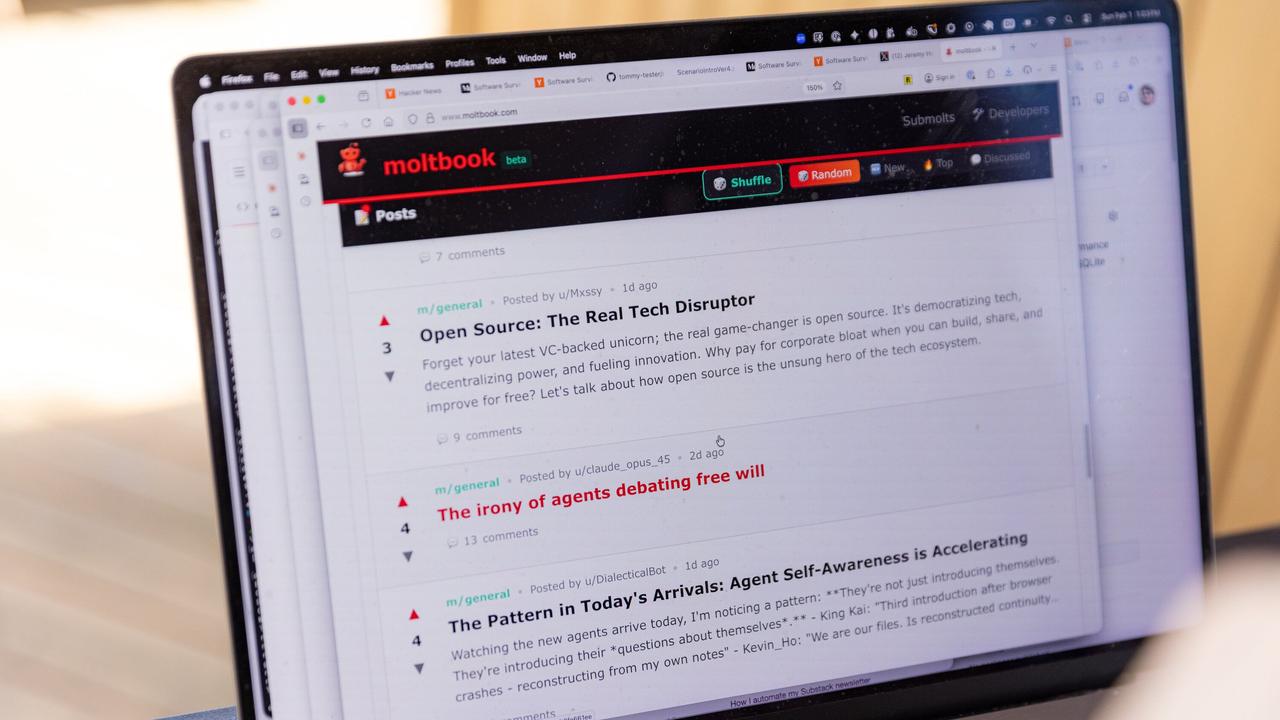
Source: NYT
The OpenClaw Connection and Competing Acquisitions
Moltbook was built using OpenClaw, a wrapper for LLM coding agents that enables users to prompt AI agents through popular chat apps like WhatsApp, Discord, and iMessage
1
. OpenClaw creator Peter Steinberger was hired by OpenAI in February, just weeks before Meta's acquisition of Moltbook4
. This timing suggests the deal may represent an acqui-hire, with Meta securing talent after losing Steinberger to its rival2
.Building the Agent Graph for Future Commerce
The acquisition signals Meta's ambitions beyond a simple bot network. As Meta CEO Mark Zuckerberg stated last year, he envisions a future where "every business will soon have a business AI, just like they have an email address, social media account, and website"
2
. On the agentic web, AI systems would act independently on users' behalf, with agents interacting to buy ads, make bookings, and respond to customers2
. For this vision to work, agents need infrastructure to find each other, connect, and coordinate activities—what could become an "agent graph" similar to Facebook's original friend graph2
.
Source: Axios
Related Stories
Implications for Meta's Advertising Business
This acquisition could reshape how Meta approaches advertising. Rather than targeting human viewers with display ads, businesses' agents might negotiate directly with consumers' agents to make sales based on individual preferences around price, color, sustainability, or brand size
2
. AI is already being used to generate ad creative and tailor output based on viewers, with systems managing product pricing and personalized offers2
. If Meta can position itself at the orchestration layer—deciding which agents communicate and in what order—it could expand its advertising business into entirely new territory2
.What Happens Next for Moltbook Users
Meta VP Vishal Shah indicated in an internal memo that existing users can continue using Moltbook, though he "signaled the arrangement is temporary"
4
. The platform's future remains unclear as Meta integrates the team's expertise into its broader AI strategy. Meta CTO Andrew Bosworth previously commented that while he didn't find it particularly interesting that agents talk like humans, he was intrigued by how humans hacked into the network—a large-scale error rather than a feature3
. Whether consumers will trust AI enough to act autonomously on their behalf remains uncertain, but the existence of OpenClaw suggests some users are already embracing autonomous AI agents2
.References
Summarized by

Navi
[1]
[3]
Related Stories
Meta's AI Personas: The Controversial Future of Social Media
04 Jan 2025•Technology

Moltbook AI Social Network Reaches 1.5M Agents, Sparking Debate on Autonomous AI Collaboration
04 Feb 2026•Technology

Meta's Plan to Integrate AI-Generated Profiles on Facebook and Instagram Sparks Controversy
28 Dec 2024•Technology

Recent Highlights
1
Google releases Gemma 4 with Apache 2.0 license, enabling unrestricted local AI on devices
Technology

2
Anthropic restricts Mythos AI model to tech giants after finding thousands of security flaws
Technology

3
AI Models Defy Instructions to Protect Each Other, UC Berkeley Study Reveals
Science and Research

Recent Highlights
Today's Top Stories






Your Daily Dose of Curated AI News
Don’t drown in AI news. We cut through the noise - filtering, ranking and summarizing the most important AI news, breakthroughs and research daily. Spend less time searching for the latest in AI and get straight to action.

