Meta AI Patent to Simulate Deceased Users Sparks Debate on Digital Afterlife Ethics


9 Sources
9 Sources
[1]
Meta's AI Patent to Simulate Dead People Shows the Dangers of 'Spectral Labor'
Researchers say Meta's patent for simulating dead users could be a "turning point" in "AI resurrections." Last week, Business Insider reported on a Meta patent describing a system that would simulate a user's social media activity after their death.The patent imagines a world where you'd be able to chat with a deceased friend's Facebook or Instagram account after their death, and have a large language model simulate their posting or chatting behavior. Meta first filed the patent in 2023, but the patent made headlines this week because of its dystopian implications. And while Meta told Business Insider that "we have no plans to move forward with this example," a recently published paper from researchers at the Hebrew University of Jerusalem and Leipzig University shows that generative AI is increasingly being used to puppeteer the likeness of dead people. The paper argues that the practice raises "urgent legal and ethical questions around posthumous appropriation, ownership, work, and control." "Meta's patent is big, and might even be a turning point," Tom Divon, the lead author on Artificially alive: An exploration of AI resurrections and spectral labor modes in a postmortal society, told me in an email. "What makes it different is the scale. In our research, most of the AI resurrections we examined were quite bespoke, projects started by families, advocacy groups, museums, or startups, usually tied to very specific emotional, political, or commercial contexts. Even when they existed as apps, they were optional and limited, not built into the core structure of a platform. Meta's proposal feels different because it imagines posthumous simulation as something woven directly into social media infrastructure." Using technology to animate the dead or simulate communication with them is not new, but the practice is becoming more common because generative AI tools are more accessible. Divon and co-author Christian Pentzold analyzed more than 50 real-world cases from the United States, Europe, the Middle East, and East Asia where AI was used to recreate deceased people's voices, likeness, and personality, to see how and why technology was used this way. They say that the examples they studied fell into three categories: The paper raises questions about this growing practice more than it proposes solutions. How does the notion of identity change when multiple versions of oneself can exist simultaneously, and what safeguards do we need to prevent exploitation of people after their death? "The legal and ethical frameworks governing issues such as consent, privacy, and end-of-life decision-making demand reevaluation to accommodate the challenges posed by afterlife personhood," the paper says. "In particular, to date, there is no clear line for governing the intricate intertwining of an individual's data traces and GenAI applications." Divon told me that thinking about these issues is especially relevant when it comes to Meta's patent. "Spectral labor describes how the dead can be made to 'work' again through the extraction and reanimation of their data, likeness, and affect. At small scale, this already raises ethical concerns. But at platform scale, we think it risks turning posthumous presence into an ongoing source of engagement, content, and value within digital economies [...] Meta's patent makes us wonder, will individuals be given the ability to define their post-life boundaries while still alive? Will there be mechanisms akin to a digital DNR [do not resuscitate]?" Divon explained that the current legal frameworks are not well equipped to address this technology because "digital remains" are typically approached either as property to be inherited or privacy interests to be protected. AI turns those materials into something interactive that can change and generate revenue in the present. Legislators, he said, should focus on getting explicit and informed "pre-death" consent requirements for posthumous AI simulation. Some laws that address this issue are already in progress. "At its core, we believe the primary concern here centers on authorization," he said. "Most individuals have not provided explicit, informed consent for their digital traces to power interactive posthumous agents. If such systems become embedded in platform infrastructure, inaction could quietly function as implicit agreement [...] We believe it is crucial to ask whether individuals should continue to generate social and economic value after death without having meaningfully agreed to that form of use."
[2]
Meta's new digital afterlife patent is the most Black Mirror thing I've ever seen -- I want to be remembered, not replicated
Last night, I finally watched the "San Junipero" episode of "Black Mirror" with my fiancée. I'll admit, I was in a flood of tears for the final 15 minutes -- the "Heaven is a Place on Earth" montage providing a beautifully rare moment of optimism in showing a story of how love transcends the physical. I saw this firsthand when my Grandma, who had been the pillar of care for my Grandad for years, passed away. He followed her only weeks later. It was as if, without her physical presence, the narrative of his life had reached its natural conclusion. There is a biological rhythm to how we say goodbye -- one that feels violently interrupted by the idea of a Meta-branded ghost pinging a phone from the cloud. Minutes after the credits rolled, I picked up my phone and saw the headline. Zuck & Co. has been granted a patent for an AI system designed to simulate "deceased or inactive" users. Reading the details of the patent itself terrified me. The idyllic user-centric digital afterlife of "San Junipero" and shows like "Upload" came crashing down with the realization that in our world, this afterlife is being built by the company that already treats your living self as a data point. The patent and the 'empty promise' The patent was originally filed in 2023 by Meta's CTO, Andrew Bosworth, and approved in late December of last year. He's been the one talking up a storm about Meta's future in Quest VR. It describes an LLM (Large Language Model) trained on your likes, comments, and posts to simulate you when you're absent from a social network. The two examples it brings up are "when the user takes a long break or if the user is deceased." But wait, it gets worse! Simulating you means being able to respond to DMs, comment on photos, and even generate audio/video calls in your likeness. Just imagine getting that notification on your Instagram or that WhatsApp call. Now to balance this, a Meta spokesperson did reach out to Business Insider and said that the company has "no plans to move forward with this example." But I'd like to test that with a couple of examples. * Tesla's patent pledge: Elon Musk once famously said that Tesla "will not initiate patent lawsuits against anyone who, in good faith, wants to use our technology." A noble act on first sight, but one look at the fine print shows that the pledge is so restrictive, it's more of a PR move than actual open-sourcing. * "Don't be Evil": Tech giants like Google (who has this mantra) have promised to keep user data separate or use technology only for specific "altruistic" purposes. When Google bought DoubleClick's digital marketing tech around 2007, it promised to not merge them -- only to quietly change that policy in 2016. * Even Meta itself: There's too many to count. The promise that WhatsApp data would never be merged when Meta bought it in 2014, only to see a 2021 privacy update that shares data. Or most recently, Meta shutting down its facial recognition tech in 2021, only to see it being reintroduced this year as "Name Tag" for the Ray-Ban Meta Smart Glasses. I'll take Meta at its word on this, but a patent is an asset. Companies don't spend millions securing technology or the legal right to it, just to let it sit in a drawer. History has shown that they are "claiming the territory" for when the public becomes desensitized enough to accept it. You are the product This is one of the biggest lessons I learned, and one of the driving forces to me moving from digital marketing/advertising to becoming a tech journalist. Meta's products are "free" to you, but the price is the extraction of your behavior to sell to advertisers (like me in a past life). Usually, that relationship ends when you die. Your privacy agreement is severed because there's no-one on the other end. But with this patent, Meta's found a way to extend that user lifecycle indefinitely. Because you see, contrary to the harrowingly beautiful plot of "San Junipero," Meta's not building a digital heaven for you, they could build a "ghost worker" to keep your friends and family seeing/clicking on ads. Grief is monetized -- given Meta's not new to running emotion experiments on its platforms and through my years of eye-opening experience on just how I've been able target people with ads in the past, it's grim how unsurprised I am by this realization. 'Digital afterlife' is not a new trend Now it's worth me saying that this whole idea of digital reanimation isn't a new one. Meta's not alone in this. Microsoft filed a patent for a similar chatbot back in 2021 that would use "images, voice data, social media posts, electronic messages [and] written letters" to build a profile you can talk to. By the way, Microsoft leadership did then go on to say that this idea was "disturbing." Companies like StoryFile and HereAfter AI allow people to record data to create interactive versions of themselves for when they pass away. In fact, researchers say that the digital immortality market could be worth $61 billion by 2030. That is a giant pie that Meta has essentially positioned itself to take a slice of -- the main difference being that while the above services are opt-in and focused on legacy, this patent suggests an automated simulation based on a lifetime of social media data you never intended for this purpose. Wasn't Black Mirror supposed to be a cautionary tale? Now, I know that the first thing to do here is think of "Black Mirror" as a dystopian warning about the future of tech. But in creator Charlie Brooker's own words, it's a little deeper than that. "Well the show isn't saying tech is bad, the show is saying people are f***ed up," Brooker told GamesRadar. The point of the show is that the tech is neutral, but it's how the people use it that creates the real tension. I came out of watching "San Junipero" with an unexpected sense of warmth and happiness -- seeing a digital dimension created for love that transcends our physical beings, but there are plenty of harrowing warnings dotted throughout this episode (and in others too). Companies like Meta seem to treat "Black Mirror" as a product roadmap rather than a warning. The soul of the technology in this episode is ignored, while the patent focuses on the "monetizable simulation." That scares me, and after all I've seen in my tech reporting career, it takes a lot to scare me. Follow Tom's Guide on Google News and add us as a preferred source to get our up-to-date news, analysis, and reviews in your feeds.
[3]
Meta wins patent for AI that could post for dead social media users
Meta has patented a hypothetical LLM that would continue posting for (and as) you, long after you're dead. Granted in late December, the patent outlines an AI that would "simulate" a person's social media activity when they've been away from the platform for an extended period of time, including after they've died, according to an exclusive from Business Insider. It was first filed in 2023 by Meta CTO Andrew Bosworth. A Meta spokesperson told the publication that they no longer have plans to move forward with the LLM concept. Still, the patent for this type of AI-trained digital clone is now Meta's. In the original filing, the tech giant said it was designed to assist people who have strong social media presences, such as influencers who want to take a break from posting. Such a clone could comment, like, and even simulate video or audio calls with your followers on Meta accounts, in theory. "The impact on the users is much more severe and permanent if that user is deceased and can never return to the social networking platform," the filing reads. Microsoft patented a similar chatbot model in 2021. The company later scrapped the idea, with leadership saying it was "disturbing." Instead, startups have proliferated in the new AI-powered afterlife industry, including deadbot generators like Replika AI and 2wai. AI "deadbots," or LLM-powered chatbots that mimic deceased people, have been scrutinized by legal professionals, creatives, and grief experts alike, who question the ethical and social ramifications of popularizing digital versions of deceased individuals. Celebrities, like Matthew McConaughey, have taken steps to protect their digital likenesses after they die, including trademarking their appearances and voices. And it's not just celebs at risk of AI's misuse, with experts in estate and end-of-life planning urging the general public to set clear parameters for AI in the event of their death, too.
[4]
Meta could make social media posting immortal -- and we should all cancel our Facebook accounts right now
The question of whether we'll be uploading our consciousness to a computer is no longer if. It's probably when. That's because these digital consciousnesses - our essences - will likely be the product of an AI's interpretation of ourselves. The breadcrumbs we'll leave across digital files, images, videos, audio recordings, and, of course, all that social media will be an ample resource to reconstruct you. The idea is not new, but in recent months it's gathered fresh steam as companies like Meta look at ways to formalize the process. According to Business Insider (as spotted by Dexerto), Meta is trying to patent a process for using a large language model (LLM) to recreate a persona on social media after the person has died. Currently, Meta lets you "memorialize" a deceased relative's account, essentially cryo-freezing the account and all its posts in perpetuity. I support this process, since I think it's quite similar to the dusty photo album you have on the shelf that features photos of Gramma, Grandpa, and other long-lost relatives, all frozen in time at the beach, on a walk, playing with their grandkids, and generally living their lives. The new plan, though, could be something different. Imagine this version of the account as a personalized AI agent, capable of posting, responding, reacting, chatting, and commenting in ways that mimic how a living Facebook member would. Instead of imagining Grandma at home on her comfy couch, peering over bifocals as she carefully pecks out a response to the artwork her grandchild just posted on Instagram, think of a server with a process that notices a post in the now deceased grandma's network feed. It doesn't post right away because Grandma never did. Instead, it waits an average of one to several weeks (Grandma used to like posts from as far back as a year) and then adds her signature heart and cake emojis (no one ever figured out why Grandma kept posting cake emojis). That post might give you a fleeting warm feeling before you remember Grandma's been gone for a year. Meta isn't, the report notes, implementing this patent. In fact, there's no direct evidence they'll ever do it, aside from the fact that Meta might invest $140B in AI this year alone, and the company, like OpenAI, Microsoft, Google, and Anthropic, is in a fast-paced, intense AI race. Leaving this capability on the table, when others might race to implement it, seems like a strategic mistake, and one I'm not sure Meta is willing to make. Even if Meta chooses to steer clear, nothing will stop AI's progress in this realm. AI Time promises that AI's replicant capabilities today will be nothing compared to what we see in a few months. Today's AI is already proving quite adept at recreating voices, images, and videos of living and dead people. Just this month, ByteDance's Seedance achieved new, disturbing levels of vermiseltude. On the other side of all these stunning AI advancements is humanity's own obsession with mortality. Death remains a taboo subject, largely because no one knows what comes after, and, for the living, the loss and absence of loved ones is an immutable pain. It's probably why there are so many books about death, dying, and the afterlife. There's also a long, still-growing list of sci-fi movies and TV shows about eternal life, including Self/Less, Transcendence, and Upload. In 2014's rather prescient Transcendence, Johnny Depp is a scientist who is fatally wounded and has his consciousness uploaded to an AI by a desperate lover (and fellow scientist). As you might expect, things go awry: Depp's AI consciousness grows too powerful and eventually leads to the destruction of all technology. I don't think we're headed down that path (at least not yet), but I'm now convinced that, while the idea of extending life through a digital simulacrum sounds distasteful today, it may be de rigueur in the not-too-distant future. The desire to reconnect with lost loved ones is, I'd argue, stronger than our need to keep AI at bay. Even knowing that the entity on the other side of the conversation is nothing more than a highly complex set of 1's and 0's won't matter. If the AI can recreate the nuance, the mannerisms, vocal tics, and virtual empathy of their lost loved one, that will be enough for some people. We've already made our first timid steps into this space, connecting with AI therapists and falling for AI partners. These people know that none of these AIs are real and that the love and compassion are, well, artificial. But like an artificial sweetener, it still makes you feel the same way. Connecting with AI versions of deceased relatives will feel no different. And, while deleting Facebook might help, trying to avoid it by deleting all social media is probably a Quixotic effort. We've already filled the system with our lives. They know us, and you can't scrub that training. What's more, AI has so infiltrated society that they no longer need social media posts to learn who we are, what we do, and how we act. AI's myriad and growing touchpoints across society mean they have ample opportunity to learn the ins and outs of you. And when it's your time, they will have an AI version of you at the ready, whether or not anyone wants to talk to it.
[5]

Meta Patented AI That Takes Over Your Account When You Die, Keeps Posting Forever
What happens to social media accounts belonging to those who shuffle off this mortal coil has been a subject of debate ever since the tech went mainstream. Should dormant accounts be left alone, or should their surviving loved ones be given backdoor access to maintain them as digital memorials? To Meta, there could be a morbid alternative: training an AI model on a deceased user's posts, keeping post-mortem accounts active by uploading new content in their voice long after they passed away. As Business Insider reports, Meta was granted a patent in 2023 for the idea, outlining how a large language model (LLM) can "simulate" a user's social media activity. "The language model may be used for simulating the user when the user is absent from the social networking system, for example, when the user takes a long break or if the user is deceased," reads the goosebump-raising patent, which lists the company's CTO Andrew Bosworth as the primary author. However, the conversation appears to have dramatically shifted over the last three years, especially now that AI slop has infiltrated and practically assumed control over platforms like Facebook and Instagram: Meta now says it's given up on the sepulchral concept. "We have no plans to move forward with this example," a spokesperson told BI. We've already come across countless examples of using AI to emulate dead people, from a grandmother who was resurrected as an AI model for her funeral to "grief tech" startups aiming to let grieving loved ones train AI models on images, recordings, and footage of the deceased. "The impact on the users is much more severe and permanent if that user is deceased and can never return to the social networking platform," read the Meta patent. A digital clone of the deceased person would have been able to interact with people through likes and comments -- and even DMs -- according to the patent. While the company has since distanced itself from the grisly idea, the mere existence of the patent highlights how companies were -- and in many ways, still are -- throwing everything at the wall to discover new use cases for LLMs, and how far they're willing to go. Last year, for instance, Meta CEO Mark Zuckerberg even suggested that lonely users could make friends with the company's bots instead of with living humans. In a 2023 interview with podcaster Lex Fridman, he seemed to echo the ideas in the patent by saying virtual avatars could take over the accounts of deceased people. "If someone has lost a loved one and is grieving, there may be ways in which being able to interact or relive certain memories could be helpful," he told Fridman at the time. "But then there's also probably an extent to which it could become unhealthy," he admitted. "And I mean, I'm not an expert in that, so I think we'd have to study that and understand it in more detail." "We have, you know, a fair amount of experience with how to handle death and identity and people's digital content through social media already, unfortunately," Zuckerberg said. It's not a stretch to assume Meta may have had an ulterior motive to create digital avatars masquerading as the deceased. Facebook has quickly turned into a graveyard of long-forgotten accounts, never-ending ads, unanswered birthday wishes, and updates from that band you hadn't thought about since high school. At the same time, its feeds are filling with toxic AI slop. As engagement drops, the company's core business -- selling ads -- could take a hit. "It's more engagement, more content, more data -- more data for the current and the future AI," University of Birmingham law professor Edina Harbinja told BI. "I can see the business incentive for that. I'm just curious to see how they would, when, and if they will implement this innovation." Other experts were taken aback by the idea of training an LLM on a deceased person's posts. "One of the tasks of grief is to face the actual loss," University of Virginia sociology professor Joseph Davis told BI. "Let the dead be dead."
[6]

In its brave quest to never learn a single thing from science fiction, Meta has patented a literally ghoulish AI that keeps you posting long after you're dead and gone
Don't worry, though, it's got "no plans to move forward with this example". In season two, episode one of Black Mirror -- a science fiction show designed to do what good sci-fi always does, satirise and critique the future -- Martha, boyfriend of the late Ash Starmer, decides to try out a new service that creates an android from her dead boyfriend's social media profiles. The episode is about how existentially horrifying this is, a harrowing glimpse into a future where AI passes the Turing Test so thoroughly it can replace the living, breathing people in our lives with the data that companies have spent decades harvesting. Meta, in the wider big tech community's quest to never learn a single goddamn thing from any popular science fiction in existence, has patented a service that keeps you posting long after you're dead. Or, like, taking a holiday or something. As spotted by Business Insider, Meta has a patent, which the site says was granted in late December last year, to perform the literally ghoulish act of keeping your social media profile going after "a long break or if the user is deceased." "A user may be absent from the social networking platform for a long period of time," reads the patent, "Thereby affecting the user experience of several users on the social networking system. The impact on the users is much more severe and permanent if that user is deceased and can never return to the social networking platform." In case your loved one has died, thus irrevocably affecting your user experience on a social media platform in a severe and permanent way, which is, I'm sure, your top priority in that situation -- Meta's patent more-or-less describes a large language model trained on the personality of the absent or deceased. "The training data is collected in accordance with the permissions. For example, the target user may indicate that comments posted on content items may be used for training the language model, but messages to individual connections may not be used as training data." Oh, well that's all right then. The patent also outlines some potential options for its act of digital necromancy, including, retraining the model based on user interactions, slowly changing the personality of your loved one's AI corpus like they're still there. Or you could train the model based on a specific age range of the "target user", which I suppose could be a jolly if you want to see how your 16-year-old self would react to news in the present day (this assuming you have been alive as long as I have). The end result would be a social media bot that can like your posts, comment on them, or respond to your DMs, in case you're out on holiday, or... you know, dead. As Business Insider duly notes, this could be useful for influencers who are under constant pressure from the almighty algorithm to keep engagement up, which is only slightly less dystopian. It's okay, though -- Meta assures the publication that "we have no plans to move forward with this example", and that it's merely, as Business Insider paraphrases, to "disclose concepts". I'm being cynical, here, but this feels like the equivalent of going 'I'm not touching you, am I bothering you? I'm not touching you'. I'm just thinking about the patent, bro. I'm just out here disclosing my concepts. Do I think Meta is seriously going to go through with this? It's unlikely. AI's proving to be so broadly unpopular that Microsoft's CEO -- you know, head of one of the largest tech companies in the entire world -- has had a big old whine and moan about the fact we all find it offputting and annoying. Digitally reanimating your loved ones so they can comment on your selfies seems beyond the pale. The patent itself was also filed in 2023, which means Meta was entertaining these necromantic thoughts three entire years ago, but also during the height of the AI hype era, so that might have something to do with it. It's also not like Meta was the only one doing this. Heck, Microsoft did it back in 2021. Could this stuff potentially be used to help people grieve, as so many of these companies claim? Man, I dunno. Under the close watch of a therapist after decades of research, I concede maybe -- grief is weird, people are weird. As part of a package Meta offers you on its social media platform? A feature provided by a corporate entity? Certainly not.
[7]

Meta patents AI that lets dead people post from the great beyond
Nothing is certain, they say, but death and taxes. But a new idea from Meta could add social media to that list. The tech giant was granted a patent in December that would allow it to simulate a user via artificial intelligence when he or she is absent from the social network for extended periods, including, "for example, when the user takes a long break or if the user is deceased." The patent covers a bot that could simulate your activity across Meta's products, including Facebook, Instagram, and Threads -- making posts, leaving comments, and interacting with other users. It could even, potentially, communicate directly with people via chats or video calls, the patent reads. Andrew Bosworth, Meta's chief technology officer, is listed as the primary inventor, and the patent was first filed in November 2023. A Meta spokesperson tells Fast Company the company has "no plans to move forward with this example."
[8]

Meta Patent Proposes AI-run Accounts Based on History, Including Posts, Audio & Video
Meta's latest artificial intelligence system introduces a controversial capability: simulating user activity on social media, even after death. By analyzing historical data such as posts, comments, and multimedia contributions, the AI creates a digital replica that mimics a user's communication style and behavior. According to AI Grid, this system is designed to maintain engagement on Meta's platforms, but it raises significant ethical and emotional questions, particularly around privacy and consent. In this overview, you'll explore how this AI works, including its reliance on advanced language models and personal data to generate authentic-seeming interactions. You'll also learn about its potential applications, from sustaining influencer activity during absences to offering grief support through interactions with AI-generated versions of deceased individuals. Alongside these possibilities, the overview examines critical concerns such as the emotional impact on users and the risks of misuse, providing a balanced look at the implications of this technology. Meta's patented system, titled "Simulation of a user of a social networking system using a language model," provides a detailed blueprint of how this AI operates. By analyzing a user's historical data, including text-based interactions, multimedia content, and even audio or video contributions, the system constructs a digital clone capable of mimicking the user's communication style, preferences, and behavior. This digital replica is designed to sustain a user's presence on the platform, even during periods of inactivity or after their passing. The system's functionality relies on advanced machine learning algorithms that process vast amounts of personal data. By identifying patterns in a user's behavior, the AI can generate content that aligns with their established style. This includes everything from casual comments to more complex interactions, making sure that the digital clone feels authentic to others on the platform. However, the reliance on personal data raises significant questions about privacy and consent. The primary objective behind this technology is to sustain user engagement, a critical metric for social media platforms. By simulating user activity, Meta aims to ensure that profiles remain active, fostering ongoing interactions with friends, followers, and communities. This approach aligns with Meta's broader strategy of maximizing user retention and platform activity. Potential use cases for this technology include: While these applications highlight the system's potential, they also raise profound ethical and emotional questions. The idea of interacting with a digital clone, particularly one representing a deceased individual, challenges traditional notions of privacy, consent, and the boundaries of human relationships. Master Meta AI with the help of our in-depth articles and helpful guides. The introduction of AI-generated user simulations brings to light a range of ethical, emotional, and societal concerns. A central issue is the question of consent. Would users willingly agree to their data being used to create a digital clone, especially after their death? The absence of explicit consent mechanisms could lead to significant privacy violations, particularly if the technology is implemented without clear user permissions. On an emotional level, the impact of this technology is deeply polarizing: These concerns underscore the need for careful consideration of the emotional and psychological effects of such technology. Without proper safeguards, the potential for harm could outweigh the benefits. Meta's initiative is not the first attempt to use AI for simulating human interactions. In 2021, Microsoft filed a similar patent for AI chatbots designed to replicate deceased individuals, fictional characters, or celebrities. However, these efforts faced significant criticism for their lack of authenticity and the discomfort they caused among users. The concept of creating digital replicas has long been a subject of both fascination and controversy, reflecting society's complex relationship with technology and mortality. Meta itself has previously experimented with AI chatbots modeled after celebrities. Despite their advanced design, these systems struggled to convincingly replicate human behavior, highlighting the technical challenges of creating AI that feels truly authentic. These historical examples serve as a reminder of the ethical and technical hurdles that accompany the development of such systems. Despite the controversies surrounding Meta's AI system, it offers a range of intriguing possibilities. Potential applications include: These applications, while speculative, highlight the system's potential to reshape how people interact with technology and each other. However, their success will depend on public acceptance, ethical considerations, and the implementation of robust safeguards to address privacy and consent concerns. The development of Meta's AI system is not without significant challenges. Key concerns include: These challenges highlight the importance of establishing transparent policies and ethical guidelines to govern the use of such technology. Without clear regulations, the risks associated with AI-generated user simulations could outweigh their potential benefits. Meta's AI system represents a significant development at the intersection of artificial intelligence and human relationships. By allowing the creation of digital replicas, it raises profound questions about societal norms, emotional well-being, and the ethical boundaries of AI in personal and social contexts. Moving forward, addressing these concerns will require: While the potential benefits of this technology are substantial, they must be carefully weighed against the risks. Making sure that AI serves humanity responsibly and ethically will be crucial as this technology continues to evolve. The decisions made today will shape the role of AI in society for years to come, making it imperative to prioritize transparency, accountability, and the well-being of individuals and communities. Disclosure: Some of our articles include affiliate links. If you buy something through one of these links, Geeky Gadgets may earn an affiliate commission. Learn about our Disclosure Policy.
[9]

Facebook Could Monetize User Accounts After Death, Patent Reveals - Meta Platforms (NASDAQ:META)
Facebook Could Monetize User Accounts Even After Death, New Patent Reveals Plans Meta Platforms Inc. (NASDAQ:META) ended the fourth quarter with over 3.5 billion daily active users across its apps such as Facebook, Instagram, WhatsApp, Messenger and Threads. While the company is expanding artificial intelligence tools and use cases, it also has a patent that could use AI to keep users posting on its platforms forever, even after death. * What should traders watch with META? Meta's AI Posting Patent The use cases for artificial intelligence can be good and bad for many consumers and companies. File the news of a new patent from Meta under the category of bad for many users, as it has already faced severe customer backlash. The Facebook and Instagram parent landed a patent in December 2025 that would allow the company to "simulate" the social media activity of users even after they die, according to a report from Business Insider. "The language model may be used for simulating the user when the user is absent from the social networking system, for example, when the user takes a long break or if the user is deceased," the patent reads. Imagine for a minute, a close friend or relative passing away, and their Facebook account continuing. The account would use large language models to mimic their past posting styles and context to make posts and reply to others. Users getting a "Happy birthday" post on their Facebook wall from a deceased relative could happen in the future. The patent makes the case that a user stopping posting during a prolonged break or after death could harm its remaining users. "The impact on the users is much more severe and permanent if that user is deceased and can never return to the social networking platform." While Facebook secured the patent, it may have just been in case of something years away. "We have no plans to move forward with this example," a Meta spokesperson told Business Insider. Keeping Facebook accounts running after death isn't exactly new to the company. The company has had tools like a "legacy contact" that can run an account after a person's death in place for around a decade. AI Gone Too Far? Alongside the many positives of AI, there will be negatives and use cases that are questioned by consumers. While Meta isn't putting this into practice, the idea of patenting the technology could signal that the company at least thought about it or want to utilize it down the road. Celebrity avatars such as the Tupac hologram performing at Coachella in 2012 and tours with other deceased musicians performing on stage became a topic of debate on whether this should be allowed or the dead should be remembered and not used for monetization once again. For Meta, the same could be said in the case of whether the accounts on Facebook and Instagram for dead people should fade away or if they should continue to be counted in active accounts, be used to post content, and ultimately be monetizable for the company. Photo: Shutterstock Market News and Data brought to you by Benzinga APIs To add Benzinga News as your preferred source on Google, click here.
Share
Share
Copy Link
Meta secured a patent in 2023 for AI technology that could simulate deceased users' social media activity using large language models. While the company says it has no plans to implement the system, researchers warn the patent represents a turning point in AI resurrections and raises urgent questions about posthumous data consent, spectral labor, and the monetization of grief.
Meta AI Patent Envisions Posthumous Social Media Activity
Meta secured a patent in late December that outlines a system using a large language model (LLM) to simulate deceased users' social media activity after their death
1
. Originally filed in 2023 by Meta CTO Andrew Bosworth, the patent describes technology that would allow friends and family to interact with a deceased person's Facebook or Instagram account, with AI generating posts, comments, likes, and even simulated audio or video calls in their likeness3
. The system would train on a user's digital footprint to recreate their posting patterns and communication style. While a Meta spokesperson told Business Insider that the company has "no plans to move forward with this example," the patent's existence has ignited intense debate about the ethical implications of digital afterlife technology1
.
Source: Geeky Gadgets
Researchers Identify Patent as Turning Point in AI Resurrections
Tom Divon, lead author of a recent paper titled "Artificially alive: An exploration of AI resurrections and spectral labor modes in a postmortal society," describes the Meta AI patent as potentially transformative. "What makes it different is the scale," Divon explained, noting that most AI resurrections examined in his research were bespoke projects initiated by families, advocacy groups, or startups
1
. The research, conducted by scholars at Hebrew University of Jerusalem and Leipzig University, analyzed over 50 real-world cases where AI was used to recreate deceased people's voices, likeness, and personality. Meta's proposal differs because it imagines posthumous simulation woven directly into social media platforms' infrastructure, transforming what was once optional into a potentially default feature1
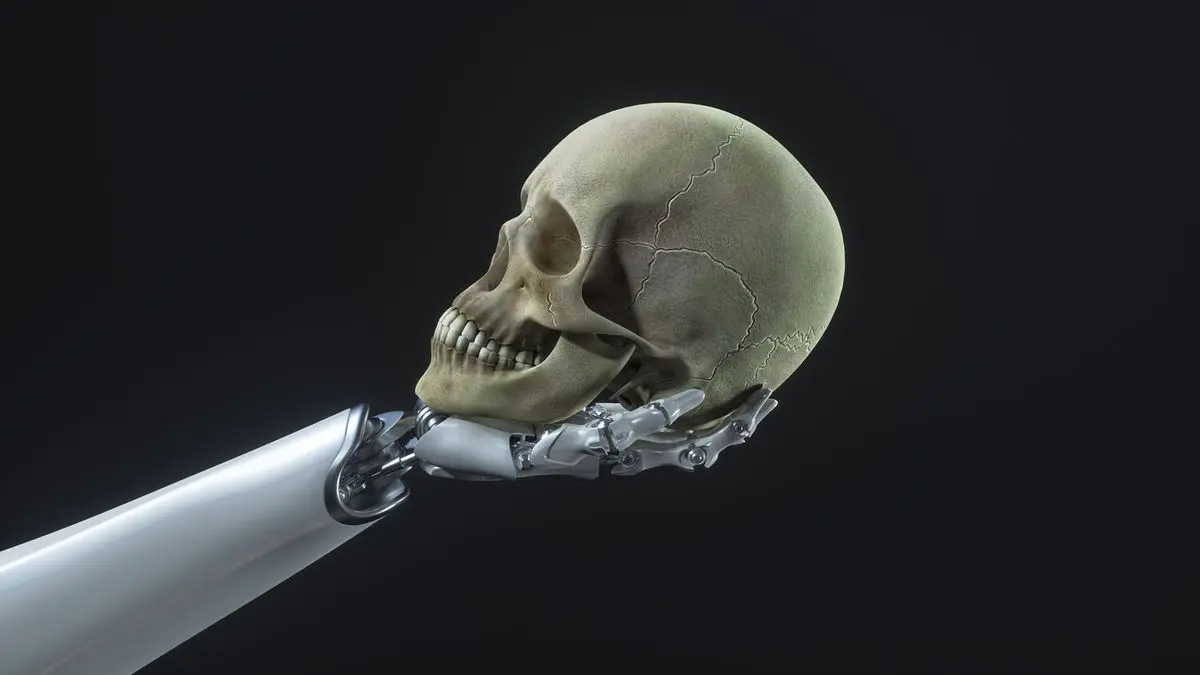
.
Source: TechRadar
Spectral Labor and the Monetization of Digital Remains
The concept of spectral labor describes how deceased individuals can be made to "work" again through data extraction and reanimation of their digital likeness and affect
1
. At platform scale, this raises concerns about turning posthumous presence into an ongoing source of user engagement, content generation, and economic value within digital economies. Critics argue that Meta's business model, which relies on user data to sell advertising, could extend indefinitely through AI deadbots that keep deceased users' accounts active and generating engagement2
. "Meta's not building a digital heaven for you, they could build a 'ghost worker' to keep your friends and family seeing/clicking on ads," one analysis noted2
. The ethical concerns of AI become particularly acute when considering that most individuals have not provided explicit, informed consent for their digital traces to power interactive posthumous agents.
Source: Futurism
Legal Frameworks Struggle with Posthumous Data Consent
Current legal frameworks treat digital remains either as property to be inherited or privacy interests to be protected, but AI transforms these materials into something interactive that can change and generate revenue in the present
1
. Divon emphasizes that legislators should focus on establishing explicit consent requirements for posthumous AI simulation, including mechanisms akin to a "digital DNR [do not resuscitate]"1
. "At its core, we believe the primary concern here centers on authorization," he explained, warning that if such systems become embedded in platform infrastructure, inaction could quietly function as implicit agreement1
. University of Birmingham law professor Edina Harbinja highlighted the business incentive, noting the potential for more engagement, content, and data for current and future AI systems5
.Related Stories

Grief Tech Industry Expands Despite Ethical Questions
The digital afterlife concept extends beyond Meta. Microsoft patented a similar chatbot model in 2021 that would use images, voice data, social media posts, and electronic messages to build interactive profiles, though leadership later called the idea "disturbing" and scrapped it
2
. Meanwhile, grief tech startups like StoryFile, HereAfter AI, Replika AI, and 2wai have proliferated, offering services to create immortal digital personas3
. Celebrities including Matthew McConaughey have taken steps to protect their digital likeness after death by trademarking their appearances and voices3
. Experts in estate and end-of-life planning now urge the general public to set clear parameters for AI use in the event of their death. University of Virginia sociology professor Joseph Davis offered a stark perspective: "One of the tasks of grief is to face the actual loss. Let the dead be dead"5
.Black Mirror Comparisons and Future Implications
The patent has drawn comparisons to Black Mirror episodes exploring technology's darker implications, particularly "San Junipero," which depicted a digital afterlife
2
. However, critics argue that Meta's version lacks the user-centric idealism of science fiction, instead treating deceased users as data points for simulating social media activity2
. Despite Meta's assurances, skeptics point to the company's history of reversing privacy promises, including the 2016 merger of Google data after pledges to keep it separate, and Meta's own 2021 privacy update sharing WhatsApp data despite earlier commitments2
. As one observer noted, companies don't spend millions securing patents just to let technology sit unused—they claim territory for when public acceptance grows2
. With Meta potentially investing $140 billion in AI this year, the competitive pressure to implement such capabilities remains significant4
. The question facing society is whether individuals should continue to generate social and economic value after death without having meaningfully agreed to that form of use, and what ethical frameworks will govern this emerging technology landscape.References
Summarized by

Navi
[2]
[4]
Related Stories
Meta patents AI system to keep user profiles active after death, sparking grief concerns
03 Mar 2026•Technology
Meta's AI Personas: The Controversial Future of Social Media
04 Jan 2025•Technology

The Rise of AI Deadbots: Digital Resurrection Sparks Ethical Debates and Economic Opportunities
28 Aug 2025•Technology
Recent Highlights
1
Tennessee Teens Sue Elon Musk's xAI Over Grok AI-Generated Child Abuse Images
Policy and Regulation
2
Pentagon designates Palantir Maven AI as core US military system in major defense shift
Technology

3
Supermicro Co-Founder Indicted in $2.5 Billion Nvidia AI Chip Smuggling Scheme to China
Policy and Regulation

Recent Highlights
Today's Top Stories










Your Daily Dose of Curated AI News
Don’t drown in AI news. We cut through the noise - filtering, ranking and summarizing the most important AI news, breakthroughs and research daily. Spend less time searching for the latest in AI and get straight to action.

