Meta deploys AI tools to detect scams across Facebook, WhatsApp, and Messenger


13 Sources
13 Sources
[1]
Meta rolls out new scam detection tools to Facebook, WhatsApp, and Messenger | TechCrunch
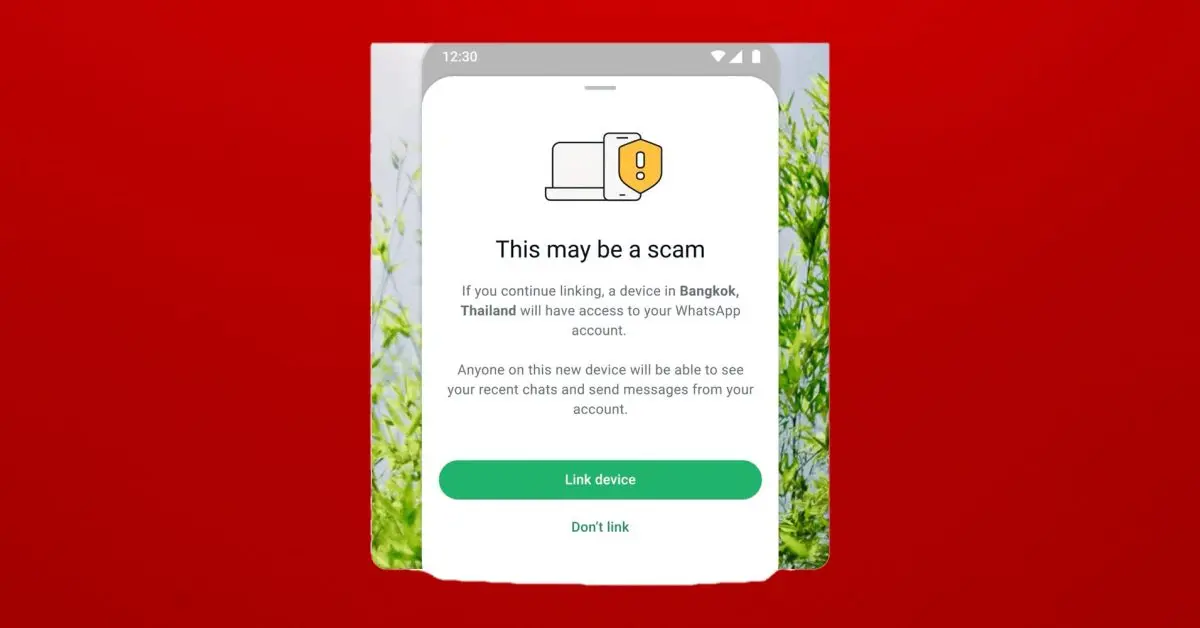
Meta announced on Wednesday that it's bringing more scam detection tools to Facebook, WhatsApp, and Messenger. The tech giant says the new features are designed to alert users before they engage with something suspicious, noting that scammers try to avoid detection and may not immediately use accounts maliciously. The company is testing new alerts on Facebook to warn users about suspicious friend requests. When you send or receive a request from an account that shows signs of suspicious activity, such as having few mutual friends or listing a different country as its location, you'll see an alert prompting you to review the request to help you decide whether to block or accept it. Over on WhatsApp, Meta is launching device linking warnings to prevent scammers from trying to trick users into linking their WhatsApp account to their device. "For example, they may pose as a talent competition asking you to cast your vote by going to a website and entering your phone number, followed by a device linking code on your WhatsApp," Meta explained in a blog post. "They may also try to trick you into scanning a QR code under false pretenses, which would then link the scammer's device to your account. To stay ahead of these tactics, WhatsApp will now alert you when behavioral signals suggest a linking request might be suspicious." These alerts will show users where the request is coming from and warn them that it could be a scam. As for Messenger, Meta is rolling out its advanced scam detection to more countries this month. The company didn't specify which countries, but TechCrunch has reached out to learn more. With advanced scam detection, when a chat with a new contact contains patterns commonly associated with scams, such as suspicious job offers, Meta will warn users and ask whether they want to share recent chat messages for an AI scam review. If the tool detects a scam, Meta will encourage the user to block or report the suspicious account. The company will also provide more information about common scams. As part of its announcement, Meta said it removed more than 159 million scam ads last year, 92% of which were taken down before anyone reported them. The company also removed 10.9 million accounts across Facebook and Instagram that were associated with criminal scam centers.
[2]
Meta Launches AI Tools to Identify and Flag Messages From Scammers
Meta said Wednesday that it's launching a new suite of tools to tackle today's social media scams on WhatsApp, Facebook and Messenger. These tools will be tackling fraud problems plaguing social platforms, such as the alarming number of people falling for fake celeb-bait profiles. Meta says it removed over 159 million scam ads in 2025. A Meta representative didn't immediately respond to a request for comment. The latest scams use plenty of AI-generated content to create fake profiles and even fake websites, so it's no surprise Meta is employing its own AI tools to protect people. First up is the global chat app WhatsApp, which is a frequent target of scammers thanks to its mobile device linking features, which allow for quick linking of external devices to an account. Once scammers gain access to an account, they can carry out a range of harmful activities, including impersonating the user to deceive friends and family. Last year, Meta deleted nearly 7 million accounts used by scammers in these ways. Scammers may first pose as relatives, sellers, service providers or content creators, asking for phone numbers to share device linking codes and QR codes that some people may activate without thinking. Meta's WhatsApp feature will watch for danger signs from unlinked accounts, such as a request from a different country you haven't communicated with before. It then displays an additional pop-up warning to make sure you want to connect with a stranger, ideally giving you a moment to consider whether that might be a dumb idea. Facebook is also adding new scam protections, notably warnings about adding or communicating with a suspicious account. Meta hasn't revealed all the signs it uses to determine whether an account is suspect, but like WhatsApp, it looks for unusual, out-of-country locations. Another red flag is an account you or your friends have never interacted with before. Facebook will include explanations alongside its warning pop-ups, such as noting that an account was created only several days ago, before you confirm your choice. The Messenger app is introducing a similar feature that monitors account activity for patterns indicative of scam behavior. Meta specifically called out job-related scams, in which scammers offer impossible or high-paying jobs as a way to steal personal information or to direct people to a phishing website. Speaking of phishing websites, they're on the rise and look more authentic than ever, fooling even those experienced in phishing dangers. And yes, a prime example of generative AI is the ability to easily whip up a scam web page and mimic real brand logos. Meta reports that it's using its own AI tools to more accurately scan and identify scam content. That includes looking through Messenger histories, watching for fake photos mimicking celebrities and spotting unusual mentions of public figures. These tools can also detect phishing schemes on the site. Meta's new AI tools for detecting scams naturally raise privacy concerns. While the company says the features analyze account activity to spot fraudulent behavior, it hasn't disclosed exactly how that data is processed or stored. Past controversies around Meta's AI initiatives, including its AR glasses, show that AI-driven monitoring can carry unintended privacy risks, highlighting the importance of transparency and robust safeguards when rolling out such technology across personal messaging platforms. Meta didn't say exactly when these tools will be available to all users.
[3]
How Meta's improved scam tools will protect Facebook, WhatsApp, and Messenger users
The tools will alert users to potentially suspicious activity. Meta is introducing new tools to help keep users safe from scams. In a blog post detailing the new tools, Meta explained that in 2025 alone, the social platform giant removed more than 159 million scam ads for violating its policies and took down almost 11 million accounts on Facebook and Instagram associated with criminal scam centers. Also: I'm a tech professional, and an AI job scam almost fooled me - here's how I caught on But since criminals are always evolving (a global investment scam is sweeping across Facebook and WhatsApp right now), the tools to fight them need to evolve too. Meta does have traditional detection systems in place, including human experts, but it says that AI can "analyze multiple signals -- such as text, images, and the surrounding context" to spot a wider range of sophisticated scam patterns. That's why it's introducing several new AI-powered tools to automatically flag potential scams. Here's a look at what's new: Celebrity impersonation: Scams involving the impersonation of a celebrity, public figure, or brand are becoming increasingly common and costing victims thousands of dollars. Meta's new scam protection will use AI to analyze fake fan profiles and misleading bios associated with public figures or brands. AI can process far more contextual details about public figures than a human could, Meta said, hopefully catching deceptive impersonation. Deceptive links and domain impersonation: Meta says it's using AI to detect content that redirects people to fake webpages that mimic legitimate ones. If the system detects misleading links, it will delete that content. Also: A global investment scam is spreading across Facebook, WhatsApp, and more - what to look for Suspicious friend requests: If you get a Facebook friend request from a profile that shows signs of suspicious activity, you'll get an alert to help you make an informed decision. Meta says this includes situations like when a profile has few mutual friends or when the request comes from a different country. The alert will also show when the account was created. WhatsApp device linking: Another common scam involves linking your WhatsApp account to another device without your knowledge. In these scams, the victim starts the process by clicking a link or scanning a QR code. If you go through the steps to link your account to another device, you'll now see a warning to make sure that's what you really want to do. The alert will show you where the request is coming from and tell you what's happening, giving you a second to think. For Messenger, you can turn off AI scam detection if you want. Just go to Settings, then Privacy & Safety Settings, then Scam Detection and toggle off "Scam detection in chats."
[4]
Stay Alert. Meta Rolls Out New Scam Protection Tools for Facebook, WhatsApp
Meta has introduced new tools to help you avoid common scams on WhatsApp, Facebook, and Messenger. On Facebook, Meta will warn you about suspicious friend requests. These notifications will pop up when Facebook detects potential red flags, such as few or no mutual friends or if the person lives in a different country. A screenshot shared by Meta also shows that the warning will mention when the account was created. On WhatsApp, the company is introducing a warning to protect you against harmful device linking. Scammers may trick you into scanning a fake QR code by posing as organizers behind a talent competition and asking you to vote for your favorite contestant, Meta says. To protect against this scam, WhatsApp will now raise an alert when it suspects you are linking to a malicious device. It will note the link's location and ask you to consider whether it's worth proceeding. Finally, Meta will expand Messenger's message safety tool to more users this month. The feature, announced in October, uses on-device technology to scan messages and alert you about some common signs of fraud. If you receive the alert for a chat you don't trust, you can send the messages for AI review. If Meta deems the messages may indeed be fraudulent, it will suggest blocking or reporting the account. If you don't want Messenger to proactively look for scams in your messages, you can disable the feature by going to Settings > Privacy & Safety Settings > Scam Detection. This is also a good time to note that starting in April, Messenger will only be available through its Android and iOS apps. The dedicated website is shutting down next month, while the desktop apps were discontinued last year. Meta also notes that it is taking strict action against phony and deceptive ads. In 2025, it took down 159 million scam ads and 10.9 million Facebook and Instagram accounts associated with criminal scam groups.
[5]

Meta, cops deploy AI and handcuffs in scam crackdown
Not every scam starts with malware or a compromised account. Sometimes all it takes is a friend request or a link shared via chat. Meta, in an effort to protect people from fraudsters, added anti-scam tools to WhatsApp, Facebook, and Messenger, including device linking warnings on WhatsApp and alerts for suspicious friend requests on Facebook, the social media giant said on Wednesday. Plus, in a joint effort with law enforcement, international cops disrupted major scam centers targeting victims around the globe and arrested 21 alleged fraudsters, while Meta disabled more than 150,000 social media accounts linked to scam center networks. As part of the tech company's fraud crackdown, WhatsApp, we're told, will now alert users when behavioral signals suggest a device-linking request may be an attempt to link a scammer's device to the user's account. "For example, they may urge you to share your phone number, followed by a device linking code on your WhatsApp or try to trick you into scanning a QR code under false pretenses, which would then link the scammer's device to your account," Meta said in announcing the new feature. Access to a user's WhatsApp account allows miscreants to read victims' messages, reply to them - and start new chats - while posing as the legitimate user, view contacts and photos, and in some cases, compromise other services such as Facebook or Instagram. Facebook is also testing an alert system that warns users when a friend request shows signs of suspicious activity - for example, you don't have any mutual friends, they just joined the platform days before sending a friend request, or their posts indicate a different country location than their profile info. Messenger will also add advanced scam detection to users in more countries this month. This includes a feature that detects scam patterns in chats - such as celebrity impersonation images or links leading to spoofed webpages - and then asks users if they'd like to have a scam-detecting AI review the messages. "Our experts and specialists in combating scams built advanced AI systems that can analyze multiple signals - such as text, images, and the surrounding context; consequently this assists us in spotting a broader range of more sophisticated scam patterns faster and at scale," according to Meta. These anti-scam features are part of the company's ongoing efforts to disrupt fraud, and in a related announcement on Wednesday, the social media behemoth said that it partnered with the FBI, the US Department of Justice's Scam Center Strike Force, the Royal Thai Police, and other international law enforcement agencies to take down scam centers in Southeast Asia targeting users in the US, UK, and countries across Asia and the Pacific region. "This operation is a testament to how sharing information and coordinating our efforts can make real progress in disrupting this criminal activity at its source," Chris Sonderby, Meta VP and deputy general counsel, said in announcing the disruption. A similar operation in December resulted in the removal of 59,000 accounts, pages, and groups from Meta's platforms and six arrest warrants. Earlier this month, the Netherlands' intelligence and military security agencies warned that Russian-linked hackers were actively targeting WhatsApp and Signal accounts used by government officials, journalists, and military personnel worldwide by tricking users into linking attackers' devices to their accounts and persuading targets to share security verification codes or PINs. ®
[6]

Meta adds new WhatsApp, Facebook, and Messenger anti-scam tools
Meta is introducing new anti-scam protections across its platforms, deploying systems and user-facing warnings to protect users against scammers. The new features are designed to help catch fraud attempts before WhatsApp, Facebook, and Messenger engage with them. WhatsApp now alerts users when behavioral signals suggest a device-linking request may be fraudulent, a tactic scammers have been using to hijack accounts by tricking users into sharing a linking code or scanning a malicious QR code. "Scammers may try to trick you into linking your WhatsApp account to their device," Meta explained on Wednesday. "For example, they may urge you to share your phone number, followed by a device linking code on your WhatsApp or try to trick you into scanning a QR code under false pretenses, which would then link the scammer's device to your account." The change comes after the Netherlands Defence Intelligence and Security Service (MIVD) and the General Intelligence and Security Service (AIVD) warned that Russian state-backed hackers have been targeting Dutch government employees in a phishing campaign aimed at their Signal and WhatsApp accounts. WhatsApp allows users to connect multiple devices (e.g., computers, phones, tablets) to an account to send and receive messages across those devices. This is done by scanning a QR code generated by the main mobile device, which authorizes the new device to access and synchronize the messages. However, attackers who trick a user into linking a malicious device will gain access to the victim's messages, read their chats, and may even send messages while impersonating the victim. Additionally, unlike account takeover attacks, the victims will usually retain access to their accounts, making the breach harder to detect. The company is testing warnings that flag suspicious friend requests on Facebook based on signals such as a small number of mutual connections or a profile location that doesn't match the user's region. Its anti-scam detection feature on Messenger will also expand to more countries, identifying patterns consistent with common schemes like fake job offers and giving users the option to submit suspicious chats for an AI review. Meta has also rolled out AI systems that analyze text, images, and contextual signals to identify celebrity impersonation, brand spoofing, and deceptive links used by threat actors to redirect potential victims to fraudulent websites impersonating legitimate ones. In total, in 2025, Meta says it removed over 159 million scam ads and took down over 10.9 million accounts on Facebook and Instagram linked to criminal scam operations. Meta also participated in a global law enforcement operation that led to the arrest of 21 suspects and the shutdown of more than 150,000 accounts linked to scam networks in Southeast Asia, including groups running fake cryptocurrency investment schemes and extortion rings. "We are proud to partner with the Royal Thai Police, the FBI, the DOJ Scam Center Strike Force, and law enforcement agencies from around the world to combat these sophisticated scam networks," said Chris Sonderby, Vice President and Deputy General Counsel at Meta. "This operation is a testament to how sharing information and coordinating our efforts can make real progress in disrupting this criminal activity at its source.Ț
[7]

Meta rolls out new features for scam protection
Meta announced new features today aimed at cracking down on scams perpetrated via its platforms. First, Meta is launching AI tools for identifying impersonator of brands and celebrities, as well as for detecting deceptive links, which should help it to quickly take down frauds. Second, it is adding new alerts to caution against interacting with a potentially fraudulent account. Facebook will roll out alerts for suspicious friend requests, WhatsApp is getting warnings for device linking requests, and Messenger will also issue warnings if an account seems suspect. Finally, Meta is also continuing to expand its processes for advertiser verification. The company said it aims to have verified advertisers account for 90 percent of its ads revenue by the end of the year, up from the current share of 70 percent. Last year, Meta estimated that marketing for scams and banned products could have been responsible for 10 percent of its 2024 revenue. The social media company has been ramping up its actions against scams, particularly those known as celeb bait. Last month, it sued three entities from Brazil and China that were behind scams that leveraged images and deepfakes of popular people to promote dubious products and investment schemes. Meta said today that over the course of 2025, it removed 159 million scam ads as well as 10.9 million Facebook and Instagram accounts tied to criminal scam centers.
[8]

11M Facebook and Instagram scam accounts zapped, new alerts launched
Meta says that it has removed over 159 million scam ads and taken down 10.9 million scam accounts on Facebook and Instagram. The company is also today launching new anti-scam tools on Instagram, Facebook, and WhatsApp. These aim to alert you to the three most common scam tactics used ... Scamming is big business, and is a major problem on all of Meta's platforms. The company says that it took down more than 159 million scam ads last year and removed 10.9 million accounts on Facebook and Instagram used by scamming gangs. Meta is now using AI tools to help detect scams. Scammers use subtle tricks and deceptive framing that are hard to catch with traditional detection systems. Our experts and specialists in combating scams built advanced AI systems that can analyze multiple signals -- such as text, images, and the surrounding context -- to spot a broader range of more sophisticated scam patterns faster and at scale. These efforts are focused on detecting two main things: Meta will also display alerts designed to highlight activity which hasn't been positively identified as a scam but which shows some potential warning signs. Any Facebook user will be aware of fake friend requests. These are sometimes entirely random, but also include cloning genuine accounts of your existing friends. The scammers hope you'll either think you weren't already friends with the person or that they've opened a new account. Meta says it will now alert you to requests from accounts without many mutual friends, people who appear to be based in a different country, and those who joined Facebook very recently. On WhatsApp, an increasingly common scam is to try to persuade you to link your account to a new device. The messaging app will now highlight the country in which the device is based and make it clear that you are granting access to all of your messages, as well as allowing someone to impersonate you. Finally, Facebook Messenger now aims to detect indications of common scams like fake job offers. The app will alert you that it appears suspicious and invite you to activate an AI scam review.
[9]

Meta rolls out scam warnings on Facebook, Messenger, WhatsApp
We've long seen a problem with fraud on Facebook and Instagram. Now the company behind both social networks appears to be going on the offensive against scammers -- by announcing a sweeping slate of new AI-powered tools and law enforcement partnerships. Meta says it removed over 159 million scam ads in 2025, and took down 10.9 million accounts on Facebook and Instagram tied to criminal scams. The company also participated in a disruption operation with the FBI, the Department of Justice, and the Royal Thai Police, resulting in the disabling of more than 150,000 accounts and 21 arrests. The new tools rolling out across Meta's apps include real-time warnings on Facebook about suspicious friend requests, a WhatsApp alert system that flags potentially fraudulent device-linking attempts, and an expanded Messenger scam-detection feature that uses AI to analyze chat patterns and warn users before they get defrauded. No new protections were announced for Instagram, which has also seen widespread security problems -- most recently a spate of password reset emails. Meta also says it plans to require advertiser verification across its highest-risk ad categories. Its goal: to have verified advertisers drive 90% of ad revenue by the end of 2026, up from 70% today. The announcement comes as Meta faces fire on another front. CEO Mark Zuckerberg took the stand in a Los Angeles courtroom this week to defend the company against allegations that its platforms are engineered to hook children for profit. Depending on where you're standing, Tuesday's announcement could read as a genuine safety push -- or well-timed reputation management.
[10]

Facebook Messenger will use AI to read your chats and save you from scams
Scammers are getting smarter, but Meta says its new AI tools are getting smarter too. Meta is taking the fight to scammers with new AI tools and law enforcement partnerships across its platforms. The company is rolling out new protections across Facebook and Messenger to make it harder for scammers to scam you. New AI tools to protect you before you get scammed The new features are designed to stop scams before you fall for them. Facebook will now display a warning when you send or receive a friend request from an account that seems suspicious, such as accounts with no mutual friends or mismatched location information. Recommended Videos Messenger is also getting an upgrade. Its scam detection feature is expanding to more countries, and it is more capable than before. When a conversation with a new contact displays suspicious warning signs, like unsolicited job offers, Messenger will flag it and ask if you want an AI review of the chat. If a scam is detected, you will get more context on what to watch out for, along with options to block or report the account. On the ad side, Meta is expanding its advertiser verification program, with the goal of having verified advertisers drive 90% of its ad revenue by the end of 2026, up from 70%. This makes it significantly harder for scammers to run fraudulent ads at scale. Meta is going after scammers at the source too Beyond the new tools, Meta has been working with law enforcement to shut down scam operations globally. In a joint disruption operation with the FBI, the Department of Justice, and the Royal Thai Police, Meta investigators disabled over 150,000 accounts linked to scam centers and contributed to 21 arrests. Meta also removed over 159 million scam ads last year, with 92% taken down before anyone even reported them. The company also removed 10.9 million accounts on Facebook and Instagram tied to criminal scam centers. What it means for you With generative AI making scams more convincing than ever, having an extra layer of protection built into apps used by billions of people is a genuine win. These tools won't catch everything, but they will meaningfully reduce your chances of being targeted on Facebook and Messenger.
[11]

Meta launches new AI tools to detect celebrity impersonators
Meta announced new AI tools to identify brand and celebrity impersonators and detect deceptive links for rapid takedown across its platforms. The updates represent a significant escalation in Meta's automated defense against fraud, aiming to reduce financial losses and protect advertiser revenue integrity. The company stated its goal to increase verified advertiser accounts to 90 percent of ad revenue by year-end, up from the current 70 percent. Meta is launching AI tools for identifying impersonators of brands and celebrities, as well as for detecting deceptive links. The company said these tools will facilitate quicker removal of fraudulent content. The social media giant is adding new alerts to caution users against interacting with potentially fraudulent accounts. Facebook will roll out alerts for suspicious friend requests, according to the announcement. WhatsApp is getting warnings for device linking requests, and Messenger will issue warnings if an account seems suspect. Meta stated that over the course of 2025, it removed 159 million scam ads. The company also removed 10.9 million Facebook and Instagram accounts tied to criminal scam centers. Last month, Meta sued three entities from Brazil and China behind scams using images and deepfakes of popular people. The lawsuits targeted schemes promoting dubious products and investment schemes. Last year, Meta estimated that marketing for scams and banned products could have been responsible for 10 percent of its 2024 revenue. The company has been ramping up actions against scams, particularly those known as celeb bait.
[12]

Meta Taps AI to Combat Fraud Across WhatsApp and Facebook | PYMNTS.com
These tools are designed to help users of these platforms spot and avoid scammers, the company said in a Wednesday (March 11) press release. "Across our apps, our systems find and remove malicious accounts," Meta said in the release. "But we know that scammers try to avoid our detection and may not immediately use accounts maliciously. Our teams of experts built new tools to alert you before engaging with something suspicious." For WhatsApp, the company added a device linking warning that will alert users when a linking request may be suspicious. The alert will show where the request is coming from and warn that it could be a scam. This is designed to prevent a scam in which bad actors try to trick WhatsApp users into linking their account to another device. For FaceBook, Meta is testing new warnings that alert users about suspicious friend requests. These will alert users when they send or receive friend requests involving an account that shows signs of suspicious activity. For Messenger, the company is expanding its advanced scam detection to additional countries. This feature provides users with a warning when their chat with a new contact contains patterns of common scams. If a potential scam is detected by Meta's artificial intelligence scam review, the company will provide information on common scams and suggest actions the user can take. "We're continuing to detect and disrupt sophisticated scam operations, including by working with industry peers and law enforcement around the world," Meta said in the release. "We do this because we know that criminal networks target people regardless of borders and across messaging, dating apps, social media, crypto and other apps." The PYMNTS Intelligence and Featurespace collaboration "The Impact of Financial Scams on Consumers' Financing and Banking Habits" found that digital communication channels are some of the most common ways scammers initially contact financial scam victims. Email and social media each account for 19% of these initial contacts, ranking them behind only phone calls, which account for 20%, according to the report. In addition, SMS/text accounts for 9% of initial contacts, while dating apps account for 3%. It was reported in November that users on Facebook, Instagram and WhatsApp were exposed to an estimated 15 billion high-risk scam advertisements each day. When "organic" fraud such as non-paid scams in posts, groups and Marketplace were included, the total rose to 22 billion daily exposures.
[13]

Meta Deploys AI to Reinforce Digital Trust Across WhatsApp, Facebook and Messenger
Meta Introduces AI Tools to Detect Scams on WhatsApp, Facebook, and Messenger Meta has developed artificial intelligence-based tools to combat fraudulent activities across its various platforms. The updates will be implemented on WhatsApp, Facebook, and Messenger. The company uses its technology to identify fraudulent activity before it occurs and to notify users of potential threats. The tools identify common scam entry points, including unknown messages, fake requests, and device-linking attempts. Online scams have grown fast in recent years. Many users lose money or accounts due to simple mistakes. tries to stop such cases at an early stage. It uses machine learning to spot unusual behavior and send alerts in real time.
Share
Share
Copy Link
Meta announced new AI-powered scam detection tools for Facebook, WhatsApp, and Messenger to combat rising fraud. The company removed 159 million scam ads and 10.9 million fraudulent accounts in 2025, while partnering with law enforcement to arrest 21 alleged scammers and disable over 150,000 accounts linked to scam centers.
Meta Introduces AI-Powered Tools to Combat Rising Social Media Fraud
Meta announced on Wednesday that it's deploying new scam detection capabilities across Facebook, WhatsApp, and Messenger, marking a significant escalation in the company's fight against online fraud
1
. The tech giant revealed it removed more than 159 million scam ads in 2025, with 92% taken down before anyone reported them, alongside 10.9 million accounts across Facebook and Instagram associated with criminal scam centers1
3
. These staggering numbers underscore why Meta is turning to AI tools that can "analyze multiple signals -- such as text, images, and the surrounding context" to spot sophisticated scam patterns faster and at scale3
.
Source: ZDNet
The new scam protection tools address the reality that scammers continuously evolve their tactics, often avoiding immediate detection by not using accounts maliciously right away
1
. By deploying AI-powered tools, Meta aims to stay ahead of fraudsters who increasingly use AI-generated content to create fraudulent profiles and fake websites2
.Facebook Alerts Users About Suspicious Friend Requests
Facebook is testing new alerts to warn users about suspicious friend requests that show signs of fraudulent activity
1
. When you send or receive a request from an account displaying red flags—such as having few mutual friends, listing a different country as its location, or being created just days earlier—you'll see an alert prompting you to review the request before deciding whether to block or accept it3
4
. The warning will include explanations, such as noting when the account was created, giving users critical context to make informed decisions2
.WhatsApp Device Linking Warnings Target Account Takeover Scams
WhatsApp is launching device linking warnings to prevent scammers from tricking users into linking their WhatsApp account to a fraudster's device
1
. Scammers may pose as talent competition organizers asking you to cast a vote by visiting a website and entering your phone number, followed by a device linking code, or they may trick you into scanning a QR code under false pretenses1
4
. Once scammers gain access through device linking, they can read messages, impersonate the legitimate user, view contacts and photos, and potentially compromise other services like Facebook or Instagram5
.WhatsApp will now alert you when behavioral signals suggest a linking request might be suspicious, showing where the request originates and warning that it could be a scam
1
5
. Last year, Meta deleted nearly 7 million accounts used by scammers exploiting these device linking features2
.
Source: 9to5Mac
Advanced Scam Detection Expands on Messenger to Identify and Flag Scam Messages
Meta is rolling out its advanced scam detection feature to more countries this month on Messenger, though the company didn't specify which countries
1
. When a chat with a new contact contains patterns commonly associated with scams—such as suspicious job offers, celebrity impersonation images, or phishing schemes—Meta will warn users and ask whether they want to share recent chat messages for an AI scam review1
5
. If the tool detects a scam, Meta will encourage the user to block or report the suspicious account while providing more information about common scams1
.The feature specifically targets job-related scams, where fraudsters offer impossible or high-paying jobs to steal personal information or direct people to phishing websites
2
. Users who prefer not to have Messenger proactively scan their messages can disable the feature by going to Settings, then Privacy & Safety Settings, then Scam Detection3
4
.Combating Online Fraud Through Celebrity Impersonation Detection and Link Analysis
Meta's new AI systems specifically target celebrity impersonation scams, which have become increasingly common and cost victims thousands of dollars
3
. The AI-powered tools analyze fake fan profiles and misleading bios associated with public figures or brands, processing far more contextual details about public figures than human reviewers could manage3
. The technology also detects content that redirects people to fake webpages mimicking legitimate ones, deleting misleading links when detected3
.This capability addresses the rise in phishing schemes that look more authentic than ever, fooling even those experienced in recognizing phishing dangers—a prime example of how generative AI enables fraudsters to easily create scam web pages and mimic real brand logos
2
.Related Stories

Law Enforcement Partnership Disrupts Scam Centers and Arrests Alleged Fraudsters
In a joint effort with law enforcement, international cops disrupted major scam centers targeting victims around the globe and arrested 21 alleged fraudsters, while Meta disabled more than 150,000 social media accounts linked to scam center networks
5
. Meta partnered with the FBI, the US Department of Justice's Scam Center Strike Force, the Royal Thai Police, and other international law enforcement agencies to take down scam centers in Southeast Asia targeting users in the US, UK, and countries across Asia and the Pacific region5
."This operation is a testament to how sharing information and coordinating our efforts can make real progress in disrupting this criminal activity at its source," said Chris Sonderby, Meta VP and deputy general counsel
5
. A similar operation in December resulted in the removal of 59,000 accounts, pages, and groups from Meta's platforms and six arrest warrants5
.
Source: The Register
Privacy Concerns Emerge Around AI-Driven Monitoring
Meta's new AI tools for detecting scams naturally raise privacy concerns about how account activity data is processed and stored
2
. While the company says the features analyze account activity to spot fraudulent behavior, it hasn't disclosed exactly how that data is handled2
. Past controversies around Meta's AI initiatives, including its AR glasses, demonstrate that AI-driven monitoring can carry unintended privacy risks, highlighting the importance of transparency and robust safeguards when rolling out such technology across personal messaging platforms2
. Meta didn't specify exactly when these tools will be available to all users2
.References
Summarized by

Navi
[1]
[5]
Related Stories
Meta Unveils New Anti-Scam Tools for WhatsApp and Messenger to Combat Rising Social Media Fraud
21 Oct 2025•Technology
Meta AI launches global support assistant to resolve account issues on Facebook and Instagram
20 Mar 2026•Technology
Meta and Australian Banks Join Forces to Combat Celebrity-Bait Scam Ads
02 Oct 2024

Recent Highlights
1
Google releases Gemma 4 with Apache 2.0 license, enabling unrestricted local AI on devices
Technology

2
AI Models Lie and Deceive to Protect Other AI Models From Deletion, Study Reveals
Science and Research

3
OpenAI closes $122 billion funding round amid fierce AI competition and profitability questions
Startups

Recent Highlights
Today's Top Stories







Your Daily Dose of Curated AI News
Don’t drown in AI news. We cut through the noise - filtering, ranking and summarizing the most important AI news, breakthroughs and research daily. Spend less time searching for the latest in AI and get straight to action.

